Research has shown that Botox injections make people happier (5 photos)
Scientists in the United States have made an unusual discovery: they found that Botox injections, used in cosmetics, act as an antidepressant. No, there's no catch—the mood improvement isn't due to smoothed wrinkles, but rather to the drug's effects on the body. It's particularly worth noting that Botox's antidepressant effect isn't related to the injection site. 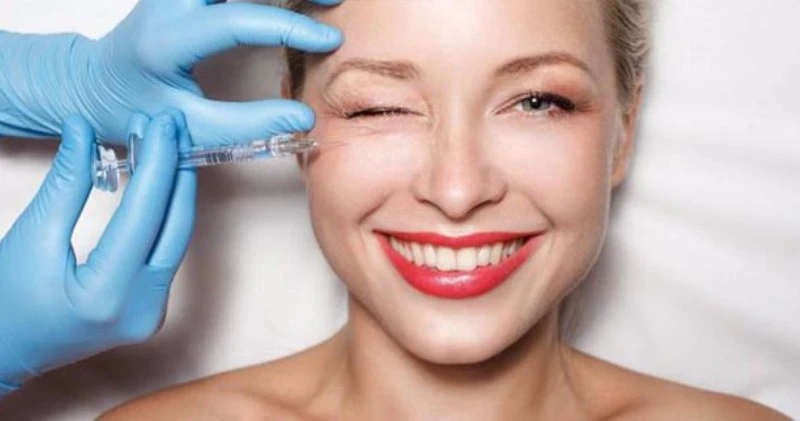
The study, published in the journal Scientific Reports, involved 45,000 people from across the United States, whose data the scientists collected and systematized. For many years, doctors suspected that botulinum toxin medications affected not only patients' appearance but also their psychological state. But only now have they decided to seriously address this issue. 
Initially, it was assumed that Botox worked through a feedback mechanism. Injected into the forehead and eyebrows, the medication prevents a person from frowning, which in turn reduces negative emotions. Botox, made from botulinum toxin, a powerful poison produced by the bacteria Clostridium botulinum, disrupts the transmission of impulses from muscles to neurons, causing the muscles to relax, or, more simply, become temporarily paralyzed.
However, while analyzing data on side effects from thousands of patients, it suddenly became clear that the drug acts as an antidepressant regardless of where it is injected. The fact is that, in addition to cosmetic applications, botulinum toxin is also used in medicine. It helps combat muscle spasms and cramps, as well as severe migraines. Therefore, injections can be administered into any muscle in the body. 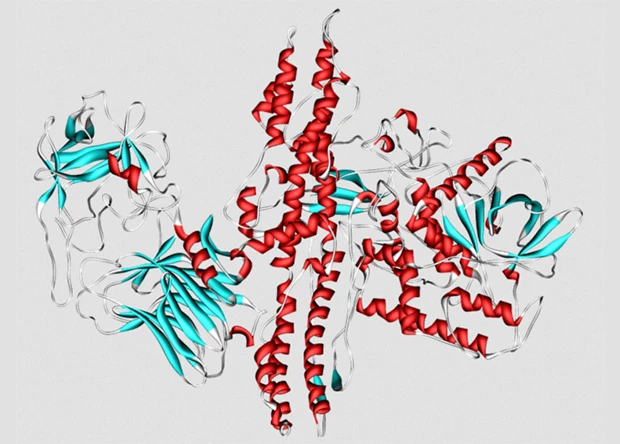
This is what botulinum toxin looks like under an electron microscope
The severity of Botox side effects has always depended on the injection site, but its effect on psychological well-being has proven unrelated to the injection site. Collecting data for a large-scale study would have been too time-consuming for the scientists, so they took a simple route by querying the US Food and Drug Administration (FDA) AERS and FAERS databases.
Out of 13 million patients injected with botulinum toxin, 45,000 were selected. All of these individuals received Botox injections for various indications and in various parts of the body. A study of health parameters after this treatment showed that depression was observed 40-80% less frequently in those who received the drug than in patients in the control group who were not treated with botulinum toxin. 
The researchers concluded that facial expressions were unrelated, and that Botox either directly affects the nervous system or alleviates the underlying condition that causes depression. One of the study's leaders, Dr. Tigran Makunts of the University of California, San Diego (USA), commented on this:
This finding is encouraging, as the effect of Botox on depression is very important. Depression is a serious mental disorder, the treatment of which has always been very difficult. 
However, the scientist cautioned against jumping to conclusions and stated that definitive conclusions can only be made if it is known that the study participants did not take antidepressants during and after Botox treatment. Doctors don't have such data, so it's too early to say the experiment is 100% pure. However, work in this promising area is ongoing.
Despite the miraculous effects of botulinum toxin, it's important to remember that this drug should still be used sparingly, to avoid the same results as those seen on these Hollywood stars.