10 rare cat species: origin and interesting facts (10 photos)
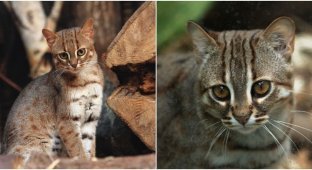
1. Andean Cat (Leopardus jacobita) 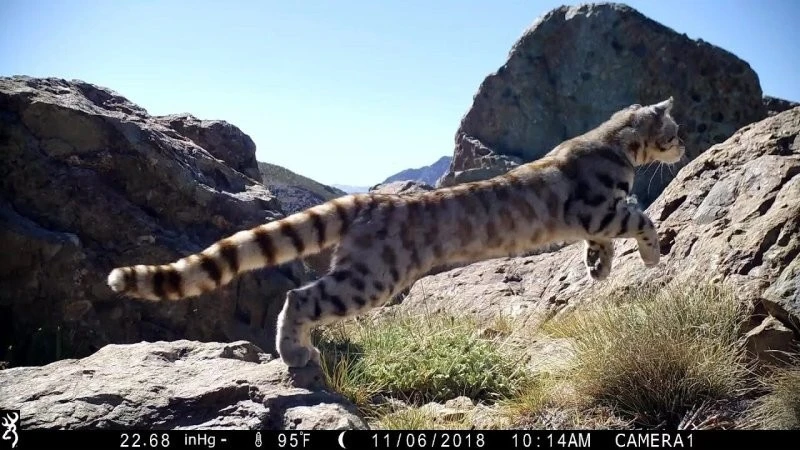
Hello everyone! Cats are some of the most graceful and mysterious creatures on the planet. We are well acquainted with purring domestic pets, but the world of wild cats is far more diverse and amazing. Among them are truly rare species – inhabitants of mountain peaks, deserts, tropical forests, and remote islands, which scientists have only recently discovered.
Many of these animals have adapted to extreme environmental conditions for centuries: surviving in the thin air of high mountains, hunting in the shifting sands of deserts, or foraging in the murky waters of swamps. Their unique features—from the Pallas's cat's thick fur, which protects them from the bitter cold, to the webbing between the toes of the fishing cat—are the result of long evolution and fine-tuning to a specific ecological niche.
However, the rarity of these species is not only a result of their narrow specialization but also a warning sign. Habitat destruction, poaching, climate change, and habitat fragmentation are pushing many populations to the brink of extinction. Some cats, such as the Iriomote or Iberian lynx, number only a few dozen or hundreds of individuals in the wild.
In this article, we'll introduce 10 rare cat species: learn how they emerged and adapted to their environment, and discover amazing facts about their lifestyle, habits, and unique characteristics. We'll delve into the world of feline diversity—secretive, fragile, and incredibly beautiful.
Origin: Lives in the Andes (South America) at altitudes of 3,000–5,000 meters. It's believed that the species developed in high-altitude conditions, adapting to the harsh climate and specific fauna of the region.
Interesting facts:
One of the least studied wild cats—the first photographs of it in the wild were only taken in the 21st century.
Body length: approximately 50–60 cm, weight: 4–6 kg.
Their thick, long fur protects them from the cold (temperatures in their habitat can drop below -20°C).
They hunt primarily mountain viscachas (rodents of the chinchilla family).
Listed as endangered on the International Union for Conservation of Nature (IUCN) Red List.
2. Sand Cat (Felis margarita) 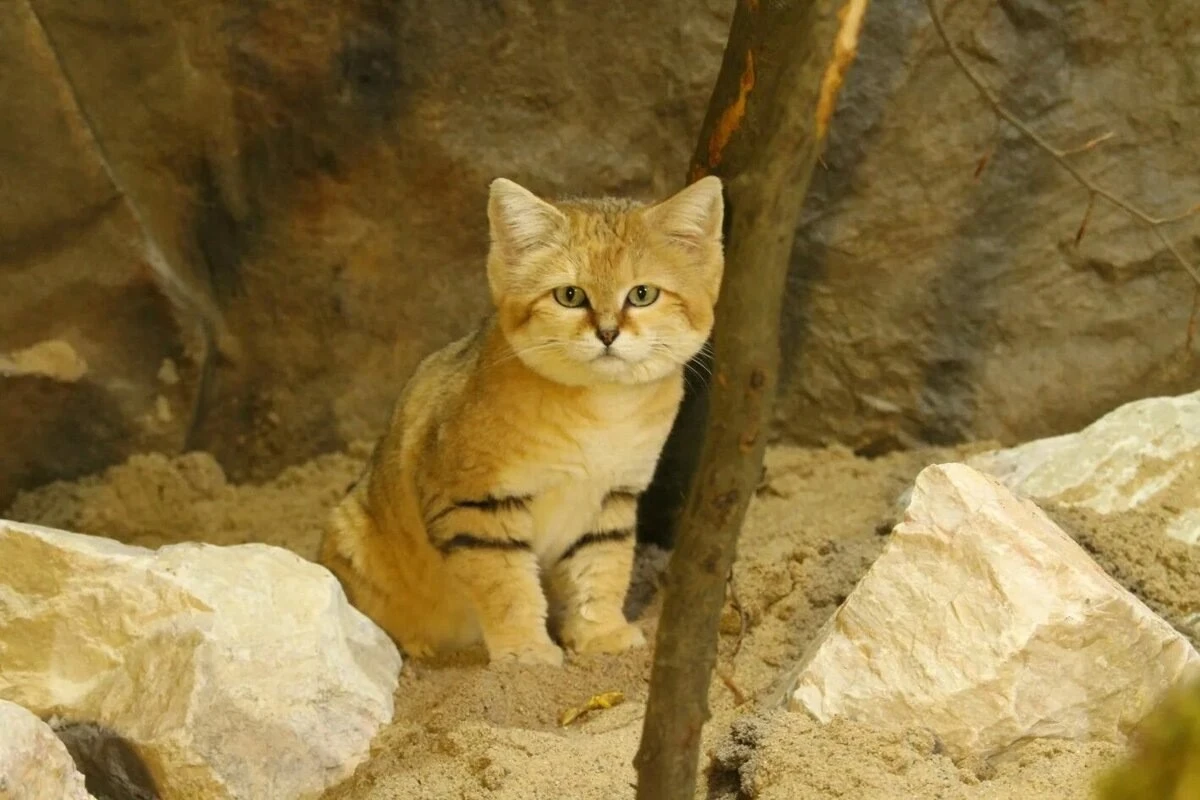
Origin: Evolved in the deserts of North Africa, the Arabian Peninsula, and Central Asia. Adapted to life in extreme heat and water scarcity.
Interesting Facts:
The smallest wild cats: body length 39–52 cm, weight 1.5–3.4 kg.
Wide paws with furry pads prevent them from sinking into the sand and protect them from burns.
They can go for long periods without drinking water, getting moisture from their prey.
Active at night, hiding in burrows during the day.
Their coloring blends with the sand – excellent camouflage.
3. Fishing Cat (Prionailurus viverrinus) 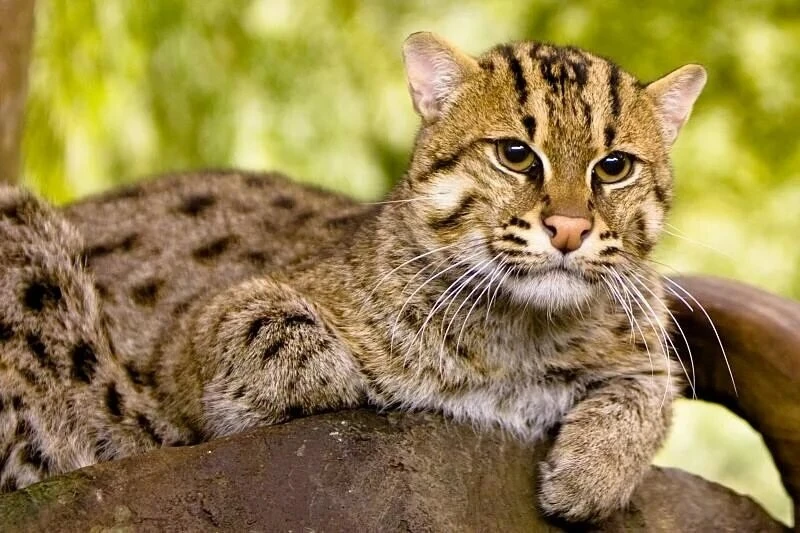
Origin: Southeast Asia. Evolved as a specialized predator hunting aquatic animals.
Interesting Facts:
Can swim and dive for fish.
The webbing between the toes helps it catch fish and navigate swampy areas.
Size: Length up to 120 cm, weight up to 15 kg.
In addition to fish, it eats frogs, snakes, crabs, and small mammals.
Listed on the IUCN Red List as vulnerable.
4. Clouded Leopard (Neofelis nebulosa) 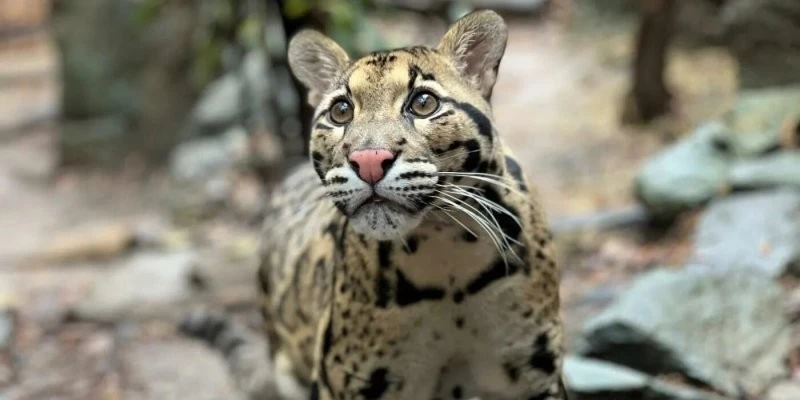
Origin: Southeast Asia. Considered a "bridge" between small and large cats. Evolutionarily, it diverged early, retaining features of ancient felines.
Interesting Facts:
Long canines relative to body size (reminiscent of saber-toothed cats).
Excellent tree climber and can descend head-down.
Their large, cloud-like markings provide camouflage in the forest.
The body length is up to 100 cm, and the tail is almost as long.
Endangered by deforestation and poaching.
5. Iriomote Cat (Prionailurus iriomotensis) 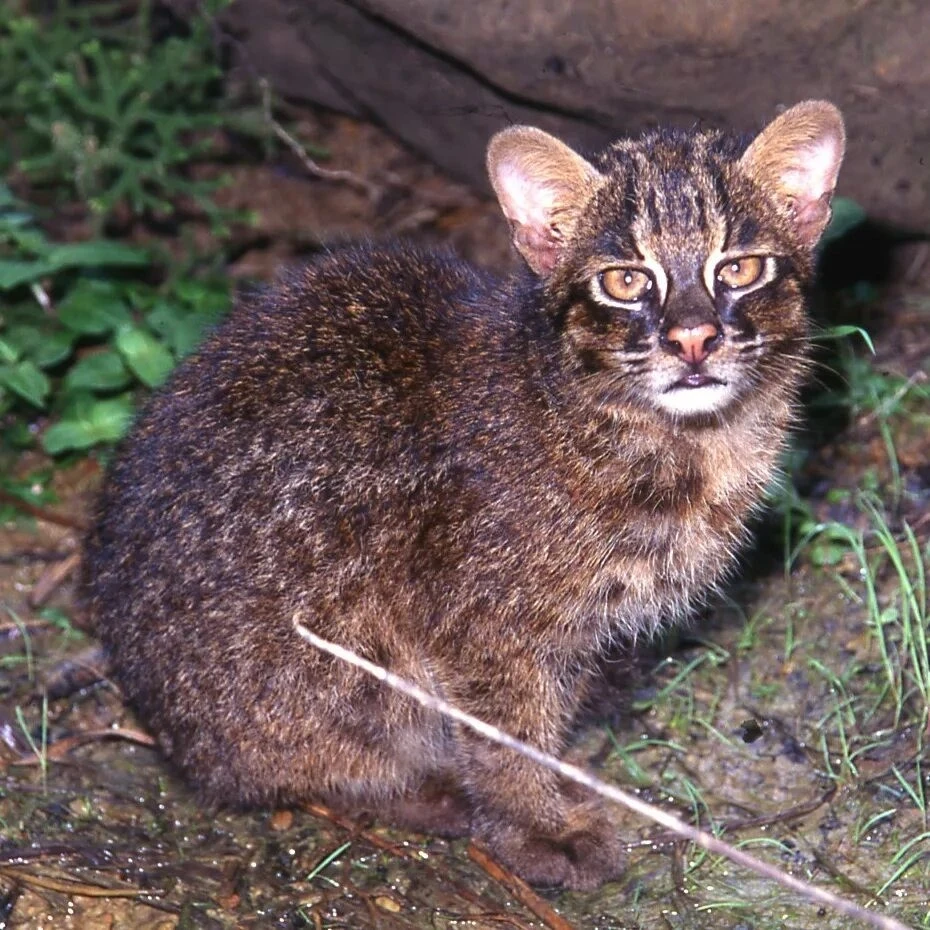
Origin: Endemic to Iriomote Island, Japan. Likely descended from a common ancestor with the Bengal cat, becoming isolated on the island.
Interesting Facts:
Lives only on one island, approximately 292 km2 in area.
With a population of less than 100 individuals, this cat is one of the rarest cat species.
Body length: 50–60 cm, weight: 3–7 kg.
It feeds on small rodents, birds, crabs, and fish.
Listed in the Red Book as a critically endangered species.
6. Pallas's Cat (Otocolobus manul) 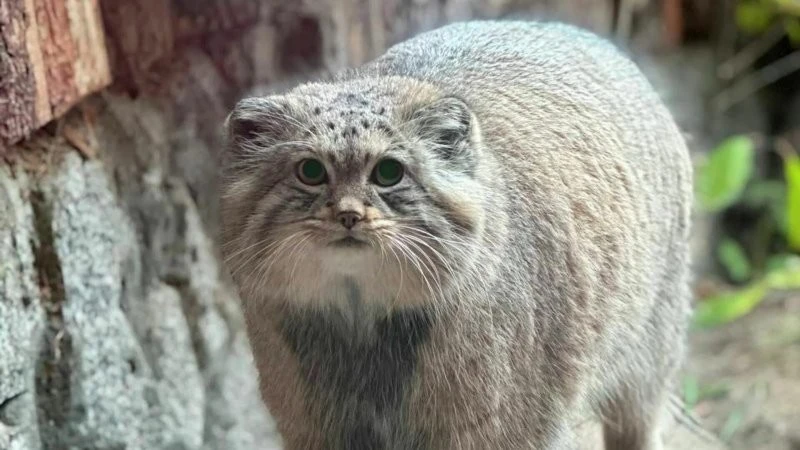
Origin: Steppes and mountains of Central Asia. Adapted to a cold continental climate with sharp temperature fluctuations.
Interesting facts:
The fluffiest wild cat—its thick fur protects it from temperatures down to -50°C.
Short, massive paws and a squat body help it move through the snow.
Body length: 52–65 cm, weight: 2–5 kg.
Extremely cautious, leading a secretive lifestyle.
Listed in the Red Book and other protected lists.
7. Sumatran Cat (Prionailurus planiceps) 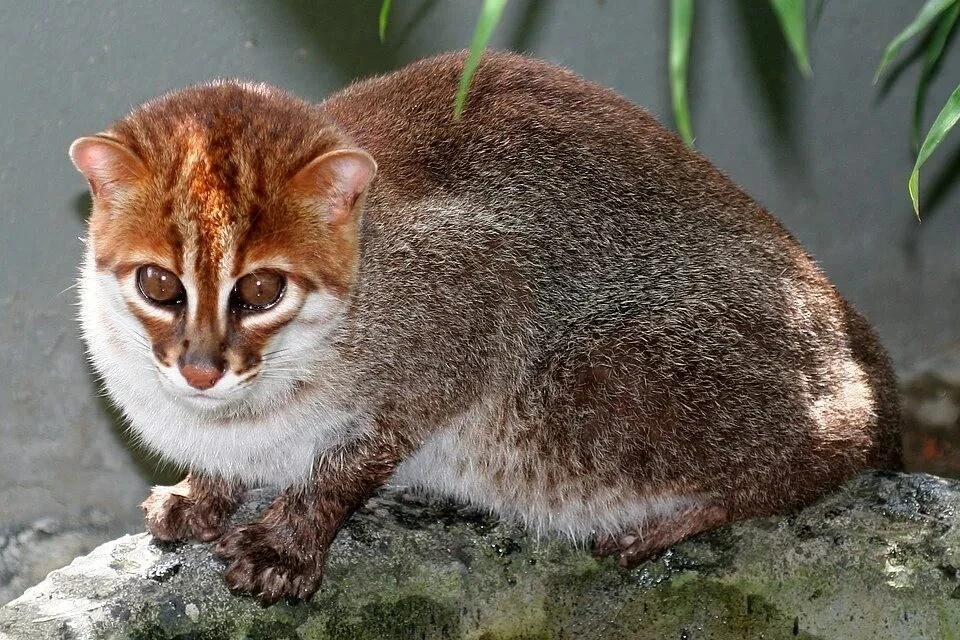
Origin: Tropical forests of Sumatra and the Malay Peninsula. Specialized in feeding on fish and other aquatic animals.
Interesting Facts:
The narrow, elongated snout and small teeth are adapted for catching fish.
The fur is water-repellent.
Body length: 53–81 cm, weight: 1.8–2.7 kg.
A rare species with a fragmented range.
It is nocturnal and a good swimmer.
8. Iberian Lynx (Lynx pardinus) 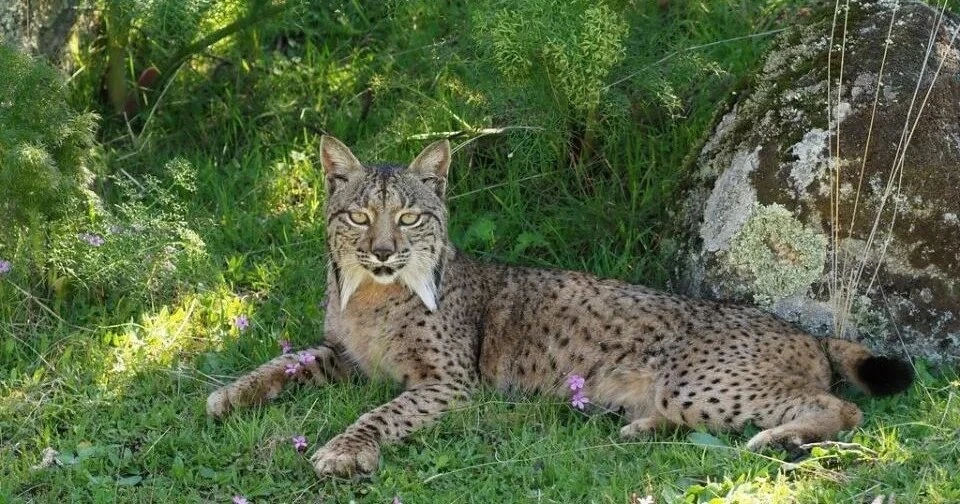
Origin: Iberian Peninsula. It separated from the Eurasian lynx several hundred thousand years ago.
Interesting facts:
The rarest lynx species, its population had fallen to critically low levels until recently.
It specializes in hunting Iberian hares (up to 80% of its diet).
Their spotted coat helps camouflage them in the Mediterranean landscape.
Body length up to 80–100 cm, weight 13–15 kg.
Thanks to conservation programs, their numbers have begun to increase, but the species remains vulnerable.
9. Bornean Clouded Leopard (Neofelis diardi) 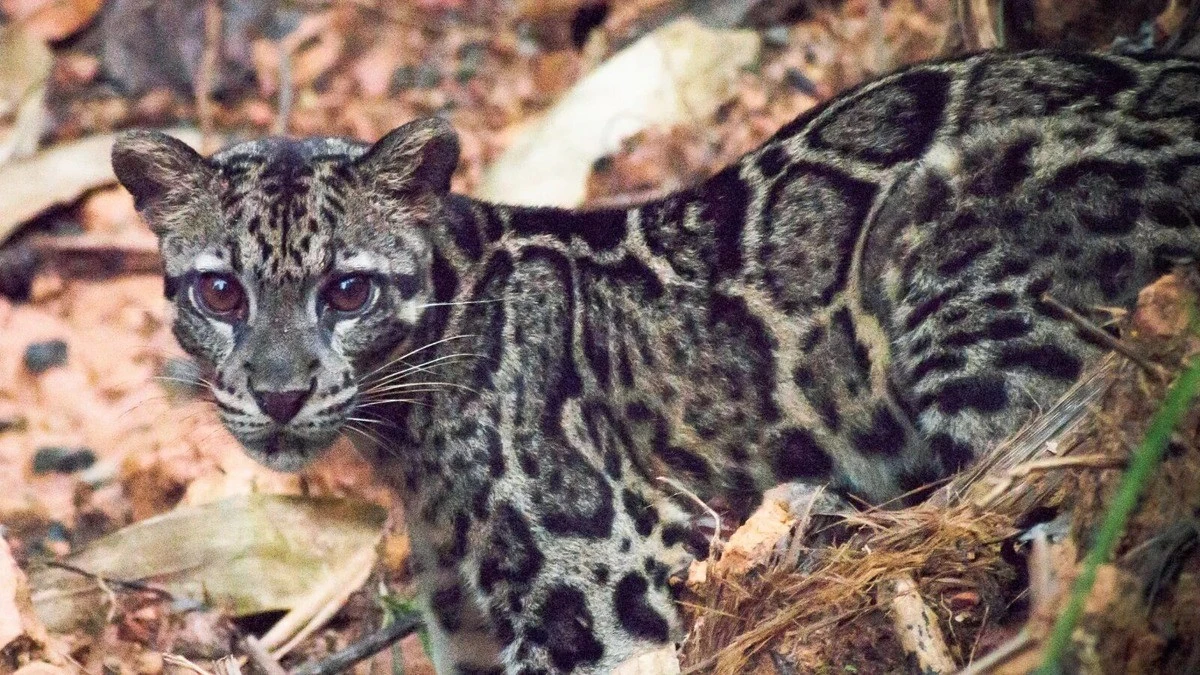
Origin: The islands of Borneo and Sumatra. Genetic studies have shown that it diverged from the mainland clouded leopard about 1.5 million years ago.
Interesting Facts:
Previously considered a subspecies of the clouded leopard, it was recognized as a separate species in 2006.
Its markings are smaller and more distinct than those of the mainland species.
Body length up to 105 cm, tail up to 90 cm.
Excellent tree climber, hunts both on the ground and in branches.
Threats: Deforestation and poaching.
10. Serval (Leptailurus serval) 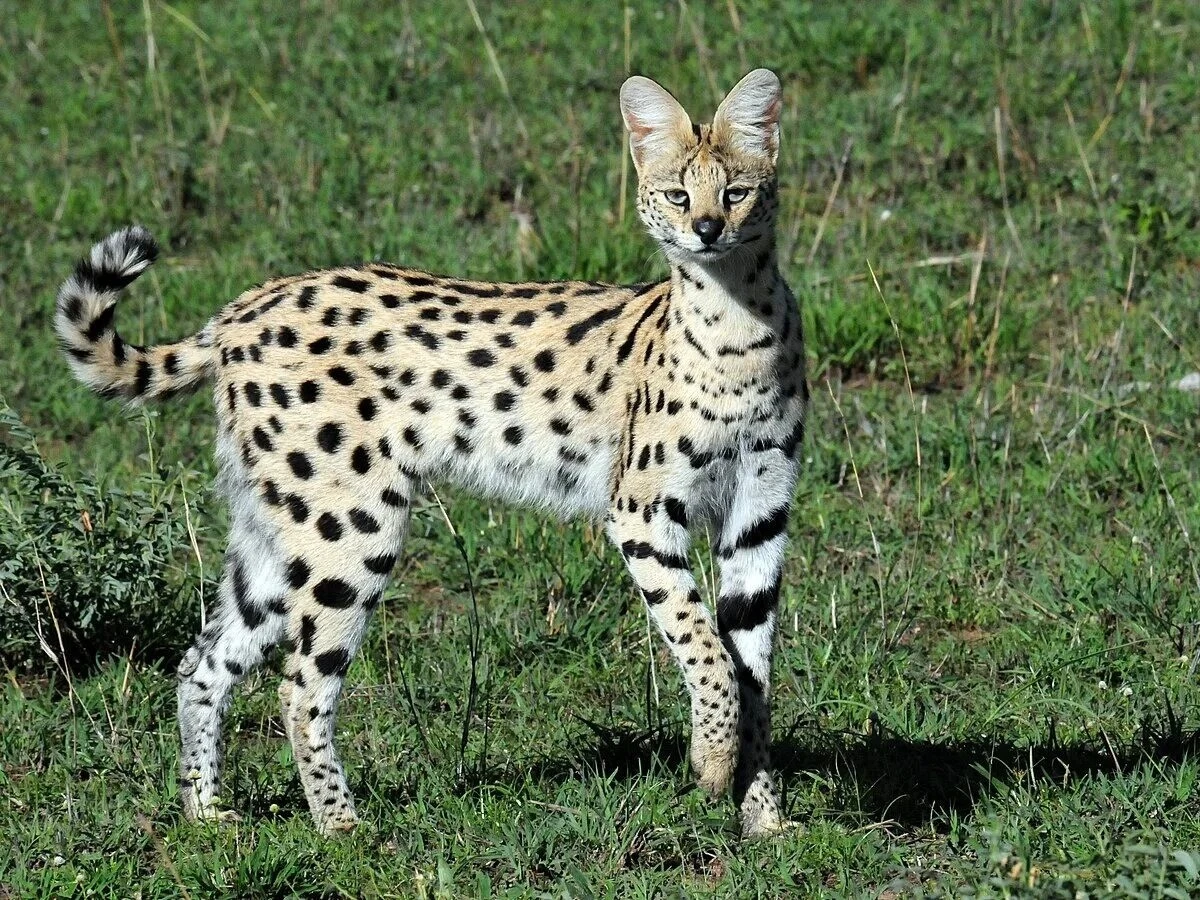
Origin: Sub-Saharan Africa. Evolved as a predator of open spaces—savannas and grasslands.
Interesting facts:
Longest legs of any cat relative to body size.
Large ears help them pick up the sounds of rodents and birds in tall grass.
Body length: 90–135 cm, shoulder height: up to 65 cm.
It makes vertical leaps of up to 3 m to catch birds.
Despite its "Least Concern" status, it is rare in some regions due to habitat loss.
The world of rare cat species is a stunning combination of natural ingenuity and fragility. Each of the described species has followed its own evolutionary path, developing unique adaptations for survival in a wide variety of environments: from scorching desert sands to snow-capped mountain peaks, from dense tropical forests to swampy lowlands.
The Andean cat, sand cat, clouded leopard, and other members of the cat family exhibit astonishing biodiversity. Their characteristics—whether the water-repellent fur of the Sumatran cat, the long legs of the serval, or the thick coat of the Pallas's cat—remind us of how finely nature tailors each species to its ecological niche.
However, the outward strength and grace of these predators conceals vulnerability. Most rare cats today face serious threats:
habitat destruction due to deforestation and development;
poaching and illegal wildlife trade;
prey decline due to hunting;
range fragmentation leading to genetic depletion of populations;
climate change, which is altering traditional living conditions.
Conserving these species is not simply a matter of protecting individual animals. It is a contribution to maintaining the planet's biodiversity, the balance of ecosystems, and our shared natural heritage. Successful examples, such as the recovery of the Iberian lynx population thanks to targeted conservation programs, demonstrate that with the right approach and international support, even the rarest species can be saved from extinction.
Meeting rare cats reminds us that every creature in nature has its role and value. Caring for them is both a responsibility to future generations and an opportunity to preserve the magic of the wild in all its diversity. May these amazing creatures continue to grace our planet for many centuries to come.