Child labor: a terrifying norm of the 19th century (6 photos)
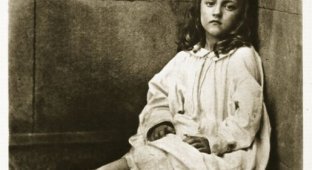
These children in the photo are six, six, and ten years old. 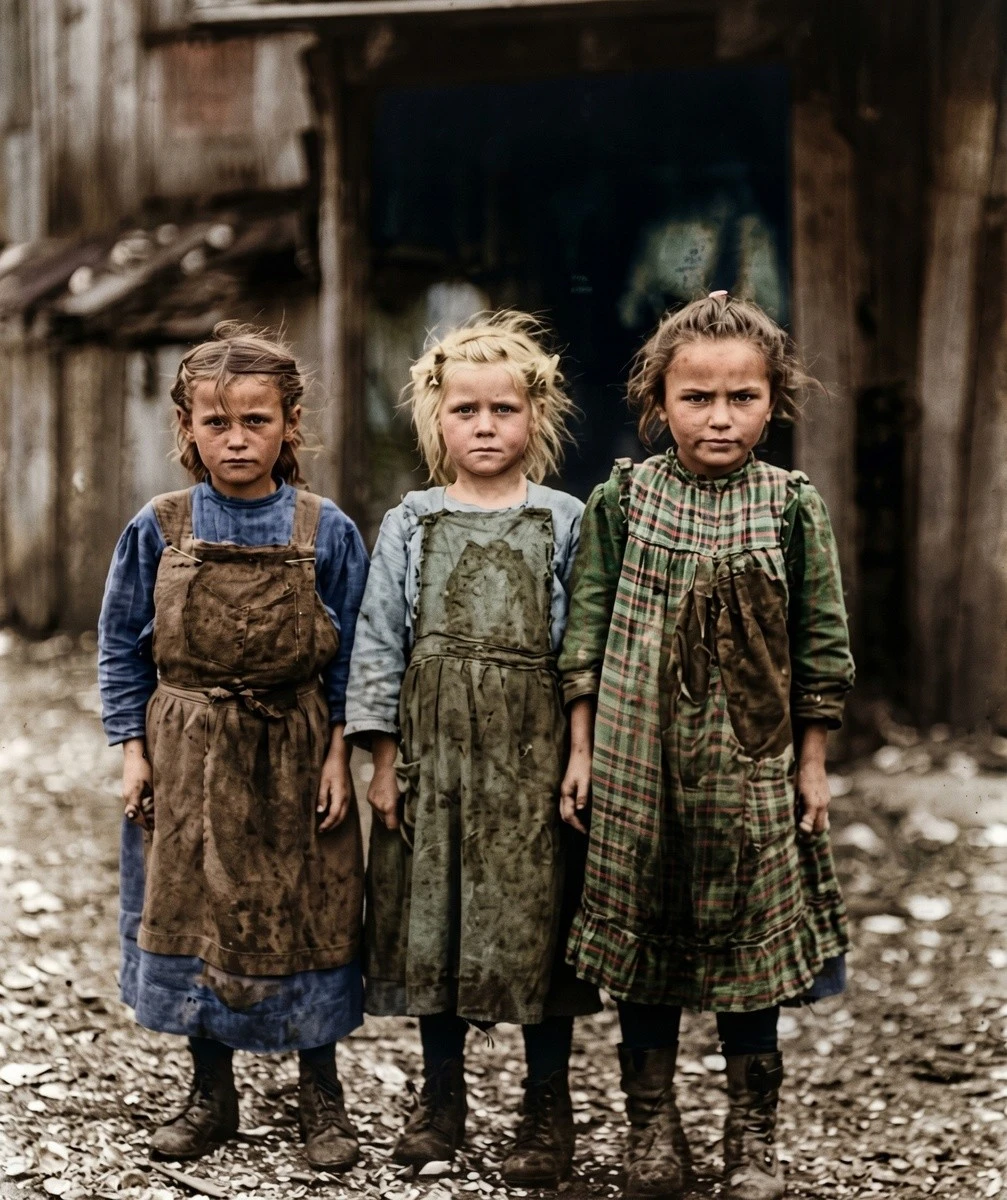
These aren't schoolchildren from a drama club, nor is this a staged shot. These are oyster harvesters in Port Royal, USA, in 1912. Their workday began at 4 a.m.
At an age when today's children are still being coaxed into wearing a hat, they were already heading off to work.
And the creepiest part is that they were considered "lucky." 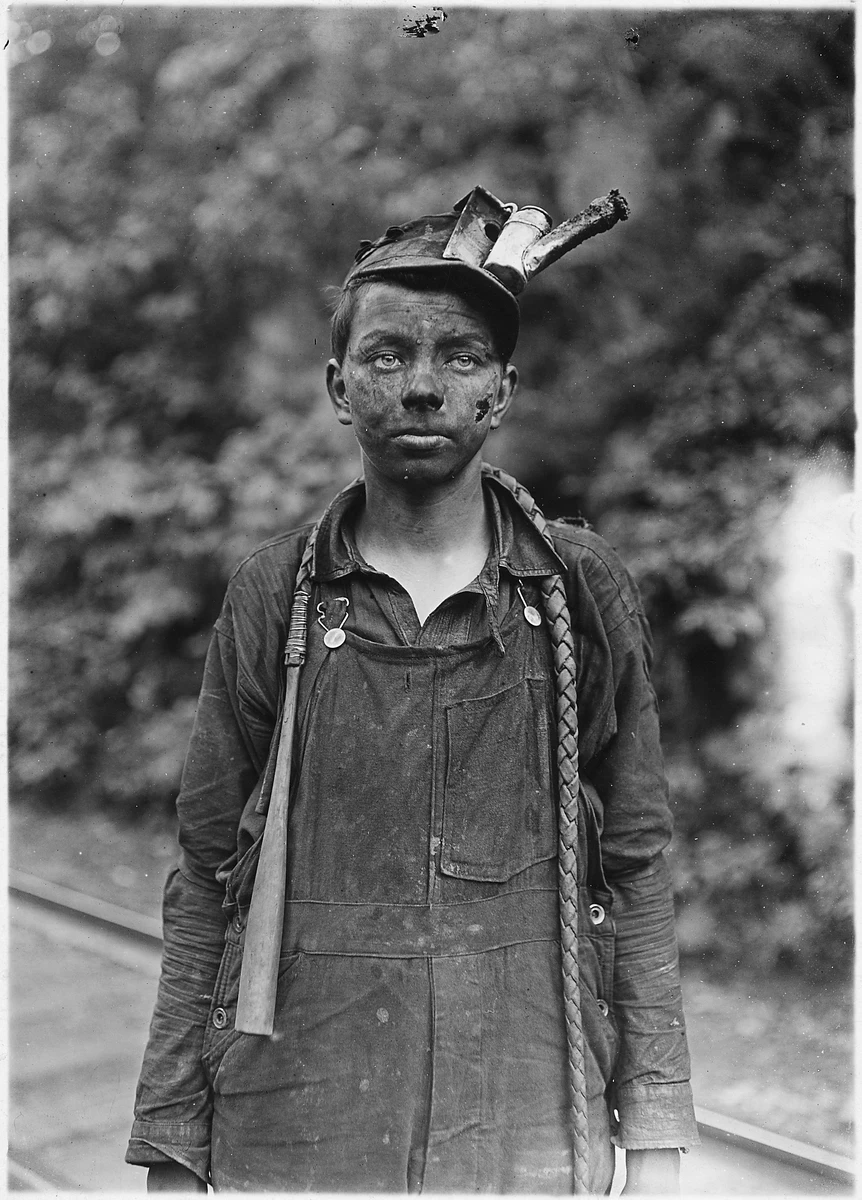
In the 19th century, children as young as 5 or 6 could work in factories for 12 to 14 hours a day. Sometimes more. Small hands were advantageous: they could fit into places adults couldn't, were cheaper, and were less likely to be negotiated.
Children were paid significantly less than adults: 2 to 3 times less for a comparable workload. 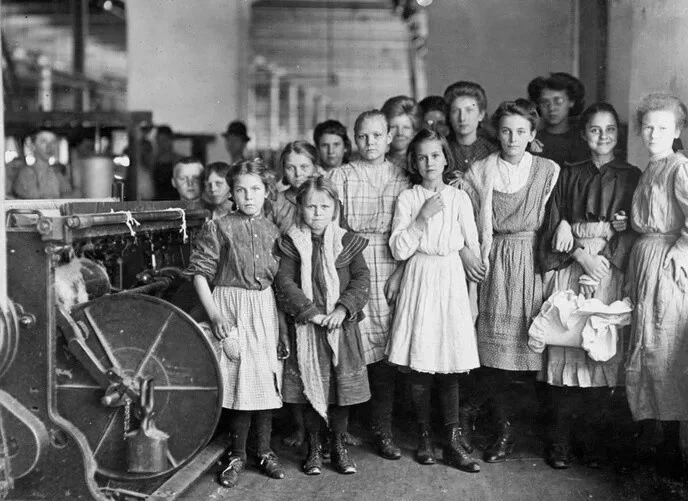
In textile factories, children ran between machines. In mines, they carried loads, opened ventilation doors, and worked in the dark. In the fisheries, they cleaned, sorted, and assembled. Of course, schooling was out of the question in such conditions. 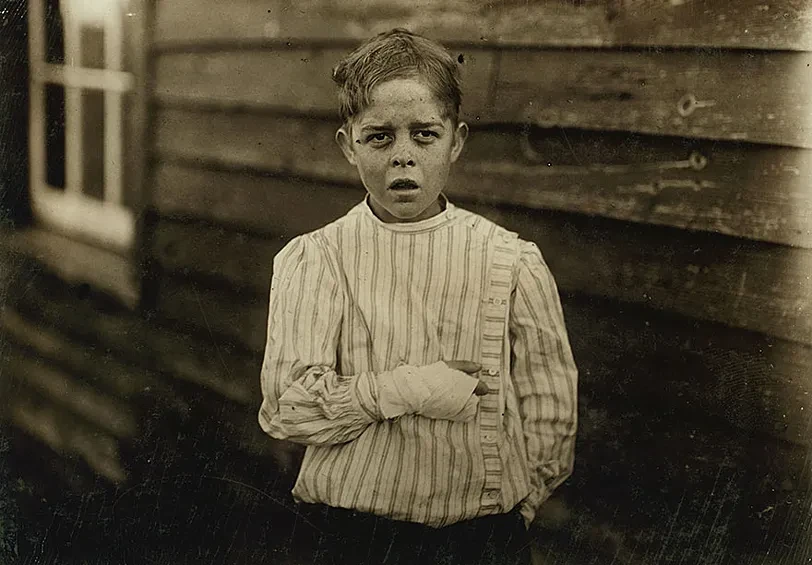
In the history of some countries, children were more likely to work in villages, helping their elders with agriculture. In a peasant family, a child aged 5 to 7 could herd cows and sheep, carry water, chop wood chips, and help with sowing and harvesting. Ours was an agrarian country. In winter, weaving was the main occupation. However, they also worked in factories – in textile, match, tobacco, and tea production. 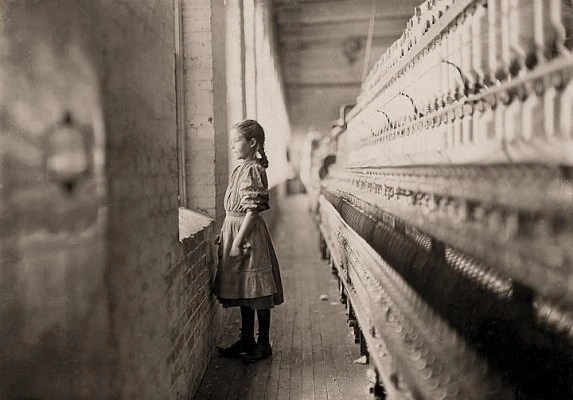
The first laws restricting child labor seemed almost mocking by today's standards. For example, a 12-hour day and one day off a week were considered "progress." In other words, a child was officially allowed to be a little worker, just a little less tormented.
Today, it seems like all of this is just a relic of old photographs. 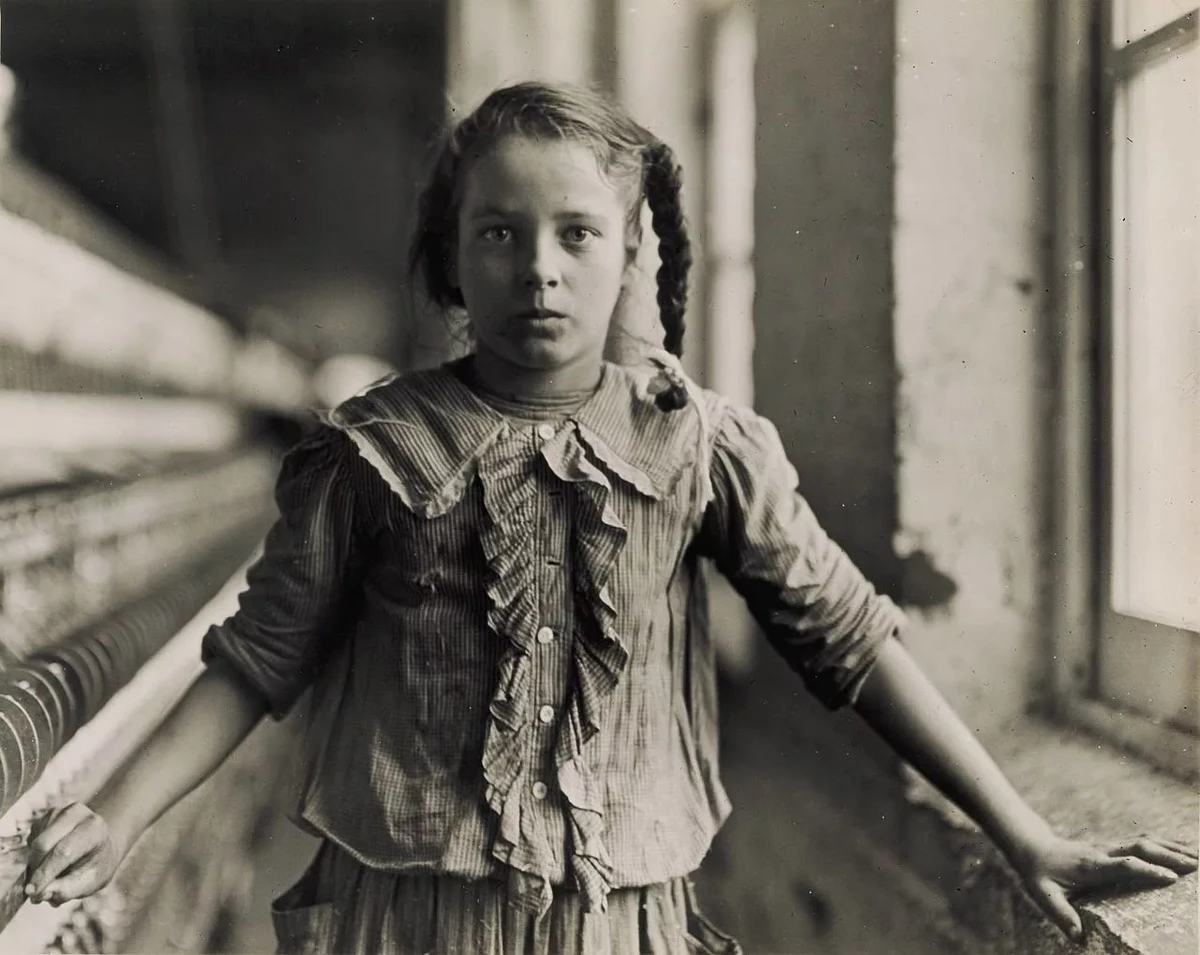
But no. Millions of children still work around the world—on plantations, in mines, on farms, in workshops. It's just that now we see more often finished goods on the shelf than their faces.
Most children continue to work today in poor countries in sub-Saharan Africa, as well as in several countries in Asia and Latin America. Specific products with a "child trace" often come from India, Bangladesh, Vietnam, Myanmar, Côte d'Ivoire, Ghana, Madagascar, and Central African countries.
The most terrifying thing about child labor isn't just that a child is forced to work. It's that their future is quietly stolen from them.