Admire the gravitational lens in the constellation Draco (6 photos)
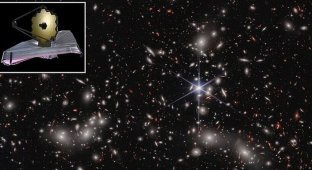
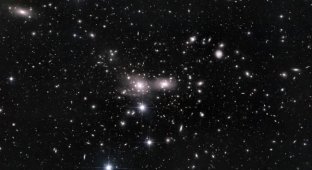
This is the galaxy cluster eMACS J1823.1+7822 in the constellation Draco, located about nine billion light-years from Earth. It is one of those structures that allows us to visualize the scale of the Universe. 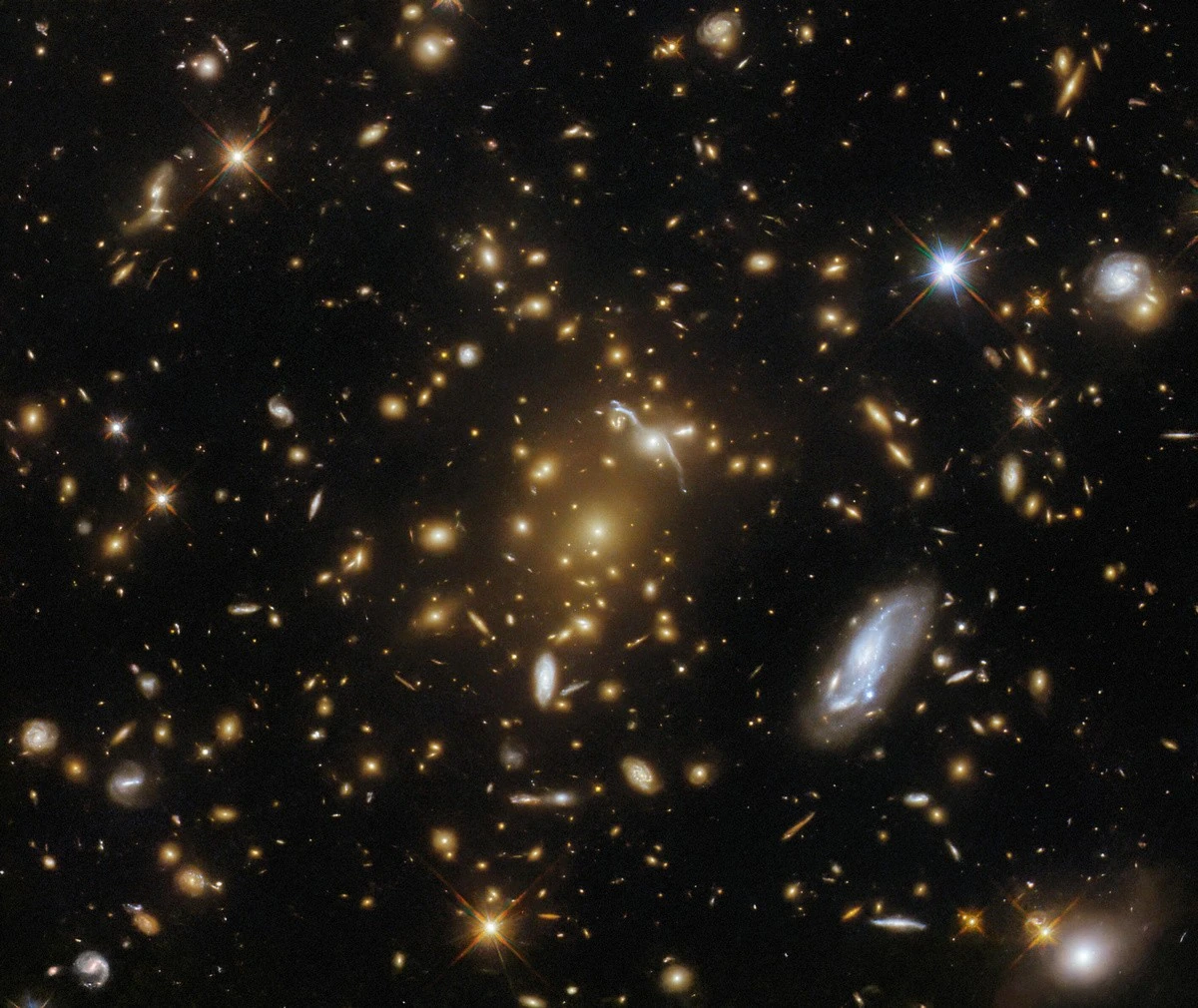
Image of the galaxy cluster eMACS J1823.1+7822, taken by the Hubble Space Telescope. The image was released on May 8, 2023.
eMACS J1823.1+7822 is a massive system of multiple galaxies bound together by gravity. Hundreds of galaxies, each containing billions of stars, are linked into a single structure stretching for millions of light-years. The cluster's mass is so enormous that it significantly distorts the fabric of spacetime around it.
Cosmic Lens
Due to its enormous mass, the cluster acts as a gravitational lens—a remarkable phenomenon predicted by Albert Einstein's general theory of relativity. 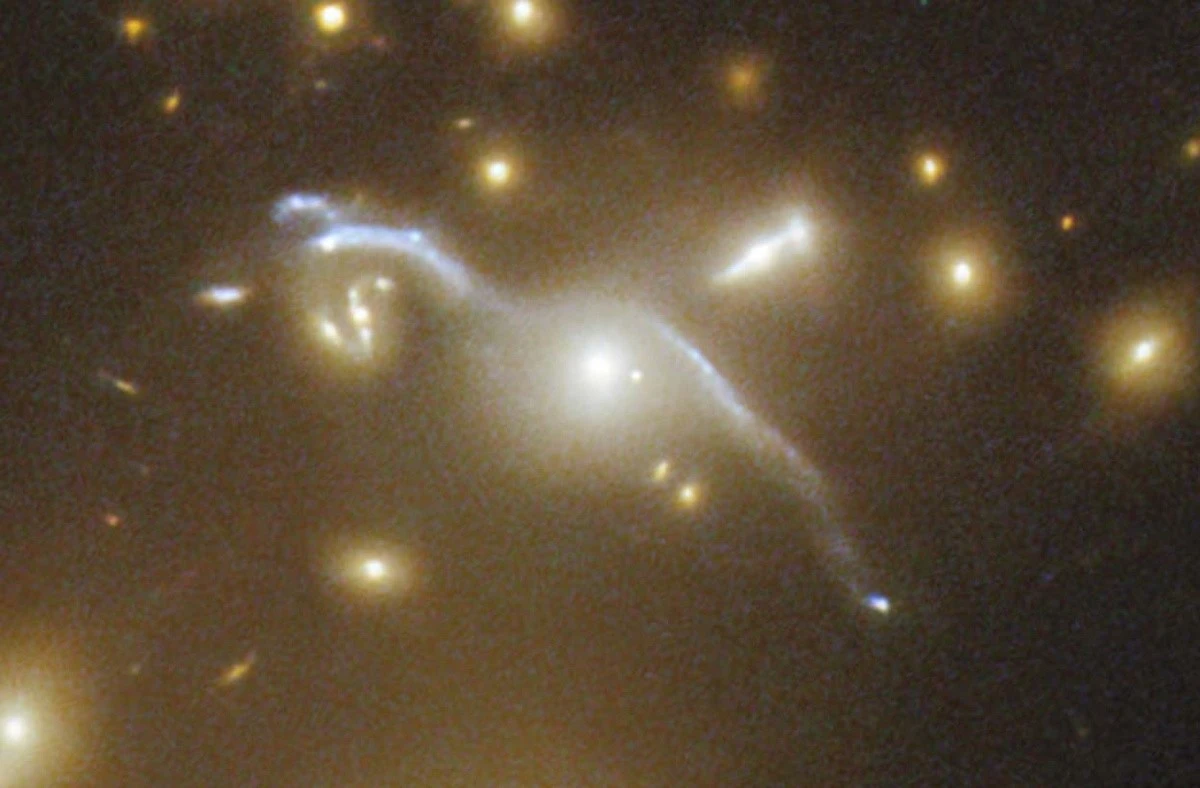
The cluster's mass bends spacetime, so the light from background galaxies travels toward us not in a straight line, but along curved paths. As a result, their images are stretched into arcs, distorted, and sometimes even repeated.
In telescope images, these "gravitational arcs" appear as glowing filaments around the cluster. This is not an optical illusion, but a real bending of light from galaxies even further away. 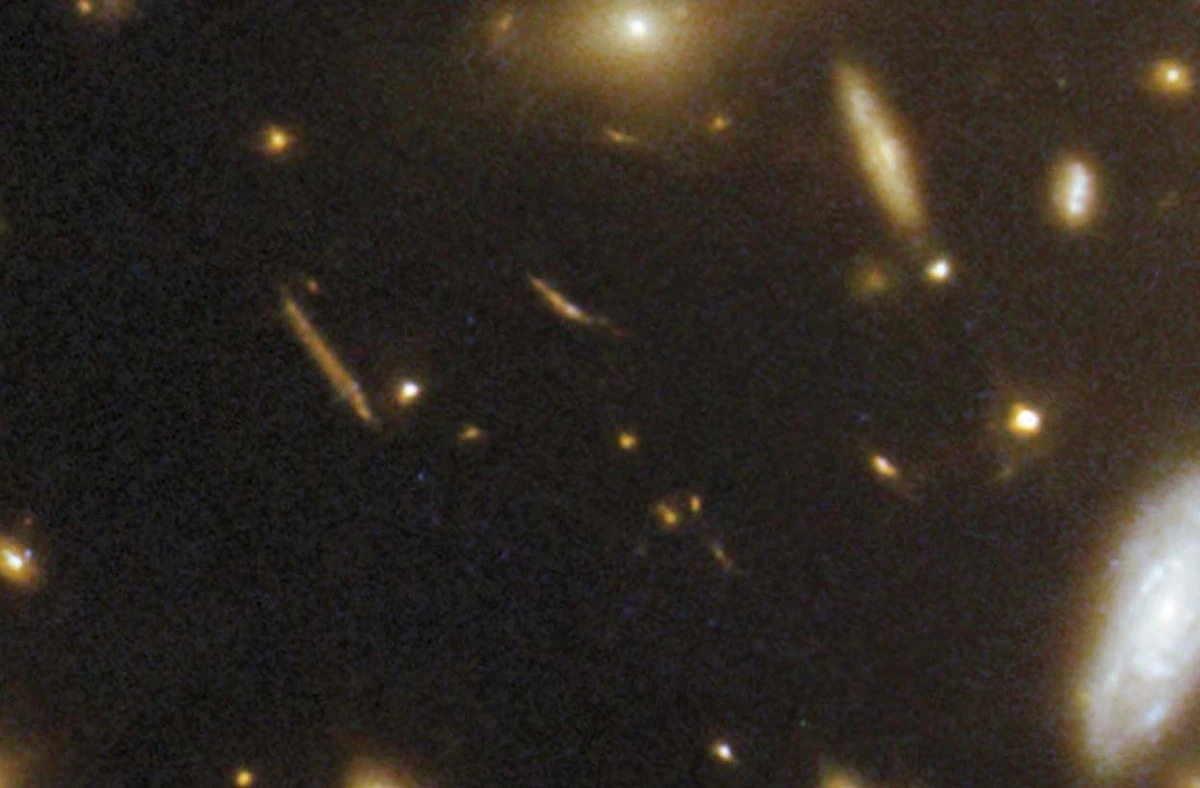
Therefore, clusters like eMACS J1823.1+7822 act as natural telescopes: they magnify and intensify the light of objects that would otherwise be too distant and faint to observe with existing instruments.
When the Universe Was Young
Today, such images seem commonplace: space telescopes regularly send back mesmerizing images of distant clusters and individual galaxies. But less than a hundred years ago, the scale of the Universe remained a subject of heated debate among astronomers.
At the beginning of the 20th century, many scientists believed that the Milky Way comprised the entire universe, and the unusual "spiral nebulae" observed with the telescopes of the time were part of our galaxy. The idea that other galaxies might exist beyond the Milky Way was considered revolutionary and... controversial. 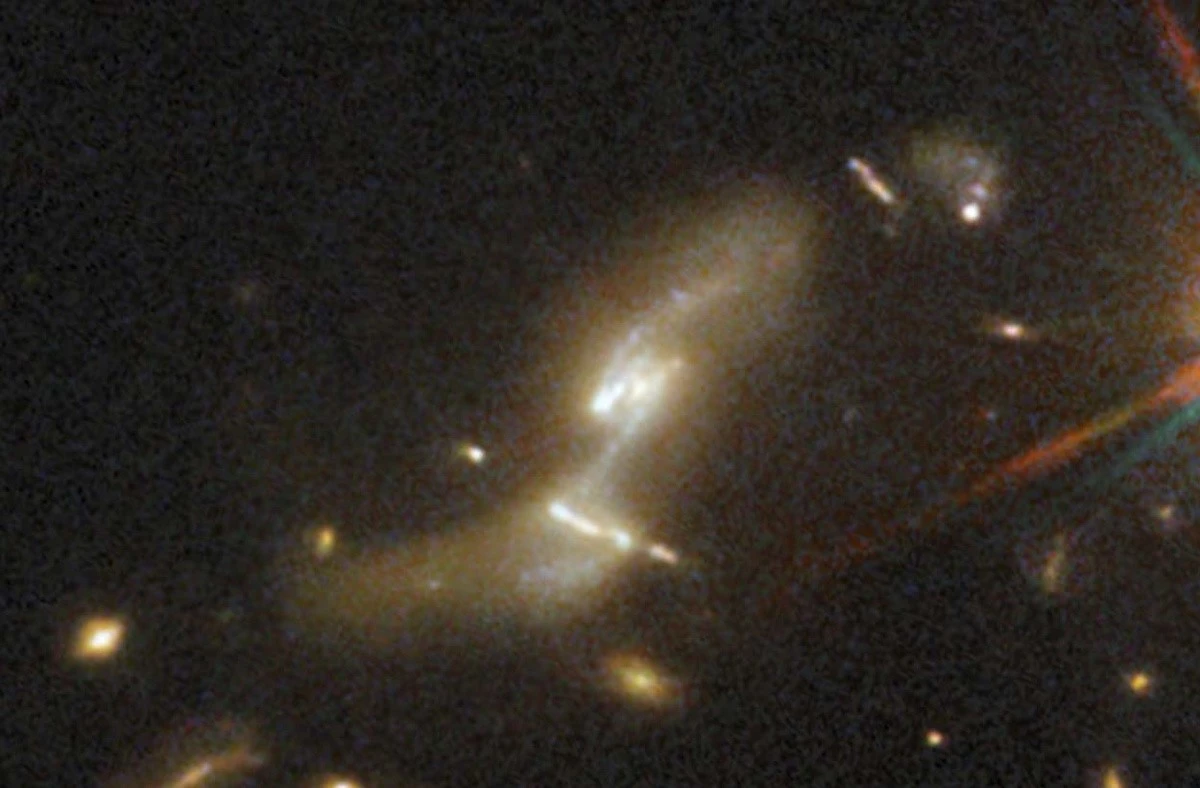
The situation changed with the observations of the American astronomer Edwin Hubble in the 1920s. Using the powerful 100-inch telescope at the Mount Wilson Observatory, he discovered variable stars—Cepheid stars—in the Andromeda Nebula, true beacons of the universe.
By measuring their brightness, Hubble calculated the distance to the nebula.
The result was stunning: Andromeda was too distant to be part of the Milky Way. This clearly indicated that the "spiral nebula" was in fact a separate galaxy, comparable in size to the Milky Way.
And so it went! There was no longer any doubt that the Milky Way was just a drop in the galactic ocean of the Universe, which turned out to be unimaginably vast, far beyond even the wildest assumptions. 
Today we know that galaxies combine into groups, clusters, and superclusters, forming a vast cosmic web of thousands and millions of individual galaxies.
A Window into the Past
Looking at the image of eMACS J1823.1+7822, consider this: the light from the cluster itself that reaches us today began its journey about nine billion years ago. And if we include background galaxies, whose images are warped by the cluster's gravity, this image takes us even deeper into the universe's past. Back then, neither Earth nor the Sun existed, and the universe itself was completely different.
Each such image is a window into the universe's very distant past, allowing us to see how large cosmic structures looked, interacted, and changed billions of years ago. 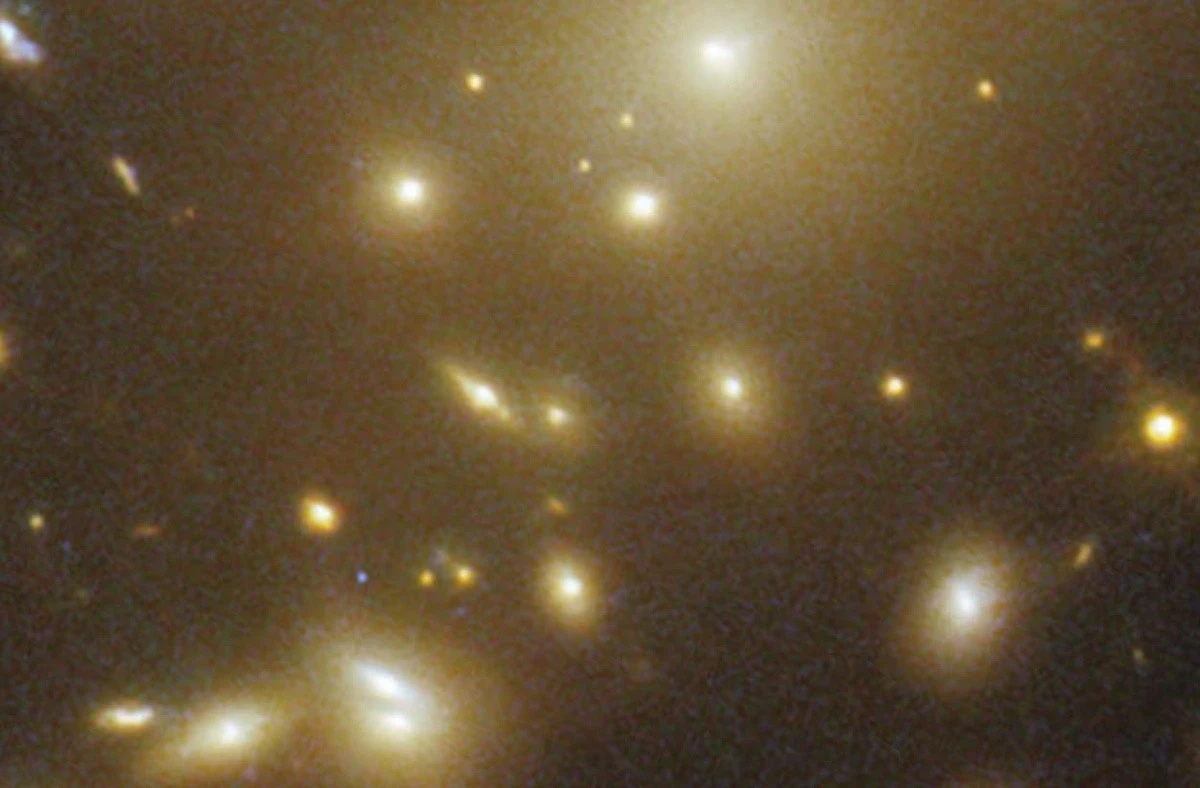
All of this brings us closer to understanding how the Universe evolved, how it became suitable for the origin of life and the emergence of consciousness capable of not just admiration, but also asking questions and then seeking answers.
This universe wasn't created for us; it has no ultimate purpose. But our thirst for knowledge, our inexhaustible curiosity, imbues the entire universe with a meaning it lacked before the emergence of reason. We are not the center of the universe, but we are its soul. And while humans struggle to understand what's going on here, the cold abyss ceases to be silent: through us, it begins to understand itself for the first time.