An imperial clam should look just like an emperor, right? Murex clams are truly magnificent. Just look at their graceful shells, covered in countless spines. Finding one on the beach on vacation is a stroke of luck. And doubly lucky when you consider how highly esteemed murex were by the emperors of the Byzantine and Roman Empires, and even the rulers of ancient, now almost forgotten, Phoenicia. 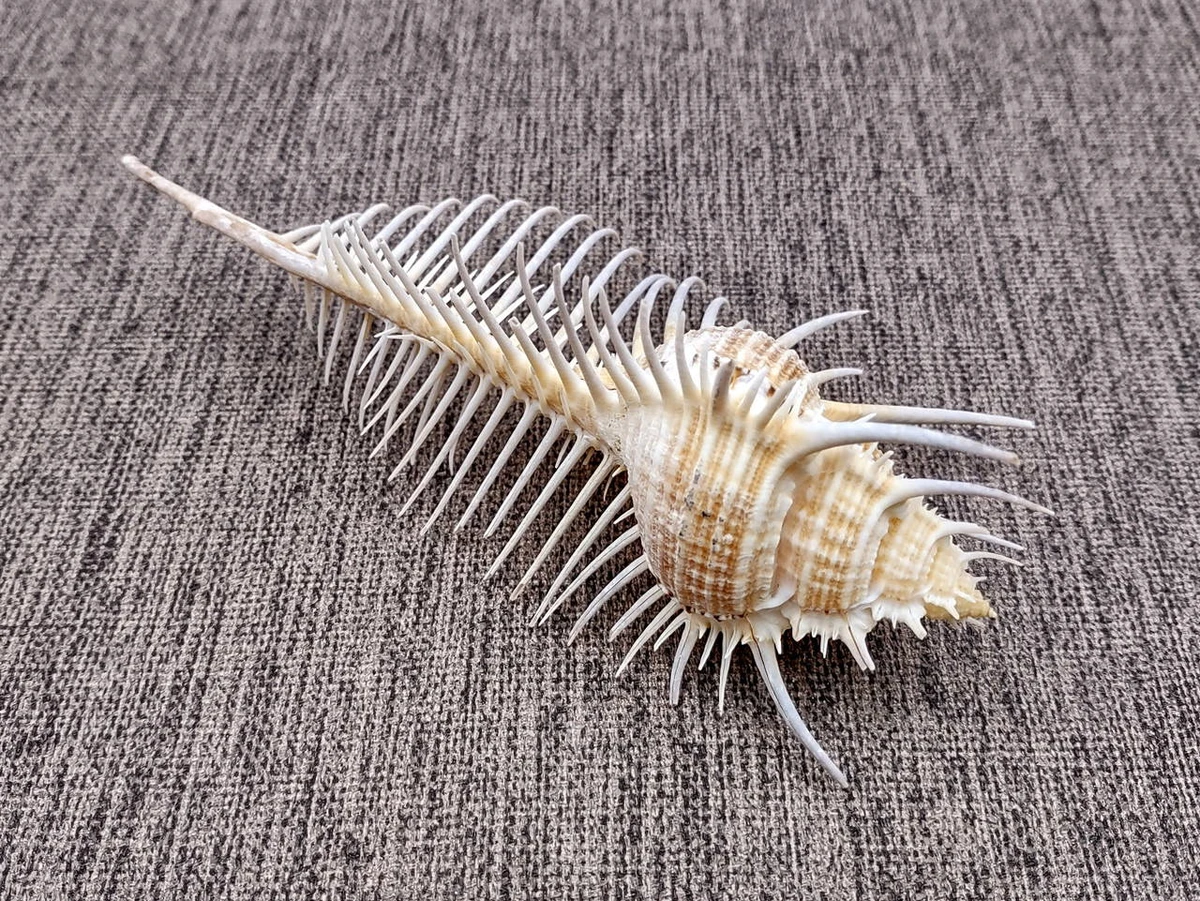 c
c
On specialized websites, these shells sell for $20 each. Sounds like a business idea... 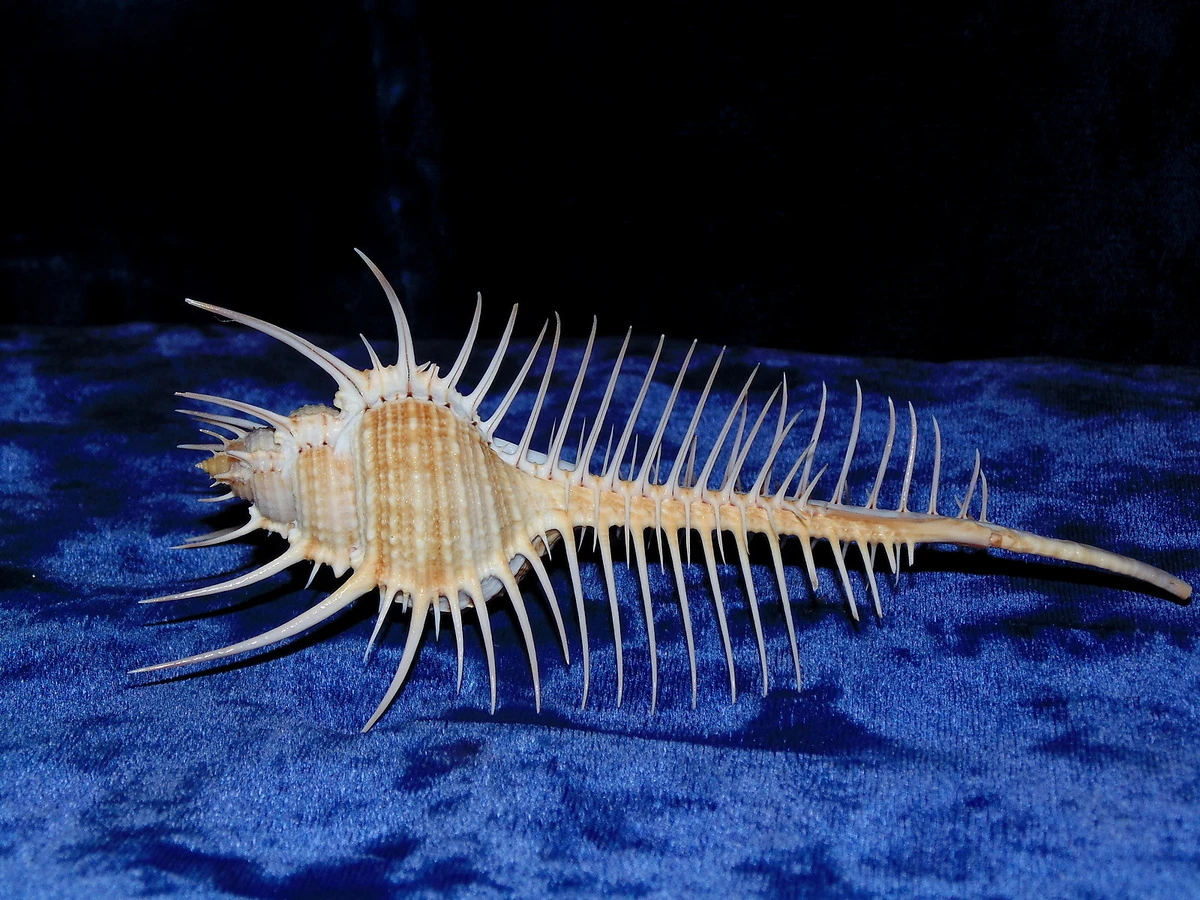
It's as if a fish skeleton has merged with a snail.
The mollusks themselves, however, don't even know they're anything special. They simply crawl along the intertidal zone of the Mediterranean Sea and the Atlantic coast, enjoying a peaceful invertebrate life. Despite being considered exclusively marine, mollusks easily survive 8-12 hours in the open air, so low tides don't harm them. However, marine predators are unable to reach them here. 
Not all murex shellfish look like the love child of a snail and a porcupine; some are camouflaged as corals.
At high tide, the slow-moving mollusks actively search for food—even slower mollusks. Having found one, the murex shellfish crawls onto it and begins slowly but surely drilling into its shell using its radula, a specialized organ covered with numerous dense teeth. But this is far from fast, and the murex shellfish is vulnerable while drilling. So it's covered in spines that prevent a potential predator from swallowing it. The spines, by the way, are surprisingly strong, and even a human couldn't easily break them. 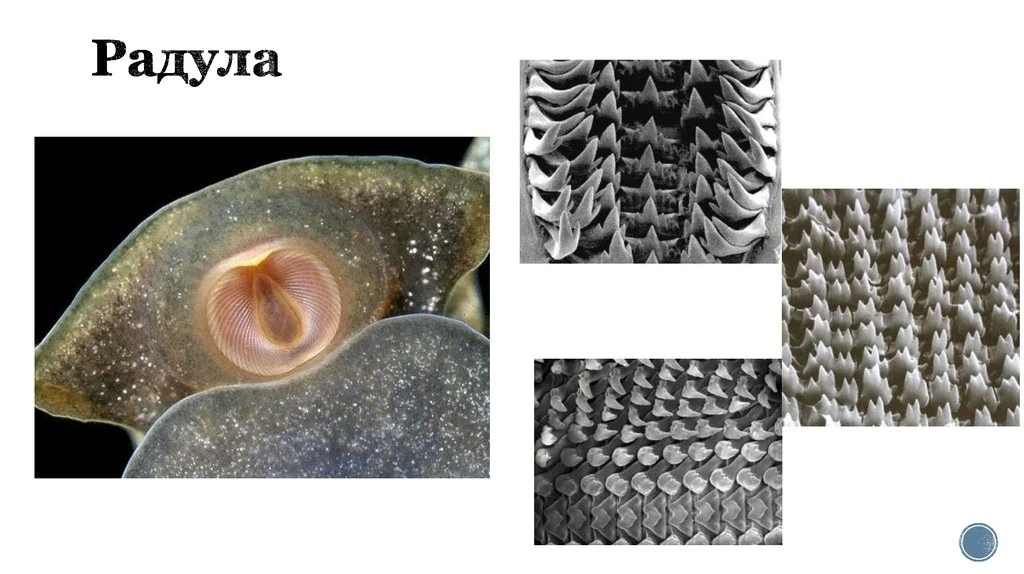
A radula is literally a grater with thousands of tiny teeth. An instrument for a very slow kill. 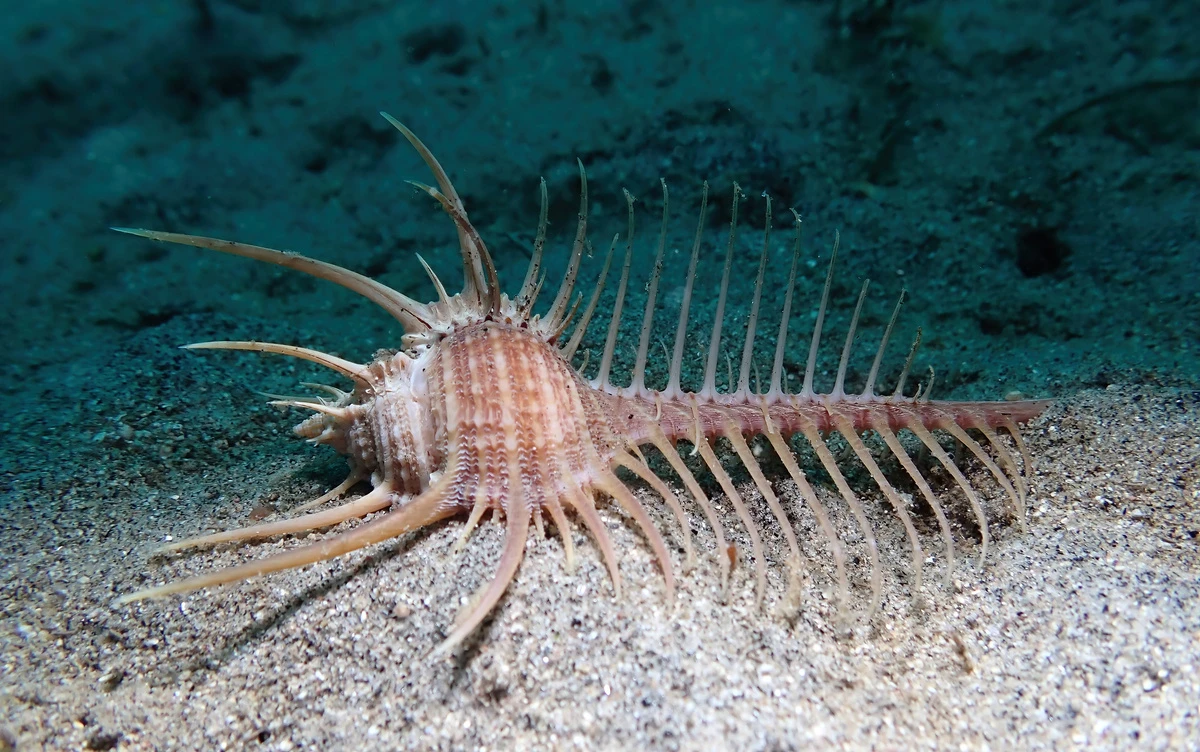
Oh, look at this beautiful mollusk! 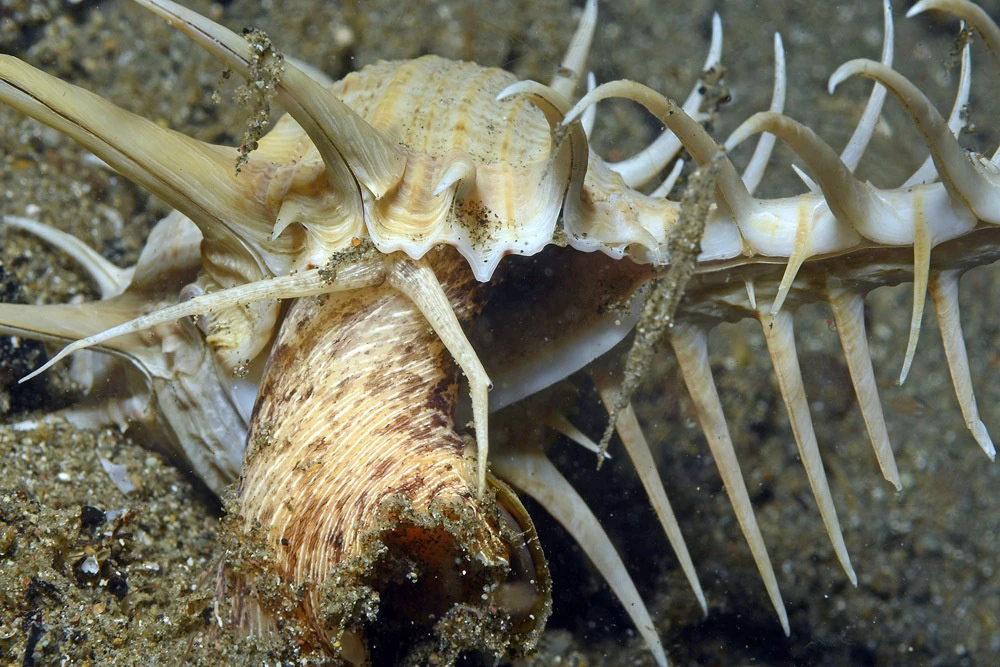
My goodness, what the hell is this?!
But their "royalty" isn't manifested in their appearance, but in their inner richness. About 3,500 years ago, the Phoenicians discovered that the mollusk's glands could be used to extract a yellowish liquid that quickly turned a deep purple when exposed to air. Since this was the only way to create a permanent purple dye at the time, murex sublingual gland extract quickly gained popularity. 
This is wool dyed with mollusk, found in a tomb in Israel. It is over 3,000 years old.
Later, the Greeks mastered the dye's production, and then the Romans and Byzantines. They gave the dye its modern name—purple. Purple clothing became a symbol of power and incredible wealth, which is unsurprising. After all, to dye just one kilogram of wool, over 30,000 mollusks had to be killed, and such labor is incredibly expensive. Therefore, just half a kilo of dyed silk was worth more than an entire village—including land, people, fields, and herds. 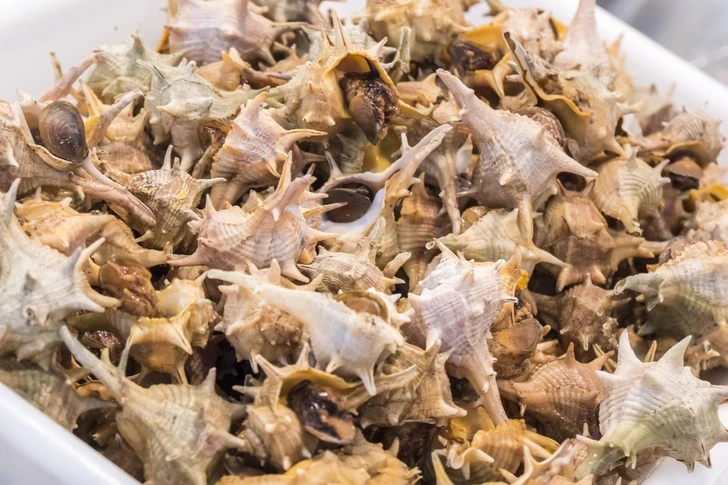
And all this – for a few grams of dye.
Over time, purple became not just a symbol of power, but a symbol of the emperors themselves, and production came under their complete control. Therefore, when the Byzantine Empire, the last empire of the ancient world, fell to the Ottomans, the secret of purple production perished with it. It was forgotten for more than 500 years. But modern science works miracles, and in the 1990s, chemists and archaeologists collaborated to recreate the ancient recipe as close to the original as possible. However, the return of the legendary color impressed no one except historians. After all, today there are hundreds of cheaper dyes, gifted to us by the chemical industry! 
Results of the purple re-creation experiment. Looks cool, but definitely not worth the money.
And personally, I think that's a good thing. Given free rein, with modern industry, we could wipe out mollusks for the sake of pretty paint in just a couple of decades. Which would be a huge loss for the biosphere. After all, Murex is a very ancient genus, dating back over 120 million years. You'd have to look hard to find such old-timers! 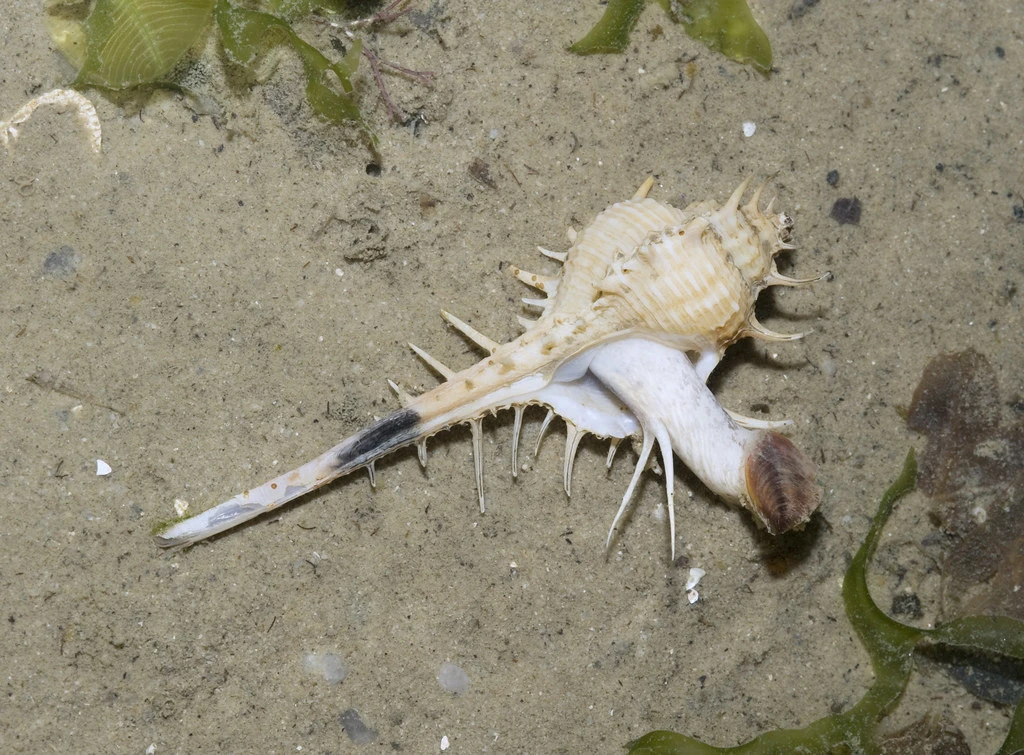
What purple? Pay me my pension!
Add your comment
You might be interested in:













MiG-29 launches AGM-88 HARM anti-radar missiles

10 largest sea vessels in the world (10 photos)

The world's largest charging station for electric cars (3

This 1979 Chrysler Sno-Runner snowbike is still in its

A unique 1952 Chrysler Styling Special coupe will be put up

4 tons of gold found on a sunken Nazi ship (4 photos)

A rare limousine from Kennedy's garage will go under the

The one-of-a-kind Ferrari KC23 supercar: priceless

Big changes: 35 entertaining photos from the series

"What Is This Thing?": 20+ Bizarre Objects That

Margaret Hamilton Dies at 90: The Story of the Moon

13 "Healthy" Habits You Should Actually Quit (14

Hypnotic and Oddly Satisfying GIFs That Show How Food Is

25 Incredibly Beautiful and Rare Stones (26 Photos)

Soldiers in Lace, a Bowling Geisha, and 20 More Rare Photos

Outmaneuvering Terrorists: How Pilot Uri Bar-Lev Saved a

16 Fascinating and Surprising Facts About Life in Sweden

Forbidden Fruit Is Good for You: Bad Habits That Might
