Red-billed Weaver: A Cloud of Hundreds of Millions of Birds Devastates Africa (10 photos)
Flocks of weaver birds block out the sun, the flapping of their wings merges into a single hum, and African farmers call them feathered locusts. And for good reason: even a single flock of birds can waste months of work in just a few hours. 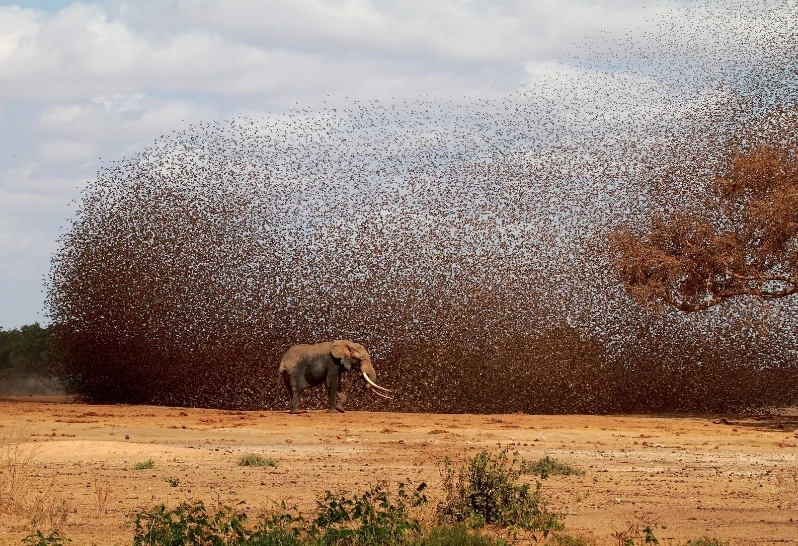
When even an elephant feels like a grain of sand.
The weaver bird's total superiority over other birds on the planet didn't arise out of nowhere; it's based on three characteristics that transform ordinary, inconspicuous birds into something unique. Let's start with perhaps the most unusual of them—the weavers' remarkable tolerance of high temperatures. 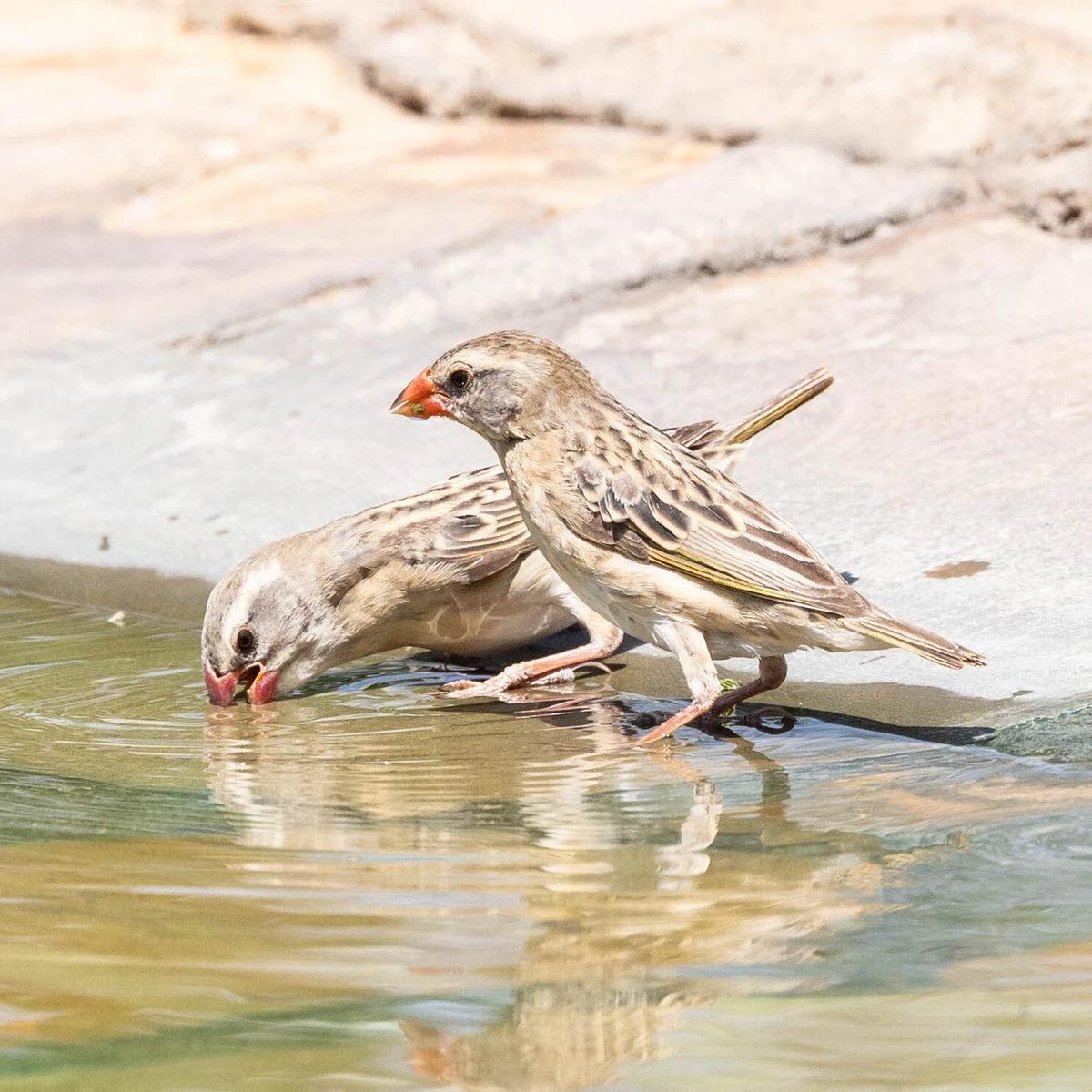
And when you look at them, they look like typical sparrows.
Red-billed weavers inhabit some of the most inhospitable regions of Africa—savannas, shrub steppes, and semi-deserts, where daytime temperatures can reach 40-45°C. But the birds themselves don't seem particularly bothered by this: they can remain active even at midday, when other birds and animals hide under the canopy of sparse trees in the faint hope of not overheating. 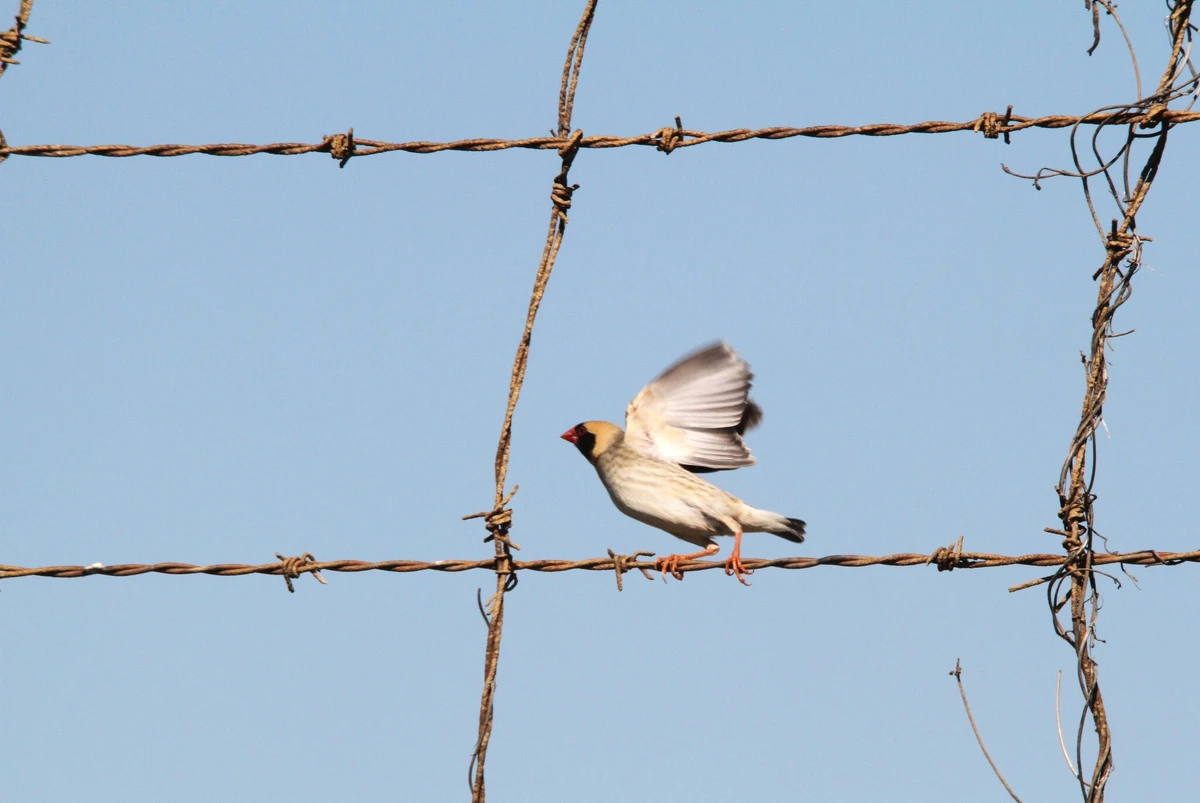
A young eagle raised in captivity...
This is all thanks to the weaver's body temperature being able to rise to 49°C without any harm, allowing it to withstand the midday heat. For reference, if a human "heats up" to a temperature above 41°C, their body proteins will begin to break down, which will inevitably lead to their death within a few days. 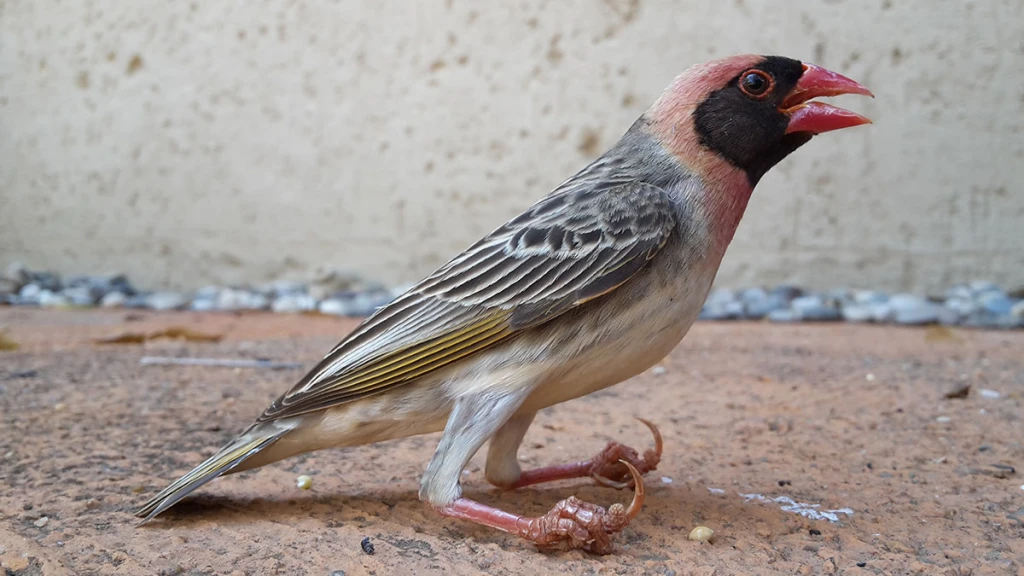
The claw pointing upward is the hind toe. All passerines have it, and it points backward/upward compared to the three front toes. This is completely normal anatomy—it allows the bird to firmly grip a branch when perched (three toes in front and one behind, like a lock).
This alone would be enough to make it one of the most common birds in Africa, but weavers have two more tricks up their sleeves. They pursue a much more complex strategy than simply "eating seeds in the sun while their competitors feast in the shade." Birds are always on the move, and flocks of birds follow rain fronts, eating everything in their path. 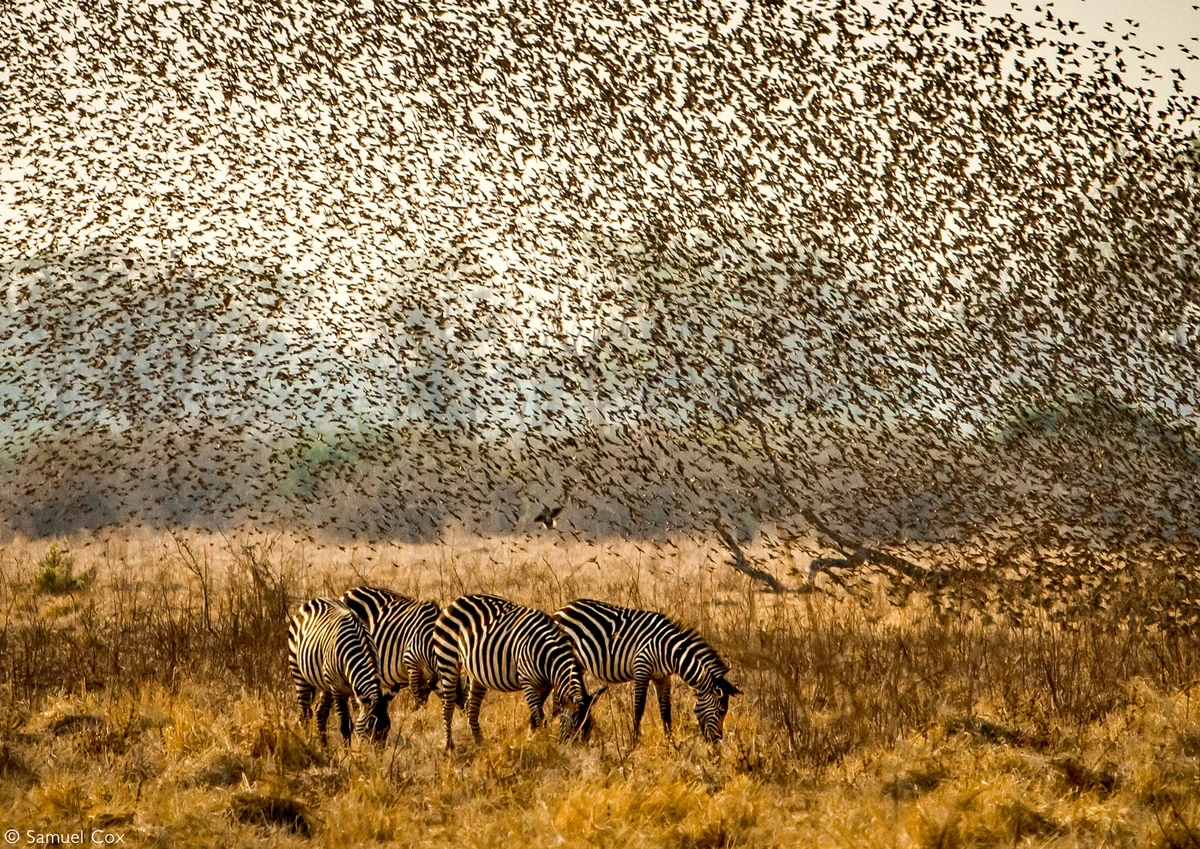
A small herd of zebras asked the weaverbirds to block the sun so they wouldn't be too hot.
The logic behind these migrations is quite simple: a passing storm front signals the start of the rainy season and brings life back to the African steppes, transforming them for several months into the most productive ecosystems on the planet. Food is much easier to come by in these conditions, so the weaverbirds take advantage of the opportunity. Not only to fill their bellies, but also to reproduce. 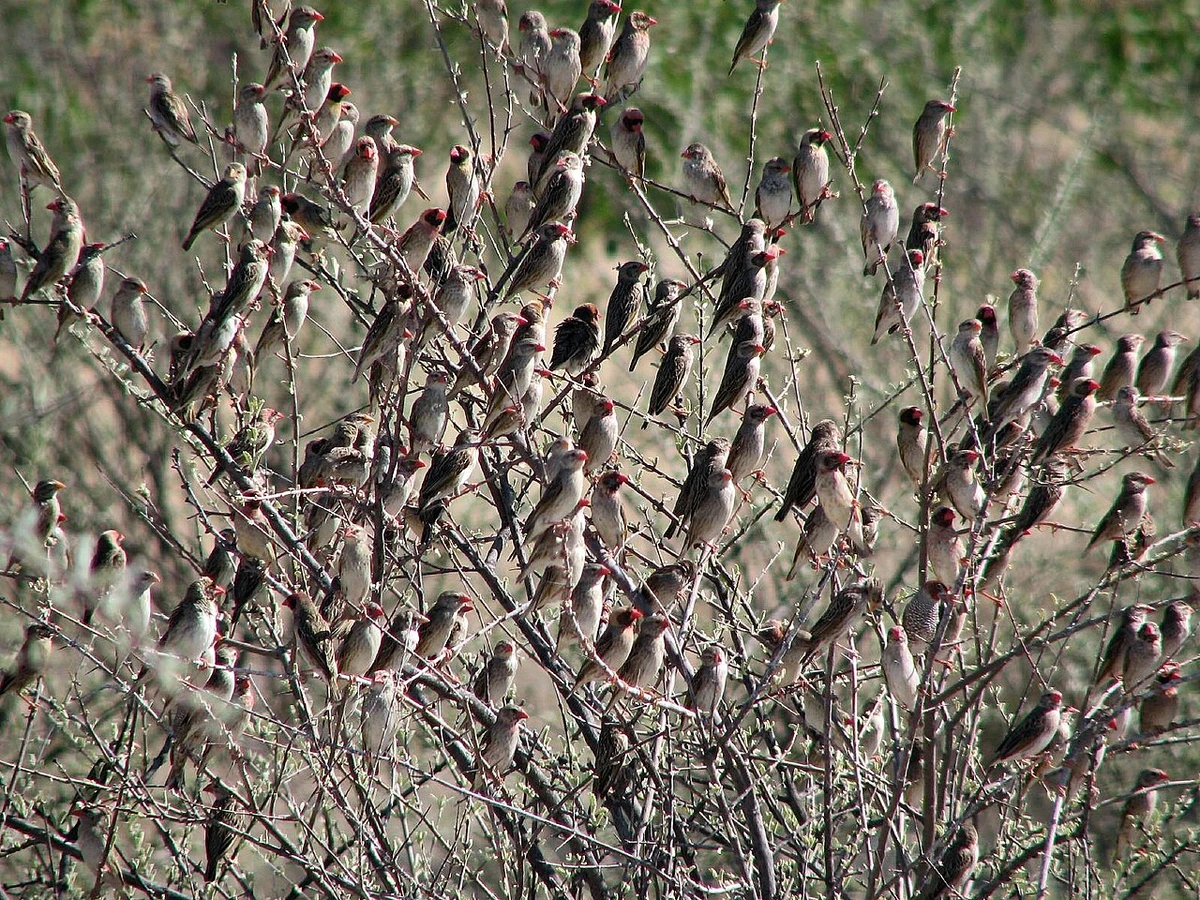
By the way, even the population of the common sparrow, which is widespread throughout the world, is estimated at only 1.6 billion, which is almost certainly less than the population of the red-billed weaver.
After 6-9 weeks of traveling, following the rains, the flock of weavers stops and establishes a colony. Males weave hanging nests from fresh grass, and females lay one to five eggs in them. When the babies hatch, they are in for a pleasant surprise: the savannah grasses are just beginning to produce their first seed crops. 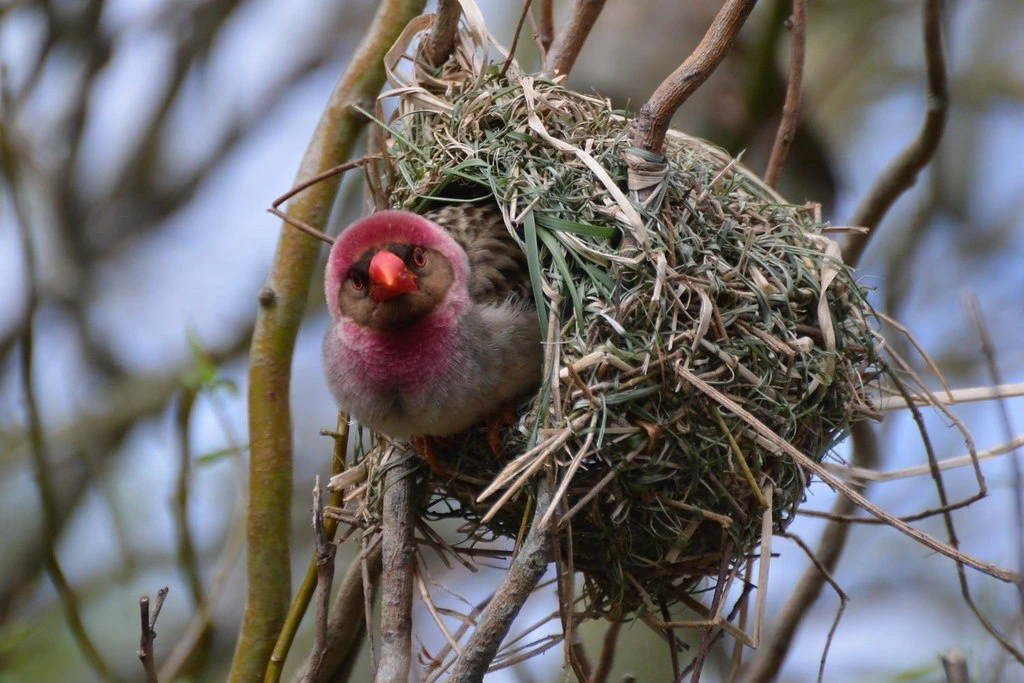
They're weavers for a reason, right? 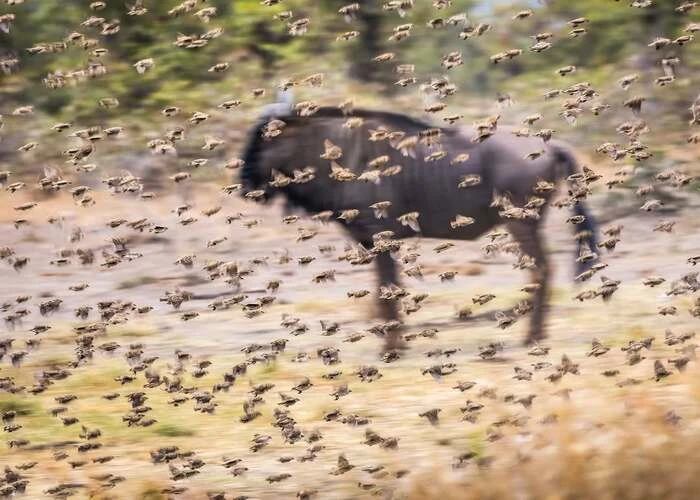
They fly like a swarm of angry bees.
Weaver colonies can be truly enormous. Researchers once recorded a colony stretching 20 (!) kilometers, with up to 6,000 nests on each tree! Flocks of migratory birds, however, can be even larger. In 2019, for example, researchers in South Africa spotted a flock of weavers estimated to number 217 million. 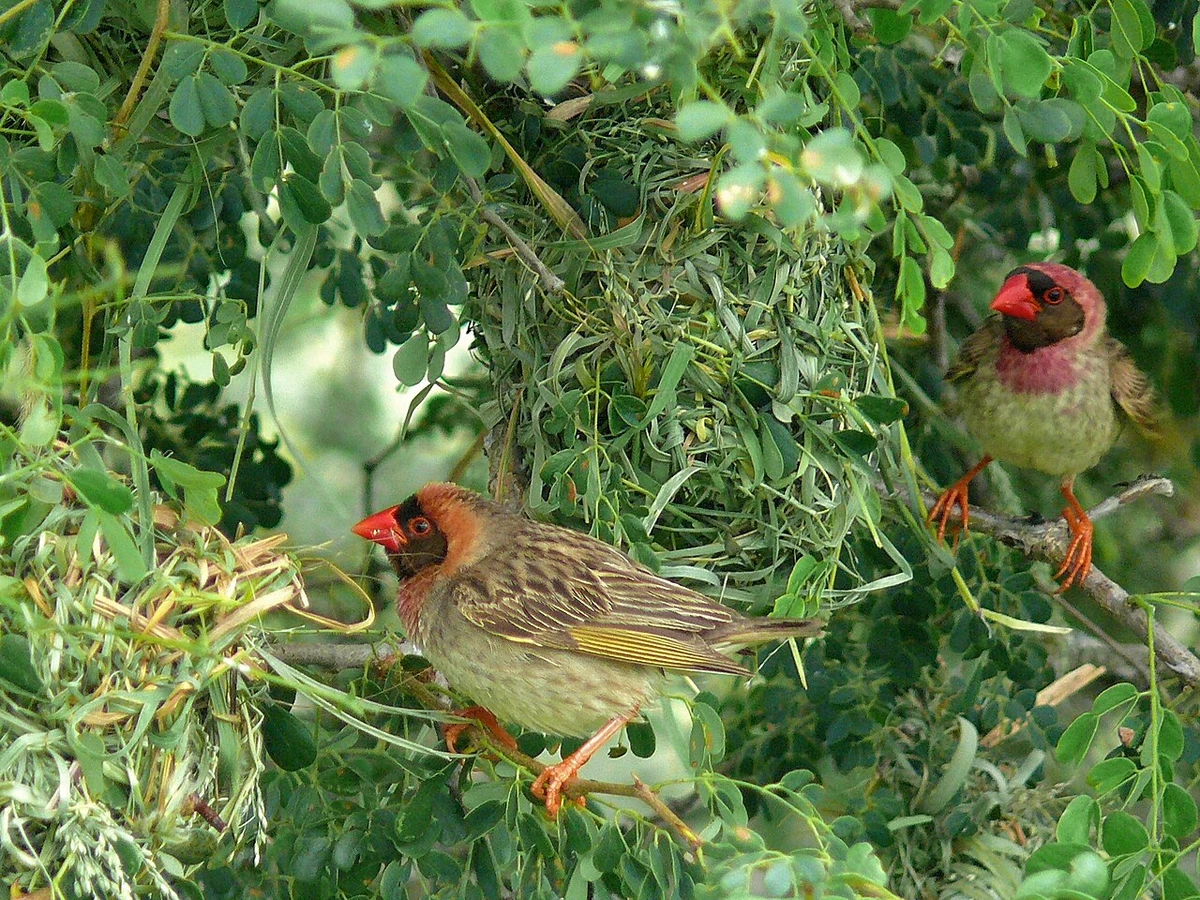
Houses and their architects.
The size of their flocks is the third reason why weavers outnumber other birds. After all, such a titanic gathering of birds seems to protect itself—not every predator would want to mess with an endless stream of birds that stretches from horizon to horizon. And even if they did, all their efforts would be ruined by the statistics. After all, even if a flock loses several thousand birds a day, the chances of you being eaten are somewhere within the margin of statistical error. 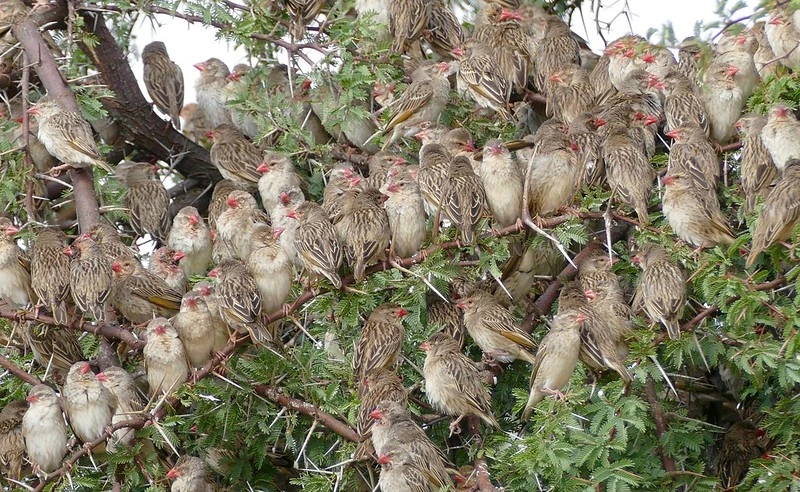
I wonder what would happen if this horde ever broke out of Africa?
If so, each individual red-billed grosbeak in the flock can afford to simply... relax. Not raise its head at every rustle, not scan for the nearest shelter, but simply eat, love, and reproduce to its heart's content. This means the grosbeak feeds faster and more efficiently than any of its competitors. Therefore, the grosbeaks grow faster, reproduce earlier, and increase their numbers even further, maintaining a huge lead over their competitors.