A selection of interesting and unusual photographs from the USA (21 photos)
I invite you to take a breathtaking journey through time and space—deep into the American 20th century. 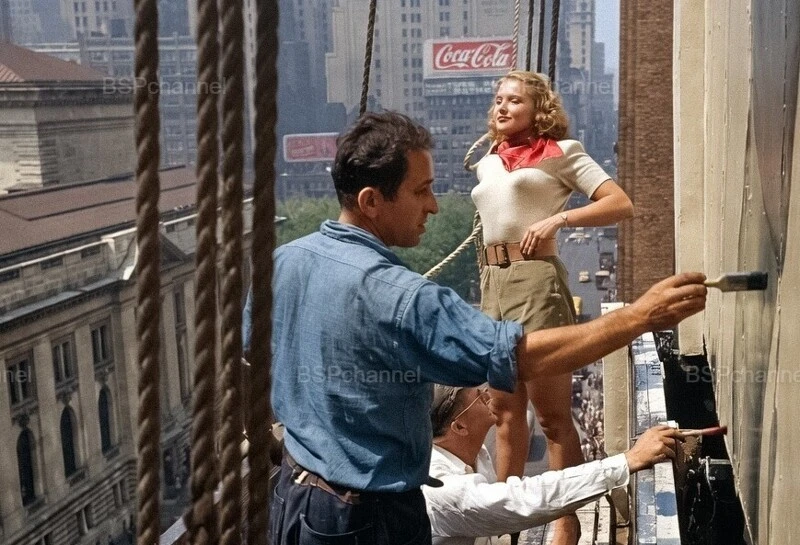
A boy playing on a horse. USA, 1930s. 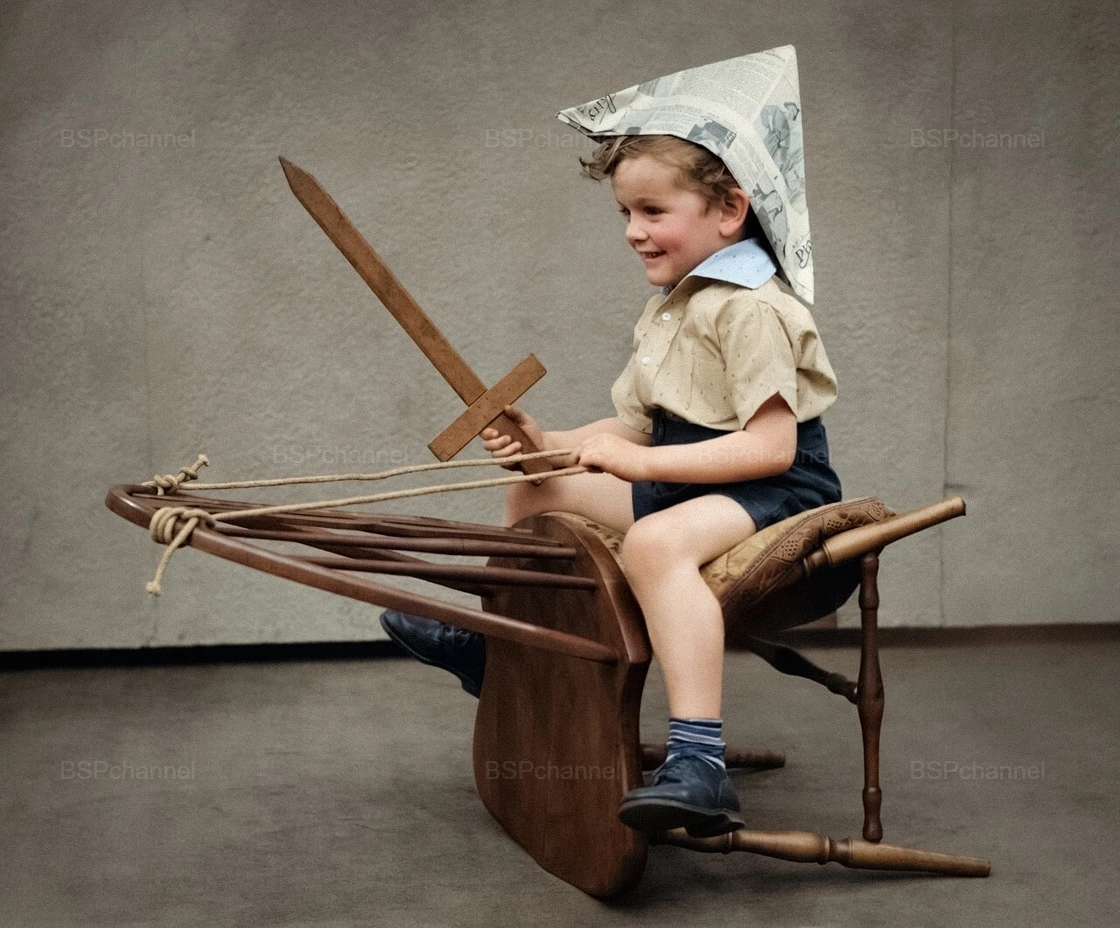
Photographer: H. Armstrong Roberts
It's a paradox, but it's true: the more limited a child's arsenal of toys, the richer and more inventive their imagination. It's precisely limitation, not abundance, that forces the brain to seek out unconventional approaches and transform ordinary objects into entire universes.
Shah of Iran Mohammad Reza Pahlavi waterskiing during his vacation in Miami Beach, Florida, 1955. 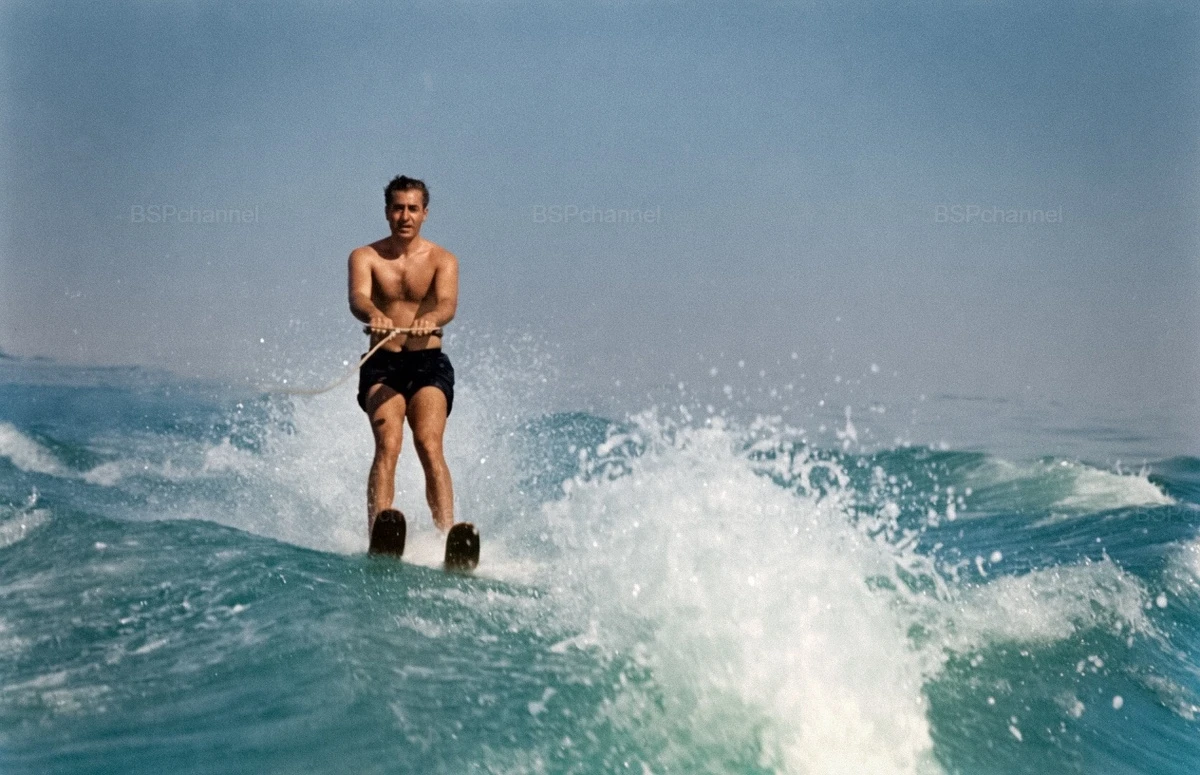
Photographer: Robert W. Kelly
The Shah of Iran and his wife stayed at the Hotel Sans Souci—today known as the Hotel Riu. The reception was organized with oriental luxury: a 12-meter red carpet was rolled out for the distinguished guests. True, the hotel did not have its own presidential suite. However, the management found an ingenious solution: four adjoining rooms were combined and painted a soft blue, the same color as the Shah's personal Rolls-Royce. In Miami Beach, the Shah behaved like an ordinary tourist. Photographer Robert W. Kelly captured him waterskiing, playing tennis and shuffleboard, and shirtless on a boat. In LIFE magazine, the Shah admitted to enjoying the beautiful women at the hotel pool, describing the American women as "very nice."
Model and artists. Working on a billboard, New York City, 1947. 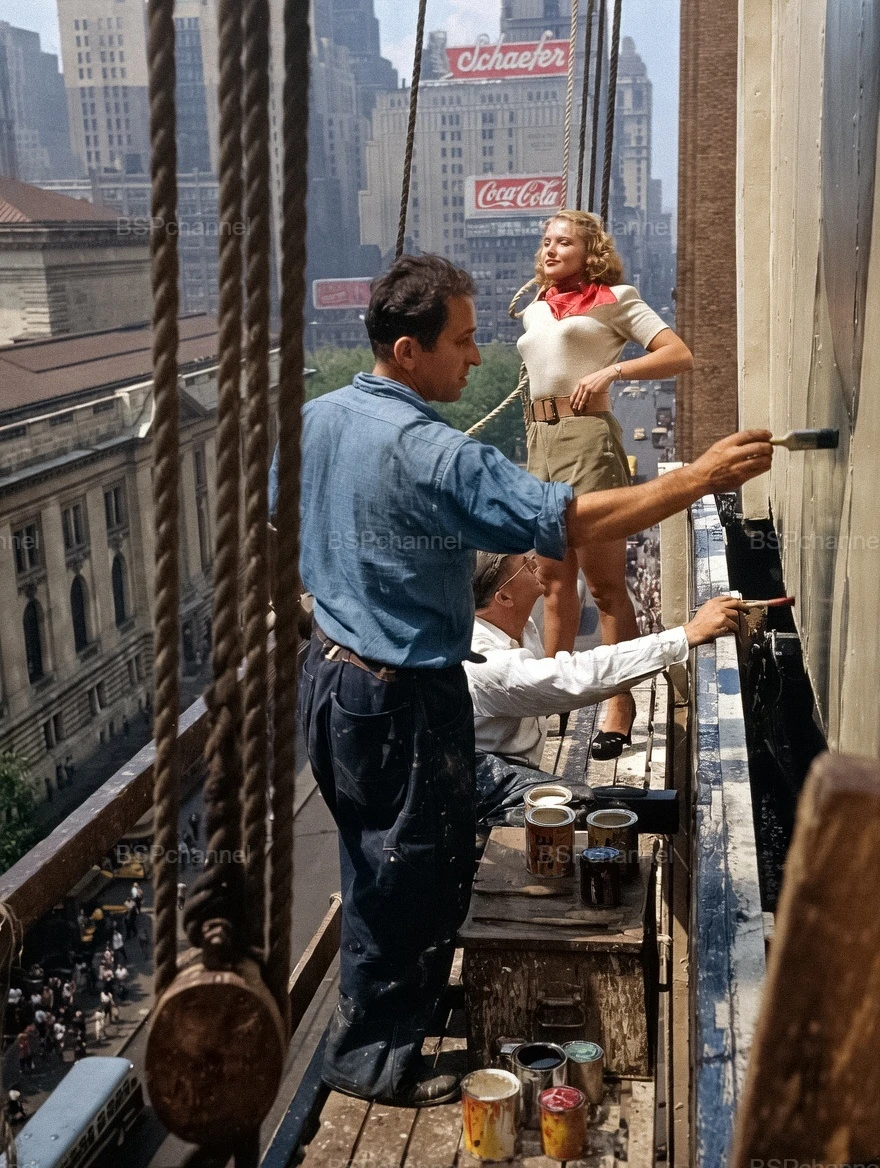
Photographer: Frank Bauman
Large-format plotters hadn't yet been invented. So billboards were painted by hand—on scaffolding and in suspended cradles. This photo shows work on a Peter Pan bra advertisement. Artists with brushes and paints, a model in the center, and no Photoshop. This is how outdoor advertising was created in the 1940s. Hard, dangerous, but beautiful work in its own way.
A Seneca girl named Ah-Weh-Iyu, meaning Beautiful Flower. USA, 1908. 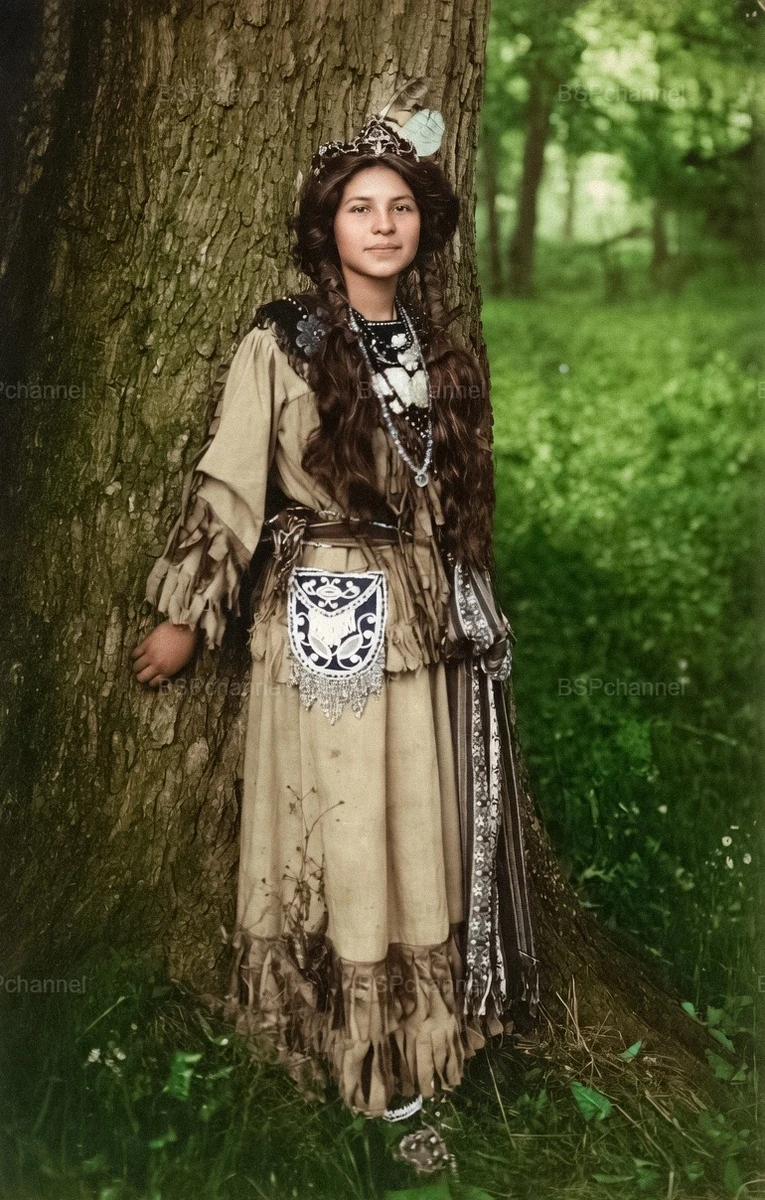
The girl was a member of the Seneca people (part of the Iroquois Confederacy). She was a renowned performer and cultural ambassador of her time. In the early 1900s, such "Indian princesses" often performed in Wild West shows, fairs, and theaters, introducing Native American culture to the general public.
A man sleeps at a fish market. Baltimore, Maryland, USA, 1938. 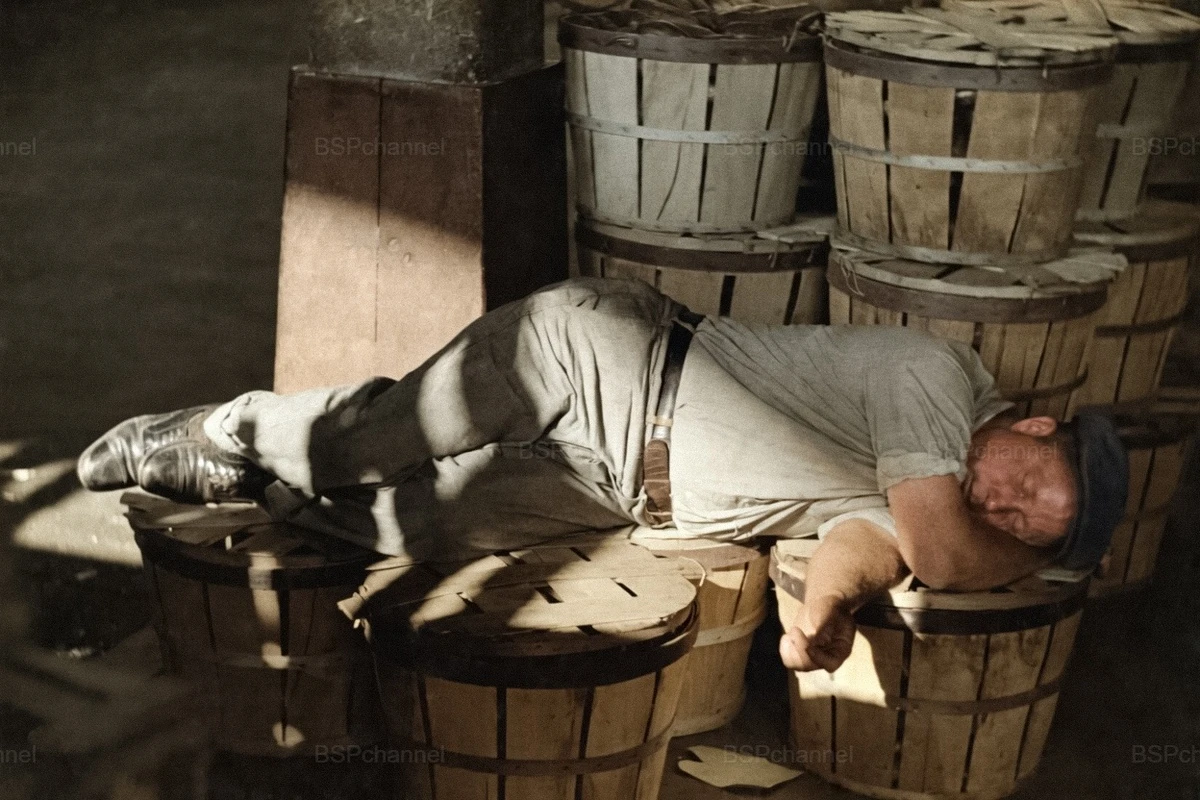
Photographer: Sheldon Dick
The Track Drive-In, Los Angeles, California, 1949. 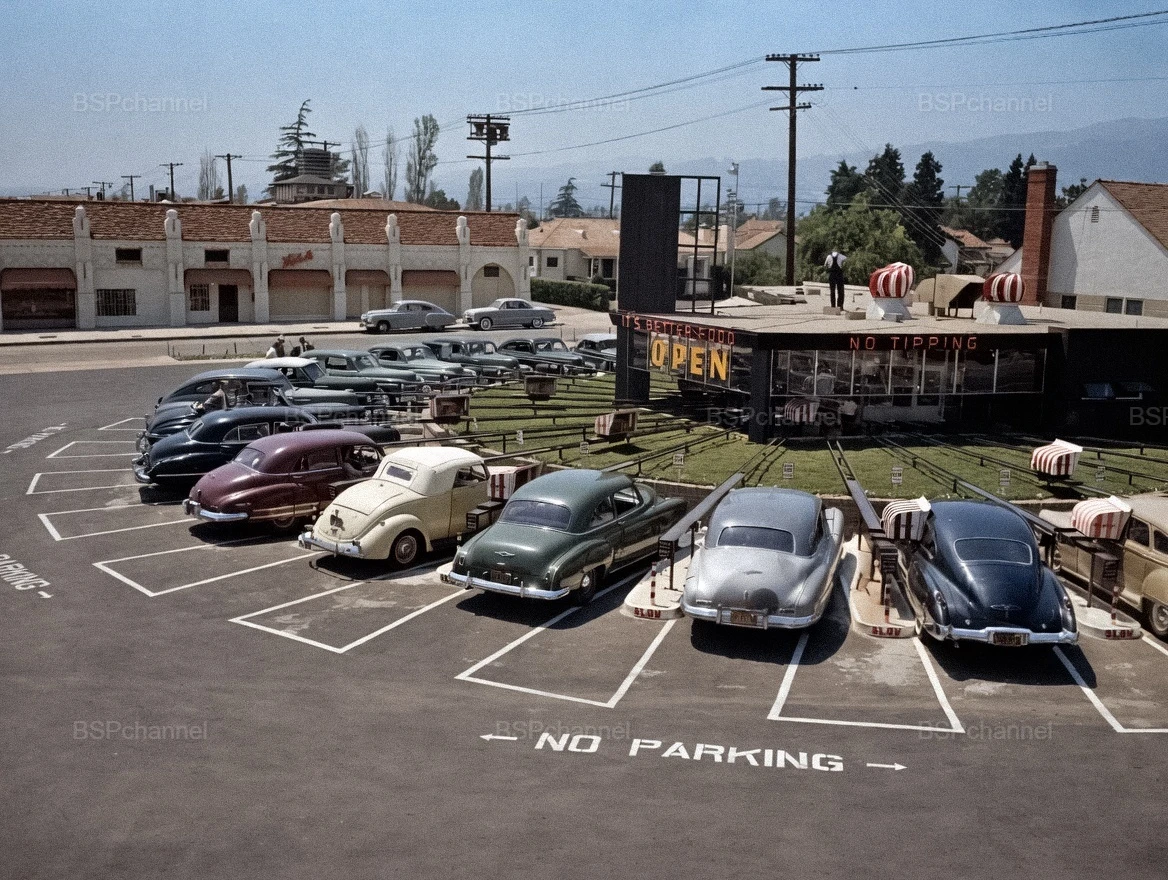
Drive-in orders were delivered on an electric conveyor belt. The fast-food restaurant was designed like a wheel: the kitchen was in the center, surrounded by parking. The conveyor belt automatically delivered food directly to each customer's window. Mid-20th-century engineering at the service of fast food.
Playing chess at Attica Correctional Facility in New York City, 1972. 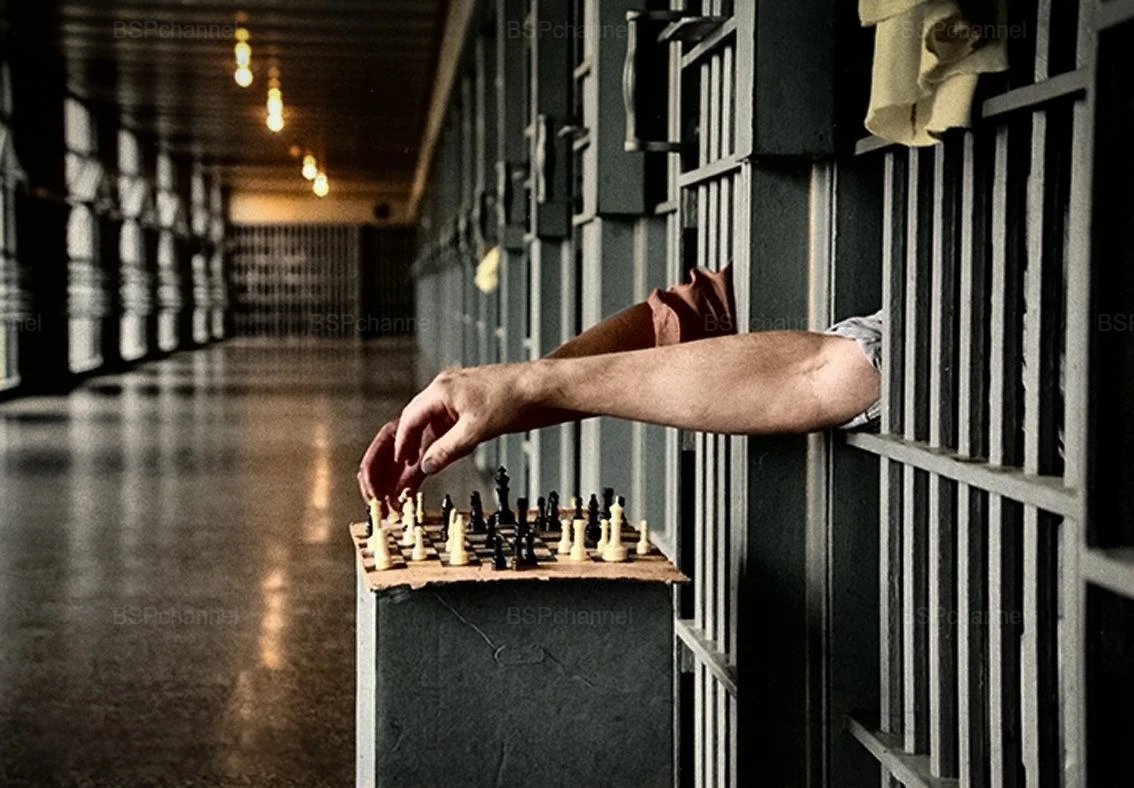
Photographer: Cornell Capa
Cornell Capa (the younger brother of famed war photographer Robert Capa) was known for his work in the genre of humanist photography. He sought to capture human dignity in the most difficult circumstances, avoiding sensationalism and focusing on the inner strength of his subjects. The photograph was taken just six months after the infamous bloody Attica riot (September 1971), which drew national attention to the problem of prison conditions in the United States. The photograph became a powerful visual statement about how even in conditions of strict isolation and physical confinement, the human mind remains free, striving for intellectual activity and social interaction.
Movie Parking, Los Angeles, USA, 1949. 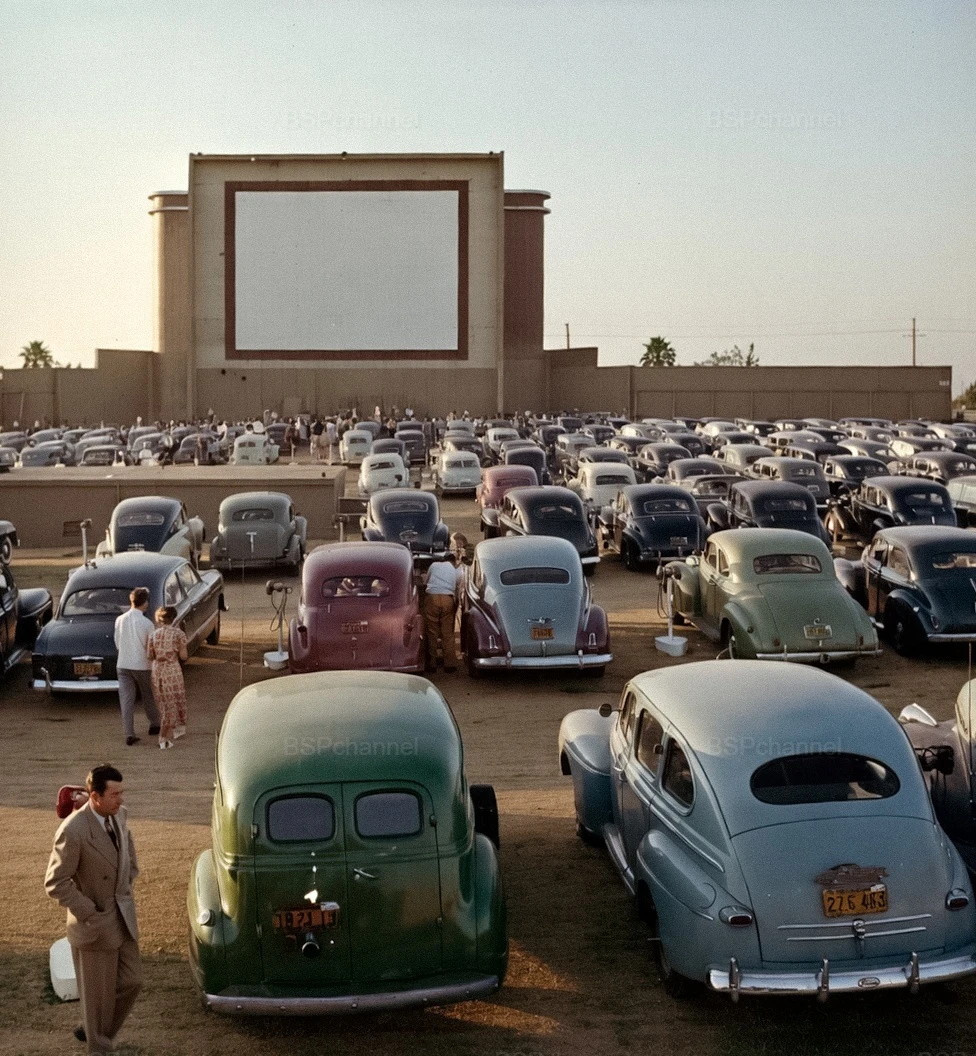
Drive-in theaters became a cultural symbol of 1950s America, where people could smoke, bring children, and pets without disturbing other moviegoers. This particular drive-in theater was one of the largest of its time. Often, these venues included not only a screen but also play areas for children and cafeterias, turning movie watching into a full-fledged family outing that lasted the entire evening.
A fisherman's family returns from an early morning fishing trip near Acres, Louisiana, 1938. 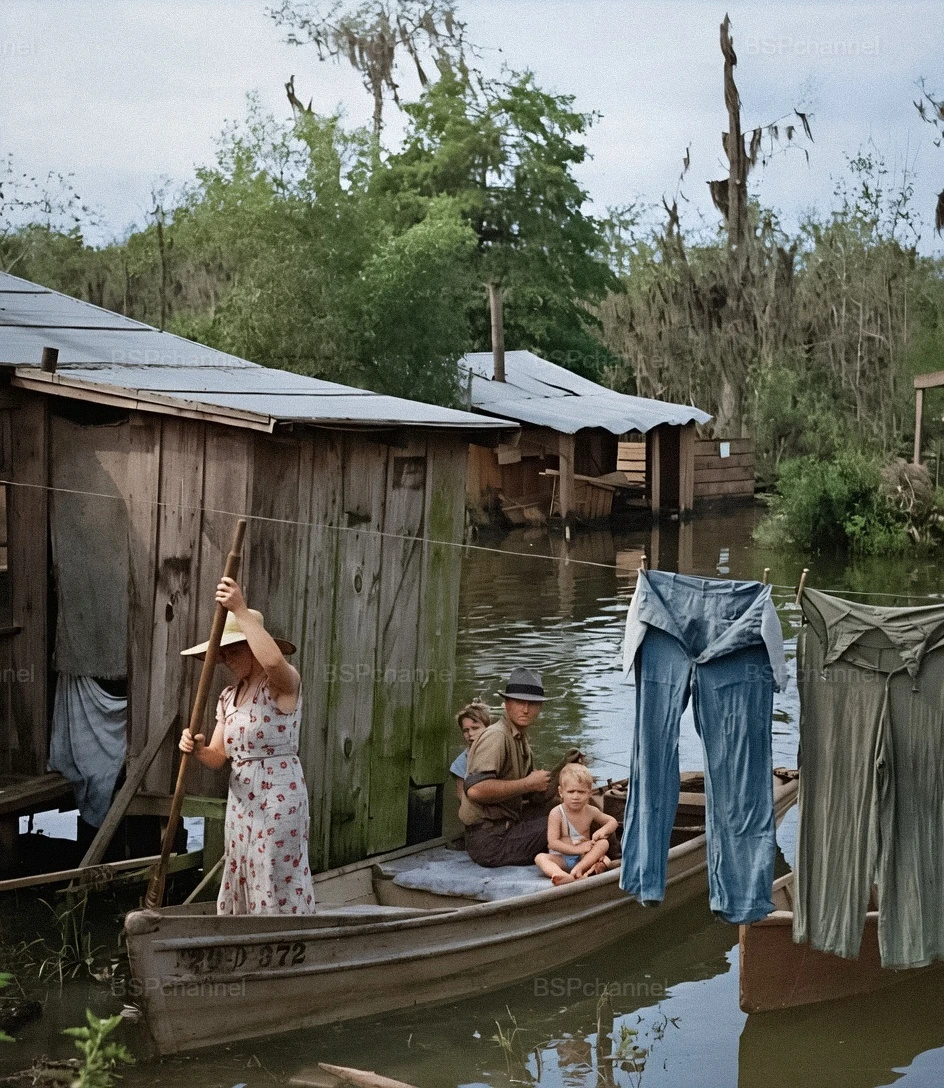
Deep in the south of Louisiana, an hour's drive from bustling New Orleans, lies another realm. This is the Atchafalaya River, the largest river swamp in America, a labyrinth of muddy channels, shady backwaters, and cypress trees covered in Spanish moss. Here, time flows differently. And for over two hundred years, a people who have managed to befriend this inhospitable environment—the Cajuns—have lived here. Cajuns are an ethnic group living primarily in the US state of Louisiana. They are the descendants of French colonists from the Acadia region (present-day Canadian provinces of Nova Scotia, New Brunswick, and Prince Edward Island). Life in the swamp begins with a home. Building on the unstable, water-soaked ground is impossible, so houses are built on stilts. These "houses on chicken legs" are not a whim, but a harsh necessity: during floods, the water rises, and the home must remain inaccessible. Roads, as we know them, are almost nonexistent here. The main transportation artery is the bayou, a slow, winding waterway. Instead of a car, the Cajun uses a flat-bottomed pirogue or an aluminum motorboat, which he uses to hunt, visit friends, and even go grocery shopping in the nearest town. Children get to school by boat, and the postman delivers letters, weaving through the cypress trees.
A dancer performs the Charleston on the roof of a skyscraper under construction. It was a publicity stunt for American dancers. USA, 1926. 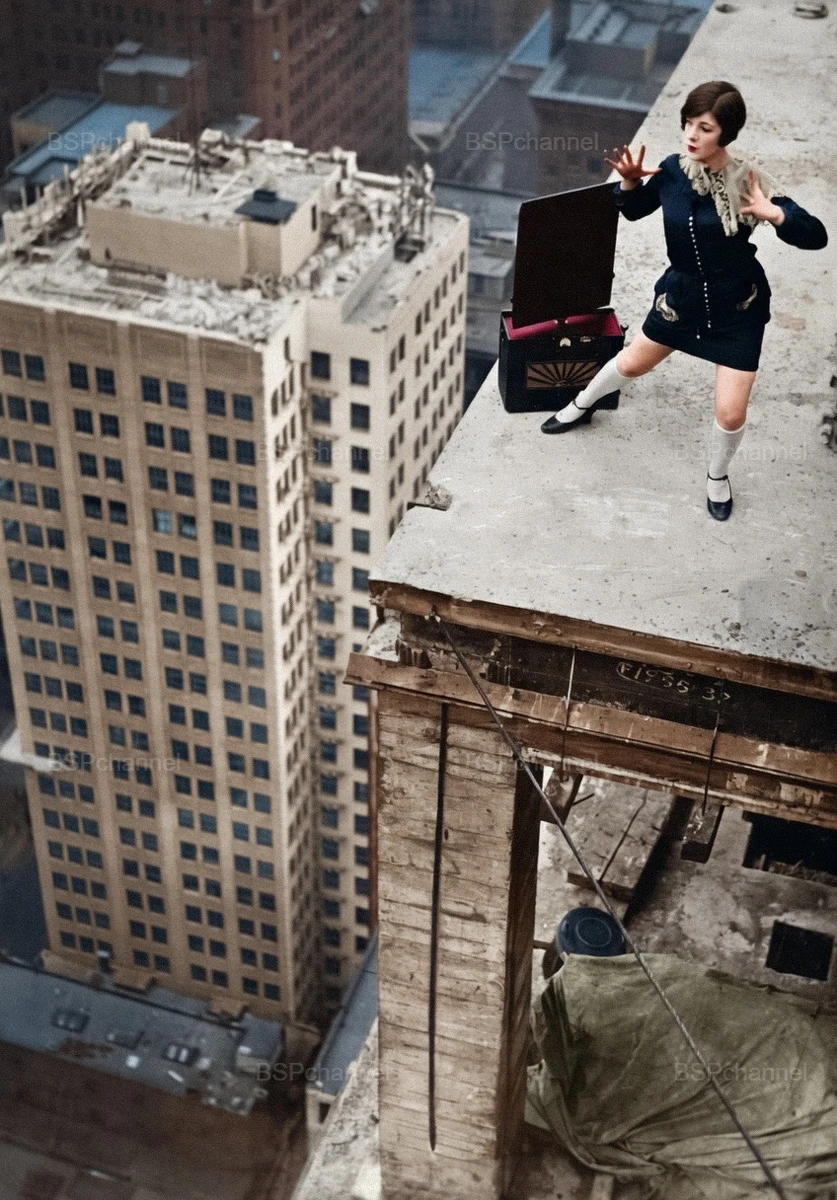
The Charleston is not just a dance, but a true symbol of an entire era. This explosive, energetic dance, which became the embodiment of the Roaring Twenties, originated in the African-American community of the United States and was named after the city of Charleston, South Carolina. The Charleston gained wild popularity on both sides of the Atlantic after being featured in the Broadway show "Runnin' Wild" in 1923. Its main features are an incredibly fast tempo, syncopated rhythm, and, of course, its signature moves: "toes in, heels out" and energetic arm swings.
Golf in St. Augustine, Florida, 1902. 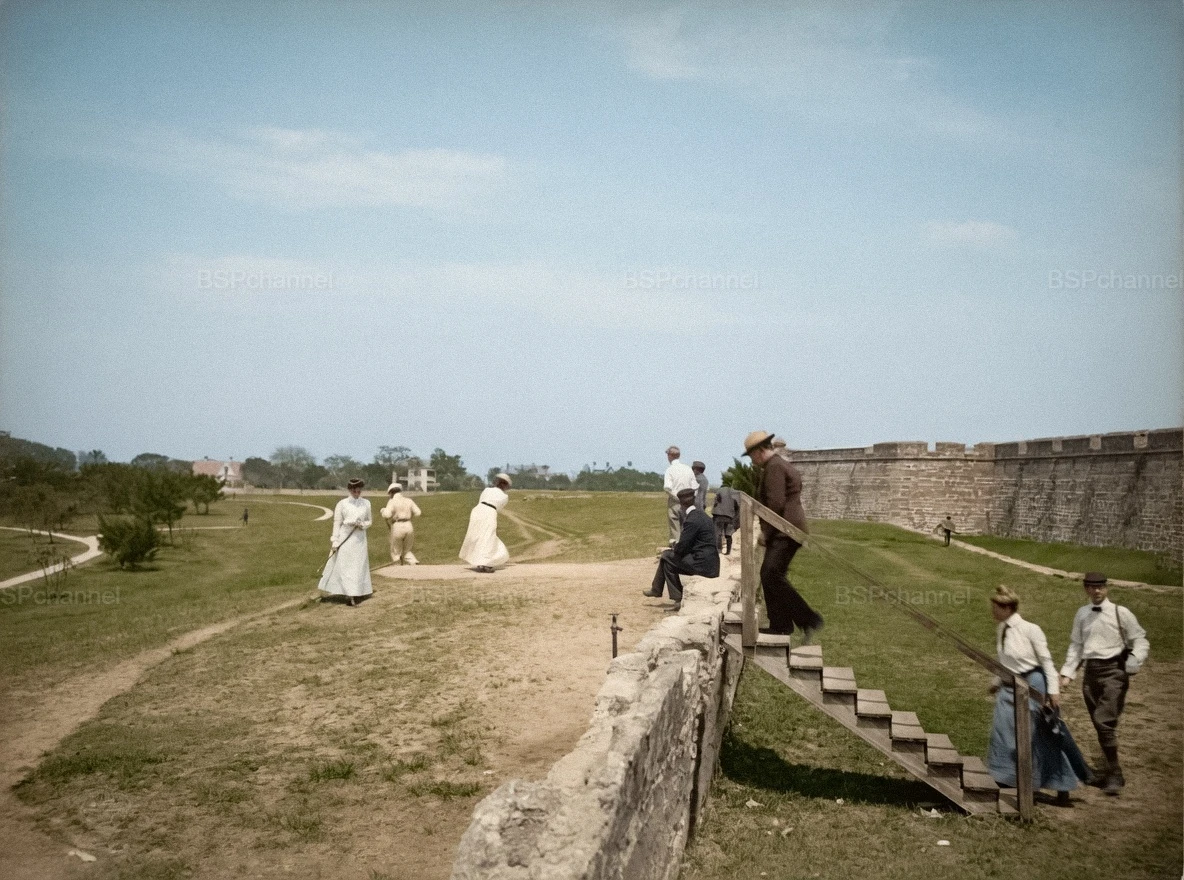
Photographer: William Henry Jackson
The earliest documented evidence of golf in America dates back to 1729. The inventory of William Burnet, Governor of Massachusetts, lists his possession of golf clubs. This is considered the earliest mention of the game on American soil.
Models in bathing suits swim in a pool. USA, 1948. 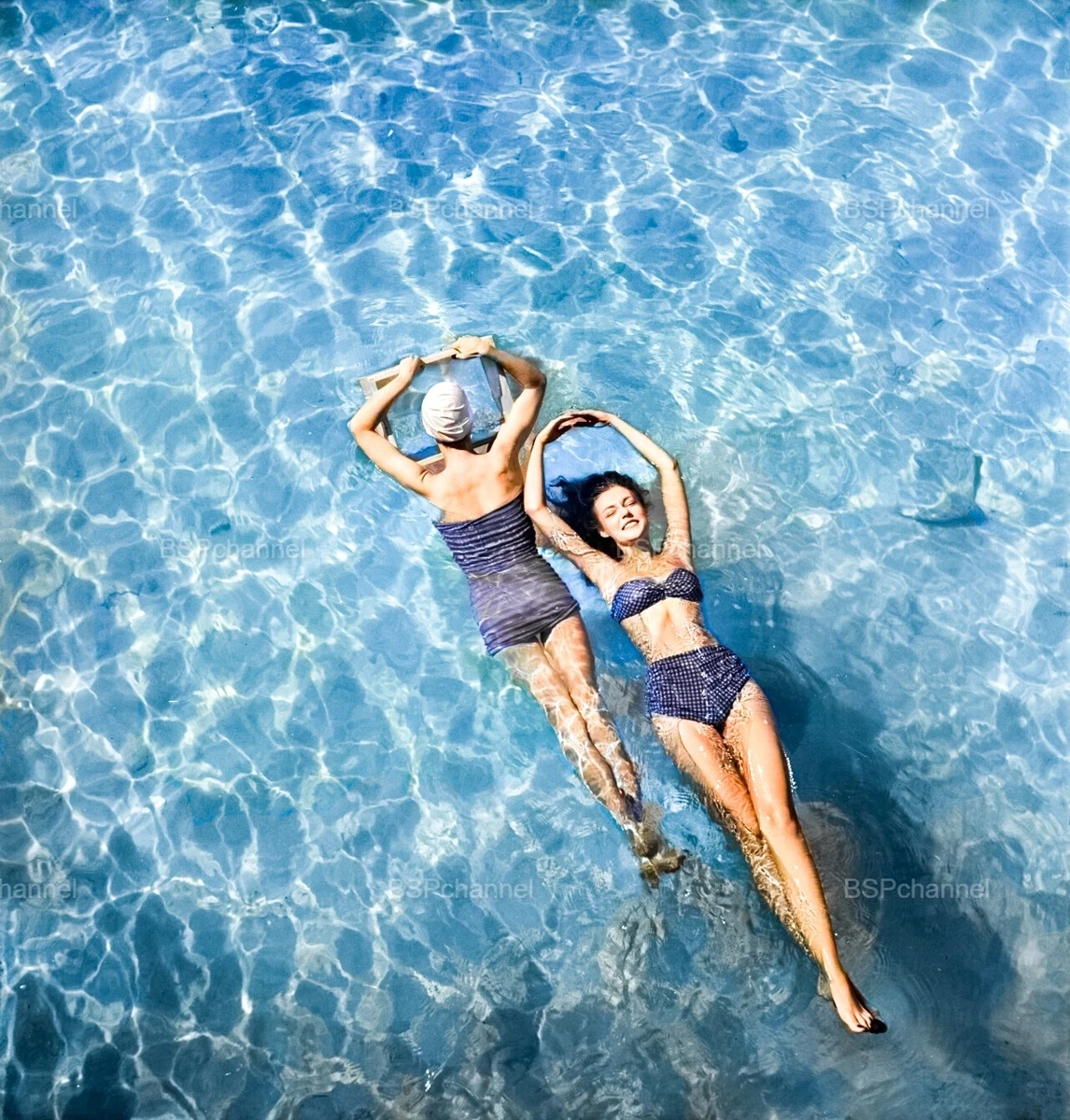
Photographer: Toni Frissell
Waitresses on a restaurant patio. Aspen, Colorado, 1970s. 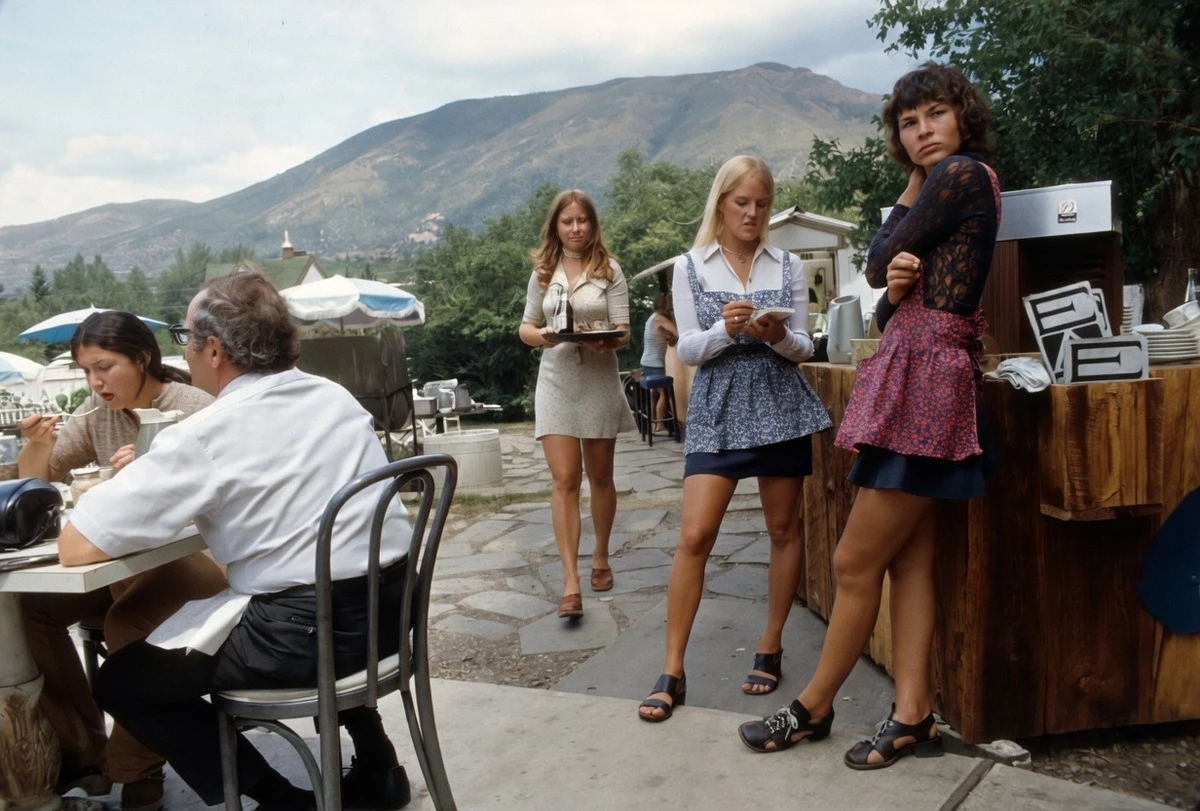
Photographer: Garry Winogrand
An organized protest march in Hollywood promoting the 1953 film Gentlemen Prefer Blondes. 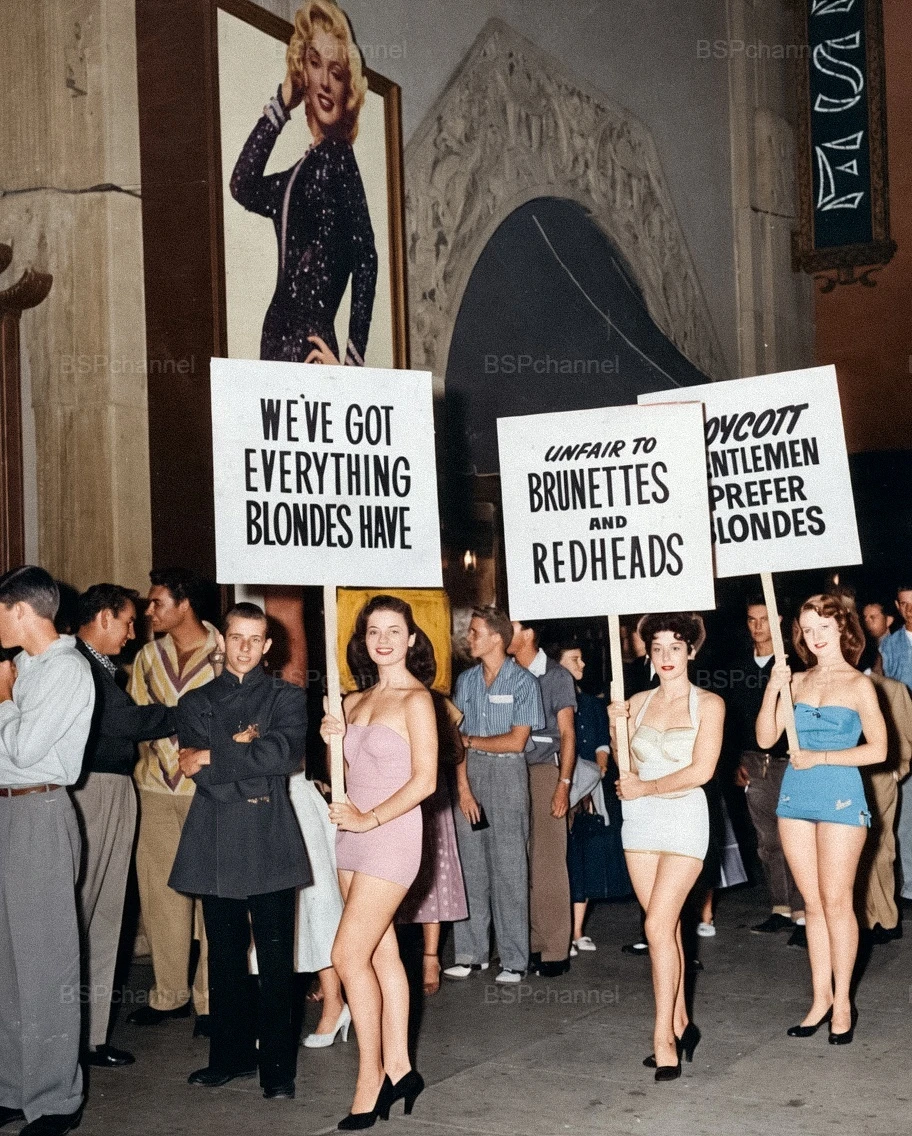
Two girls in a cafe. USA, 1940s. 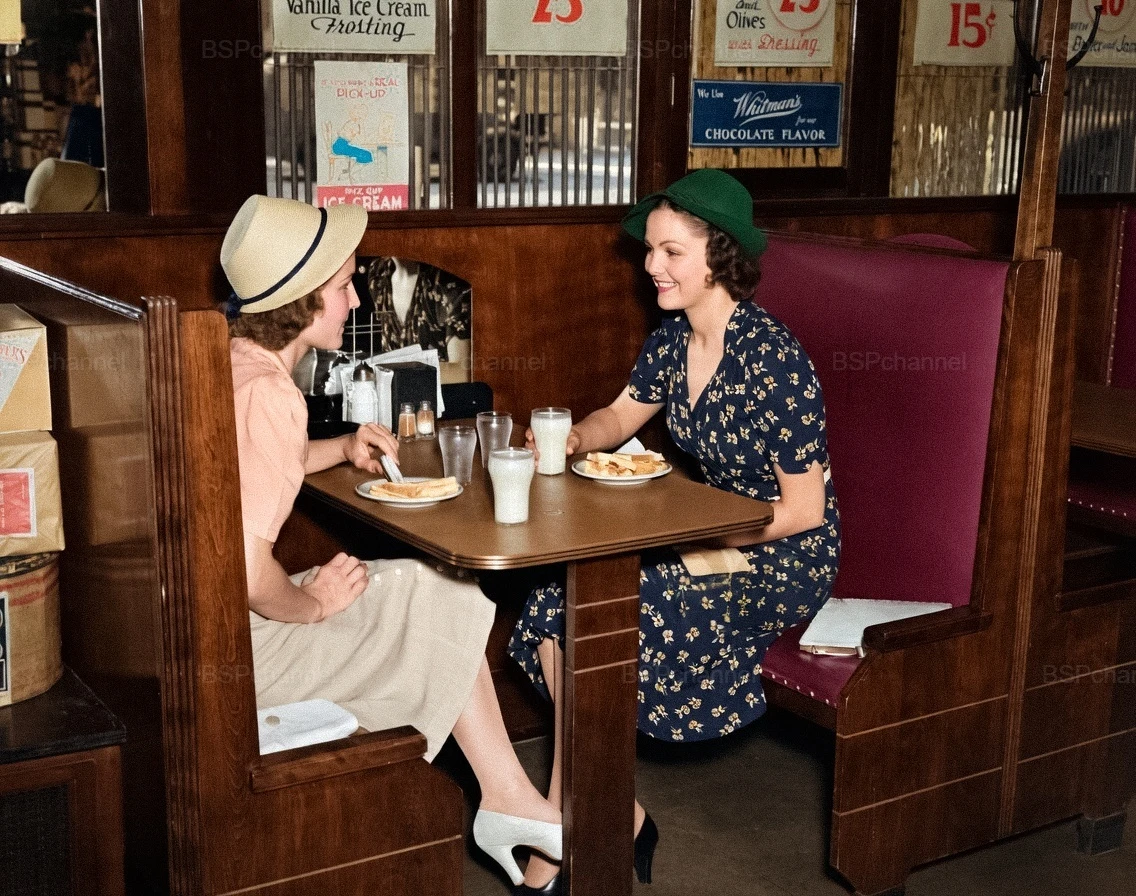
Central Park, New York, 1985. 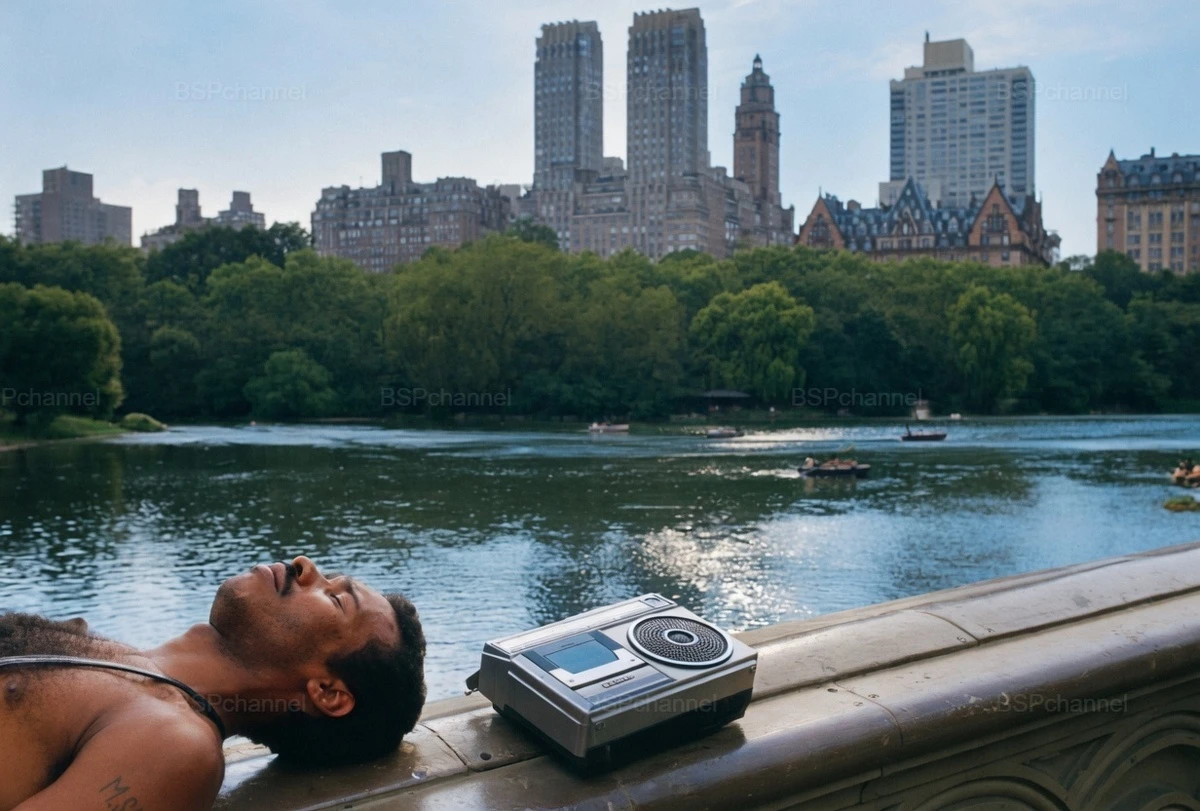
Photographer: Ferdinando Scianna
Central Park is not just the "green lung" of Manhattan, but a true symbol of New York City and the first landscaped public park in the United States.
Pennsylvania Station, 1948. 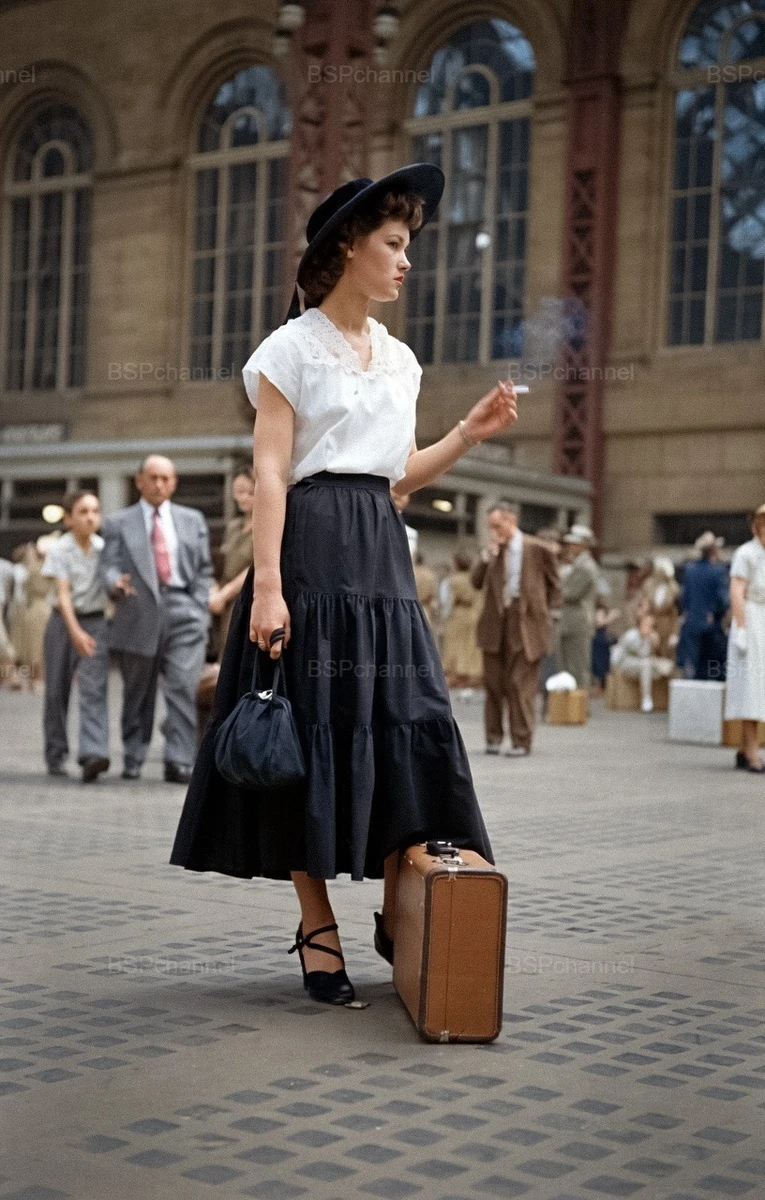
Photographer: Ruth Orkin
Albertina Vitak (1904–1993) performed on Broadway in the 1920s and 1930s. USA, 1923. 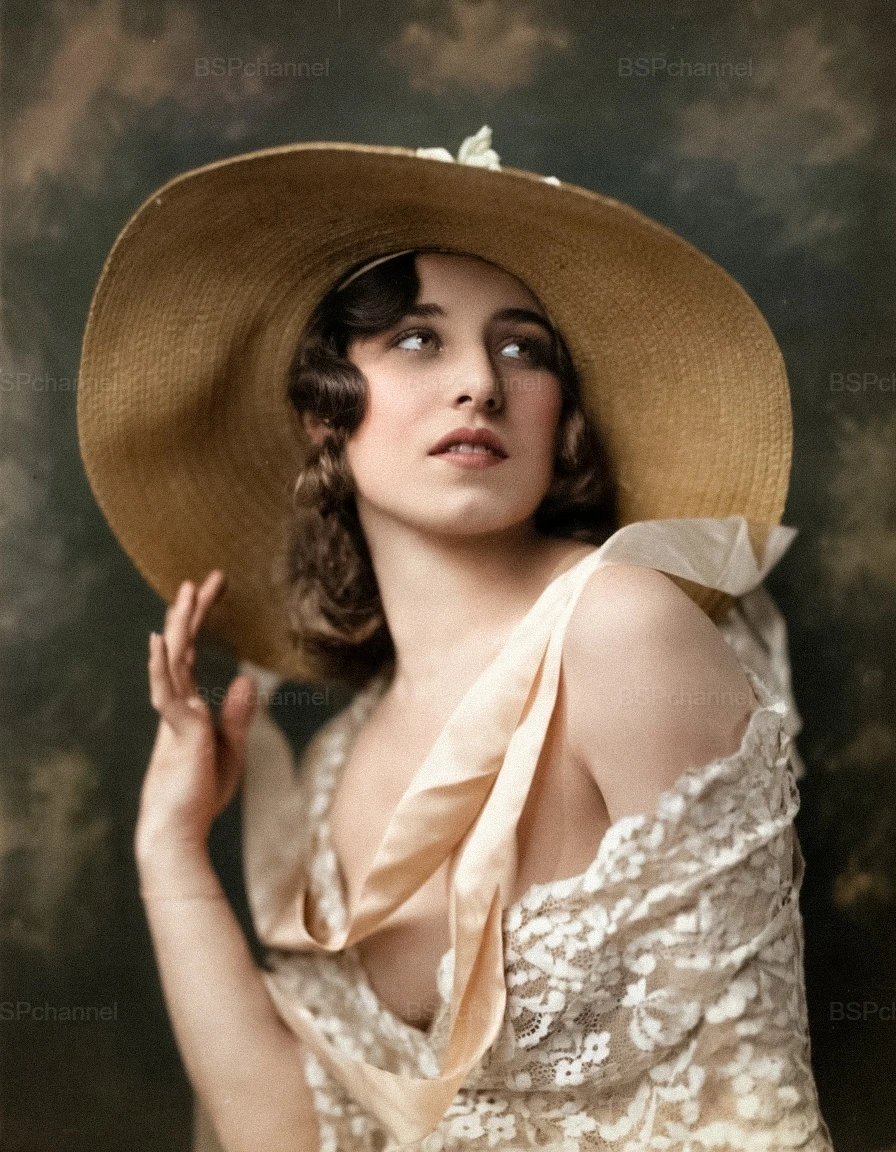
Born in Chicago to Czech immigrants. She was not only a talented classical ballet dancer but also a multifaceted personality: by the age of 20, she knew four languages, played the violin and piano, and enjoyed fencing and even boxing.
Cable car in San Francisco, 1940s–1950s. 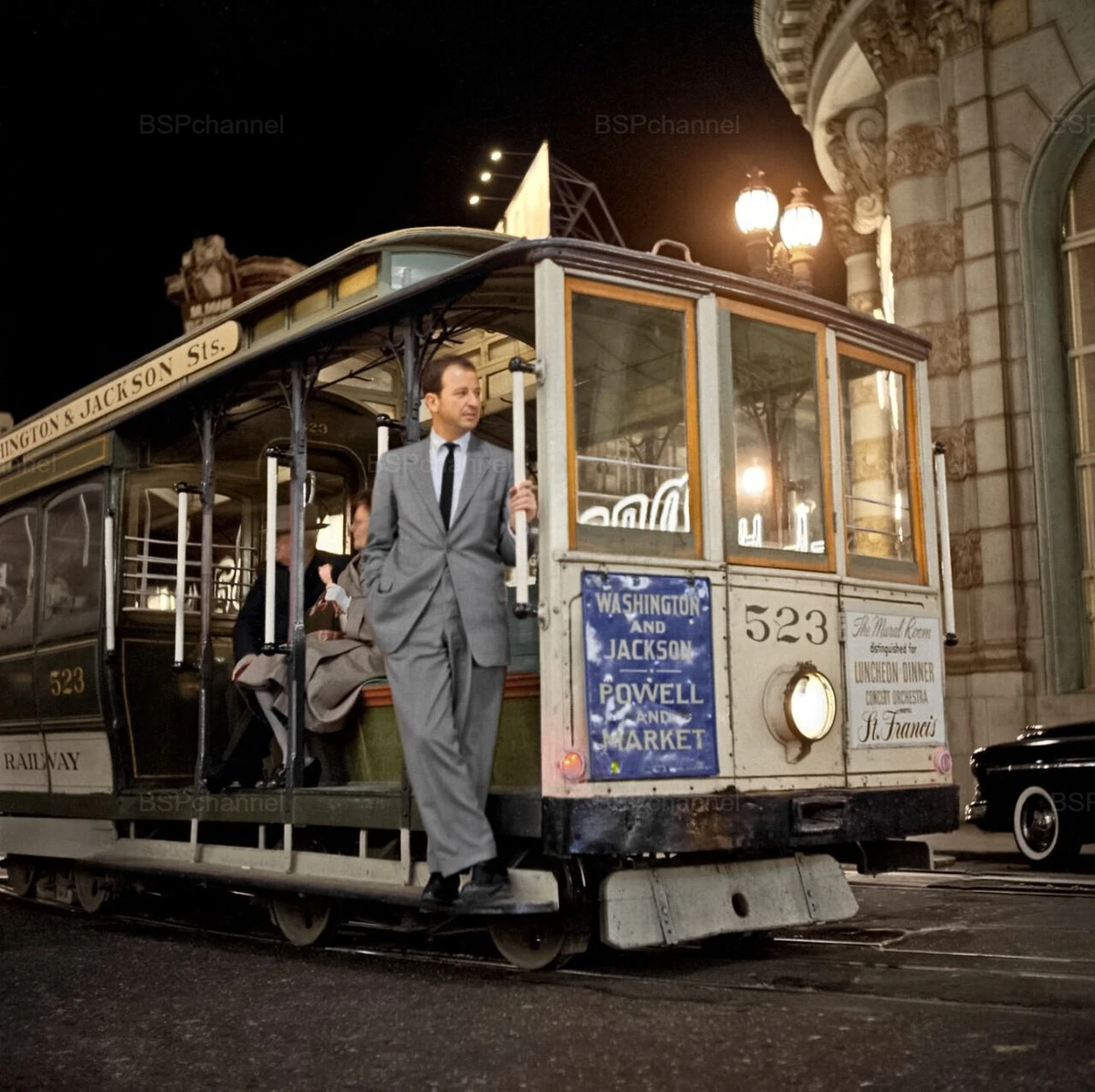
Photographer: Fred Lyon
The famous cable cars are not just a mode of transportation, but a living symbol of the city by the bay. Unlike regular streetcars, these cars do not have their own engines. They are pulled by a cable laid underground and driven by a powerful motor at the central station.
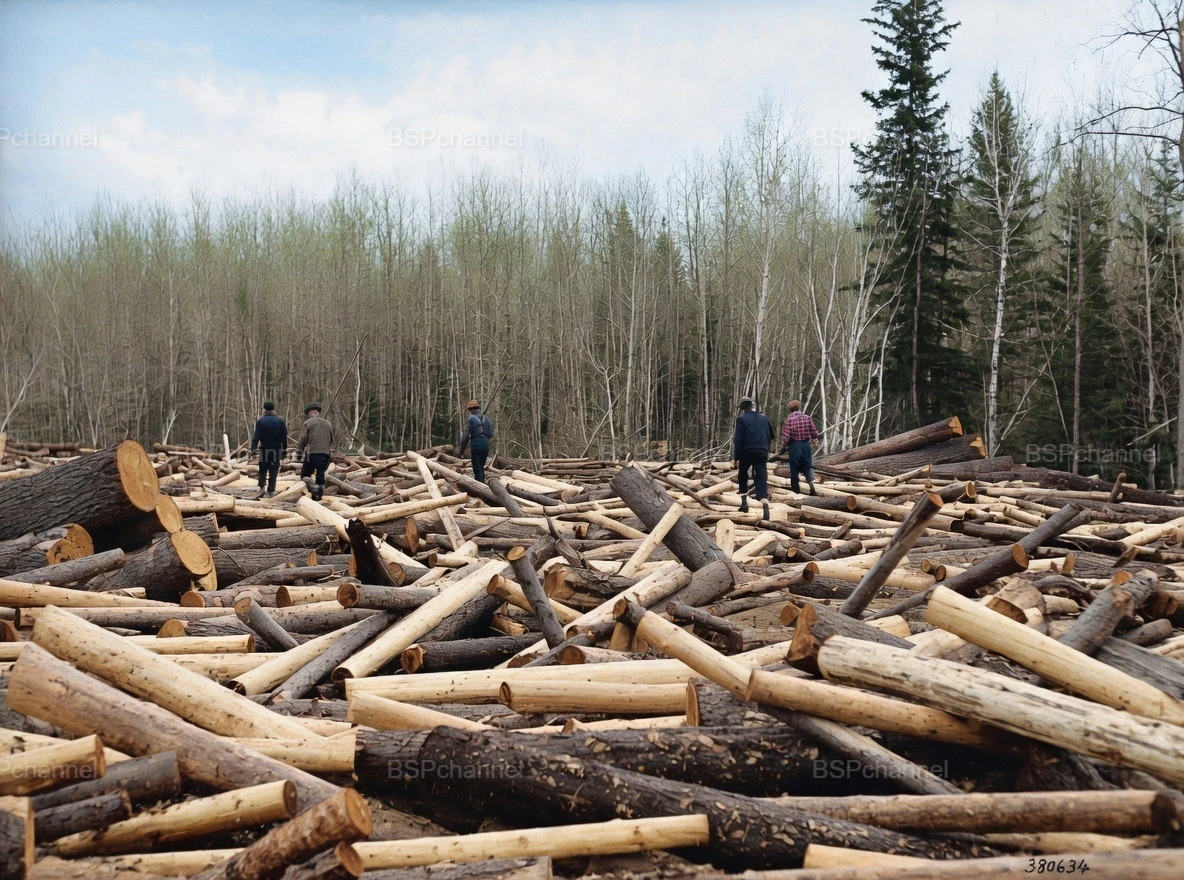
Loggers walk across prepared logs. USA, Littlefork, Minnesota, April 28, 1937.