These creatures infiltrate human society, mimicking its members and spreading further and further until they can destroy it in the flames of a senseless and merciless rebellion. But this is all fiction, of course. Real Genestealers look like this: 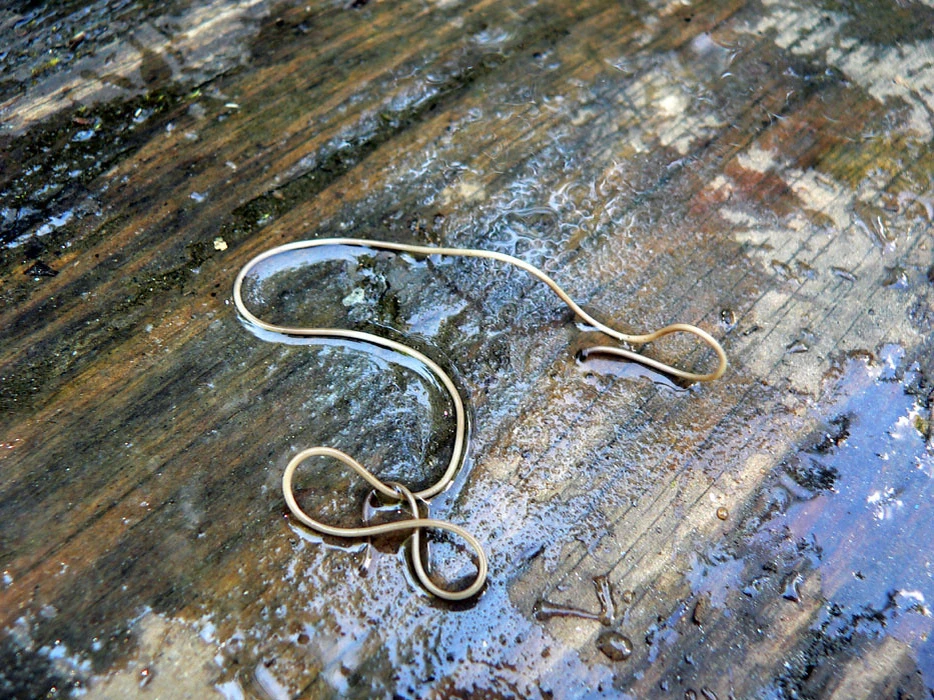
Stole 1,342 genes and lies contentedly.
The creature in the photo above is a horsehair worm, also known as a nematomorpha, a relative of roundworms that lives wherever there is permanent, stagnant water. It's also a deadly parasite. However, seeing one in a lake, you wouldn't think it could be dangerous. A 5-10 centimeter-long worm is just swimming along minding its own business—well, let it swim. Adult horsehair worms are harmless. Don't be alarmed if you encounter them in the summer; they can't cause any harm. On the contrary, horsehair worms themselves are prey for hundreds of animal species. 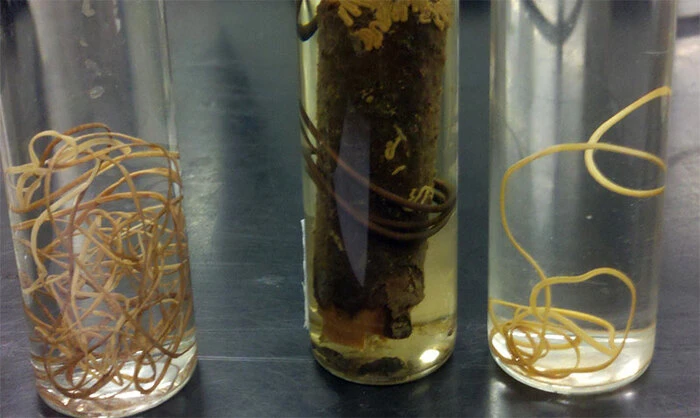
I see, but why did they stuff straw into the test tubes?
Their strangest feature is their method of reproduction. Each horsehair worm secretes pheromones that attract other worms. These also secrete pheromones, attracting even more horsehair worms. So, after a while, somewhere on the shore, a gigantic, terrifying mass forms, in which numerous males mate with numerous females. Soon after mating, the females lay long chains of eggs and die—their role is fulfilled. The eggs hatch into parasitic larvae, eagerly seeking a host. 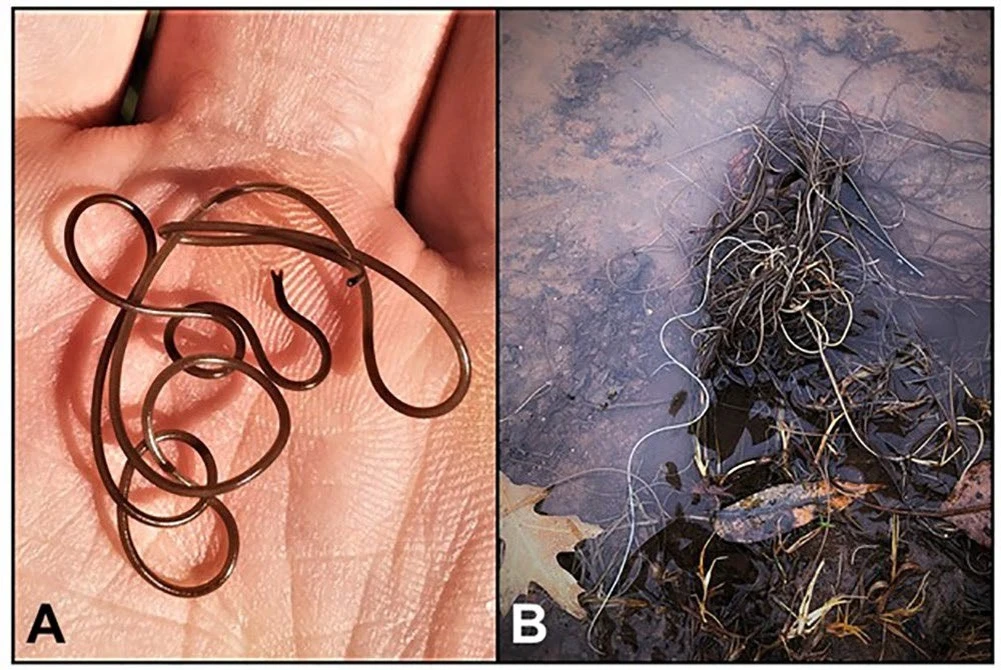
Places where horsehair worms accumulate are called Gordian knots. That makes sense.
In most cases, they find aquatic insect larvae (such as mosquitoes), chew a tiny hole in them, and enter the abdominal cavity, where they transform into cysts—nearly impenetrable capsules. Then they simply wait until their true host—a larger predatory insect—swallows them along with their food. And then the fun begins. From the intestines, the horsehair worm penetrates the host's abdominal cavity, where it feeds on its hemolymph and surrounding tissues. At the same time, it slowly and methodically takes over the victim's consciousness. 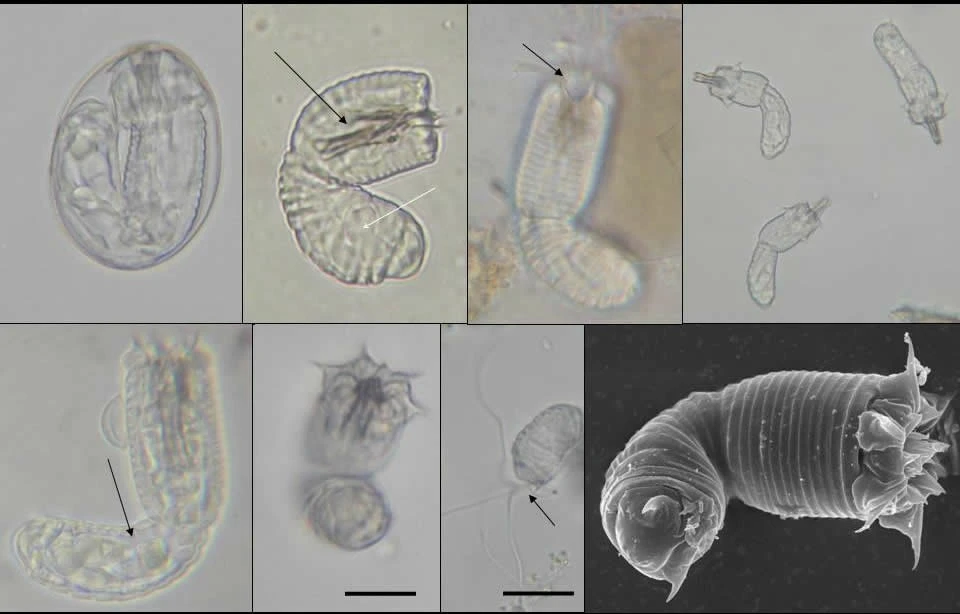
This is what the parasitic stage of the worm looks like.
First, it forces the insect to dart around erratically. Then, it gravitates toward the light, moving toward the brightest spot within sight. This could be a polished metal surface, a sunbeam, or the reflection of the sun on the surface of the water—the parasite directs its host there. The hairworm needs water to move to the next stage. 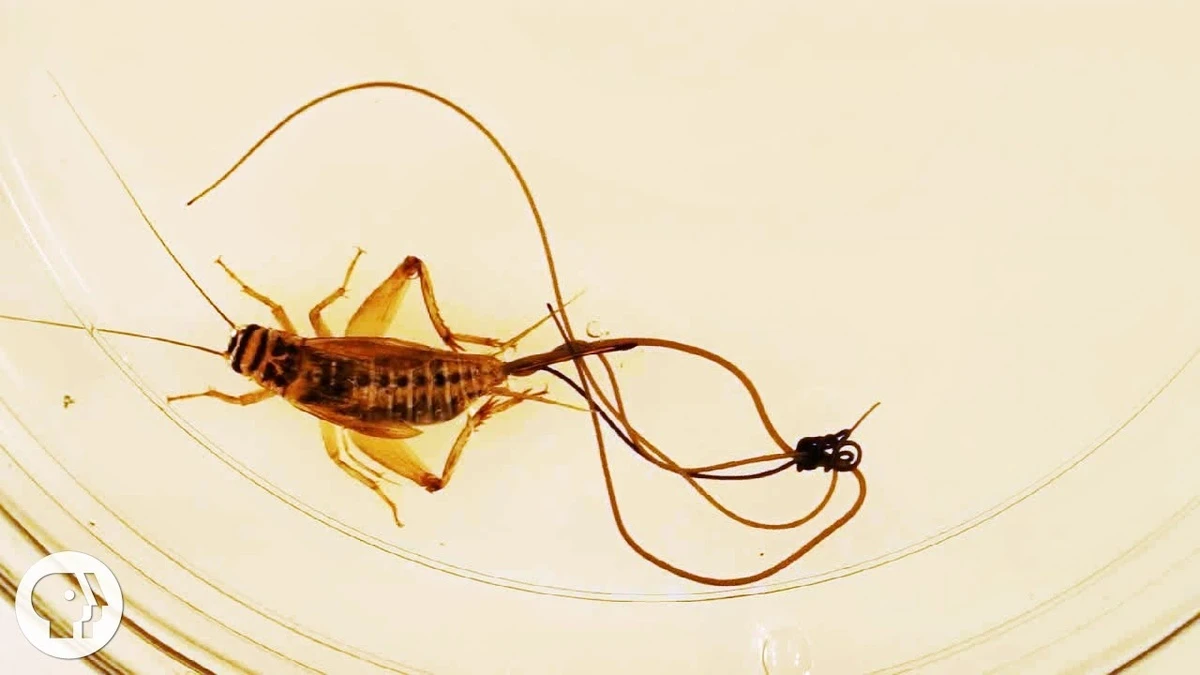
And how did it all fit in?!
And for a long time, we couldn't figure out how the worm manages to so precisely control its host. Biochemical studies of the tissues of infected insects showed that the horsehair worms secreted specific proteins into their hemolymph that help them evade the host's immune system—but nothing more. Everything else was normal! 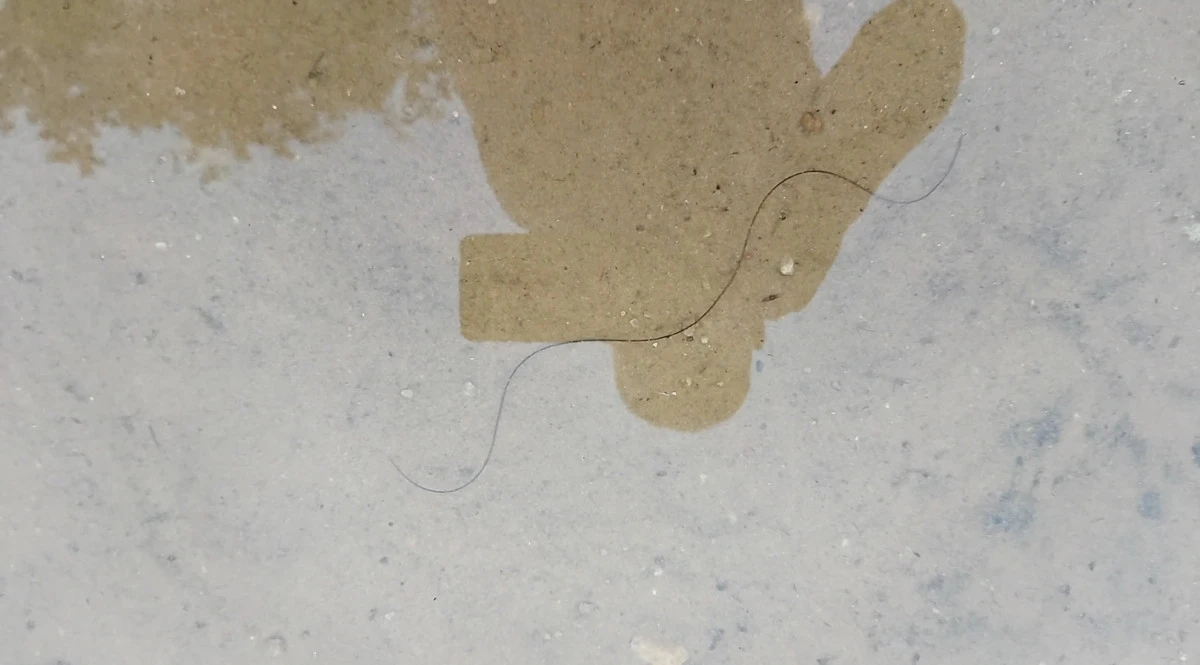
While most horsehair worms are no more than 10 centimeters long, some species grow up to 2 meters!
It was only three years ago that scientists from the Japanese Center for Biosystem Dynamics Research decided to compare the genome of the horsehair worm and the praying mantis it parasitized. That's when they discovered something incredible: 1,342 genes of the parasitic worm were absolutely identical to those of its host. These genes are primarily responsible for the development and control of the insect's nervous system. That's why scientists couldn't detect foreign hormones—the worm was producing neurotransmitters indistinguishable from those of its host. We witnessed gene theft, which was previously thought impossible. 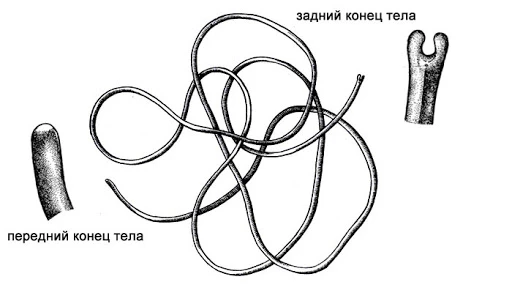
The adult worm has neither a mouth nor an anus—they will close over during metamorphosis. But it doesn't need one—the worm lives no more than a month and survives solely on fat deposits.
Humanity has a relatively good understanding of the mechanism of horizontal gene transfer—the exchange of genetic material between two organisms of different species. But previously, we were convinced that such transfer was possible only among primitive single-celled organisms or through viruses that accidentally "hijack" the genes of their host cells. However, both worms and insects are far more complex than primitive prokaryotes and are too distant from each other to share viruses. It seems there's a mechanism hidden here, as yet unknown to humanity. 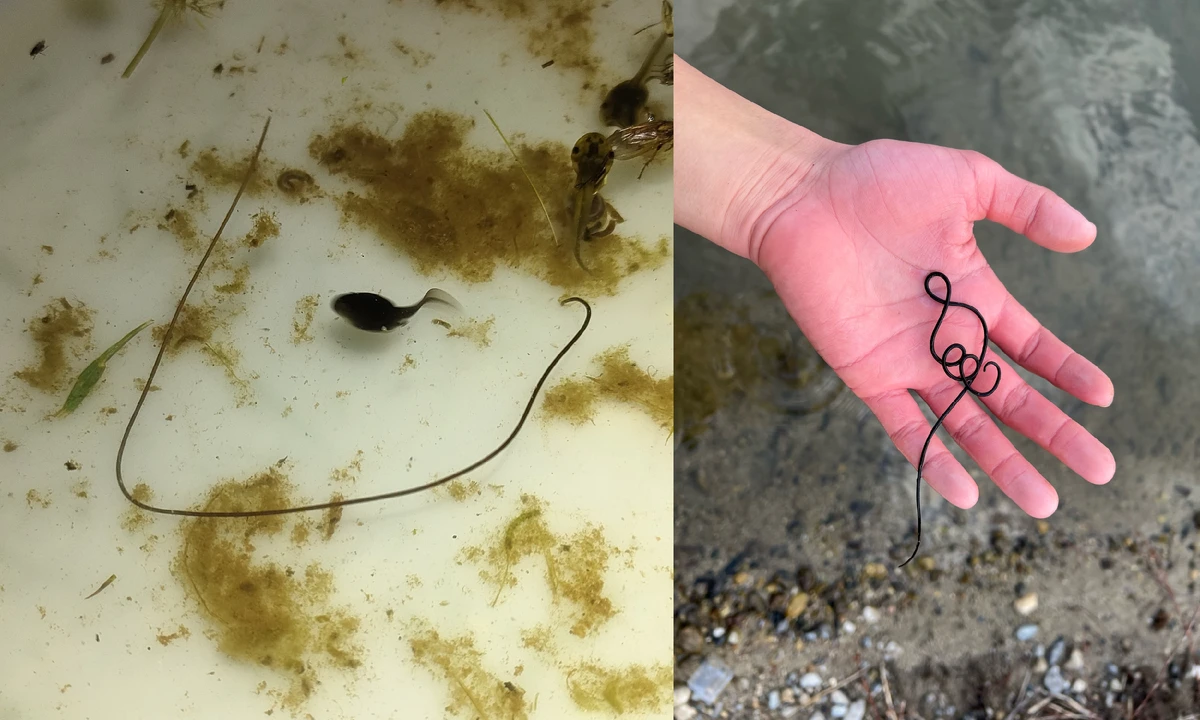
Incidentally, horsehair worms can even inhabit tadpoles. However, this is a dead-end host for them, where they cannot develop. If a predatory insect eats the tadpole, the worm can complete its life cycle.
The worm itself is also unaware of this mechanism, since its job is simple: to force its host to jump into the water so it can crawl out and reproduce—to complete the cycle. All that remains of the host is an agonizing shell, still thinking it's alive. 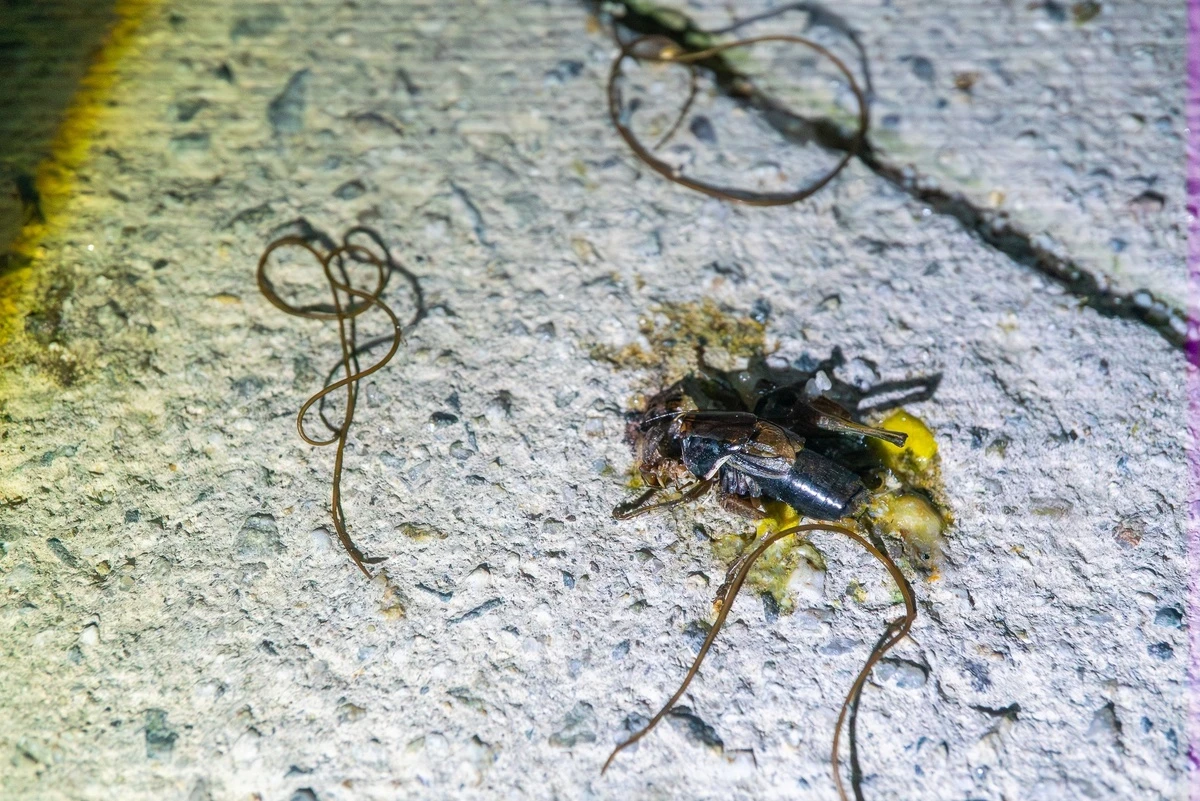
That's it, folks. It's the end of the line. From here on, it's on your own.
Add your comment
You might be interested in:












Worms Armageddon - 25 years!

MiG-29 launches AGM-88 HARM anti-radar missiles

Trailer for the new season of "Rick and Morty"

How a neural network sees pets (5 photos)

Big changes: 35 entertaining photos from the series

Amusement ride cars derail in British park, 14 injured (4

Animal rights activists stole sheep from the estate of the
The Internet showed how cute penguins are when they seek

A drink that is gaining popularity in Japan is water jelly

"What Is This Thing?": 20+ Bizarre Objects That

Margaret Hamilton Dies at 90: The Story of the Moon

13 "Healthy" Habits You Should Actually Quit (14

Cassini Spacecraft Reveals Saturn’s Rings (10 Photos)

Hypnotic and Oddly Satisfying GIFs That Show How Food Is
25 Incredibly Beautiful and Rare Stones (26 Photos)

Soldiers in Lace, a Bowling Geisha, and 20 More Rare Photos

Outmaneuvering Terrorists: How Pilot Uri Bar-Lev Saved a

16 Fascinating and Surprising Facts About Life in Sweden
