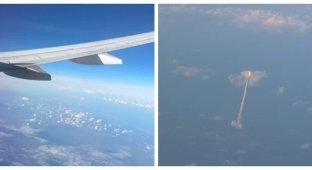
Tragedy in the skies over Texas: could the crew of the shuttle Columbia have been saved? (8 photos)
Twenty-three years ago, on January 16, 2003, the American shuttle Columbia launched from Cape Canaveral Air Force Station on its latest mission. It was its 28th flight into space. And it would be its last. For both the spacecraft and its seven crew members... 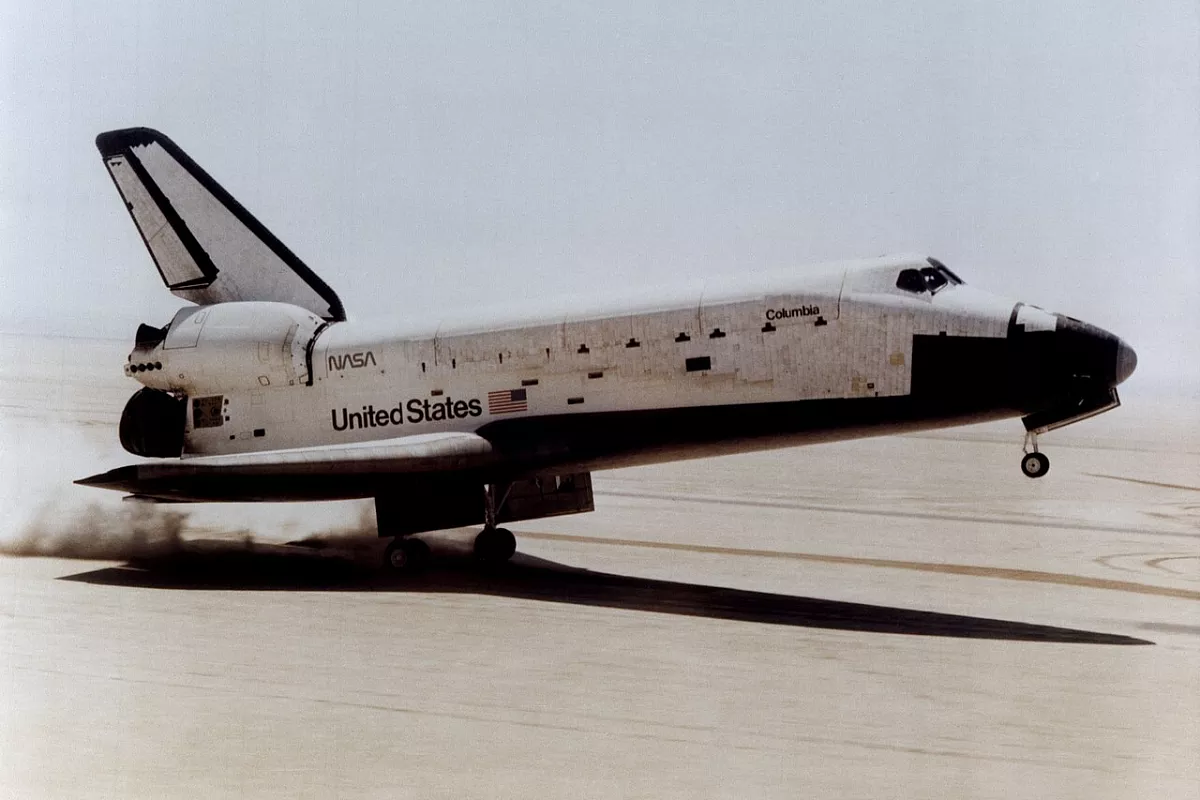
The Space Shuttle Columbia. Photo: NASA, Public domain, via Wikimedia Commons
The Space Shuttle Columbia was the first shuttle in the American Space Transportation System program. Its construction began in 1975. In 1979, the shuttle was delivered to the Kennedy Space Center, where preparations for its flight scheduled for April 10th continued until April 1981. However, the launch was delayed by two more days, so the shuttle's maiden spaceflight took place on April 12, 1981.
The Doomed Columbia
Columbia's 28th flight was also significantly delayed – over the course of two years, the shuttle's launch was repeatedly postponed due to various problems. It was scheduled to fly on January 11, 2001, but only lifted off on January 16, 2003, with seven astronauts on board.
Before launch, Columbia spent 39 days on the launch pad, two weeks longer than usual, 23 of which were marked by heavy rainfall. If water had leaked into the insulation or cracks around it, it could have led to significant ice formation after the tank was filled with ultra-cold hydrogen and liquid oxygen the day before launch.
Columbia Crew:
- Commander – Richard "Rick" D. Husband, US Air Force Colonel, NASA Astronaut.
- Second Pilot – William "Willie" K. McCool, Test Pilot, NASA Astronaut.
- Flight Engineer – Kalpana Chawla, Science Officer, NASA's first Indian-American woman astronaut.
- Payload Specialist – Michael F. Anderson. Scientist, NASA astronaut.
- Zoology Specialist – Laurel B.S. Clark. U.S. Navy Captain, NASA astronaut.
- Science Specialist (Medical Doctor) – David McDowell Brown. Test Pilot, NASA astronaut.
- Science Specialist – Ilan Ramon. The first Israeli NASA astronaut.
The fate of the spacecraft and its crew was sealed at launch! Eighty-two seconds into the flight, several pieces of thermal insulation foam, possibly covered in ice, broke off from the spacecraft's external fuel tank and struck the shuttle's left wing at high speed.
No one saw this at launch. Even when reviewing the launch video two hours later, ground support personnel saw no signs of a problem. Only the next day, when examining a higher-quality recording, did Mission Control specialists see what had happened at launch. And they didn't like what they saw... It appears that this fleeting impact damaged the heat-resistant tiles on the leading edge of Columbia's left wing, which protect the spacecraft from overheating.
A Tragic February Morning
On the morning of February 1, 2003, the Columbia crew, having safely completed their 16-day mission in orbit, received the command to return and began landing.
Ten minutes after the spacecraft entered the Earth's atmosphere, at an altitude of 71 kilometers and traveling at 23 times the speed of sound, the first signs of impending disaster appeared – a signal about a sharp drop in pressure in the left landing gear tires came over the telemetry channels.
Approximately 200 kilometers west of Dallas, contact with the spacecraft was lost. A few minutes before the estimated touchdown time, Columbia broke apart at an altitude of 61 kilometers over Texas. Just over 40 seconds elapsed from the loss of control of the spacecraft to its destruction.
Later, the Columbia Accident Investigation Commission determined that the cause of the spacecraft's destruction was the ill-fated foam fragments that broke off from the fuel tank and struck the wing. The impact caused heat-resistant tiles to fly off the wing's leading edge, creating a hole in the heat shield measuring at least 15 x 20 cm. Through this hole, air, heated to gigantic temperatures during the descent, penetrated the left wing, then the center section of the fuselage, and the left main landing gear wheel. The wheel exploded, and the hot gas literally burned through the aluminum wing structure...
A chain of fatal accidents, or a predictable outcome?
Foam insulation impacts on the shuttle body during launch were not uncommon. Such incidents had happened many times before. Shuttle designers knew that broken-off pieces of foam could damage the fragile heat-resistant tiles. Therefore, the initial design requirements stipulated that large foam fragments should not be released from the tank, although the release of small particles that could not damage the spacecraft's heat-resistant panels was permitted. But actual flights revealed otherwise.
After the shuttle's first launch in 1981, it was discovered that the spacecraft had been "bombarded" by foam fragments from the fuel tank during ascent. More than 300 tiles had to be replaced, and engineers noted that had they known the tank would release so much foam, they would hardly have given the go-ahead. 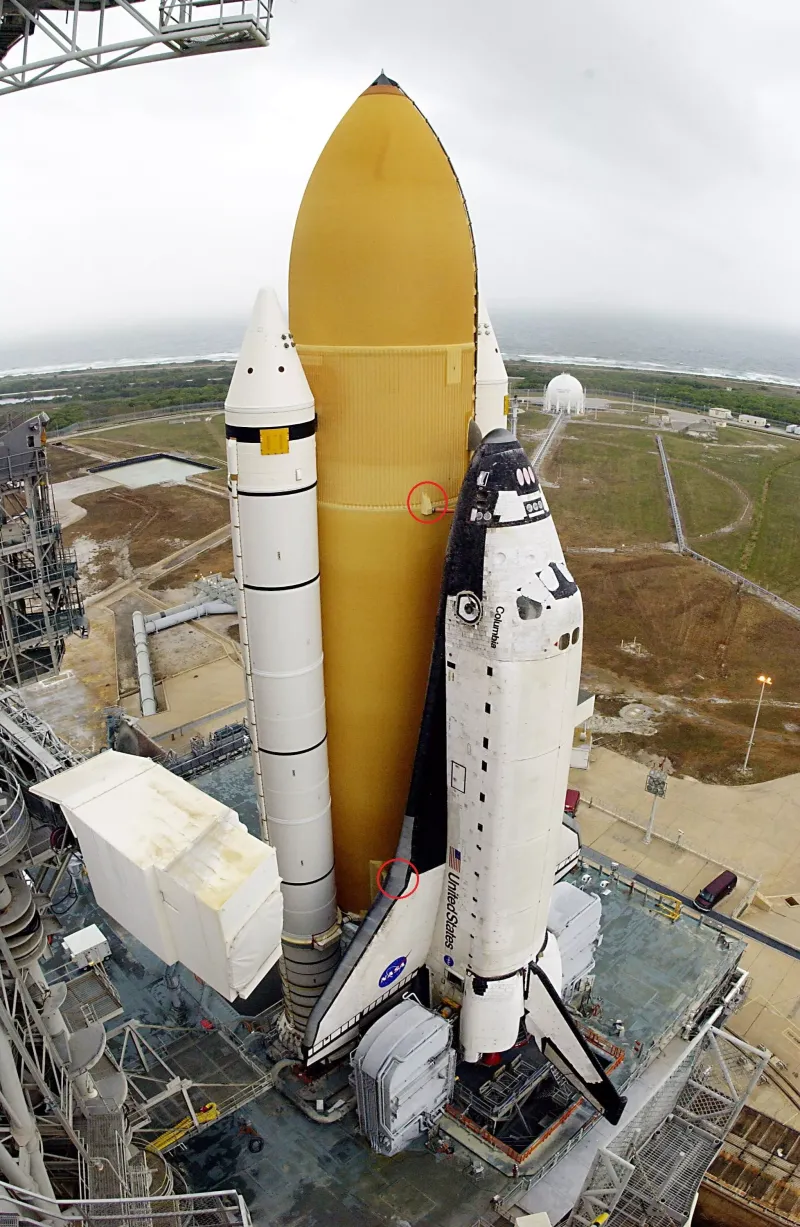
Columbia shortly before launch. The area on the tank where foam pieces broke off and the impact site on the wing are marked in red. Photo: NASA, Public domain, via Wikimedia Commons.
As later noted in the Board of Investigation report, impacts from foam pieces on the spacecraft occurred during most shuttle launches. However, this problem apparently didn't greatly concern engineers and program managers. Although NASA considered developing impact-resistant thermal tiles, it concluded that the likelihood of losing the shuttle due to foam fragments was extremely low.
In 1990, a study published in the journal Space Shuttle News warned that the protective tiles around the shuttle's wheel wells were particularly vulnerable to damage. It was in the left landing gear well that the first increase in temperature was recorded during Columbia's descent.
"Prohibited Filming"
On January 17, 2003, the day after Columbia's launch, the NASA Image Working Group (IPWG) examined high-resolution video footage of the launch and discovered that an exceptionally large piece of foam had struck the shuttle's left wing.
Concerned about the potential for serious damage to the heat-resistant tiles, Bob Page, the team leader, immediately asked management to contact the Department of Defense for additional images of Columbia. Meanwhile, the IPWG reported the impact to program management, which led to the creation of a Damage Assessment Team (DAT). 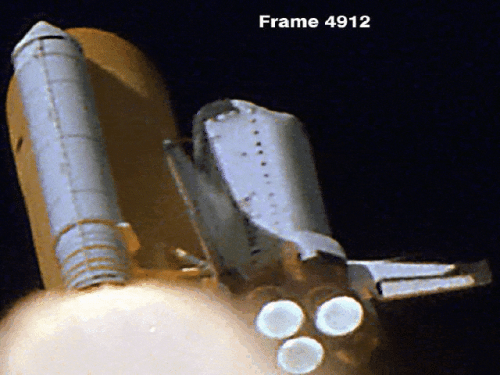
The moment a piece of insulating foam struck the surface of the spacecraft's wing.
Three days after the first official DAT meeting, team member Robert White and DAT co-chair Rodney Roach independently requested NASA images of Columbia's left wing. However, these requests were blocked by another agency employee, Linda Ham. She learned of the requests but, after consulting with members of the mission control team, concluded that additional images of the damaged wing were not required.
She also expressed concern about the additional time it would take to move Columbia into a position favorable for photographing its left wing. Another factor in her decision not to photograph the damaged wing was the widespread belief among NASA senior management that nothing could be done, even if the damage was severe.
"No need to worry"?
Without images of Columbia's left wing, the damage assessment team had little data to analyze. However, they attempted to use the Crater computer program to estimate potential foam impact damage, even though it was not designed to predict damage to thermal tiles.
Based on their analysis, the team concluded that the shuttle would suffer "some thermal damage" upon reentry, but they were unable to estimate the extent of this potential damage or whether it would lead to structural failure of the orbiter. 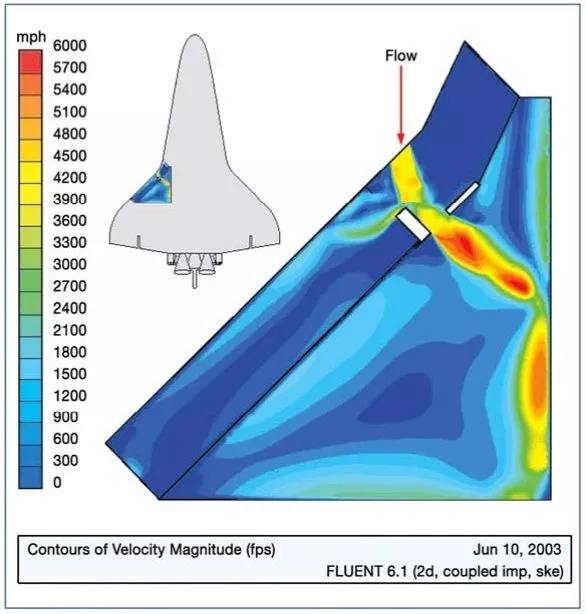
Consequences of damage to the wing thermal protection system. Photo: Illustration from the Columbia Accident Investigation Board report.
A week into the Columbia mission, NASA notified commander Rick Husband and pilot William McCool that a foam strike had occurred during launch. However, the incident was presented as a minor issue. After describing the incident, the notification stated that "there is no concern regarding tile damage" and clarified that similar incidents had occurred on "several other flights." Tellingly, this conclusion was communicated to the crew two days before the damage assessment team completed its attempt to predict damage using the Crater program.
The crew was told that the foam strike wasn't even worth mentioning, and they were only being informed of it so they wouldn't be surprised if reporters asked about it upon returning to Earth.
The next day, Columbia Commander Husband replied to Flight Director Stephen Stich: "Thanks so much, Steve!"
A Fiery Trail in the Texas Sky
On February 1, 2003, Columbia was set to return to Earth. As the shuttle passed over California at 8:53 AM EST, witnesses reported several bright flashes of light illuminating its trail.
At 8:59 AM, the orbiter transmitted its final, unintelligible message. At 9:00 AM, numerous observers on Earth saw Columbia literally disintegrating. Smoking debris from the spacecraft and the remains of its crew fell from the sky, causing panic and chaos on Earth.
The last moments of the Columbia crew before disaster. Video from the spacecraft's cockpit, February 2003.
A NASA report published in 2008 stated that the first alarm inside the shuttle sounded only four seconds before Columbia spun out of control. However, either Rick Husband or William McCool remained conscious for another 26 seconds, desperately trying to save the crew.
"Death" for Sale
Immediately after the destruction of the shuttle Columbia, thousands of pieces of the orbiter fell across Texas and Louisiana. Despite local police efforts to keep people away from the crash sites, fragments claimed to be from Columbia appeared on eBay within hours of the crash. Within two days, more than 1,500 such listings had been posted, causing extreme displeasure at NASA.
The space agency stated that any parts of the lost spacecraft are the property of the US government, and anyone found in possession of the debris could be charged with both theft and obstruction of a government investigation. 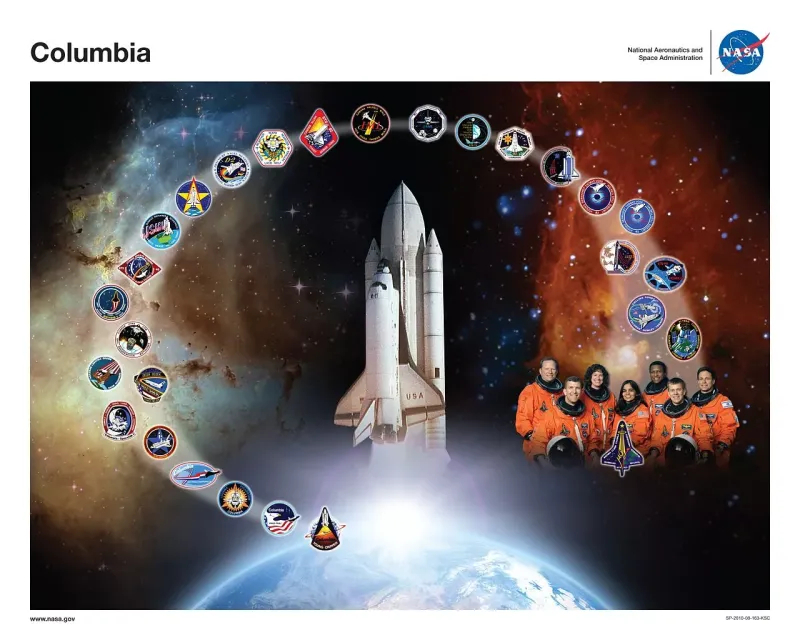
Memorial poster honoring the crew of the lost spacecraft. Photo: NASA. Amy Lombardo, Public domain, via Wikimedia Commons.
Eventually, eBay began removing all auctions related to Columbia debris and reiterated that such sales were prohibited. However, this did not prevent new auctions from appearing for memorabilia related to the shuttle's final mission, such as crew patches and photographs.
Wreckage Collection and a New Tragedy
To collect as many Columbia fragments as possible, the US government announced a three-day amnesty period on February 5, during which anyone could donate debris without repercussions.
The vast area over which Columbia debris was scattered required a massive search effort involving both air and ground teams. 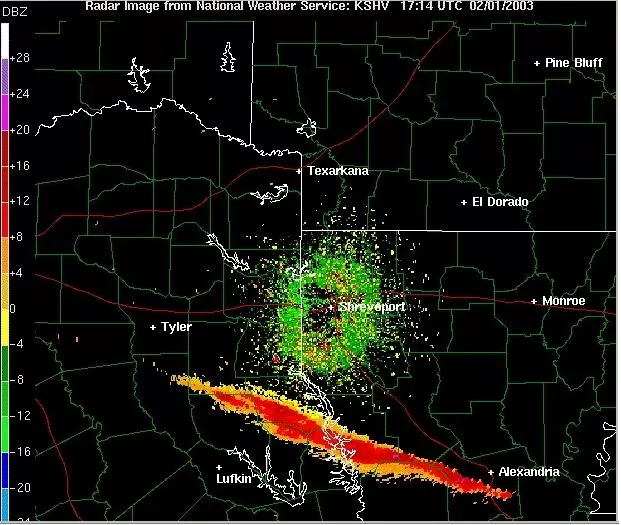
Columbia debris scatter over Texas and Louisiana. Photo: National Weather Service Office, Shreveport, Louisiana, Public domain, via Wikimedia Commons.
During the search and recovery of debris in Texas, a helicopter crashed. Two other people died in the crash – helicopter pilot Jules Francis "Buzz" Mier and Texas Forest Service aviation specialist Charles Krenek. Three Kennedy Space Center employees – Richard Lange, Ronnie Dale, and Matt Chachere – were seriously injured.
The search for spacecraft fragments continued for several months. By the end of March, approximately 84,000 fragments had been recovered, representing approximately 38% of the spacecraft's total mass.
Rescue Scenarios That Never Came to Pass
After the tragic incident, many researchers inevitably asked the "million-dollar question": could the spacecraft, or at least its crew, have been saved?
Some experts believed that if the damage to the left wing had been detected in a timely manner and properly assessed, rescue of the crew might have been possible.
Three hypothetical crew rescue scenarios were discussed:
Lighten the spacecraft and reduce its descent trajectory. Calculations showed that this could reduce its speed upon reentry, thereby reducing the thermal load on the spacecraft's structural components. To reduce weight, it was proposed to drain fuel to a minimum, "get rid" of the Spacehub laboratory and some other equipment. This would reduce the ship's weight by approximately 14 tons.
The Columbia astronauts repaired the damaged spacecraft themselves. But this option was completely utopian. There was neither equipment nor materials on board for such repairs. Moreover, according to some reports, there were no spacesuits suitable for such work in outer space. A rather exotic option was even proposed: plugging the hole in the heat shield with a bag of water and securing it to the wing with Teflon tape.
Evacuation of the crew using the shuttle Atlantis. To achieve this, it would have to launch 20 days earlier than planned. Calculations showed that if the crew of the stricken spacecraft had used consumables (including carbon dioxide absorbents) sparingly from the first days of the flight, it could have remained in orbit for two weeks longer than planned – right up until February 15 – until the rescue shuttle Atlantis arrived.
Atlantis was originally scheduled to launch on March 1, but if its pre-launch preparations had begun on January 16-17 and been more intensive, it could have been safely launched as early as February 10—five days before the Columbia crew's deadline. Weather conditions from February 10 to 15 would have allowed such a launch. In this case, after the two shuttles rendezvoused in orbit, the Columbia crew would have had to transfer to Atlantis via a spacewalk. This option also wasn't guaranteed to succeed, but NASA Administrator Sean O'Keefe stated that he would have authorized an emergency launch of the recovery ship had he known the Columbia crew was doomed. 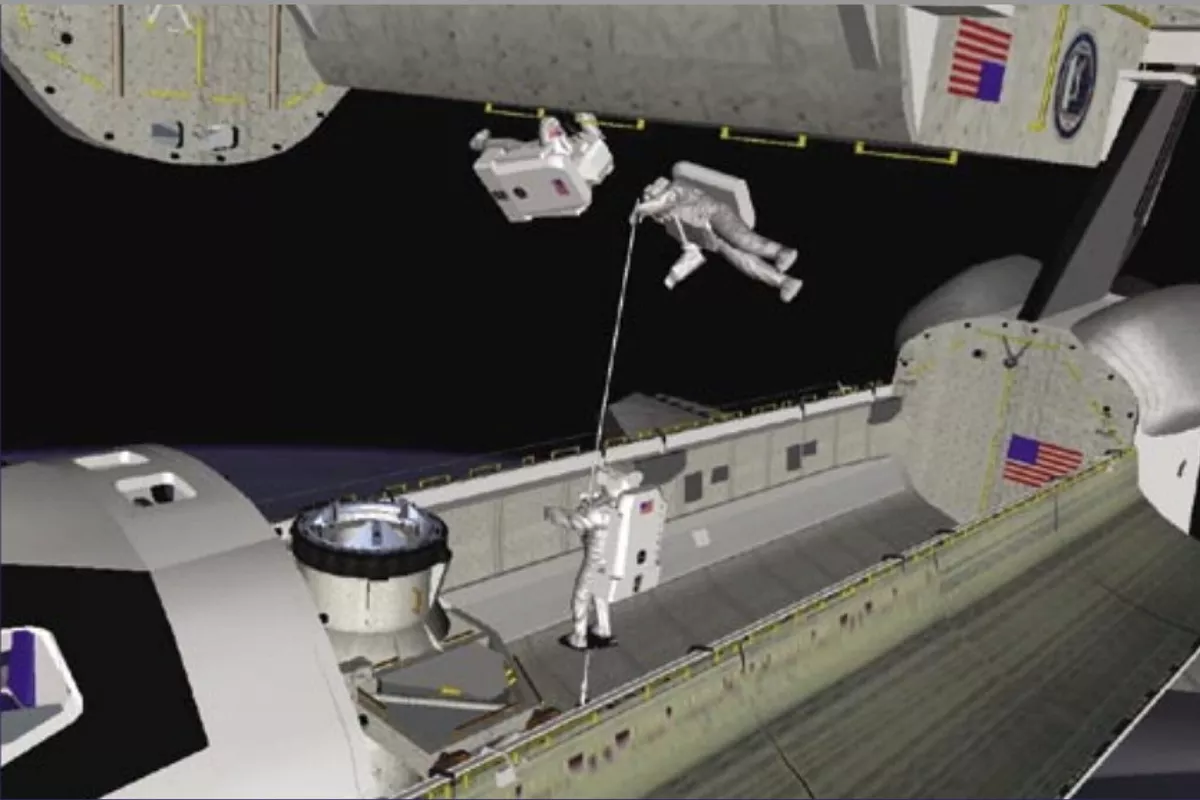
Simulation of the Columbia crew evacuation aboard the Space Shuttle Atlantis. Photo: Illustration from the Columbia Accident Investigation Board report.
But history does not tolerate the subjunctive mood, so everything happened as it did.
Resignations, Reforms, and the End of the Space Shuttle Era
The loss of Columbia was one of the most tragic events in NASA history and had serious consequences for the agency. This disaster was comparable to the Challenger disaster 17 years earlier and became the catalyst for the end of the reusable spacecraft program.
After this tragedy, NASA still had three shuttles left – Discovery, Atlantis, and Endeavour – but their flights were suspended pending the outcome of the investigation and improvements to safety systems. In 2011, the Space Shuttle program was completely canceled.
The Columbia disaster dealt a serious blow to NASA's reputation. The agency was harshly criticized for negligence and mismanagement. The disaster investigation board found serious problems in its organizational culture and management. The board's report noted that the space agency ignored long-known thermal protection problems – thermal insulation failures during shuttle launches had occurred before (in 1983, 1990, 1992, and 2002), but they were not given due consideration. 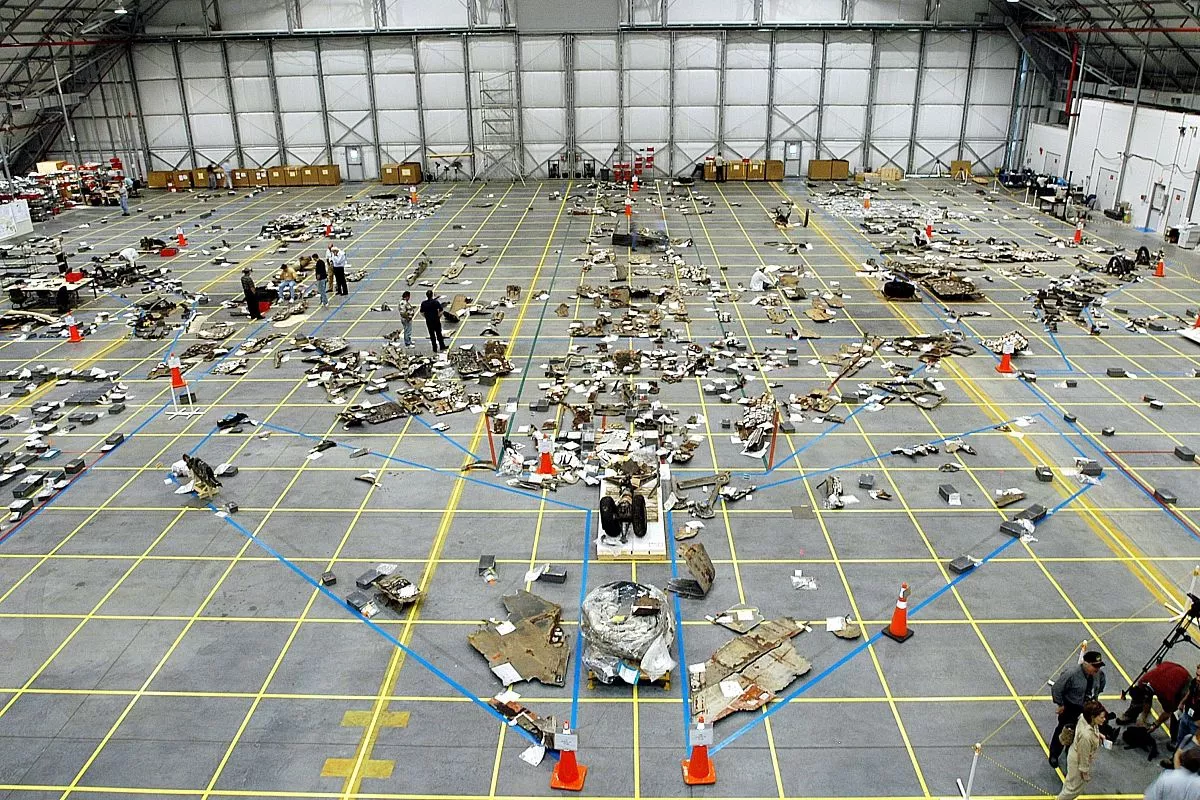
The recovered shuttle debris. Photo: NASA, Public domain, via Wikimedia Commons
The commission emphasized that NASA had a corporate culture in which specialists' concerns were often dismissed, and communication channels between departments were effectively blocked. The decision-making system was also criticized – in particular, management failed to respond to engineers' requests for additional damage inspections and failed to facilitate the acquisition of images of Columbia for a quality damage assessment.
The tragedy prompted NASA to rethink its approach to flight safety. Shuttles began to be equipped with the necessary tools and materials to allow for similar damage repairs to be carried out in orbit. During subsequent shuttle launches, a backup spacecraft with a reduced crew was kept ready to perform a "rescue" mission in the event of an emergency.
As part of the reforms, independent safety oversight structures were created, as recommended by the investigative committee. Approaches to astronaut training and mission preparation were revised.
Several agency executives responsible for the Space Shuttle program were removed or transferred to other positions. For the next two years, the United States was forced to rely solely on other spacecraft to deliver its crews to the ISS.
PS
After a two-year hiatus in the Space Shuttle program, the shuttle Discovery launched into orbit in July 2005. This flight, too, could have ended in tragedy. After the solid rocket boosters separated from the spacecraft, a large chunk of thermal insulation foam broke off from the external tank again. But this time, luck was on – the airflow carried it away from the spacecraft, preventing it from impacting its hull. So, does this mean that billions of dollars invested in the development and implementation of new approaches to flight safety, new regulations, new requirements, and so on – were all wasted?