The Kawah Ijen phenomenon: why an Indonesian volcano spews blue-violet flames (3 photos + 3 videos)
The Ijen volcanic complex, located in eastern Java, Indonesia, has attracted the attention of researchers and naturalists from around the world for many years due to its unique optical effect. 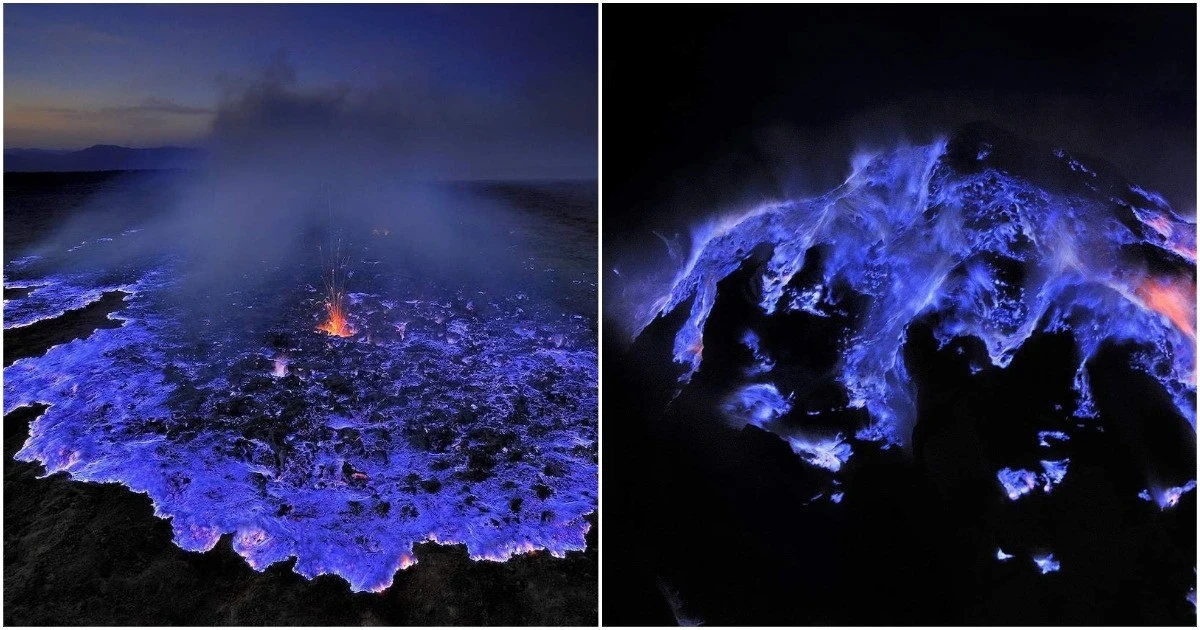
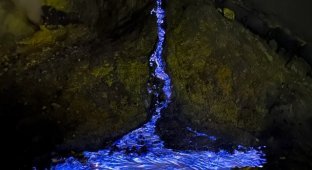
At night, purple or bright blue lava flows can be observed on the slopes of one of its craters, Kawah Ijen. 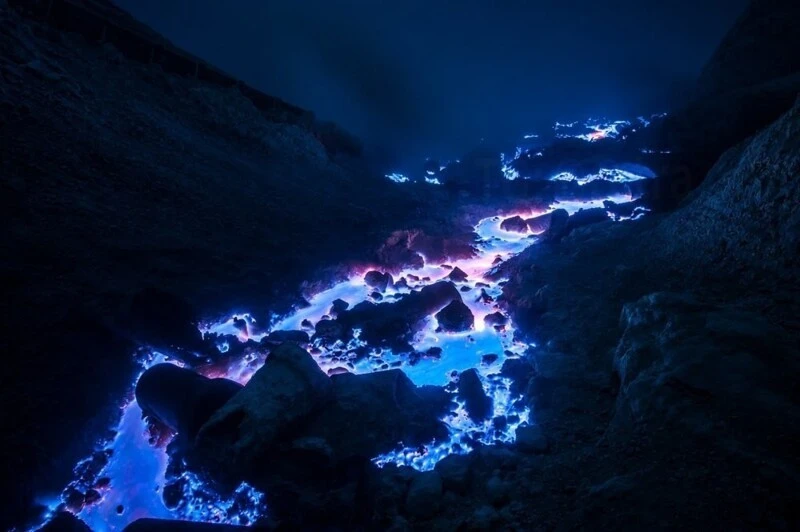
However, from a geological and chemical perspective, the nature of this phenomenon is radically different from a typical magma outpouring. The misconception that the volcano erupts lava of an atypical color is due solely to the specific conditions within the crater. In fact, the temperature and composition of Kawah Ijen's magma are typical for most active volcanoes in the region, and in daylight, it has a familiar red-orange hue.
The volcano contains one of the world's largest acidic lakes, and highly concentrated gases containing pure sulfur continuously escape from fissures in its rock under enormous pressure. The temperature of these gases at the outlet exceeds 600°C.
Upon contact with atmospheric oxygen, the hot sulfur dioxide gas instantly ignites. According to the laws of physics and chemistry, sulfur combustion occurs within a strictly defined spectrum, producing a characteristic intense blue-violet flame that can reach a height of five meters.
Due to the temperature difference, some of the gaseous sulfur condenses, turning into a liquid. The flammable liquid sulfur begins to flow down the rocky slopes of the crater. This creates the complete illusion that a glowing purple liquid is flowing down the volcano.
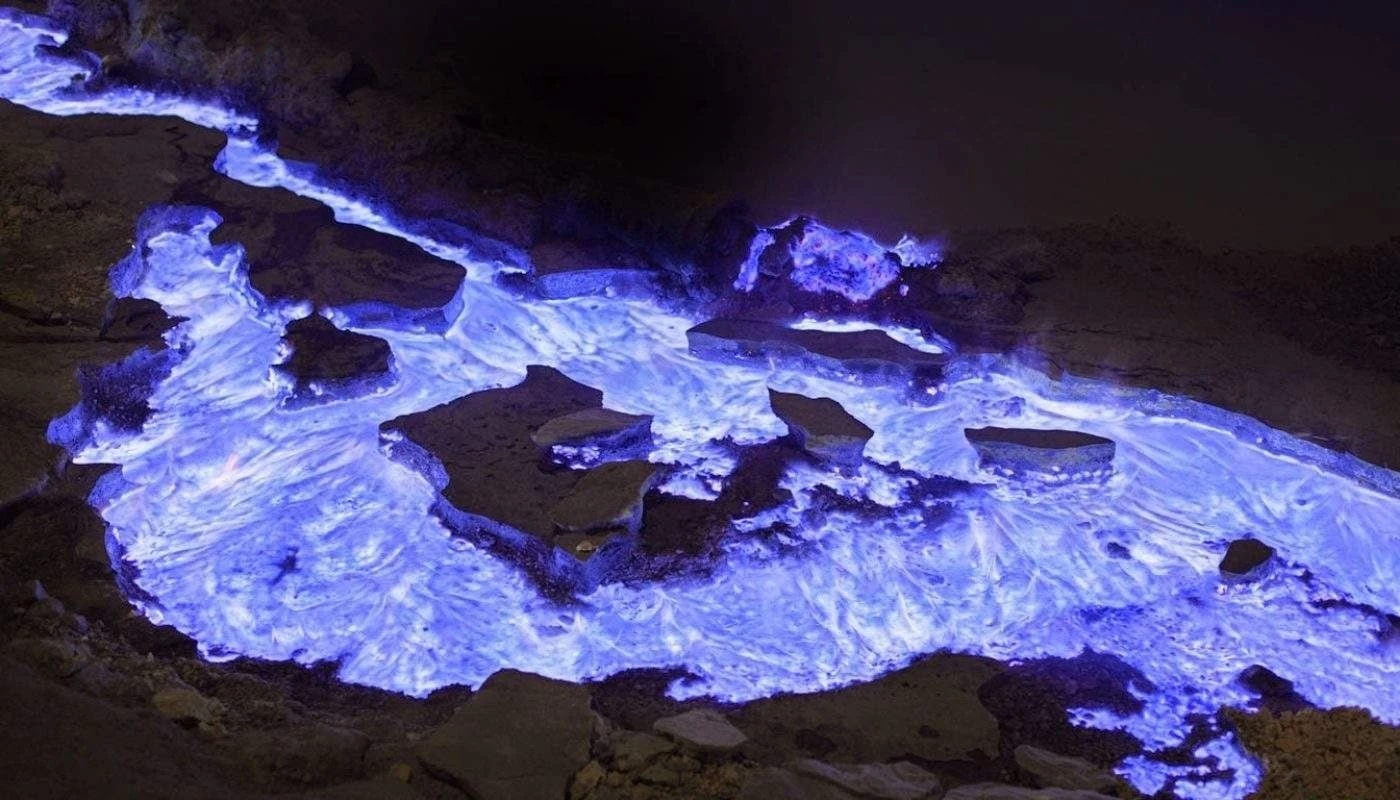
Besides its tourist and scientific interest, the Kawah Ijen crater is the site of active mining operations. Local workers manually, under extremely difficult conditions and with virtually no protective equipment, extract crystalline sulfur, which forms after the liquid streams cool. The product is widely used in the chemical and pharmaceutical industries of Indonesia.