Cordyceps: A predatory fungus creates zombies from insects (9 photos)
Cordyceps are more or less well-known, grants are allocated for their study, and today we already know 250 species of these fungi. And they all love arthropods. Most of them love to eat them. 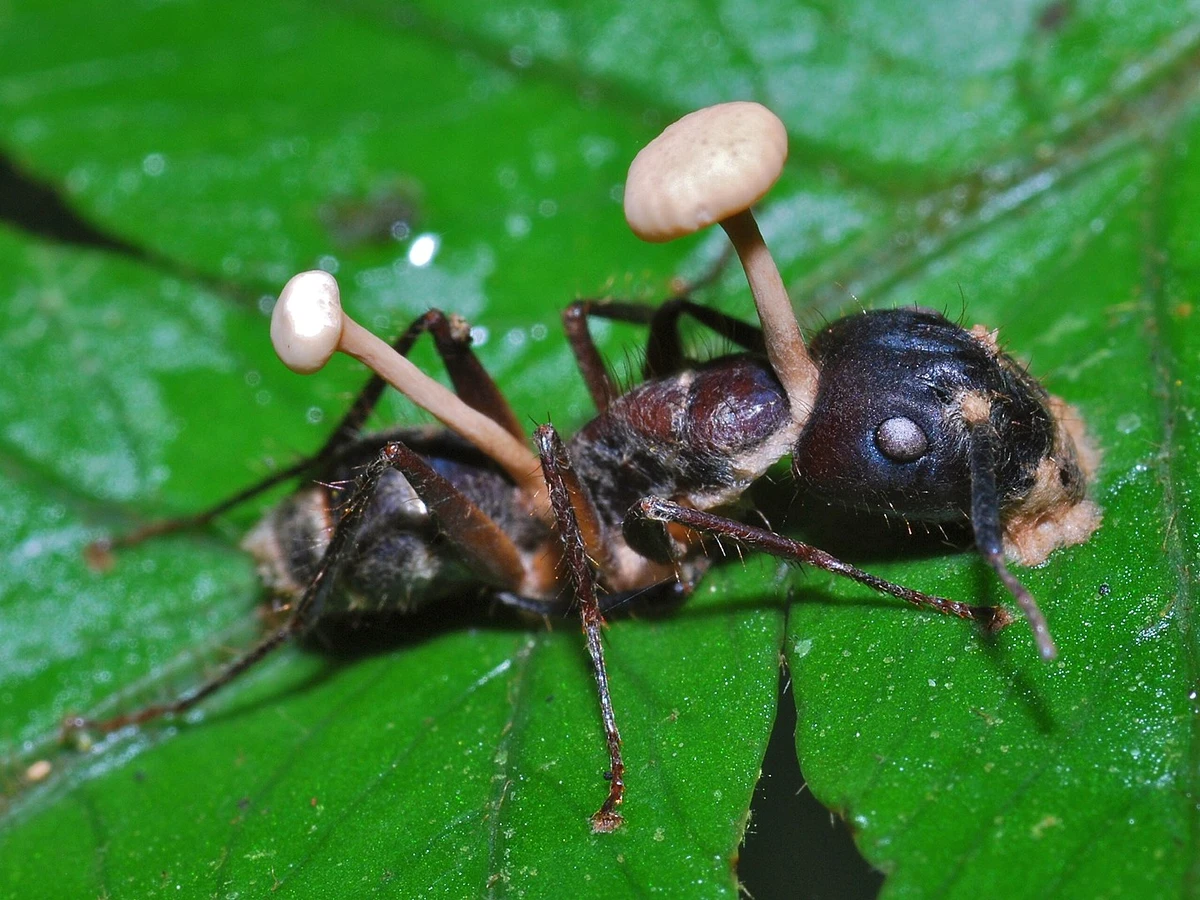
Oops, honey fungus has appeared... 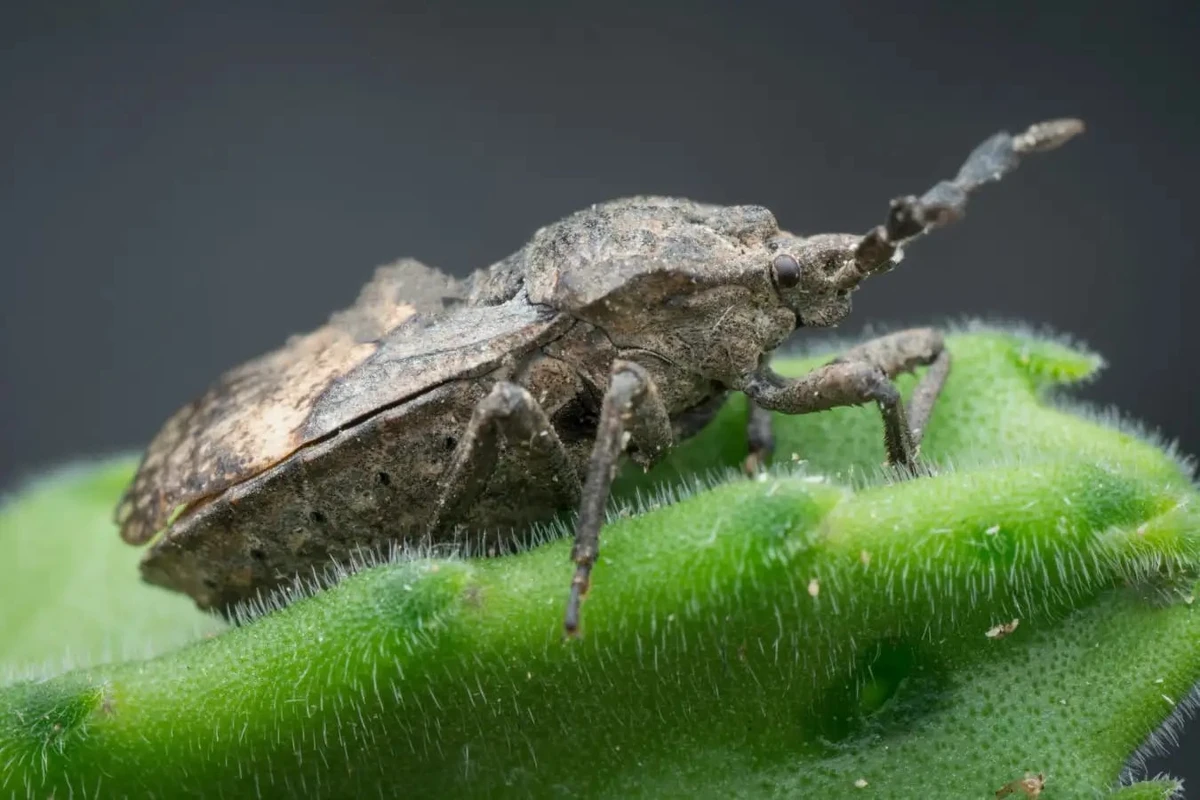
However, we know of several cases where the cardiepeps acts as a helper rather than an enemy. In at least one species of cicada, it has taken root in the intestines, and in the bug in the photo above, it lives only on the carapace, without penetrating inside.
The infection process is the same regardless of whether the fungus's target is an ant, a spider, or a beetle. First, a mucus-coated spore attaches to one of the insect's joints. The chitinous exoskeleton there is noticeably thinner, so the fungus has a chance to destroy it with dissolving enzymes—protease and chitinase—and penetrate. If the parasite manages to reach the poor animal's hemolymph, it's the end, no question about it. 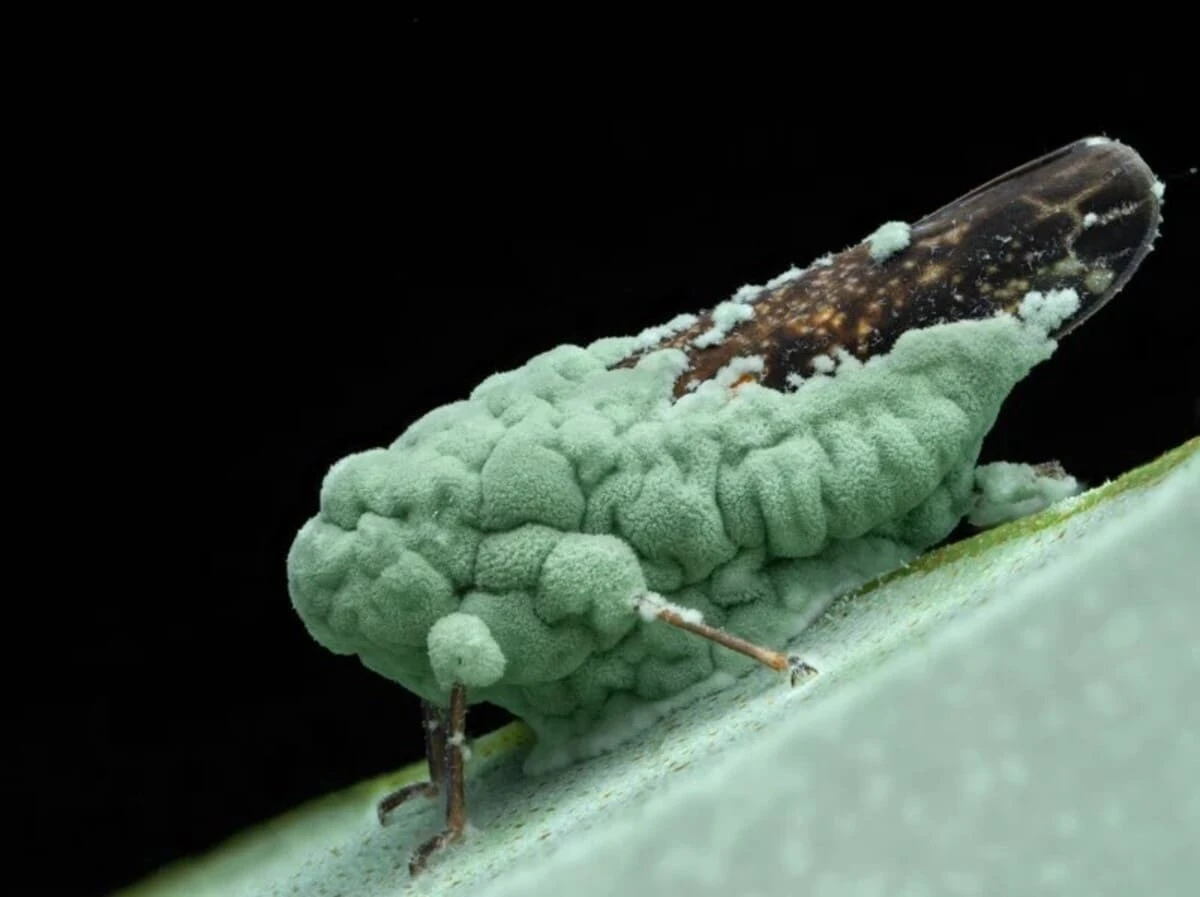
When you've been sitting in one place for too long...
Not right away, of course. The fungus will grow for several days or even weeks, but the arthropod's immune system will definitely not cope with such an invader. Over time, the fungus will begin to produce biologically active substances that will alter the animal's behavior. Ants, for example, will become hyperactive and asocial, beetles and spiders will leave their shelters, and male cicadas will mate endlessly, infecting more and more females. 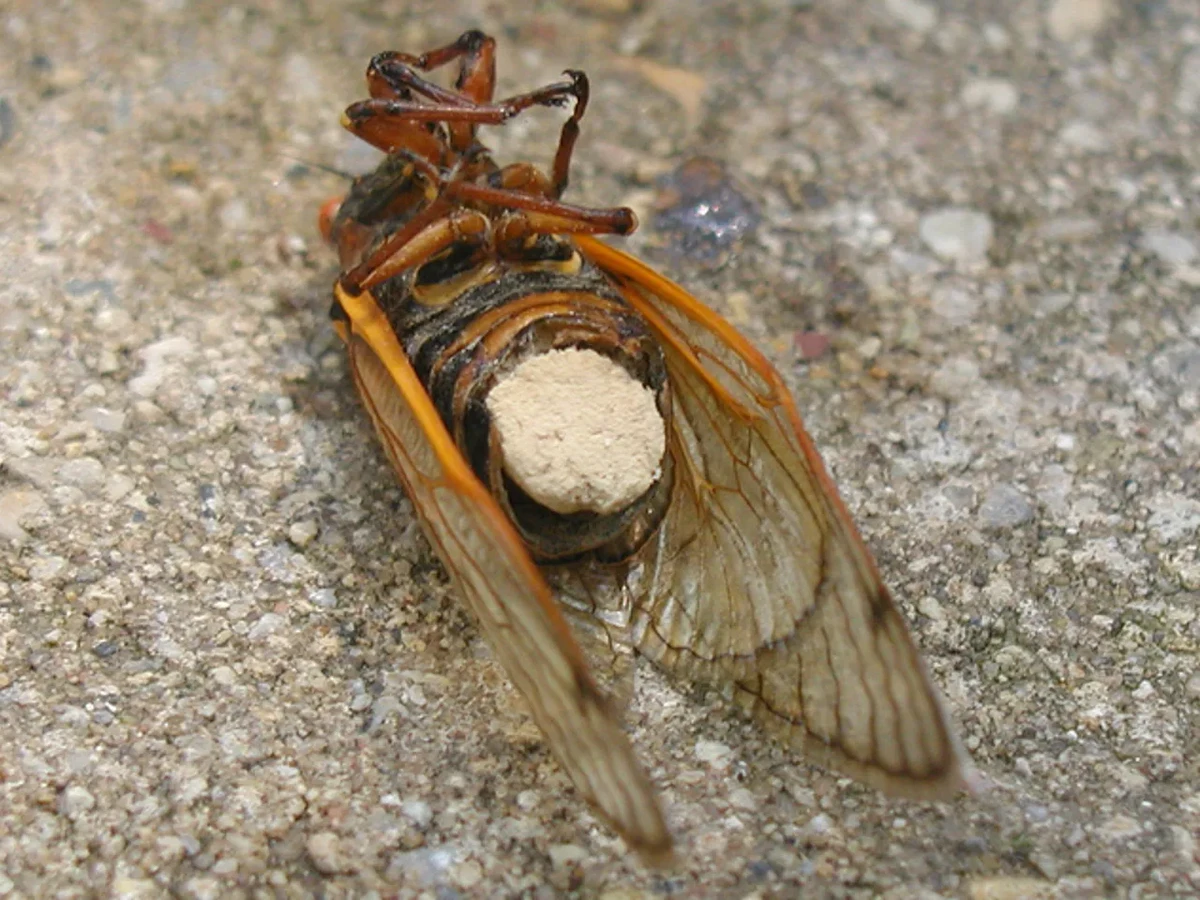
All normal Cordyceps grow fruiting bodies outside the host's body. But cicada Cordyceps grows spores directly within the insect's abdomen. At some point, the abdomen falls off, and thousands of spores spill out.
The fungus will then gradually begin to take control of the arthropod's muscles. Its hyphae (mycelium) will begin to grow directly through the muscles, affecting them as well. The insect will begin to spasm, which will gradually become more severe until it becomes paralyzed, where it will spend its final hours. By this point, the poor creature will be approximately 40% fungus. 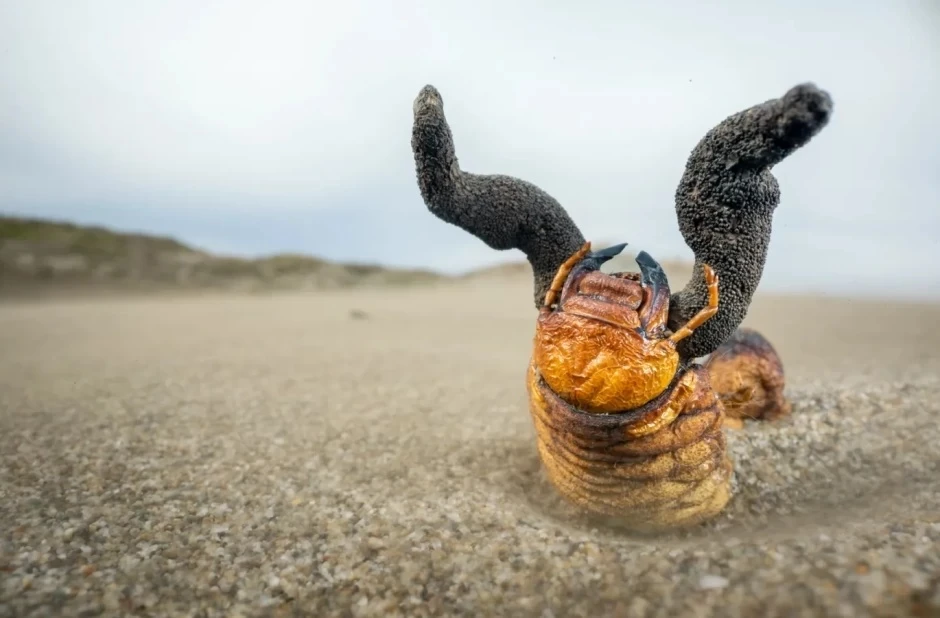
Just before death, the animal assumes a position ideal for the Cordyceps fungus to spread. Ants cling to leaves, spiders climb higher, and beetle larvae emerge to the surface.
And you know what's most terrifying? The arthropod remains conscious until the very last second, because the fungus doesn't affect its brain. Yes, it influences its victim's behavior with hormone-like substances and by interfering with muscle control, but it doesn't dare touch the brain—it's too complex an organ. If you grow into the wrong layer of nerve cells, you destroy the wrong neural connection, and the insect will die before the parasite has a chance to grow. And it doesn't need that. 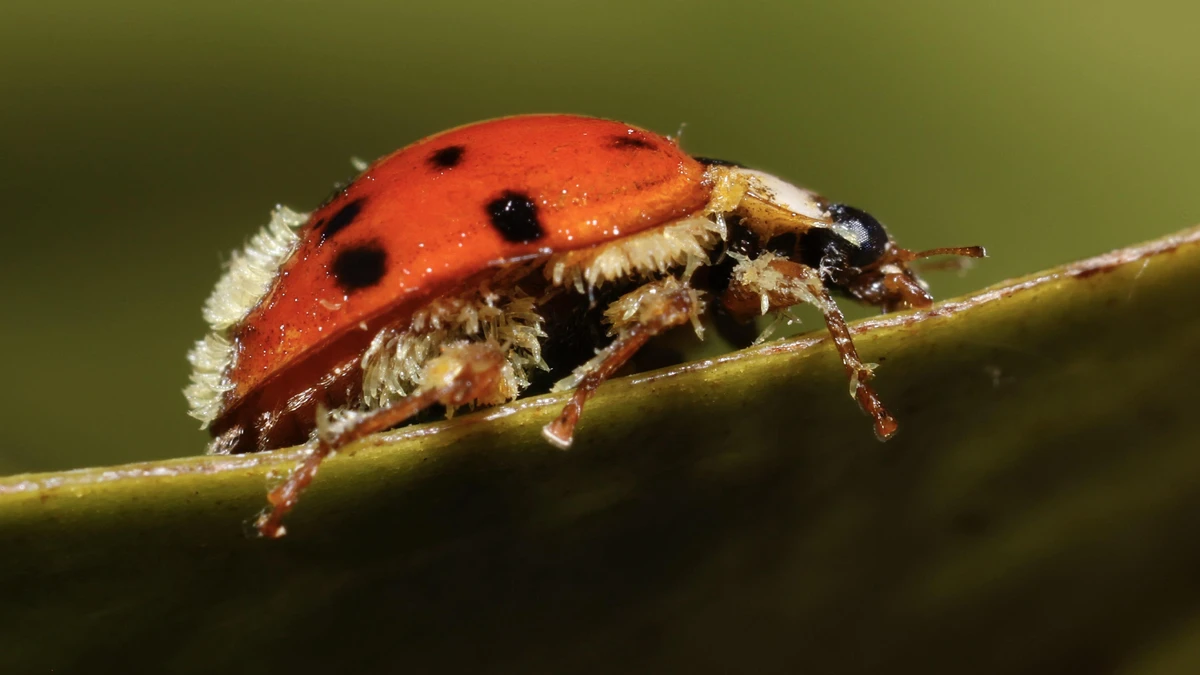
Yes, this ladybug is still conscious.
The death of the insect is just the beginning for the fungus. Now that it no longer needs to keep its prey alive, it can devour it whole and use the resources gained to grow fruiting bodies that will disperse spores over a wide area. Fortunately, the animal climbed as high as possible before its death, and billions of spores will scatter hundreds of meters around. 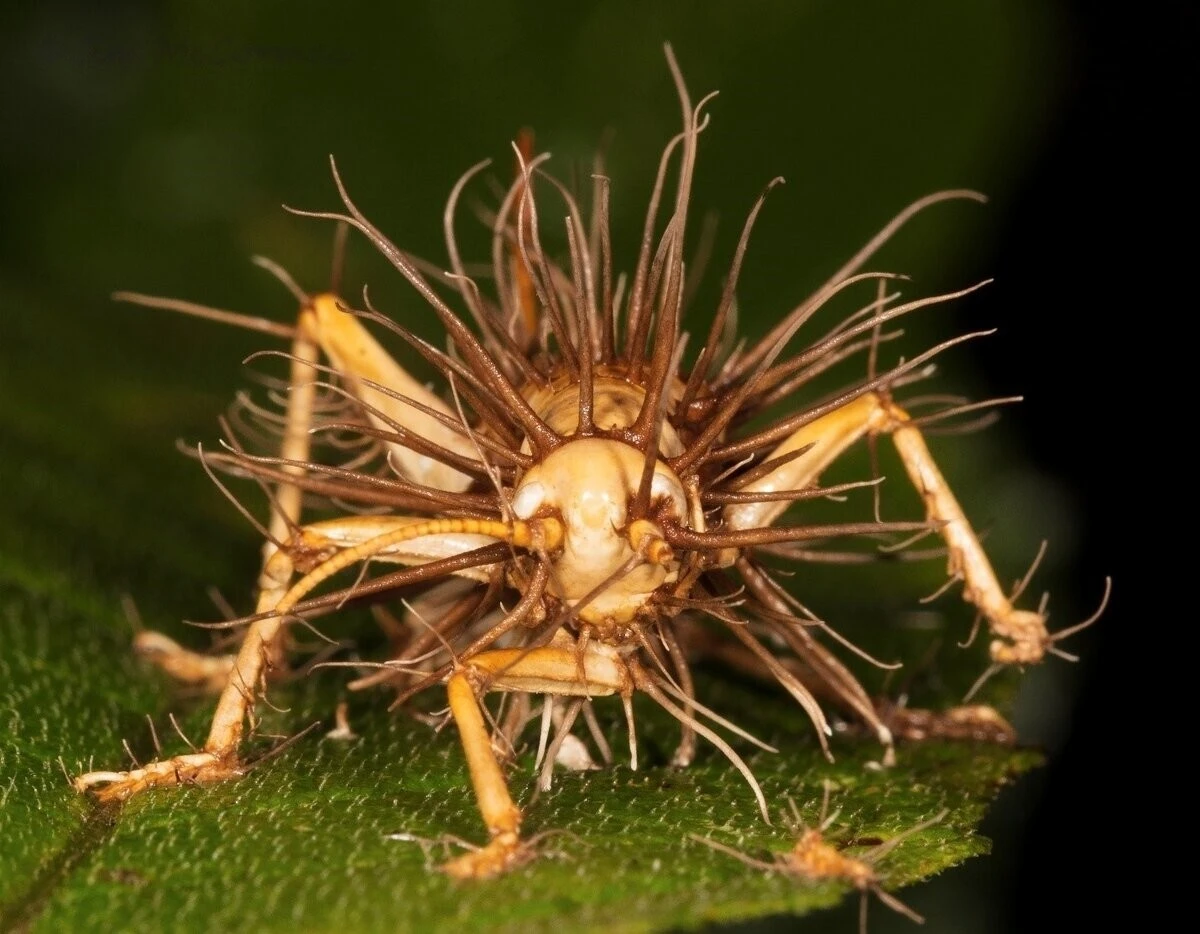
Come on, shave it off! You've grown so much hair you can't even see your head!
It sounds scary. Especially if you imagine a manipulative fungus suddenly mutating and infecting people, growing through their bodies. However, fortunately for us, such a thing is just a great plot for video games and horror movies. We're too big, our nervous systems are too complex, and our body temperatures are too high. It can't penetrate us anyway—human skin, seemingly so soft and vulnerable, is impervious to the fungus's digestive enzymes. So, the fungal zombie apocalypse is off the table, hooray! 
In fact, the 2013 post-apocalyptic game with mushroom zombies popularized the idea of cordyceps among the general public. We'll give it credit for that. And the game turned out great, too.
Moreover, we've even been able to derive some benefit from Cordyceps. Since 2023, certain species have been used to suppress pest outbreaks. Fungal spores are simply sprayed over the affected area, and within a few weeks, the vast majority of insects die. And most importantly, there's no harm to the biosphere. After all, each Cordyceps species specializes in only 5-6 closely related insect species. Unlike insecticides, which destroy all living things. 
Also, larvae infected with Cordyceps have long been used by New Zealanders as a source of tattoo ink. And they don't become infected.