Here is one of the most impressive terrain features discovered on comet 67P/Churyumov-Gerasimenko. 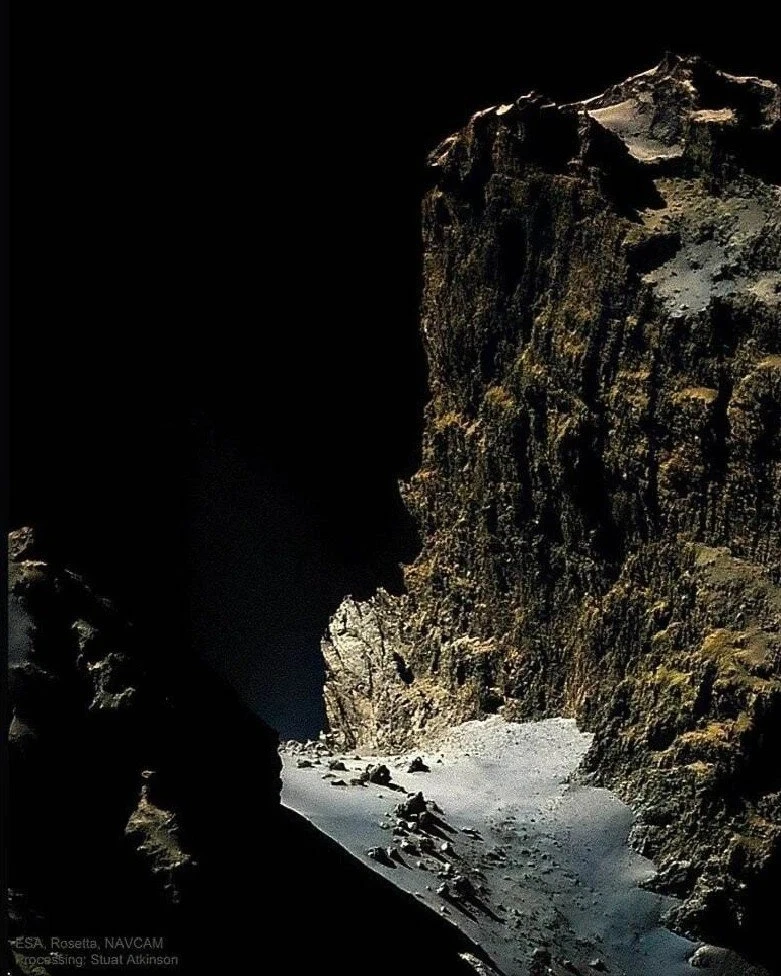
This gigantic cliff, known as Hathor Rock, rises approximately 900 meters—and this is in extremely weak gravity. For comparison, the Burj Khalifa, the tallest building on Earth, is 828 meters high.
The rock's surface is riddled with cracks and covered with scree. This is a result of the constant "work" of the Sun: when it approaches the Sun, the ice inside the comet sublimates—transitioning directly from a solid state to a gas. Gas escapes and literally loosens the surface, scattering material that first rises upward and then very slowly settles.
Over time, these processes change the shape of entire sections of the nucleus, an integral part of the comet's gradual and irreversible destruction.
This image was obtained by ESA's Rosetta spacecraft, which studied comet 67P/Churyumov–Gerasimenko from August 6, 2014, to September 30, 2016.
Add your comment
You might be interested in:













TU - 104 - the fastest aircraft (10 photos)

A tourist miraculously survived after falling from a

Fans saved a cat that fell from the upper tier of the

Kiss co-founder guitarist Ace Frehley has died (3 photos)

Beautiful and amazing (short videos). Release 21

10 exhaust pipes and rivets: Gelendvagen stylized as a

An actor from "Stranger Things" directed a music
Hole in the rock - the legendary cave house (7 photos)

2-year-old dancer William came out to excite the audience

Persistence in achieving a goal

A biker prevented a hit-and-run driver from escaping

Not everyone is having fun on the amusement ride

Absolute perfection

17 Photos That Will Stop You in Your Tracks (18 Photos)

Young women, Dancing and George Michael: nothing superfluous

The cutest lunch delivery ever

What Would Happen to a Human on Every Planet in the Solar

Toyota Celica ST165 on a rally track
