Badger: the only one that emerges from hibernation fat and well-fed, while other animals are emaciated (7 photos)
For most animals, spring is a time of suffering. Squirrels have exhausted their nut stores, hares are finishing off the last bark from the trees, and wolves and foxes are eating the last hares. Even bears, having slept soundly all winter, emerge from their dens weakened, skinny, and with matted fur. Only one badger is doing just fine. 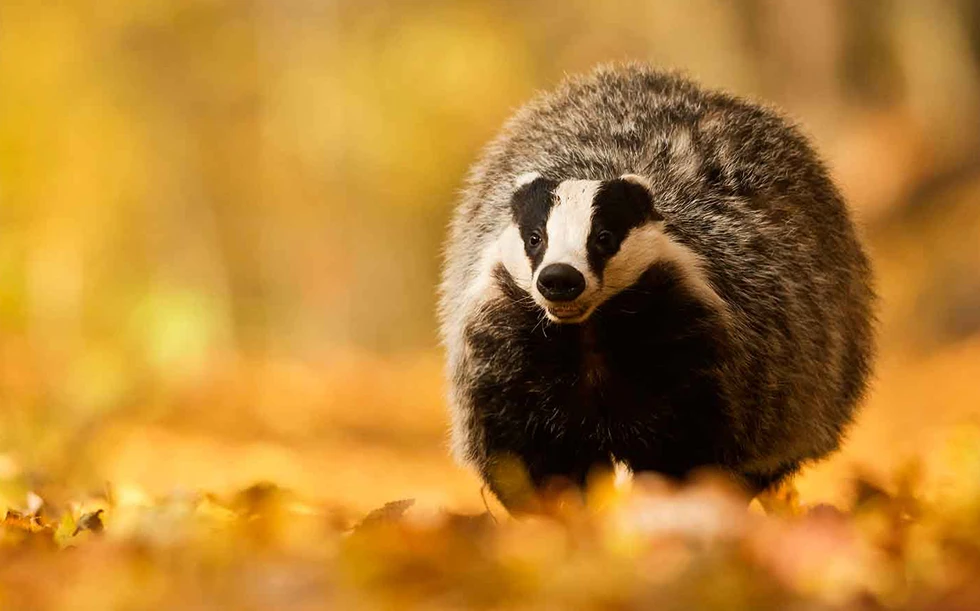
A spherical badger is rushing for treats!
He wakes up, stretches sweetly, scratches the last bit of fat on his belly, and heads to the pantry of his luxurious mansion to check his food supplies!
How does he survive the winter so well? The answer is simple: he enters it half-fat. And that's no joke! The weight of a large adult badger in October—just before hibernation—can reach 24 kilograms. Even though back in June and July, he was exactly half that weight! This ratio of fat to body mass is more typical of seals and whales than land dwellers. So it's no surprise that he can easily sleep through the winter and even store some reserves for the first few days. 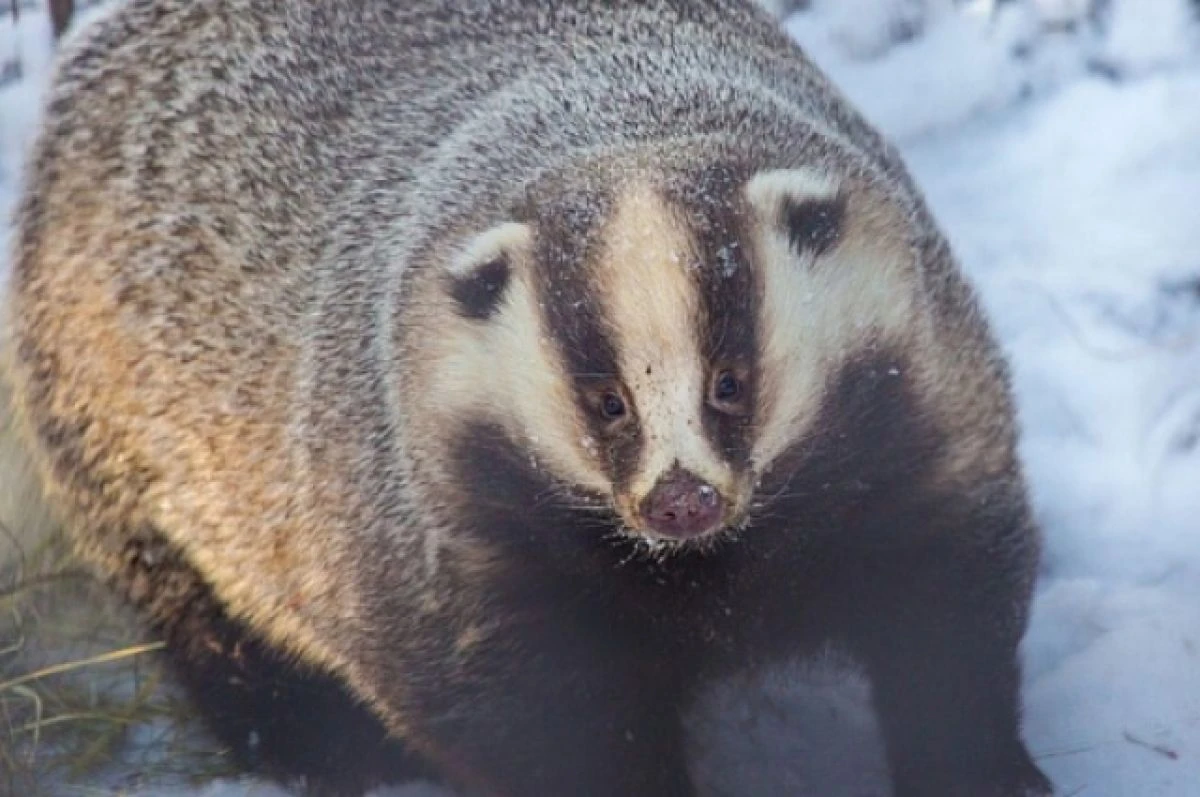
Fat not only serves as a food reserve, but also acts as excellent thermal insulation!
Naturally, to gain such mass, this stocky animal has to eat like crazy. Even in the summer months, when the badger isn't in fattening mode, it consumes half a kilogram of frogs, lizards, mice, and plant matter in a single night's trek. That's equivalent to a 70-kilogram adult man consuming 11.5 kilograms of food daily! 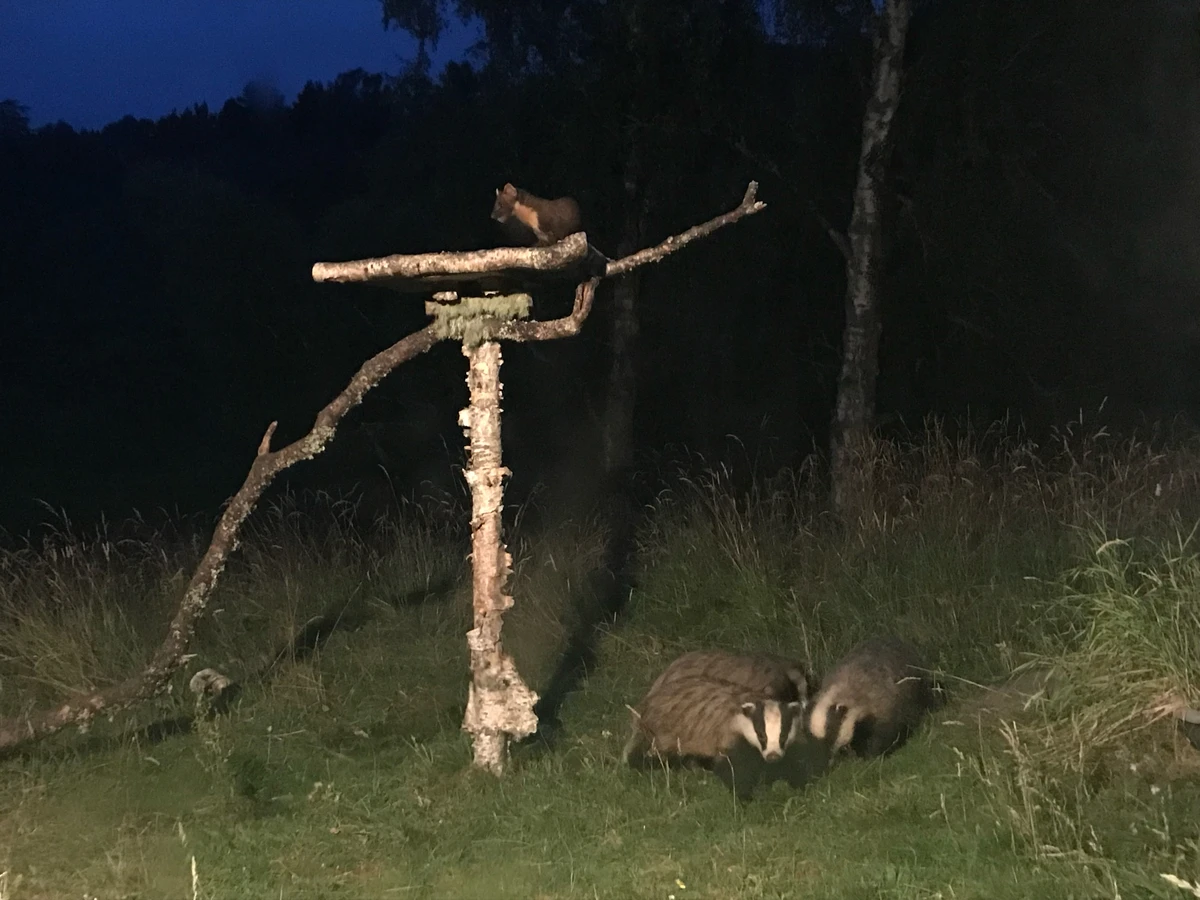
Badgers belong to the mustelid family, but a glance at a marten reveals how different they are.
In the fall, a badger's food intake triples, reaching 1.5 kilograms of biomass per day. Even theoretically, the predator cannot provide itself with such a quantity of meat, so its diet begins to focus on fruits, berries, nuts, and roots. Furthermore, the badger collects more food than it can eat and stores the excess vegetation underground for future use. 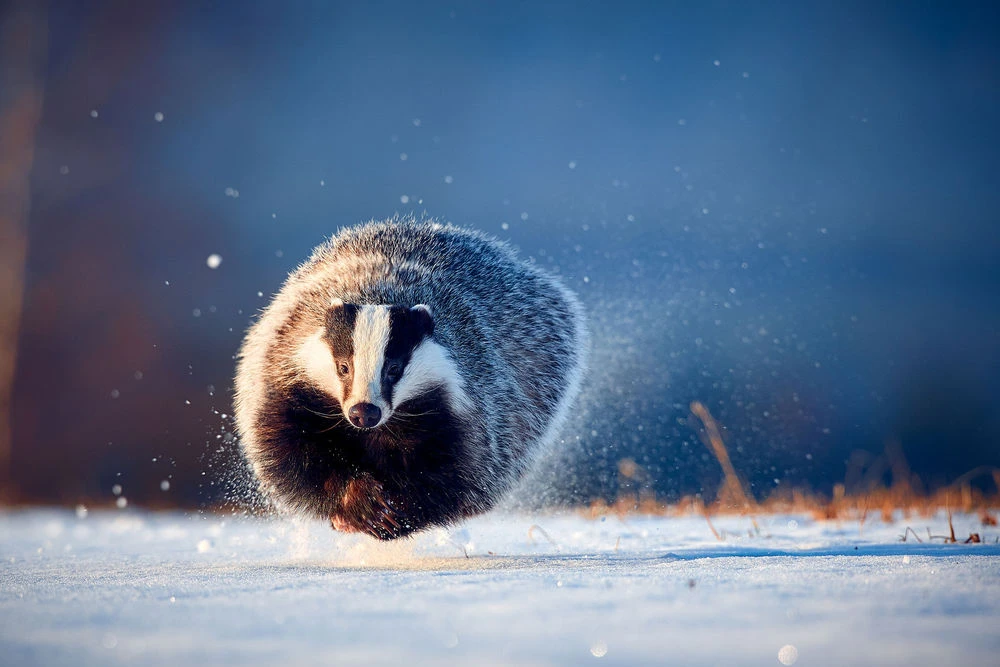
If the winter is warm or a sudden thaw sets in, badgers may venture outside once every few days.
Despite constantly filling their stomachs, badgers also find time for a hobby – finding a home. During the day, badgers often not only rest but also expand their burrows. Using their long, but wide and blunt claws, they dig new entrances, corridors, and chambers. They also decorate. All rooms and corridors of a badger's home are lined with dry grass, which is soft and provides good warmth. 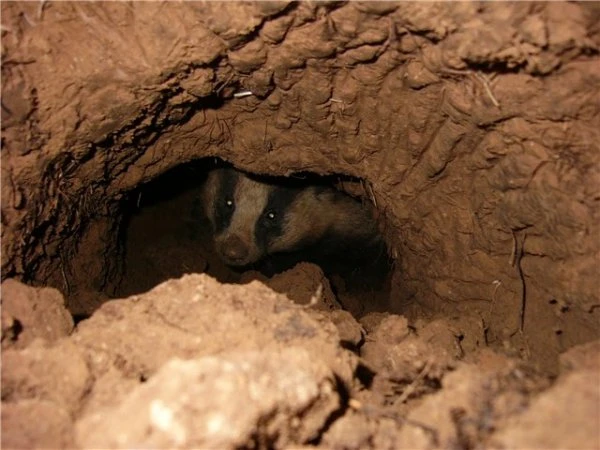
Hello, I wasn't expecting you, so my place is a bit untidy. Would you like some tea?
But badgers don't know when to stop. If their burrow is well-located and the surrounding soil is stable, they expand it generation after generation, over the course of centuries. Then a modest dwelling with a single entrance turns into a multi-tiered structure with numerous nesting chambers, storage rooms, and dozens of entrances. Its area can reach up to one hectare! 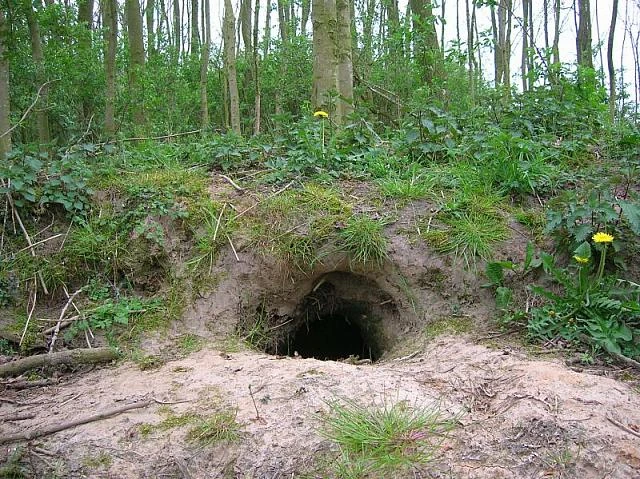
Want to know how deep a badger's burrow goes? 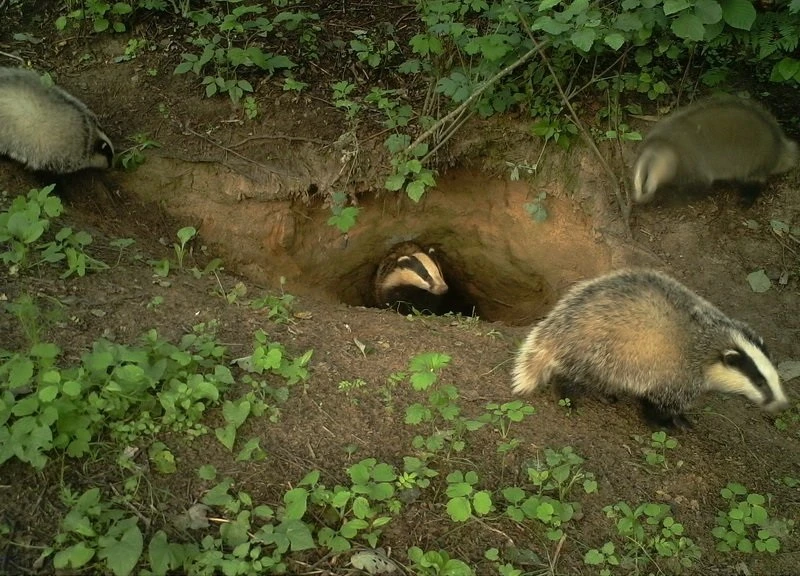
Guys, let's build a house together!
Of course, such a fort is too large for one badger, so it is inhabited by several animals, often unrelated. And they are not the only ones. Sometimes foxes and raccoon dogs take up residence in the empty parts of the fort. The badgers don't bother them. As long as they don't interfere with the badgers, of course. So, step by step, the badger creates not just a cozy home and a food supply that allows it to survive a hunting mishap or two, but also the ability to hibernate for the entire winter. And even when it awakens in the spring, the thrifty animal can calmly recover. After all, last year's provisions are stored away, and some fat remains on its belly.