You'll be able to tell for yourself if you look closely at their eyes. No, not those black dots on their faces—those are their nostrils. You need to look higher and deeper, at the oddly shaped green lobes visible through the translucent skin. Those are their real eyes. They're physically impossible to reach from the outside, so no dangerous parasitic worm or malicious virus can harm them. 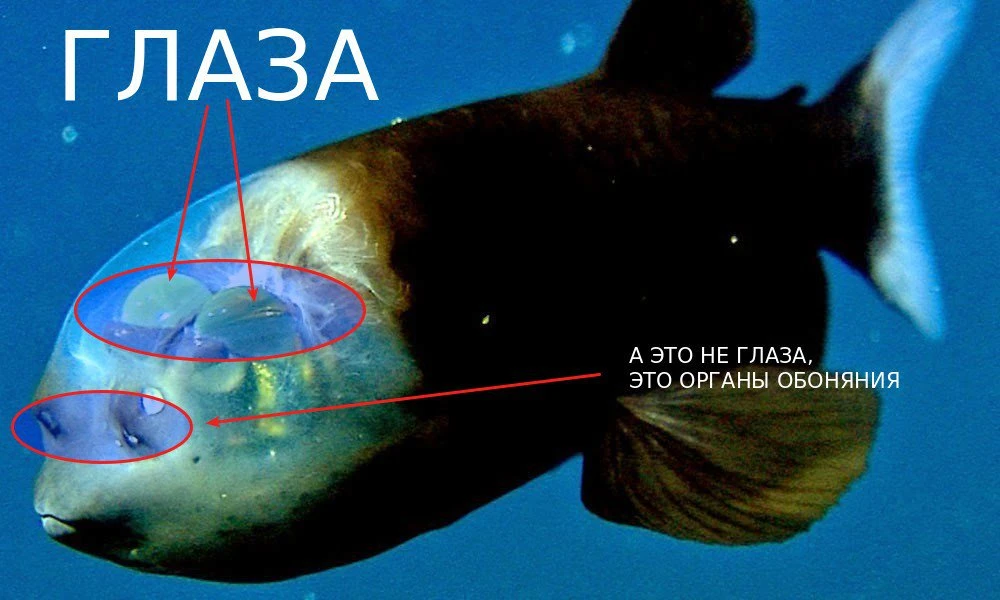
A fish-fish-fish-fish looks playfully at me. 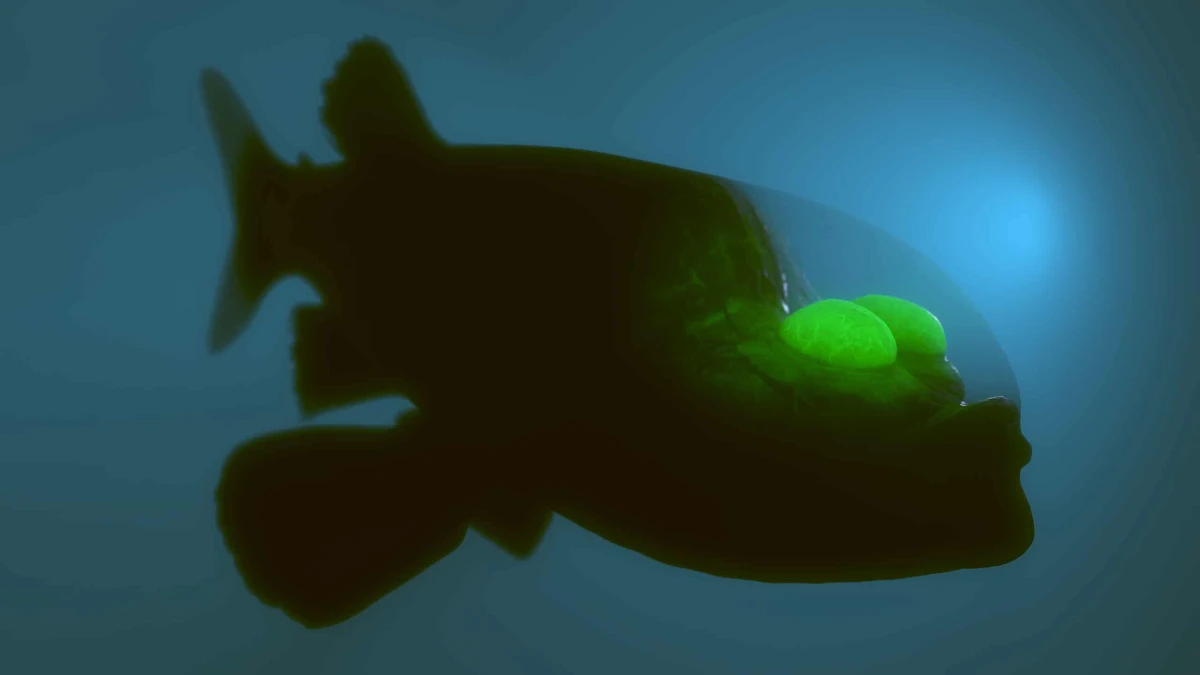
And how do you put glasses on this?
It sounds so cool that it even becomes unclear: why haven't all other vertebrates thought of this? Why did some deep-sea fish figure out how to hide their eyes behind a huge transparent lens, while humans, birds, and frogs have to blink 20 times a minute to avoid going blind? 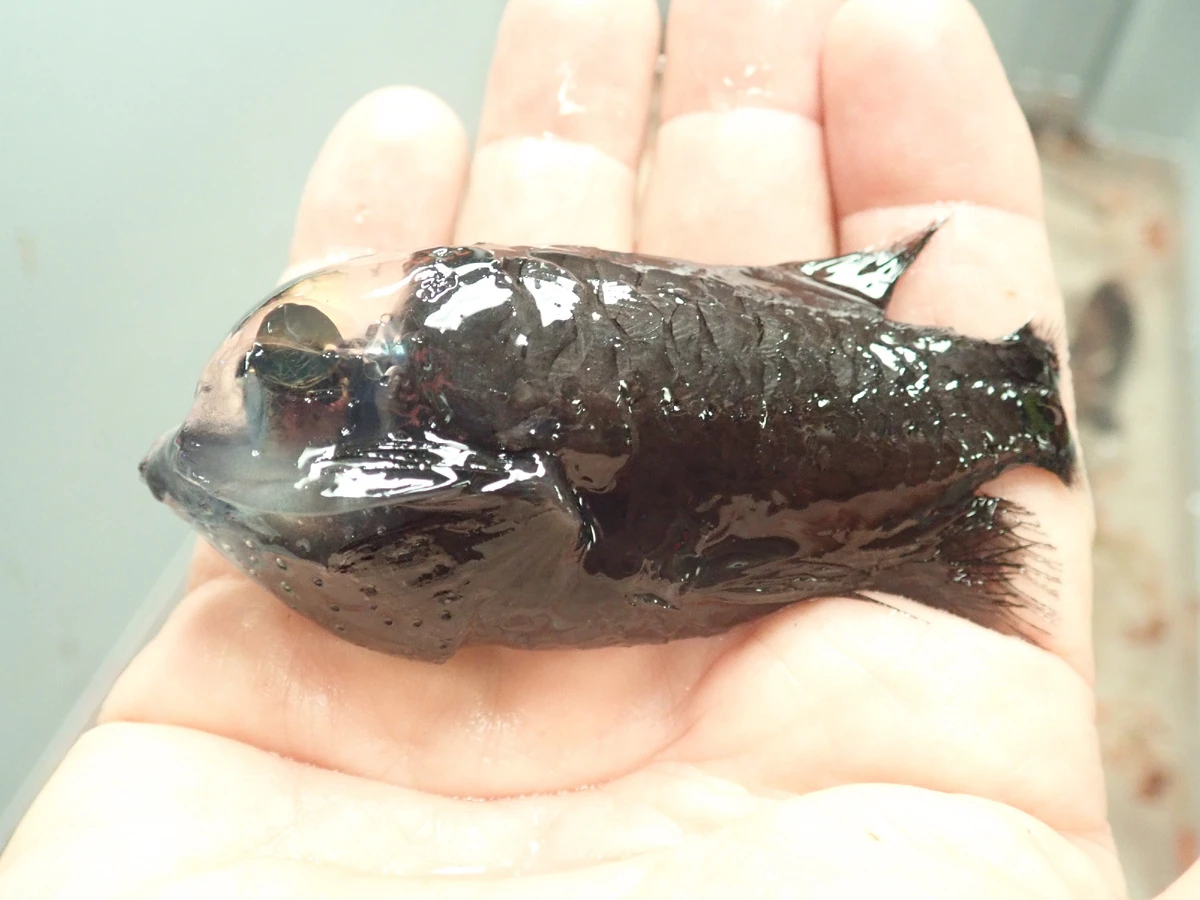
Here it is, the pinnacle of vertebrate vision! Or is it?
Because such reliable, yet crude, eye protection has effectively destroyed the barreleye's vision. Through its thick, leathery lens, the fish sees only the silhouettes of animals and can track their size and direction of movement. But even to achieve such simple vision, it had to transform its eyeballs into cylinders, operating much like binoculars. 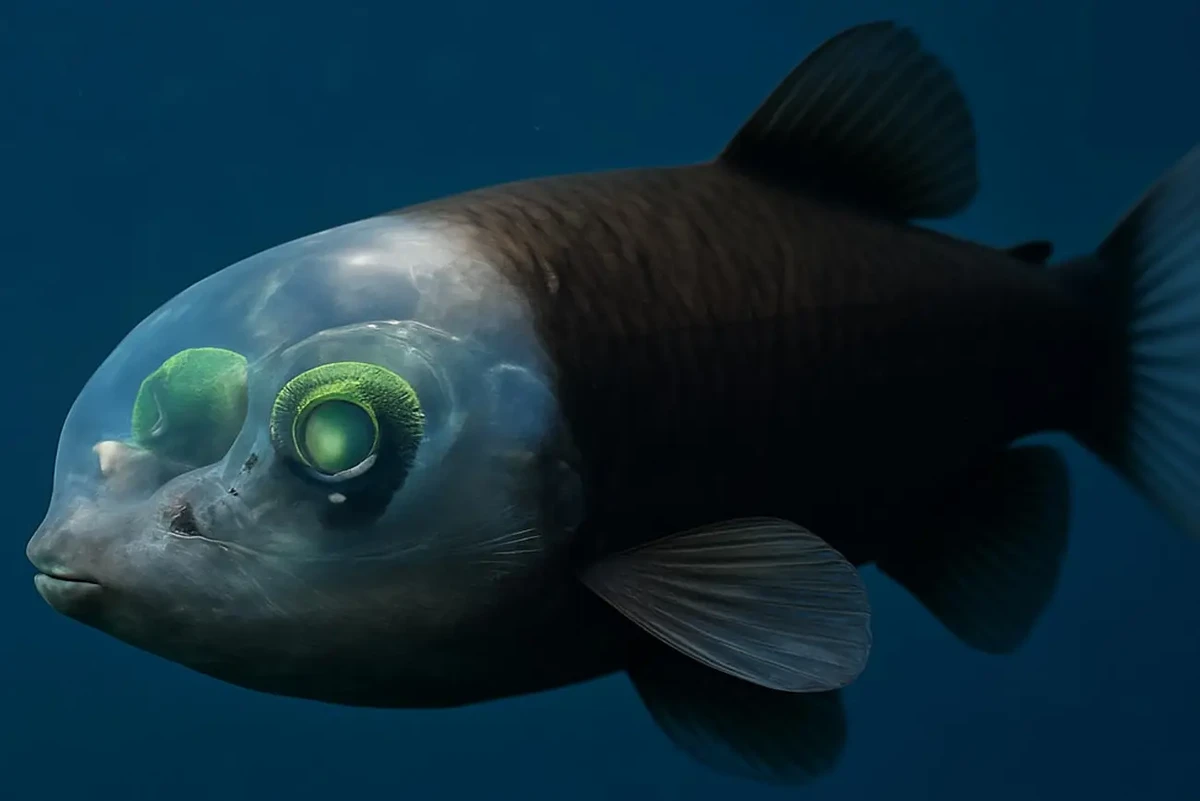
During hunting, the eyes switch to the prey and assume a more or less normal position. However, they are still located inside the head... 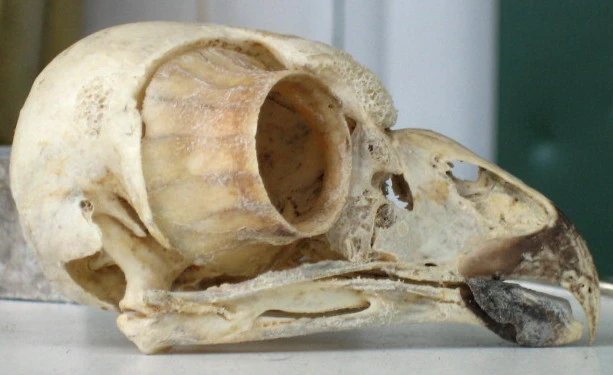
The skeleton of an owl's eyes. This shape allows them to see very far, like through binoculars. The same is true for the barrel-eye.
The only reason a half-blind fish hasn't been eaten alive is its habitat. The barreleye lives at depths of 600 to 3,600 meters; half of the locals are blind, and as the saying goes, in the land of the blind, even the one-eyed is king. 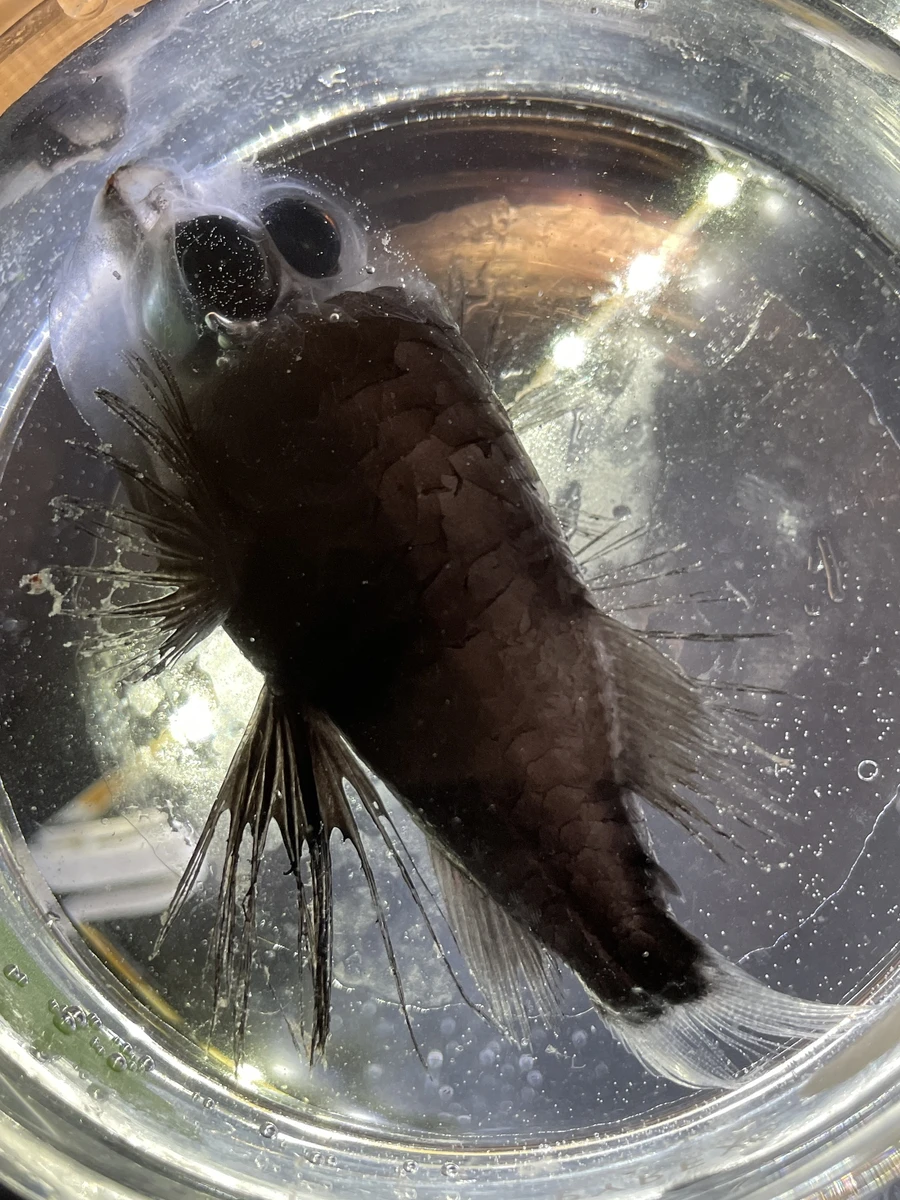
Meet the king!
But to be fair, it's worth acknowledging that the barreleye's eyes are capable of more than expected. We previously believed that the fish's eyes were completely incapable of movement, turning them into a kind of underwater owl. This was a mistake; the scaly creature can actually move them, and by almost 90°. When held vertically, the barreleye's eyes scan for the silhouettes of potential predators poised to attack from above, while when held horizontally, they scan for prey: jellyfish and siphonophores. The fish eats them along with their venomous tentacles, to which they are immune. 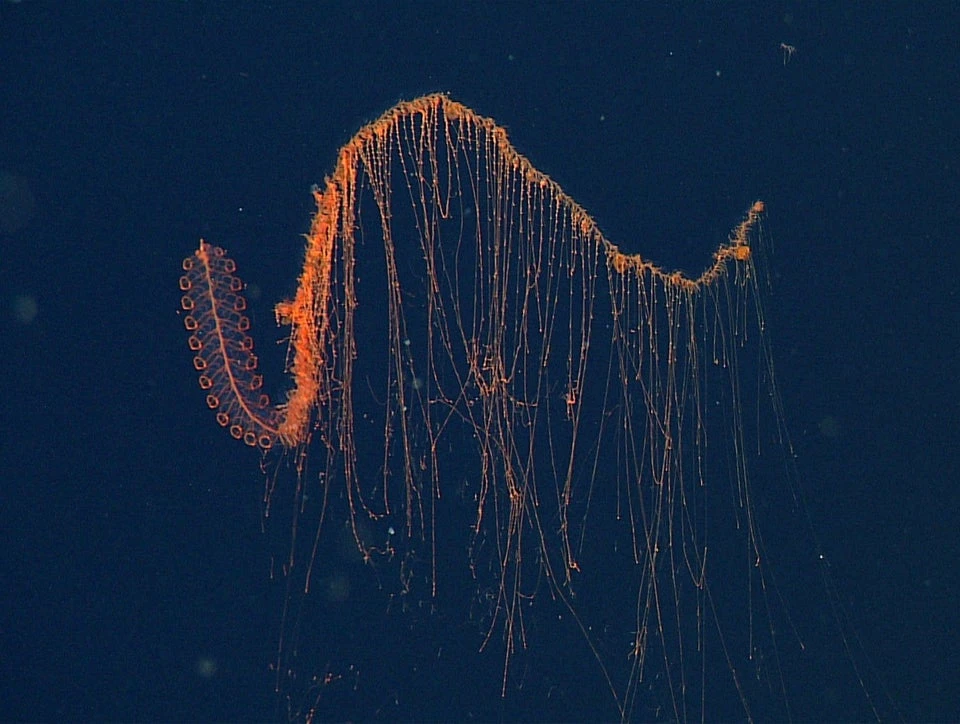
This is what a siphonophore looks like. It's an entire floating colony of simple organisms, distantly related to jellyfish. They often have the ability to glow.
How the fish find each other during breeding season is a mystery. It's unlikely they rely on their poor eyesight, but the exact methods for finding a mate have not yet been determined—the fish are encountered too rarely. However, it is known that both male and female don't care about the fertilized eggs and don't even try to protect them. The oil-coated eggs quickly float to the surface and spread across a good half of the Pacific Ocean, providing the species with a vast habitat.
Add your comment
You might be interested in:











Housewife Irina Brovkina sang the composition of the

Supercar of Russian oligarch confiscated in Ukraine (3

Fish house in India (5 photos)

The neural network visualized famous songs (19 photos)

Glen Lockett. California in the 60s (39 photos)

A rare sports Mercedes-Benz SL 65 AMG Black Series with

MiG-29 launches AGM-88 HARM anti-radar missiles

Retrofuturistic prototype Mercedes-Benz Vision One-Eleven
Scientists repainted cows as zebras and got an unexpected

Protective film Removing it with a power screwdriver

How to start a 102-liter engine

When a child plays hide-and-seek at a professional level

Man sets up bedroom camera and discovers the reason for his

Super dads who swoop in to save the day

Precision carpentry

Looks like it's time to buy WinRAR

How to hang wallpaper neatly

Athlete in Bavarian dress flies over a lake on a hydrofoil
