Comet Churyumov-Gerasimenko: 10 Breathtaking Photos from a Record-Breaking Distance (15 photos)
Comet 67P/Churyumov–Gerasimenko (hereafter Churyumov–Gerasimenko) is one of the most thoroughly studied celestial bodies in the Solar System. This cosmic wanderer, composed of two fragments*, resembles a giant rubber ducky. 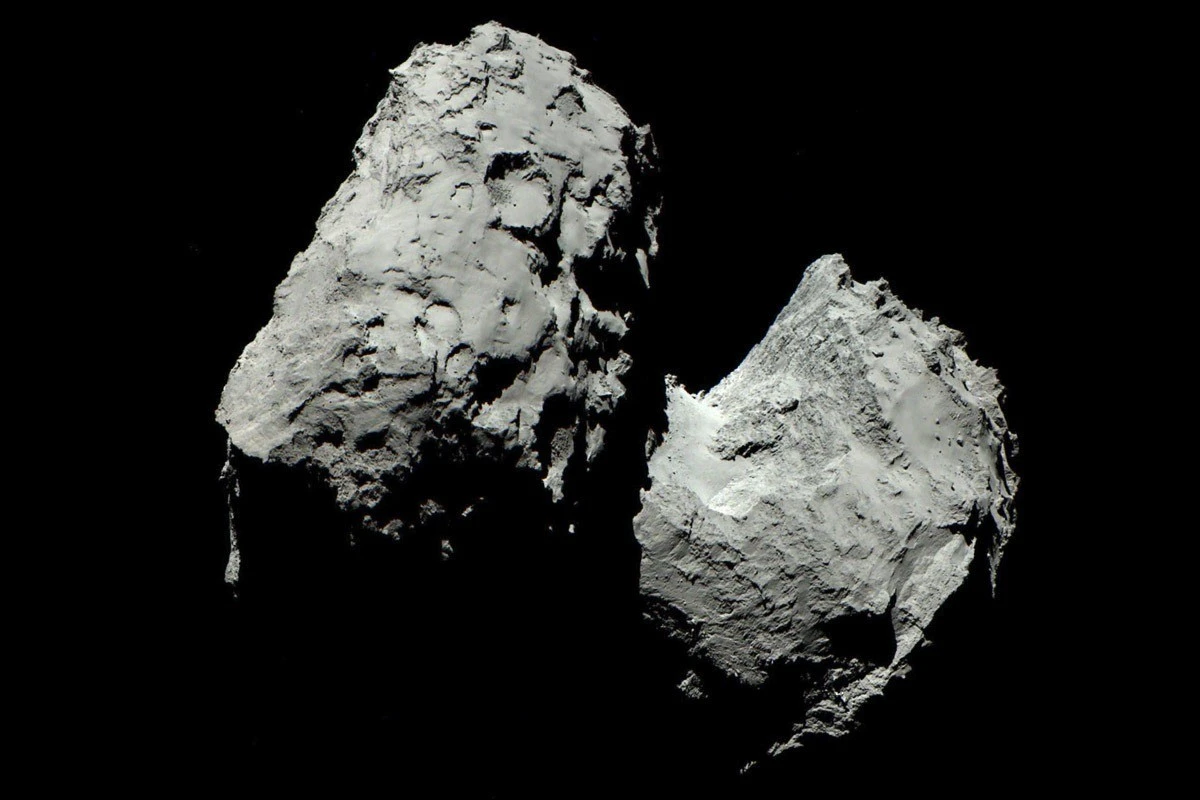
Color image of Comet Churyumov-Gerasimenko, obtained by the Rosetta probe on August 6, 2014, from a distance of approximately 120 kilometers.
*Comet dimensions: 4.1 km × 3.3 km × 1.8 km (large part); 2.6 km × 2.3 km × 1.8 km (smaller part).
On March 2, 2004, the European Space Agency (ESA) Rosetta probe was launched toward the comet. It reached its destination in May 2014, becoming its temporary artificial satellite.
By the end of September 2016, the comet began moving away from the Sun, and the spacecraft was receiving less and less power from its solar panels. Scientists were faced with a choice: put the probe into "sleep mode" until its next close encounter with the Sun or obtain the maximum scientific data. Since there was no guarantee that the probe would survive the extreme cooling, ESA chose the second option—a controlled collision with the comet. On September 30, 2016, Rosetta began its fourteen-hour descent toward the surface. The probe was aimed directly at the region of active "wells"—the comet's local geysers. Until the last second, the probe transmitted invaluable data to Earth from its gas flow analysis. At just 3 kilometers per hour—slower than a pedestrian—the spacecraft gently touched the comet's surface, becoming a permanent part of it.
I present to you ten detailed images of Comet Churyumov-Gerasimenko's features, captured by the Rosetta spacecraft's navigation camera during its closest approach to this remarkable object.
Natural Cosmic "Engines"
This image, taken from a distance of 7.7 kilometers, includes one of the many pits on the comet's surface. Scientists speculate that these pits act as "engines" for the celestial body. 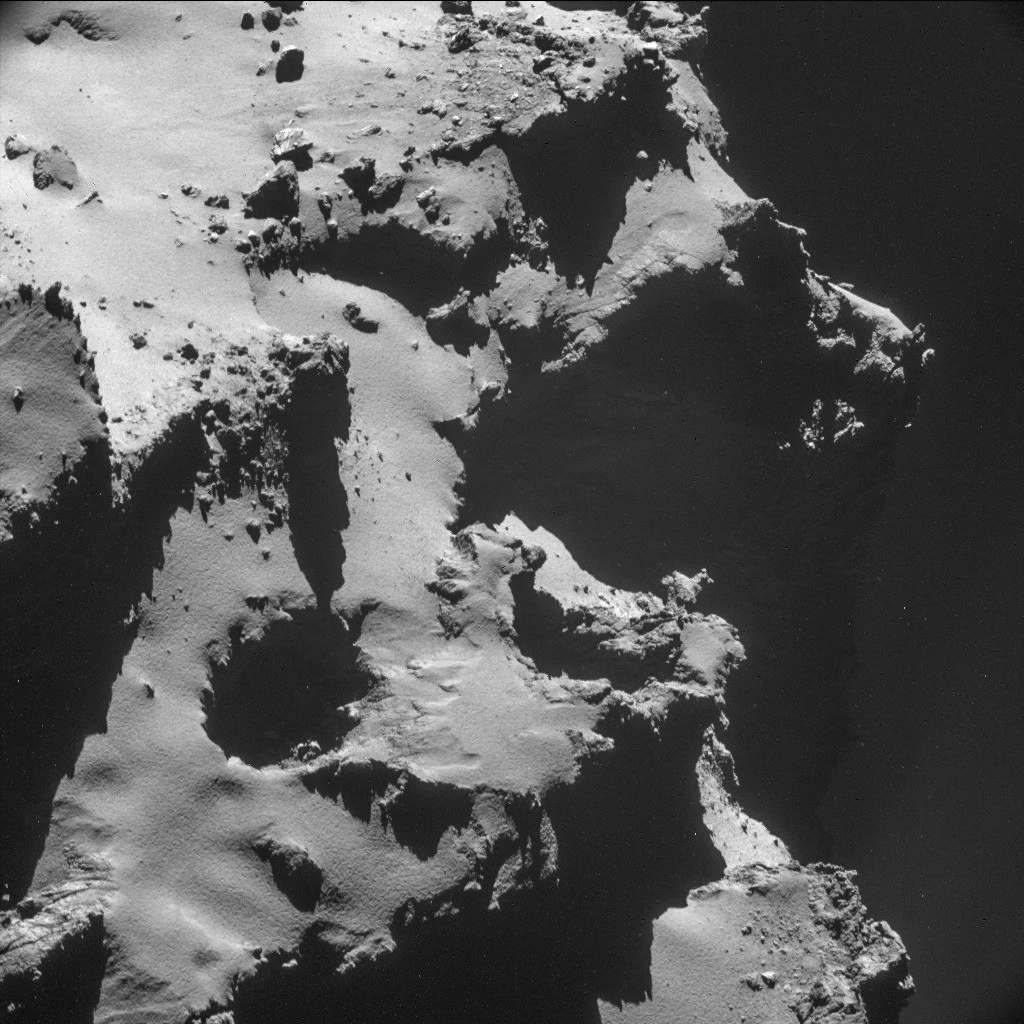
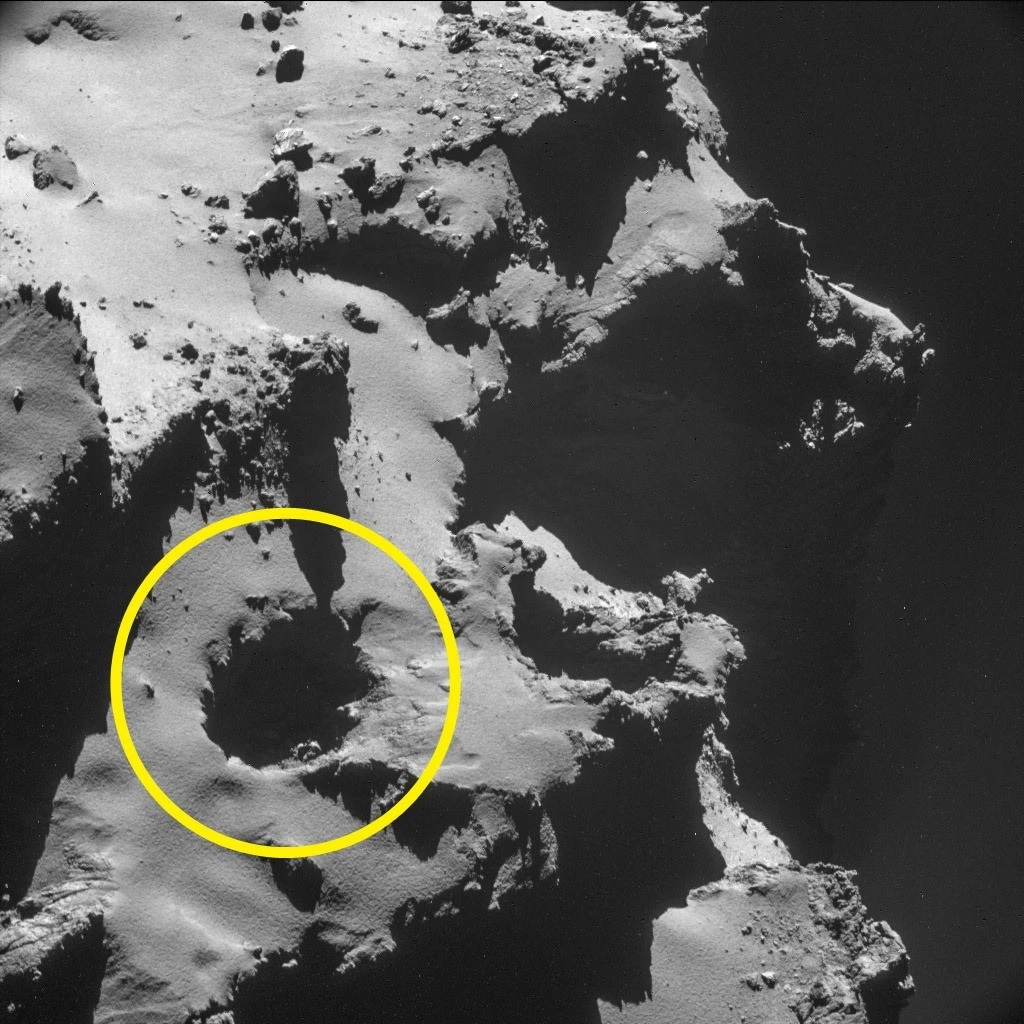
It is from here that gas escapes through the comet's porous interior, carrying dusty particles of cometary material with it. This process is responsible for the characteristic cometary activity that can be observed as it approaches the Sun.
The image covers an area of 866 by 866 meters.
Space Mesas
This dramatic view along the horizon reveals several flat-topped formations rising from the rugged terrain. The walls of these mesas are riddled with numerous cracks and deep fissures, and at their base lies debris that likely once rolled down the cliffs and crumbled under erosive forces. 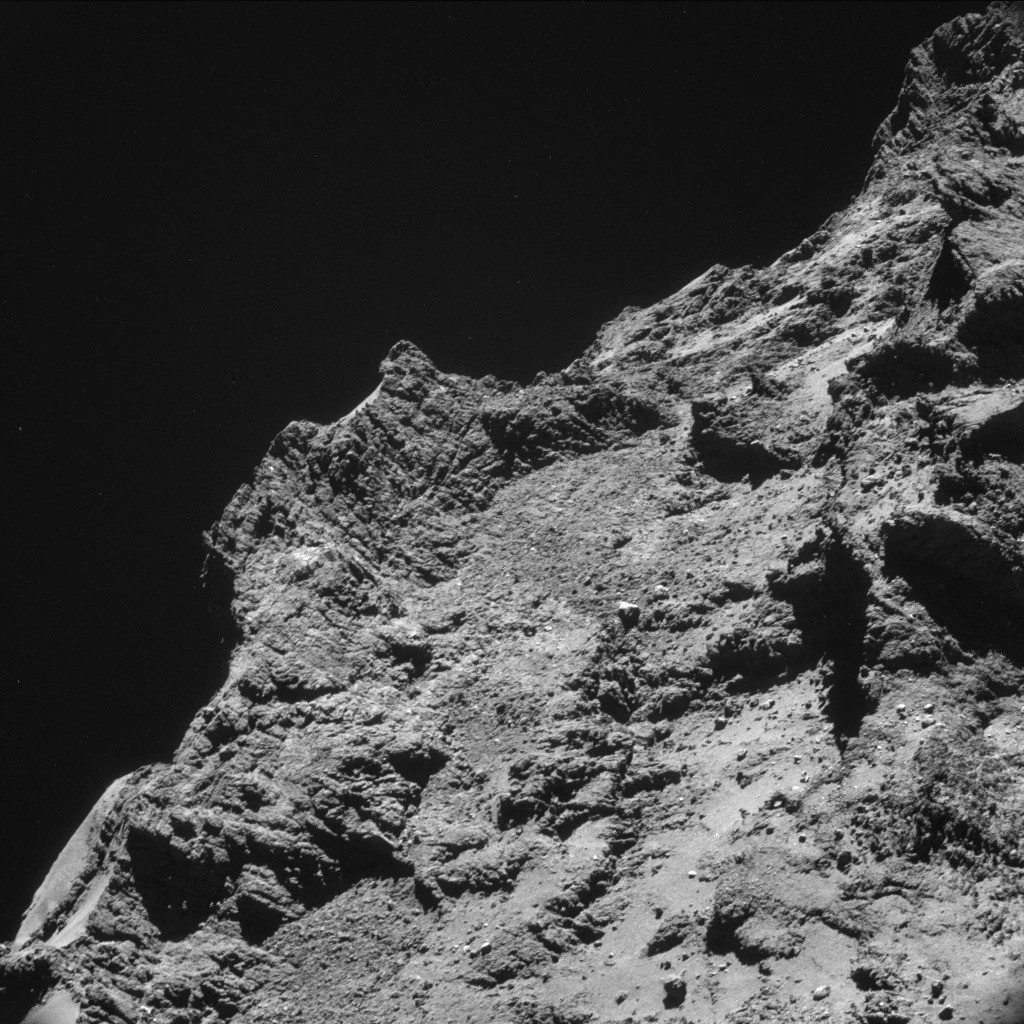
The image, taken from a distance of 7.8 kilometers from the surface, covers an area of 859 by 859 meters.
Khups Boulder
In the upper left corner of the photograph rises the Khups Boulder—the largest and most striking of all the boulders in this region. This flattened ellipsoid is impressive in size: 45 meters wide and 25 meters high. 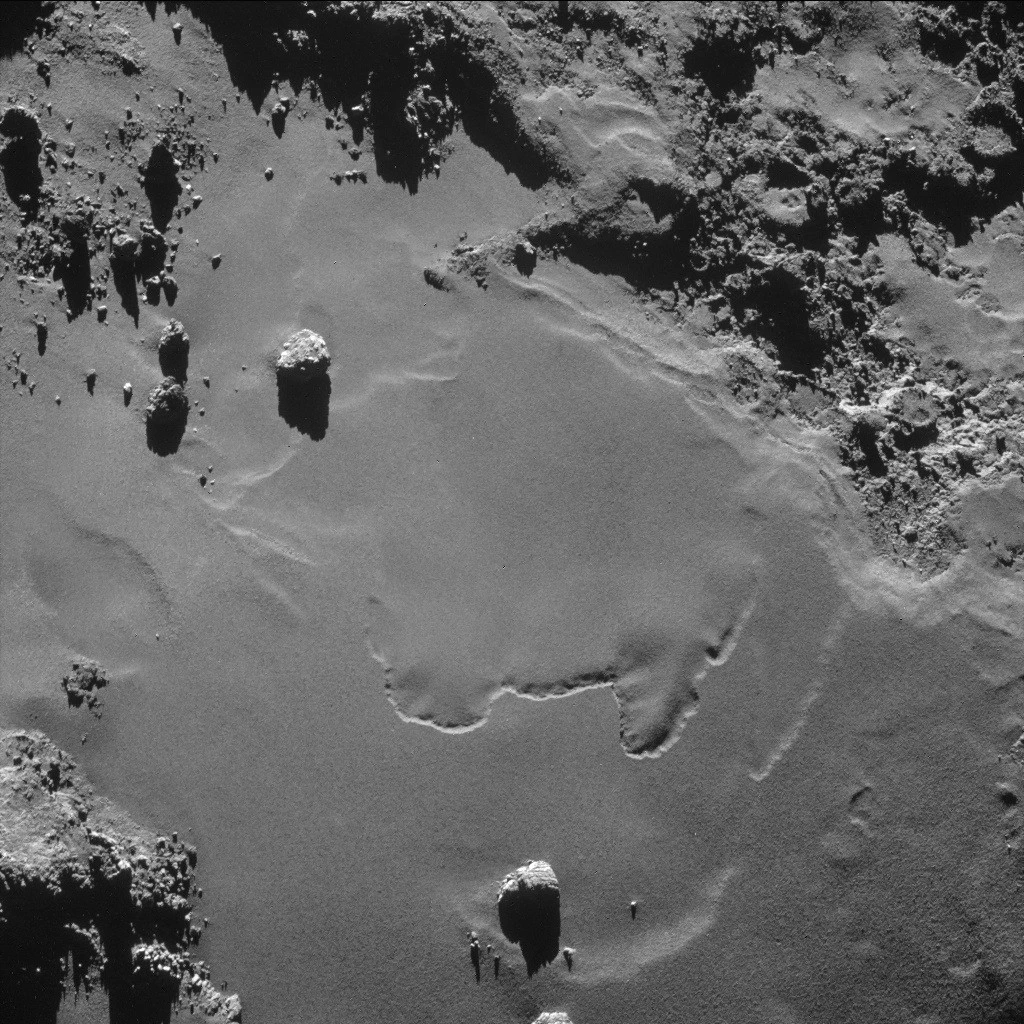
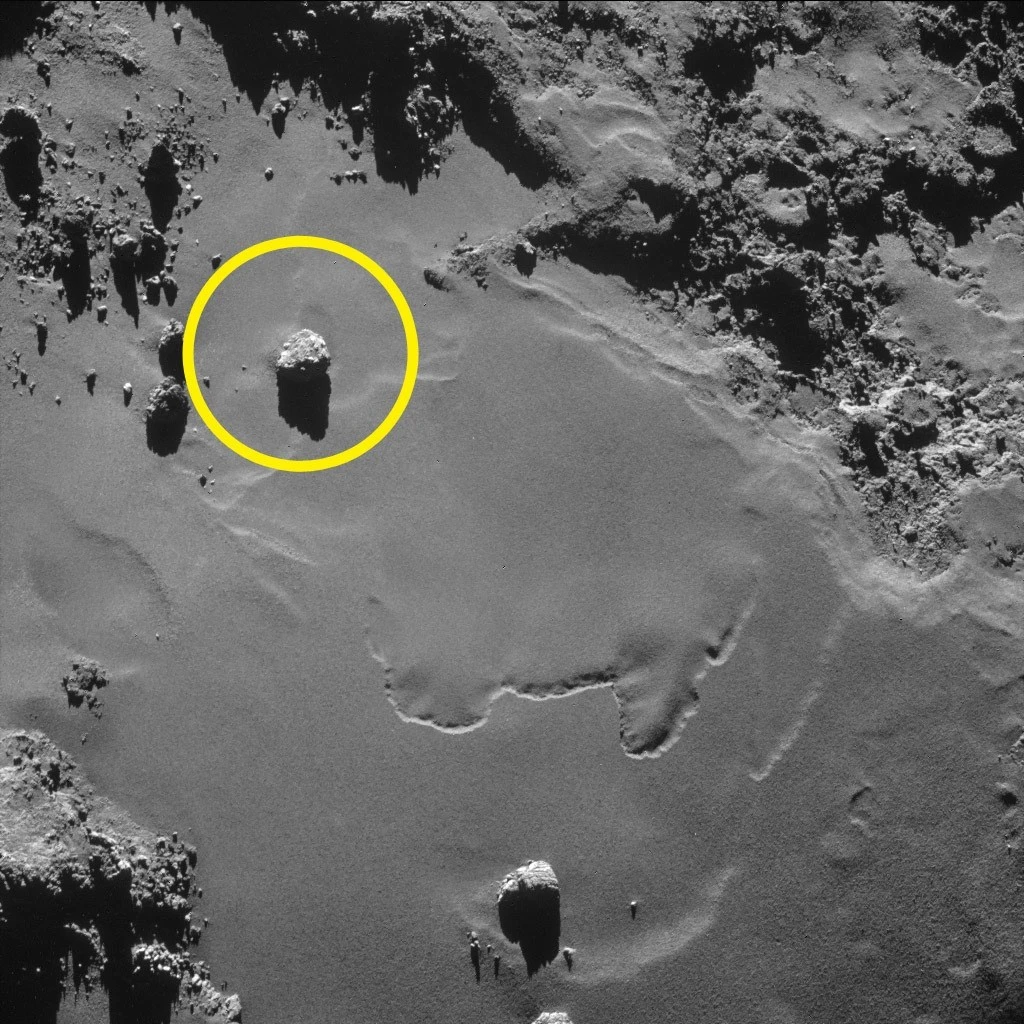
Khufu and the surrounding boulders, protruding from beneath the smooth, dusty surface, reminded scientists of the famous pyramids at Giza, so it was named after the Great Pyramid of Pharaoh Khufu.
The image, taken from a distance of 7.8 kilometers from the surface, covers an area of 854 by 854 meters.
Cometary Rocks
This image captures a smaller portion of the comet and the smoother relief of the "neck" region. The rocks of the larger portion of the comet rise majestically in the background, adding a special touch to the image. 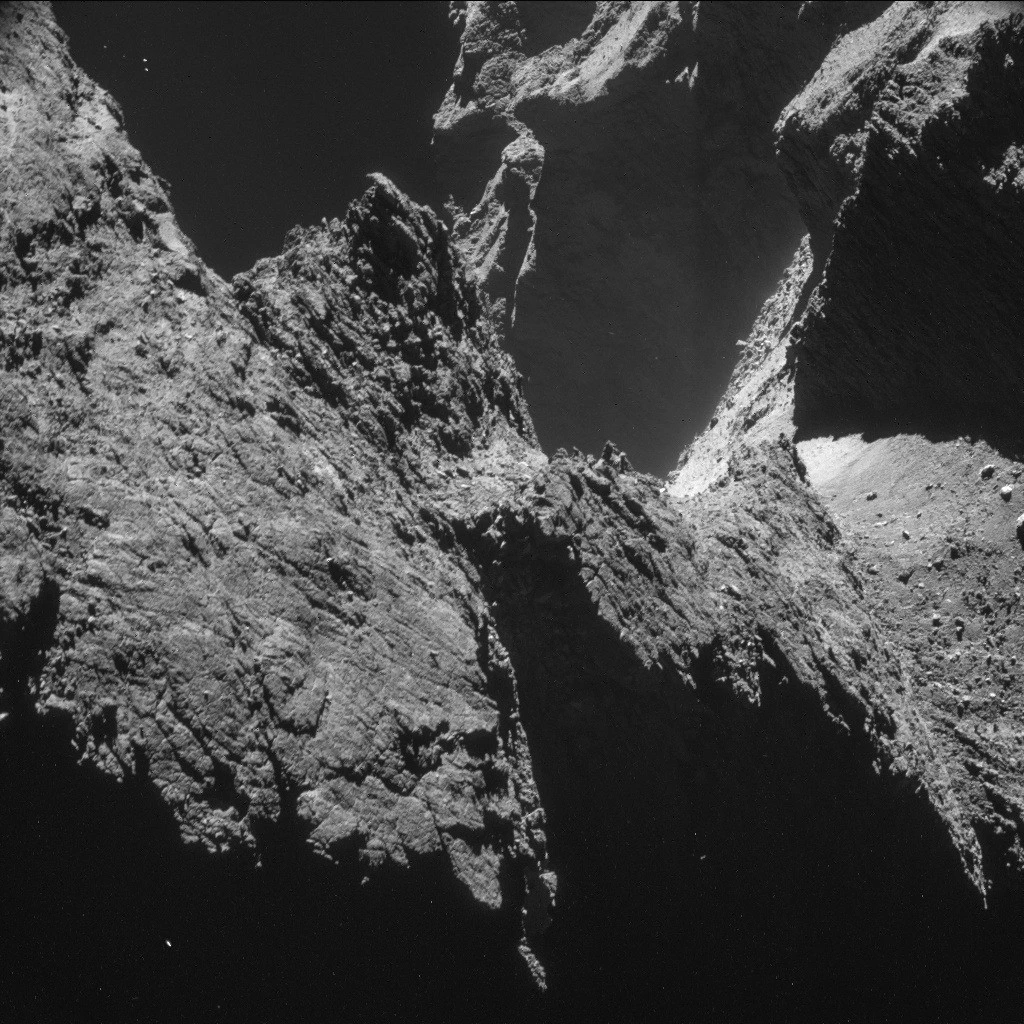
The image, taken from a distance of 7.8 kilometers from the surface, covers an area of 855 by 855 meters.
Pages of the Stone Chronicle
In this image of a large portion of Comet Churyumov-Gerasimenko, the rows of long parallel grooves and ridges in the center of the frame are particularly striking—these superimposed natural formations can tell a story spanning billions of years. 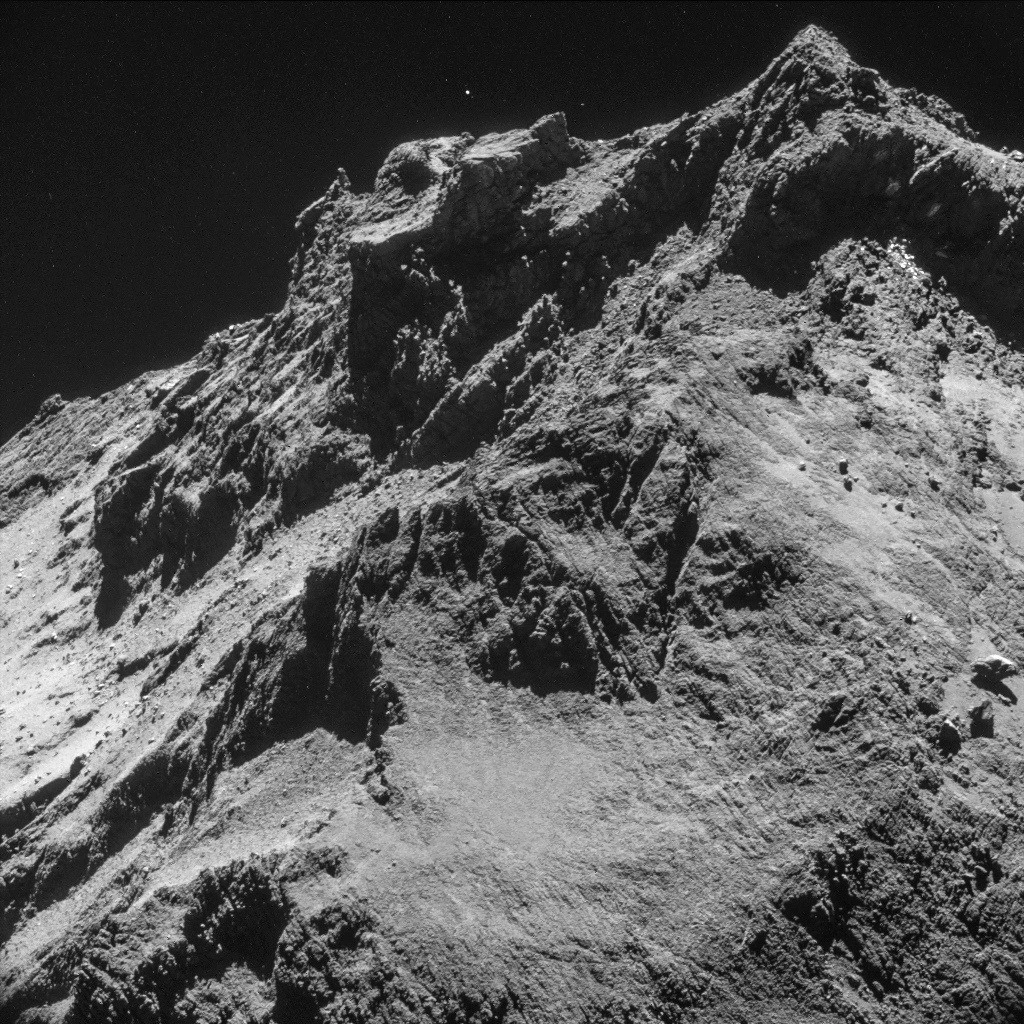
If humanity were to organize a mission to collect samples from this region and return them to Earth, we would have the opportunity to learn much about the early days of the Solar System.
This image, taken from a distance of 8.8 kilometers from the surface, covers an area of 855 by 855 meters.
Plateau with "fresh wounds"
This image highlights a distinctive flat structure located on the elevated plateau of the comet's larger lobe. Areas of lighter material are visible at the base of this formation—possibly "fresh wounds" of the Churyumov-Gerasimenko collision, exposed by erosion or a collision with a small celestial body. 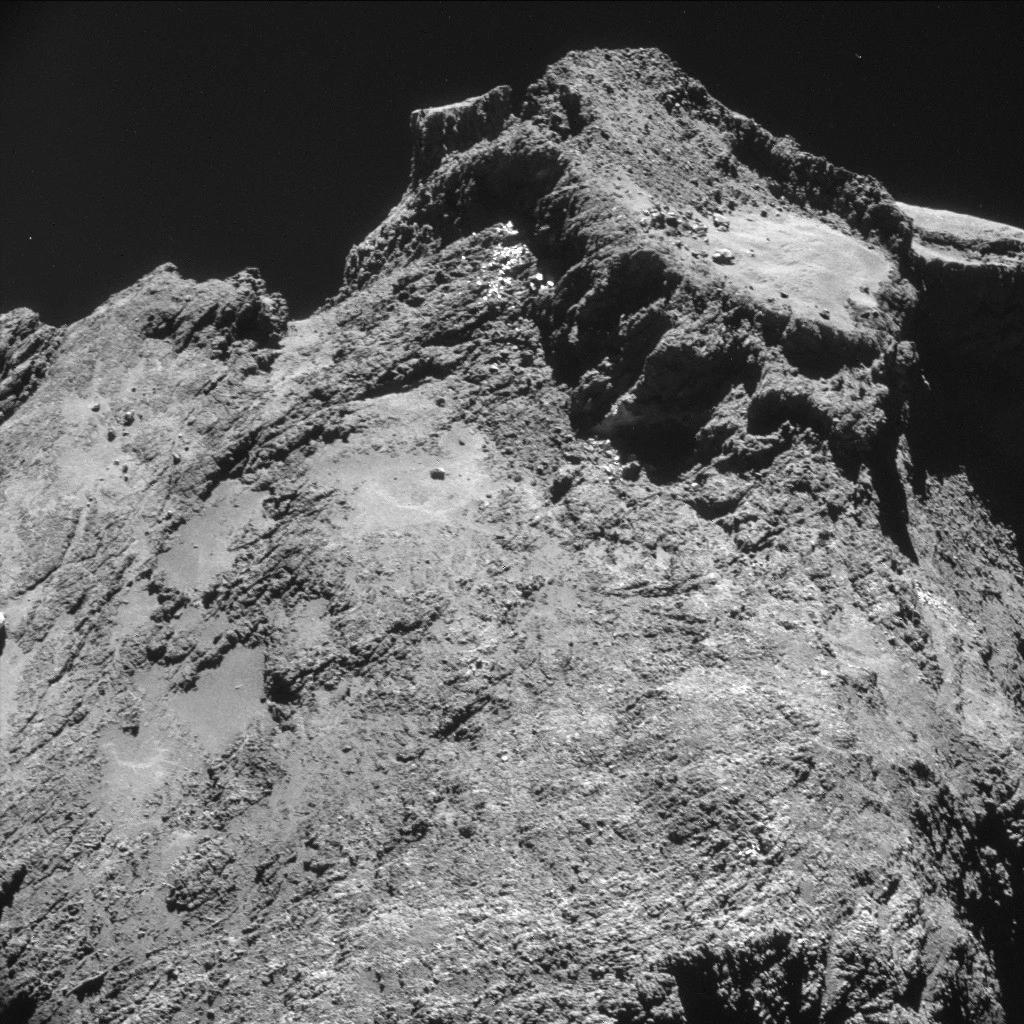
The image, taken from a distance of 7.8 kilometers from the surface, covers an area of 854 by 854 meters.
Debris-filled depressions
This image shows the view from the smaller lobe of the comet (in the foreground, lower left) to the larger lobe, which takes up the majority of the frame. Debris-filled depressions predominate here. 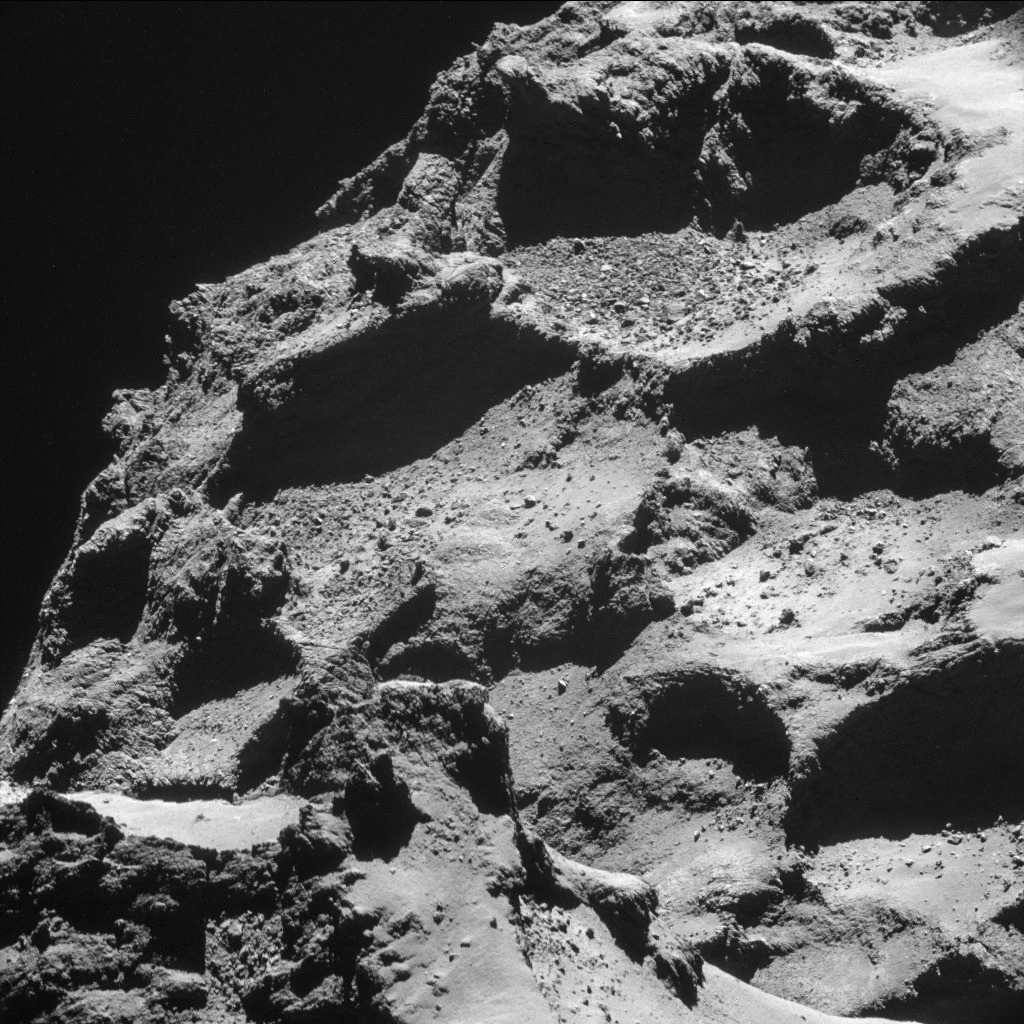
It is believed that these rounded depressions may be associated with the comet's sources of activity, possibly gas vents from its porous interior.
The image, taken from a distance of 7.7 kilometers from the surface, covers an area of 847 by 847 meters.
Rocky protrusion and cometary breath
This photograph shows a view of a large lobe of the comet's body. A wide, elevated area on the horizon contrasts sharply with the surrounding landscape. Brighter material was detected on both sides of the inner portion of the "wall," which may be related to recent cometary activity. 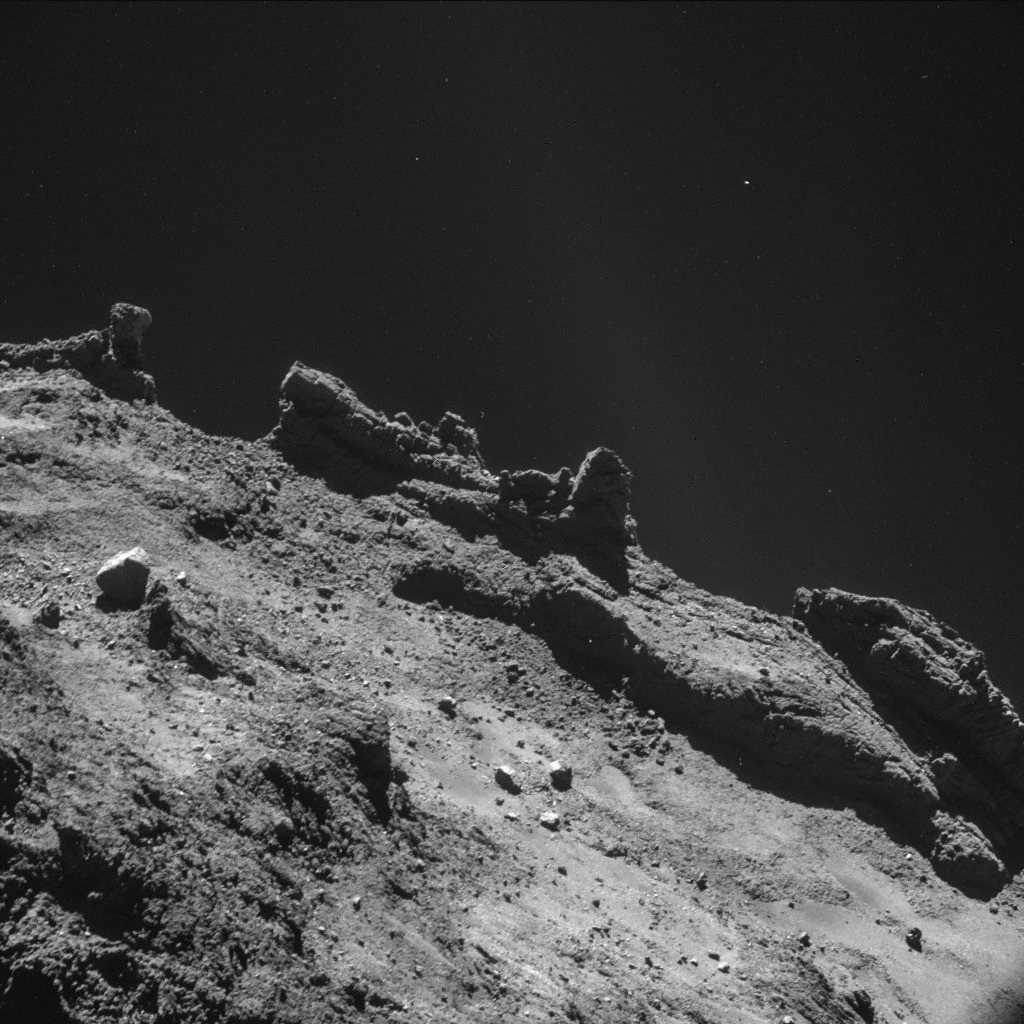
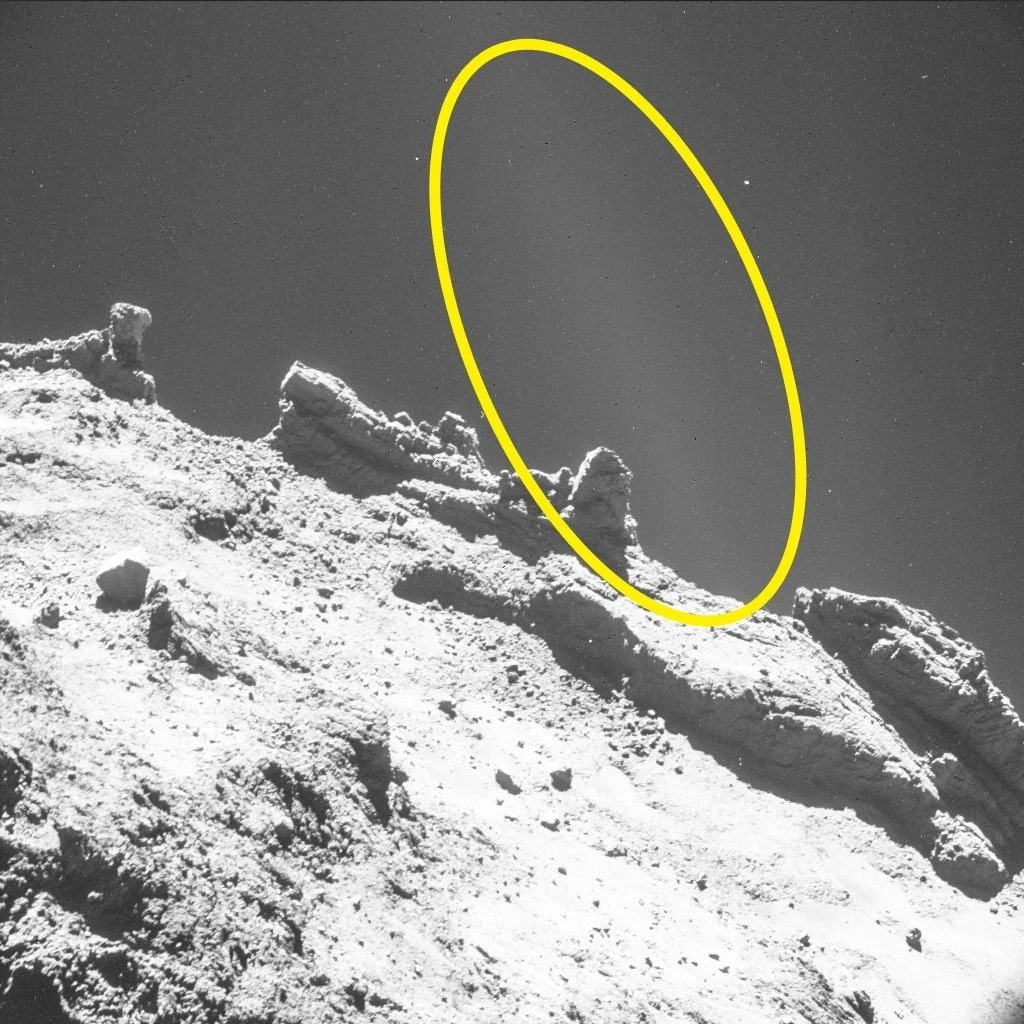
And indeed, if you look closely, you can see a faint stream of gas and dust in the background—evidence that the comet is "breathing" and remains active.
The image, taken from a distance of 7.8 kilometers from the surface, covers an area of 857 by 857 meters.
A Gravity Puzzle
The relatively small boulders captured in the frame seem to defy gravity, clinging to the steep slopes of the comet's larger lobe. An equally intriguing detail is on the right, where the rock layers appear compressed—possibly the remnants of an ancient cosmic catastrophe. 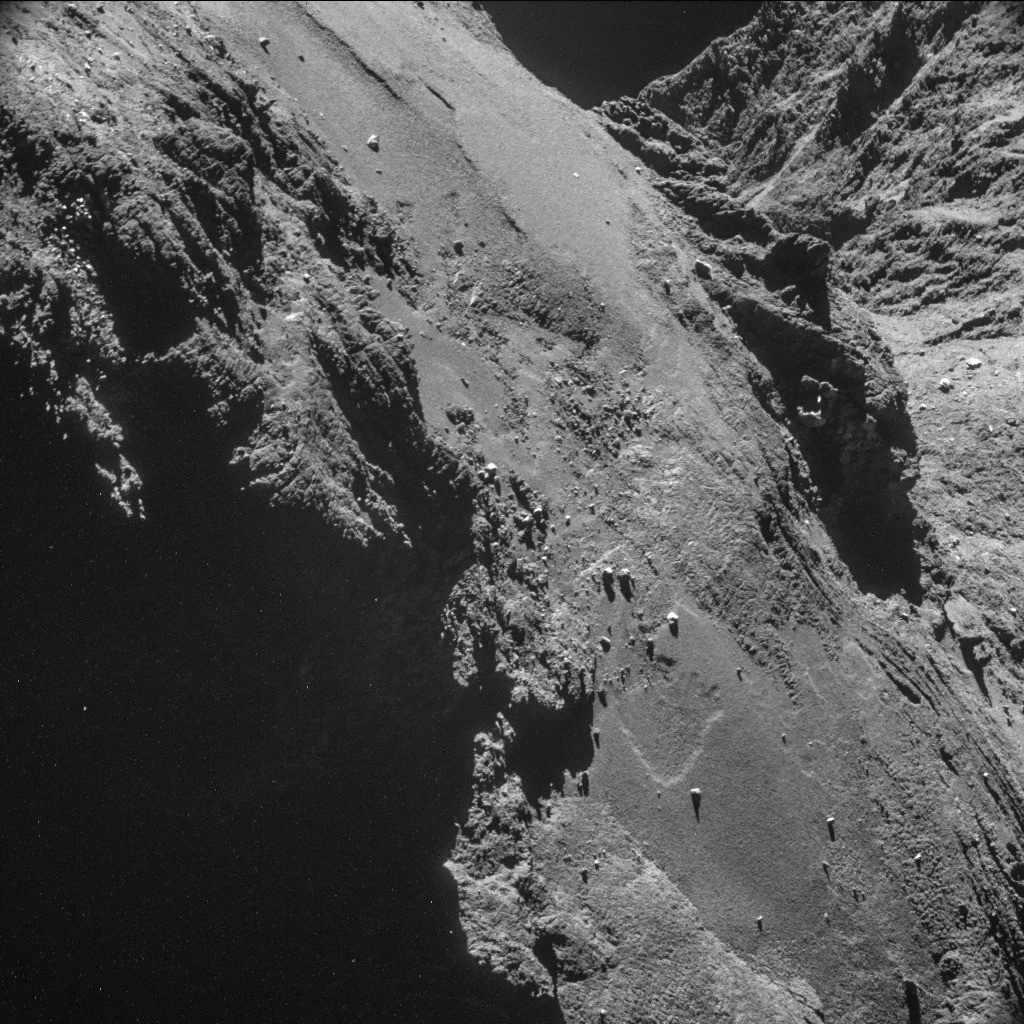
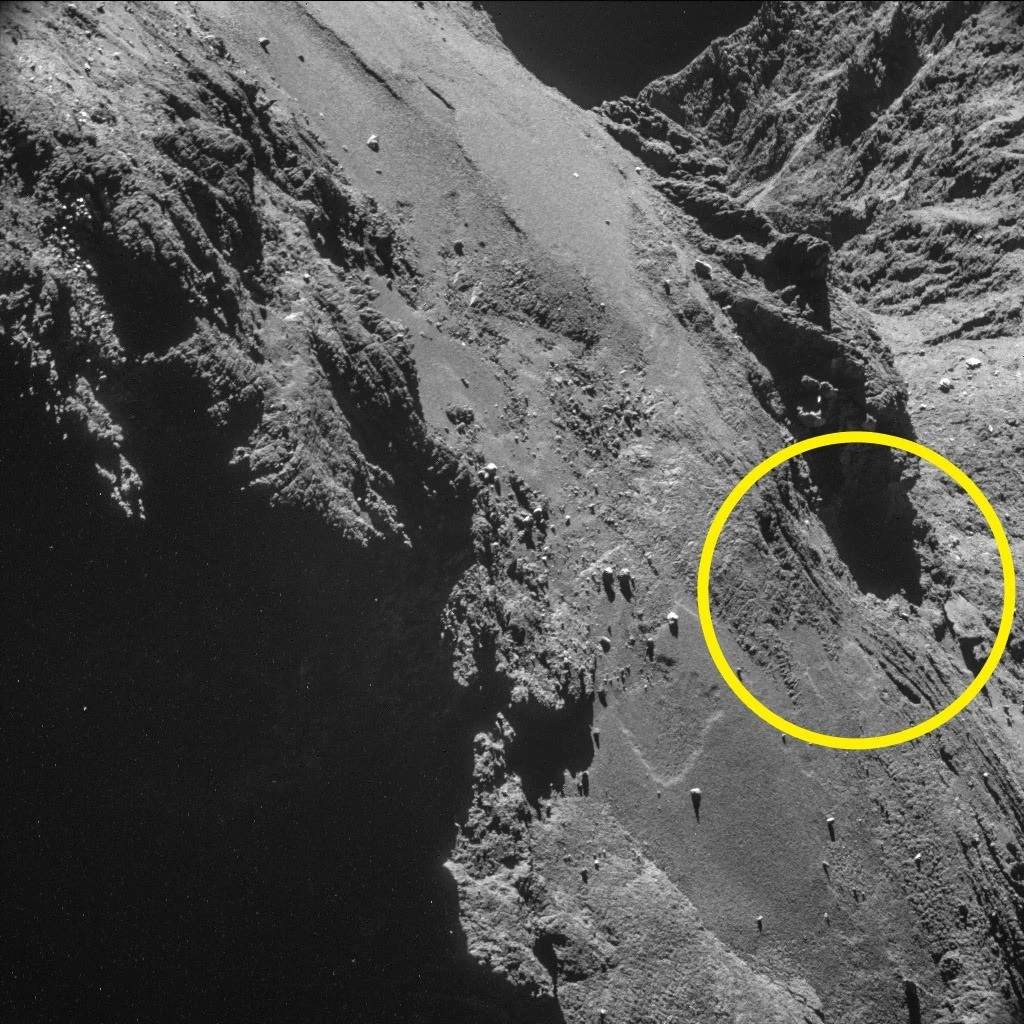
One theory suggests that the comet formed as a result of a gentle collision between two smaller bodies, which would explain its unusual shape.
The image, taken from a distance of 7.8 kilometers from the surface, covers an area of 857 by 857 meters.
The Comet's "Neck"
The final image shows the boulder-strewn region of the comet's "neck"—the junction between its two lobes. The smaller lobe is located on the left, the larger on the right. It is the neck that is the source of most of Comet Churyumov-Gerasimenko's activity. 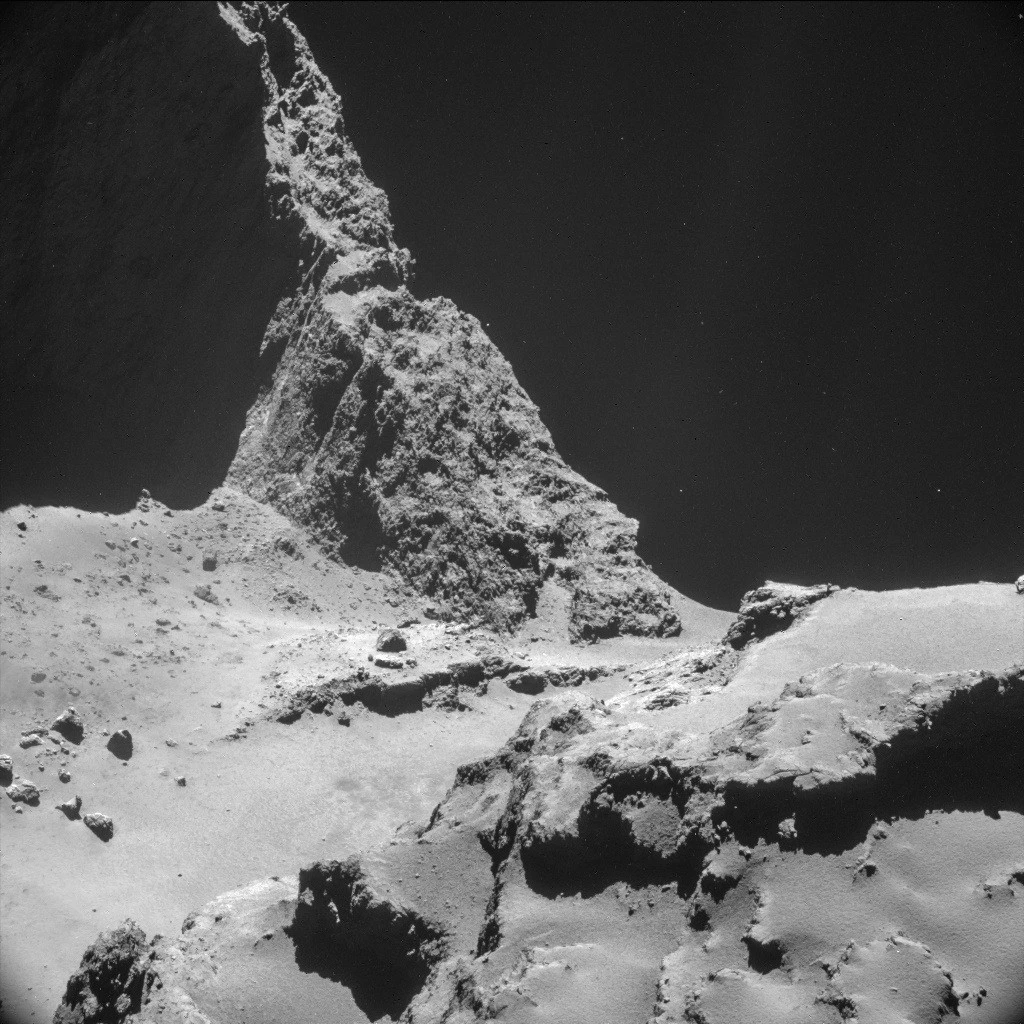
The photograph shows a clear contrast between the rough material of the rock walls and the softer, more textured material, resembling dust and sand. In the lower left corner of the frame, boulders are visible, although they appear small, some are taller than 10 meters.
The image, taken from a distance of 7.7 kilometers from the surface, covers an area of 844 by 844 meters.