Ancient Star Cluster Moves Against the Galactic Tide (1 Photo)
A newly released image from the Hubble Space Telescope captures the globular cluster Messier 30, or M30. Located roughly 27,500 light-years away in the constellation Capricornus, the cluster's core appears as a dense, luminous cloud of stars, though the space telescope can still resolve individual points of light. 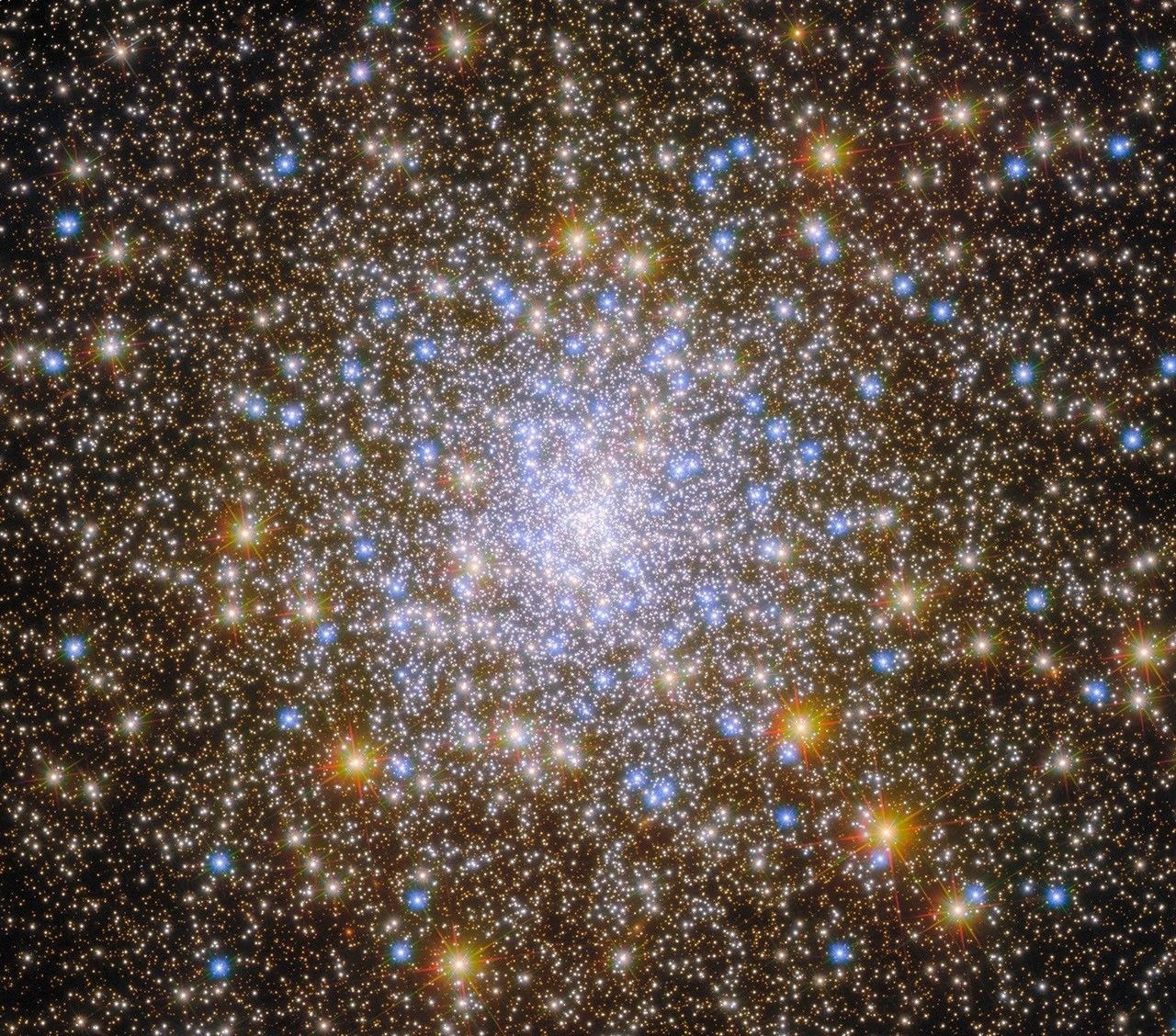
Cluster M30. ESA/Hubble & NASA, M. Libralato, G. Piotto, A. Sarajedini.
What makes this cluster unique is its retrograde orbit: it revolves in the opposite direction to the Milky Way's rotation. This unusual trajectory suggests M30 formed outside our galaxy and was captured by it later—a plausible explanation for its history, though its precise birthplace remains unconfirmed.
The composite image, unveiled by NASA on November 5, merges data from three separate observation programs across the ultraviolet, visible, and near-infrared spectra. By comparing data gathered over several years, astronomers can not only study the stars but also map their movements over time.