America's Cheese Caves: How and Why the US Government Stashed 635,000 Tons of Cheese Underground (11 Photos)
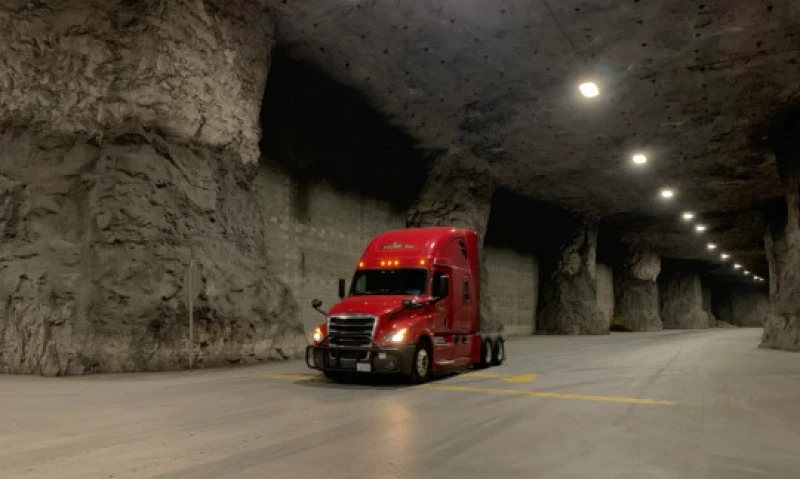
Deep underground in the United States, massive stockpiles of cheese are stored away to this day. This isn't an urban legend or the plot of a 3 a.m. conspiracy show—it’s reality. In former limestone mines across Missouri, roughly 635,000 tons of cheese and other dairy products are stored. These underground facilities are colloquially known as the "cheese caves." 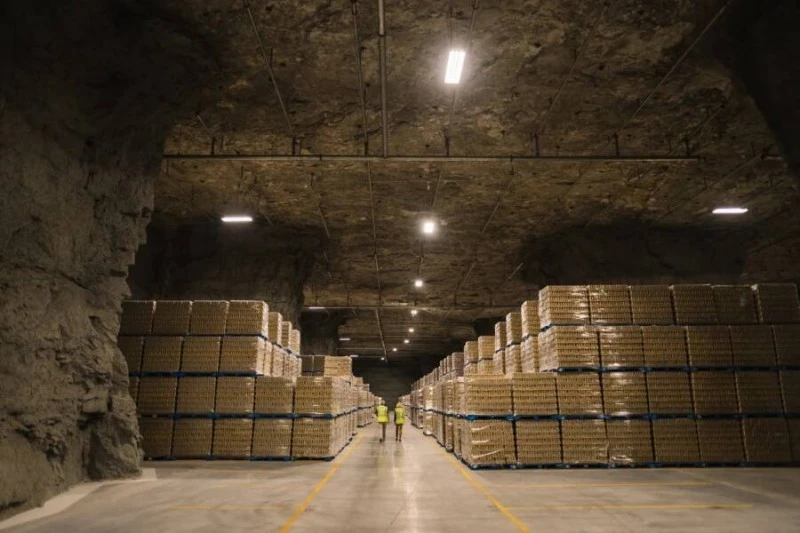
The story begins in the aftermath of World War II. Fearing food shortages, the government passed the Agriculture Act of 1949. It established a price support system for milk: if market prices dropped, the federal government was obligated to buy up the surplus. For a long time, the system functioned relatively smoothly. 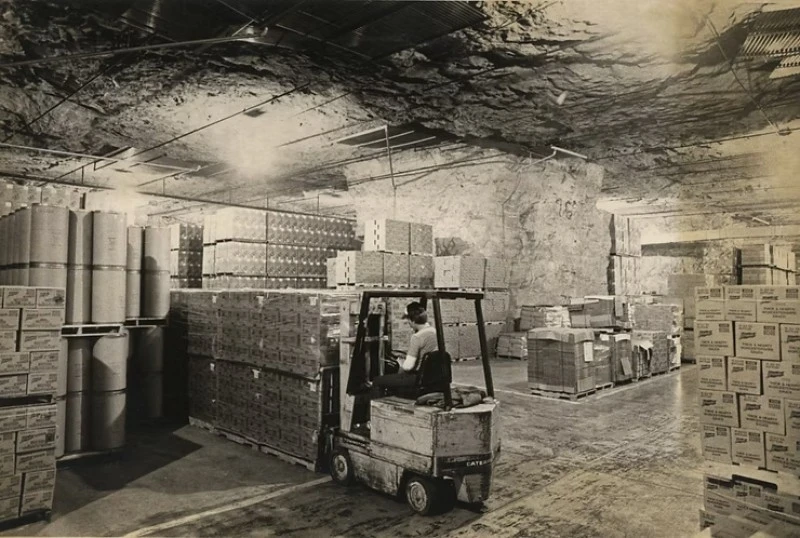
Everything changed in the 1970s. Under President Jimmy Carter—himself a farmer—the government poured nearly $2 billion into the dairy industry to support farmers amid rising inflation. Naturally, dairy producers ramped up production dramatically. The government kept buying the surplus, converting the milk into cheese, butter, and powdered milk to extend its shelf life. As a result, the government was left holding roughly 227,000 tons of dairy products. 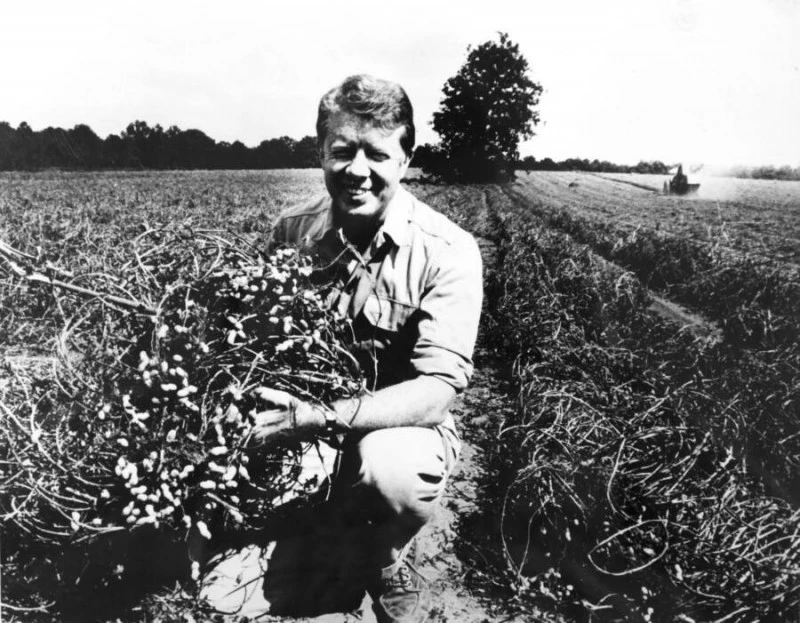
President Jimmy Carter on his peanut farm—essentially "America's Khrushchev."
Storing all of this in conventional warehouses was expensive and energy-intensive. That was when officials recalled the old limestone caves.
Underneath Missouri lie vast limestone deposits that had been heavily mined for decades. Once the reserves were depleted, they left behind massive, dry caverns with a natural chill. The temperature inside stays consistently low, making them ideal for food storage without the need for costly refrigeration.
By the 1980s, the government began putting these spaces to use. Among the most famous sites were a facility in Springfield, Missouri, with 298,000 square meters of underground space, and SubTropolis—the world's largest underground business complex—in Kansas City. 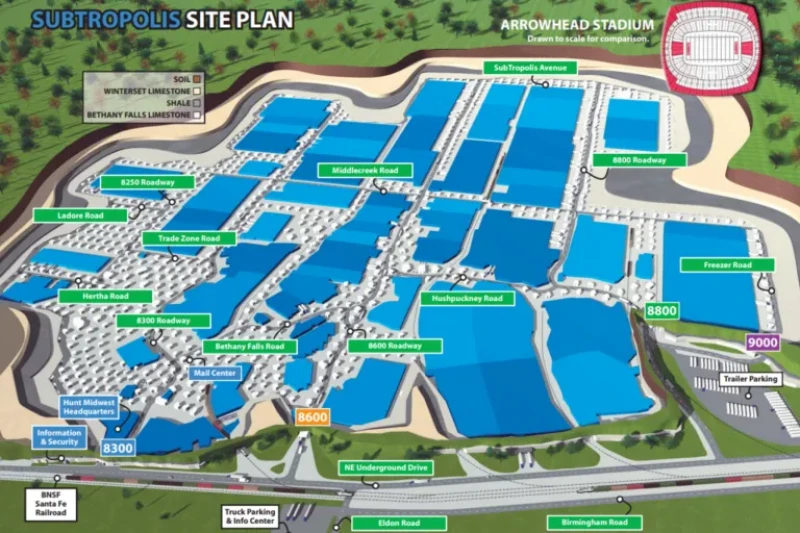
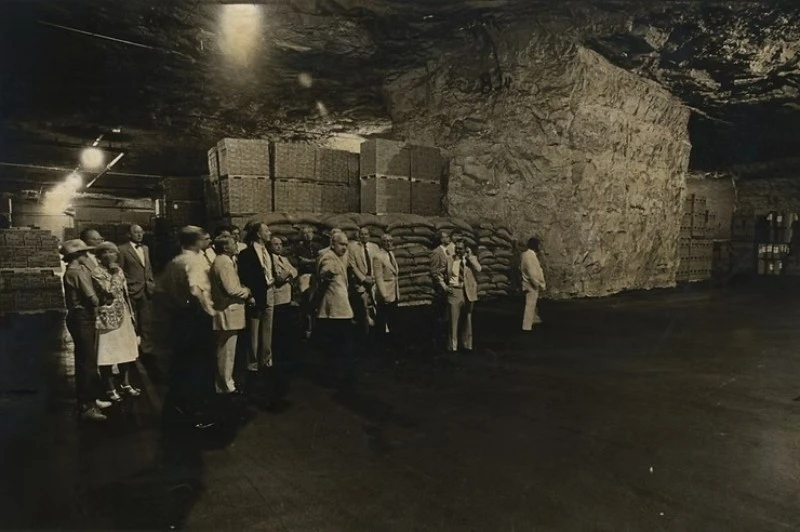
Similar facilities opened in Wisconsin and Kansas, but Missouri's became the symbol of the whole affair. In 1982, The New York Times described the scene: corridors stretching more than 180 meters, packed to the 5-meter ceiling with bags of powdered milk, barrels of cheese stacked four tiers high, and massive rooms filled with frozen butter kept at -18 degrees Celsius. 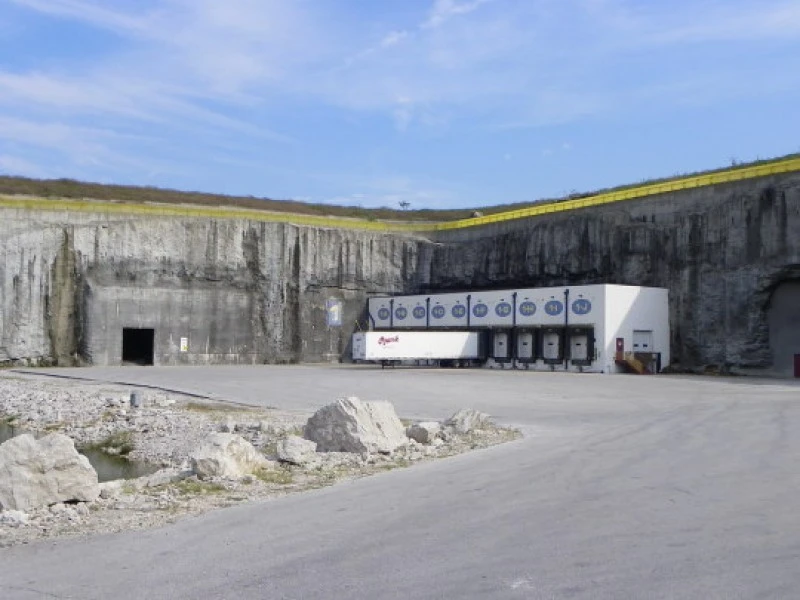
Storing cheese underground was certainly clever, but by the early 1980s, a problem emerged. At a 1981 press conference, Secretary of Agriculture John Block held up a moldy block of cheese and said, "We've got 60 million of these blocks... It’s molding, it's spoiling... We can't sell it, and we're just trying to find a way to give it away." 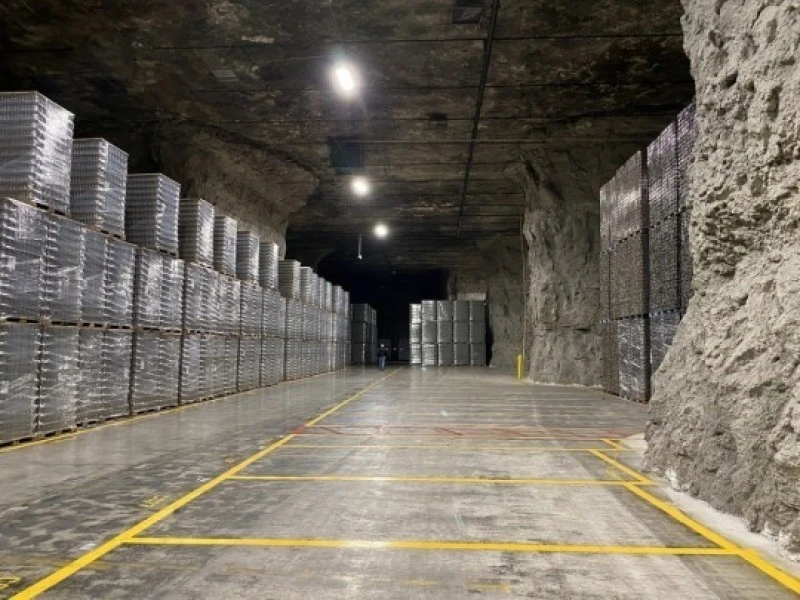
The Ronald Reagan administration decided against dumping the cheese into the ocean—an option that was seriously discussed—and opted instead to give it to those in need. On December 22, 1981, Reagan announced the immediate distribution of 13,600 tons of cheese. This gave rise to the Temporary Emergency Food Assistance Program. Low-income families, food banks, and community centers began receiving five-pound (roughly 2.3 kg) blocks of processed cheddar, which would come to be known as "government cheese." 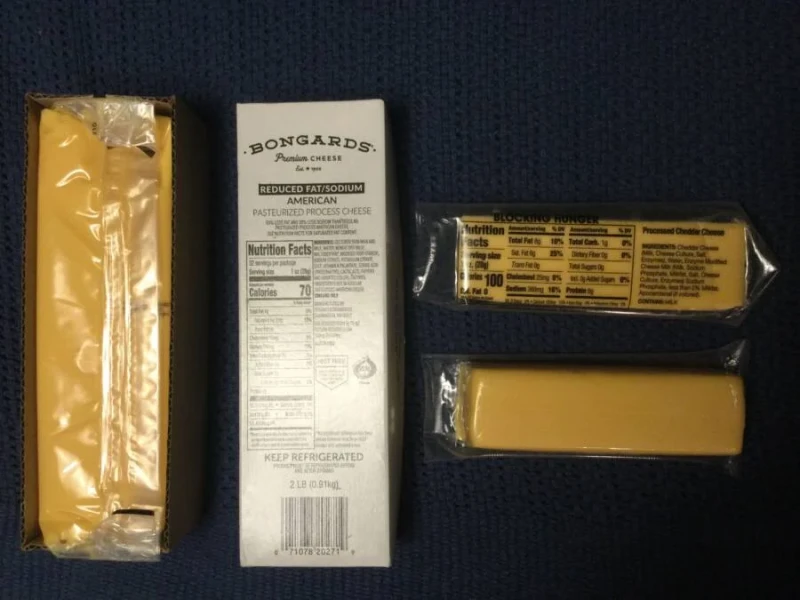
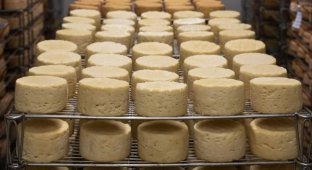
Five-pound blocks of "government cheese" stored in underground caverns.
Throughout the 1980s, more than 136,000 tons of this cheese were distributed. It helped many families get through hard times, but left a mixed legacy. This was no aged, authentic cheddar, but an ultra-processed product high in saturated fat and salt, yet capable of lasting for decades—a processed cheese product of sorts. For many, the bright orange bricks became a symbol of poverty and hardship. 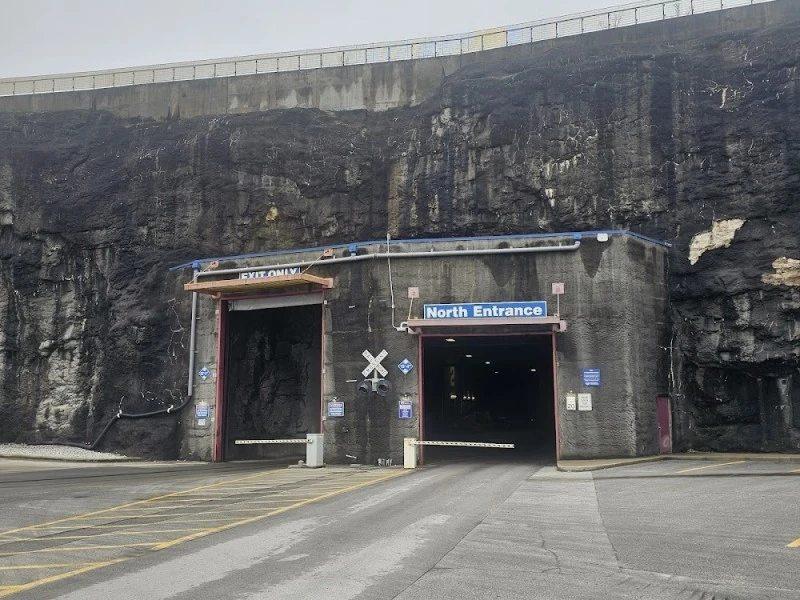
Today, most of the "cheese caves" still exist, but they are no longer government-owned. Private companies lease them to store a wide variety of goods, including cheese. The natural cold and vast capacity continue to make these underground facilities economically viable. 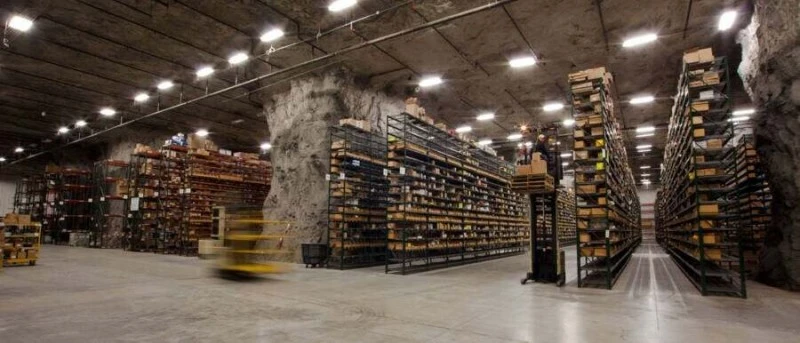
Beneath Missouri, there remains a lingering reminder of how easy it is to create a mountain of cheese—and how hard it is to get rid of it.