Saharan Horned Viper: A Venomous Landmine in the Sand — And Why You Should Never Walk Barefoot in the Desert (8 Photos)
Native to the deserts of North Africa and the southern Arabian Peninsula, the Saharan horned viper is a relatively small snake, typically measuring between 30 and 60 centimeters long, though rare individuals can reach up to 85. Its coloration—ranging from sandy beige to pinkish or pale gray—blends seamlessly into its surroundings, making the viper nearly invisible against the desert terrain. 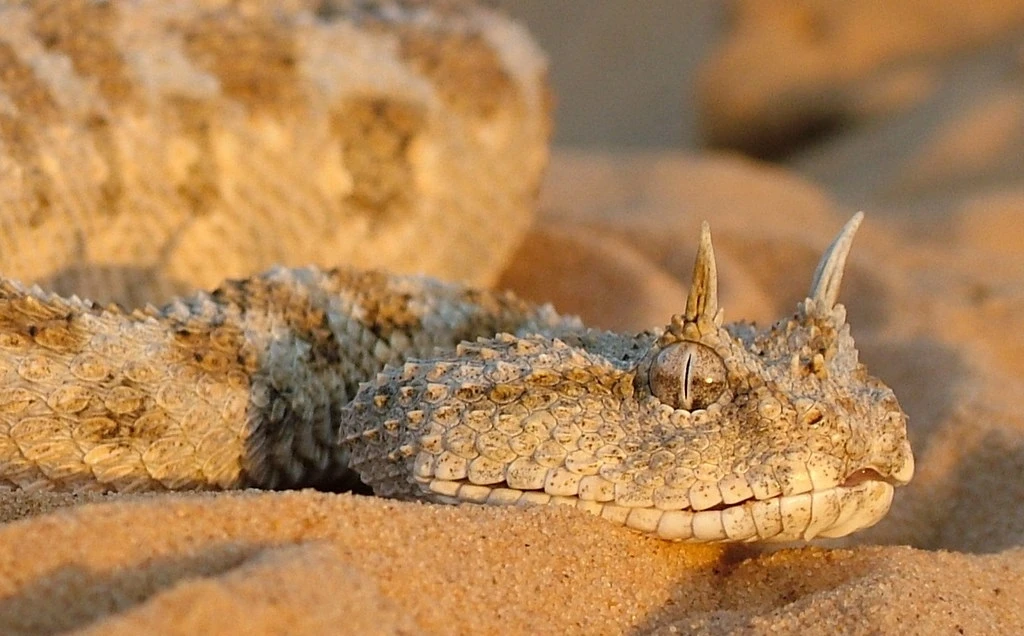
Watch out, the horned viper is on the prowl! 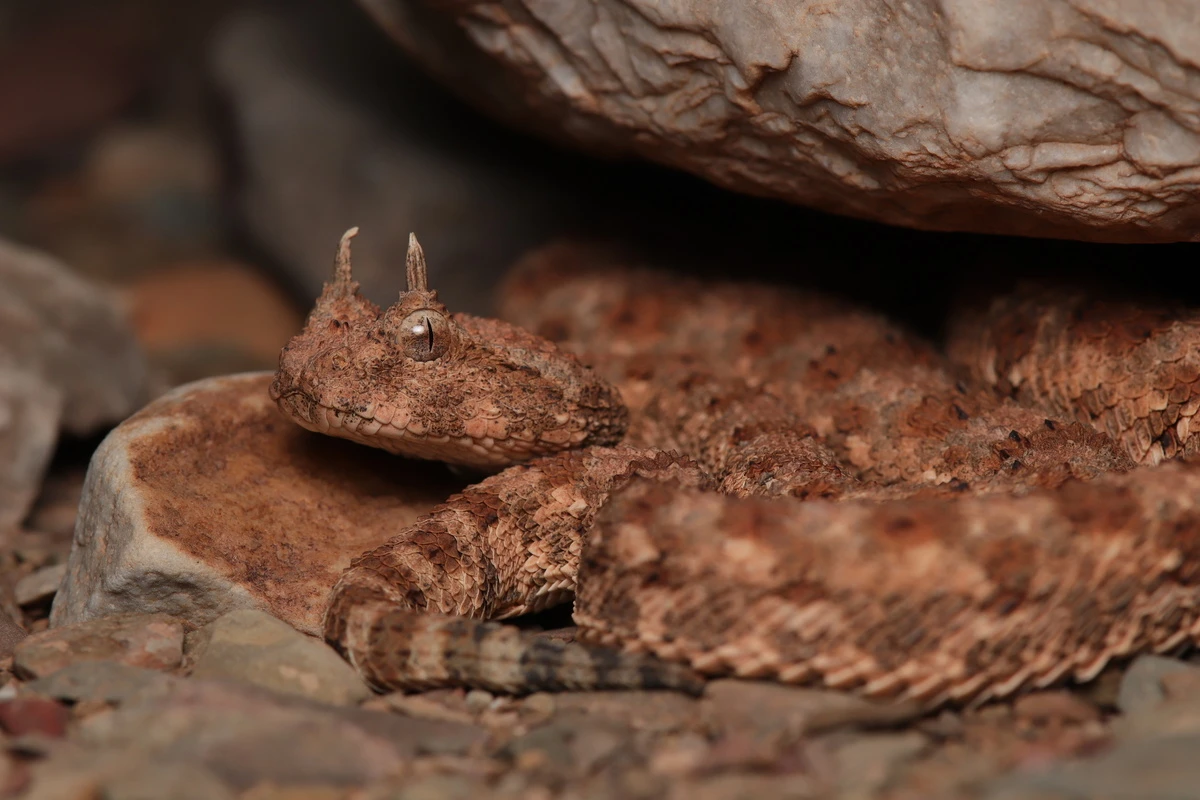
A reddish color morph.
Horned vipers are infamous for their knack for burying themselves in the sand out of nowhere. Thanks to specialized lateral scales and a swift, rhythmic body motion, the snake can submerge itself in just 10 to 20 seconds flat. It disappears so completely that only its horns remain exposed. Remarkably, not all of them even have horns—only about half of all individuals, male and female alike, feature these modified, horn-like scales above their eyes. 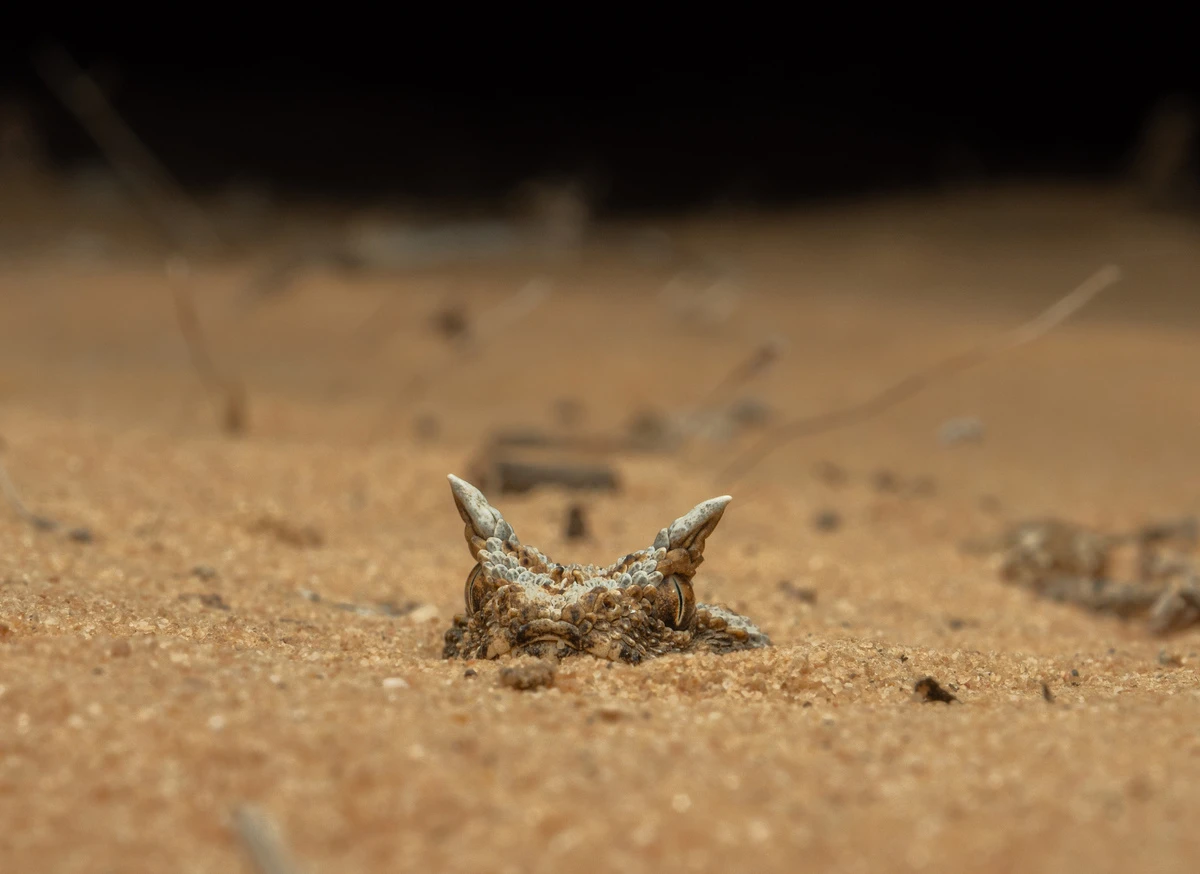
Don't tell Nick where I am—I owe him a hundred bucks.
These "horns" aren't made of bone, but rather elongated supraocular scales that project upward. Their exact evolutionary purpose remains a bit of a mystery. Popular theories suggest they shield the eyes from sand while buried, cast shade, or break up the outline of the head to disguise it from predators and prey. The truth is likely a combination of these factors—or perhaps just an evolutionary quirk that simply stuck around. During the scorching daylight hours, the viper stays hidden, emerging to hunt mostly at night. Its signature tactic is the ambush: settling onto the sand, it vibrates its body from side to side, using its ribs like tiny shovels to sink out of sight within seconds, leaving only its eyes and nostrils exposed. Then it waits. The moment a lizard, gerbil, or bird wanders past, the viper strikes instantly from what appears to be flat, empty sand. 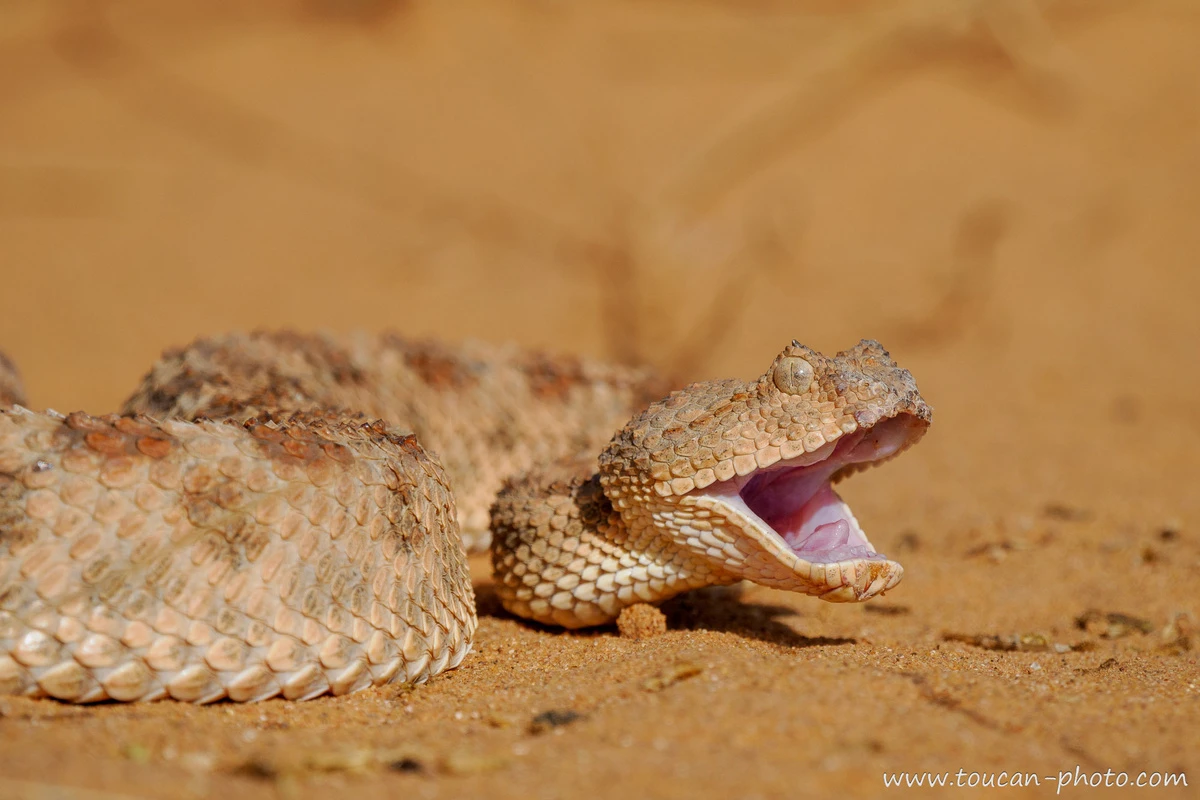
And here's an individual without horns.
Standard serpentine slithering doesn't work well on loose, baking sand: the snake slips, and too much of its body stays in contact with the scalding surface. To overcome this, the horned viper relies on sidewinding. It lifts the front part of its body, flings it sideways, plants it on the sand, and pulls the rest along behind—touching the scorching ground at only two brief points at any given moment. 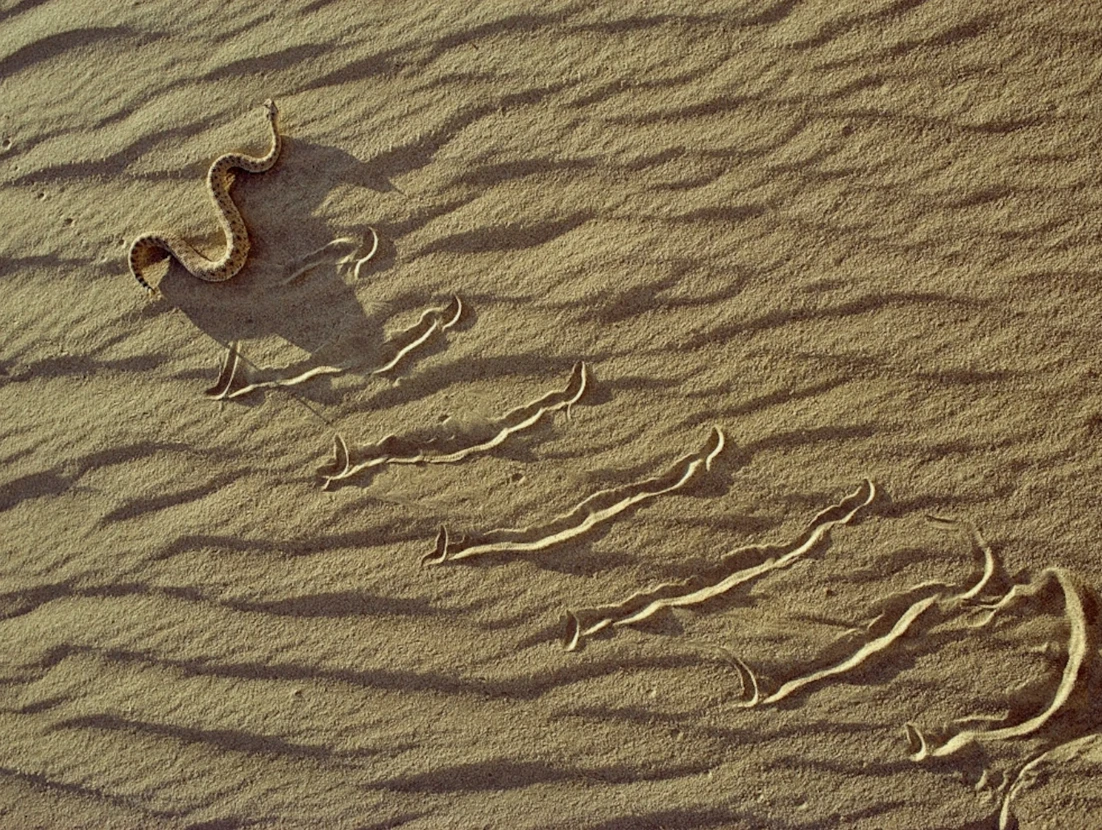
Interestingly, almost all desert snakes independently evolved this "sidewinding" style of locomotion.
Its venom is hemotoxic, destroying tissue and causing severe swelling, pain, and blood clotting disorders. A bite requires immediate medical attention and can cause serious illness, but fatalities are rare—partly because the snake is small and injects relatively little venom. In fact, despite the potential threat, dying from a horned viper bite is quite unlikely; even without medical treatment, the mortality rate is estimated at no more than 4%. With modern medical care and antivenom available, deaths occur roughly once every five years, usually involving a combination of high-risk factors such as advanced age, cardiovascular issues, or overall physical exhaustion. 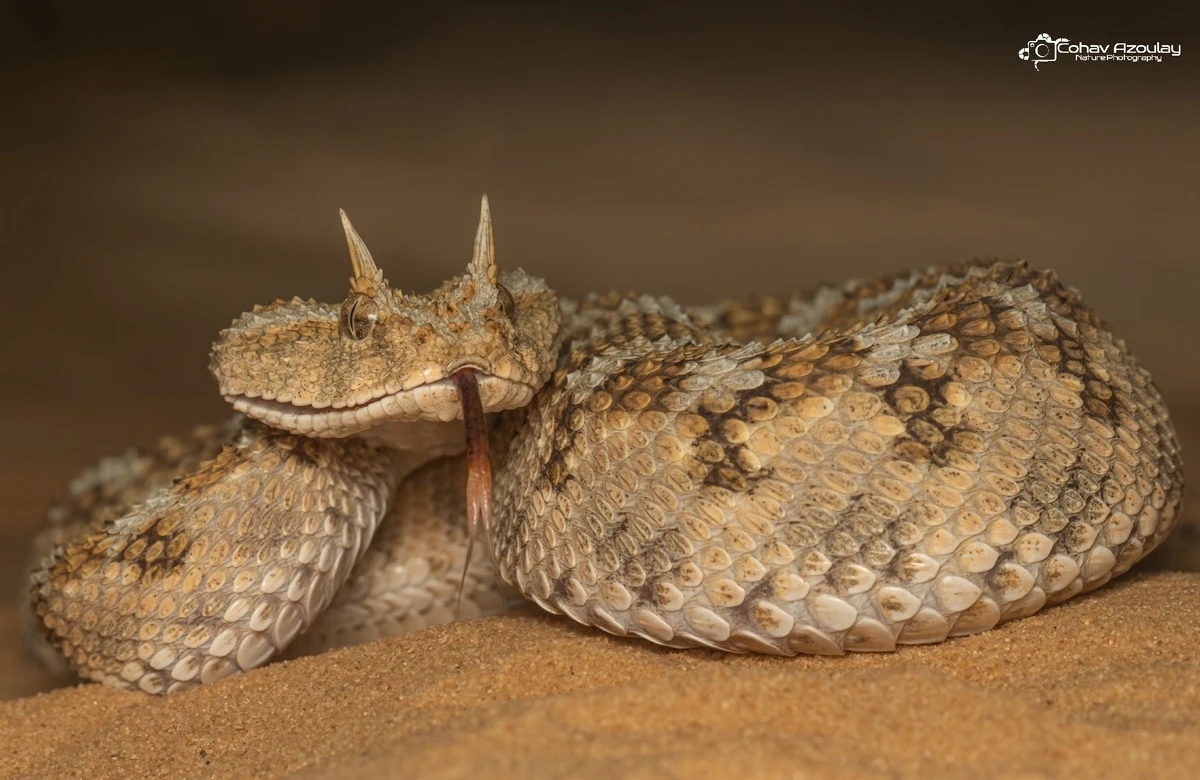
Yes, the snake is sticking its tongue out at you. Any questions?
Ultimately, the snake isn't trying to kill humans. The horned viper uses its venom primarily for hunting small prey like rodents and lizards rather than for self-defense—in larger animals, the venom takes up to half an hour to take effect anyway. This makes evolutionary sense: if a single dose can make a human seriously ill, a small mouse will succumb in a matter of minutes, leaving no need for stronger toxicity. 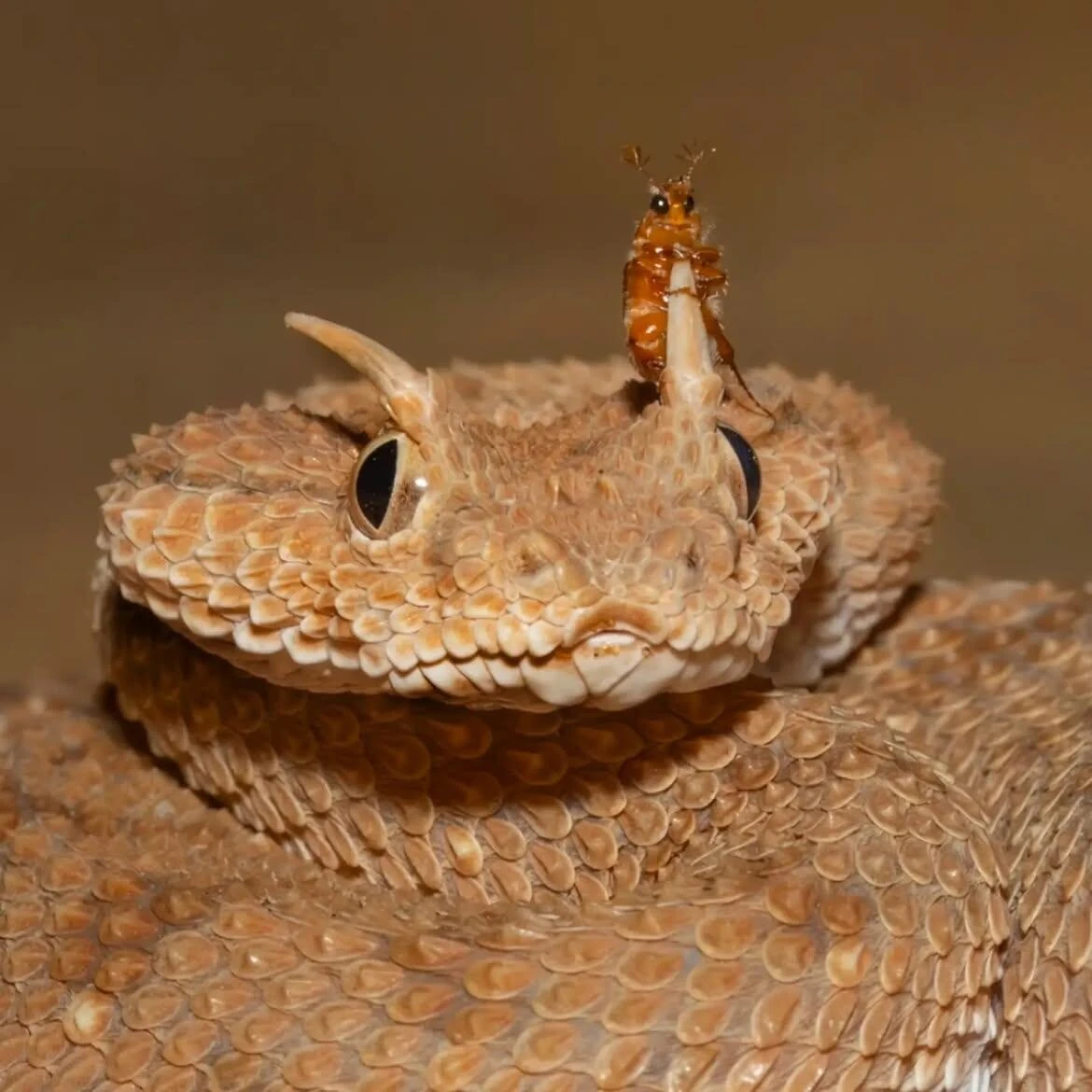
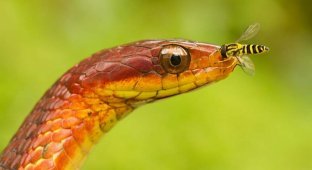
Nobody knows why the beetle decided to hitch a ride on the snake, but it turned out surprisingly cute!
The horned viper also has a bizarre distant cousin. If regular horns aren't exotic enough for you, the spider-tailed horned viper (Pseudocerastes urarachnoides) inhabits the mountains of western Iran. Belonging to a related genus, this species features a bulbous, fringed appendage at the tip of its tail that looks identical to a spider or camel spider. The viper lies completely motionless while twitching its tail; when birds swoop down to snatch the "spider," they land right in the snake's mouth. 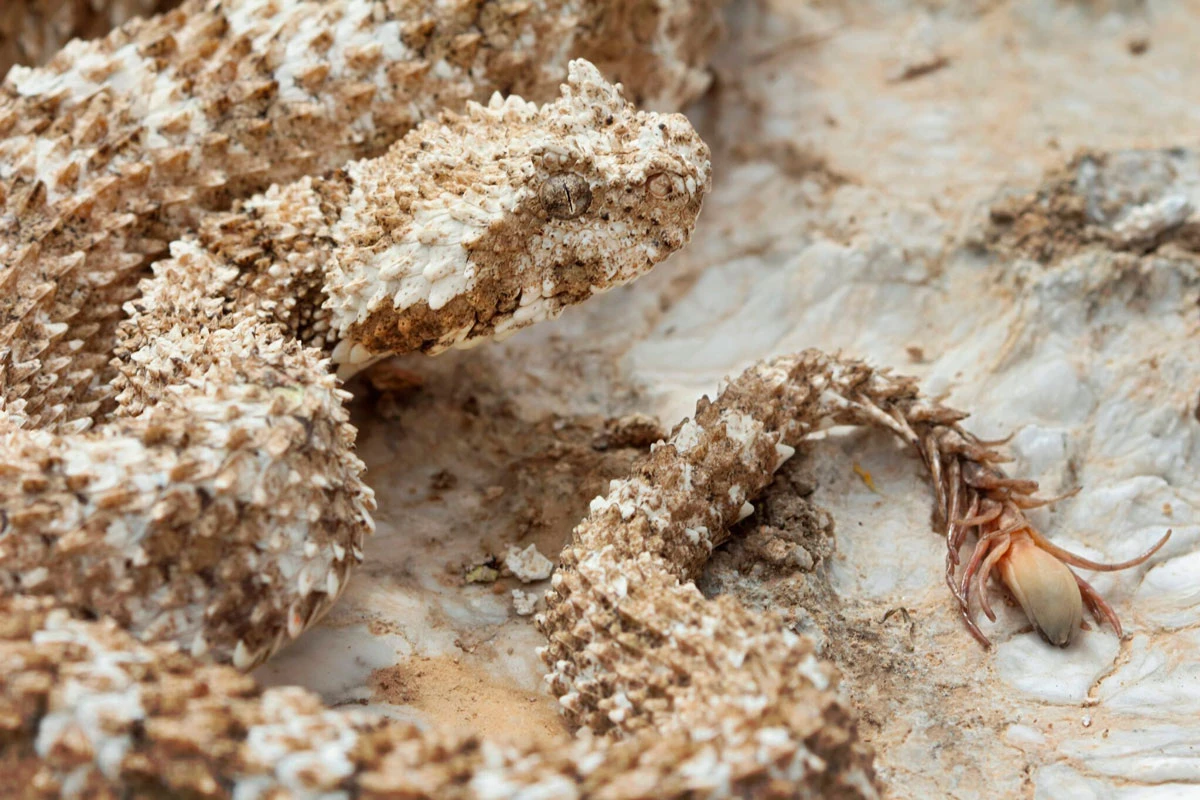
Even without hands, you can still put on quite a show.