What Came of Scientists' Attempts to Teach Primates to Speak (10 photos)
It has long been understood that language is not merely a tool of human intellect, but an essential component of its development. Unsurprisingly, scientists trying to "humanize" animals have long made speech their primary objective. Little has changed today, save for the fact that futile efforts to get horses and cats talking have been abandoned in favor of our most promising animal relatives: primates. 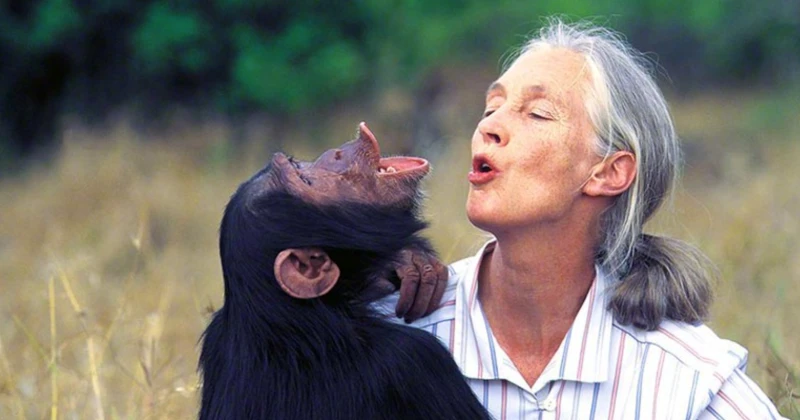
Since antiquity, numerous attempts have been made to teach apes human speech, but to no avail. Primates mastered cutlery, grew accustomed to clothing, and even picked up human vices like smoking and drinking—yet talking remained strictly off the table. 
The first success came only in 1916, when British researcher William Furness managed to teach an orangutan to pronounce the words "papa" and "cup" somewhat clearly. It required immense time and effort, but the experiment was far from pointless. Furness discovered that apes vocalize without relying on their tongue or lips. While this presented a major obstacle, it brought much-needed clarity to how primates produce sound.
In the mid-20th century, husband-and-wife psychologists Keith and Catherine Hayes compared the reasoning skills of a chimpanzee named Viki with those of several young children. To their surprise, the cognitive gap proved unexpectedly narrow. Through painstaking effort during the experiment, Viki even managed to master four words. 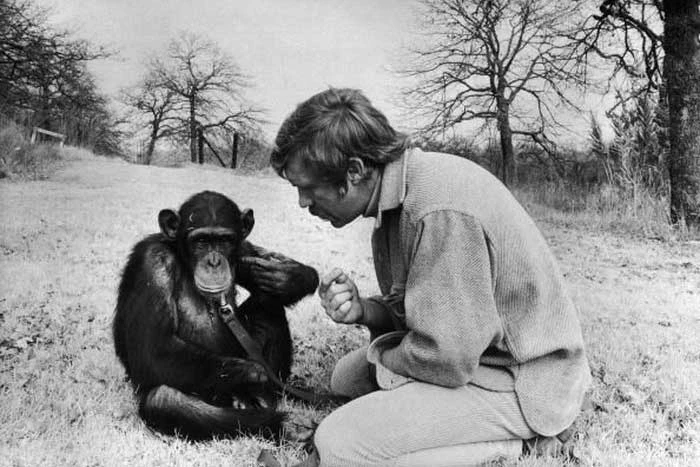
Washoe the chimpanzee "communicating" with Allen Gardner
A decade later, Keith and Catherine's work yielded new insights. Reviewing footage of Viki's lessons, another husband-and-wife research team, psychologists Allen and Beatrix Gardner, noticed that every word the chimp struggled to vocalize was accompanied by distinct hand gestures. Her hand and head movements were so expressive that her intent was clear even with the sound muted.
The Gardners realized that studying primate linguistic potential meant shifting focus to sign language and facial expressions. To test their hypothesis, the couple acquired a female chimp named Washoe and began teaching her ASL (American Sign Language). 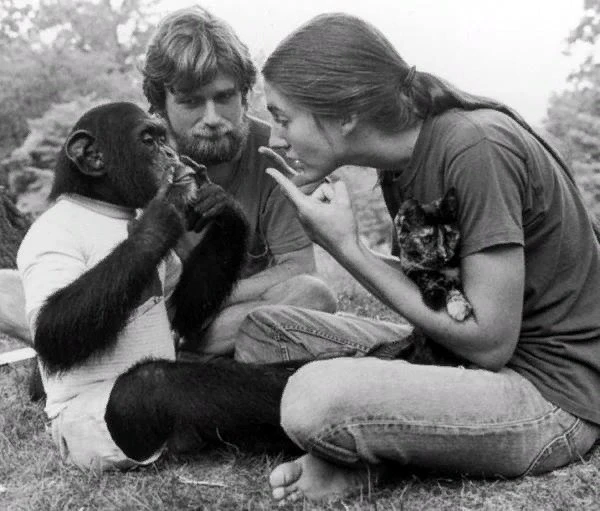
Allen and Beatrix working with Washoe
Washoe was raised in ideal conditions: rather than living in an enclosure, she lived right in the Gardners' home as part of the family. The psychologists believed this immersive environment would help her adapt to human communication and absorb new signs much faster.
During training, researchers showed Washoe an object and molded her fingers into the corresponding sign, reinforcing the cognitive link between symbol and object. Before long, Washoe began combining signs into simple phrases. Three years of intensive effort yielded a vocabulary of 85 signs, and two years later, she knew 160. 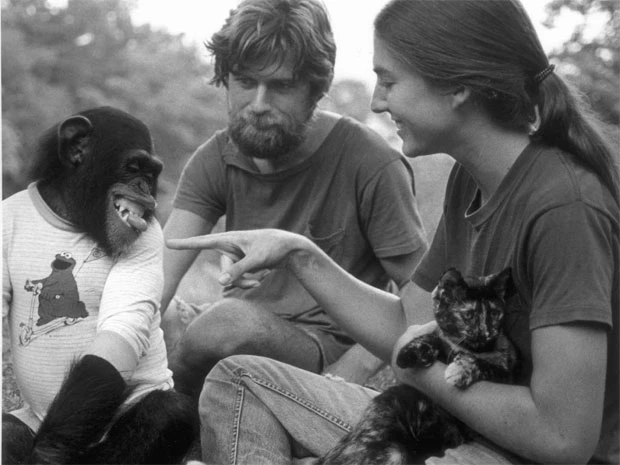
The Gardners noted an intriguing phenomenon: Washoe began coining her own compound signs for unfamiliar items. She combined two known concepts—one naming the object or creature, and another describing a key attribute. A refrigerator became "cold-box," a watermelon was "drink-candy," and a swan was dubbed "water-bird."
Most astonishing of all was her ability to curse. To express her intense displeasure, Washoe used the sign for "dirty"—a context she had never been taught. This proved to psychologists that great apes possess abstract reasoning, capable of using metaphors and figures of speech. 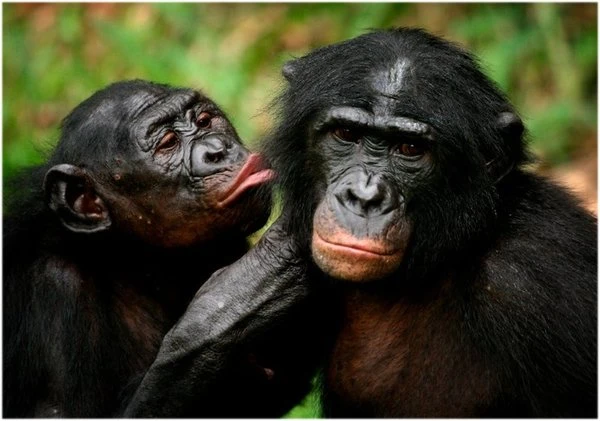
Bonobo chimpanzee
By the early 1970s, about a dozen chimpanzees around the world could communicate using sign language. Furthermore, symbolic thinking was discovered in other primates, including bonobos and gorillas. Bonobos proved to be the most intellectually adept. Researchers documented a case where a sign-trained female bonobo took it upon herself to teach her infant, successfully passing down several basic signs.
This remarkable occurrence drew intense scientific interest toward bonobos. Before long, many experts were convinced that these smaller apes were closer to humans in intelligence than any other species. 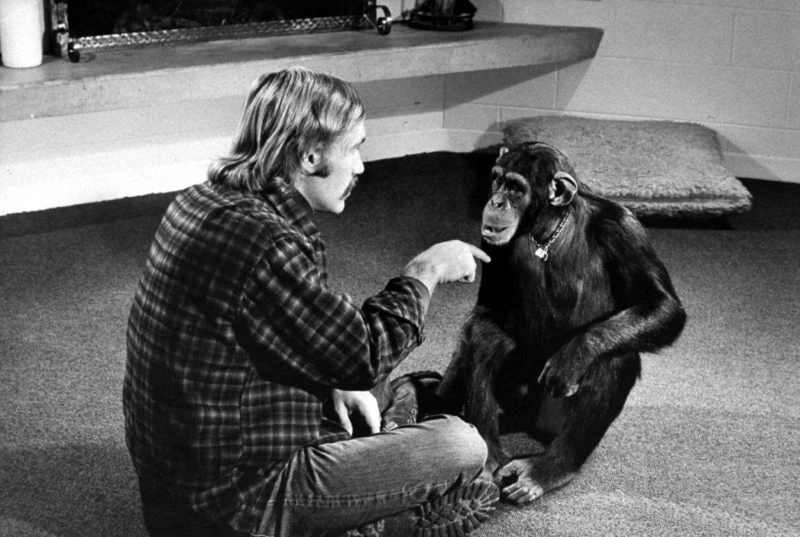
Naturally, these groundbreaking studies by zoologists, psychologists, and linguists sparked fierce criticism from skeptical peers. Skeptics argued that the apes were merely mimicking gestures they had seen humans perform, rather than understanding them.
In his book
When the Gorilla Spoke
, science journalist Boris Zhukov noted:
"The Gardners' early publications caused a sensation—and, predictably, a wave of skepticism and criticism. Almost every finding was contested, starting with whether the ape was truly using such a vast vocabulary intentionally. But the heaviest blow targeted their interpretation. 'The human understands the context and projects that comprehension onto the ape,' wrote psychologist Herbert Terrace, commenting on Washoe's compound phrases." 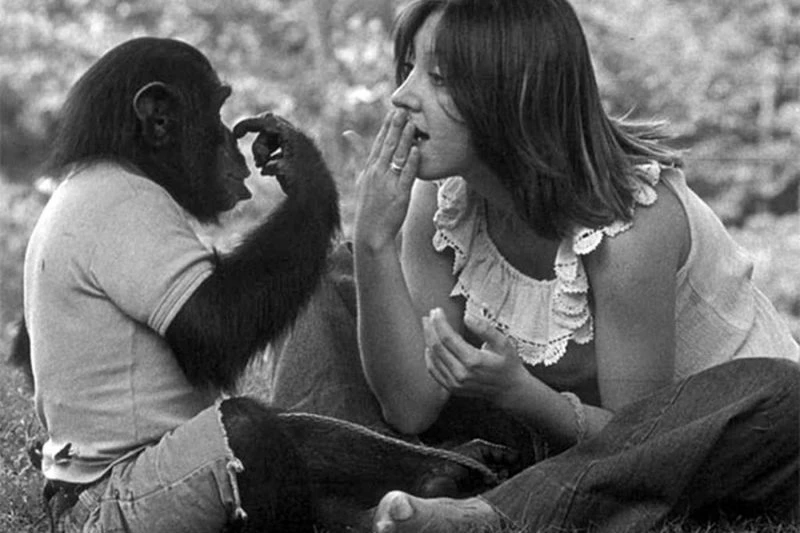
In parallel with the Gardners, researcher David Premack was pursuing a different approach. Working with a chimpanzee named Sarah, he used abstract plastic shapes representing objects, properties, and actions to communicate. Premack designed a unique symbolic system that allowed Sarah to communicate by arranging tokens.
The system was simple: to convey a message to David, Sarah selected the appropriate shape from a box and placed it on a magnetic board. Premack's method possessed one major advantage: it was immune to standard scientific skepticism. Critics could no longer claim that researchers were simply reading whatever meaning they wanted into ambiguous hand gestures. 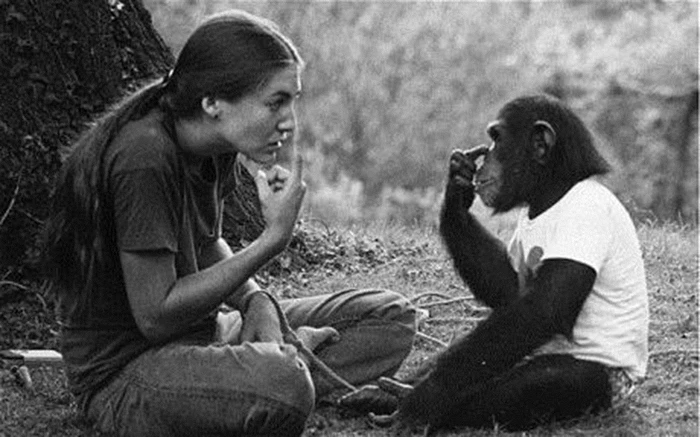
With Sarah, accusations of wishful thinking fell flat, as she consistently selected tokens with precisely assigned meanings. Premack's work convinced many that apes were indeed using symbols with deliberate intent.
A decade later, in the 1980s, Premack's method was refined further. This allowed a young male bonobo named Kanzi to master an astounding 600 words! Remarkably, while Kanzi's mother proved completely unable to learn the symbol system, Kanzi and his sister served as "translators," helping interpret messages for her.
Yet despite these successes, experts warn against overestimating ape language capabilities. Cognitive development in apes peaks early in life, leaving them with whatever skills they acquire during those formative years. Generally speaking, their mental capacity caps out around that of a two- or three-year-old human child, making further progress impossible.
Furthermore, spoken language remains fundamentally out of reach for apes and other non-human mammals. Human speech requires fine motor control over the lips and tongue, as well as precise breath modulation. Interestingly, brain scans reveal that the language centers in great apes are surprisingly well-developed. Why evolution stopped short of bestowing vocal speech upon them remains one of nature's intriguing mysteries. 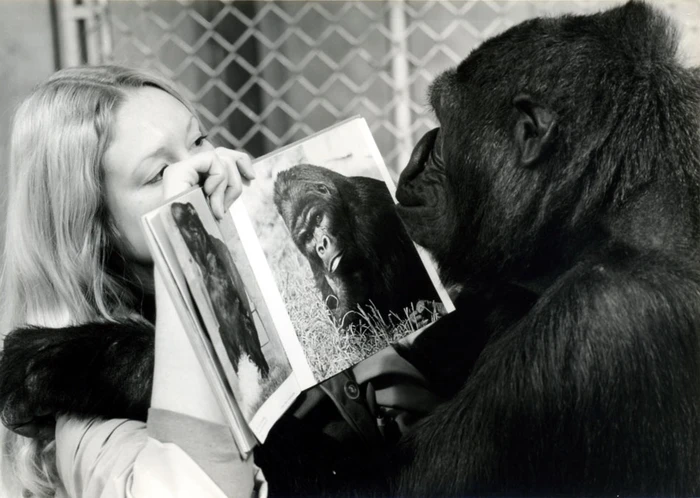
Finally, there is one compelling and eerie case worth noting. When asked about a kitten that had died, one sign-language-trained ape responded: "It went where one doesn't come back." Could apes be far more profound than we realize, possessing insights into mysteries humanity has yet to solve?
On rare occasions, other animals like dogs can be taught primitive forms of communication. However, these cases stem from conditioned reflexes and trained tricks rather than true conscious communication.