"Slash Everyone in Sight": Why Italians Were Renowned as Europe's Most Ferocious Knife Fighters (12 photos)
From the Middle Ages through the mid-20th century, Italians enjoyed a terrifying reputation across Europe as the most brutal and skilled knife fighters on the continent. Gutting an enemy was seen as a point of honor, while reporting a "fair" knife killing to the authorities was considered the ultimate act of cowardice. Yet what shocked foreigners most wasn't their deadly skill, but the sheer savagery of their customs. Young bon vivants, for instance, indulged in a morbid game: kill the lights, draw your blades, and start slashing anyone within reach. Why? Simply because they thought it was fun.
This handy tool was equally adept at slicing food, woodworking, and dressing game or cleaning the day’s catch. 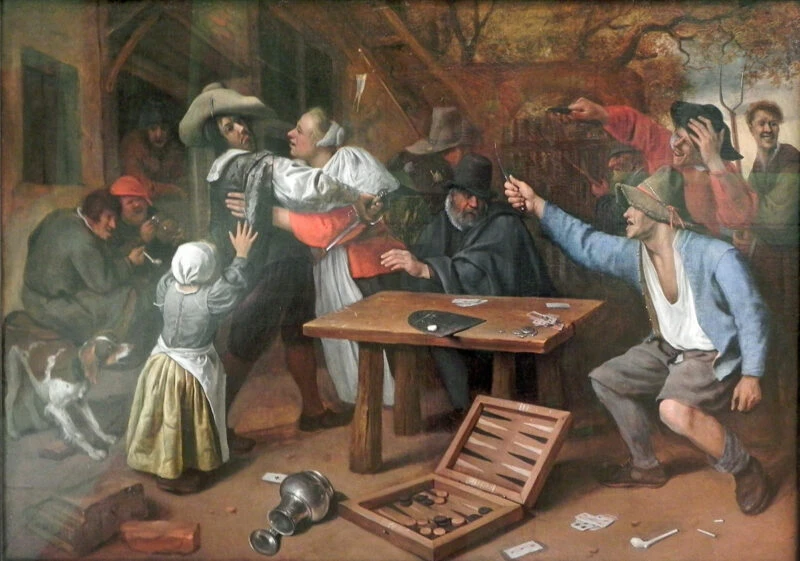
Feuds of the Medieval Mafia
Starting in the Middle Ages, the Italian peninsula became a hotbed of fiercely proud, heavily armed men ready to draw steel at the slightest provocation. This boiled down less to stereotypical Southern passion and more to intense political fragmentation.
The peninsula’s rival principalities and republics were in a state of perpetual conflict with one another and with foreign powers like Spain and France. Endless domestic and foreign wars created a volatile environment where people had to stay constantly on guard. As a result, nobles, townsfolk, and peasants alike rarely went anywhere unarmed. 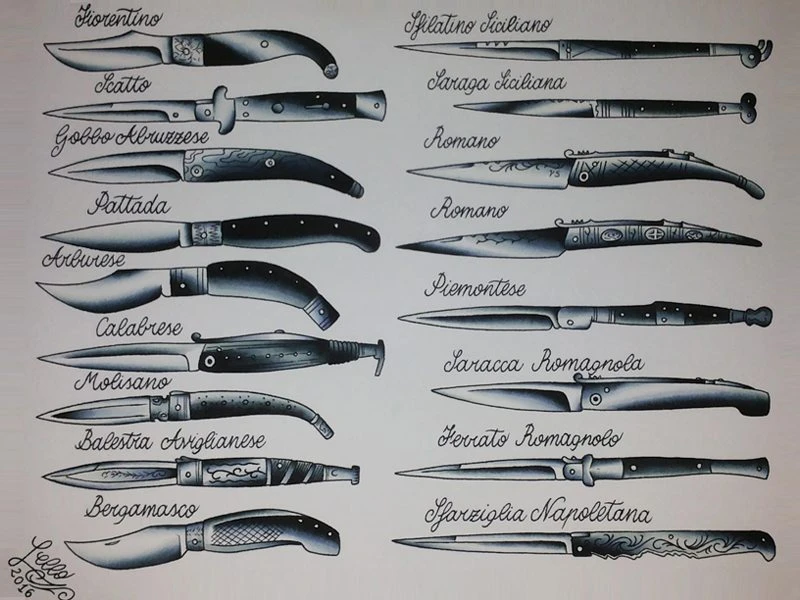
While the nobility could legally carry swords and rapiers, commoners and peasants had to settle for short blades—knives and daggers.
Naturally, weak central authority allowed organized crime to thrive. Alongside the famous Mafia, Naples saw the rise of the Camorra. According to legend, it was founded by three knights, one of whom was Spanish. While this romantic origin story merely sanitized dirty vices like extortion, gambling, and prostitution, the Camorra did adopt a veneer of nobility—complete with a strict code of chivalry and mandatory dueling to defend one's honor.
From adolescence, every member of the syndicate was trained in the use of a specialized knife, ready to settle any dispute in a duel. Lower-ranking members, however, were forbidden from challenging their superiors. The duel itself was a fascinating spectacle, known as the
zumpata
or "leaping duel." The name stemmed from the combatants' footwork—bouncing on the balls of their feet, ready to lunge forward in a flash with a lightning-fast strike.
The
Bulli
: Swaggering Street Toughs 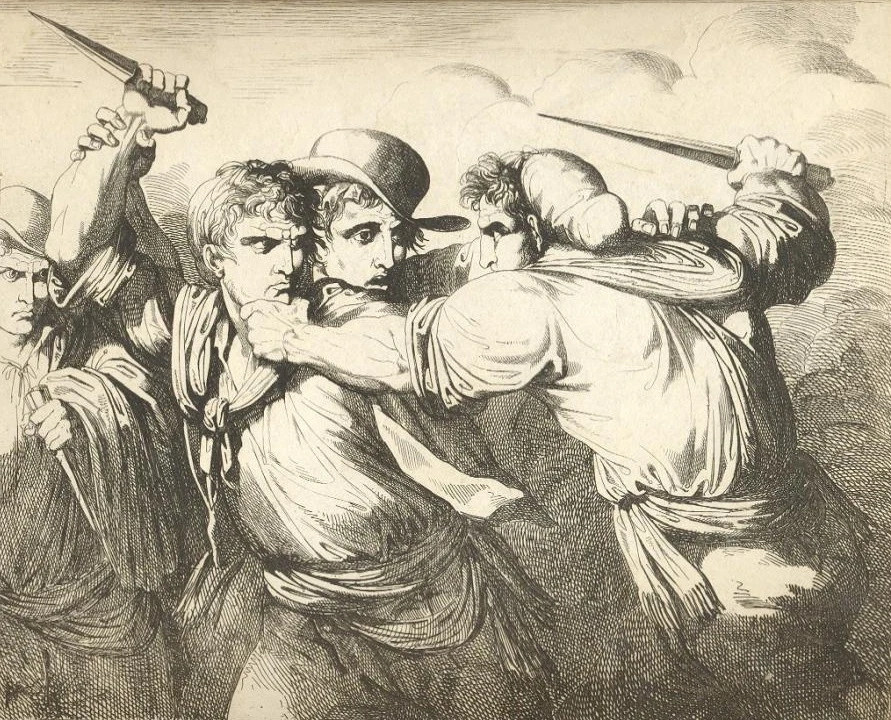
But mobsters weren't the only ones famous across Italy for their obsession with blades. Even more notorious among the populace were the
bulli
—a unique subculture that emerged on urban fringes and in city slums, blending the style of English dandyism with the aggression of street thugs.
Despite pervasive poverty, they strove to dress flashily, gamble at cards, and live recklessly. Aggressive, bravado-driven behavior was key to their identity, and paired with concealed knives, it routinely led to bloodshed. 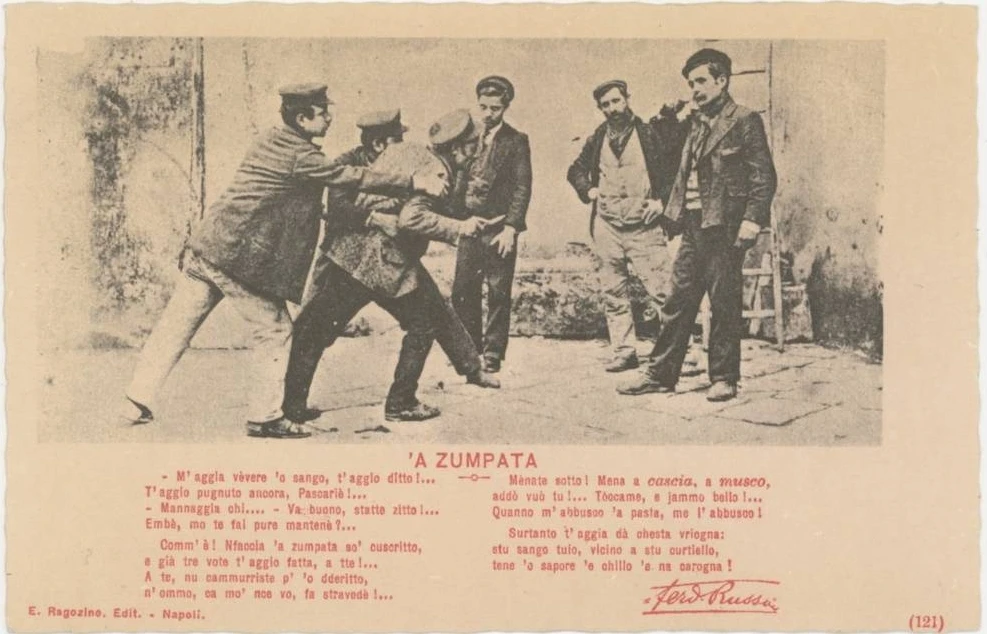
Yet their fights were far from simple drunken brawls. More often than not, they observed formal dueling etiquette—formal challenges, seconds, and established rules. The fact that these bouts took place in filthy alleys and involved disemboweling an opponent with a pocket knife rather than a refined rapier mattered little. Group brawls were equally common. 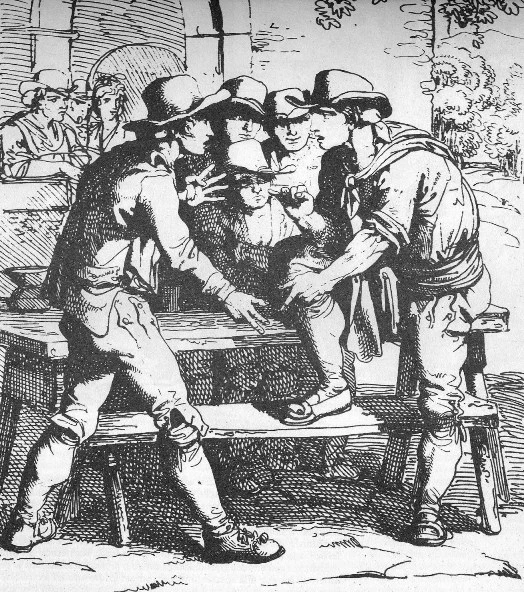
Roman factions of
bulli
settled their rivalries through the
sassolata
—pitched battles fought amidst the ruins of the ancient Roman Forum.
Gathering at dusk armed with knives, slingshots, and rocks, they would charge through fallen statues and marble ruins, stabbing rivals and cracking skulls with cobblestones. As dawn approached, the battle would wind down, and the wounded were dragged off to the local hospital. Yet those were at least disputes between sworn enemies. A far truer reflection of 18th- and 19th-century Italian youth culture was the
cicciata
—the young
bulli
's favorite blood sport.
It worked like this: once the young rowdies were fueled with enough wine, someone would call out that it was time for a game of
cicciata
. Everyone would enthusiastically agree, quickly clearing the tavern of tables and benches, and barricading the door against the police. The participants would then draw their knives and face the wall. 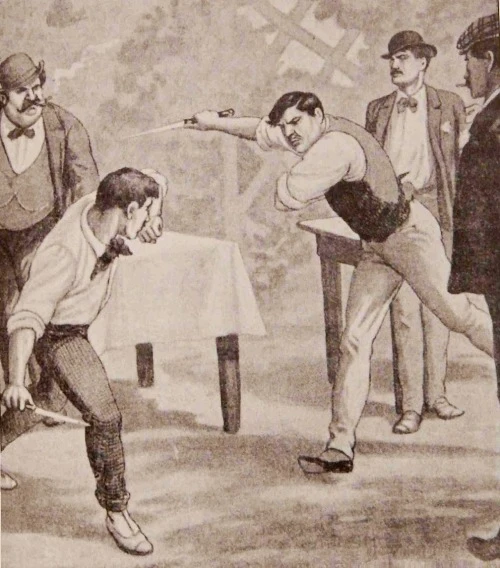
The host would kill the lights, and in pitch darkness, the players would leap at one another, blindly stabbing at torsos—primarily targeting the abdomen.
The entire ordeal unfolded in dead silence; screaming, talking, or even groaning was considered deeply humiliating. Attacking a fallen man was strictly forbidden, so anyone wanting out simply dropped to the floor. When the lamps were relit, survivors immediately rushed to assist those lying in pools of blood, while the lightly injured casually bandaged their own slash wounds.
Afterward, the tavern resembled a slaughterhouse—making the game's name grimly appropriate, as
ciccia
is Italian slang for "meat." The
bulli
and their knife obsession were finally curbed only by the French occupation authorities in the early 19th century. Napoleon's officials subjected any brawler caught carrying a blade to public humiliation, finally forcing these proud toughs to leave their weapons at home.
Sicilian Duels and the Bite of the Ear 
Beyond criminals and street toughs, ordinary peasants were also formidable knife fighters, as no law enforcement existed to protect them from extortion or robbery. Their fights ranged from wild brawls to formal honorable matches governed by the rules of the "shepherd’s duel." 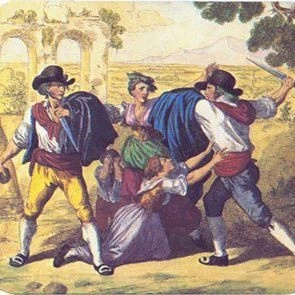
The left wrist of one fighter was bound to the left wrist of his opponent, with knives held in their right hands. In a milder variation, combatants simply held onto opposite ends of the same rope or handkerchief.
With virtually no room to maneuver, one combatant—and often both—quickly met a fatal end.
Italian peasants even developed a distinct fighting system utilizing a knife in one hand and a cord in the other, which skilled fighters used to entangle their opponent's weapon arm. Precisely how this looked in practice remains a matter of speculation. Unsurprisingly, Sicilians were regarded as the most dangerous fighters in all of Italy. Even the humblest peasant on the island carried steel and adhered to a rigid code of honor; a wrong look or a careless joke could instantly invite a blade to the ribs. The formal challenge was accompanied by a strange ritual, detailed by late 19th-century ethnographer Giuseppe Pitrè in his studies of Sicilian customs.
Before combat, the challenger would embrace and kiss his opponent—signifying a fight "for life and death." He would then lightly bite the rival's ear, a gesture meaning "one of us will die."
The rivals would then set a time and place, fighting under one of two rulesets: either targeting only the arms and legs, or stabbing to the torso for a guaranteed kill. Tradition dictated that the victor kiss his fallen rival before casually walking away, pretending to have had nothing to do with the incident.
The
Arditi
: Italy’s World War I Shock Troops 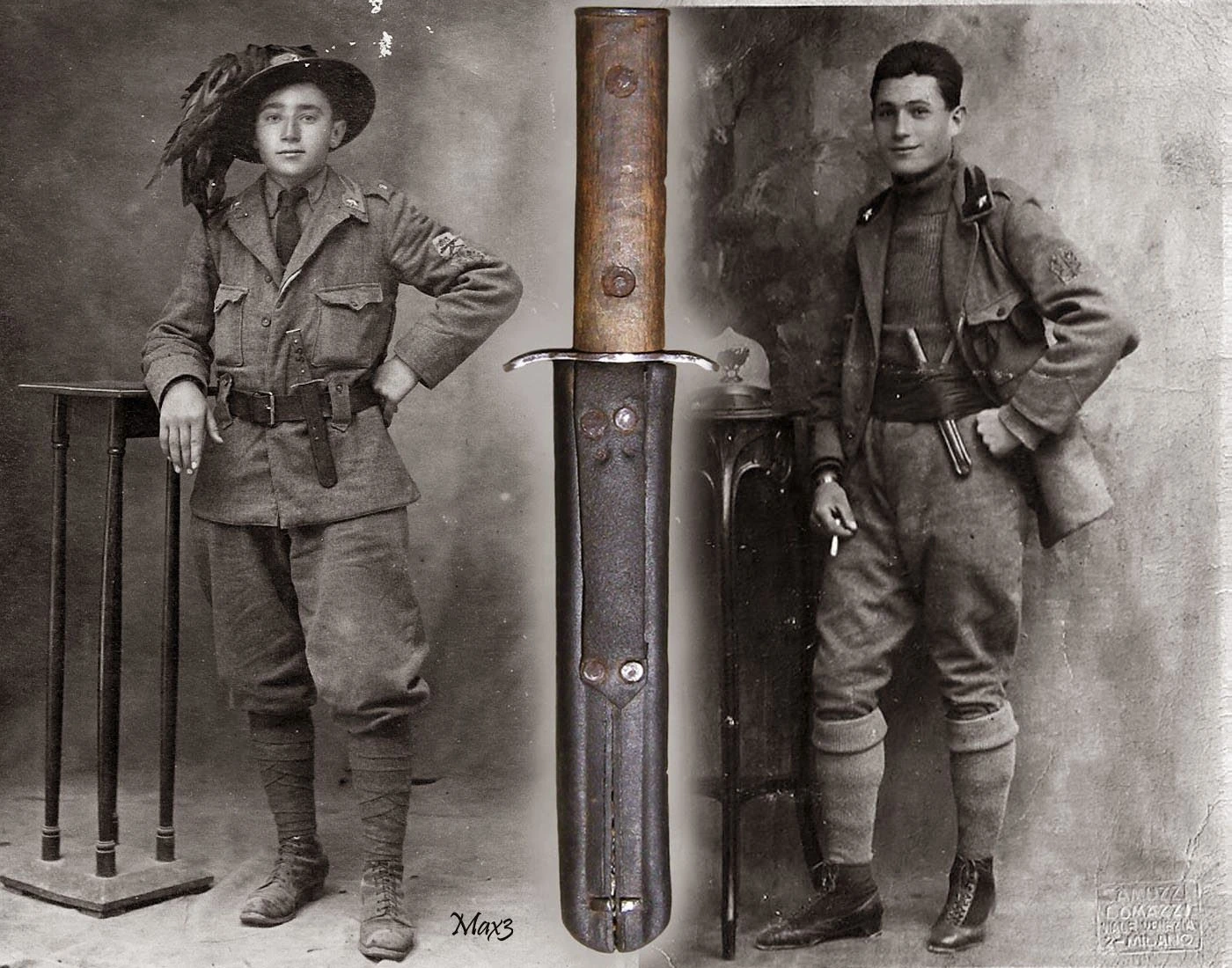
Italian authorities failed to stamp out knife dueling well into the 20th century—until World War I unwittingly did it for them. In Italian society, killing a rival with steel was long deemed honorable, while turning to the police was a disgrace. Though laws grew stricter by the late 19th century, the eruption of total war became the final, explosive chapter in the history of Italian knife fighting—transferred directly to the battlefield. 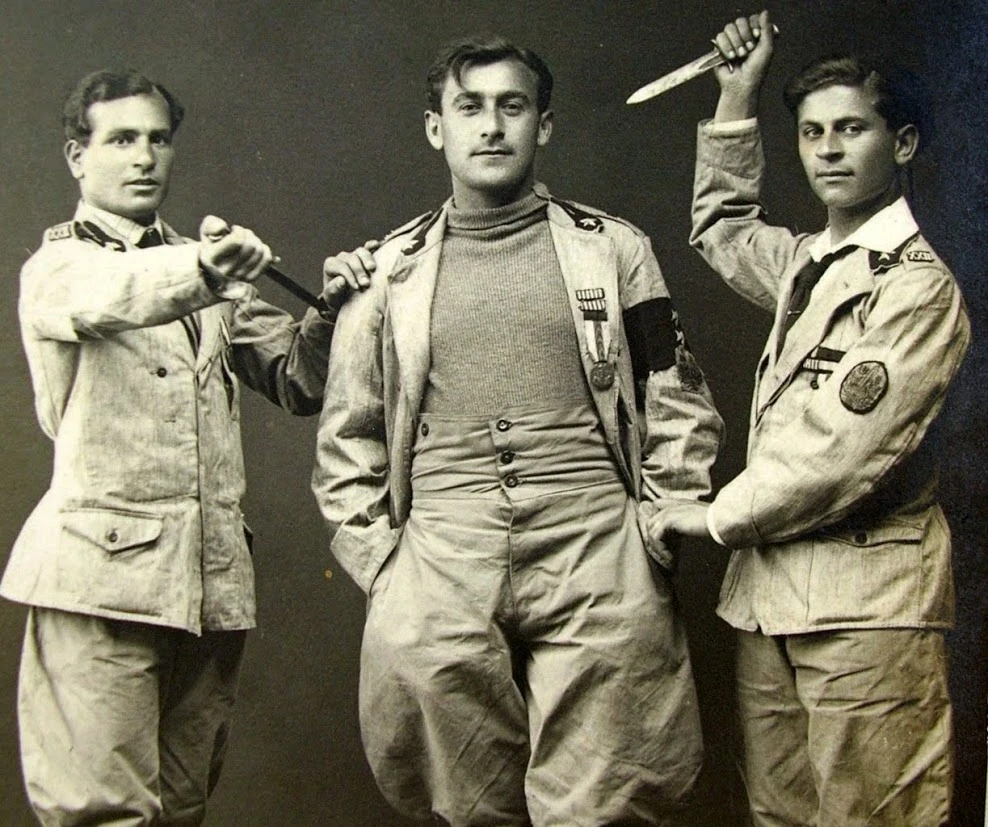
Italian soldiers, particularly conscripts from the South and Sicily, struck terror into Austro-Hungarian troops during close-quarters combat.
Even Italian officers struggled to force their men to use fixed bayonets; stubborn soldiers habitually reached for the knives they had used since childhood as they leaped into enemy trenches.
None were more lethal than the
Arditi
("The Daring Ones")—elite assault units assigned to breach enemy trenches and bunkers. Recruited from the most fearless and capable soldiers, they were deployed to the deadliest sectors of the front.
Journalist Paolo Giudici, who witnessed the
Arditi
training, wrote:
"Here are straw-filled dummies used for target practice, as the
Arditi
plunge their dagger blades into them: hair standing on end, eyes bulging, screaming at the top of their lungs, faces contorted. The
Arditi
hurl themselves furiously at the mock enemy, striking straight for the heart." 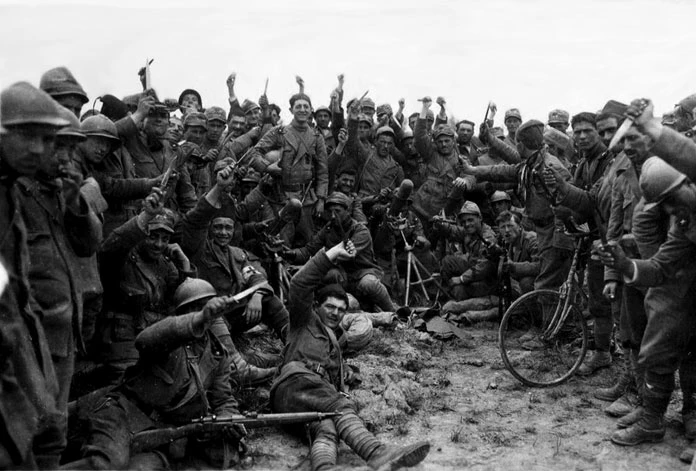
The mastery of these assault troops was so exceptional that they routinely threw daggers in combat. According to another eyewitness, Mario Palieri, one of their favorite pastimes involved an
Arditi
standing against a wooden door while his comrades threw daggers that pinned into the wood inches from his head. Whichever soldier kept his head dead still was hailed as the bravest.
Unsurprisingly, such ruthless conditioning rendered the
Arditi
a terrifying force, cutting down enemy troops by the dozens in hand-to-hand fighting. When a
New York Times
correspondent asked an
Arditi
officer in 1918 how many Austrians he had killed with his dagger, the man coolly replied, "Too many to count."
However, the staggering loss of life and senseless brutality of World War I left survivors craving peace above all else. Consequently, widespread street duels gradually died out—though the tradition reportedly endured within underground criminal circles. 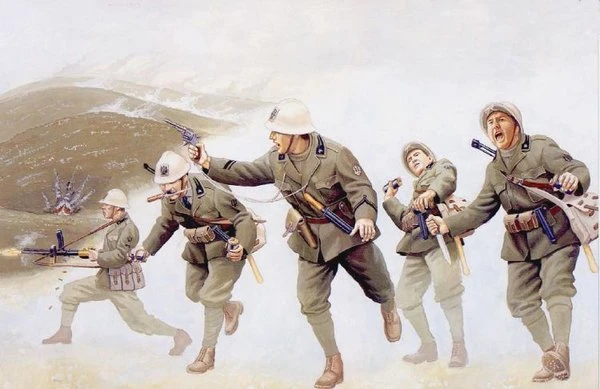
In 1993, mob boss Maurizio Abbatino noted in an interview that knife dueling was still practiced, claiming that even the archaic "shepherd’s duel" had not entirely vanished.
So if a local heartthrob kisses you and nibbles your ear while you're traveling in Sicily, don't mistake it for warm Southern hospitality. More likely than not, he’s fixing to gut you according to ancient tradition.
For those interested in exploring the topic further, Denis Cherevichnik’s book
A World History of Knife Fighting
offers a deep dive into the subject.