Is Non-Alcoholic Beer Really Completely Harmless? (5 photos)
Many people don't even consider non-alcoholic beer a true substitute for the real thing—after all, can you really compare the two when they share little more than a name? Even so, booze-free beer has a huge following. It's often the go-to choice for those out with a drinking crowd who need to stay sober because they're driving. Others drink non-alcoholic beer almost daily as a substitute for soda or kvass. And nearly everyone is convinced that if a drink contains no alcohol, it can't do any harm. Is that really the case? 
The Hidden Dangers of Non-Alcoholic Beer
For starters, non-alcoholic beer isn't strictly alcohol-free. A typical 100 ml serving can contain anywhere from 0.05 to 0.1 percent alcohol. Some varieties go up to 0.5 percent—which adds up to about 2.25 ml, or roughly a teaspoon of pure alcohol per 500 ml bottle or can. That's why drivers shouldn't overdo it: drinking more than a liter could actually be enough to register on a breathalyzer. 
Fans of zero-proof brews assume they are completely safe and drink them without a second thought. But that isn't true. Alcohol content aside, non-alcoholic beer has several major drawbacks. First and foremost are the chemical additives manufacturers rely on to replicate the authentic flavor and color of real beer.
Just like regular beer, non-alcoholic varieties contain phytoestrogens. Addiction psychiatrist Marina Kalyuzhnaya explains:
"In men, phytoestrogens can suppress testosterone production, leading to the development of a classic 'beer belly.' In women, on the other hand, they can trigger an increase in testosterone, leading to hormonal imbalances." 
There are also several health conditions where non-alcoholic beer is just as dangerous as the real thing. These include pancreatitis (acute inflammation of the pancreas), stomach issues, hemorrhoids, prostatitis, cystitis, and diabetes—essentially the entire list of conditions where alcohol is strictly off-limits. Switching to a non-alcoholic alternative doesn't protect people with these conditions from potential health risks.
Does It Have Any Health Benefits?
We often hear that regular beer can offer health benefits when consumed in moderation. To be fair, non-alcoholic beer has a few perks of its own. It contains antioxidants that help the body fight cellular oxidative stress—a major factor in aging. It's also packed with B vitamins, which play a key role in metabolism and energy production. 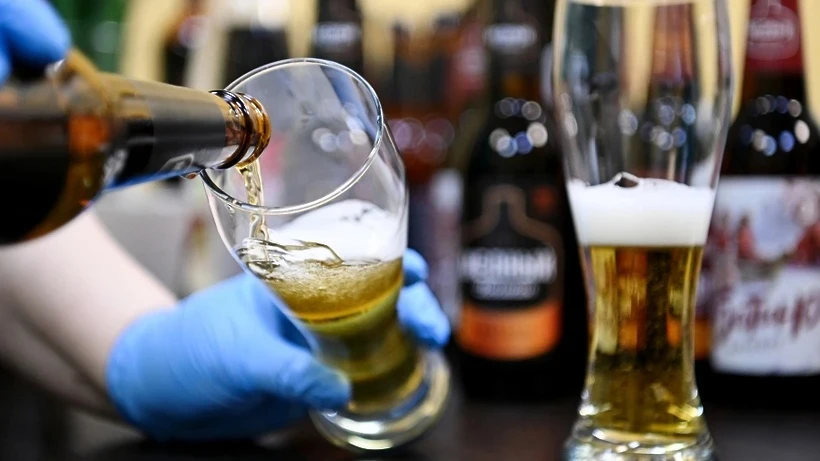
Not long ago, German researchers discovered that non-alcoholic beer might actually benefit the cardiovascular system. They gathered three groups of volunteers for an experiment: the first group was given regular beer, the second got non-alcoholic beer, and the third was given a 4% ethanol solution. Each participant was given 3 liters of their assigned drink and 3 hours to finish it.
Blood tests taken after the trial revealed that those who drank non-alcoholic beer had significantly lower levels of thrombin, an enzyme involved in blood clotting that causes platelets to clump together and form blood clots. In contrast, alcoholic beer and the ethanol solution actually increased blood clotting. 
The researchers believe non-alcoholic beer could even have medical applications as a natural anticoagulant. Anticoagulants—or blood thinners—are commonly prescribed to heart attack and stroke patients to prevent clotting and support recovery.