How an Airline Pilot Was Sucked Out of the Cockpit Mid-Flight and Survived (7 photos)
Can a person survive being sucked outside a commercial airliner at cruising altitude? In the real world, the odds are virtually zero—yet miracles do happen. The harrowing story of BAC One-Eleven captain Timothy Lancaster, who was literally blown out of his cockpit in the skies over Britain, is one of aviation's most incredible tales of survival. 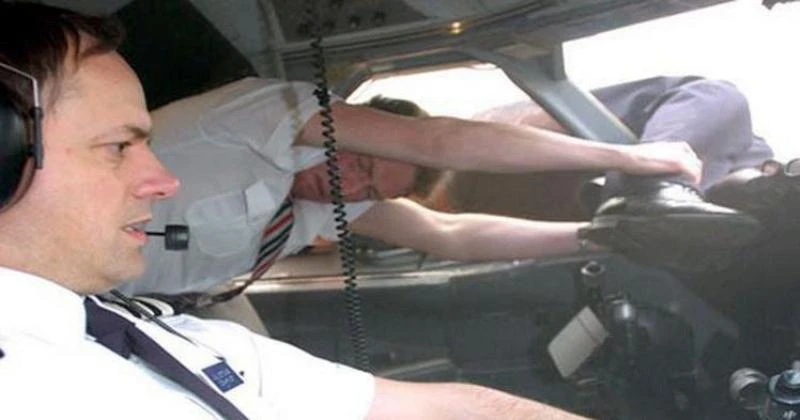
The British Airways BAC One-Eleven incident occurred over the town of Didcot on the morning of Sunday, June 10, 1990. Flying conditions were ideal, with visibility around six miles (10 km), an air temperature of 15°C (59°F), and a light northerly breeze. 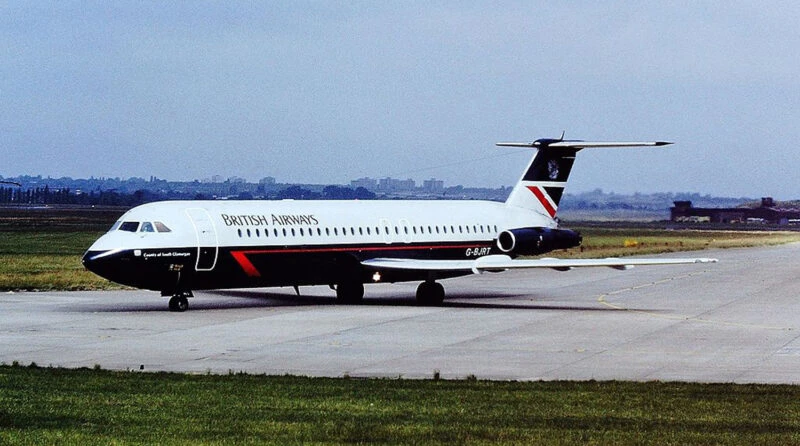
Flight BA5390, bound for Málaga from Birmingham, took off right on schedule at 8:20 a.m. carrying six crew members and 81 passengers. With smooth skies ahead, the crew, led by Captain Timothy Lancaster, prepared for what was expected to be an ordinary, routine flight.
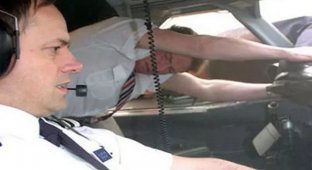
At 8:33 a.m., the airliner leveled off at an altitude of 17,300 feet (5,273 meters) over Oxfordshire. With everything proceeding smoothly, both pilots unfastened their shoulder harnesses to get comfortable. Captain Lancaster also loosened his lap belt—a fateful decision that almost cost him his life. Moments later, a tremendous bang ripped through the aircraft. The left windscreen directly in front of the captain blew out, and Lancaster was instantly sucked through the opening like a ragdoll. 
Reconstruction of the incident
Lancaster was pinned against the outside of the fuselage, his legs miraculously caught between the control yoke and the instrument panel. A second loud blast followed almost immediately: the explosive decompression tore the flight deck door off its hinges, smashing it into the radio console and cutting off communication with air traffic control. But the crew had far more urgent concerns—two-thirds of Timothy Lancaster’s body was dangling outside the aircraft at over 17,000 feet, and no one knew if he was dead or alive.
Flight attendant Nigel Ogden, who was on the flight deck when the windscreen blew, was closest to the captain. Acting on sheer instinct, he lunged forward and grabbed Lancaster firmly by the belt of his trousers. Ogden later told reporters that while he was terrified, there was no time to think—adrenaline took over.
“I heard a bang and turned around to see the windscreen was gone and Tim was slipping out through the gap. He was sucked right out so that all I could see were his legs.” 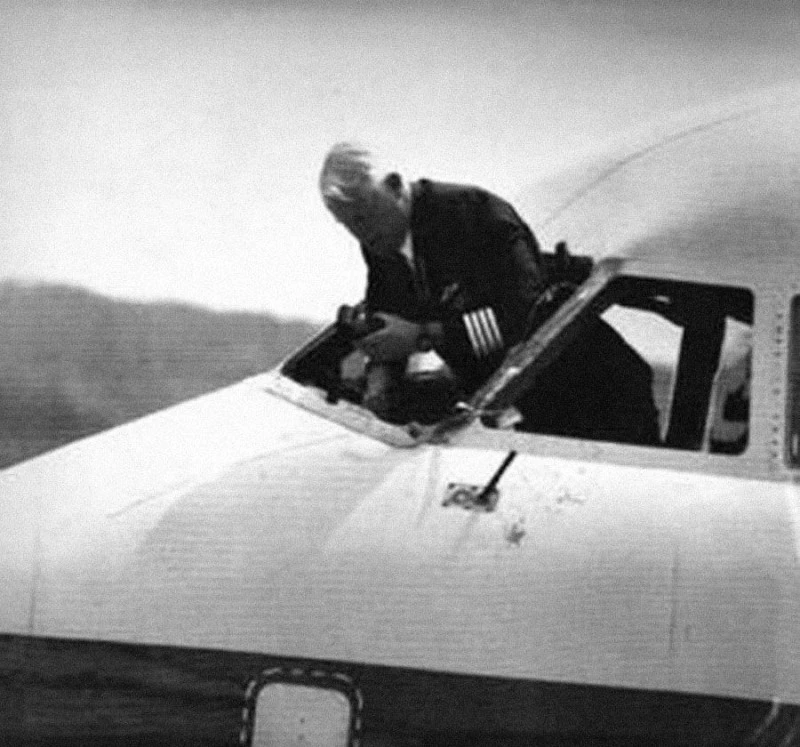
An investigator inspects the aircraft windscreen fittings
Once the ordeal was over and air accident investigators began their work, they discovered that the ill-fated windscreen had been replaced just 27 hours prior to the flight. It had been secured with 90 bolts—84 of which were smaller in diameter than specified. Even so, the remaining six bolts might have held if they had been the correct length. Instead, the only bolts with the right diameter were too short, held in place by a mere two or three threads.
How did such an error occur? The explanation was shockingly mundane. Short-staffed during a night shift, the maintenance manager had decided to replace the windscreen himself. He picked the wrong bolts from the stockroom and skipped using power tools out of convenience. Installing the bolts by hand, he never ran a cabin pressure check afterward. The catastrophic failure came down entirely to human error.
Decompressed and with its captain dangling out the front, the jet began a rapid dive, sending the passenger cabin into sheer terror. Lancaster’s snagged foot had inadvertently kicked off the autopilot. Flight attendant Susan Gibbins did her best to calm the panicked passengers while the flight crew regained their composure, leveled the aircraft, and restored radio contact. Co-pilot Alastair Atchison took full control of the plane, initiated an emergency descent, and prepared to divert to one of the airports offered by controllers: London or Southampton. 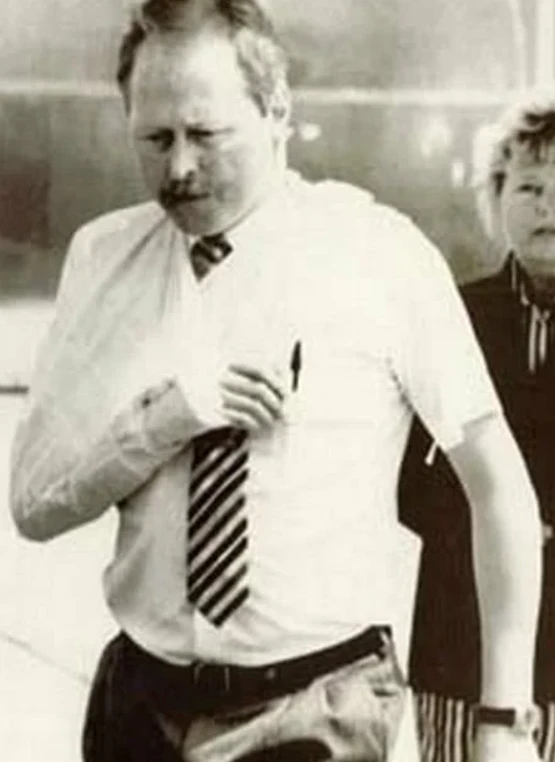
Timothy Lancaster
Atchison initially requested to land at London Gatwick, but air traffic control redirected him to Southampton Airport, whose runways the co-pilot was unfamiliar with. As the plane banked toward the diversion field, flight attendant Ogden waged a desperate tug-of-war for Lancaster’s life as the captain continued to slip further out into the sub-zero airstream. Nigel Ogden later recounted:
“I held on to Tim by the legs, but I was being pulled out too—another steward, John, grabbed me by the belt to keep me inside. Everything was flying around and being sucked out into the wind. An oxygen cylinder that had been bolted down nearly took my head off. My strength was failing, so another colleague wrapped a strap around Tim’s ankle and lashed it to the captain’s seat. Someone said, ‘We’re going to have to let him go,’ but I said I’d never do that. I couldn't bear the thought of having to look his family in the eye.”
Miraculously, the brave crew managed to hold on to the captain. The emergency landing was executed flawlessly under the circumstances. The passengers were even evacuated normally down mobile boarding stairs. As they stepped off the jet, they were immediately met by trauma counselors in the terminal.
Twenty-two agonizing minutes had passed from the blowout to touchdown, and virtually no one expected Lancaster to have survived. Crew members pulled him back into the cockpit and immediately began first aid. To the astonishment of his colleagues and first responders, Lancaster was still alive, though unconscious. It defied belief: he had spent 22 minutes exposed outside an airliner hurtling at nearly 400 mph (600 km/h) in temperatures plunging to -17°C (1°F). 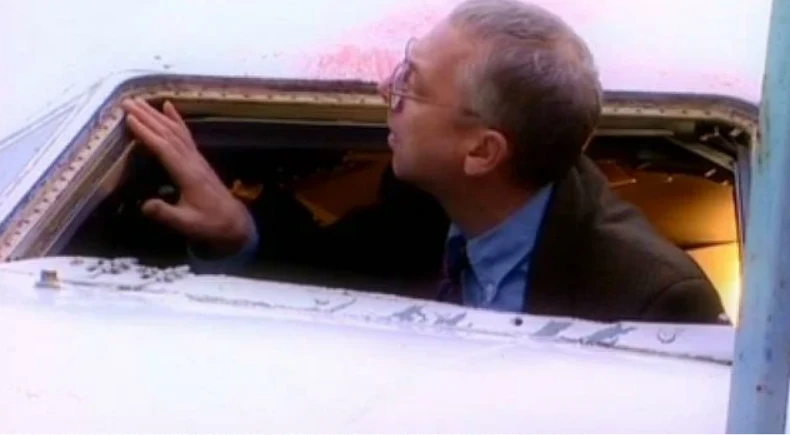
An investigator inspects the window frame through which Lancaster was sucked out. Traces of the captain’s blood can be seen along the top edge
Lancaster was carried off the aircraft on a stretcher and rushed to the hospital, where doctors evaluated his injuries. Incredibly, his trauma was relatively light given the circumstances: a fractured right arm, broken left wrist, fractured finger, severe facial swelling, and frostbite.
His savior, flight attendant Nigel Ogden, suffered facial frostbite and a dislocated shoulder. Crew members Heward and Rogers were treated for cuts and bruises from debris flying around the cockpit. While the flight ended in an astonishing miracle, it left deep emotional scars on everyone involved.
Following six months of rehabilitation, Timothy Lancaster returned to the cockpit, though he chose not to fly passenger jets again. Nigel Ogden was left so traumatized by the event that he stepped away from cabin service and took a ground job instead. First Officer Alastair Atchison continued a long, distinguished flying career, retiring in 2015. Both Atchison and flight attendant Susan Gibbins were later awarded the Queen’s Commendation for Valuable Service in the Air. 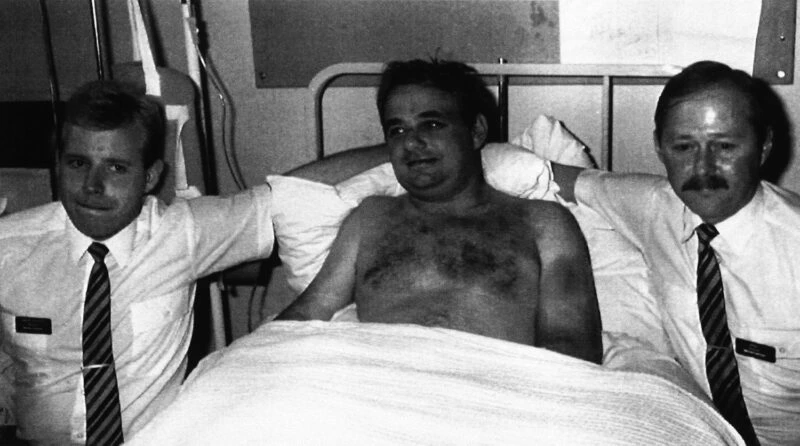
Timothy Lancaster with flight attendants Simon Rogers and Nigel Ogden (right) recovering in the hospital
As for the maintenance manager whose oversight nearly claimed dozens of lives, little was ever disclosed about his subsequent career. The head of maintenance at Birmingham Airport initially defended him to reporters, arguing that he had acted under pressure to keep the flight on schedule. In the wake of the near-fatal blowout, aviation authorities across the UK overhauled aircraft maintenance and quality-control standards to ensure such an oversight could never happen again.