Why Do People in India Wear Turbans? Unlocking the Secret Behind the Striking Headwear (13 Photos)
There is a widespread misconception that everyone in India wears a turban, competing to see who can wrap the most elaborate yards of fabric around their head. That is not quite how it works—wearing a grand turban is an honor that must be earned. In fact, not everyone is even permitted to wear one, meaning for some Indians, a turban is entirely off-limits under any circumstances. Here is the story of how the turban originated in India, why it is worn, and what lies beneath it. 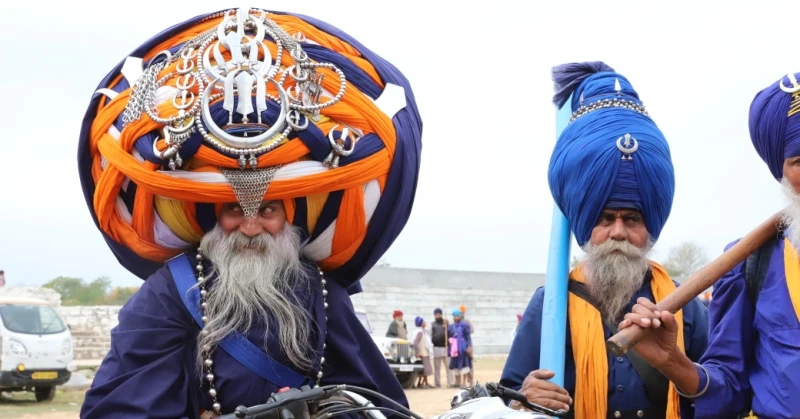
Of course, anyone can wrap a towel around their head, but we are talking about authentic turbans—headwear rich in history and sacred meaning. For centuries in India, these head coverings have been the distinct mark of the Sikhs, followers of one of the region's major religions. 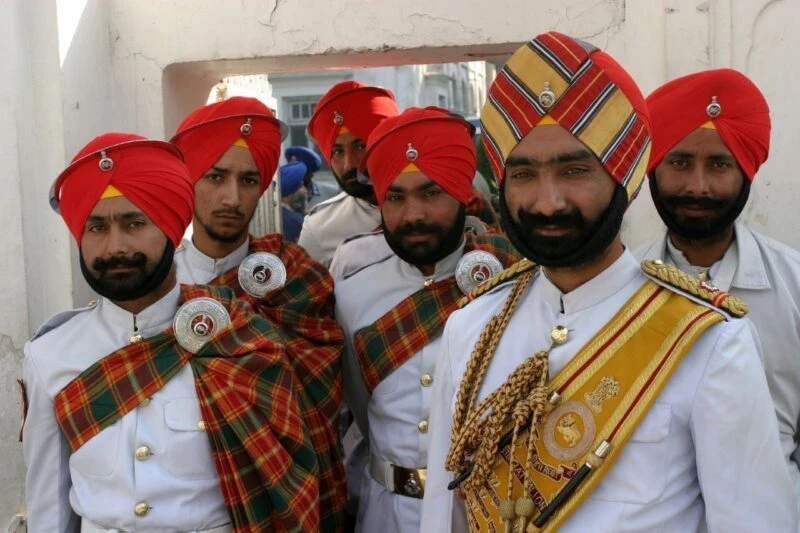
During the formative era of Sikhism from the 15th to 18th centuries, wearing a turban was a privilege reserved exclusively for the upper-caste elite. However, because human equality is a core tenet of Sikhism, the right to proudly wear a turban was eventually extended to all followers of the faith. Still, not everyone has free rein when choosing its size or color. 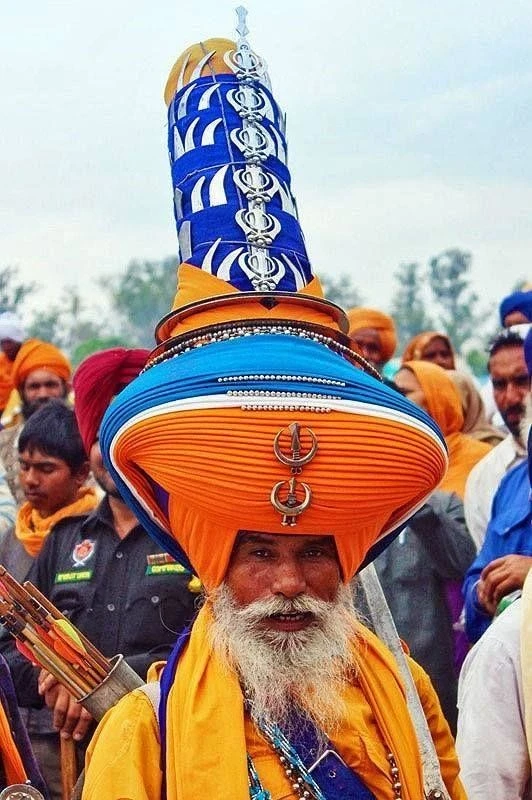
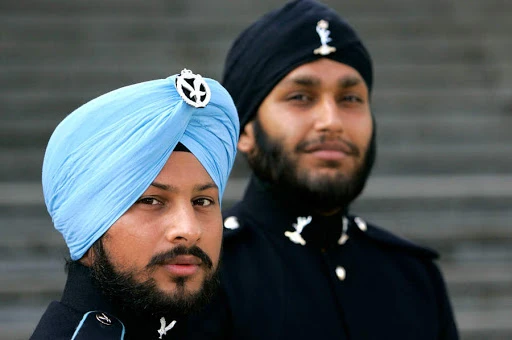
Sikhs do not typically use the word "turban"—or worse, "chalma." In Punjabi, spoken by the majority of Sikhs, the headwear is called a
pagri
, or simply a
pag
. Its name in Sanskrit, India's ancient literary language, sounds remarkably similar:
pak
. Most respectfully, Sikhs themselves refer to their turbans as a
dastar
. 
A Sikh's
pag
conceals one of their most sacred treasures: their hair. Every Sikh is bound by
Kesh
—the vow to leave hair uncut and natural. As hair grows, it is pinned up higher and higher on top of the head. As the hair grows, the Sikh’s turban grows along with it, sometimes reaching staggering proportions. 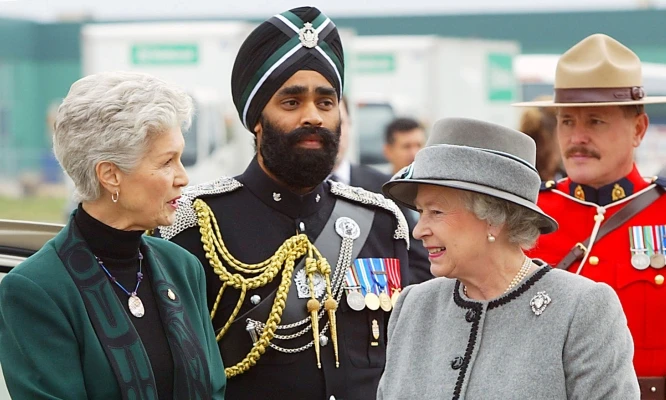
An adult Sikh man—a head of a household and a respected community member—would never appear in public bareheaded. Going out without a turban is considered almost as shameful as shaving one's head or trimming a full beard into a European style. The
pag
and everything beneath it hold such immense significance that forcibly removing a Sikh's headwear could provoke deadly retaliation—especially considering a Sikh traditionally carries a sword or dagger. 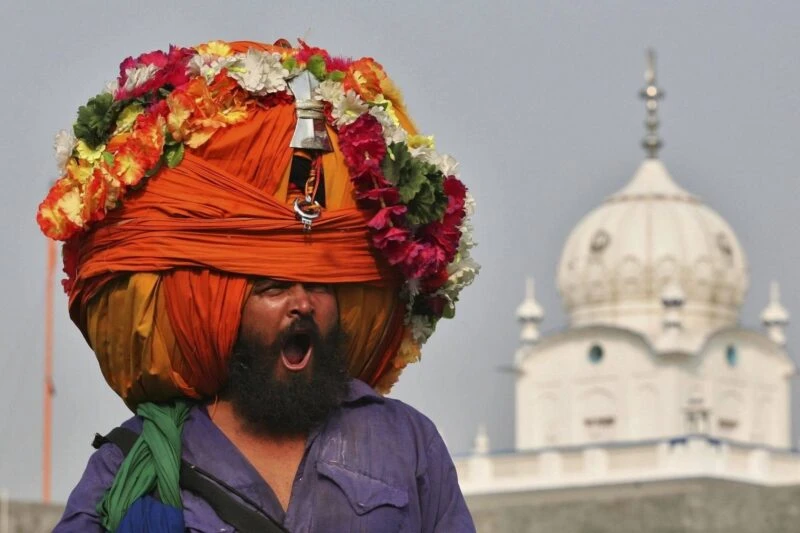
In terms of design, a turban is not a ready-made hat that can simply be slipped on. It consists of long strips of fabric meticulously wrapped layer by layer following a precise technique. In times past, a turban even doubled as a vault, where a Sikh might tuck away money, valuables, documents, or personal keepsakes. While that practice is rare today, traditional Sikh ritual items are still frequently fastened to the headwear in abundance. 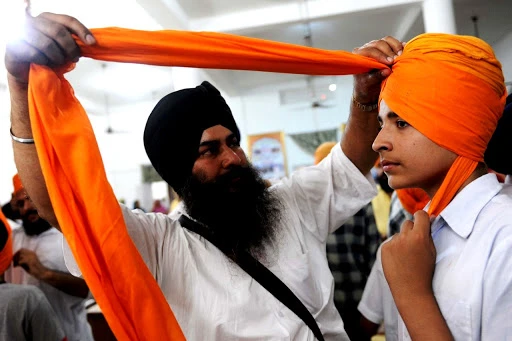
Few realize that the primary purpose of the turban goes beyond displaying masculinity or strictly observing religious doctrine. Sikhs believe their
dastar
shields their third eye from evil spirits and the ill intentions of jealous onlookers. 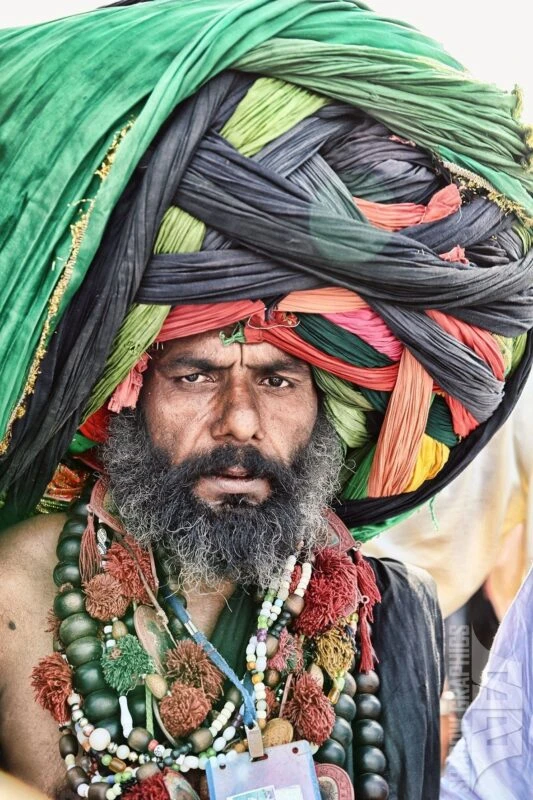
To an Indian local, a turban speaks volumes about the person wearing it. Everything matters: the color or combination of shades, the direction and layering of the folds, the width of the fabric, and the shape and number of knots—the intricacies are endless. 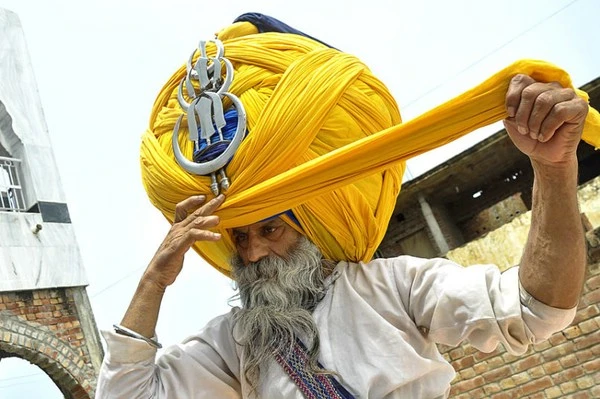
Specific sects and groups stand out from the crowd precisely through their turban styles. For instance, members of the Namdhari sect wrap their
dastar
flat across the forehead without sharp angles. Moreover, their turbans must strictly be white. Vibrant orange turbans are typically reserved by most Sikhs for the spring festival of Vaisakhi. 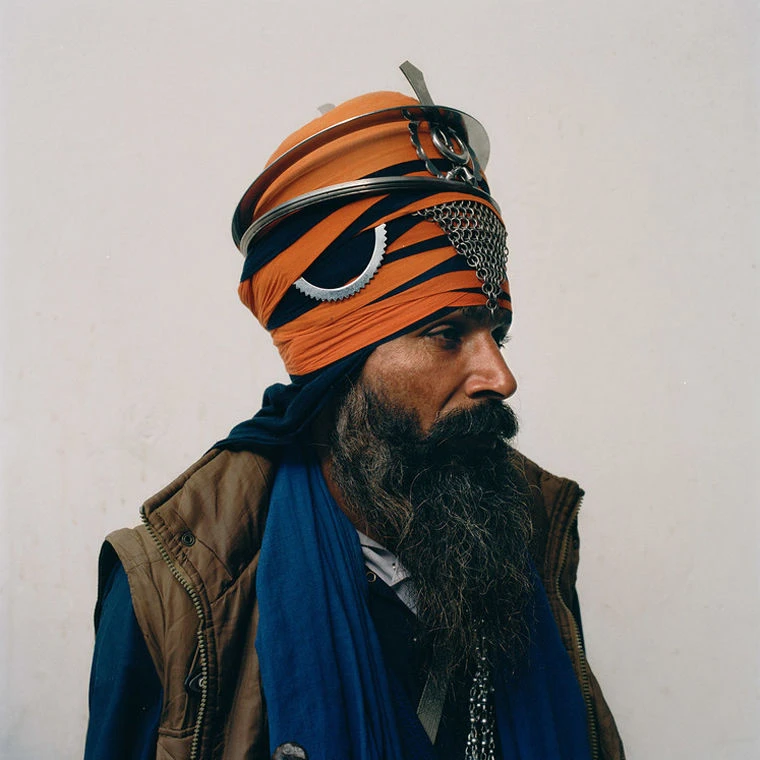
Pale orange or stylish pink turbans are donned for weddings. Not only the groom, but all male guests wear a
dastar
of these shades to the ceremony. Warriors of the Akali order historically wore pitch-black turbans. Only relatively recently did their spiritual leaders relent, permitting dark blue fabrics for the first time in centuries. 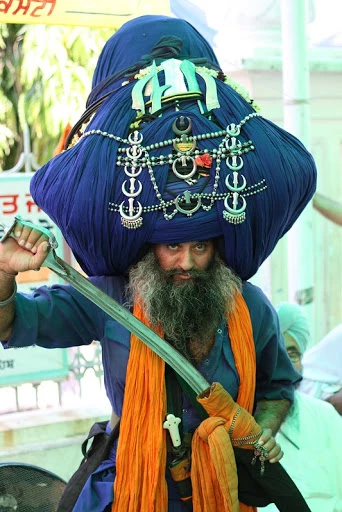
Red or yellow turbans are everyday options, with colors chosen at personal discretion. A khaki
dastar
, on the other hand, is the exclusive domain of military personnel. A standard daily turban typically uses 3 to 5 meters of fabric, though this does not apply to the most venerated figures in Sikh society. 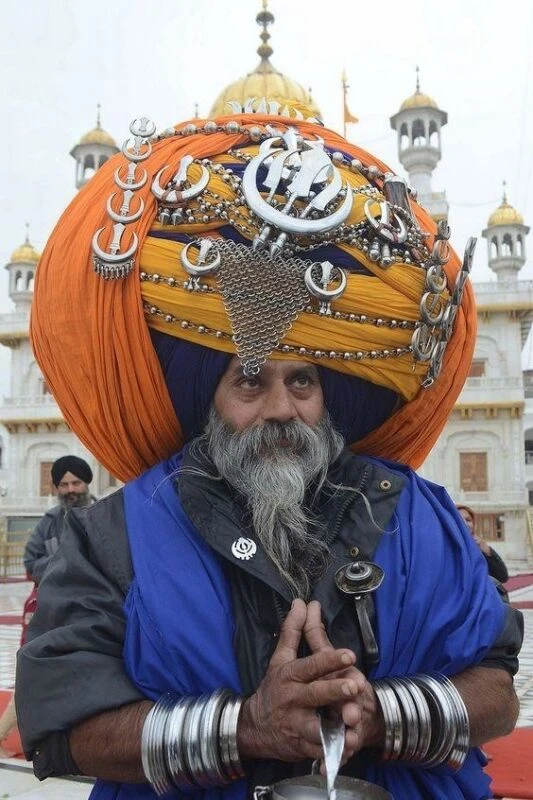
A wise, highly respected, or enlightened individual would never settle for a modest few meters of cloth. The larger, fuller, and heavier the turban, the greater the stature of the man beneath it. Avtar Singh Mauni holds the undisputed record for turban size and weight. This prominent Sikh's
dastar
is crafted from a staggering 650 meters of fabric, weighing in at 45 kilograms! 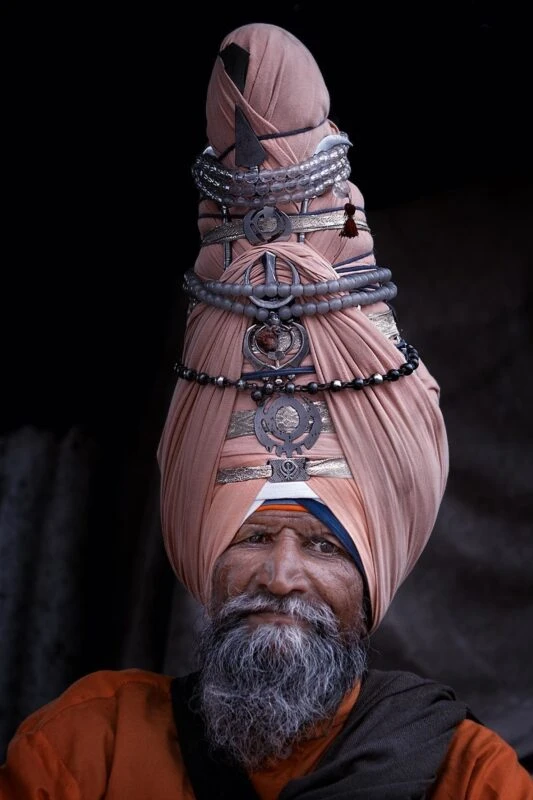
It is worth noting that the gap between the record-holder and other respected elders is not as wide as one might think. Turbans weighing 30 to 35 kilograms are surprisingly common among wise, grey-haired Sikh elders.