He Spent €300,000 of His Own Money to Put a Broken Eiffel Tower in the Desert (10 photos)
The original Eiffel Tower was built as a temporary structure—yet has stood proudly since 1889. The art installation EIFFELA BROKEN DREAM was designed to last forever—yet stands in a city built for just nine days. French entrepreneur Philippe Maindron spent €300,000 of his own money to ship a fractured, 30-ton tower through the Panama Canal to the Black Rock Desert for Burning Man 2026. Here is the story of the man behind the project and why he decided to shatter France's iconic landmark right in the middle of Nevada. 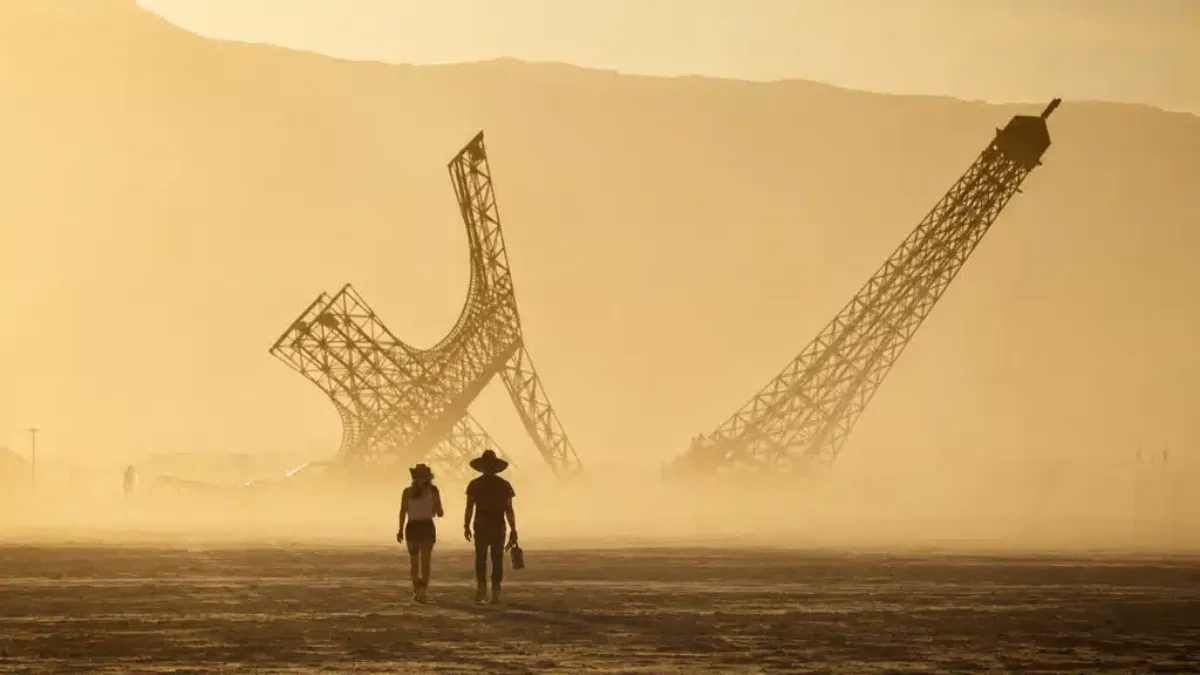
A Vendée Entrepreneur Driven by Wild Ideas
Philippe Maindron was born in 1961 in the village of La Verrie in western France. Raised in a farming family, he spent several years working as a technician for an agricultural cooperative. In 1985, he moved to the village of Saint-Malô-du-Bois and decided to break the ice with his new neighbors the only way he knew how: by throwing a community party. 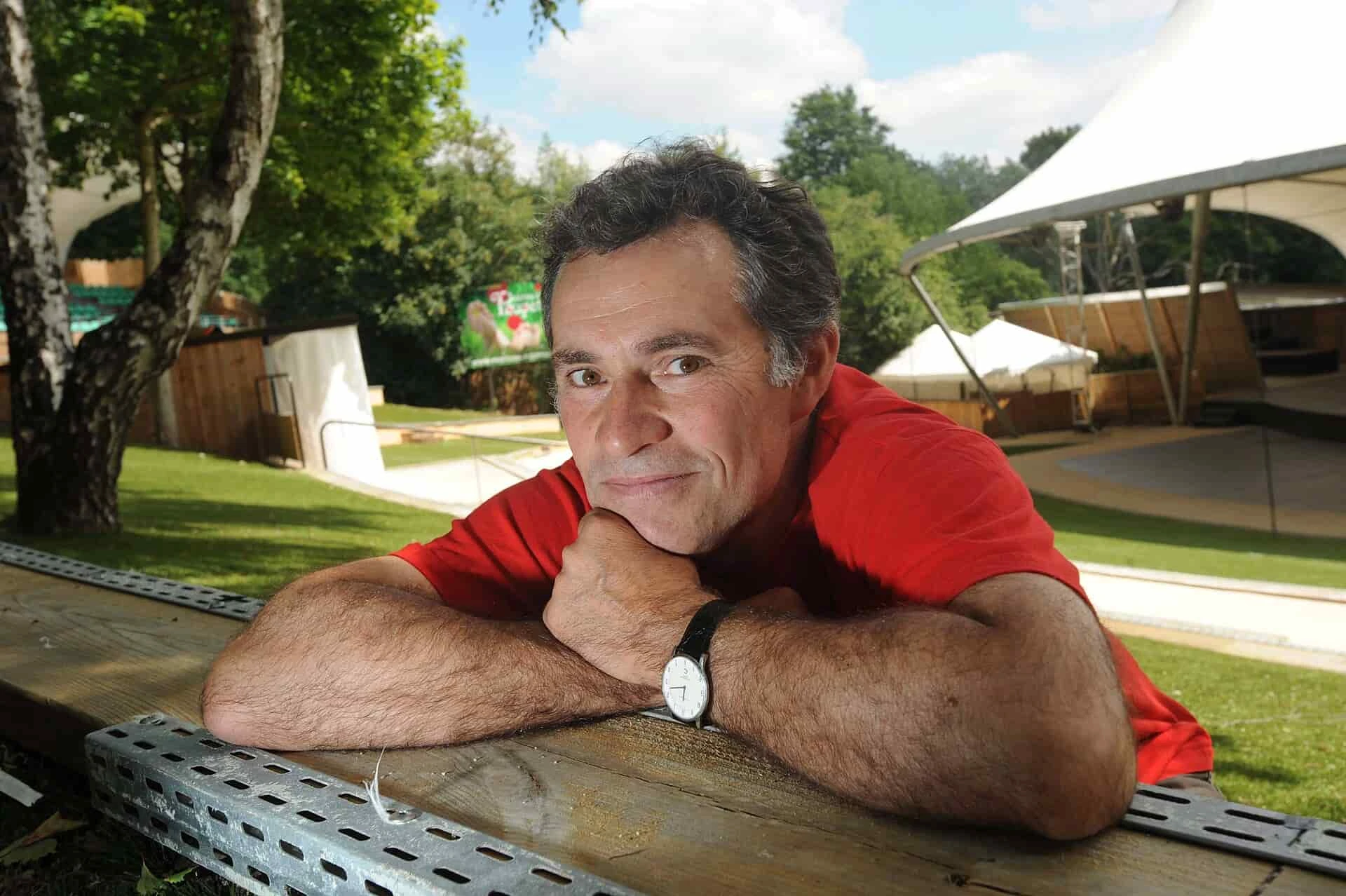
Maindron in the early 2000s. The Poupet Festival was already drawing thousands of attendees, long before the idea for EIFFELA BROKEN DREAM was born.
What began as cozy evening gatherings involving basket weaving grew into the Festival de Poupet—now one of the largest summer music festivals in western France. Over the years, its stage has hosted the likes of Bob Dylan, Joe Cocker, Yannick Noah, and Johnny Hallyday. Alongside the festival, Maindron launched Maindron Production, an event management company specializing in corporate gatherings—far from boring ones, featuring tracked motorized beds, moped races down the Champs-Élysées, and other stunts he playfully calls "conneries" ("shenanigans"). 
The Poupet Festival attracts tens of thousands of music lovers every summer. It was here that Maindron mastered the art of turning wild impossibilities into reality.
In 2026, Maindron Production marks its 10th anniversary. EIFFELA BROKEN DREAM is its flagship project—the most ambitious endeavor in the company's history. For the 65-year-old Maindron, this isn't a business move. It is the culmination of a decade-long obsession.
First Time in the Desert: 2016
Burning Man isn't just a festival; it’s a temporary metropolis that rises in Nevada's Black Rock Desert every August and vanishes without a trace nine days later. The tradition began on June 22, 1986, when Larry Harvey and Jerry James burned a wooden effigy of a man on San Francisco's Baker Beach, drawing a small, curious crowd. By 1990, the gathering relocated to the desert, evolving from a beach bonfire party into a universe of its own. 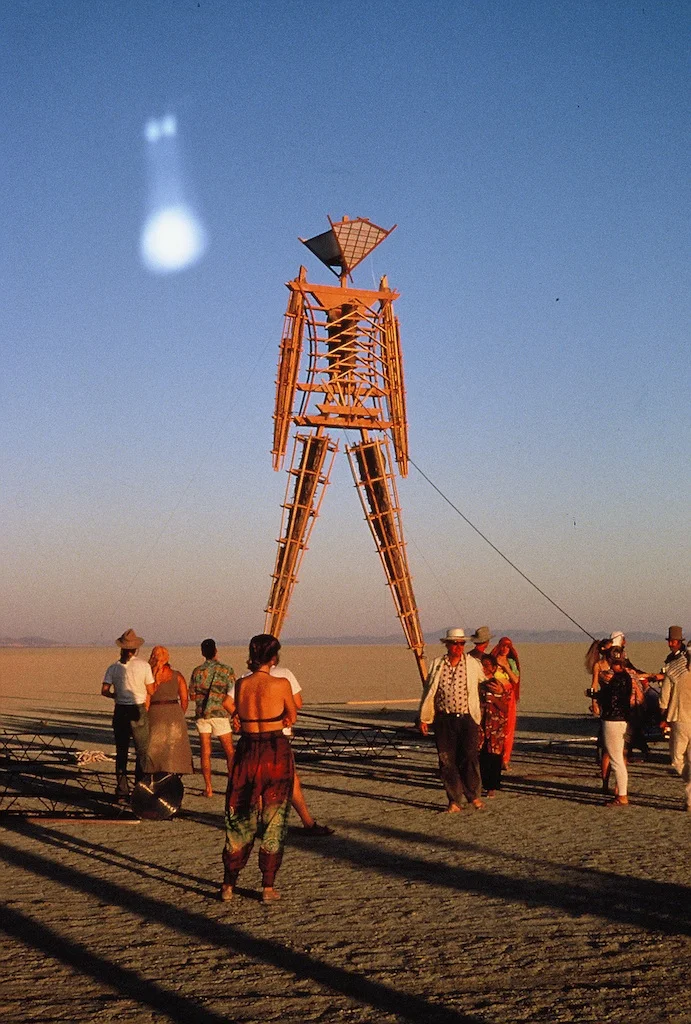
The early years of Burning Man in the Black Rock Desert, early 1990s. The wooden "Man" effigy back then was far more modest than today's colossal structures.
Inside the temporary city, cash holds no power: everything runs on a gifting economy and bartering, where participants themselves build the entire infrastructure. At its peak, the event drew nearly 80,000 attendees. Burners bring massive art installations, set up themed camps, host performances, and ultimately burn the central effigy—giving the event its name. 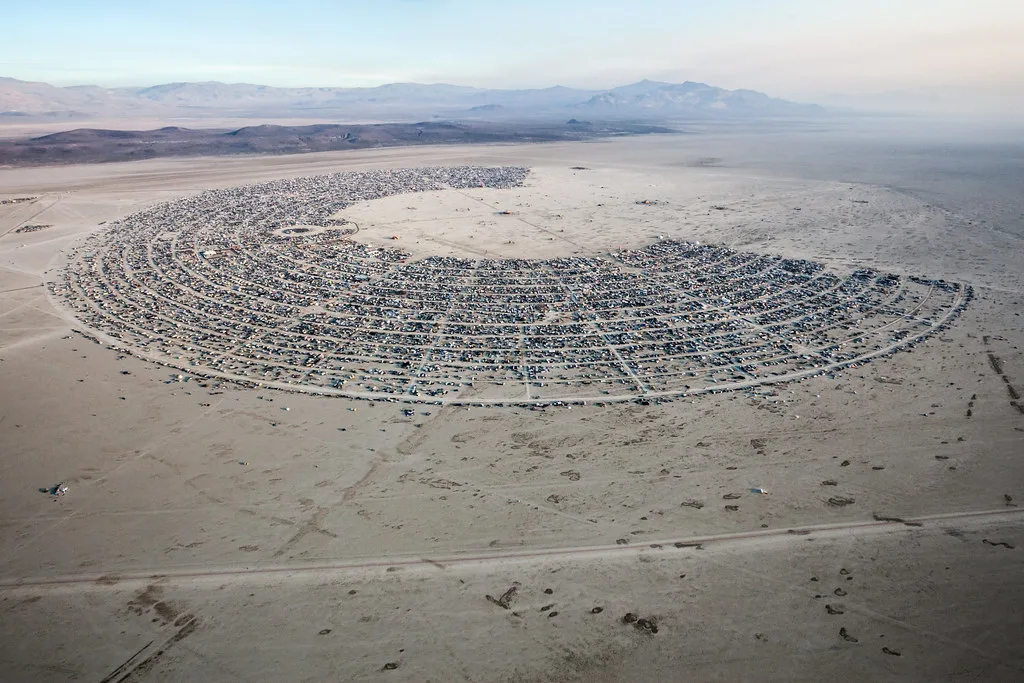
Black Rock City exists for just nine days a year. Once it ends, the desert returns to its pristine state, leaving no trace of human presence.
Maindron attended his first Burning Man as an ordinary participant in 2016. The experience overwhelmed him. Surrounded by awe-inspiring art brought by creators from around the globe, he realized this was the place to bring his long-harbored vision to life—not in an art gallery, not in a city square, but out in the open desert.
Two Years of Sketches and Four Months of Engineering
The idea took root at a restaurant table in 2023. Videographer Abel Arnoux, who documented the project from day one, recalled Maindron sketching his vision on a dinner menu, declaring he was going to put the Eiffel Tower in the desert. Nobody took him seriously at the time, but Maindron immediately got to work.
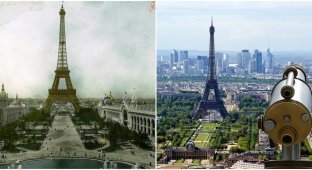
Why the Eiffel Tower? The original landmark was erected in 1889 as a temporary entrance arch for the Paris World's Fair—a modular structure intended to stand for just twenty years. Though scheduled for demolition, it remained standing forever. Maindron flipped this logic on its head: his tower was engineered to last, yet built for a city destined to exist for only nine days. 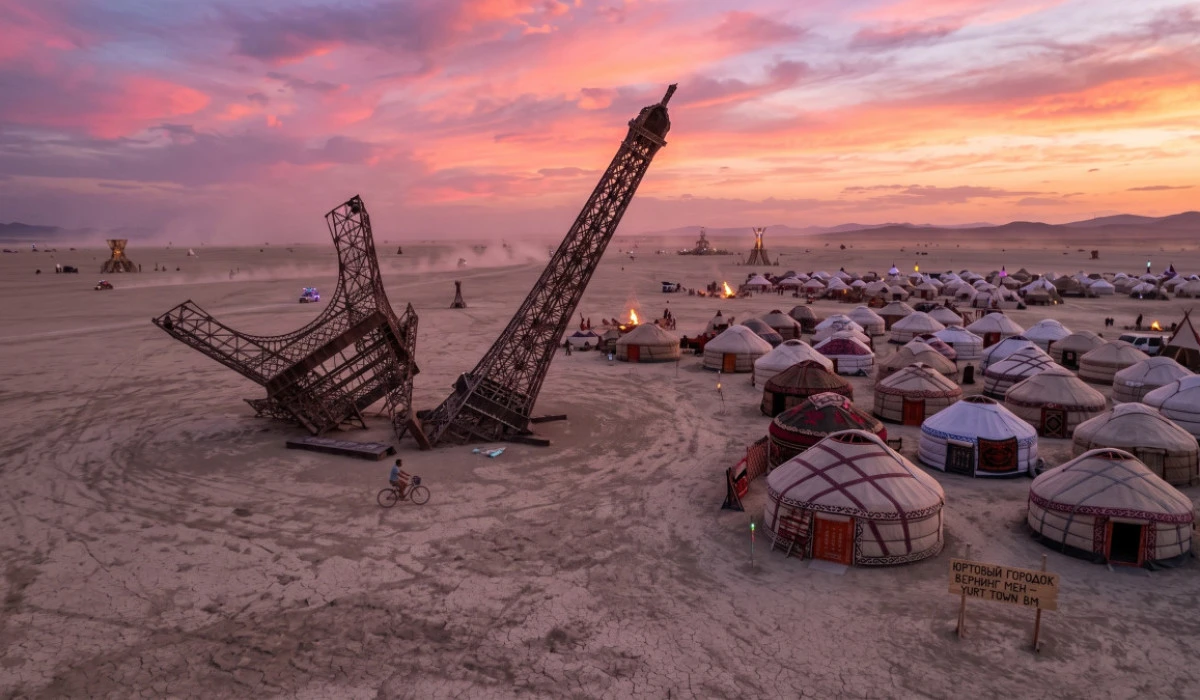
5,000 metal components and 10,000 bolts. The rust is intentional—Maindron incorporated an aged patina into the design right from the start.
Refining the concept took over two years. From September 2025 to January 2026, engineers calculated extreme desert wind loads and structural stress under the tension of a tightrope walker's cable. Four months of complex engineering calculations for an installation that would stand for just nine days. The metal was artificially weathered; the rustic patina was built into the design, not caused by desert elements.
Across the Ocean: 15,000 Kilometers in Four Shipping Containers
Trial assembly took place in the village of Rochetrejoux in Vendée. About twenty volunteers spent three weeks erecting the structure to test every joint and bolt. In May 2026, the tower was disassembled piece by piece and packed into four ocean shipping containers. The total cargo weight exceeded 40 tons: roughly 30 tons for the art installation itself, with the remainder consisting of camp equipment and heavy machinery. 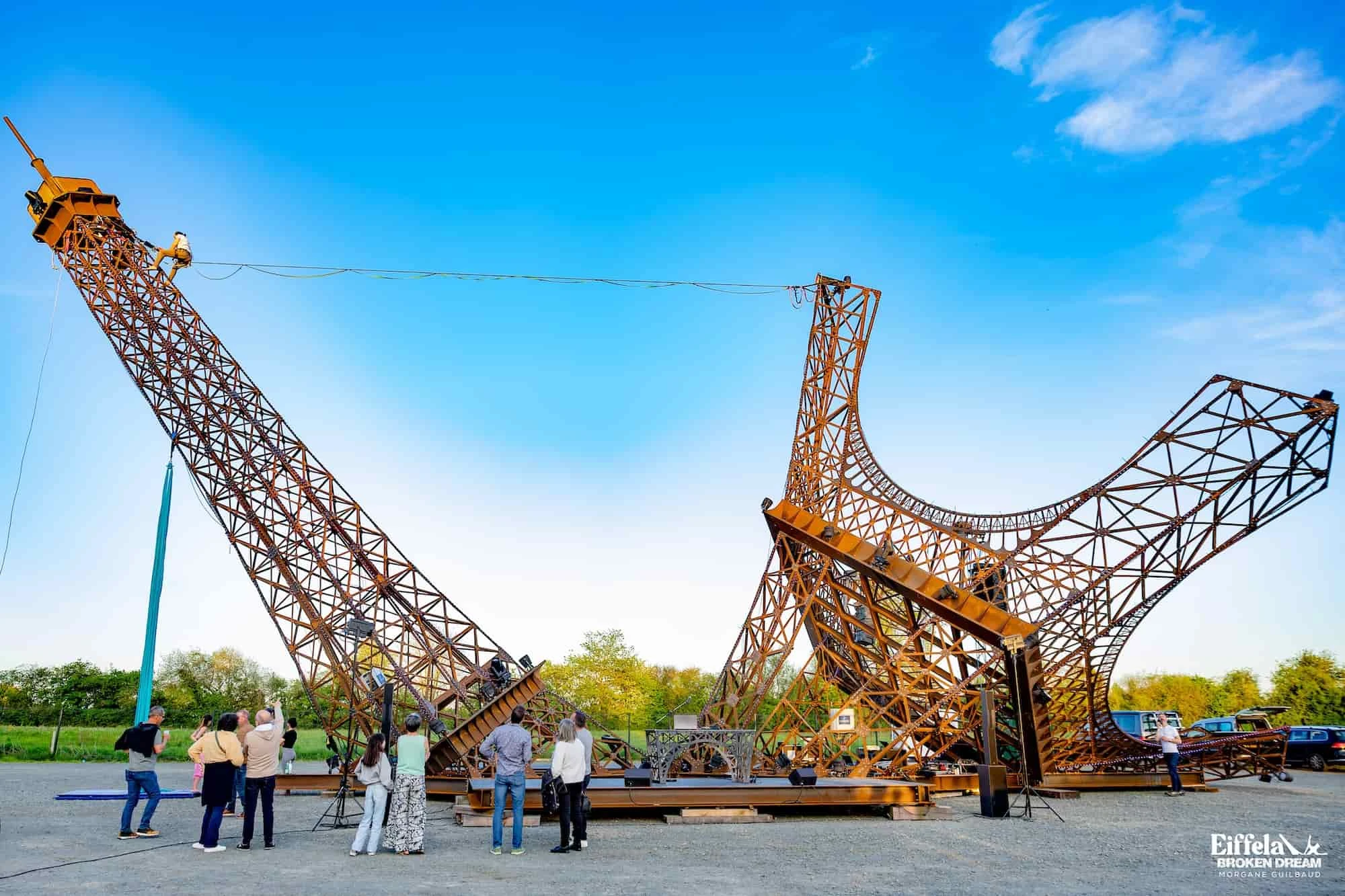
Rochetrejoux, Vendée, May 2026. The tower was completely disassembled prior to shipping: two of the four 40-foot containers were filled entirely by the structure itself.
On May 5, 2026, the containers departed from the Port of Le Havre. The journey spanned the Atlantic, coasted past Cuba, navigated the Panama Canal, and swept up through Mexico to the Port of Los Angeles over 60 days. From Los Angeles, semi-trucks hauled the cargo another 600 kilometers into the desert. All told, a journey of nearly 15,000 kilometers. 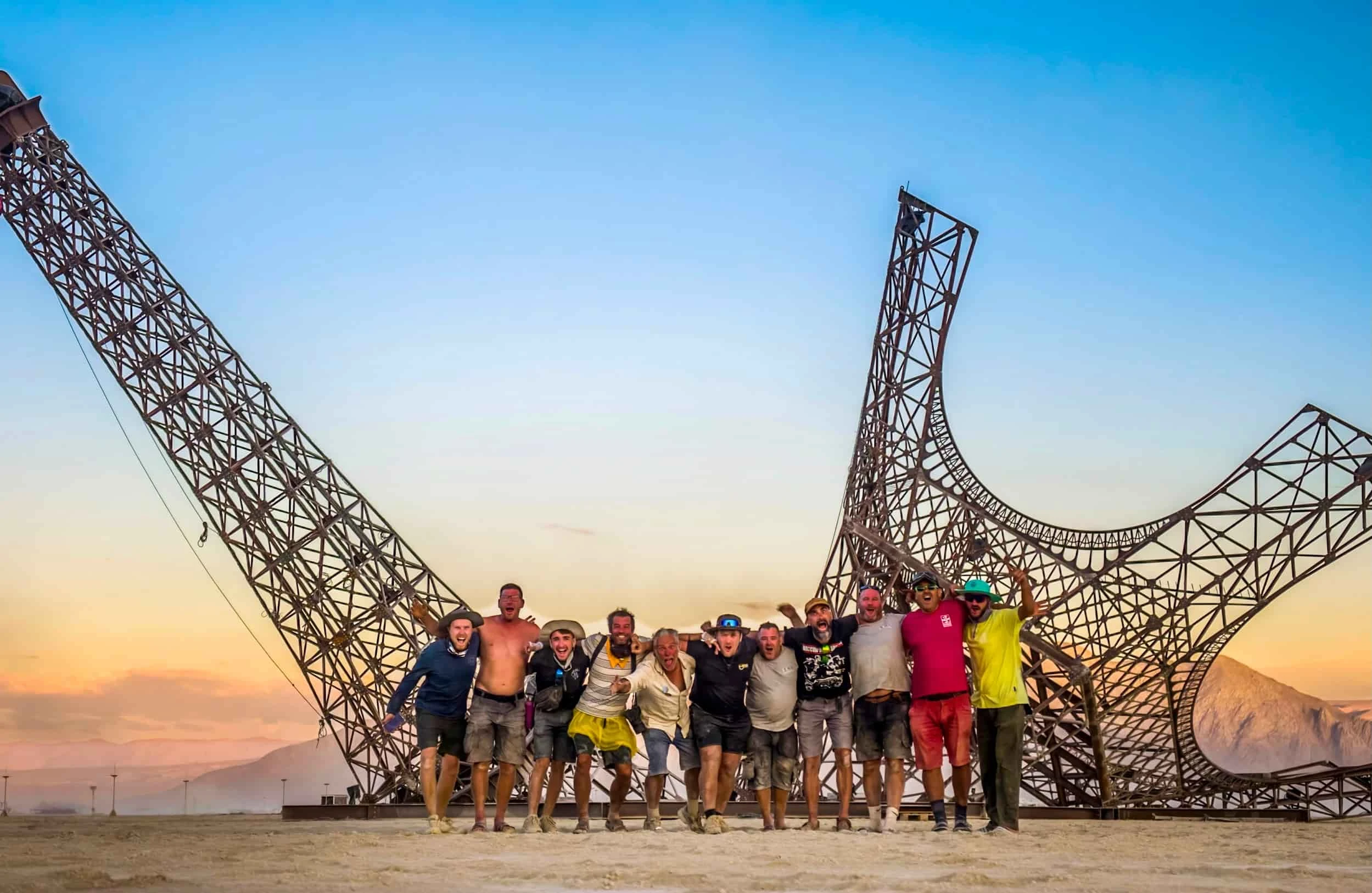
Maindron's crew alongside the assembled installation in Black Rock City. On-site construction took just 72 hours.
On-site, the team reassembled the structure in just 72 hours. Maindron called from Black Rock City right as construction wrapped up: "It’s utterly surreal. A completely insane story." The installation stood tall in the desert on August 30, 2026—opening day of the festival.
The Meaning Behind the Broken Tower
The structure lies horizontally—30 meters long, 15 meters high, fractured in half. The lower section with its four legs sinks into the earth, symbolizing a civilization being swallowed by the sands. The upper tip reaches toward the sky. Strung between the two severed halves is a high wire crossed by a tightrope walker. 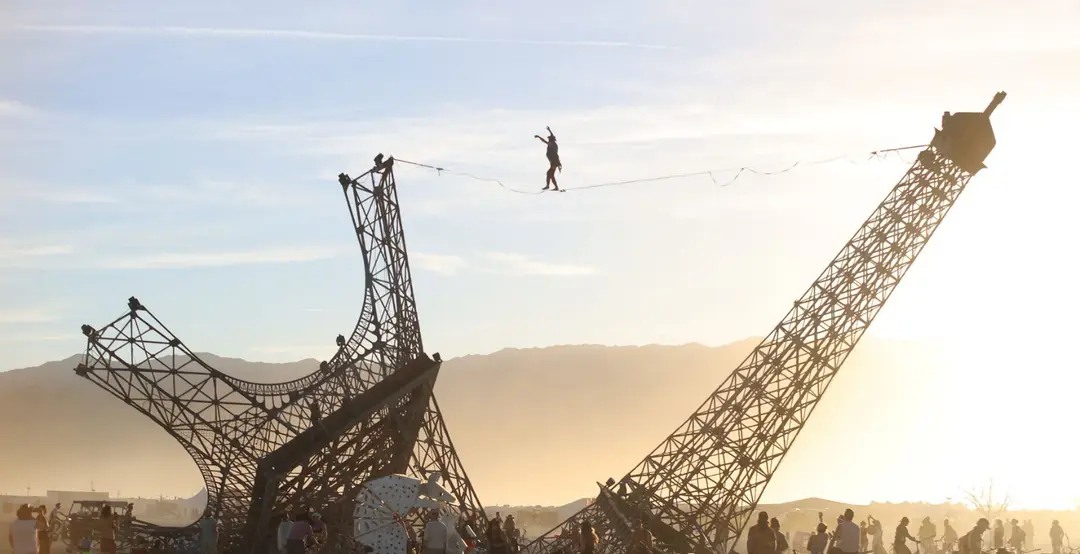
A tightrope walker balanced above the fracture—a living metaphor for Burning Man 2026's theme: Axis Mundi, the cosmic axis, a point between two states of being.
The theme of the 40th Burning Man was Axis Mundi, the "world center"—a mythological concept bridging earth, sky, and underworld across many cultures. The gap between the tower's two halves represents both a fracture and a bridge. Maindron's concept is simple: the tower traveled across a world torn by crisis until it collapsed in the desert. The lower section serves as a monument to what was lost; the upper tip embodies hope.
€300,000 Out of Pocket—and a September Auction
Maindron funded the entire €300,000 budget out of his own pocket with zero corporate sponsorships. While he launched a minor crowdfunding campaign to engage like-minded enthusiasts, the vast majority was his own high-stakes personal investment. 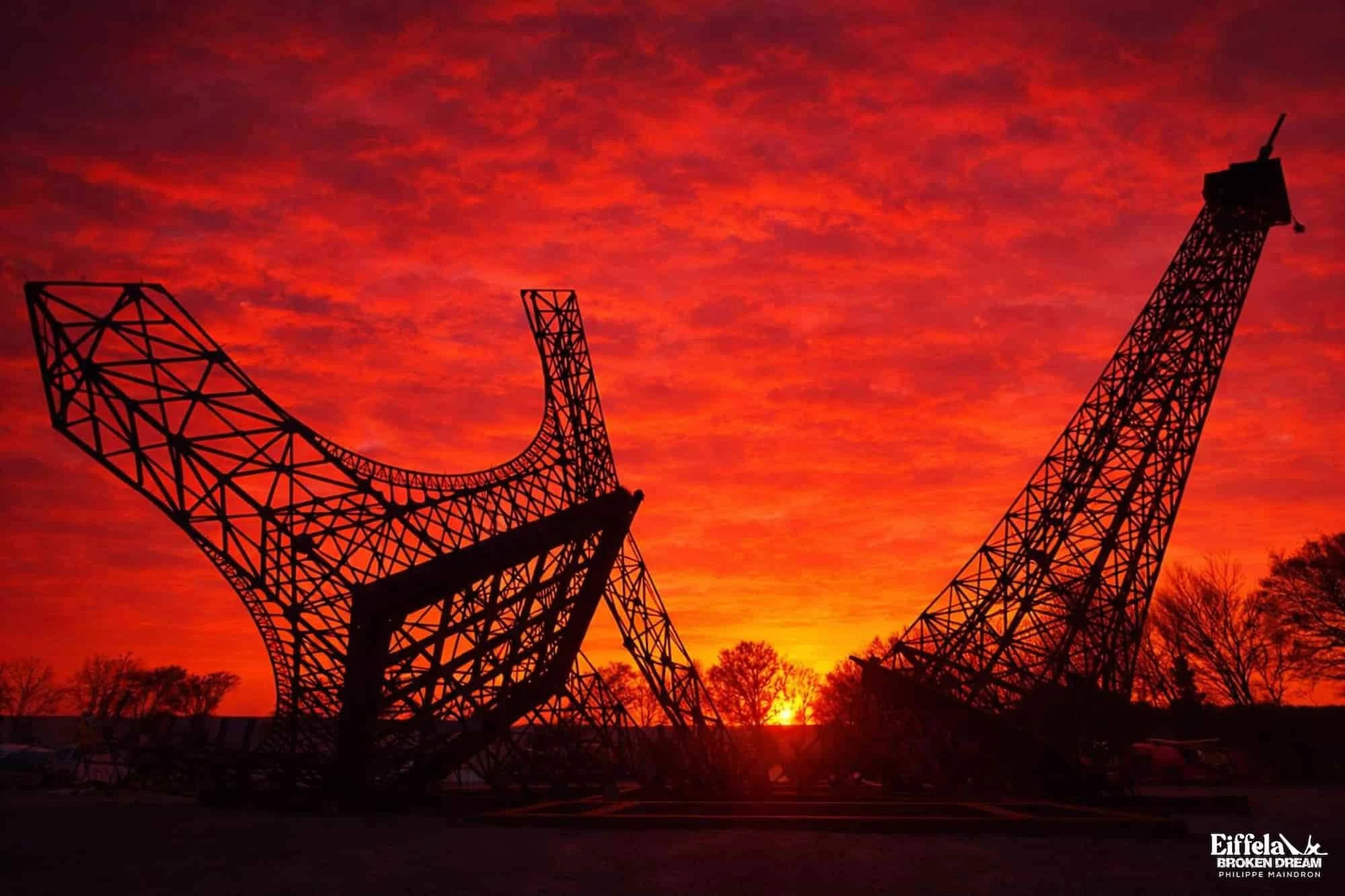
The installation silhouetted against a desert sunset. Following the auction on September 14, 2026, the tower will find a new owner—and a new destination.
On September 14, 2026, the installation will be auctioned off by Rouillac as part of "The Take-Off" sale. The starting price is set at €435,000, with online bidding held at rouillac.com. The lot is signed and numbered: Philippe Maindron, "Eiffela Broken Dream," 2026, steel, 15 × 30 m, 30 tons, edition 1/8. The buyer will determine where the tower travels next.
For Maindron, this isn't a financial venture. It’s the grand finale of a ten-year journey: attending as a burner in 2016, returning as a volunteer in 2025, and arriving in 2026 as an artist creating the festival's centerpiece. His company celebrates its 10th anniversary. The tower stands tall in the desert. That is enough.
What do you think—is art worth making such massive personal sacrifices, or is there a line that shouldn't be crossed?