The Story of Fearless Katherine Slaughterback, Who Killed 140 Rattlesnakes and Turned Them into a Dress (8 Photos)
History is full of stories about people performing incredible feats to protect themselves and their loved ones. Yet even among them, Katherine Slaughterback’s harrowing ordeal in 1925 stands out. Trapped in a waking nightmare, surrounded by hundreds of venomous serpents, she managed to fight them off and save both herself and her young son. Her bravery brought her nationwide fame and an extraordinary trophy unlike anything else in American history. 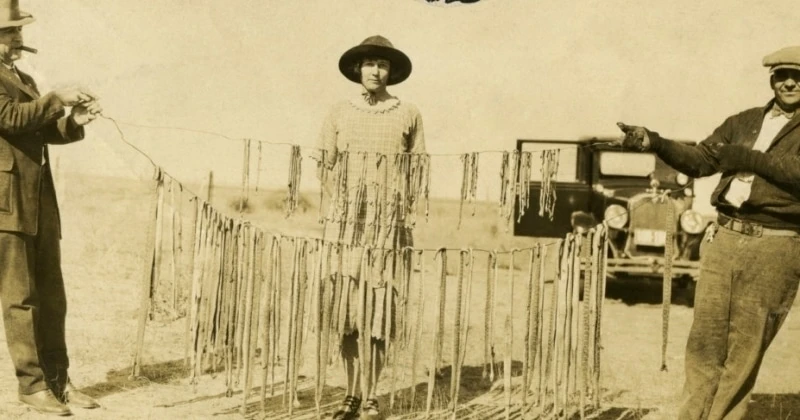
Katherine McHale Slaughterback was born on July 25, 1893, to Wallace and Albina McHale, a modest farming couple living near Longmont, Colorado. Growing up in the woods surrounding her family's log cabin, Katherine learned to shoot with pinpoint accuracy, wielded a knife and an ax like a seasoned frontiersman, and became skilled in taxidermy. 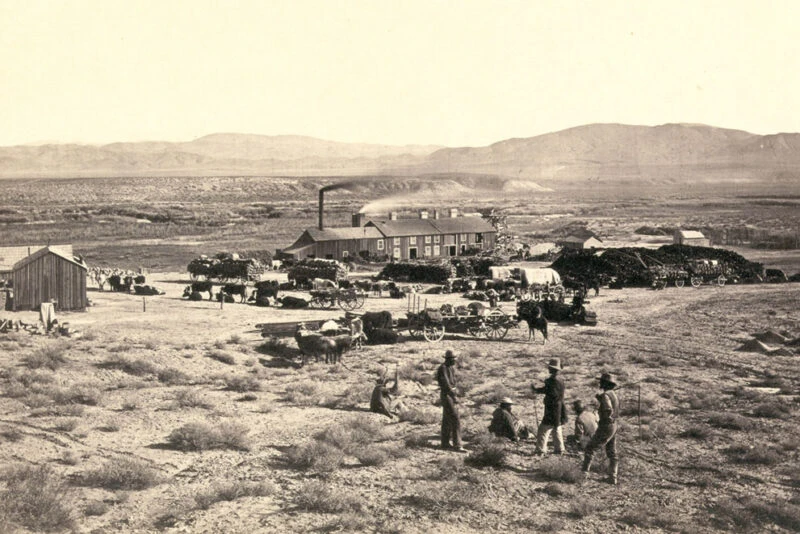
At the turn of the century, Colorado remained a wild and unforgiving frontier
Katherine stood apart from her peers with her fierce independence, a fondness for salty language, and a habit of wearing men's clothing—a rare sight for an American woman in the early 20th century. Despite her rugged demeanor, she pursued the traditional path of nursing, graduating from nursing school with honors.
Finding no job openings near Longmont, McHale relocated to Hudson, Colorado. The semi-arid climate was unfamiliar to her, but the town was bustling, and the local hospital offered not only steady employment but also free lodging.
She wasted no time settling into her new life, soon marrying a local man named John and taking his surname, Slaughterback. Over her lifetime, she would marry at least six times, though reliable details about all her husbands and children remain scarce. 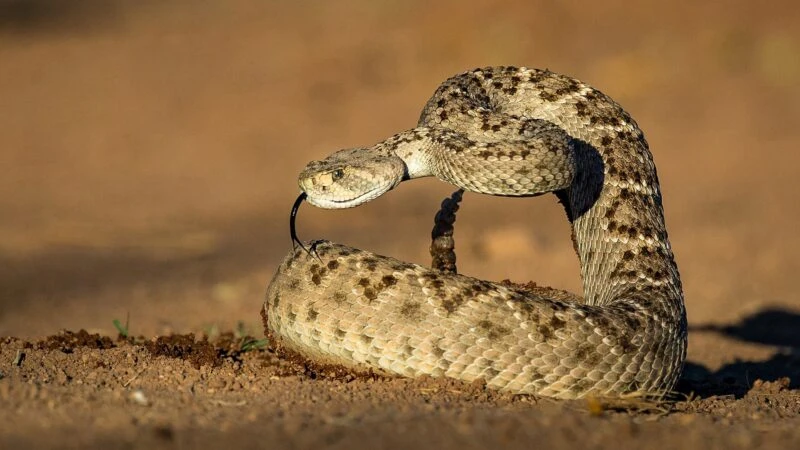
Rattlesnake
What is known for certain is that on October 28, 1925, Katherine set out on horseback toward a lake near Hudson with her three-year-old son (or stepson), Ernie Adamson. Hearing shotgun blasts in the distance, they took a detour to watch a duck hunt. Slaughterback likely hoped to snatch up downed birds before the hunters could reach them—an opportunistic habit that, while frowned upon, was quite common on the frontier.
She had no idea what kind of trap she was riding into. Instead of ducks, the pair stumbled directly into a migrating army of rattlesnakes that swarmed them from every direction. Katherine never left home without her rifle, but in this situation, firearms offered little help.
After firing three .22-caliber rounds with little effect, she dismounted and threw herself into an uphill battle against the vipers, desperately clearing a path for her horse carrying her terrified child. Rattlesnakes are among the most venomous vipers in North America, with bites capable of killing a human within hours. Their venom is just as lethal to horses, making Katherine's panic for her boy all too real. 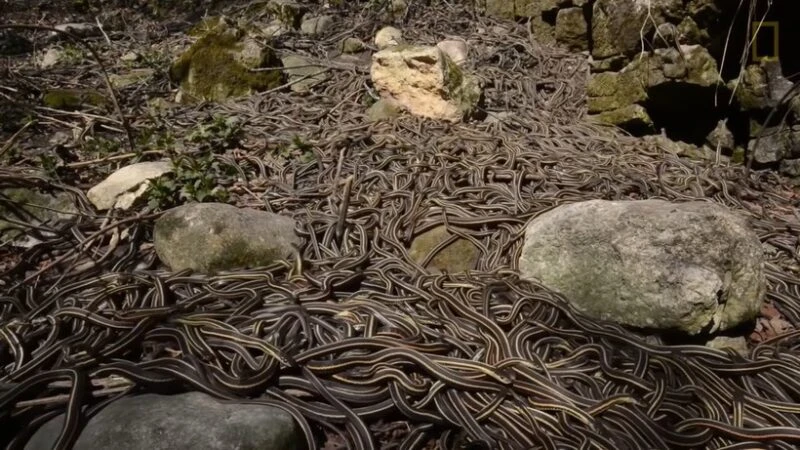
What a reptile migration looks like
Faced with an army of deadly serpents, Slaughterback ripped a three-foot wooden post out of the ground and began swinging wildly in all directions. In an ironic twist of fate, the sign nailed to the post read "No Hunting."
For two grueling hours, Katherine fought off the rattlers until the surrounding surge finally came to an end. Young Ernie watched the entire brawl from the saddle, stranded in the middle of a roiling sea of snake coils. When the dust settled, the clearing was blanketed with dead vipers—no fewer than 140 of them. She later recounted the ordeal to reporters:
“I fought them with a club about three feet long for two hours, and then I was able to lead out the horse and Ernie, who had sat in the saddle watching the whole fight.” 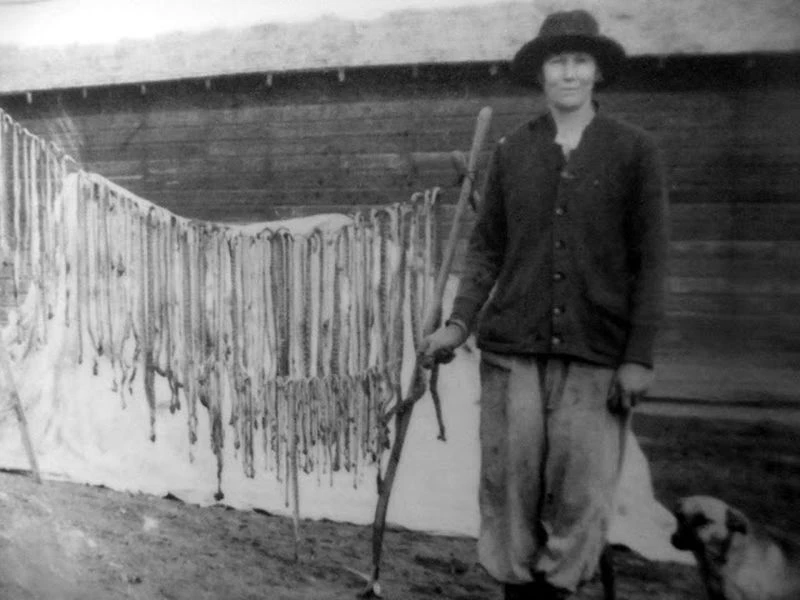
After slaughtering nearly a hundred and fifty snakes, Katherine stuffed their carcasses into sacks, tied them to her saddle, and hauled them to a friend’s farm. Hearing her unbelievable story, he was skeptical at first, but one look at the grim haul convinced him that she needed to get in touch with the press. Slaughterback did just that.
Before reporters arrived, she strung the dead serpents on wires, draping macabre garlands all around her home. Once the press took a series of photographs with her catch, Katherine put her taxidermy talents to work, skinning the snakes to fashion an iconic dress along with a matching pair of shoes and a belt. 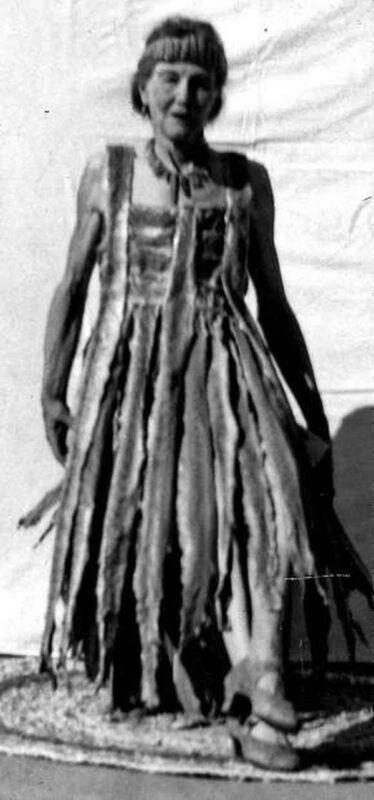
The showstopper was the dress itself, pieced together from 53 rattlesnake skins. It quickly achieved legendary status, drawing curious visitors from hundreds of miles away just to see it in person. Katherine even received visits from scholars: a curator from the Smithsonian Institution offered her $2,000 for the spectacular piece, but she flatly refused to sell her one-of-a-kind creation.
The legend of Katherine McHale Slaughterback—soon dubbed "Rattlesnake Kate"—spread across the country and was featured in the New York Evening Journal. Word of the daring nurse even made it across the Atlantic, earning her fan letters from admirers in France, Germany, Belgium, Spain, and Great Britain. 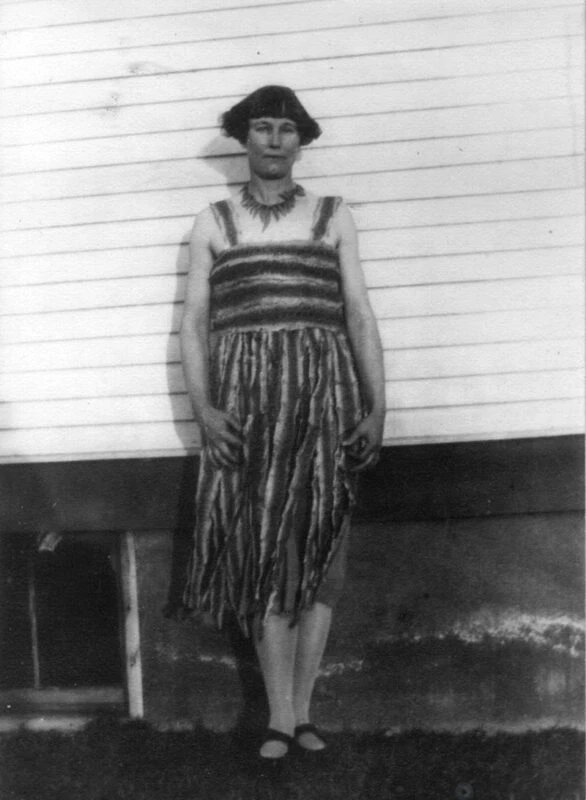
Riding high on her fame as a venomous snake hunter, Katherine stepped away from nursing and launched a rattlesnake farm. She crafted snake-skin clothing and curios that were in high demand. Katherine Slaughterback passed away on October 6, 1963. Sparing her prized artifact from being lost to time, she found the resolve to part with it just weeks before her death, donating the snake dress to the city of Greeley, Colorado. 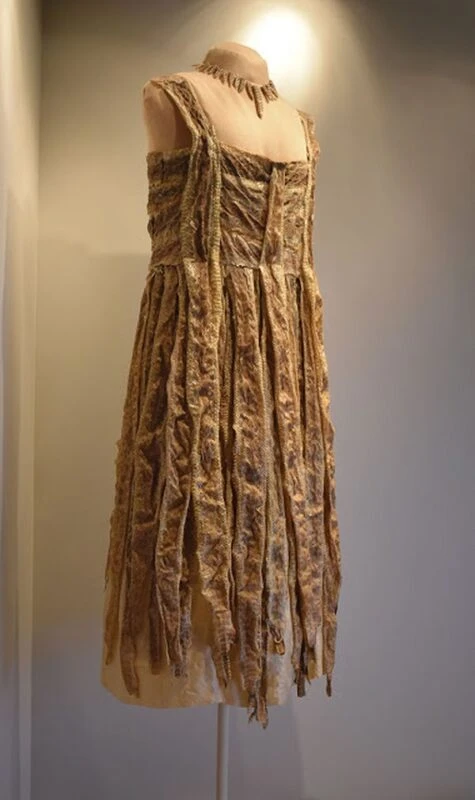
Today, this extraordinary piece of frontier history is housed at the Greeley History Museum, preserved inside a custom-built, climate-controlled display case designed to safeguard it for generations to come.