Mary Quant: How the daughter of schoolteachers—with no formal training—invented the miniskirt and dressed a whole generation (14 photos)
In the mid-20th century, the fashion world resembled an exclusive club. Paris couturiers dictated the rules. Young women dressed like their mothers; there were no other options. But in the 1950s, a petite rebel with a pair of scissors appeared on the streets of London. She was destined to spark the most significant fashion revolution of the century. Without a design degree, relying instead on intuition and a thirst for freedom, Mary Quant achieved the impossible. She didn't just shorten skirt hemlines—she gave women the right to movement, youth, and a style of their own.
A Teacher's Daughter with Fashion Ambitions
Mary Quant was born on February 11, 1930, in the Blackheath district of London. Her parents, Jack and Mildred Quant, were schoolteachers of Welsh descent who came from mining families. They dreamed of a secure future for their daughter; in their view, fashion was far too unstable a career path.
Mary saw things differently. By her own account, she had hated hand-me-downs since childhood—the clothes she was given to wear felt "alien" to her. She began sewing at the age of five, experimenting by altering, hemming, and trying out new ideas. A compromise with her parents was reached at Goldsmiths College of Art: Mary enrolled in the book illustration program. It wasn't fashion, but it was still a creative pursuit. 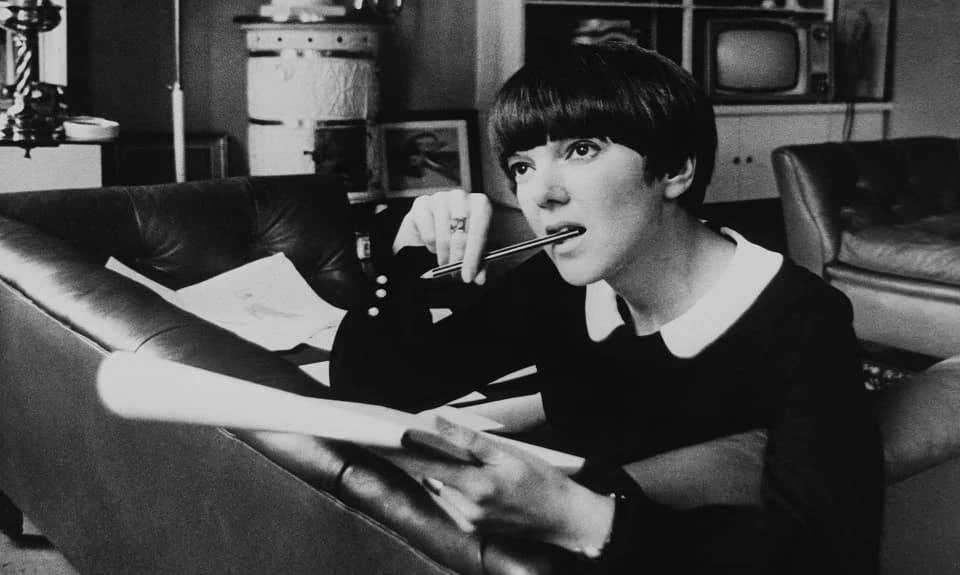
Mary Quant in 1968
After finishing college, she held a diploma in art education and an apprenticeship with a milliner-couturier. It was there that she began creating clothing in earnest. Quant would later say that she was perhaps lucky not to have received a formal fashion education; this gave her the freedom to think about ordinary female customers rather than the runway.
At Goldsmiths, Mary met the eccentric aristocrat Alexander Plunket-Greene. They married in 1957 and remained together until his death in 1990. Their son, Orlando, was born in 1970.
Bazaar Boutique: Jazz, Drinks, and Late-Night Sewing
In 1955, Mary, Alexander, and a mutual friend—former lawyer Archie McNair—rented a space on King's Road in Chelsea. They had almost no money and no retail experience. They opened the Bazaar boutique and immediately decided to make it unlike anything else.
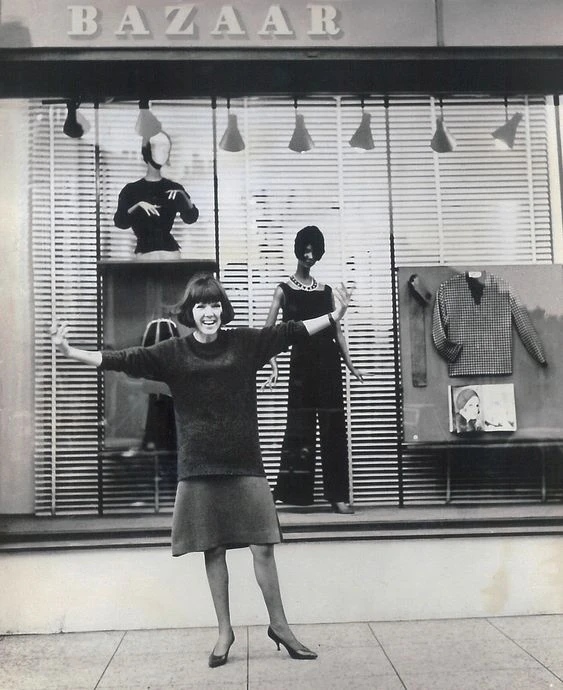
Mary outside her first Bazaar boutique, 1955
Loud jazz played in the shop, and customers were offered free drinks. The mannequins in the shop windows were posed in lively, dynamic stances—something unseen in London stores at the time. A restaurant called Alexander’s operated beneath the boutique. Bazaar became a magnet for Chelsea’s creative bohemian crowd.
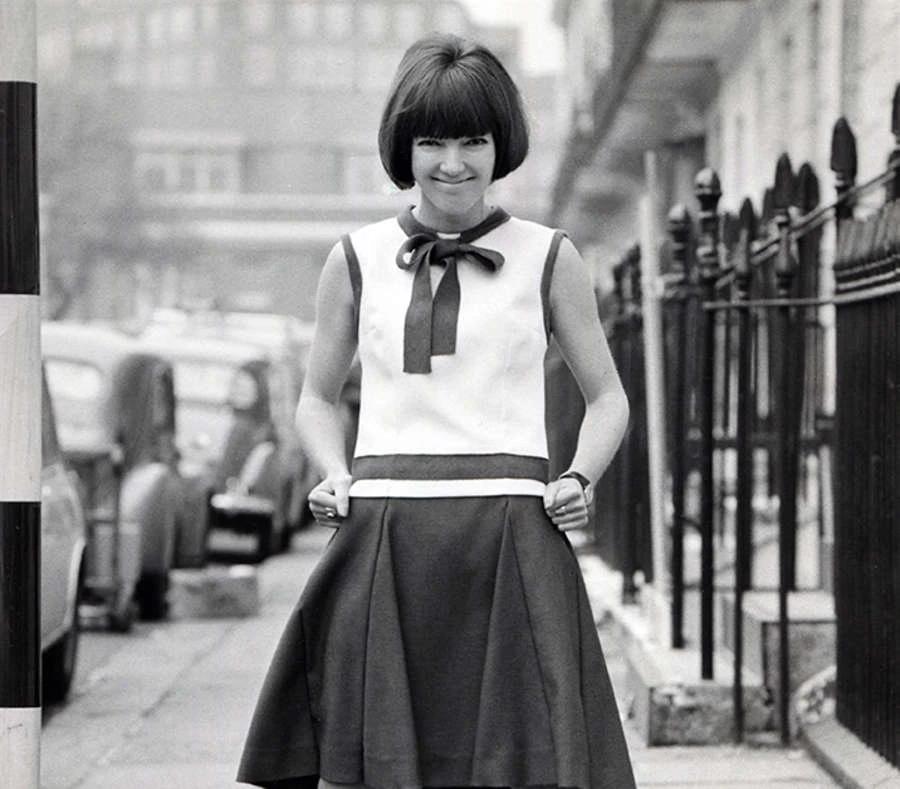
A young Mary Quant on King’s Road, 1956.
At first, Mary ordered garments from wholesalers based on her own sketches. But she quickly realized that the market lacked what her generation wanted to wear. So, she bought a sewing machine, stocked up on fabrics, and began sewing the clothes herself—at night. In the morning, she would hang the finished pieces in the shop. Initially, her best-sellers were white plastic collars—worn over black dresses or T-shirts—and black leggings. Simple, bold, and affordable.
The Magic of King’s Road: From Chelsea to New York
Bazaar instantly became the epicenter of London’s cultural life. Artists, musicians, and actors flocked there—the entire "Chelsea set," the bohemian crowd of the Swinging London era. Members of The Beatles and The Rolling Stones, as well as Brigitte Bardot, were spotted among the customers.
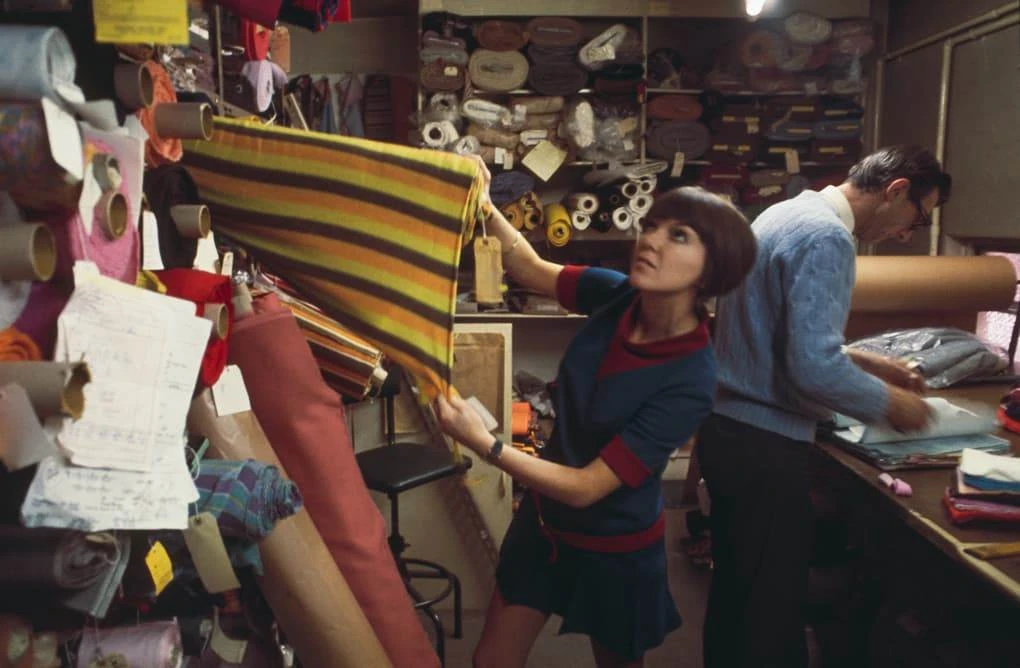
Mary at work: selecting fabrics for a new collection, 1967.
Success was rapid. Just two years later, in 1957, a second Bazaar opened—this time in prestigious Knightsbridge. By 1963, Quant had established mass exports to the USA. The American market embraced her just as enthusiastically as the British one had.
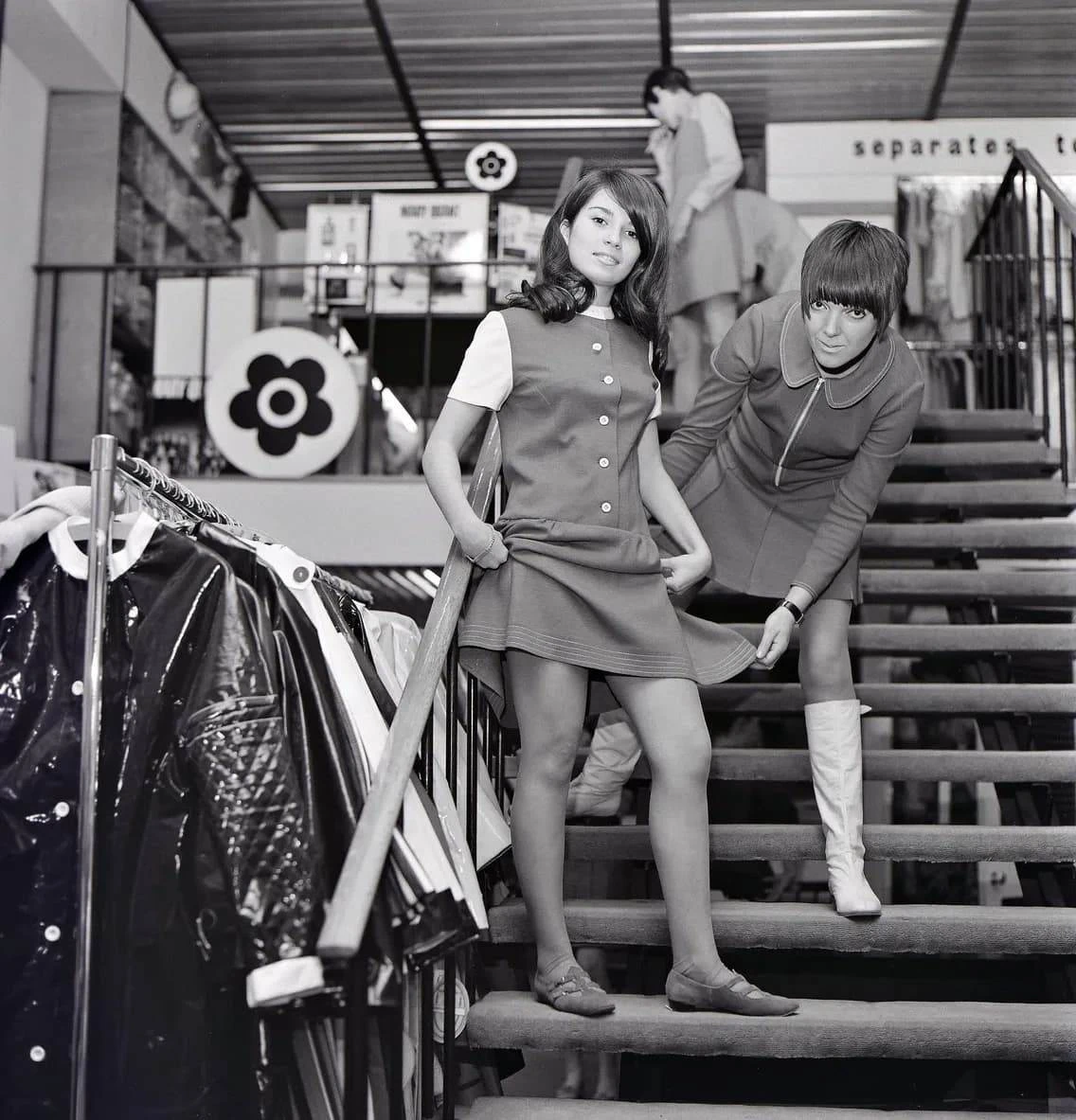
Mary Quant’s first mini designs
At the same time, Quant was experimenting with style and form: slim-fitting striped sweaters, tall white patent-leather boots, and plaid jackets with sharp silhouettes. The press dubbed this combination the "London Look." Fashion had moved from the runway to the street.
The mini-skirt debate: who was first?
The burning question of the era was: who invented the mini-skirt? Fashion historians still debate this today. In 1964, French designer André Courrèges showcased a collection featuring short dresses; he, too, lays claim to the title of pioneer. Yet Quant’s true significance lay elsewhere: she created fashion not for runways or museums, but for real young women.
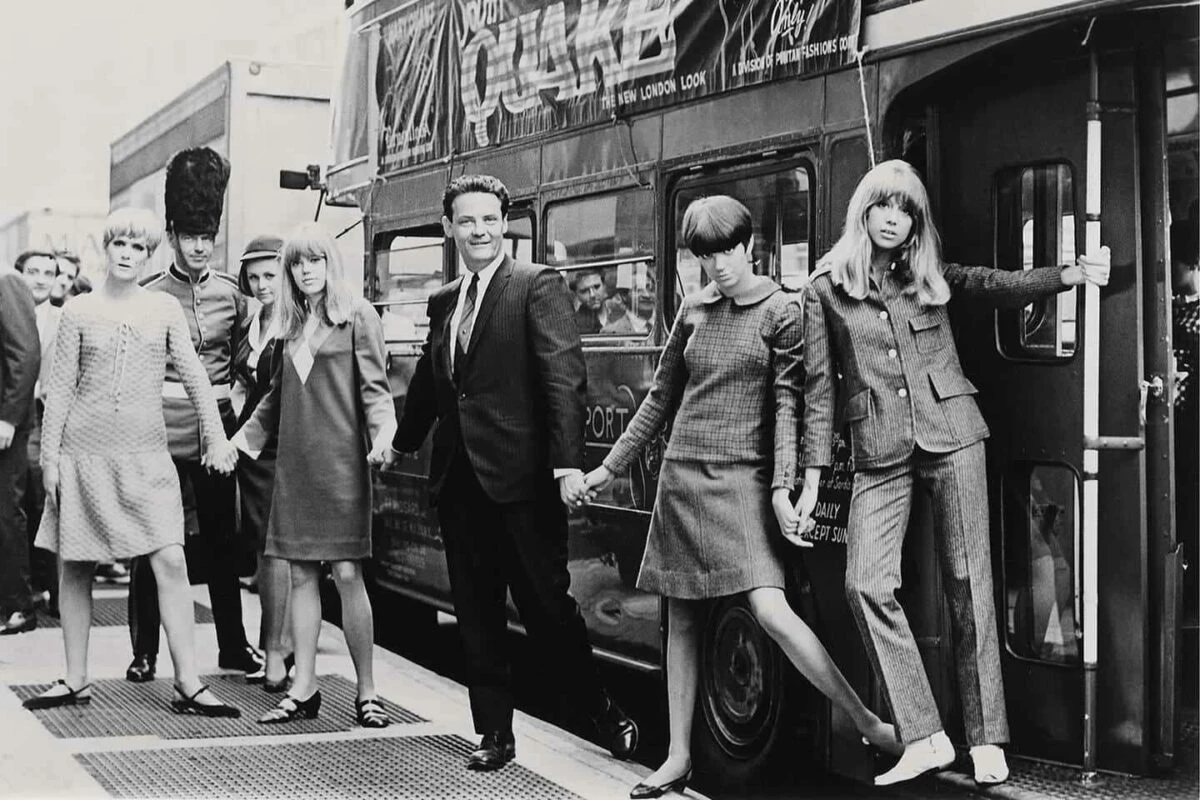
Quant’s fashion on the streets of London, 1966
Quant herself spoke about this with a touch of irony. Sometimes she claimed she had invented the miniskirt; at other times, she insisted that the true inventors were her customers. Young women would simply ask: "Make it shorter, Mary—make it even shorter." The designer listened to them. She named her creation "mini" after her favorite car—the accessible and equally spirited Mini.
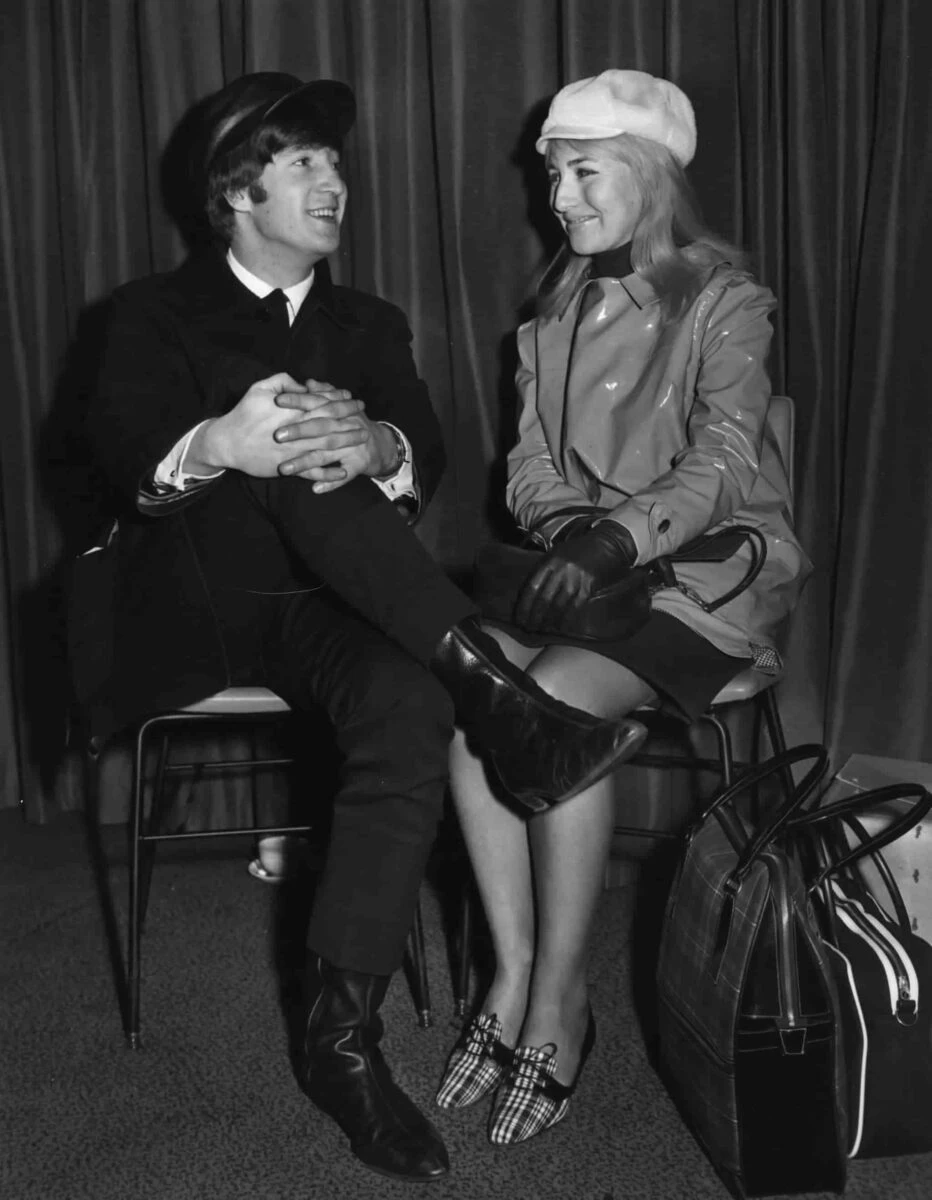
John Lennon and his wife Cynthia wearing caps by Mary Quant. 1964.
The miniskirt caused panic in some quarters of the press; certain newspapers even demanded it be banned. Yet, it became the symbol of "Swinging London"—an era when young people asserted, for the first time, their right to live life on their own terms. Before this, women's clothing had restricted movement: tight pencil skirts and rigid corsets necessitated a slow, measured gait. Quant gave young women the freedom to run, hop onto buses, and dance tirelessly.
Twiggy, the Bob, and the Cosmetic Revolution
The new fashion demanded a completely new look. Quant understood this better than anyone. Twiggy—a teenage model with huge eyes and a boyish haircut—became the face of the brand. Her androgynous appearance defined the era and complemented the graphic lines of Quant’s silhouettes perfectly. 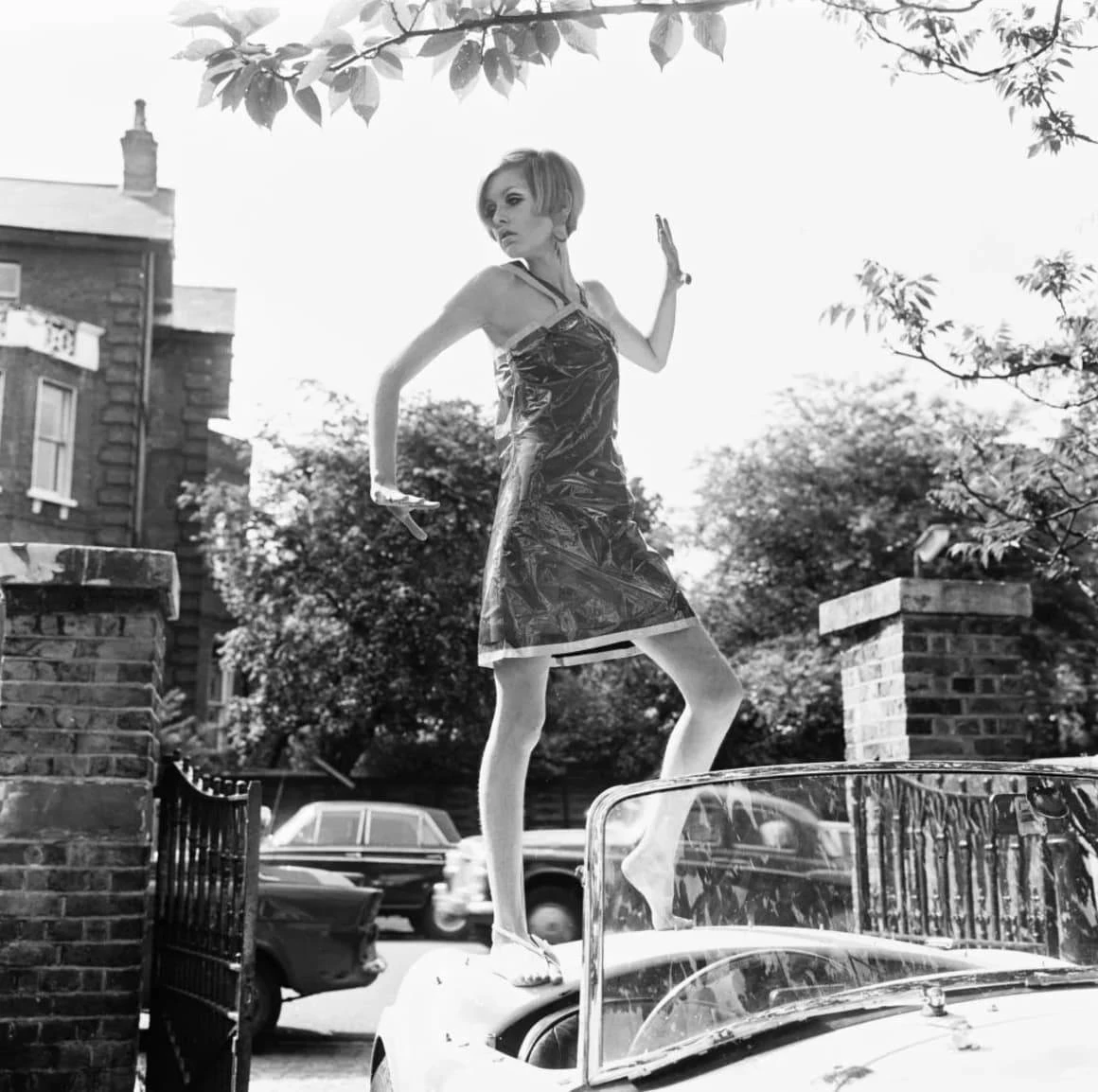
Twiggy in a dress by Mary Quant
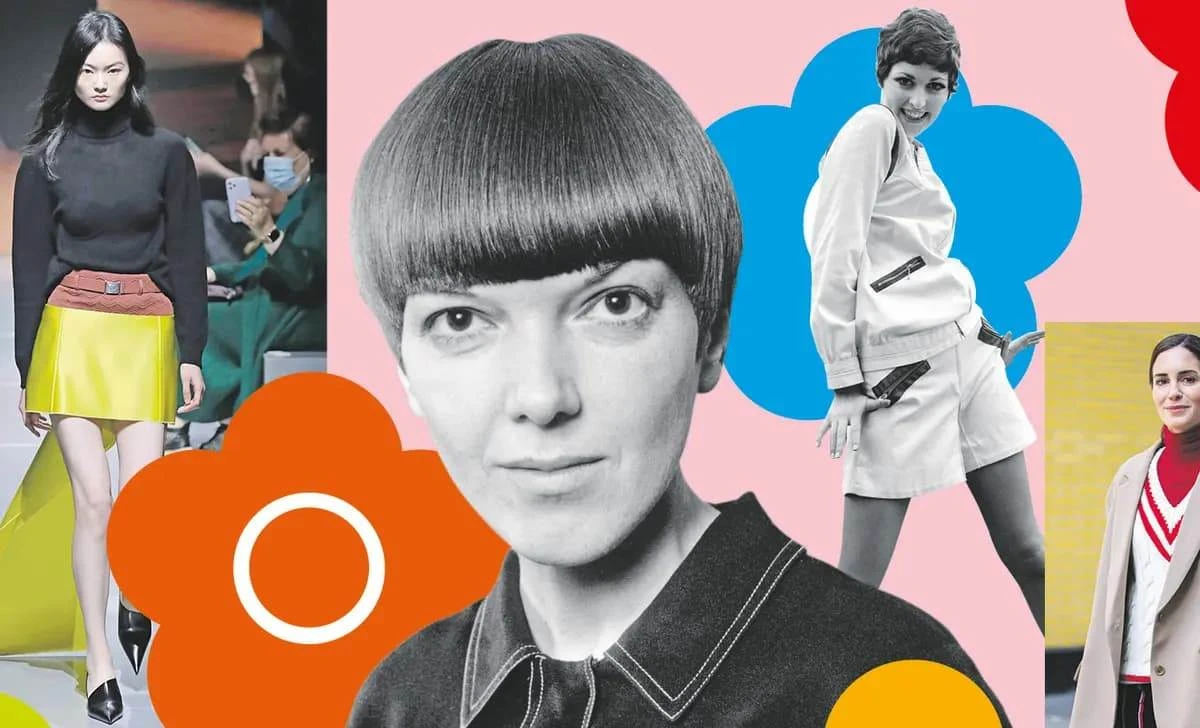
Legendary hairstylist Vidal Sassoon created his famous bob cut for Quant herself. The lines were precise—almost like an architect's blueprint—and perfectly complemented the graphic silhouettes of her dresses. Quant became the living embodiment of an entire era: a petite woman with a flawless bob and scissors at the ready.
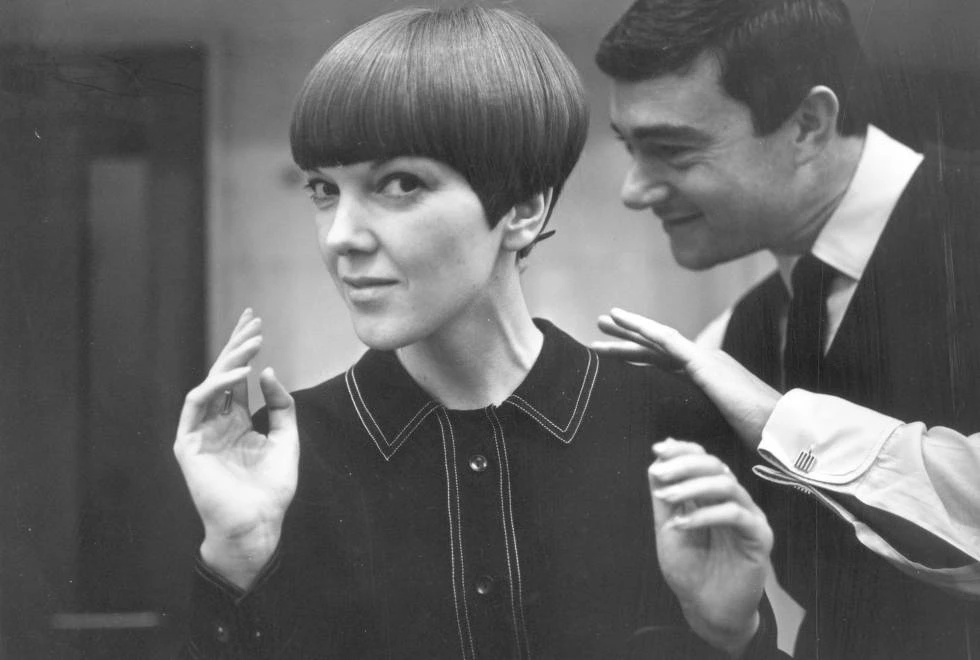
Vidal Sassoon giving Mary Quant a bob cut. 1964
In 1966, Quant sparked another revolution—this time in cosmetics. She launched the "Paint Box," the world's first ready-made makeup palette housed in a stylish plastic case. It featured bold colors and pop-art-style packaging, with everything in one place—a prototype for all modern makeup palettes. At the same time, Quant began incorporating PVC into her clothing designs, creating voluminous hats, raincoats, and tall boots.
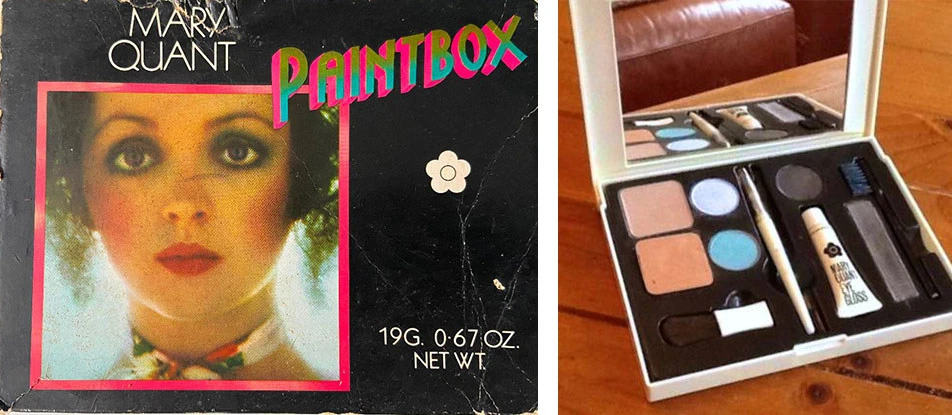
"Paint Box" makeup kit. 1966
Post-revolution: a doll, a Mini, and the Japanese market
In the 1970s, Quant broadened her horizons. She launched the Daisy doll—a rival to Barbie, featuring big eyes and a short haircut. The doll embodied the aesthetic of the era and is now sought after by collectors worldwide.
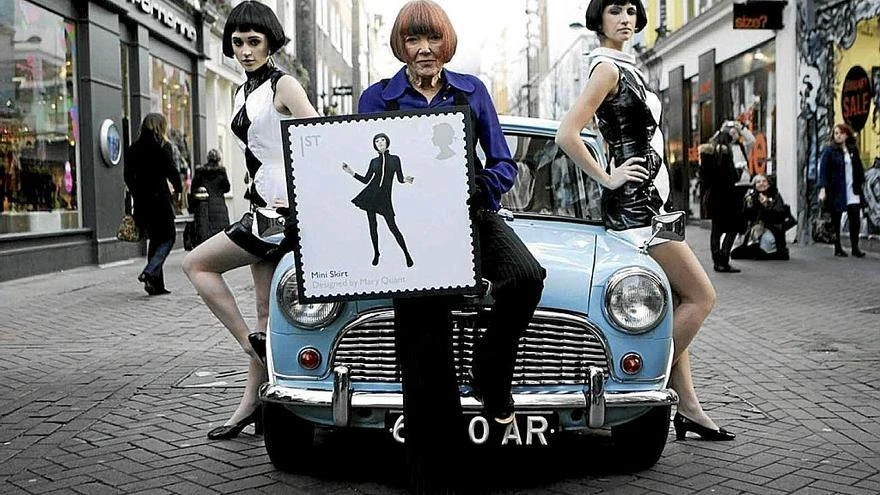
A postage stamp issued in honor of Mary Quant
In 1988, Quant received an unusual commission: to design the interior for a special edition of the Austin Mini. Two thousand cars were produced featuring her designs. Her bond with this beloved car was unbreakable—after all, she had named her most famous invention after the Mini.
In the 1990s, she opened boutiques in Paris and New York. In 2000, Mary sold her company to a Japanese group and retired. By then, her cosmetics line had long since become a successful, independent brand.
An honor, a stamp, and farewell to an era
Britain highly valued Quant’s contributions. In 1966, while still under forty, she was appointed an Officer of the Order of the British Empire (OBE) for her services to the country. In 2015, Queen Elizabeth II elevated her to the rank of Dame Commander of the same order, making her Dame Mary Quant.
Her work is held in the collections of the Victoria and Albert Museum and the Museum of London. In 2019, the V&A hosted a major retrospective of her work. The Royal Mail issued a series of stamps featuring her designs.
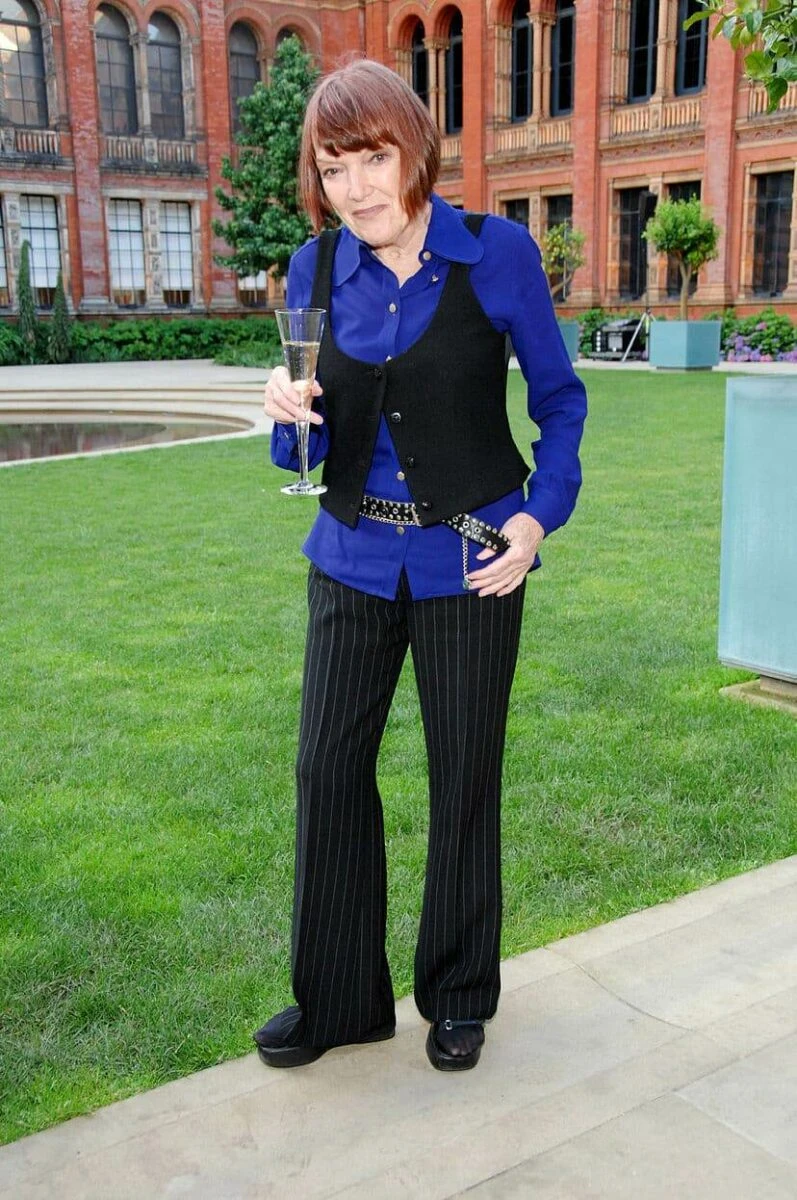
Mary Quant at a party celebrating the 150th anniversary of the Victoria and Albert Museum.
Mary Quant passed away on April 13, 2023, at her home in Surrey. She was 93 years old. Her children and grandchildren were by her side.
This slight woman proved that you don't need a couturier's diploma to rewrite the rules. All it takes is listening to the pulse of the street, believing in youth, and not being afraid to pick up a pair of scissors.
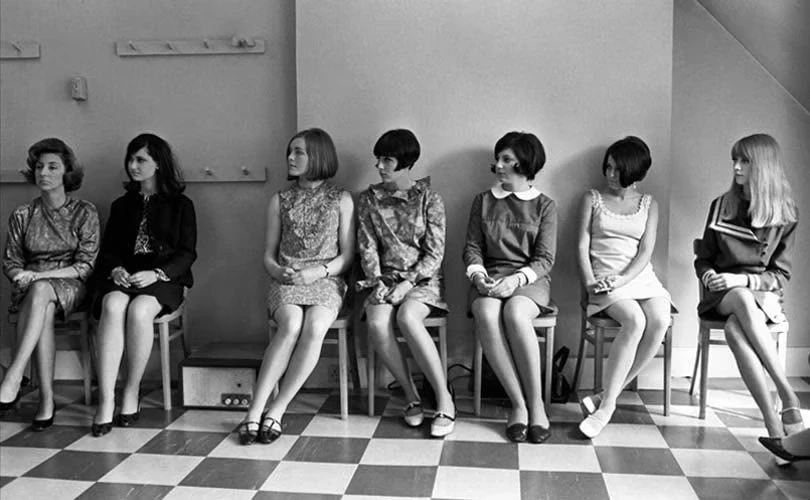
Spectators and models before a Quant fashion show in London. The 1960s.
Today, the miniskirt is a staple of any wardrobe. Yet, there was a time when it symbolized the fight for freedom and the right to self-expression. Do you think modern fashion is capable of offering something equally revolutionary—or has the era of great fashion manifestos gone for good?