Why Harem Women Got Pregnant by Eunuchs and Why the Guards Married (11 Photos)
Historical chronicles record curious instances where eunuchs, despite their physical alterations, not only led active sex lives but even managed to father children. But how was this possible? Doesn’t castration rule out paternity altogether? While baffling at first glance, the answer lies in the anatomical details. Here is a look at how it happened and what really lay behind these extraordinary accounts. 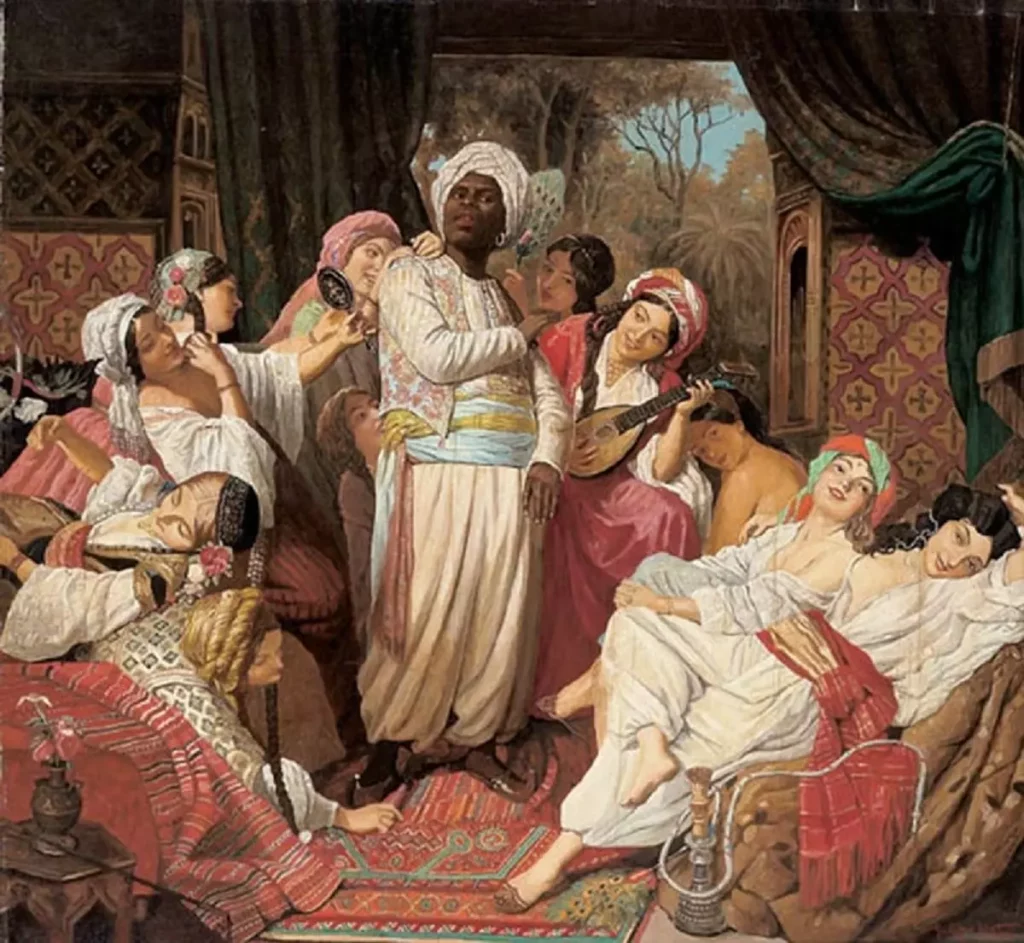
History is full of astonishing tales, and pregnancies attributed to eunuchs are certainly among them. At first blush, it sounds impossible—after all, castrated men should not be able to sire children. In reality, however, things were never quite so simple.
The Origins and Roles of Eunuchs
As a distinct class of royal servants, eunuchs existed long before the Ottoman Empire. The Ottomans adopted the practice from the Byzantines, who had in turn inherited it from ancient Eastern civilizations. The fundamental idea was simple: unable to produce heirs, eunuchs would show absolute loyalty to their master, having no family interests of their own to advance. 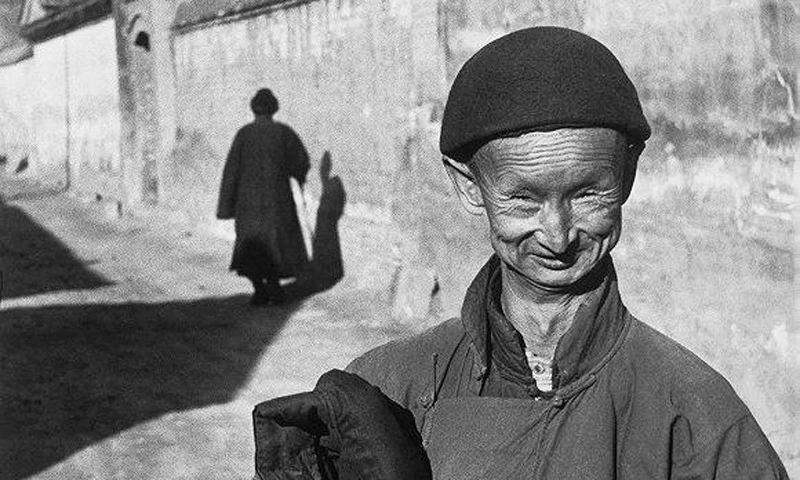
An imperial court eunuch. China, 1946. Photo by Henri Cartier-Bresson
Eunuchs frequently held key positions in royal courts, serving as advisers, treasurers, and even military commanders. In Imperial China, for instance, they helped govern a vast empire. Their unique status granted them access to palace secrets and the intimate trust of rulers. Castration also carried ritual and religious significance in certain cultures: in ancient Rome, for example, eunuchs served the goddess Cybele, where self-castration formed an integral part of religious worship.
Black and White Eunuchs of the Ottoman Empire
Under Islamic law, bodily mutilation such as castration was strictly forbidden. Consequently, Ottoman rulers could not castrate subjects within their own borders and had to import them from abroad instead. Slaves were typically captured in warfare or purchased at slave markets, arriving at court already castrated and prepared for service. 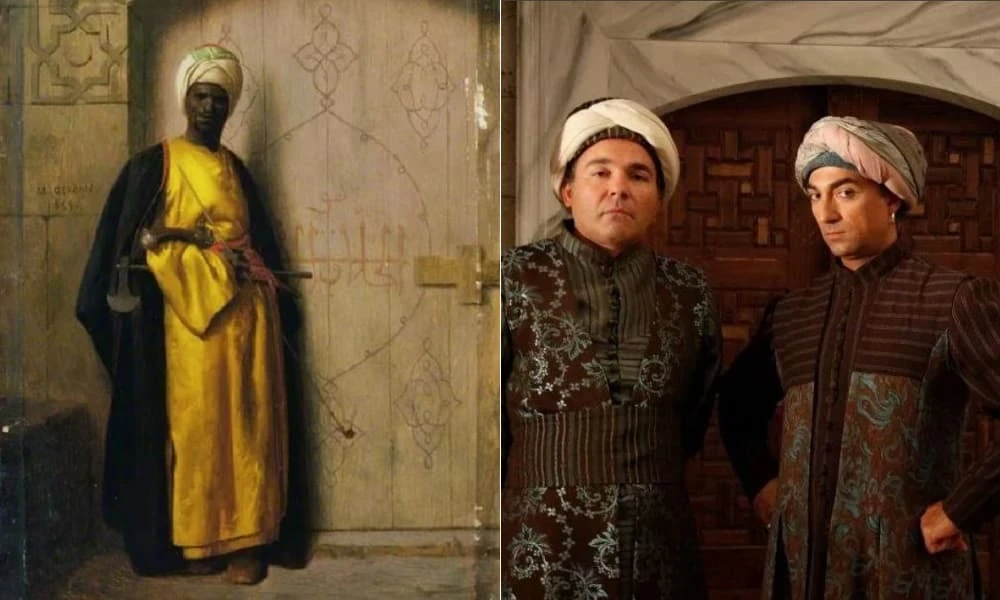
At the Ottoman court, eunuchs were divided into two main categories: Black and White. The former hailed from sub-Saharan Africa, often captured during military raids or acquired in slave markets. African eunuchs were renowned for their resilience and robust health, making them ideal candidates for harem duty. White eunuchs, by contrast, originated mainly from the Balkans and the Caucasus, though some came from other regions. They fell into slavery through warfare or were sold by impoverished families hoping to secure a better future. 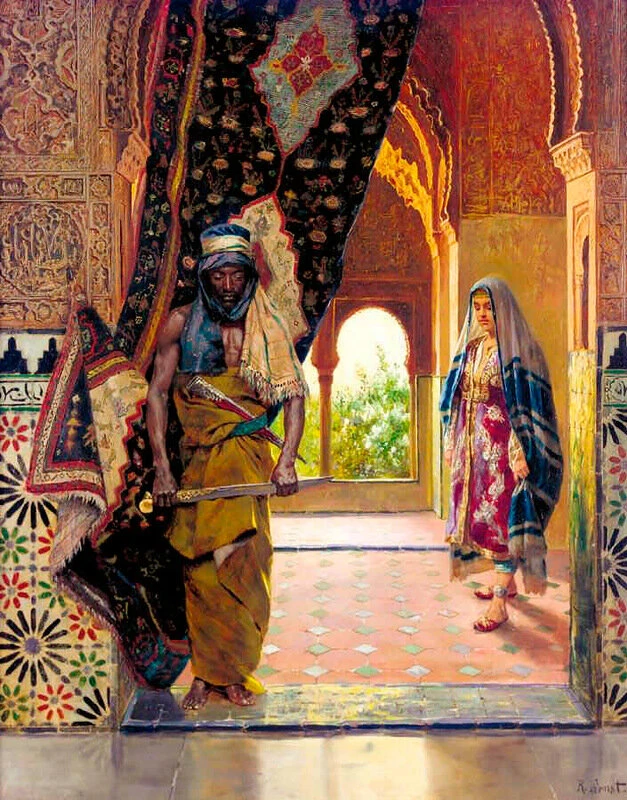
Harem Guard. By Austrian Orientalist painter Rudolf Ernst
White eunuchs initially held sway at court, training pages and carrying out key administrative duties. Over time, however, Black eunuchs grew increasingly influential. Beyond maintaining order in the harem, they were entrusted with many of the sultan's most delicate errands. Black guards were also favored for a very practical reason: if an illicit liaison with a concubine did occur, any infidelity would be immediately obvious through the birth of a mixed-race child—especially since concubines were virtually never Black women. 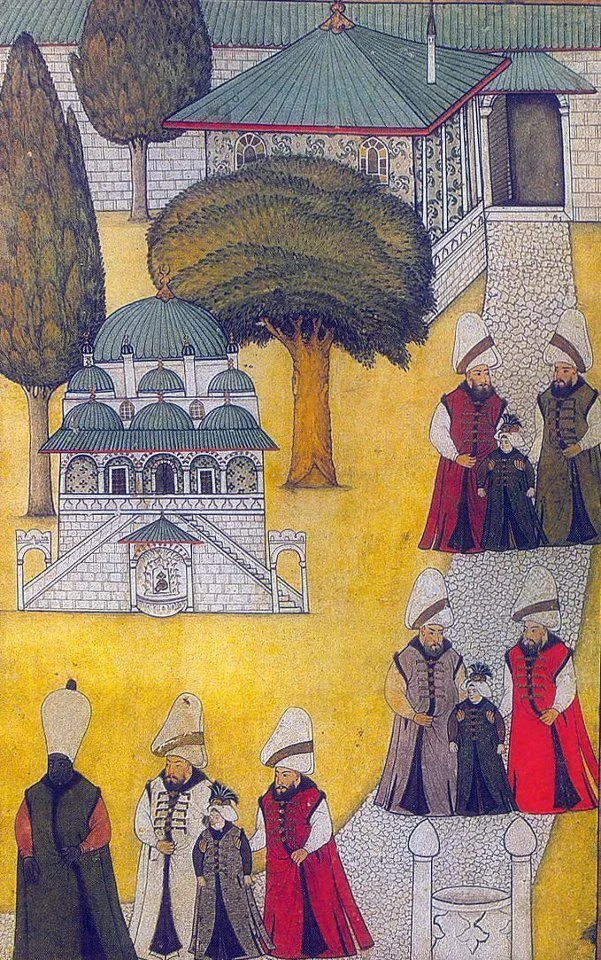
The Kizlar Agha (leading the procession) escorts the princes to their circumcision ceremony. 18th-century miniature
The White eunuchs, who had once dominated palace administration, gradually ceded ground to their Black counterparts. By the 15th century, Black eunuchs had become the chief overseers of the harem and wielded immense influence. The Kizlar Agha (literally "Master of the Girls"), the chief of the Black eunuchs, remained one of the most powerful figures in Istanbul until the early 19th century, thanks to his direct access to the sultan and the crucial role women played in palace intrigues. Black eunuchs governed daily life in the harem, policed conduct, and executed imperial decrees. They also oversaw the upbringing and education of young princes, cementing their status as indispensable figures at court.
The Intimate Lives of Eunuchs
In popular culture and literature, eunuchs are often depicted as entirely asexual, but reality was far more nuanced. In truth, sexual drive varied greatly depending on the age at which castration took place and other factors. Secret affairs between harem guards and concubines were far from unheard of, despite carrying severe penalties. Some eunuchs engaged in relationships with both men and women, though such encounters were kept strictly covert and remained taboo. 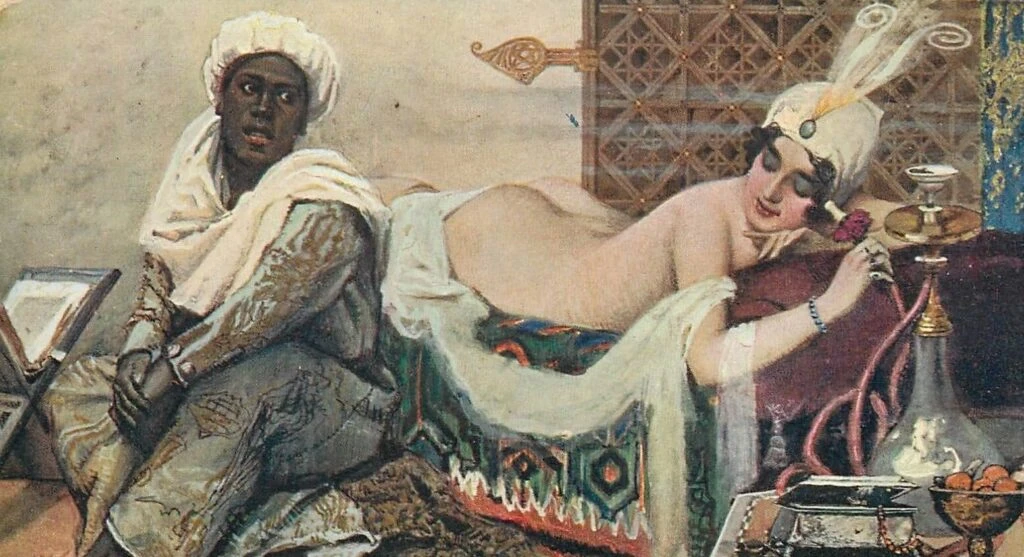
Eunuch and concubine
Several methods of castration were practiced, each affecting a man’s sexual capability differently. The most brutal involved total emasculation—the complete removal of both the penis and testicles. Men subjected to this ordeal endured agonizing pain and lifelong health complications. Yet even these eunuchs were known to engage in sexual acts using artificial aids. 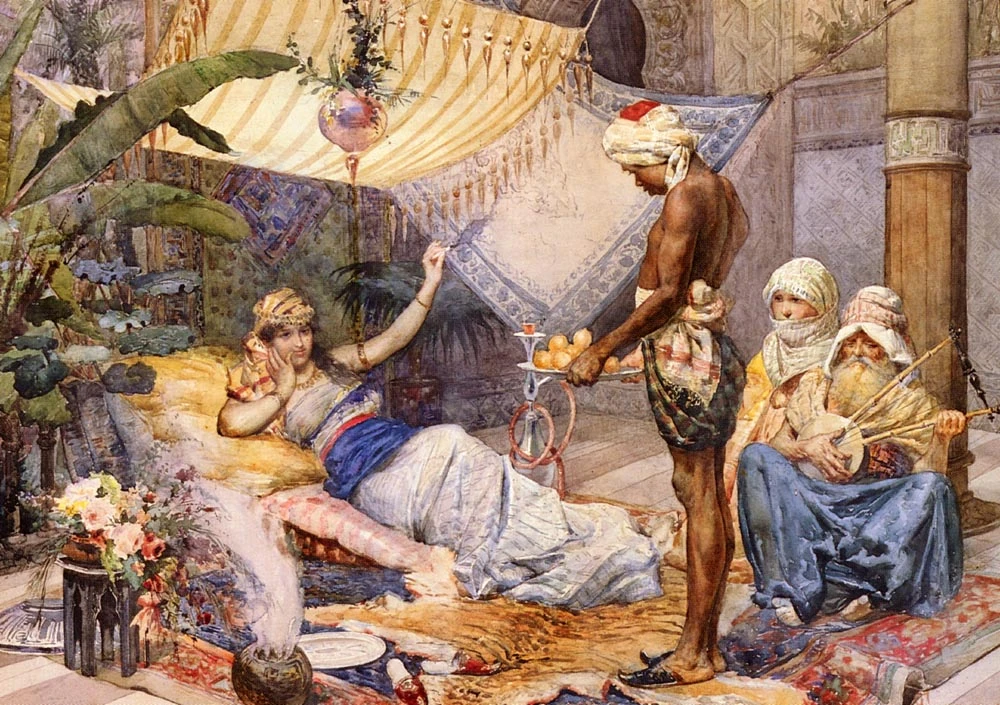
Another procedure involved removing only the testicles. This method was far less physically traumatic, and men who underwent it could still achieve erections and maintain an active sex life, even though they were completely sterile. Especially when castrated after puberty, these eunuchs retained their sexual desire and frequently engaged in physical intimacy. 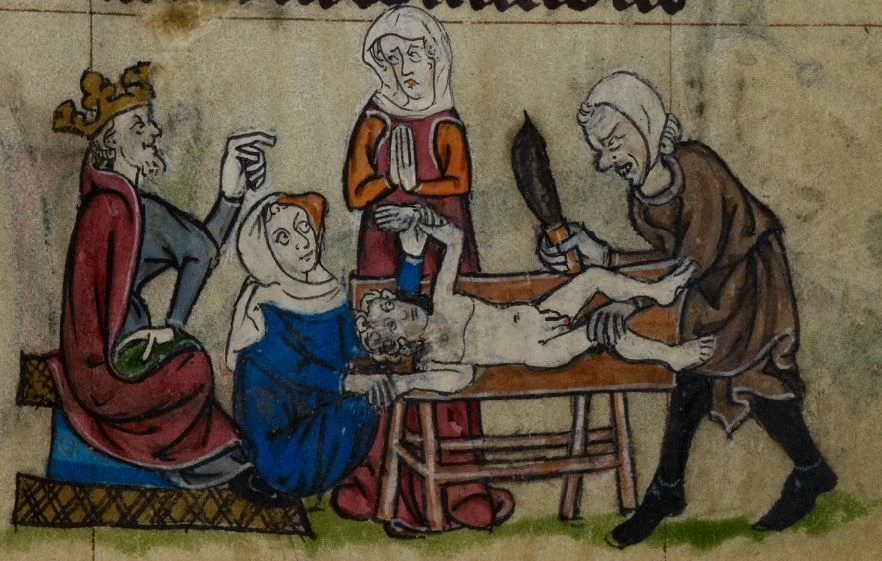
The Castration of Abelard. 13th-century European miniature
The least invasive method involved crushing the testicles or severing the spermatic cords. This procedure did not always guarantee total sterilization, occasionally leaving a man capable of siring a child. While rare, such cases are documented in historical records.
Court life for eunuchs was fraught with paradox. Deprived of intimacy with the sultan, many harem women sought solace in the arms of eunuchs. The eunuchs, intimately familiar with women’s anatomy and desires, proved to be attentive and gratifying partners, making them appealing lovers.
Romance and Married Life Among Eunuchs
In the Ottoman palace, eunuchs did not merely perform their duties and climb the ranks—they were also entitled to personal lives that could be remarkably full. While outsiders often viewed them as sexless figures, history offers numerous examples of eunuchs entering legal marriages and finding genuine love. 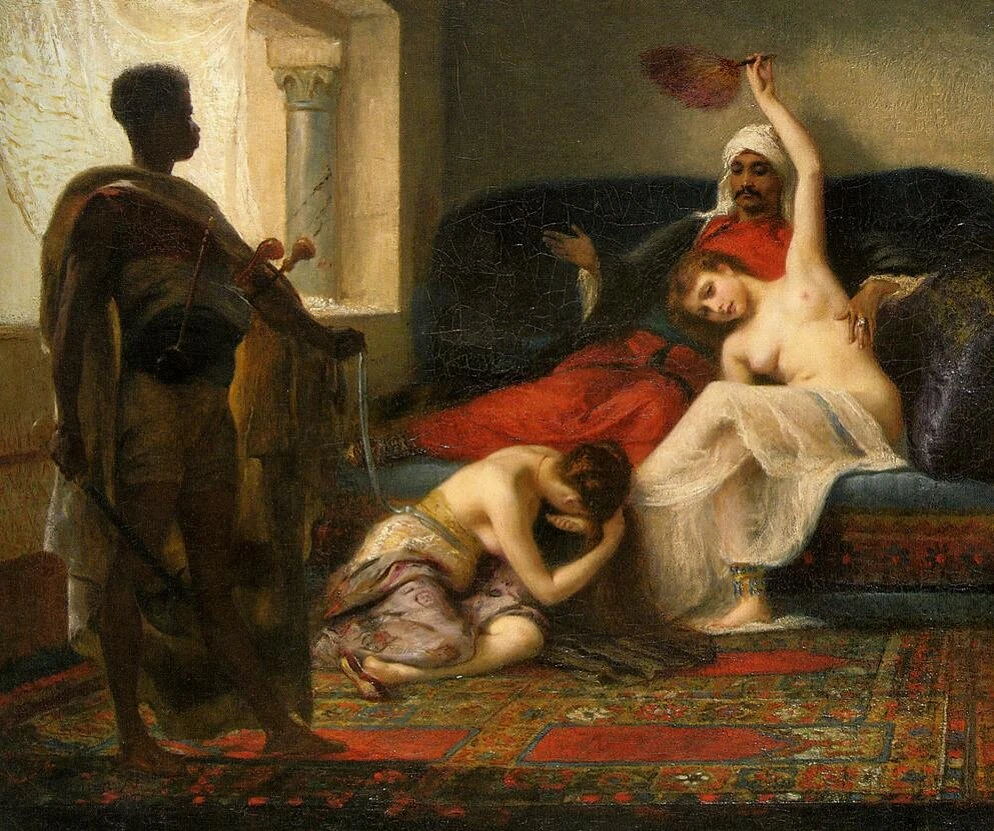
The Deposed Favorite. By French painter Fernand Cormon
One famous example was the marriage of Hadım Ibrahim Pasha, the chief White eunuch during the reign of Suleiman the Magnificent. After holding senior state posts, he married the sultan’s own sister, Fatma Sultan. While likely more of a political alliance than a love match—Ibrahim Pasha had already retired in old age by the time of the wedding—the mere fact that an imperial princess was wed to a eunuch speaks volumes about his immense stature and influence.
Not all eunuchs married for political reasons, however; some fell genuinely in love and built meaningful partnerships. Their private lives could be vibrant and diverse. Despite their condition, many maintained romantic relationships, and those who had undergone partial castration could still experience erections and enjoy an active sex life. 
Retiring from palace service also offered eunuchs a chance to establish families of their own. They frequently married widows or mothers with children who struggled to find husbands, creating unions founded on mutual support and respect. Decades of court service often yielded substantial wealth, enabling them to provide generously for their households. Some went on to adopt children, bequeathing to them their property and social standing. 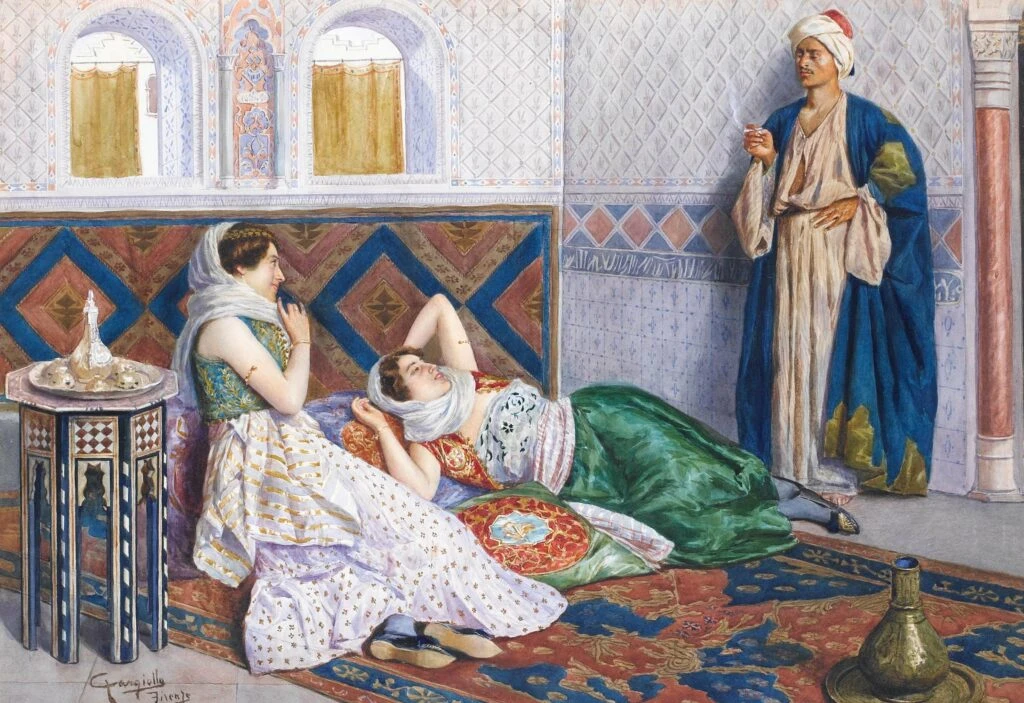
A prominent figure in this regard was Beshir Agha, the Chief Black Eunuch who rose to become one of the most powerful men in the Ottoman Empire. Despite his castration, he married and adopted several children, securing their future and social standing. His life demonstrated that eunuchs were far from mere servants: they could be influential figures in society, building families and leaving a lasting mark on history.
Harem pregnancies attributed to eunuchs represent a fascinating historical phenomenon rooted in both physiology and human nature. Incomplete castrations, surgical oversights, and genuine emotional bonds between eunuchs and women all played a part. Ultimately, history shows that even within the most rigid and heavily guarded walls, human relationships inevitably found a way.