6 Breakthrough Technologies Changing Our Lives Right Now (8 photos)
Since 2001, the Massachusetts Institute of Technology has published an annual list of breakthrough technologies set to have a major impact on our lives in the near future. Not all of the innovations featured are brand new—some have been decades in the making.
That’s because MIT's experts look beyond single scientific breakthroughs. Instead, they consider a broad combination of factors to determine which technologies will actually go mainstream. They evaluate the maturity of the tech, the existence of viable commercial products, and the significance of the problems it solves. For instance, 3D printing was first patented in 1989 by Ely Sachs, but it wasn't until 2017 that his startup, Desktop Metal, shipped its first commercial metal 3D printers. 

3D Printing
For a long time, 3D printing was largely a hobby for tech-savvy designers and niche enthusiasts. However, steady advances in the technology have slashed costs, bringing 3D printing into the mainstream and putting it on track to revolutionize modern mass manufacturing.
Massive factories built for high-volume runs of limited product lines could soon give way to smaller, agile facilities capable of producing a wide range of goods. With 3D printing, manufacturers can respond instantly to shifting consumer demand. Even auto repair shops will no longer need to keep massive inventories of spare parts—they will simply print the component you need right on the spot.
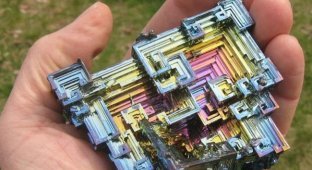
3D printing enables the creation of lighter, stronger, and more complex structures at a lower cost than traditional manufacturing. Researchers at Lawrence Livermore National Laboratory, for example, used 3D printing to produce steel parts twice as strong as conventionally manufactured steel. Meanwhile, startup Markforged released the first metal 3D printer priced under $100,000. High costs aside, the technology is becoming accessible to everyday consumers—you don't need an engineering degree to use it. Companies like Desktop Metal offer software that automatically generates print-ready models based simply on the desired specifications of an object. 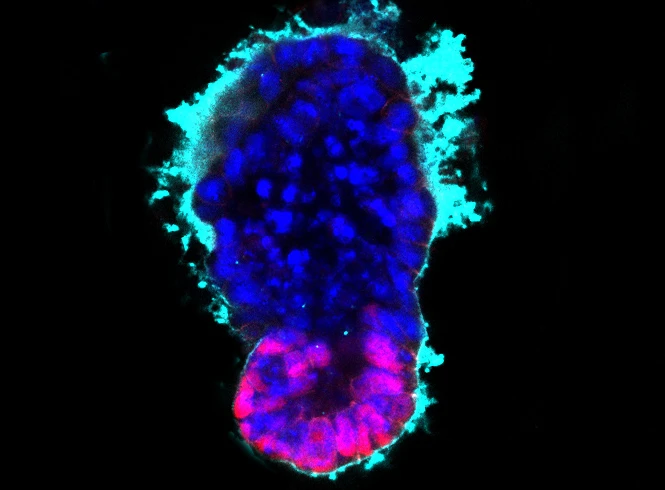
Artificial Life
Embryologists at the University of Cambridge achieved a groundbreaking world-first by growing a mouse embryo using only stem cells—no sperm or egg required. This breakthrough fundamentally reshapes our understanding of how life can be created, showing that the building blocks of an organism can literally be drawn from another embryo with a pipette.
Stem cell research opens up endless avenues for studying developmental disorders in early-stage embryos and exploring how organs form. By observing individual cells specialize as the embryo develops, scientists hope to eventually master the ability to grow lab-created organs for transplantation.
Still, the work raises profound ethical concerns. How should a lab-grown embryo be categorized compared to a natural one, and what moral status should it hold? Is it ethical to experiment on synthetic embryos if they might develop the capacity to feel pain? Does a lab-created embryo have a right to life? These delicate ethical questions present major hurdles to the mainstream adoption of synthetic embryology. 
Smart Cities
Integrating digital technology into urban planning could redefine life in the cities of tomorrow. Pervasive sensor networks will monitor pollution, noise levels, and traffic congestion in real time, handing off management tasks to automated systems and robots. These technologies could adjust city operations so seamlessly that residents might never have to sit in gridlock or lodge a noise complaint again.
One of the most prominent initiatives in this field was Sidewalk Labs' Quayside project in Toronto. The design envisioned an underground system of autonomous utility robots delivering packages and managing waste below ground, freeing up surface streets and cutting pollution.
Supporting this automated infrastructure is an extensive network of sensors collecting environmental data alongside patterns of resident and business activity. Analyzing these patterns makes urban optimization possible: commuters avoid rush-hour bottlenecks, while families can check real-time crowd density at parks or museums before heading out. However, widespread data collection sparks serious privacy concerns. In the event of a cyberattack or data breach, sensitive location data could allow bad actors to track individuals' real-time movements or daily commutes.
The motives of private corporations involved in these projects also draw scrutiny. Experts emphasize the need for a clear boundary between public interests and the commercial goals of tech giants like Google, who could be incentivized to monetize urban data by selling it to advertisers or real estate developers targeting residents based on their habits and location. 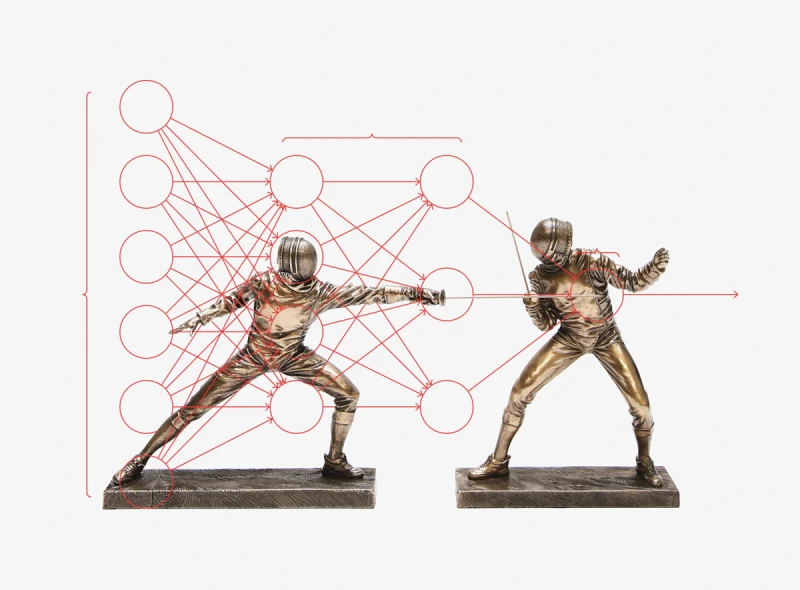
Dueling Neural Networks
Artificial intelligence is getting dramatically better at mundane-seeming tasks—like sifting through thousands of photos to tell a human apart from a giraffe. Yet it is precisely this ability to accurately distinguish and categorize objects within vast datasets that separates specialized narrow AI from truly versatile artificial intelligence.
Until recently, AI progress was largely restricted to recognition tasks, completely lacking creative capacity. Generating a convincing image of a person from scratch was an impossible task; even after studying millions of photos, an AI attempting to generate a human face would inevitably add an extra eyebrow or a third arm.
A breakthrough technique first introduced by Ian Goodfellow in 2014 solved this issue through Generative Adversarial Networks (GANs)—pairing two neural networks against each other as a "generator" and a "discriminator." The discriminator acts as a quality control checker for the generator's output. By learning from the discriminator's feedback, the generator eventually produces synthetic images so convincing they are indistinguishable from real photos.
Thanks to this approach, computers can now generate photorealistic imagery that easily fools the human eye—such as these synthetic portraits of fake celebrities created entirely by AI. 
Nvidia researchers trained neural networks on celebrity headshots to generate hyper-realistic images of people who do not exist. Many experts believe that as AI models master these complex perceptual tasks, they are taking a major step toward genuinely comprehending the world around them—and ultimately operating independent of human instruction. 
Real-Time Translation Earbuds
Advances in neural networks have turned a long-standing sci-fi trope into reality. Google's Pixel Buds drew immediate comparisons to the legendary Babel Fish from
The Hitchhiker's Guide to the Galaxy
—the creature that slipped into your ear to instantly translate any spoken language.
Priced at $159, the earbuds offered real-time translation during live conversations. It marked one of the first viable consumer attempts to eliminate global language barriers. As this technology matures, it isn't hard to imagine a future where real-time translation hardware becomes ubiquitous, changing how we travel, do business, and interact across cultures without relying on traditional language learning. 
Genetic Fortune-Telling
Predicting a person's risk of developing cancer, their likelihood of addiction, or even traits like above-average IQ and musical ability has become possible by analyzing massive genomic datasets from millions of individuals. By spotting complex polygenic patterns, scientists can now produce high-accuracy risk scores and trait predictions.
This capability could revolutionize medicine and healthcare by reducing unnecessary screenings and false alarms for patients whose genetic profiles show low risk for specific diseases. In pharmaceutical research, genetic profiling allows clinical trials—such as those targeting Alzheimer's disease—to recruit candidates far more accurately, drastically improving trial efficiency.
Yet predicting complex human traits alongside medical risks brings steep ethical dilemmas. How might parents and educators use forecasts about a child's academic strengths or limitations? How will families cope with knowing a child's elevated risk for terminal illness, or individuals with knowing their odds of developing Alzheimer's? Moreover, polygenic scores raise concerns over genetic discrimination in hiring and insurance. Employers might hesitate to invest in workers flagged with high risks for chronic conditions, making robust privacy protections an urgent necessity as these tests go mainstream.