Traditional Slavic Women's Tattoos: A Vanishing Heritage (11 photos)
Tattoos on women are hardly a recent trend; they are rooted in ancient traditions across the globe. Ainu women on the northern Japanese island of Hokkaido bore facial tattoos resembling a bear's grin, while Romani women adorned their skin with intricate lines and dots. South Slavic women also practiced a unique tattooing tradition of their own. 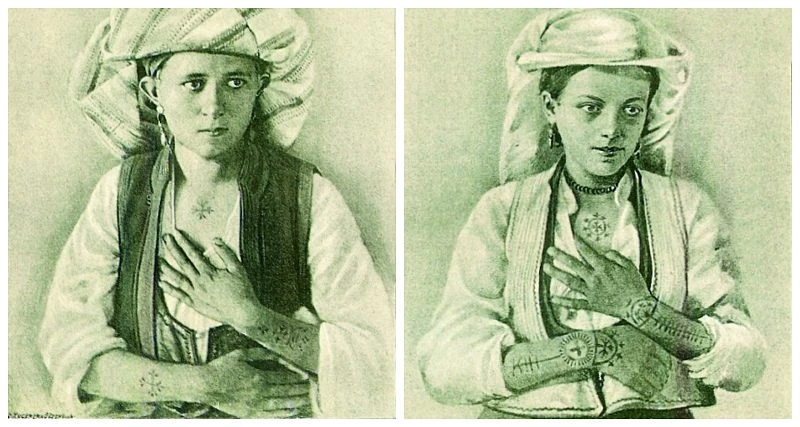
While sacred tattoo traditions among women have endured in many cultures around the world, they have almost entirely vanished from Europe. The custom survived the longest among Balkan peoples. Today, you might still encounter an elderly woman with ornate motifs decorating her hands in remote Montenegrin or Croatian villages, but with each passing year, the keepers of this tradition are fading away. 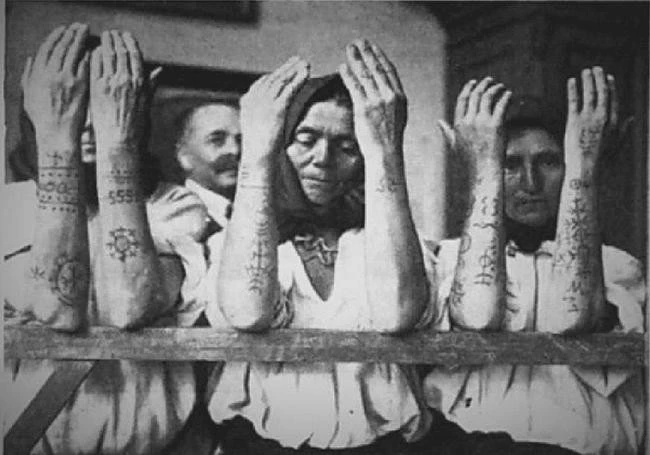
Croatian peasant women show off their tattoos. Late 19th-century photograph
Slavic folklore is rich with legends of young women disguising themselves as men to take up arms and defend their people. Yet in the everyday life of the South Slavs, such a disguise would have been virtually impossible: a woman’s tattooed hands would immediately give her away, and hiding them was no easy task.
Remarkably, among these Balkan communities, only women wore tattoos—men avoided any distinct markings on their bodies. The craft of applying them was also exclusively female: craftswomen passed down their techniques and intricate patterns from generation to generation for well over a millennium. 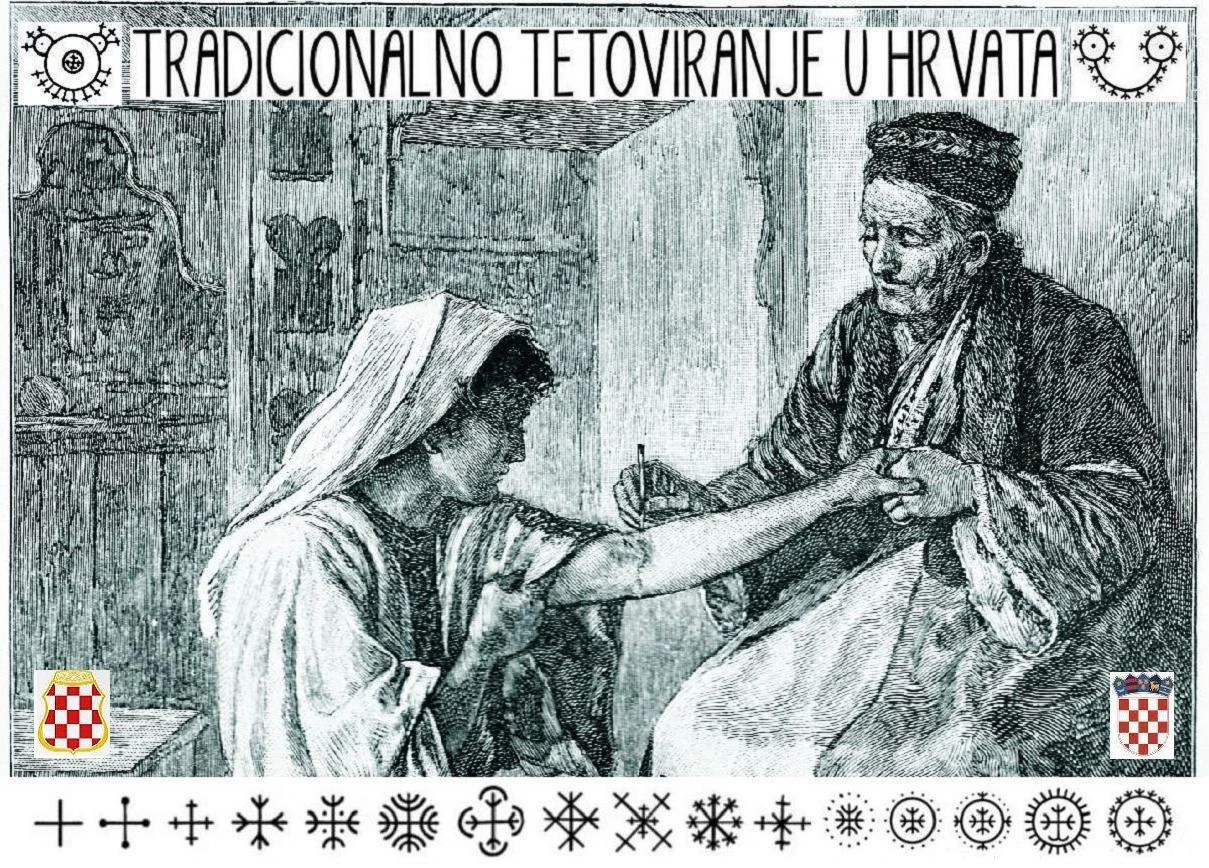
Tattoos were especially popular among Montenegrins, Bosnian Croats, and Albanians. Albanian women embraced body art regardless of faith, practiced by Muslims and Catholics alike.
Some historians suggest these markings were intended to prevent young women from being converted to Islam, as Sharia law prohibited such bodily ornamentation. Yet scholars have yet to reach a consensus explaining why Muslim women across the Balkans also bore these tattoos. 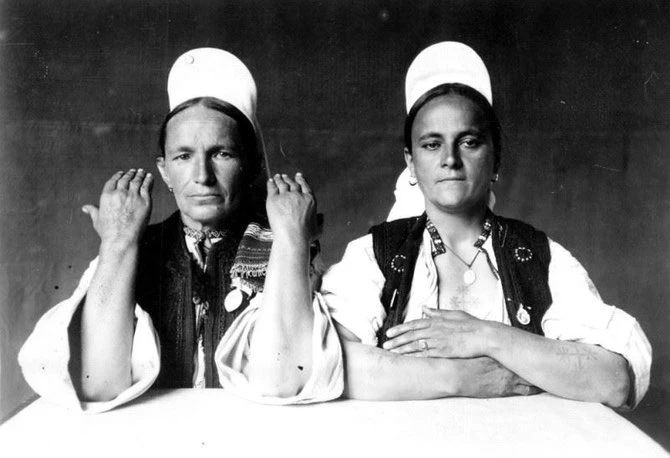
Croatian women with tattoos on their hands and forearms. Early 20th-century photograph
The most common placement for these markings was the backs of the hands. Curiously, the designs on the left and right hands were always different. Less frequently, the motifs extended up the forearms to the elbows, and only rarely were they inked between the collarbones. When tattooed on the chest, the design was typically a cross, embellished with ornamental details resembling pendants.
Identical tattoos were rare among Slavic women, yet every design drew from a shared repertoire of core symbols and geometric elements. Those literate in this visual language could decipher a woman’s family lineage, status, and the defining moments of her life. 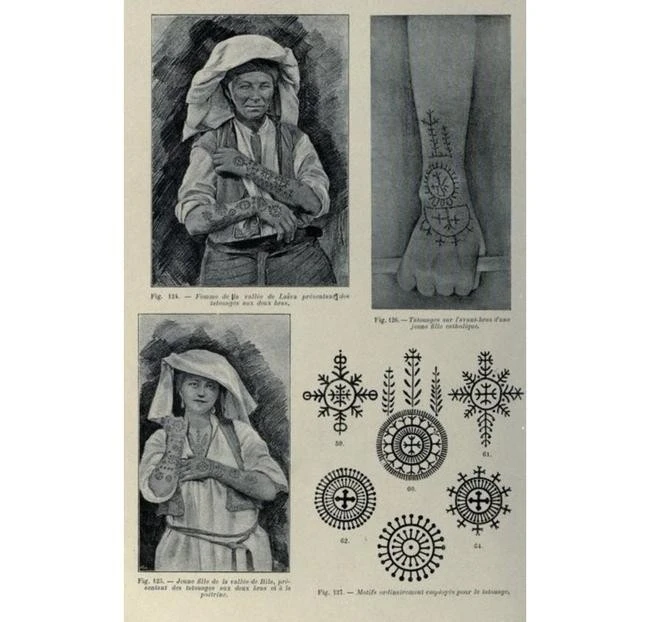
Anyone who understood the symbolic language of these tattoos could read a woman's life like an open book
A girl received her first tattoo between the ages of four and five, followed by another upon reaching maturity to signify her eligibility for marriage. However, not all markings were tied to age milestones—tattoos could also be applied as protective amulets if a child fell ill.
Throughout adulthood, new tattoos marked key life transitions: marriage, childbirth, or the loss of a husband. While other Slavic cultures documented such milestones through traditional costume, jewelry, or headdresses, Balkan women carried their life stories etched permanently into their skin. 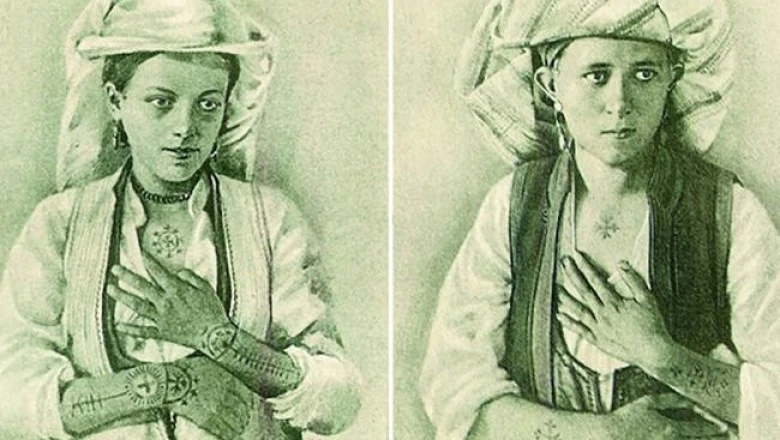
In these photographs from 1896, the tattoos on the women’s hands and chests are clearly visible
Early ethnographers assumed that the Balkan tattooing tradition arose during the Ottoman expansion. However, historical evidence suggests otherwise: the cross motif was not exclusively Christian in origin. Long before Christianization, the cross symbolized the sun among the Slavs, serving as a powerful safeguard against evil spirits.
The asymmetry between the right and left hands likely stemmed from this dualism—one hand bore solar symbols, while the other carried lunar imagery. Such pagan markings were particularly repugnant to Ottoman authorities; while Christian motifs could be tolerated, even the most desirable woman marked with pagan symbols was deemed unappealing. 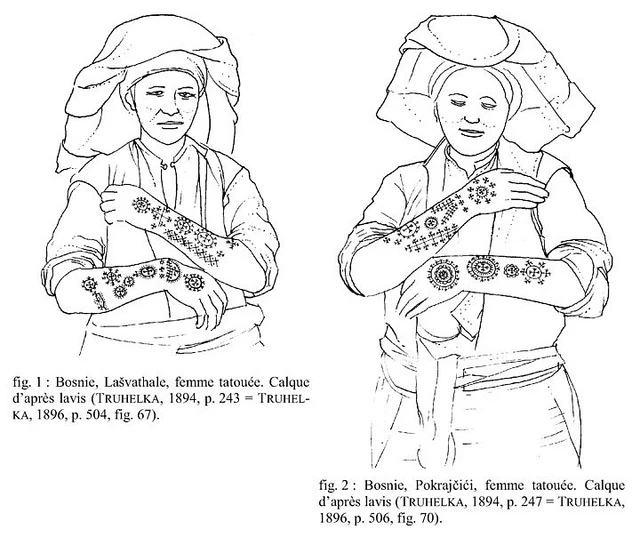
The Slavic tradition of female tattooing began to fade during the 19th century. As Western European norms spread eastward, tattooed individuals increasingly faced stigma, often viewed as uncivilized or associated with criminals and outlaws. Leopold Glück and Ćiro Truhelka, two prominent scholars who documented Balkan traditions in the late 19th century, noted that the custom was disappearing even in remote mountain hamlets.
Glück wrote of encountering women who wore designs not only on their arms, but also on their faces—predominantly on the forehead, and occasionally on the cheeks. According to his field observations, Catholic women sported the most elaborate and extensive tattoos, whereas Orthodox women tended to have more modest designs, mostly hidden beneath their clothing. 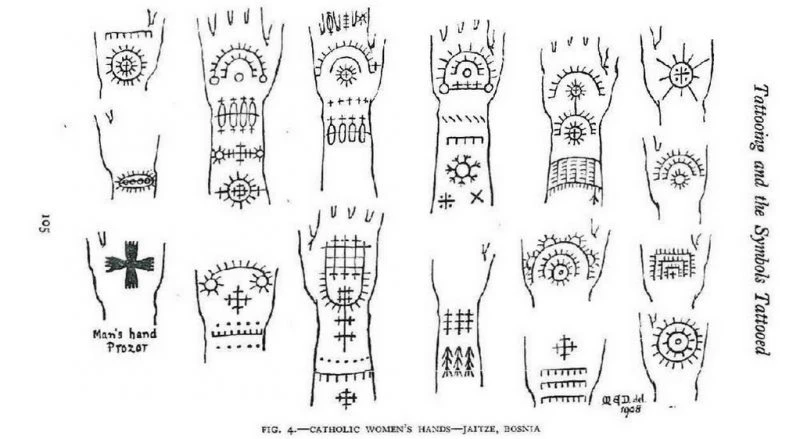
A chart of female tattoos compiled by Ćiro Truhelka, illustrating motifs worn by Catholic women in Bosnian villages
Glück took a particular interest in what the locals called these tattoos. To his surprise, neither Serbs, Montenegrins, nor Albanians had a universal, standardized term for the practice. This led him to speculate that the custom might not be ancient, arguing that a long-established tradition would have produced a dedicated name. 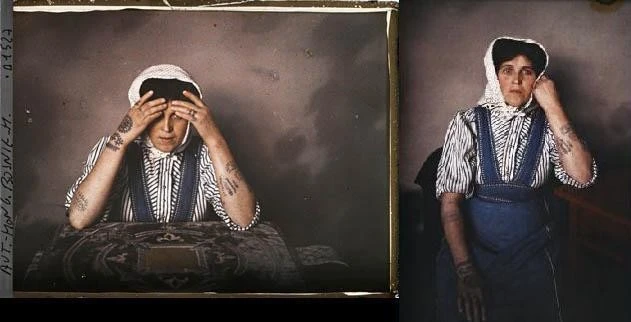
During Glück and Truhelka's travels through rural Balkan villages, tattoos were traditionally applied during church festivals, just outside the sanctuaries. Female tattooists performed their craft once church services concluded. To Glück, this seemed definitive proof of an exclusively Christian origin—after all, could a pagan ritual be tied so closely to the liturgical calendar? 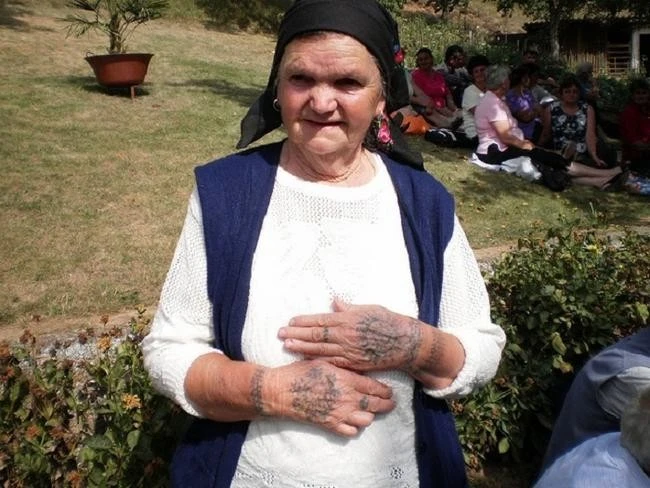
Today, encountering a woman with traditional Balkan tattoos is an exceedingly rare sight
Ćiro Truhelka held a different view. He observed that alongside Christian symbols like crosses, hearts, and the Christogram, the tattoos incorporated a myriad of other motifs: flora, fauna, stars, and celestial crescents. Truhelka argued that these symbols originated in ancient fertility cults that flourished across Europe long before the advent of Christianity.
Unlike Glück, Truhelka refrained from strictly linking the tattoos to established religions. Delving into classical antiquity, he discovered references to tattooed Balkan women in the writings of several ancient Greco-Roman authors. 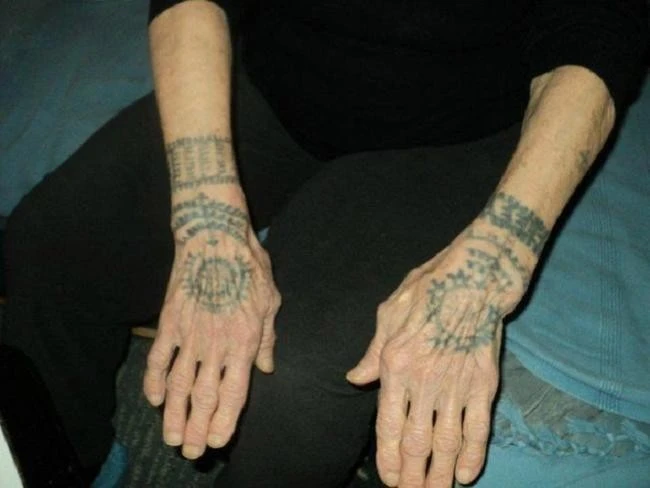
One of the last bearers of the ancient tradition. Photograph from the mid-1980s
Unfortunately, tracing the true origins of this ancient custom proved difficult even in the 19th century. The women who practiced it could offer little historical insight to Truhelka or Glück. Today, with the tradition on the verge of complete extinction, its deepest origins may remain an enigma forever.