The Mystery of the "Blood Quran"—the Book Written in Saddam Hussein's Blood (9 photos)
The Muslim world is notoriously unforgiving of sacrilege; anything that desecrates Islam is typically destroyed. Yet exceptions exist—most notably the "Blood Quran," a paradoxical holy book that by all rights should never have been created. Its very existence defies Islamic law, yet it cannot be destroyed because the Quran itself is sacred and inviolable. 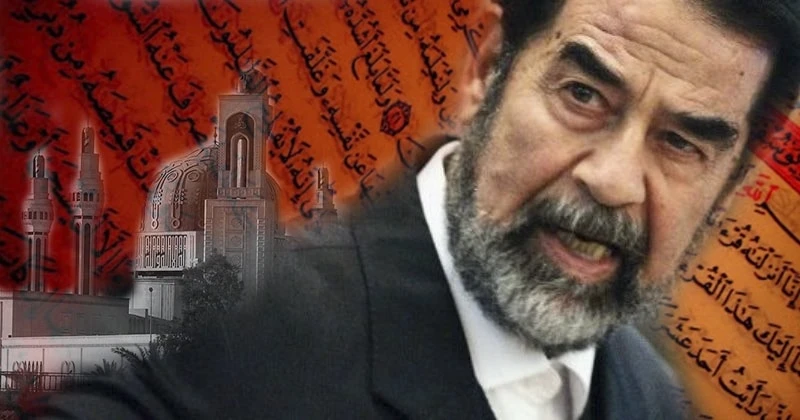
Today, this macabre text is locked away in a vault beneath Baghdad's Umm al-Qura Mosque, completely off-limits to ordinary people. Few Muslims would even want to touch a blasphemous tome that violates fundamental religious decrees. Officially, the holy text was written using the blood of Iraqi dictator Saddam Hussein, though many treat this claim with deep skepticism. 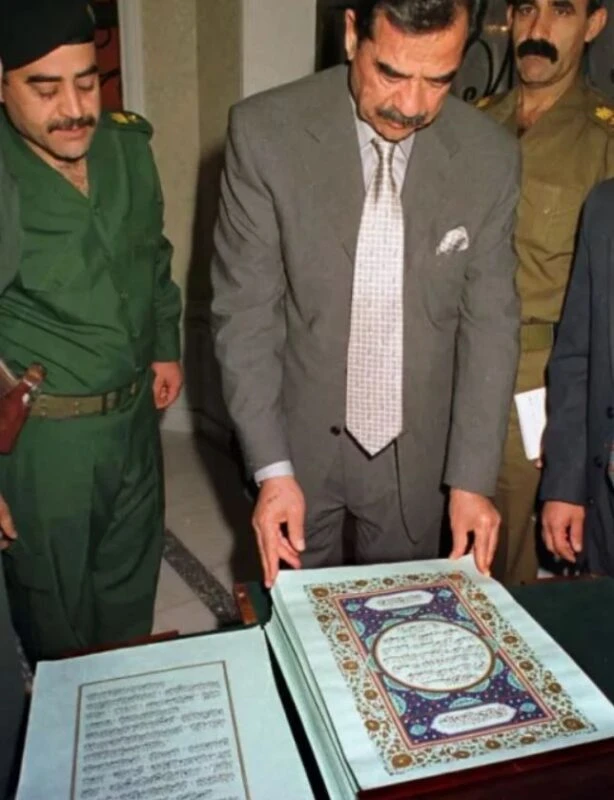
What is beyond dispute is that the "Blood Quran" was commissioned by Hussein himself on his 61st birthday, April 28, 1998. Not long before, the tyrant had publicly embraced Islam for a second time, having abandoned faith decades earlier. This religious awakening was triggered by a December 12, 1996 assassination attempt on his son, Uday Hussein, who miraculously survived.
In 2000, Saddam offered an official explanation for the project. He claimed the manuscript was a gesture of gratitude to God for saving his son’s life and for protecting Hussein himself from the numerous "conspiracies and dangers" he had faced over his lifetime.
"My life has been full of dangers in which I could have lost much blood... but since I spilled only a little, I asked to have God’s words written with my blood in gratitude." 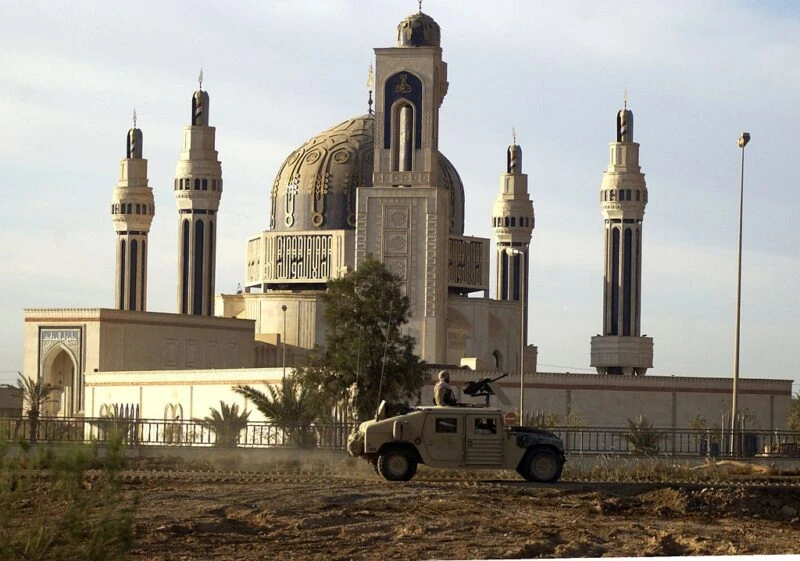
Umm al-Ma'arik Mosque in 2005
Creating such a book was a monumental undertaking, so the Iraqi leader entrusted it to Abbas Shakir Judi al-Baghdadi, a renowned calligrapher and Islamic scholar. According to official reports, the project required 27 liters of blood, drawn from Hussein over the course of two years.
Because blood makes a poor ink, it required chemical processing before use. Al-Baghdadi mixed special compounds into the blood to stabilize it. Using this bizarre fluid, the master calligrapher penned all 114 chapters and over 6,000 verses of the holy book across 605 pages. The project took two years, reaching completion in 2000.
The surahs of the Blood Quran were written in lettering two centimeters tall, with every page decorated in traditional red and black motifs. The finished manuscript was put on display in a custom-built pavilion at the Umm al-Ma'arik ("Mother of All Battles") Mosque. Access was strictly limited; the pavilion opened only to the most distinguished guests at Hussein's personal command. 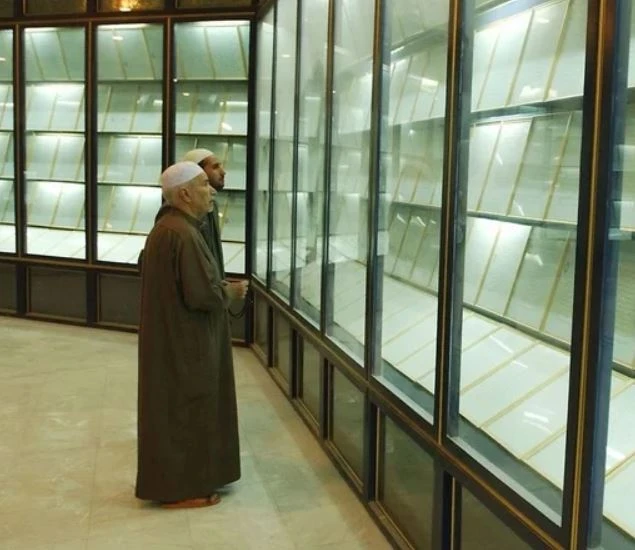
The Blood Quran as it looked before 2003, back when select VIPs were still allowed to view it
The mosque itself was virtually built to house the book, as construction began around the same time work on the manuscript started. The structure is visually striking: its minarets are designed to resemble Scud ballistic missiles and Kalashnikov rifle barrels. Saddam dedicated the mosque to what he proclaimed as victory over coalition forces in the 1990–1991 Gulf War.
Even while in production, the Blood Quran provoked fierce debate among Islamic scholars. Under Sharia law, human blood is considered
najis
—an impure substance that defiles anything it touches. Writing sacred texts in blood is strictly
haram
(forbidden), a fact Abbas Shakir Judi al-Baghdadi knew all too well. But the calligrapher had little choice but to commit the sin, knowing Saddam dealt brutally with anyone who disobeyed him.
Al-Baghdadi now lives in Virginia, in the United States, and refuses to comment on his work on the Blood Quran. He last spoke to the press about it in 2003, making it clear he had no desire to revisit the topic ever again.
"I don't like to speak about this now. It was a dark, terrible period of my life that I want to forget forever." 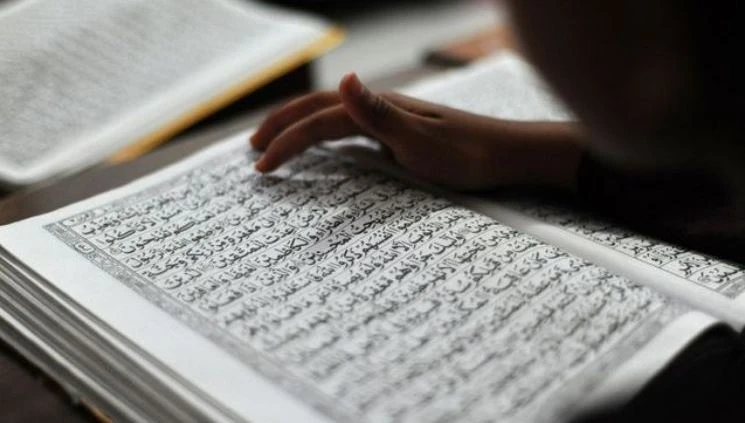
The calligrapher’s silence has only fueled ongoing controversy surrounding the blasphemous manuscript. The primary point of contention is whether the ink truly came exclusively from Saddam Hussein. Standard medical guidelines dictate a safe blood donation limit of no more than three liters per year—meaning it would have taken the dictator nine years to donate that much blood.
Consequently, many suspect the blood was pooled from his inner circle, or even forcibly drawn from political prisoners. A definitive answer is unlikely ever to emerge: Saddam is dead, and surviving witnesses are unwilling to talk.
The manuscript did not stay long at the Umm al-Ma'arik Mosque. When U.S. forces captured Baghdad in 2003, mosque custodians spirited the book away into hiding. Sheikh Samarrai reportedly kept the artifact concealed in his home. He retains the title of custodian to this day, though the book itself was eventually returned to the mosque, which has since been renamed Umm al-Qura ("Mother of All Cities"). 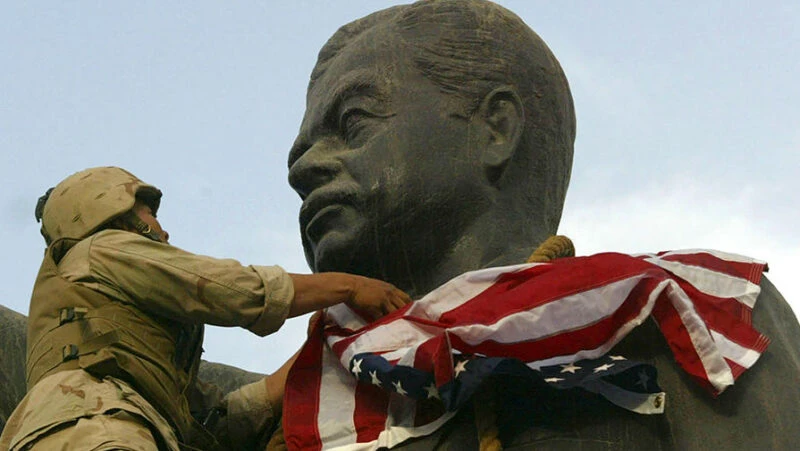
The manuscript is kept in a specially fortified vault beneath the mosque, secured behind a door with three separate locks. In 2010, Sheikh Samarrai offered journalists a rare glimpse into its security measures, explaining why such extreme protection is necessary.
"I knew it would become a target for many, so we decided to protect it. Seeing it now is nearly impossible. There are three keys, held in three different locations: I have one, the local police chief has another, and the third is kept in another part of Baghdad. Access requires official authorization from a dedicated committee."
Ordinary visitors are never shown the manuscript. The handwritten text occupies a bizarre legal and religious limbo, fueling years of debate over its fate. Because of how it was made, it is deemed ritualistically impure and an affront to Islamic doctrine. Yet, because it contains the holy word of the Quran, destroying or even defacing it is strictly forbidden. 
For Iraqi clerics and scholars, the book presents a thorn in the side of Islamic theology. Abdul Qahar al-Ani, a professor of Islamic thought at Baghdad University, put it this way:
"Saddam was no saint, so his blood is impure. Some scholars argue it might be acceptable, pointing out that after one battle, Muhammad's warriors gave thanks for victory with enemy blood still on their clothes. But I don't accept that logic. No book like this has been created since the time of the Prophet—so why on earth did Saddam feel compelled to do it?!"
Beyond theological concerns, the Blood Quran is kept hidden for political reasons. Authorities fear it could become a shrine for Saddam loyalists, who remain numerous in Iraq. As a relic directly tied to the former dictator, it could serve as a rallying symbol for those seeking to revive the Ba'ath Party. Most political figures favor destroying the controversial artifact, much like other monuments to Saddam's decades of tyranny. 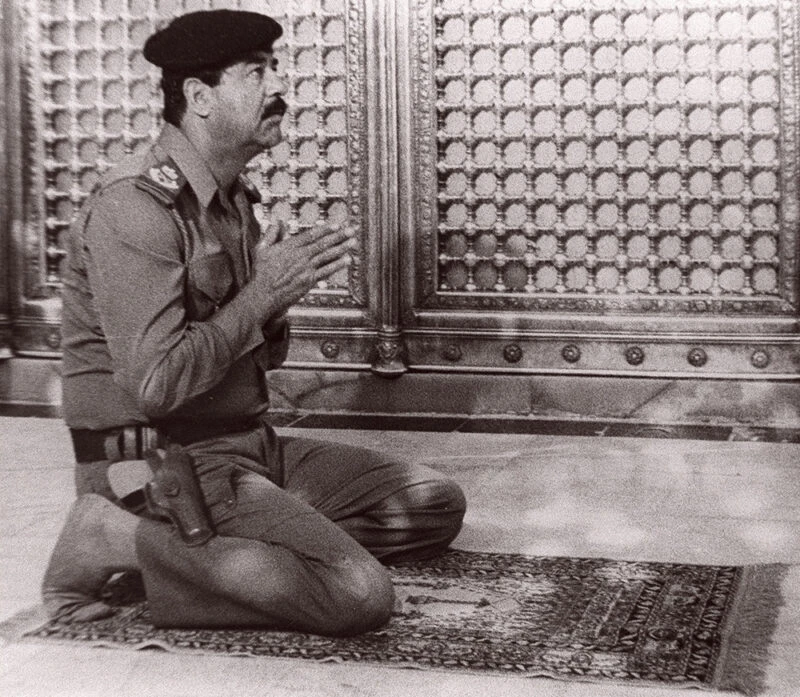
However, not everyone agrees. Mowaffak al-Rubaie, a former national security advisor who stood beside Saddam as he was led to the gallows, believes the Blood Quran is part of Iraq's history and should be preserved for that very reason.
"He lived, he ruled, he impacted the world, and he was part of our history. Even if it was a bad chapter, he played a massive role in shaping this nation, whether we like it or not. We shouldn't bury the legacy of that era. We must remember everything—the good and the bad—and draw lessons from it. And the most important lesson of all is that dictatorship has no place in Iraq." 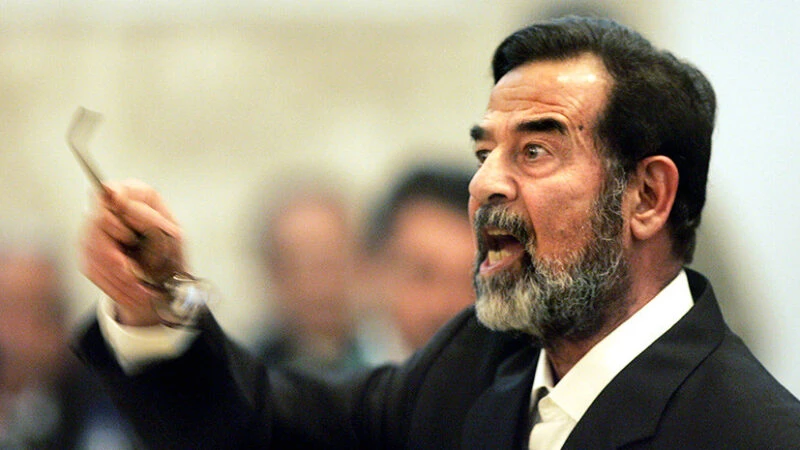
Nearly two decades later, the debate over the Blood Quran rages on, while the book itself remains locked inside its subterranean secret vault. This chilling monument to a tyrant's 24-year reign has no right to exist—neither under religious doctrine nor as a historical artifact—yet no one has yet dared to order its destruction.