The Noble Bandit Bulla Felix: The Rise of an Ancient Roman Crime Syndicate (7 Photos)
Mention the Mafia, and Italian crime syndicates instantly spring to mind—ruthless organizations that somehow managed to command grassroots public support. Yet the core principles of organized crime emerged centuries before Sicilian cartels ever took root. Back in ancient Rome, outlaw gangs were already using remarkably similar tactics. The most notorious of these figures was Bulla Felix, a mastermind who forged an entire criminal empire and became a legend. 
The Mystery of His Name and Origins
Numerous Roman authors chronicled the exploits of Bulla Felix, but the most detailed account of his life and death comes from a contemporary: the third-century historian Cassius Dio. In his monumental
Roman History
, Dio dedicated considerable space to the outlaw. To this day, his true name remains unknown. "Bulla Felix" was an alias derived from two Latin words:
bulla
, an amulet or protective charm, and
felix
, meaning "lucky" or "fortunate." 
Born into poverty in the port city of Brundisium, Bulla Felix’s early years are lost to history. By the time he first surfaces in written records, however, he was already a grown man—physically formidable and remarkably charismatic. Blending sharp intellect, daring bravery, and uncanny cunning, he possessed all the traits needed to lead the largest criminal syndicate in ancient Rome.
A Criminal Empire Built on Trust
Bulla Felix commanded a force of roughly 600 men. Unlike typical bands of highwaymen, his was an expansive, meticulously organized network. In practice, he ran two distinct operations: a mobile strike force patrolling the highways, and a clandestine network of everyday Roman citizens—artisans, peasants, merchants, and enslaved laborers. They lived ordinary lives until called upon, ready to take up arms at their chieftain’s command. 
The Appian Way
Their primary hunting ground was the famous Appian Way, the vital highway connecting Rome to Brundisium. Highway robberies were run like a well-oiled machine, yet Bulla Felix operated under a distinct moral code. He punished gratuitous cruelty, refused to prey on the weak or the poor, and often helped those in need.
A Bandit with a Code of Honor
Bulla Felix went out of his way to avoid bloodshed, even striving to make robberies as painless as possible for his victims. Merchants were relieved of their cash and luxury goods, but never left destitute. After all, if traders were ruined, who would bring the next caravan down the road? 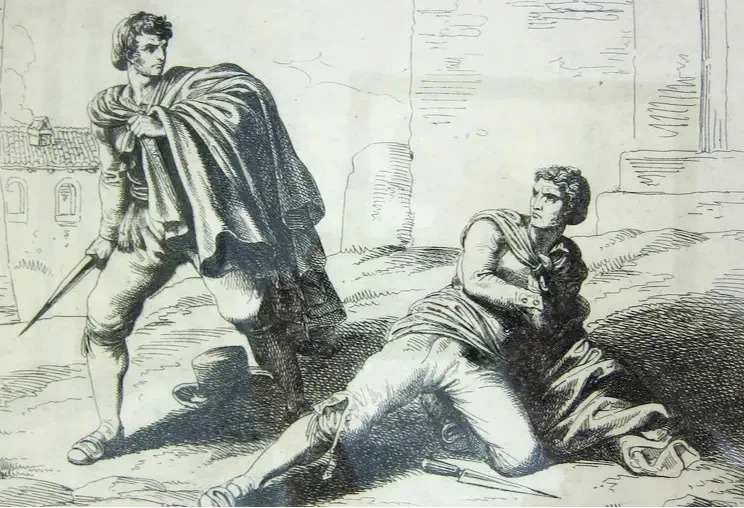
His policy toward artisans was particularly clever. Rather than enslaving or forcing captured blacksmiths, tailors, and jewelers into manual labor, he offered them work. They forged weapons, crafted armor, and tailored clothing—and received generous wages in return. Many willingly stayed on as trusted allies.
Masterful Schemes
Beyond his organizational brilliance, Bulla Felix possessed an extraordinary knack for subterfuge. On one occasion, he forged official documents and posed as a Roman magistrate to break two of his men out of prison. Another of his daring stunts belongs in a textbook on deception.
Disguising his identity, the outlaw approached a centurion offering to turn in Bulla Felix for a hefty reward. The unsuspecting officer took the bait, only to walk straight into an ambush. Bulla took him captive, but spared his life. After stripping him of his coin and weapons, the bandit smiled and said:
“Tell your masters to feed their slaves, so they won’t have to turn to banditry.” 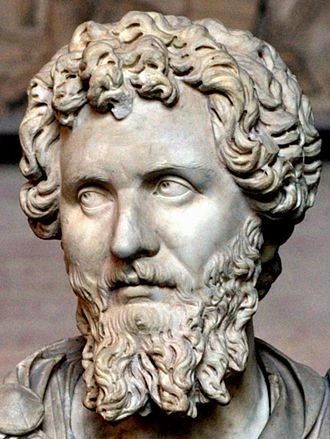
Emperor Septimius Severus
Needless to say, Bulla Felix and his syndicate became a major thorn in the side of Emperor Septimius Severus. Occasionally, Roman authorities captured a few gang members, but none ever betrayed their leader. In fact, many couldn’t have even if they tried: they had never seen the legendary outlaw in person, receiving orders through a complex chain of intermediaries.
Cherchez la Femme
Yet despite his courage, cunning, and flair, Bulla Felix was ultimately brought down—and, as the story often goes, a woman was his undoing. The outlaw had a weakness for romance and often threw caution to the wind. His lover happened to be a married woman, and when a Roman tribune tracked down the cuckolded husband, the man willingly helped authorities corner the lovers. 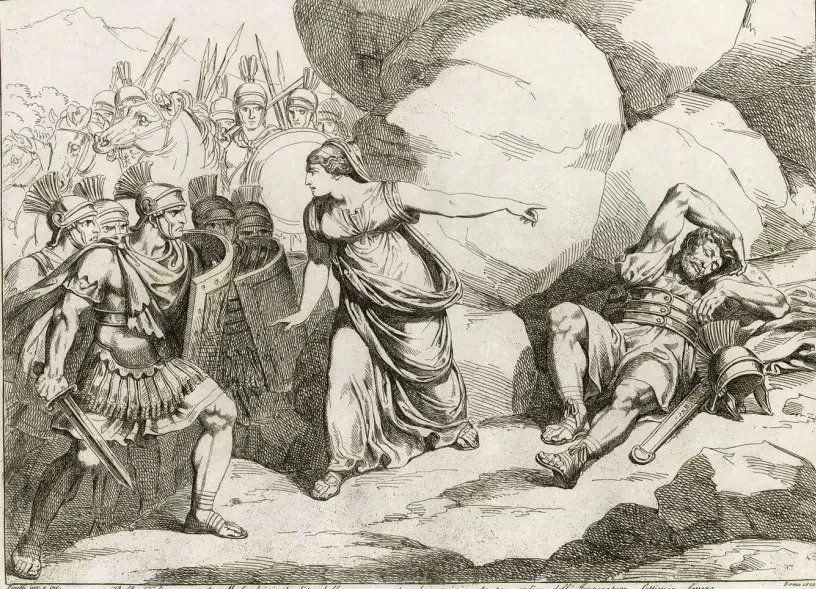
Roman legionaries ambushed the elusive bandit in a cave while he was in the arms of another man’s wife. Hauled to Rome in chains, Bulla Felix was brought before the authorities. Cassius Dio recorded a memorable exchange between the captured chieftain and the praetorian prefect Papinian just before his execution. When the official demanded, “Why did you become a bandit?”, Bulla Felix shot back, “Why did you become a prefect?”
The noble outlaw was sentenced to a brutal death, thrown into the arena to be torn apart by wild beasts. While many of his confederates were hunted down and executed, a substantial number managed to escape. Remnants of Bulla Felix's gang continued to plague travelers along the Appian Way for years, but without their leader, the network lost its cohesion and gradually faded into oblivion. 
What do you think: was Bulla Felix a truly noble outlaw, or simply a ruthless criminal romanticized by history?