Sinking of the Princess Alice: The Thames Disaster That Claimed 650 Lives (10 photos)
Major maritime disasters claiming hundreds of lives are well documented, inspiring books and feature films. Far less is known about river shipwrecks, though some have been just as deadly. On September 3, 1878, the passenger paddle steamer Princess Alice sank in the River Thames. The disaster claimed over 650 lives, making it the deadliest accident in the history of British inland waterways. 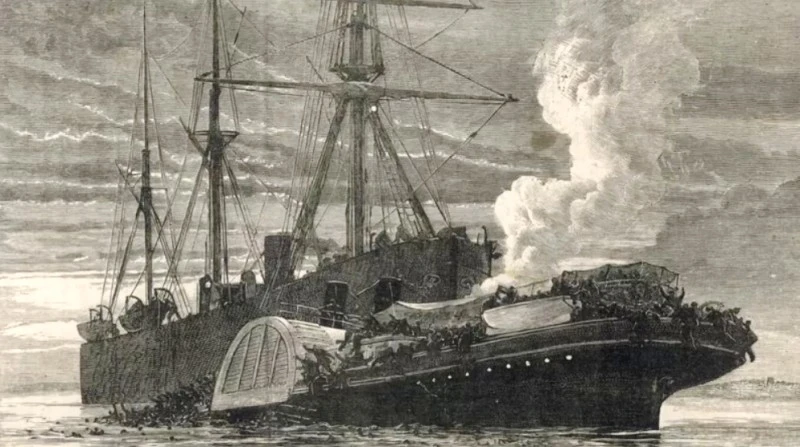
During the warmer months, the paddle steamer Princess Alice offered day trips from London to the coast and back. On that fateful morning, under clear skies, the ship set off on its usual route with around 700 passengers aboard. Most of the holidaymakers were working- and middle-class families with children, drawn by tickets costing just two shillings. 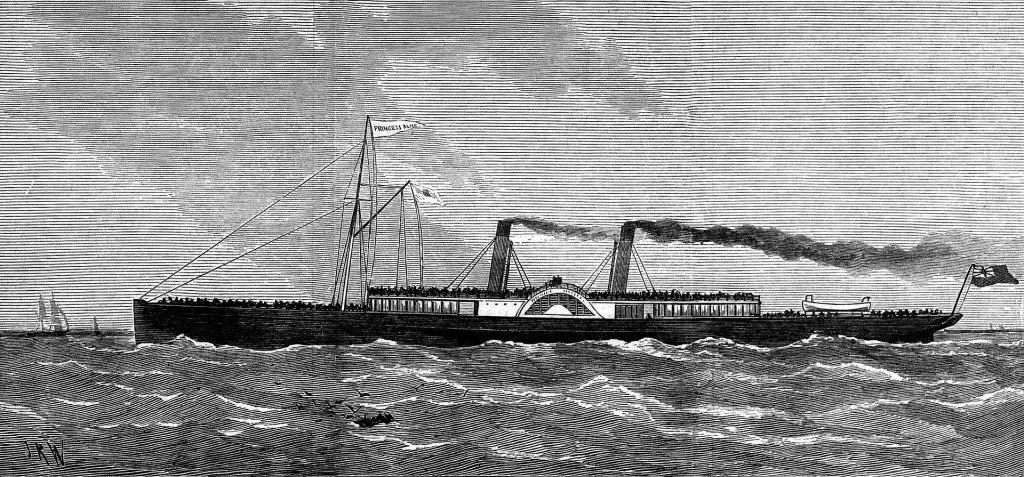
The paddle steamer Princess Alice
The passengers arrived at their destination in Kent, where local attractions awaited them: the pleasure gardens of Rosherville, the waterfront at Sheerness, and the coastal views of Gravesend. By evening, as the Princess Alice set sail on the return journey, many passengers were exhausted and retired to the lower cabins or gathered in the saloon.
Details of the tragedy that unfolded on the evening of September 3, 1878, came to light largely thanks to the ship’s cook, Alfred Merriman. A 30-year-old father of four, Merriman had struggled to find work before securing a position aboard the Princess Alice just before its fateful voyage. The galley job promised steady pay—a lifeline for his growing family. Merriman proved twice fortunate: he was also one of the few who managed to survive. 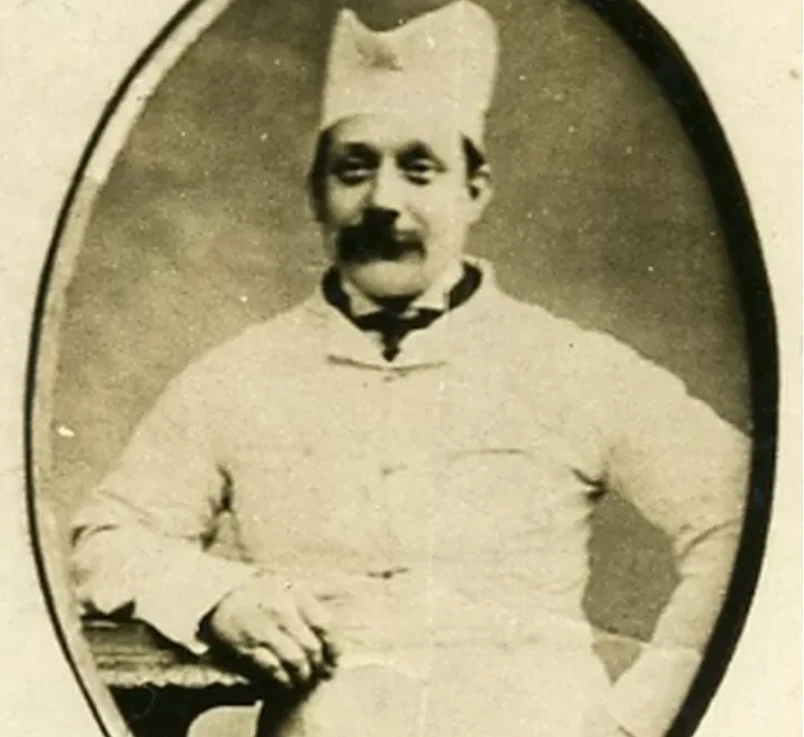
Alfred Merriman
Disaster struck at 8:00 p.m. as the steamer approached the North Woolwich pier in East London. Having finished his shift, Alfred Merriman stood in the saloon doorway, admiring the evening views of the capital. He later recalled a crew member walking up to ask how his first day on the job had gone. "Splendid," Alfred replied—and at that exact moment, a violent crash shuddered through the ship.
The Collision
The 890-ton steam collier Bywell Castle rammed full-tilt into the starboard side of the Princess Alice. Weighing three times as much as the passenger steamer, the cargo vessel cut her virtually in two. Panic instantly erupted aboard: screams echoed through the decks as women and children frantically tried to scramble up toward the bridge. 
Transcripts of the cook's testimony recorded his brief exchange with the captain:
"I rushed straight to the captain and asked him what to do. 'We are sinking,' he said. 'Do what you can.'"
At that moment, the Princess Alice snapped completely in two and plunged to the bottom. A scale model at the National Maritime Museum in Greenwich depicts the wreck: the bow and stern buckled upward, creating a massive void in the middle where torrents of water rushed in. The resulting whirlpool sucked down everyone on deck with terrifying force.
Merriman, along with others on deck, was dragged underwater. But those trapped below in the cabins and saloon faced an even grimmer fate—they had virtually no chance of escape. Making matters worse, the collision occurred near sewage outfalls discharging raw waste into the Thames. The water around the wreck was foully polluted, giving off an unbearable stench. 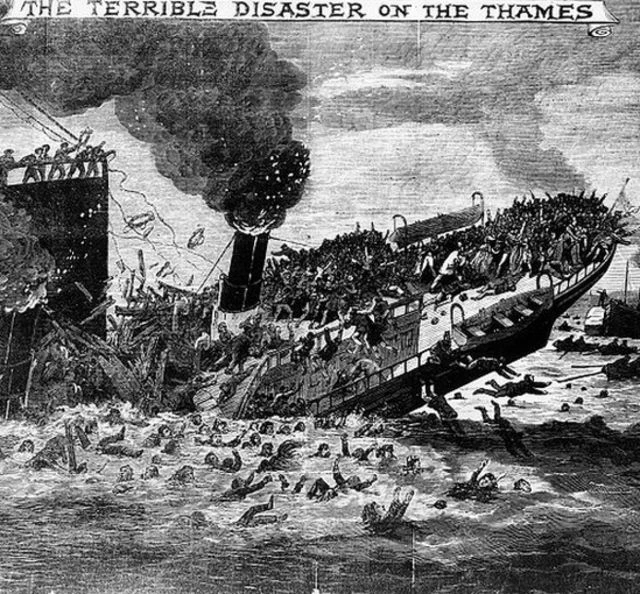
This severely hindered rescue efforts. Boatmen launched from the shore toward the crash site, while sailors aboard the Bywell Castle hurled lifebuoys, wooden planks, and even chicken crates into the water—anything struggling victims might grab onto. Yet people continued to drown. Even those fortunate enough to escape the whirlpool were pulled under by the weight of heavy Victorian dresses.
The Rescue of Cook Merriman
Merriman managed to surface and grab onto a piece of floating wreckage. But within seconds, 20 other desperate victims lunged for the same timber, dragging it under. Fortunately, Alfred could swim—a rare skill at the time—and he struck out toward the hull of the collier. Spotting a rope hanging overboard, he grabbed hold along with three other survivors. The crew hauled them all up onto the deck of the Bywell Castle. 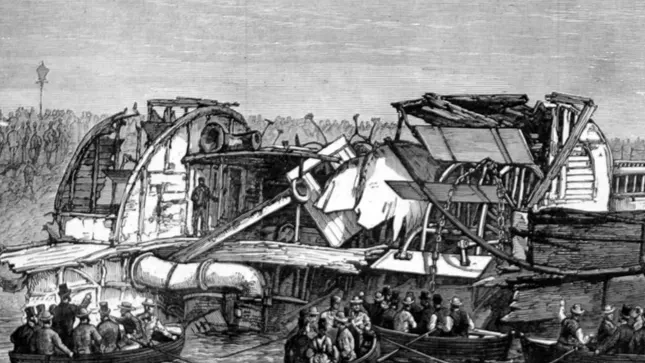
The wreckage of the Princess Alice near Woolwich Pier
Other survivors recounted horrifying scenes. Overcome by raw survival instinct, people dragged one another underwater in a desperate bid to stay afloat. Claude Hamilton Wyllie, a 20-year-old clerk, told investigators:
"I noticed my brother swimming beside me. As we were both good swimmers, we managed to reach a nearby steamer. The water was swarming with people, and we had a hard time avoiding them. A woman grabbed onto me, but I managed to break free, and she sank like a stone."
Alfred Merriman and other survivors were set ashore at East Woolwich Pier. The cook later revealed that not everyone who reached land survived; an eight-year-old boy died in his arms after swallowing polluted water. In total, only about 130 people were pulled from the river alive, and several died shortly after in local hospitals from severe sewage poisoning. 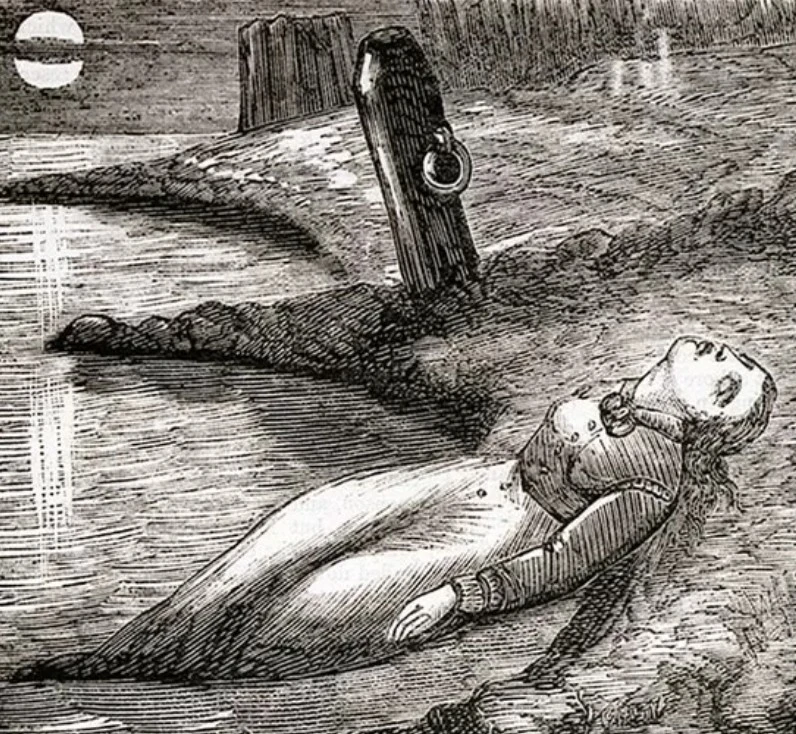
One of the disaster victims washed ashore
The aftermath of the disaster was devastating. Children were orphaned, parents lost their offspring, and entire families perished together. For days, bodies were recovered downriver along the Thames. Boats crisscrossed the water as men hauled in victims with grappling hooks. The city offered a bounty of five shillings for every corpse recovered, triggering grim brawls among boatmen over the dead. London's morgues quickly overflowed, forcing authorities to erect makeshift mortuaries along the riverbanks.
Investigation into the Tragedy
Once the initial shock subsided, Londoners demanded a full inquiry. The public was desperate to know who was responsible for the terrible loss of life. Rumors swept the city: some blamed toxic sewage for the high death toll, others cited overcrowding on the Princess Alice, or alleged drunkenness on the part of the Bywell Castle's captain. 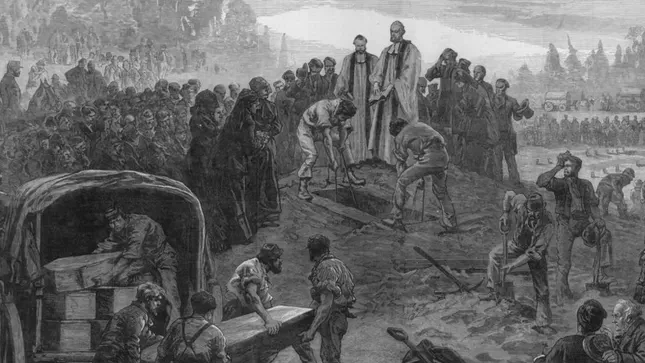
Burial of unidentified victims at Woolwich Cemetery
An inquest opened the following day, but yielded few immediate answers. Officials could only watch as body after body was pulled from the river while enduring the grief and fury of bereaved relatives. It soon emerged that no passenger manifest had been kept, making an exact death toll impossible to calculate.
For two months, a jury listened to endless testimony from survivors and grieving relatives. Handwritten proceedings filled over 5,000 pages. On November 13, 1878, an angry crowd locked the jurors in their deliberation room, vowing not to let them out until a verdict was returned.
Aftermath and Legacy
The jury was forced to reach a conclusion. After deliberations, they ruled that the Bywell Castle should have reversed engine sooner, while the Princess Alice should have stopped her engines. They also found that the collision was compounded by lax navigation rules governing river traffic. 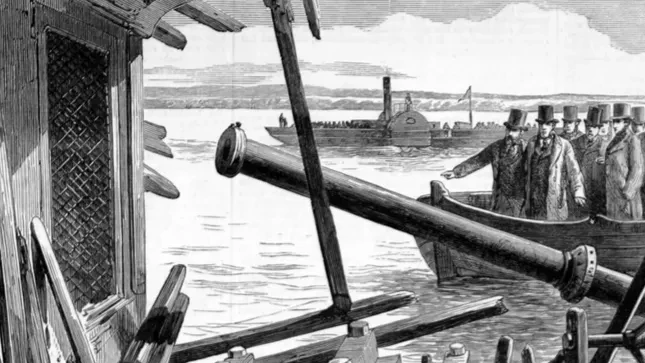
Inquiry commission examining the wreckage of the Princess Alice
The investigation established that while the Princess Alice was seaworthy, she was undermanned, carried far more passengers than permitted, and lacked adequate life-saving equipment.
Though the formal inquest closed, debates over the catastrophe persisted for years. The disaster ultimately drove major safety reforms and stricter regulations. Navigation lights on rivercraft and seagoing vessels became standard worldwide. To separate passenger and cargo traffic, the Royal Albert Dock was constructed on the Thames. The tragedy also accelerated funding for London's sewer system modernization, originally launched in 1858. 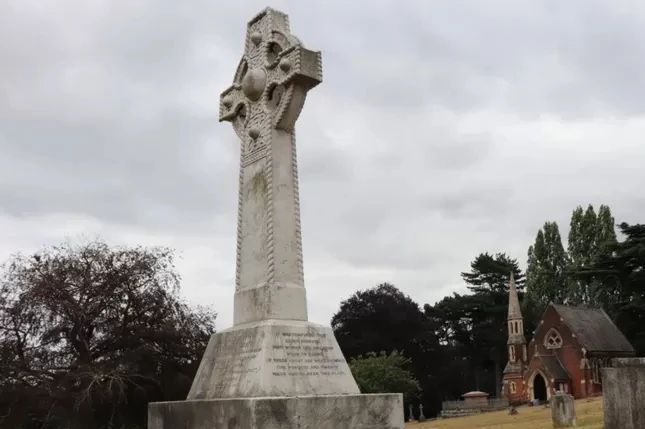
In the end, sole blame was never assigned to either party, nor was a single cause definitively proven. Today, the worst tragedy in the history of the River Thames is marked only by an inconspicuous plaque on a quiet bank. At Woolwich Cemetery, a memorial Celtic cross stands over the victims' mass grave, erected through donations from 23,000 citizens.