The World's Largest Cave (7 Photos)
Son Doong Cave (Vietnamese: hang Sơn Đoòng, meaning "mountain river cave"), located in Vietnam's Phong Nha-Ke Bang National Park, is the largest known cave on Earth. Its volume is estimated at approximately 38.5 million cubic meters. For comparison, the Great Pyramid of Giza has a volume of around 2.58 million cubic meters. 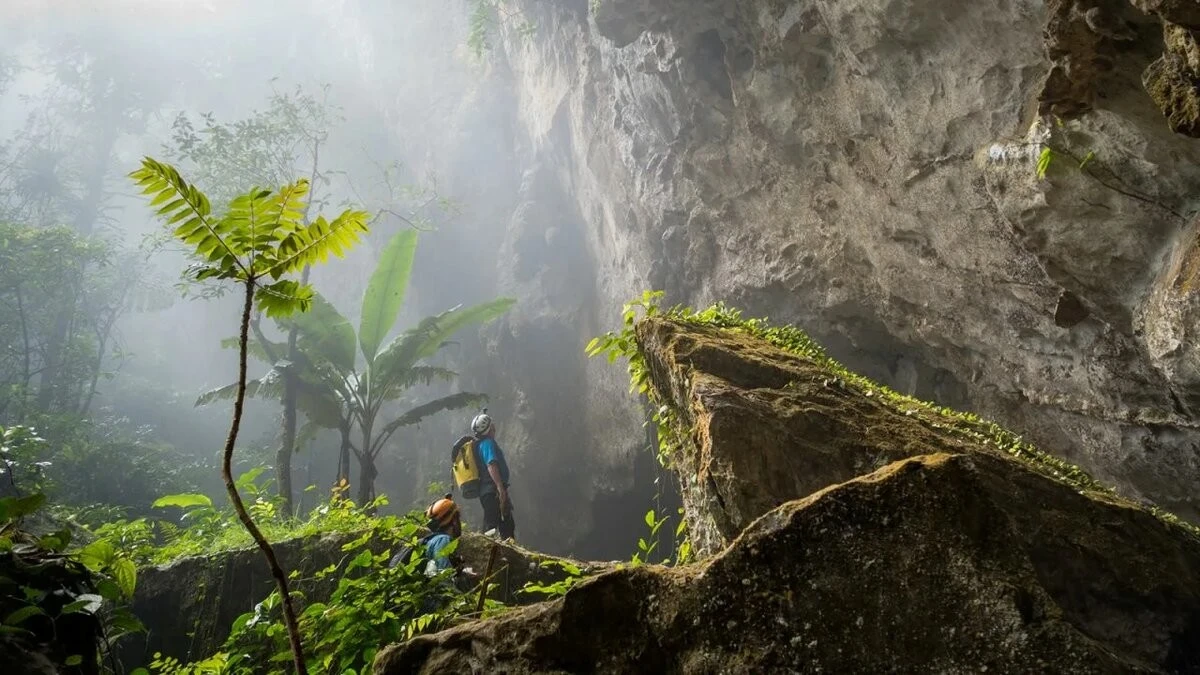
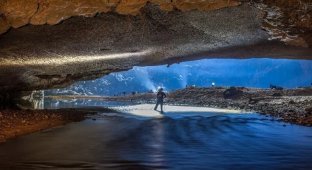
The cavern stretches over nine kilometers in length, with individual passages reaching up to 150 meters wide and ceilings towering 200 meters high.
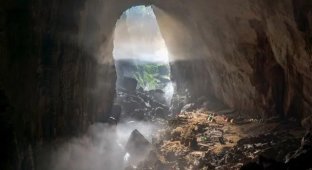
Carved into the limestone of a karst mountain range, the cave began forming around five million years ago. As a subterranean river diverted its course, it eroded the soluble rock, hollowing out massive chambers over time. Eventually, the ceiling collapsed in two places, creating giant sinkholes through which sunlight now pours into the abyss.
Discovery History
The cave was first discovered in 1991 by a local man named Ho Khanh. While searching for timber, he was caught in a torrential downpour and sought shelter near the entrance of an unfamiliar cave. Stepping inside, he felt gusts of wind and heard the roaring rush of a subterranean river, prompting him to back out. After returning to his village, Ho Khanh shared his finding, and a group of curious locals set off to explore the site a few days later. However, dense jungle terrain made it impossible to relocate the entrance. It took 18 years of searching—and the assistance of British cave researchers—for Ho Khanh to finally prove he hadn't made the story up. 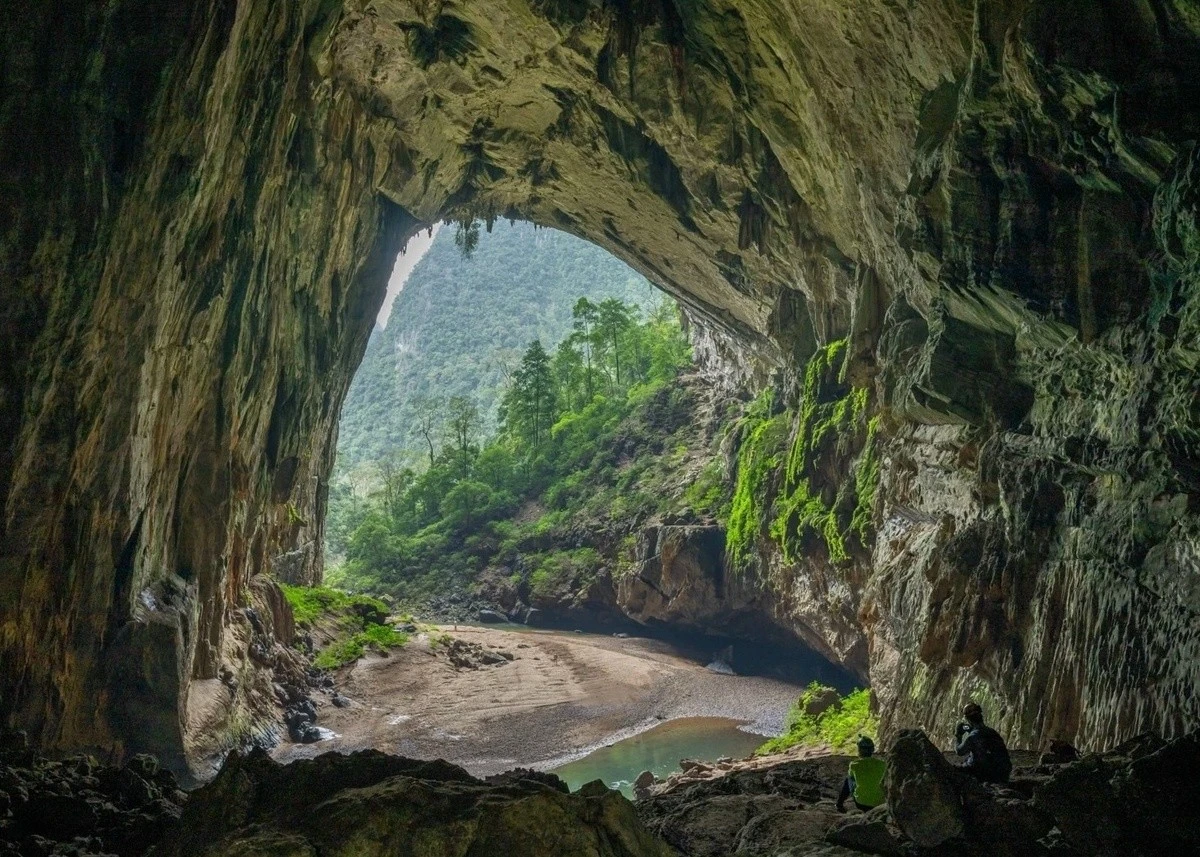
In 2009, an expedition led by Howard Limbert of the British Cave Research Association (BCRA) conducted the first official survey, confirming the cavern's staggering dimensions. Following the expedition, Son Doong was officially recognized as the world's largest cave.
A Unique Ecosystem
Son Doong is much more than a void in the earth: it houses its own distinct ecosystem, virtually isolated from the outside world.
Sunlight streaming through the two collapsed skylights nurtures rich plant life inside, giving rise to lush underground jungles complete with 30-meter-tall trees, ferns, and climbing vines. 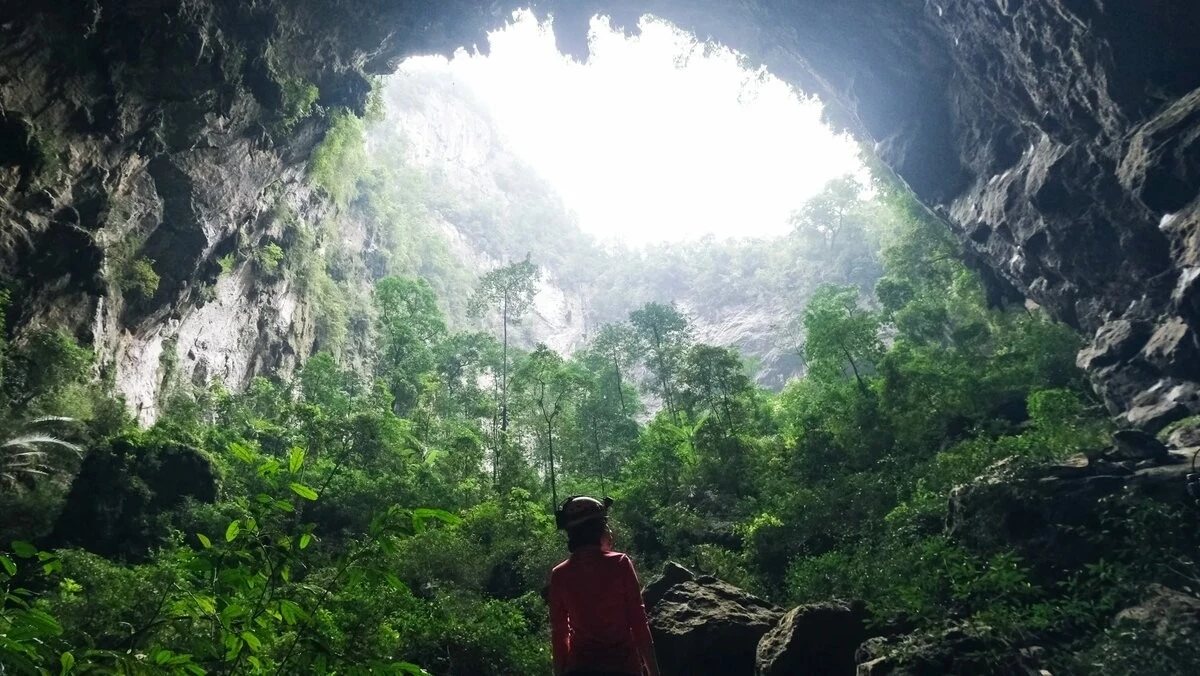
A river flows right through the cave before coursing beyond it. During the rainy season, rising waters render several sections completely impassable.
Moisture evaporating from the river and dense foliage condenses in the cool subterranean air, giving rise to internal clouds and mist trapped within the cave walls.
The cavern is also home to some of the largest known stalagmites on Earth. One famous formation, dubbed "Hand of Dog," reaches nearly 70 meters in height. 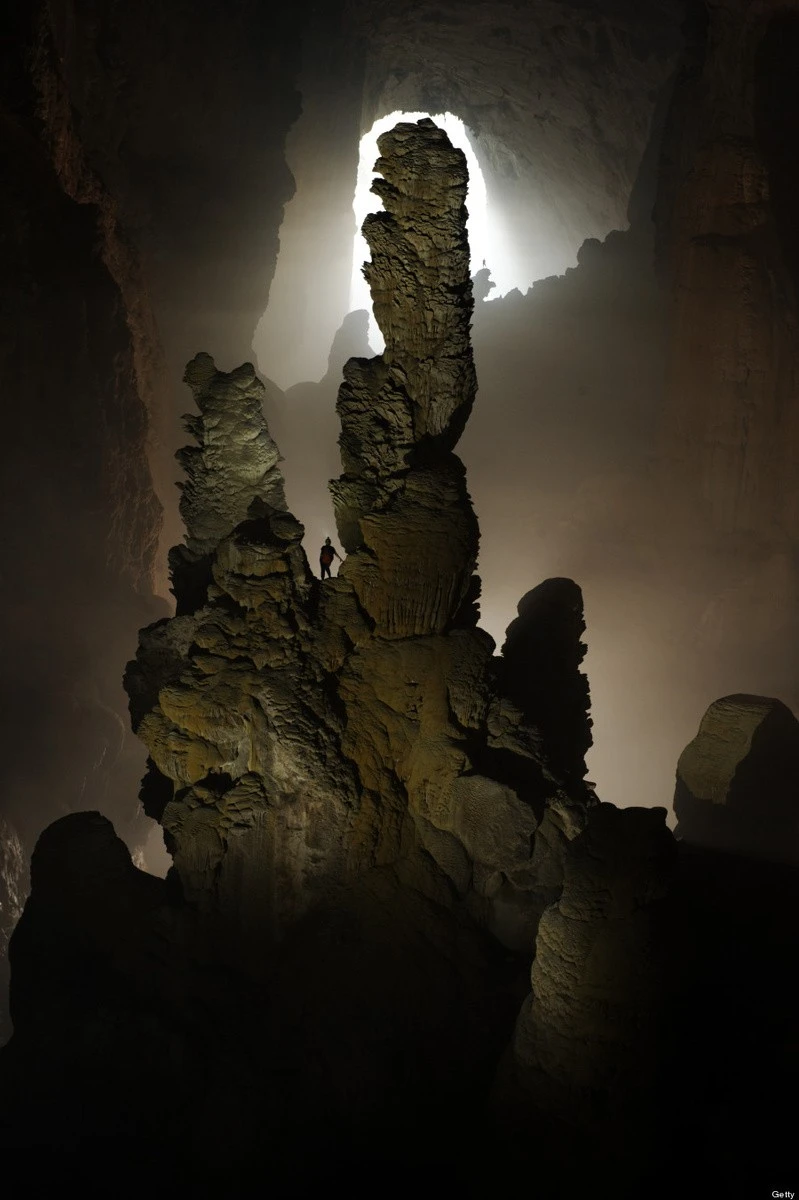
Calcite deposits coating the cave walls are hundreds of thousands of years old, offering scientists a detailed window into the region's climate history across vast geological epochs.
Access and Tourism
Access to Son Doong is strictly regulated by the Vietnamese government. Entry permits are strictly capped, allowing only about 500 to 1,000 visitors per year. 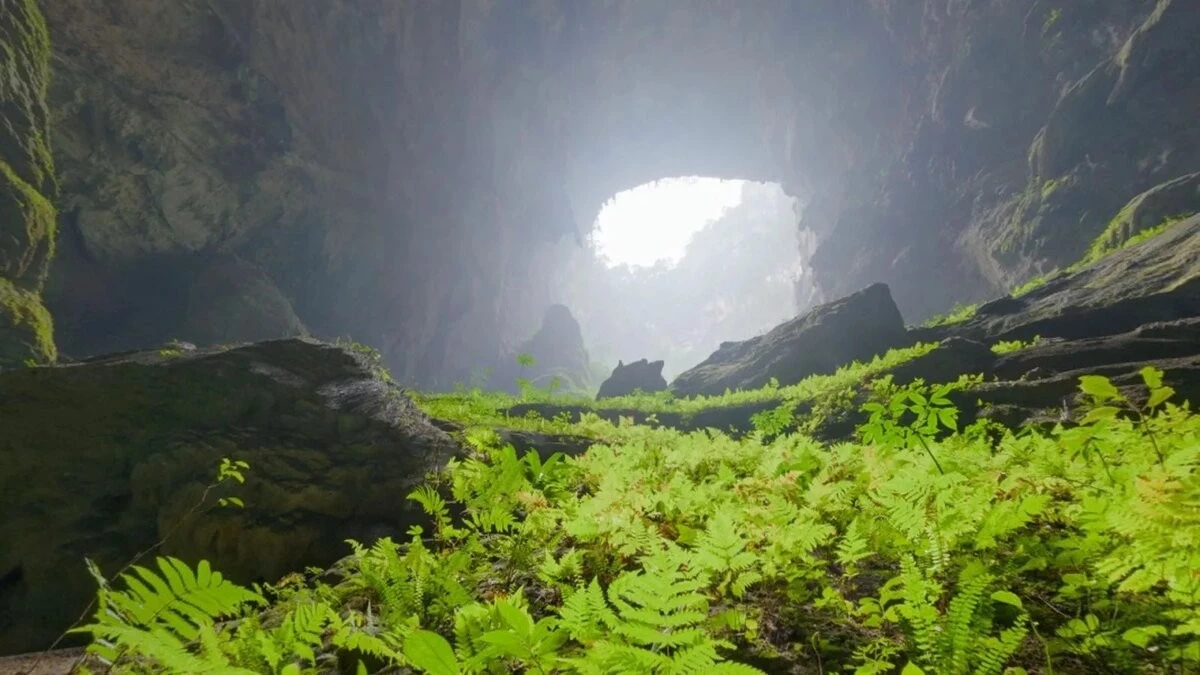
A typical expedition lasts six to seven days and demands a high level of physical fitness. The route involves trekking through dense jungle, abseiling into the cave, wading across underground rivers, and camping inside the cavern itself. 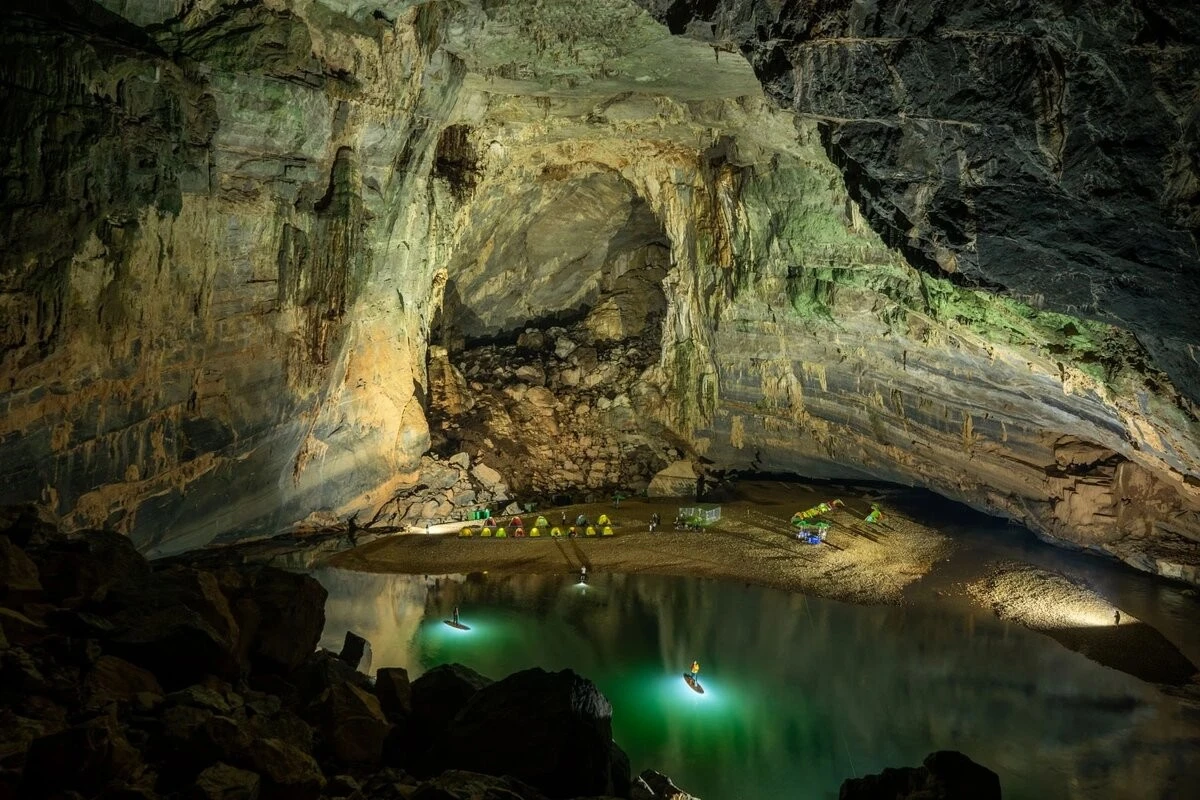
These strict permit limits are vital to preserving the cave's fragile ecosystem. Mass tourism would disrupt its delicate microclimate, pollute the underground river, and damage calcite formations through vandalism or physical contact.
Scientific Significance
Son Doong holds immense value for biologists, geologists, and speleologists. Its most remote and inaccessible reaches may harbor undiscovered plant and animal species that evolved in complete isolation from the outside world. 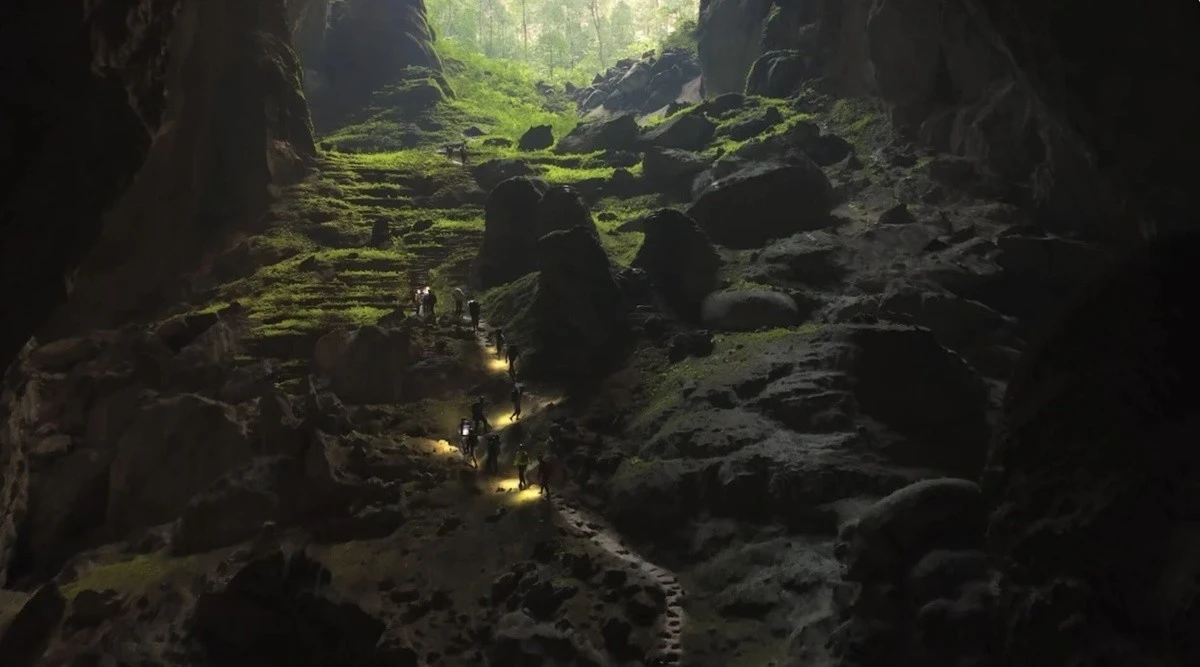
Analyzing its calcite formations enables researchers to reconstruct ancient regional climates. By studying individual stalagmite layers, scientists can gather data on rainfall patterns, temperature fluctuations, and vegetation shifts over hundreds of thousands of years.
What's more, Son Doong serves as a terrestrial analogue for studying potential subterranean ecosystems on other planets and moons. If self-contained systems with their own microclimates and biospheres exist on Earth, similar subsurface oases could realistically be found inside lava tubes on Mars or icy cavities on outer solar system moons.