The crime and tragedy of Typhoid Mary: how a sinister cook terrorized all of New York for 10 years (11 photos)
Thanks to the popularity of zombie apocalypse movies, even those with little medical experience are now familiar with the term "patient zero." This is the very first carrier of an infection, the one who starts an epidemic that turns the world into hell.
This term was introduced into science after the case of Mary Mallon, an Irish cook who didn't wash her hands and nearly destroyed several New York City neighborhoods because of it in the early 20th century. We know her by another, more famous name: Typhoid Mary. 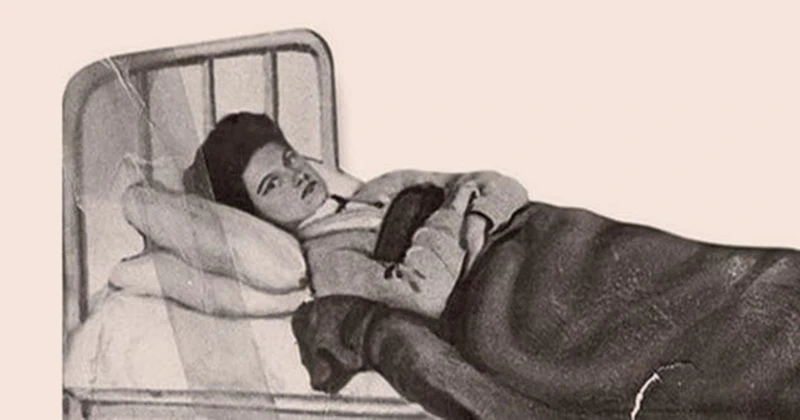
A Miraculous Birth and an Ordinary Life
The story of the most famous typhoid fever carrier began before she was even born and resembled the plot of the film "Blade." It happened in Ireland in 1869, when Mary's mother contracted typhoid fever during pregnancy and not only survived, but also gave birth to a seemingly healthy child. Researchers believe Mary was already infected, but unlike Blade, the little girl did not become a superhero. On the contrary, albeit unwittingly, she caused the deaths of many people.
The girl grew up quite healthy and, at fifteen, emigrated with her family to the United States. There, she settled in quickly and, instead of marrying, as was common at the time, decided to build her own American dream. 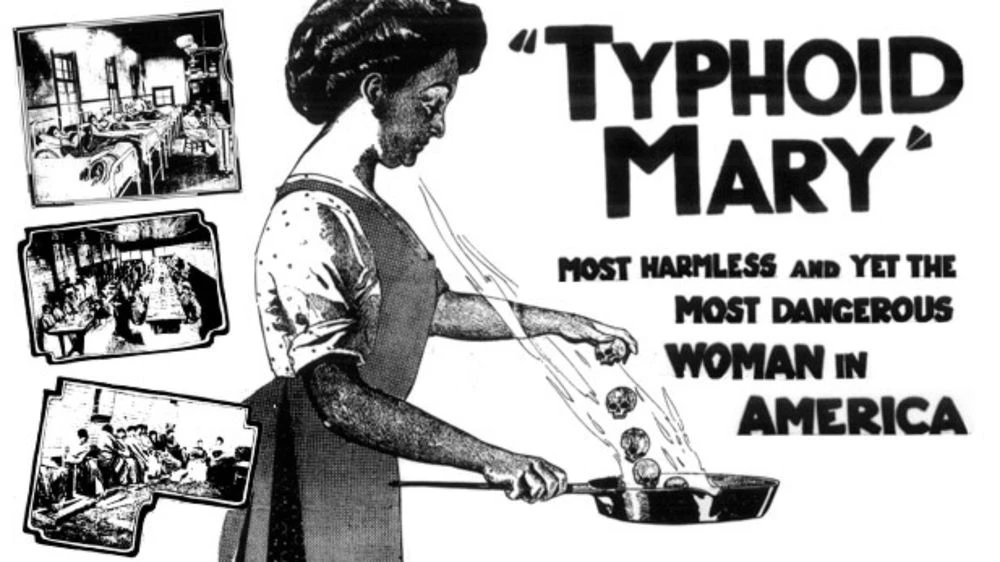
By the age of twenty, she found a job as a cook in the home of a wealthy New York family, but something immediately went wrong—one after another, the family began to fall seriously ill. No one could accuse Mary of anything—she had no motive to harass her employers, and she appeared quite healthy and was unlikely to have accidentally infected anyone. However, the fact was clear: people with typhoid fever began appearing in the city immediately after her arrival. Considering this a bad omen, the locals threw the girl out.
A year later, in 1901, Mary moved to Manhattan. Less than a week later, the family she had just started working for fell ill with fever and diarrhea, and their laundress died. The Irishwoman then went to work for a local lawyer, and again, almost everyone in his household contracted typhoid fever. 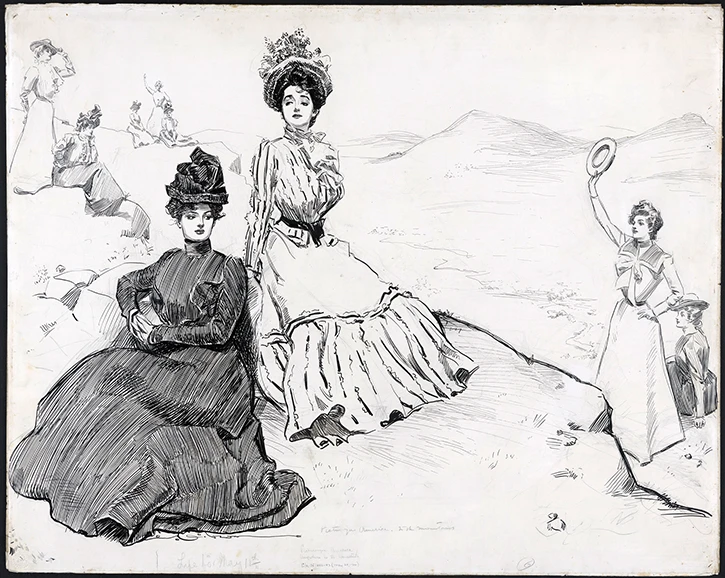
A kind Christian woman, Mary Mallon tried to help the sick. She nursed them, but, naturally, her help only made everyone worse. Ultimately, all her efforts proved futile—between 1900 and 1907, she had to change as many as seven employers.
Dirty Hands and a Greedy Landlord
The year 1906 proved fatal for Typhoid Mary. In early August, Mallon found a job in the kitchen of a wealthy New York banker, Charles Henry Warren. Wanting to enjoy the last days of summer, the Warrens rented a mansion on Long Island and took a bunch of children and relatives with them. The talented cook also went. 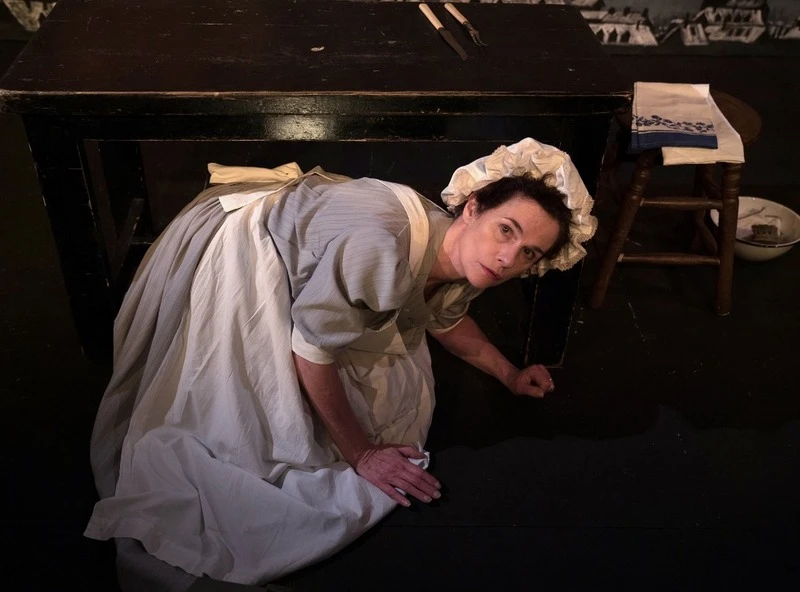
Typhoid Mary in the Broadway production
At the very end of August, the banker's child fell ill, and a week later, more than half the family fell ill. This time, Mary didn't play nurse but immediately went looking for a new job.
Perhaps she would have continued her "typhoid march" if not for the landlord of the summer house, George Thompson, who became quite concerned about the situation. It was obvious that renting out the house, where someone had contracted a dangerous disease, would be very difficult – what if potential tenants feared the infection had come from, say, the drinking water source. 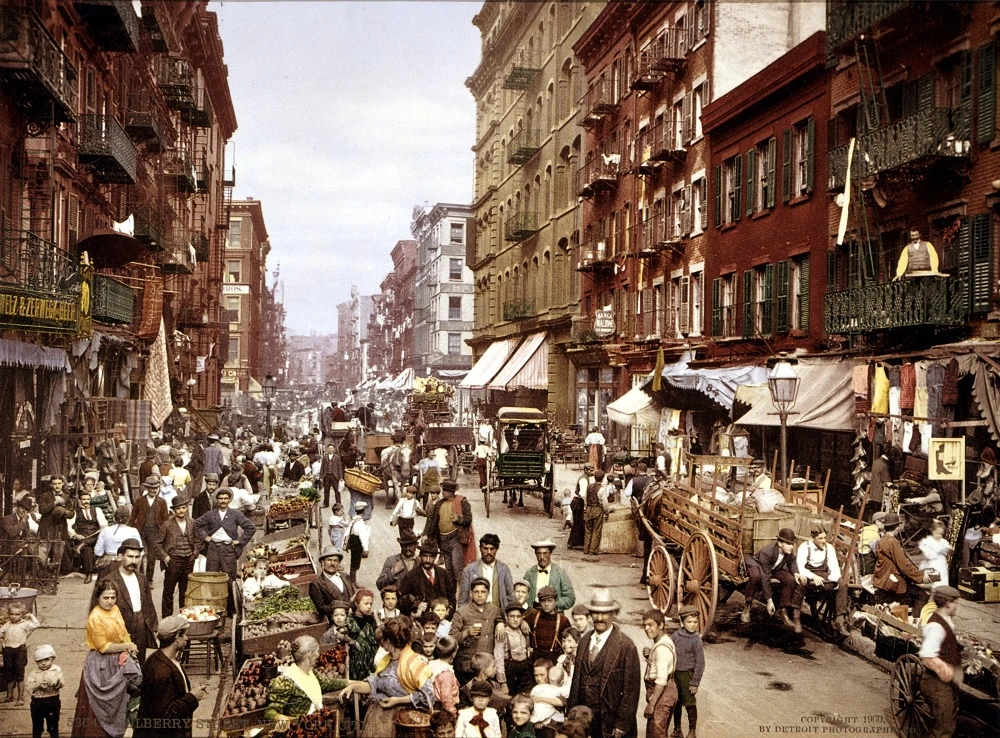
To understand what really happened and reassure future clients of the home's safety, Thompson hired sanitary engineer George Soper. Luckily, he also knew something about typhoid fever—he had already worked on similar cases in his job.
Soper took up the investigation and studied all typhoid outbreaks in the state over several years. He soon determined that all the cases in respectable, well-off families had occurred while Mary Mallon was working as their cook.
Unfortunately, no matter how efficiently the sanitary engineer worked, Mary and her typhoid fever were faster.
When Soper tracked down the infected cook, she had already found a job in a house on Park Avenue. As a result, two servants were hospitalized, and the owner's daughter died. He tried to persuade Mary to get tested, but she clearly didn't take kindly to the request. The hot-blooded Irishwoman didn't mince words and even lunged at him with a fork, forcing Soper to retreat.
The New York State Department of Health then decided to send Dr. Sarah Josephine Baker to negotiate with the feisty woman, but Miss Mallon refused to engage with the doctor. She claimed to have been examined by a pharmacist, who had found her perfectly healthy. Even though no one knew about healthy carriers of disease at the time, the authorities trusted the doctors' arguments more than the words of an Irish cook. As a result, Mary Mallon was arrested and sent to a prison hospital. 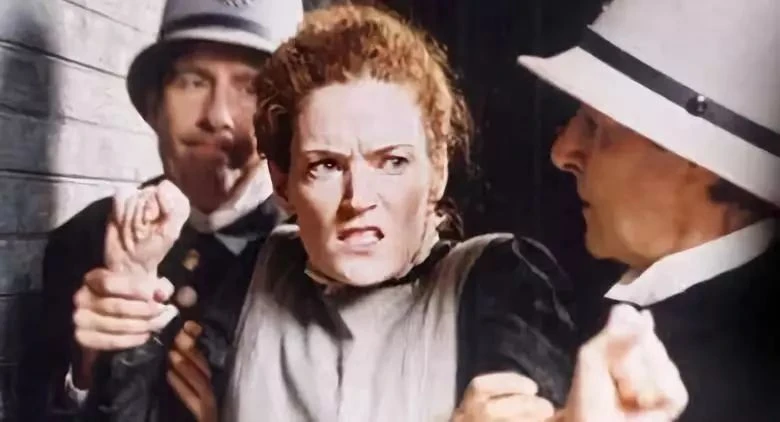
At the hospital, Typhoid Mary was examined and found to have a lesion of typhoid-like bacteria in her gallbladder. The doctors' only option was to suggest a gallbladder operation, but Mary, firmly convinced of her cause, flatly refused the procedure. However, she did admit that she often didn't wash her hands while working, seeing no point in doing so. The court deemed such uncleanliness inexcusable and sentenced Mallon to three years of quarantine on North Brother Island near New York.
Typhoid Island 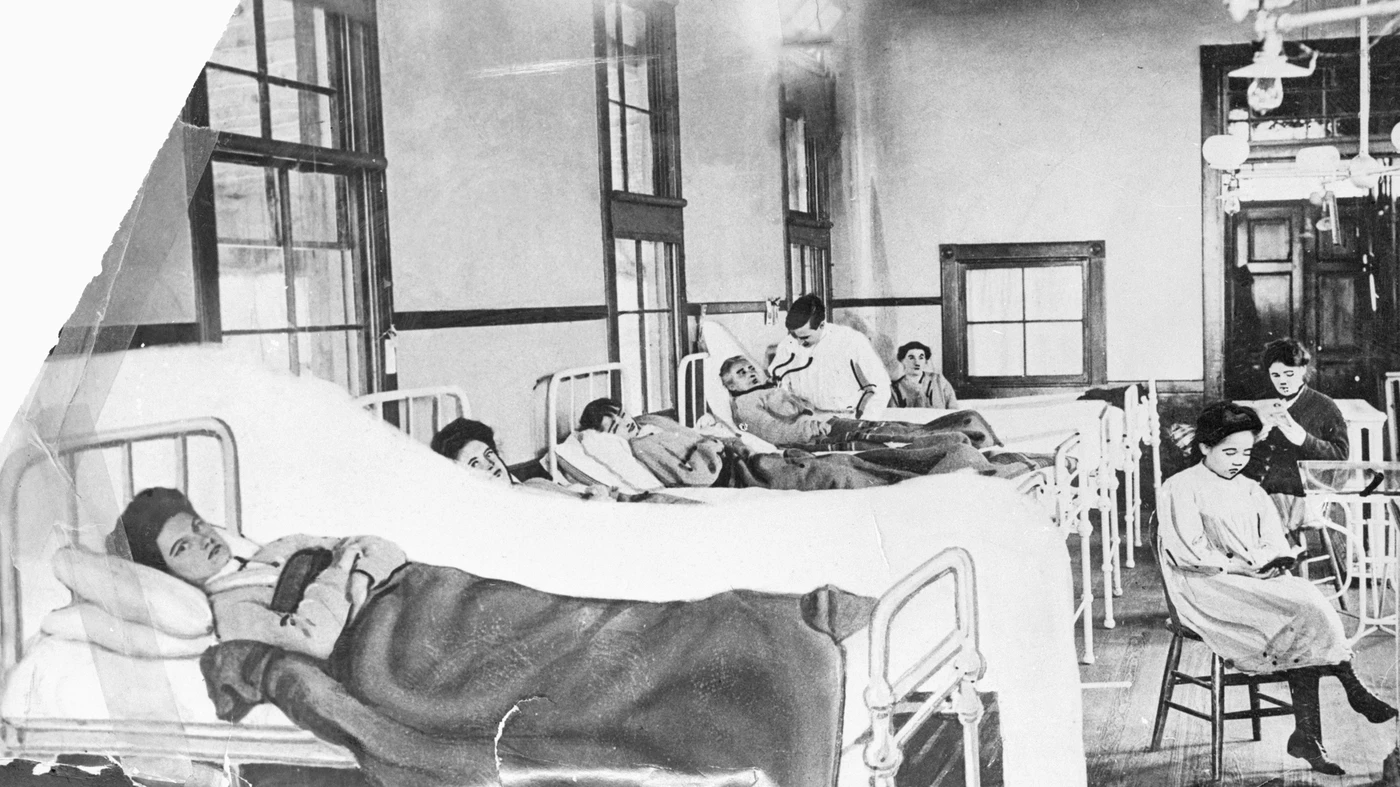
Mary Mallon (left) in a hospital bed at the asylum
The forced isolation irritated Mary. She complained constantly and sincerely couldn't understand how a "healthy" person could be kept in such conditions. And then, in June 1907, that same George Soper published an article in the Journal of the American Medical Association, in which he dubbed Mallon "Typhoid Mary," a nickname that would later stick.
This crude nickname was perfectly in keeping with the prevailing notions of Irish immigrants at the time, who were considered filthy scum and carriers of disease. 
Therefore, Soper's second meeting with Mary ended in failure when he arrived on North Brother Island with the announcement that he wanted to write a book about her. The insulted woman simply refused to listen to any offers of worldwide fame or a royalty on the book's sales. The stubborn Irishwoman spent the entire day in the restroom until the sanitation engineer she hated left.
However, she was more tolerant of the other medical staff. Mary was taken for procedures, after which she was tested—she felt fine. But captivity was wearing her down, so she decided to turn to a private, independent laboratory, where they unexpectedly confirmed her health. The new test results became her main argument in her fight for freedom and a chance to return to a normal life.
Tired of endless disputes with Mallon, the doctors and hospital administrators finally decided to release the girl from the island. But on the condition that she would not approach anyone else's stove, even under threat of death, and would take all possible measures to avoid infecting others. The girl swore under oath that she would comply with sanitary and epidemiological regulations, and on February 19, 1910, Typhoid Mary returned to the mainland.
Only habits remain unchanged 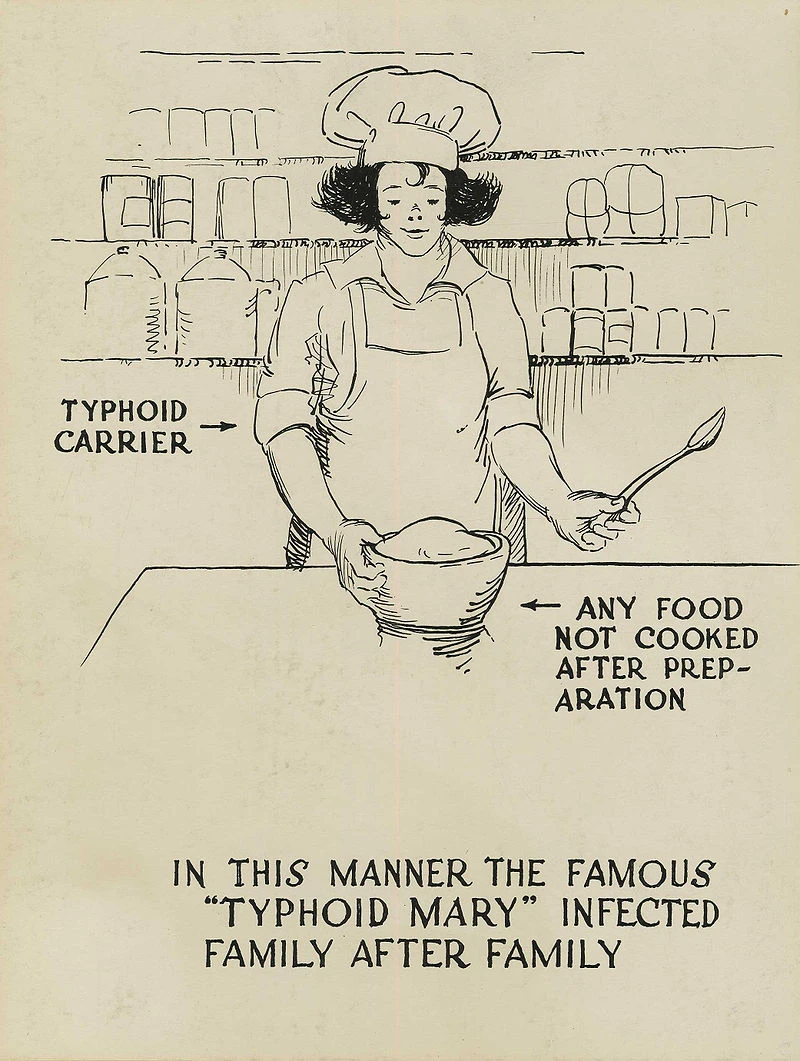
A poster urging people not to act like Typhoid Mary
An uneducated former leper colony prisoner had only one path to follow—laundry work. And at first, Mary did indeed observe all the required rules and didn't even mention public catering. But washing clothes brought in far less money than cooking. Moreover, at the beginning of the 20th century, women in laundries performed the most difficult and dangerous work: fractures, burns, and spinal and joint problems were their constant companions.
Tired of the hardships of her thankless laundry job, the enterprising Irishwoman took a desperate step: she changed her name to Mary Brown and went back to work as a cook. Unfortunately for others, the name change had no effect on Mary's lifestyle. She continued to disregard hygiene (sometimes literally) and frequently moved from job to job, leading to new outbreaks of typhoid fever in the area. This time, the authorities knew who to look for, but the search was complicated by Typhoid Mary's new name. They only found her trail in 1915, when she went to work at Sloane Hospital, where she infected another twenty-five people, one of whom died. 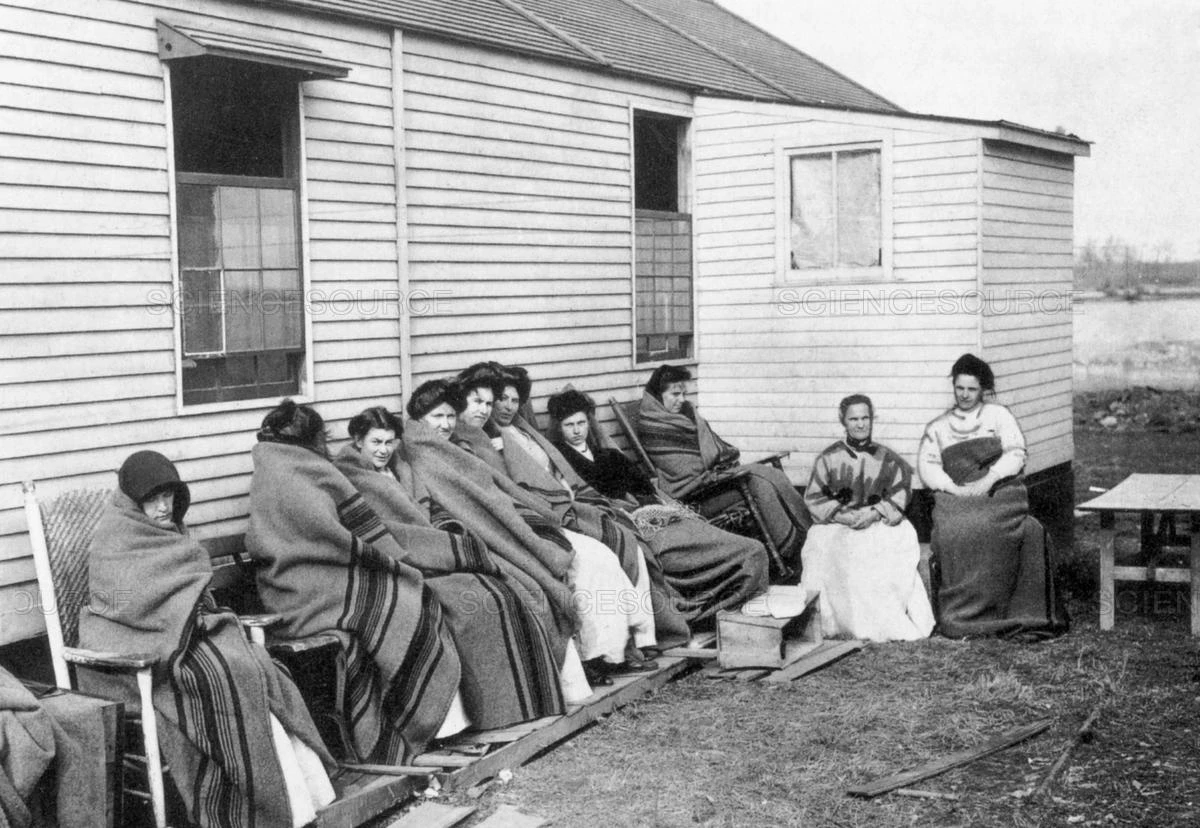
Mary (fourth from the right) after returning to the island
On March 27, 1915, she was sent back to North Brother Island, but this time without the possibility of release.
Over time, she became a local celebrity. Journalists visited her, and in interviews, Mary constantly lamented the people who had condemned her to loneliness. She again refused treatment, protested her innocence, and categorically denied being ill. Despite this, her numerous visitors were forbidden to accept anything from Mary's hands.
And yet, every cloud has a silver lining—starting in 1922, she was allowed to work as a nurse's aide in the local laboratory, and three years later, she was promoted to lab assistant.
One Life and Fifty Deaths 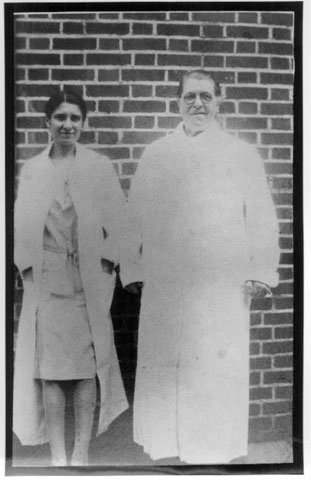
Mary Mallon (right) in 1932
Typhoid-stricken Mary actually felt healthy until she suffered a stroke at age 63, which left her semi-paralyzed. Six years later, she died of pneumonia. An autopsy revealed what she had denied all her life—her gallbladder was occupied by typhoid bacteria, which had left the "sweet hostess" untouched but had nearly caused a full-blown epidemic in New York.
The exact number of people infected by Typhoid Mary remains unknown—only three deaths are known for certain. However, historians believe there may have been around fifty deaths, with most of them contracting the disease after she was released from the island and quit her job as a laundress.
Considering the poor record-keeping practices in American departments at the beginning of the last century, establishing the truth is no longer possible.
Typhoid Mary's life became a shining example of how neglecting one's health can have dire consequences, and also an important reminder—always wash your hands!