What Religion Do Roma People Belong to, and What's So Unusual About Their Faith (5 photos)
The Roma have lived alongside us for centuries, yet we know less about them than we do about the Amazon Indians. For example, if you ask passersby about the religion of this people, most will confidently say that they are pagans, while some will even specify that they are fire worshipers. This may have been true centuries ago, but today everything has changed. So what gods do modern Roma believe in? 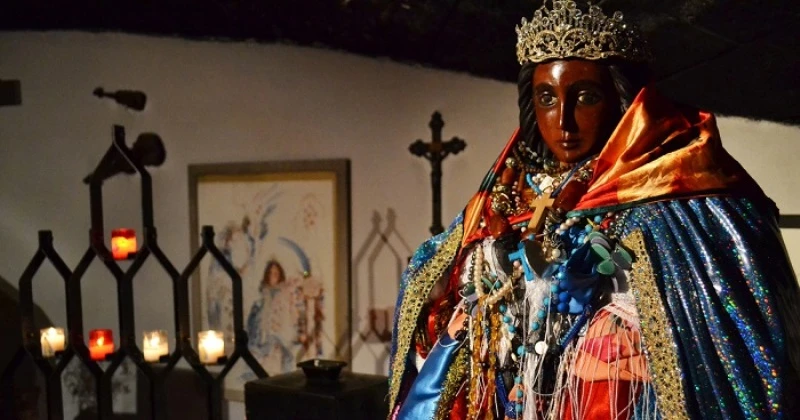
In the modern world, Roma practice the religion of the people they live near. This could be Christianity of various sects, Islam, or Buddhism. There are even Jewish Roma in Israel, though they are very few in number. But despite belonging to quite traditional faiths, the Roma always add something of their own. 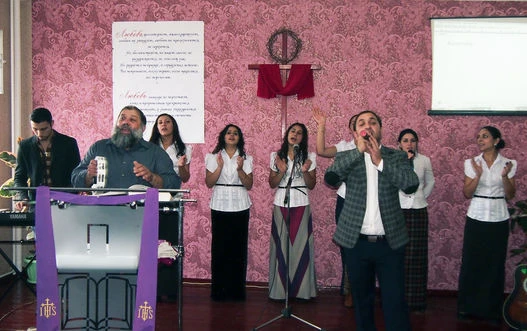
Service at the Evangelical Roma Church
Orthodox Roma venerate St. Nicholas and St. George as their patrons, and they're not particularly original in this. However, some of these people, who have converted to Catholicism, have chosen Blessed Seferino and... a certain Sara Kali as their patrons.
The Roma saint was of Egyptian descent, as many Roma still believe they are descendants of the pharaohs. She served as a servant to Mary Magdalene and the Virgin Mary and once saved the women during a storm on the high seas, where they were traveling by boat.
What the two Marys and Sarah were doing at sea and where they were sailing is unknown, but Sarah Kali helped them find their way to shore using the stars. Another version holds that Sarah was the first Roma Christian, baptized by the righteous—followers of Christ and witnesses to his martyrdom. 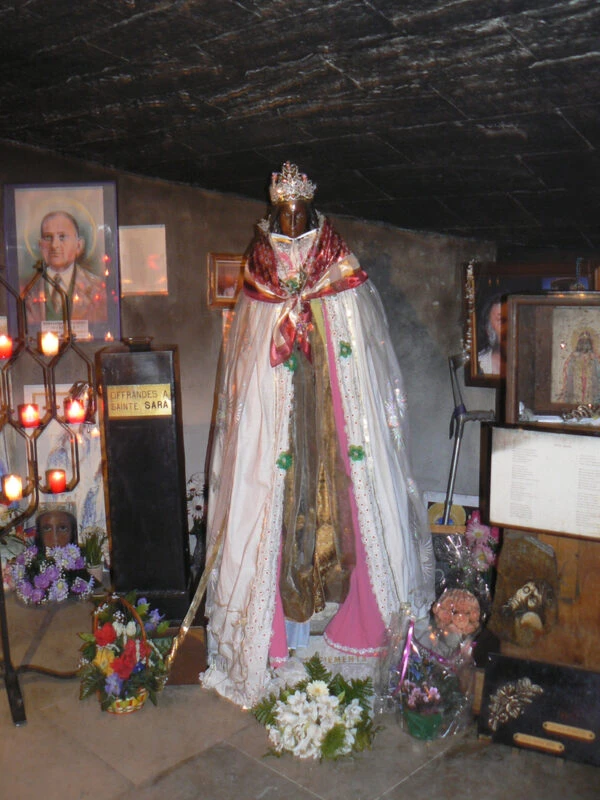
Statue of Saint Sarah Kali of Saintes-Maries-de-la-Mer
In France, in the seaside town of Saintes-Maries-de-la-Mer, there is a cave temple to Sarah Kali, containing a statue of her. Every year on May 25th, the saint's feast day, the statue is taken out and immersed in the sea several times, symbolizing the rite of Epiphany. Non-Roma were once forbidden from entering the Sara Kali sanctuary, but since 1912, anyone can venerate this unusual saint. Her "bath" in the sea every spring attracts hundreds of tourists from around the world.
Roma living in Eastern European countries are primarily Orthodox Christians. This may seem strange, but most of these people are very devout. In the homes of settled Roma, you will almost always see a "red corner," similar to the peasant huts of pre-revolutionary times. It houses an iconostasis with icons, candles, and oil lamps, before which the whole family prays.
Roma couples may not register their relationship at a civil registry office, but a wedding ceremony is mandatory for newlyweds. The only significant event is the "Roma wedding," which precedes the church ceremony—without it, the marriage will not be recognized by Roma society. The main holidays of Orthodox Roma are Christmas and Easter. 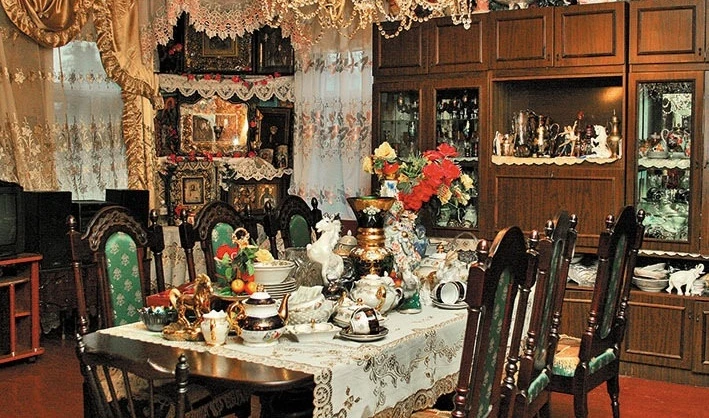
A Roma apartment with a "red corner"
The few Christian Roma in Turkey consider the main holiday to be Hidrilez, which they celebrate on the night of May 5th-6th. The Balkan representatives of this people have a similar holiday, Ederlezi. Both are dedicated to St. George the Victorious.
Vlach Roma never miss Radonitsa, the day of remembrance for the dead. On this holiday, women and children go to cemeteries to beg for alms. This practice is practiced not only by the poor, but also by members of wealthy families. This begging has a cult-like significance—with it, the Roma help others fulfill their Christian duty.
Roma who practice Islam differ somewhat from ordinary Muslims. Their women almost never cover their faces, and their men go uncircumcised. 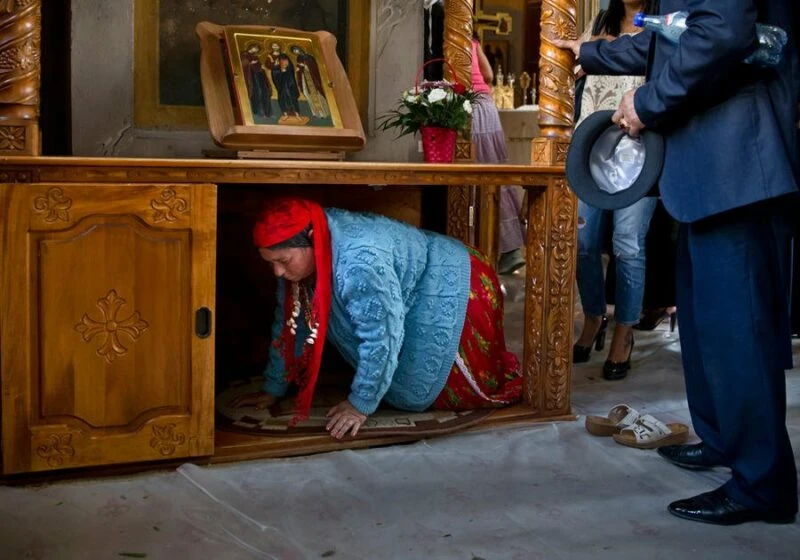
A strange Roma ritual for the Nativity of the Virgin Mary in a Romanian church
Roma Christians have many religious legends and parables. One of them tells how God permitted the Roma to steal because they once did a favor to Christ. As Jesus was being prepared for crucifixion, passing Roma stole one of the nails, thus delaying his death somewhat. This myth, which likely originated in the Balkans, is often cited by Roma as evidence against accusations of theft and fraud.