Ada Blackjack and her amazing story of solo survival in the Arctic (10 photos)
In 1923, American society was shaken by the story of 23-year-old Eskimo girl Ada Blackjack. She was the only woman on a polar expedition and ultimately its only survivor. Ada was driven to undertake this dangerous undertaking by extreme poverty and love for her son. But the courageous polar explorer had no idea what she would endure in the icy wilderness. 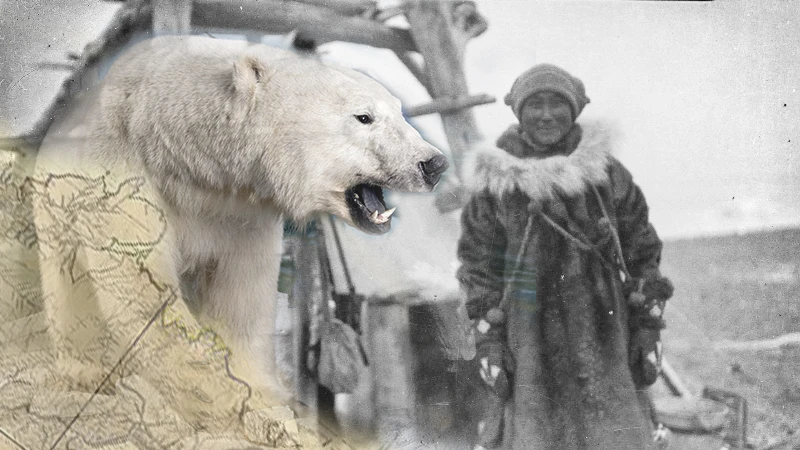
Alaskan Eskimos have been traveling their harsh land since early childhood, smiling at trials that would be fatal for outsiders. Ada Delituk, other than her ancestors, had nothing in common with these people. She was born in 1898 in the small town of Spruce Creek, to Eskimo parents. But she grew up at a Christian mission, where she was taught English and the Bible. Ada didn't know how to build an igloo, hunt, or drive a dog sled. 
Ada Blackjack with her son Bennett
At 16, Ada married a dog driver named Jack Blackjack. They left the north and settled in Pennsylvania, where they lived for seven years. Ada gave birth to three children, but only one survived—her son Bennett. Ada's husband drank and beat her, and in 1921, he abandoned the family. Due to extreme poverty, the single mother and child were forced to return to Nome, Alaska.
At age four, Bennett contracted tuberculosis, but Ada couldn't afford his treatment. She placed her son in an orphanage, where he received the necessary care. His mother promised her son that she would earn money and take him back. Ada was able to secure a job on an expedition to Wrangel Island to establish a colony there.
Lucky Job
The expedition was led by Canadian explorer, ethnographer, and writer Vilhjalmur Stefansson. Four young and inexperienced polar explorers—Allan Crawford, Milton Galle, Fred Maurer, and Lorne Knight—set out on the dangerous journey. Ada Blackjack, an Inuit woman just 150 cm tall, was the only woman in the group. 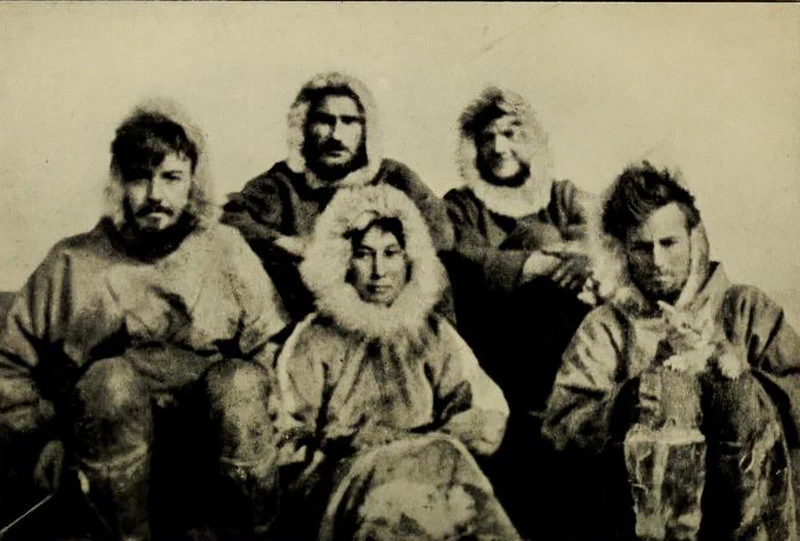
Members of the Wrangel Island Expedition
The explorers deceived Ada, telling her that other Inuit would also be going to the island. Only at the last minute was she informed that they had supposedly refused. Vilhjalmur Stefansson promised that along the way they would visit several villages and recruit a team of local residents, among whom Blackjack would be one of them.
But the little Eskimo woman was determined, because she so wanted to live near her son. The trip would solve her financial problems. Stefansson promised to pay Ada a huge sum at the time – $50 a month. On September 9, 1921, Ada, along with a group of four men and a cat (the expedition leader chose to remain on the mainland), set out to sea on the ship "Silver Wave." 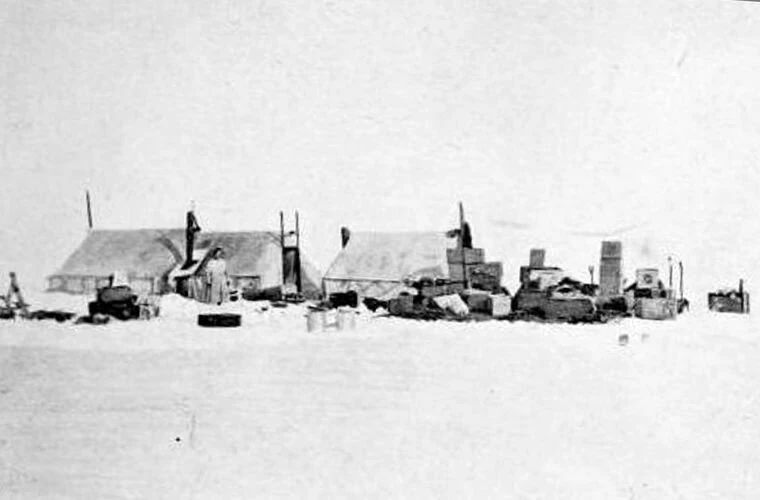
Expedition Camp
On September 16, the group landed on Wrangel Island. Stefansson was confident the expedition members would survive. The island was teeming with game, and the colonists had brought a whole arsenal of firearms. The expedition was scheduled to return to Alaska in two years, having completed a series of surveys and set up camp for the next group of colonists.
Failure after failure
The first year passed peacefully. The men mapped, studied the climate, and hunted. Ada remained in the tent city, cooking and sewing. All was well until the short polar summer ended. Hunters returned with fewer and fewer catches, and food became scarce. The islanders waited for a ship from the mainland to deliver supplies for the winter. But due to thick ice, it was unable to reach Wrangel Island. 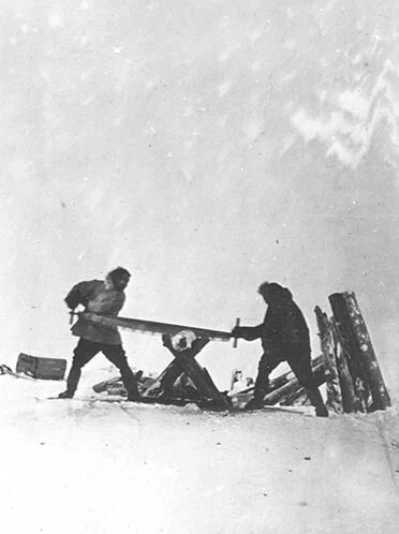
Maurer and Knight gather firewood
In late autumn, Knight and Crawford set out across the ice to the shores of Siberia. They planned to bring help or at least procure provisions. But they were soon forced to turn back, as Knight fell seriously ill. They left him at camp, and decided to make a second attempt as a trio—Crawford was joined by Maurer and Galle.
On February 28, the three-man detachment left the island and headed for the mainland. Ada remained to care for Knight, who was growing increasingly ill. She never saw any of the men who had set out for help again. They vanished without a trace among the ice.
Knight, who suffered from either scurvy or kidney disease, was unable to get up again. All the cares fell on the frail shoulders of the Eskimo woman. She became the patient's nurse, caregiver, cook, and servant. She chopped wood herself, and when the last of the food supplies ran out, she also became a hunter. Ada cared for Knight for six months, but he was an extremely ungrateful patient. 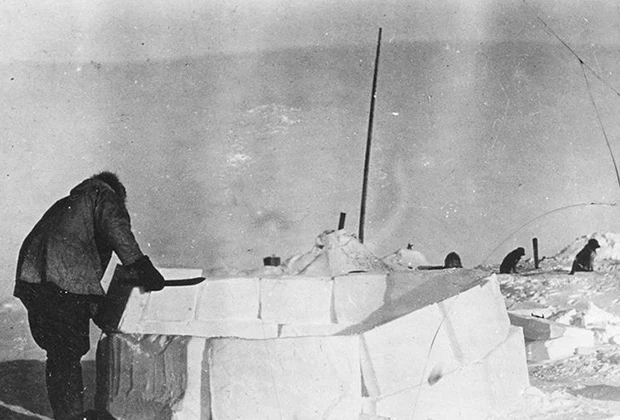
Building an Igloo
From morning until night, the patient did nothing but criticize and insult the woman. Ada endured without complaint, writing only of her misfortune in her diary:
"He doesn't think how hard it is for a woman to replace four men, gather firewood, hunt, sit with him, and clean up his mess."
Alone on an Island with Bears
By the beginning of the summer of 1923, Knight had become so ill that he could no longer speak. On June 23, he died, and Ada Blackjack was left alone on the island. She didn't have the strength to bury the dead man. She placed the body in a sleeping bag, dragged it out of the tent, and covered it with rocks to keep animals and birds out. 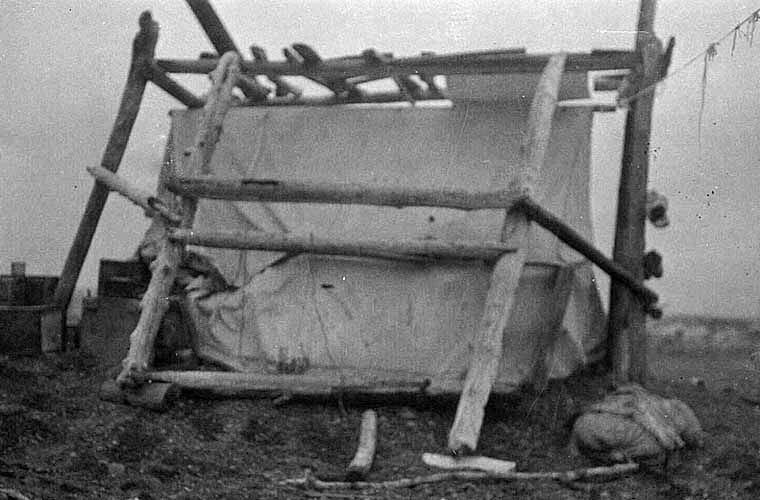
A tent reinforced with logs
The woman reinforced and insulated the tent, which served as a storage area, and moved in. There were many polar bears on the island, so she had to sleep with a weapon in her hand. Hunting was especially dangerous for Ada. One day, she decided to hunt a seal, but almost became dinner for a mother bear and her cub.
"I was four hundred yards from my tent. I turned and ran as fast as I could until I reached my tent. I almost fainted at that moment." 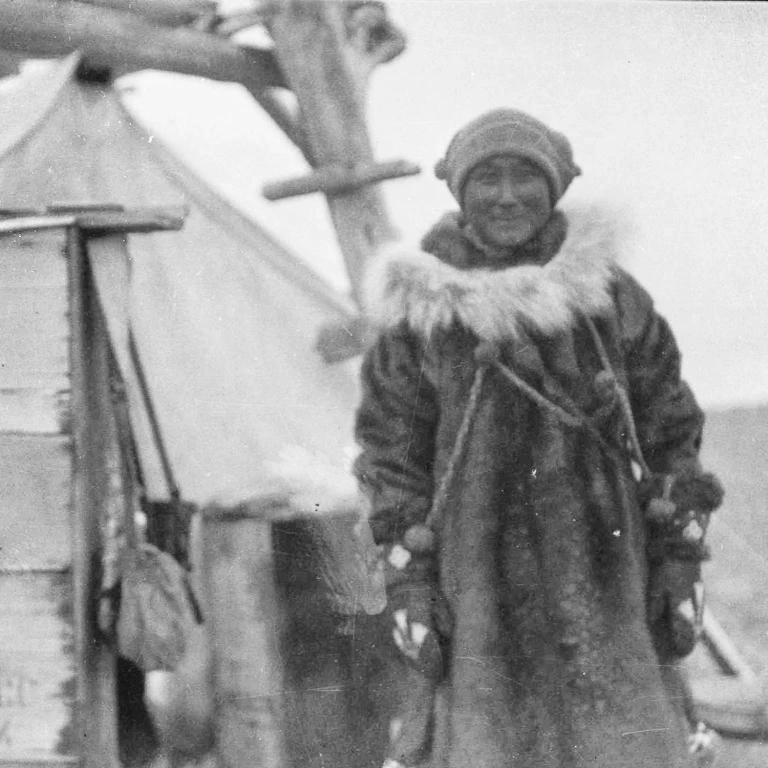
Ada Blackjack near her tent on the island
In just three months, Ada Blackjack learned to shoot, set traps, and even use a camera. On August 20, 1923, the schooner Donaldson docked at Wrangel Island. Its crew was surprised to see a single woman living in the camp. They were equally astonished by how Ada had arranged her life. Many believe that if help hadn't arrived, she could have survived on the island for at least another year.
From Honors to Accusations
Returning to Nome, Ada became a true heroine. Journalists and photographers came to visit her, and the press dubbed her nothing less than "the new Robinson Crusoe." But the heroine wasn't overly ambitious. She simply told everyone that she simply wanted to earn money to be near her son. 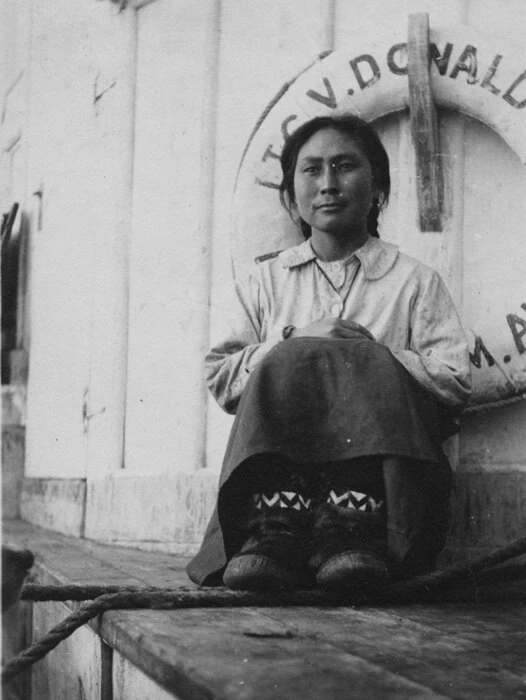
On board the schooner "Donaldson"
For her adventures on Ada Island, she received significantly less money than she had been promised. But it was still enough to take her son from the orphanage. She soon remarried and gave birth to a second son, Billy Johnson. But the second marriage also quickly fell apart. The brave Eskimo woman's subsequent life was spent in poverty and despair.
The only person to benefit from the failed expedition was Vilhjalmur Stefansson. He capitalized on the tragedy and became famous. Some time passed, and Ada Blackjack's admiration faded. Some even blamed her for Knight's death.
Rescuer Harold Noyce claimed that the woman had been negligent in her duties and that Knight had died due to inadequate care. Journalists, who had recently praised Ada's courage, launched into accusatory articles against her. Interestingly, Knight's relatives did not participate in this persecution—they always considered Blackjack a true heroine. 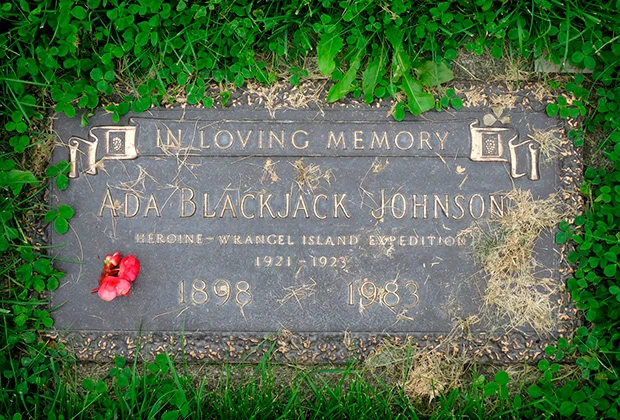
Ada lived to be 85 and died in Palmer, Alaska. Her son from her second marriage, who always admired his mother's heroism, erected a bronze plaque on her grave with the inscription: "Heroine of the Wrangel Island Expedition."