Traces of Unknown People Found in Our DNA: Why Homo Sapiens Turns Out to Be an Ancient "Assemblage" of Genes (11 photos)
In the popular imagination, evolution has always been depicted as a ladder: apes, early humans, near-modern humans—and finally, we're at the very top. 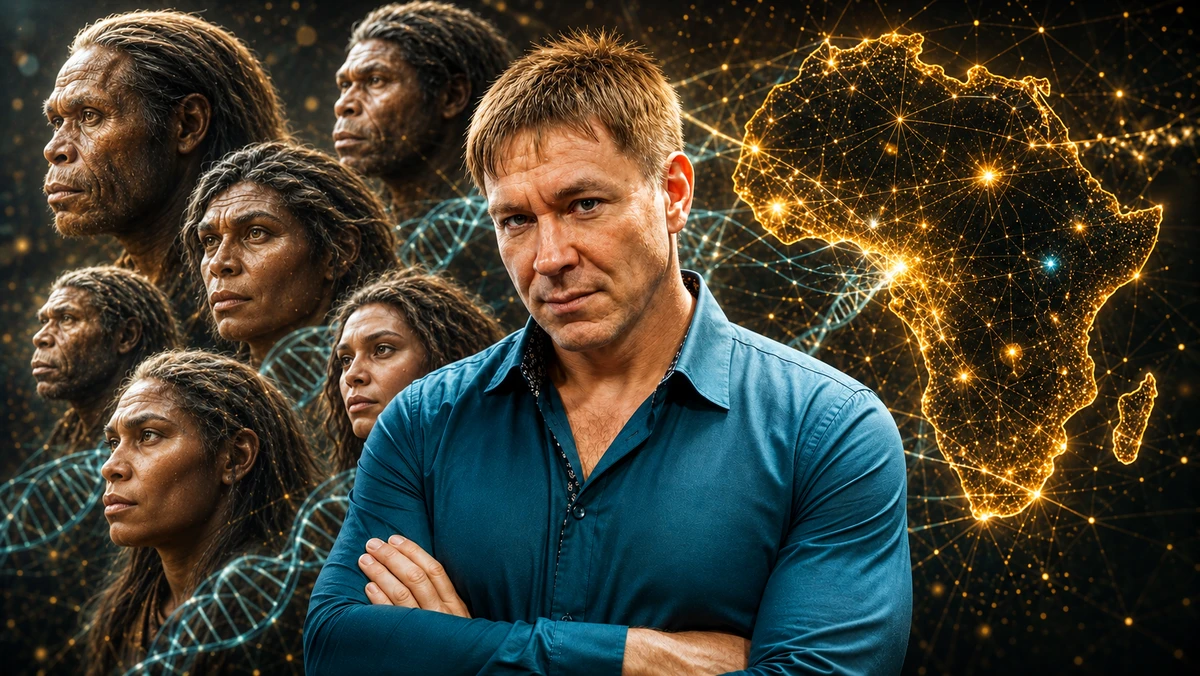
Convenient. And apparently untrue. New genetics reveal a more interesting picture: the origins of Homo sapiens resemble not a ladder, but a network of rivers where channels diverge, merge again, and carry the now-mixed waters away. Our DNA contains not only traces of Neanderthals and Denisovans, but also the shadows of populations we don't recognize from their bones or faces.
Anthropology is currently on the brink of a revolution, and the main theory of human origins on Earth will be significantly revised. Over the past 10 years, many discoveries have been made that change our understanding of the human past.
The so-called "hybrid hypothesis of human origins" has emerged. Or, as scientists themselves call it, the pan-African model of Homo sapiens' origins. Instead of a neat evolutionary "tree" with a single leading branch, a complex network emerges.
There was no ladder
The school picture was deceptively neat. It was as if one species had gracefully replaced another, passed the baton, and Homo sapiens had finished—in its modern form, with a diploma and poor posture. 
Today, geneticists are increasingly cautious about speaking not of a single isolated "ancestral homeland," but of a loosely structured network of ancient African populations. They diverged, lived separately, met again, and exchanged genes. And so it went on for hundreds of thousands of years. Human evolution turned out to be not a ladder, but a tangled family history, where everyone is a little related.
The Neanderthals were the first to shake up this beautiful linear picture.
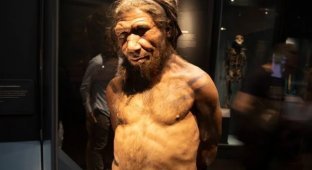
Neanderthals and Denisovans
When ancient DNA was deciphered (by the team of Swedish biologist Svante Pääbo, for whose discovery he was awarded the Nobel Prize in 2022), an unexpected finding emerged. Most people outside of Africa have about one to two percent of their genome that is Neanderthal in origin. Some of these variants are related to immunity, skin, hair, and how ancestors adapted to new lands. 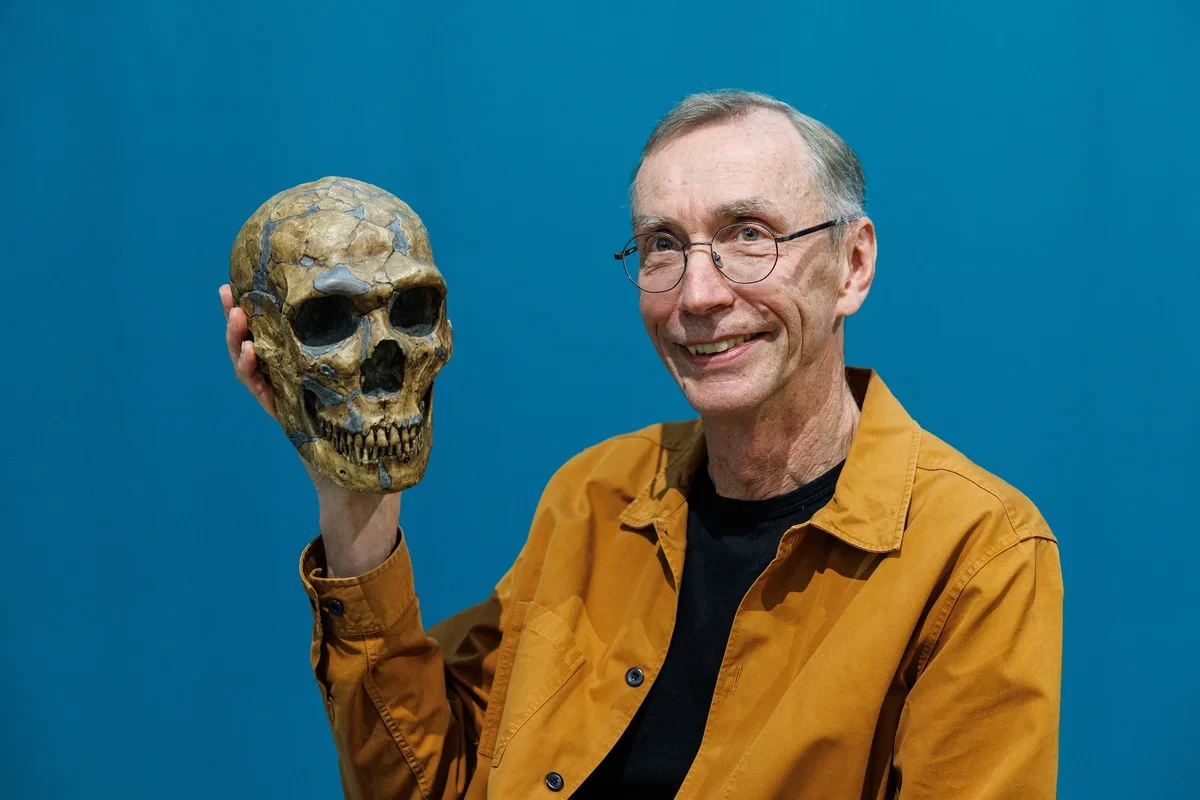
Svante Pääbo
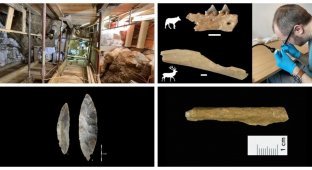
Then, a piece of a finger was recovered from the Denisova Cave in Altai. A single phalanx, and inside it was the genome of an entire archaic lineage, initially identified almost not by the bones, but by DNA.
This human species was named Denisovans (although debate continues – some scientists consider them a subspecies of Neanderthals). 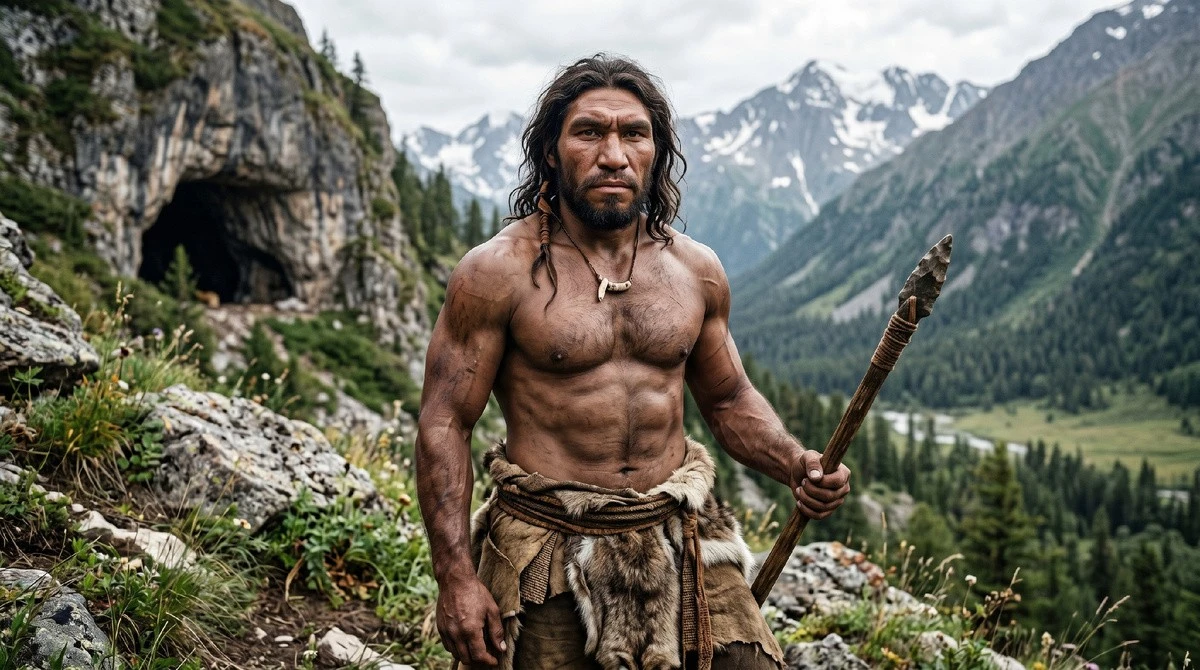
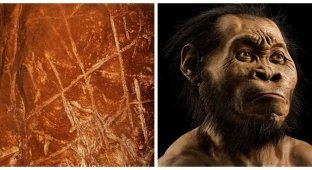
Denisovans. Modern photo reconstruction
Some peoples of Oceania share their heritage far more than others. And the EPAS1 gene variant that helps Tibetans live at dizzying altitudes most likely came from them. 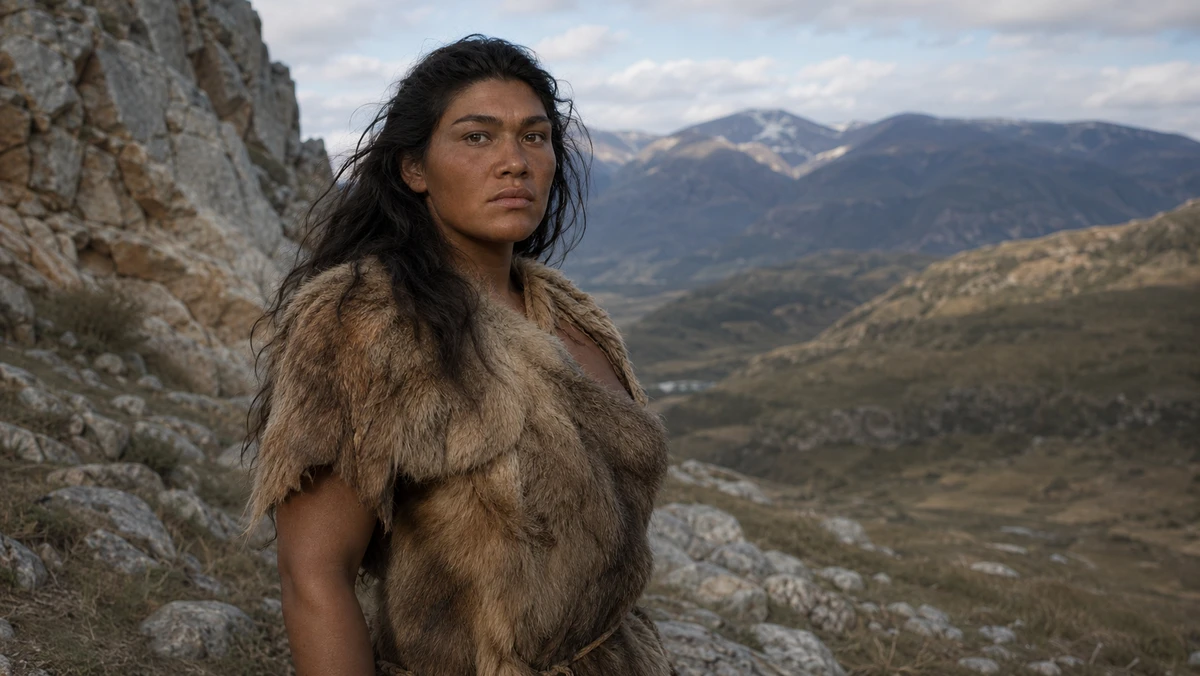
And the Denisovans turned out not to be a single group, but a collection of widely divergent Asian lineages. The further back in the genome, the more strangers there are. And some we know only by their "mug stain."
What is a ghost lineage?
A ghost lineage is an ancient population whose complete genome we don't have, and sometimes even whose bones we don't even have. But its contribution is visible in the DNA of other people.
A ghost lineage is like the mark left by a mug on a table in a cafe: the mug itself is gone, the guest is gone, but the circle remains.
That's why we don't know what type of ancient human this is, although we see traces of its manifestation. And several such types are known. 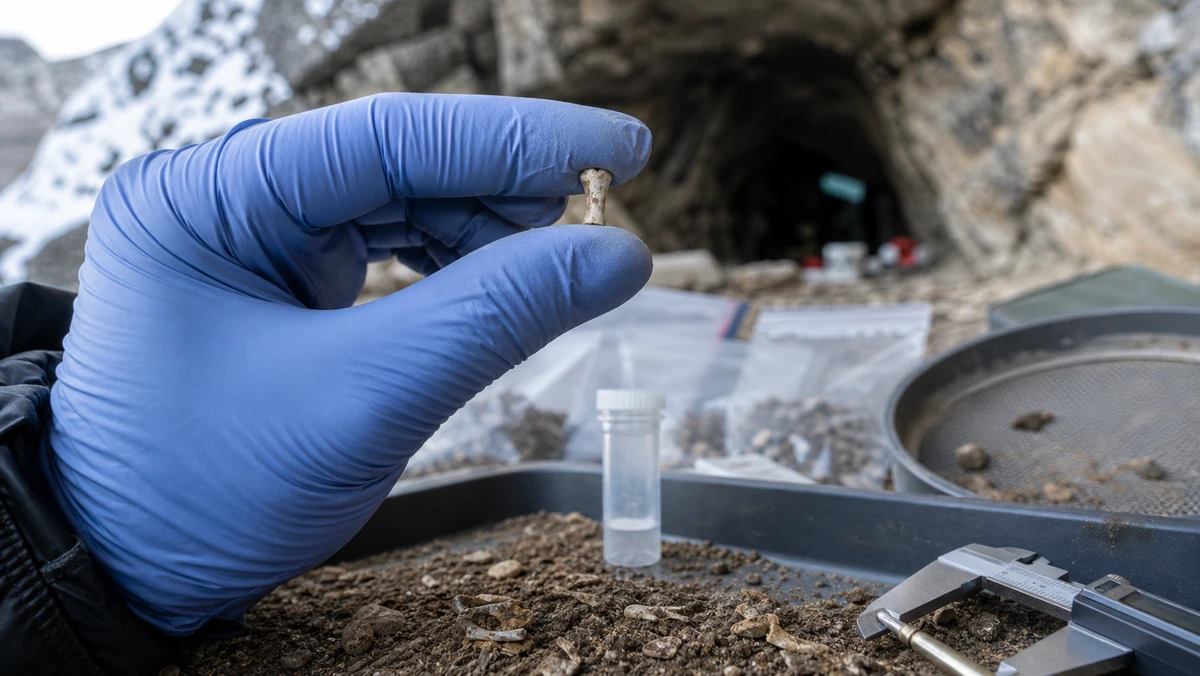
"Ghostly" doesn't mean "alien" or even necessarily "separate species." More often, it's simply an ancient group of Homo that the model can't yet identify based on its findings.
In 2020, a similar signal was found among West African peoples—the Yoruba, Mende, and Gambians. Scientists reported their discovery in the scientific journal Science Advances.
According to the authors' model, the contribution of the unknown lineage was up to 19% (!). This is a huge statistical trace of ancient admixture, the source of which has not yet been identified by a museum plaque.
Where did Homo sapiens originate? 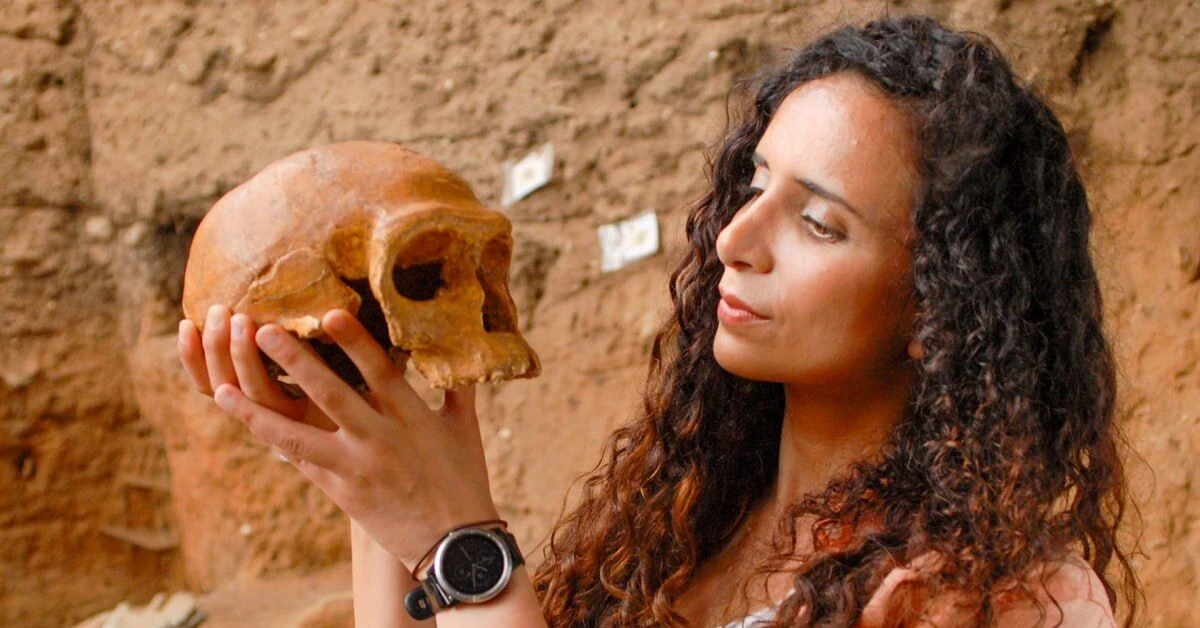
For a long time, it was believed that the first Homo sapiens, as a single species, emerged in eastern and southeastern Africa, in the area roughly stretching from Botswana to Ethiopia. It was there, it was believed, that this new human species formed, which subsequently won the evolutionary race.
But a few years ago, a discovery was made that profoundly challenged this accepted view.
The earliest known Homo sapiens are from Jebel Irhoud in Morocco, dating back approximately three hundred thousand years. A detailed article about this discovery was published in Nature. Yet modern anthropology believes that Homo sapiens originated in East Africa. Morocco, however, is located in a completely different place—it's a stone's throw from Europe! 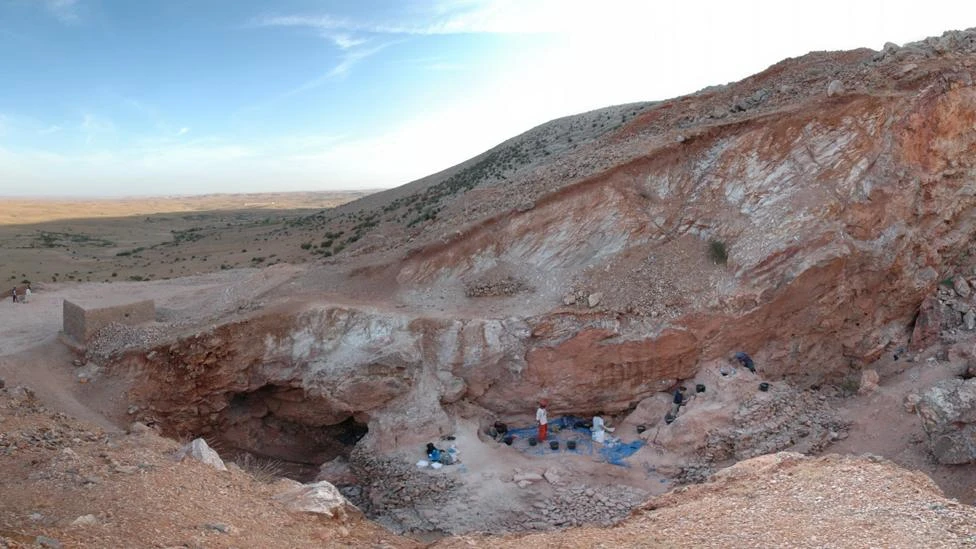
Jebel Irhoud in Morocco, where the remains of the very first Homo sapiens were found
And the bones reveal a mosaic—modern and archaic elements coexisted for a long time in the same skull; there was no single "standard" ancient human.
A legitimate objection arises here: we were taught that humans originated in East Africa. That's true—one doesn't preclude the other. It's just that before Jebel Irhoud, the oldest "modern" humans were thought to be from Ethiopia, and from them the idea of a single eastern cradle was derived.
The Moroccan find turned out to be older and, moreover, in the northwest—meaning sapient traits emerged earlier and simultaneously in different parts of the continent.
The East, however, hasn't gone away: the Ethiopian finds are still there, and the oldest roots of our DNA still lead to the east and south of the continent. What's changed isn't the "from," but the "how." Today, scientists talk not about a single cradle, but about a pan-African network: different groups of ancient humans lived in different parts of Africa, diverging and then mixing again for hundreds of thousands of years—and together, they gave rise to our species.
Africa is not a point, but a network
It turns out that we can't identify a single "birthplace" on the map, but an entire continent, where humans formed in several places at once. So Homo sapiens isn't a native of a single point, but an African, assembled from all over Africa at once. 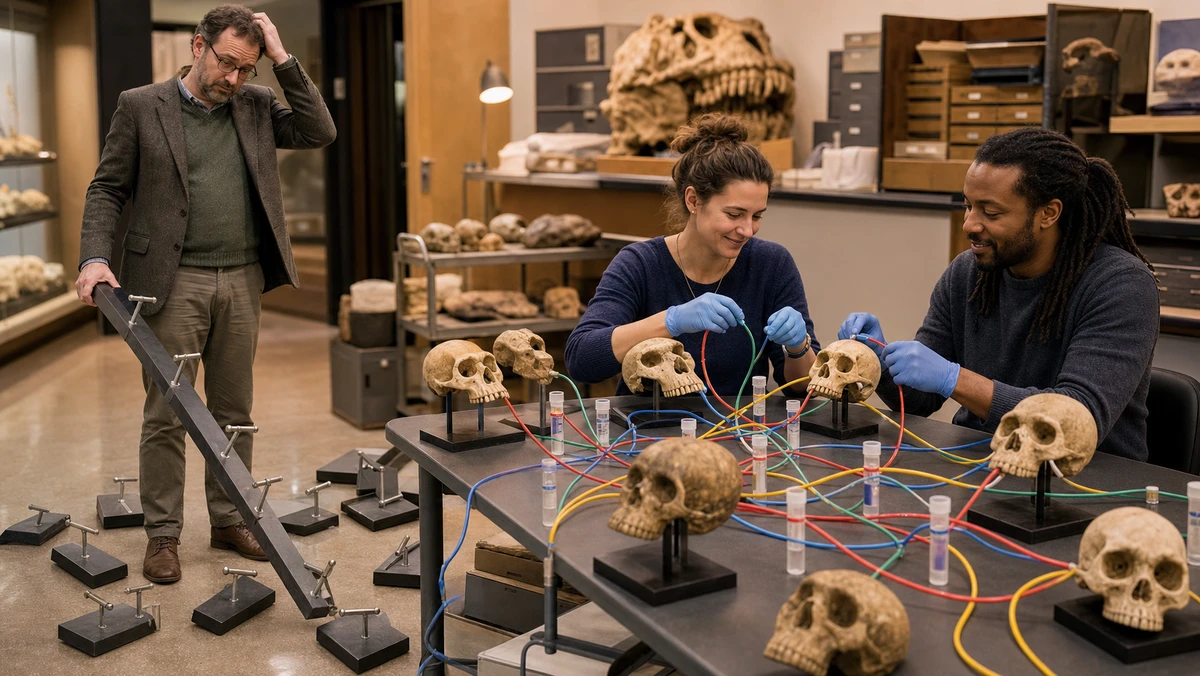
The hot African climate has an unfortunate side effect: ancient DNA degrades quickly—unlike in the cold caves of Eurasia. Therefore, we see much of African human history not directly, but through the "shadows" that ancient populations left in the genomes of living people. And in 2023, these shadows were reinterpreted. Some of the strange DNA sequences, previously explained by the admixture of some mysterious "archaic" relatives, turned out to be much simpler to explain: several related groups of ancient people lived in Africa for a very long time, and they constantly exchanged genes. Not a single spring from which a genetic river flowed, but a network of streams—sometimes merging, sometimes spreading, until they produced the person who now combs his hair in the morning and reads Zen articles.
And in 2025, geneticists from Cambridge went even further. According to their model, the ancestry of all living people shows traces of the merger of two very ancient populations. A paper about this discovery was published in the scientific journal Nature Genetics. 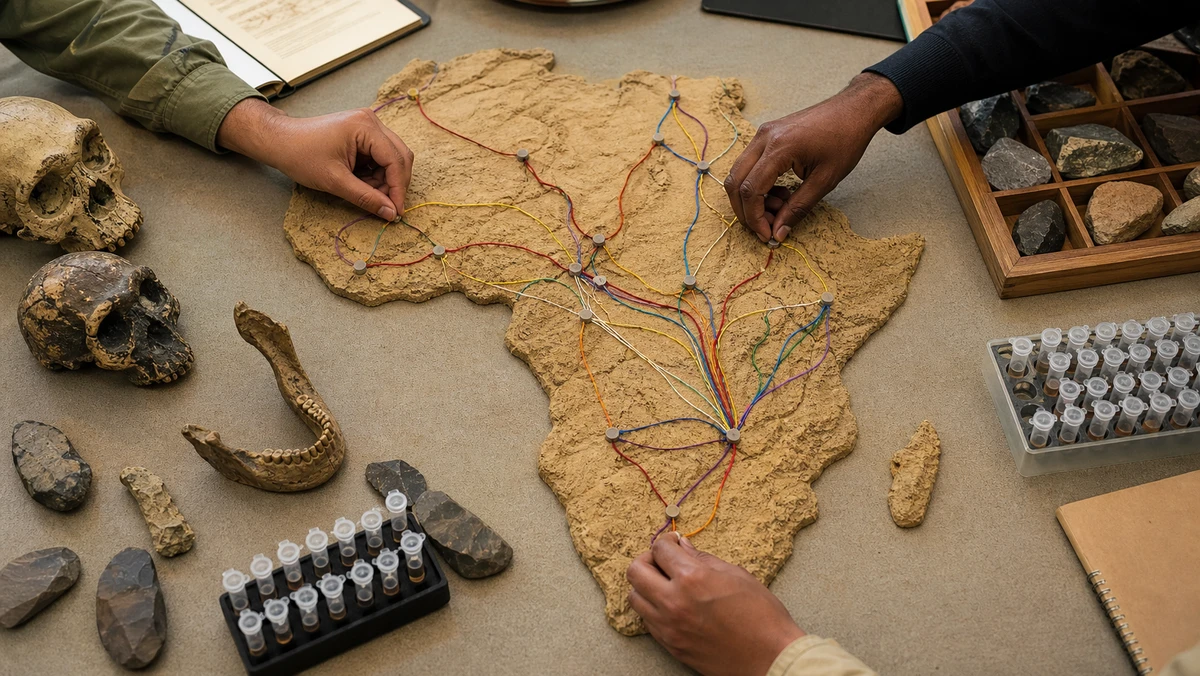
They diverged about one and a half million years ago, and re-mixed about 300,000 years ago—and unevenly, in a roughly 80/20 ratio: one lineage provided the basis, the other contributed its share.
It turns out we're not a neat single branch on a tree, but the result of the ancient confluence of two rivers.
What does this mean for us?
Okay, an ancient setup. But we're not living in the Paleolithic, we're here—with loans, traffic jams, and a sore back. What does all this genetics change for us personally? It changes some things, and quite unexpectedly. 
First, it's inconvenient for lovers of racial genealogies, nationalists, and others who like to seek advantages not in their own culture and intellect, but in national characteristics.
There are no pure bloodlines. No one. No matter how hard you search for the untainted blood of an ancient people, you won't find it: no other person on the planet has such blood. Each of us is a mosaic, a patchwork of fragments from different populations.
Strength lies in diversity. And here's the funny thing: it was precisely this "impurity" that saved us. Mixing is not a curse, but a strength. Those very same foreign genes that our ancestors picked up from Neanderthals and Denisovans still work for us today. An immunity that more quickly recognizes local infections. A variant that allows a Tibetan to live peacefully in places where a lowlander's vision darkens. Cold resistance in northern peoples. All of this is a legacy from our "invading" relatives.
Furthermore, it would have been difficult for Homo sapiens to conquer Europe, and especially the north, without Neanderthal genes. Neanderthals had a good adaptation to local diseases and cold climates, which was passed on to our ancestors.
People don't vanish without a trace. Neanderthals are extinct. Denisovans are extinct. And yet they haven't disappeared—you carry pieces of their genome within you right now, reading this line. It's a strange thing: you can vanish from the face of the earth as a people and still look out from someone else's mirror every morning.
Therefore, every person is a walking museum. Within you are fragments of worlds long gone, and gene variants older than all borders, flags, and empires combined. Only this archive isn't kept under glass; it's working: it breathes, fights off disease, and provides warmth in winter.
And that means we, too, are no longer living simply, passing on these fragments and adding something of our own.