History is not just a science of dry dates and famous names. It is a living fabric, woven from the destinies, passions, hopes, and fears of people who lived long before us. This collection includes 18 artifacts that literally breathe the past. Here is the voice of a mother begging her husband to return to her sick son (2nd-3rd century). And the dedication of a father who gave his daughter a precious pendant. And the traces of the most ancient hominids, frozen in stone 3.7 million years ago. Here is the luxury of imperial gifts—a Fabergé egg and the Gatchina Palace. And everyday objects—a bronze buckle in the shape of a tiger, a terracotta rattle in the shape of a pig. And testaments to greatness—the head of the goddess Hathor made of lapis lazuli and calcite. Let's explore these treasures!
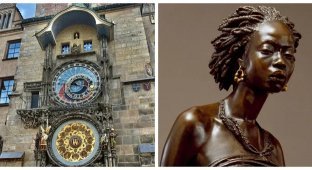
1. Charles Cordier — "African Venus" (1851) 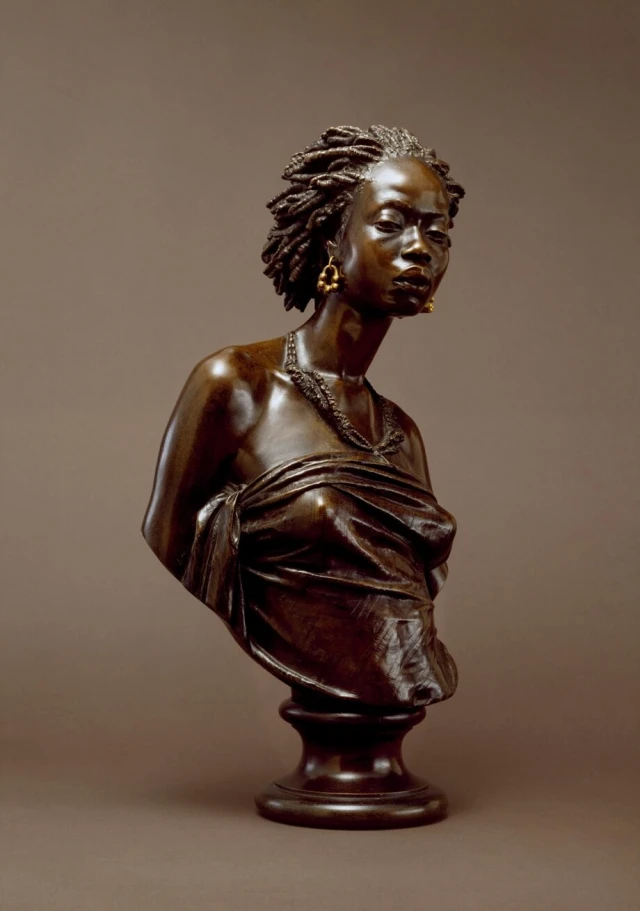
Charles Henri Joseph Cordier (1827–1905) was a French sculptor known for his ethnographic and orientalist works. He was one of the first European sculptors to use polychrome (a combination of different colored materials) and create realistic portraits of representatives of different races, striving to show the beauty and dignity of all peoples.
The sculpture "African Venus" (also known as "Black Venus" or "African Venus") depicts a woman of African descent. Cordier created works on the theme of racial diversity and challenged colonial stereotypes by depicting the aristocratic beauty and nobility of his models. It is one of his most famous works, reflecting ideas of equality and human dignity through art.
2. Letter from a woman pleading with her husband to return home as soon as possible because of her son's serious illness. 2nd-3rd century CE. 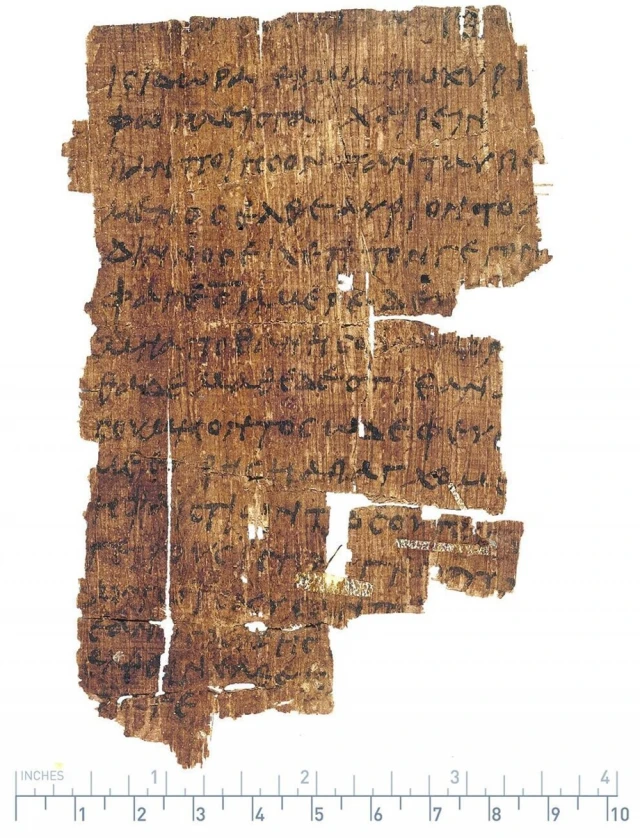
3. Head of a statue of the goddess Hathor in the form of a cow. Egypt, New Kingdom, 18th Dynasty, c. 1450 BC. 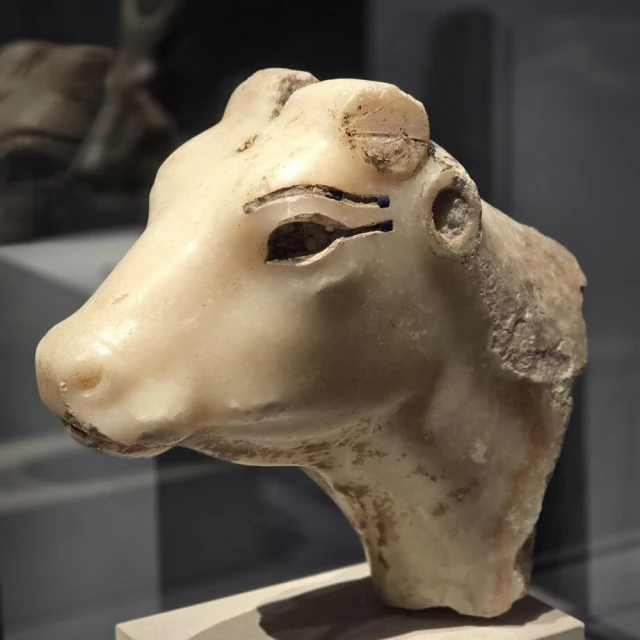
Calcite with lapis lazuli and rock crystal. On loan to the Metropolitan Museum of Art from the British Museum.
4. Clay rattle in the shape of a pig (300–50 BC). British Museum 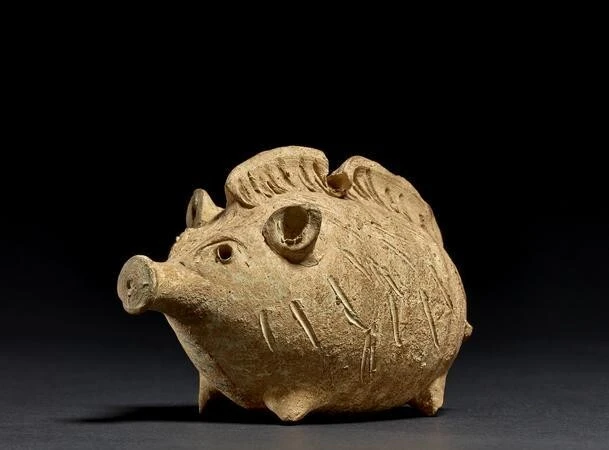
5. Baboon sarcophagus – an offering to the god Thoth. Egypt, 4th–1st century BC. 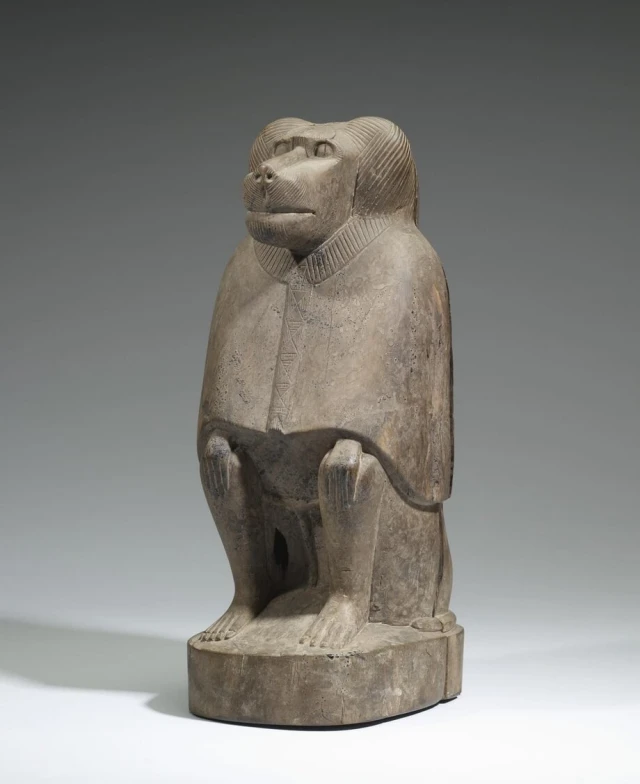
6. Trackway likely left by Australopithecus afarensis (Australopithecine afarensis) approximately 3.7 million years ago, in Laetoli, Tanzania. 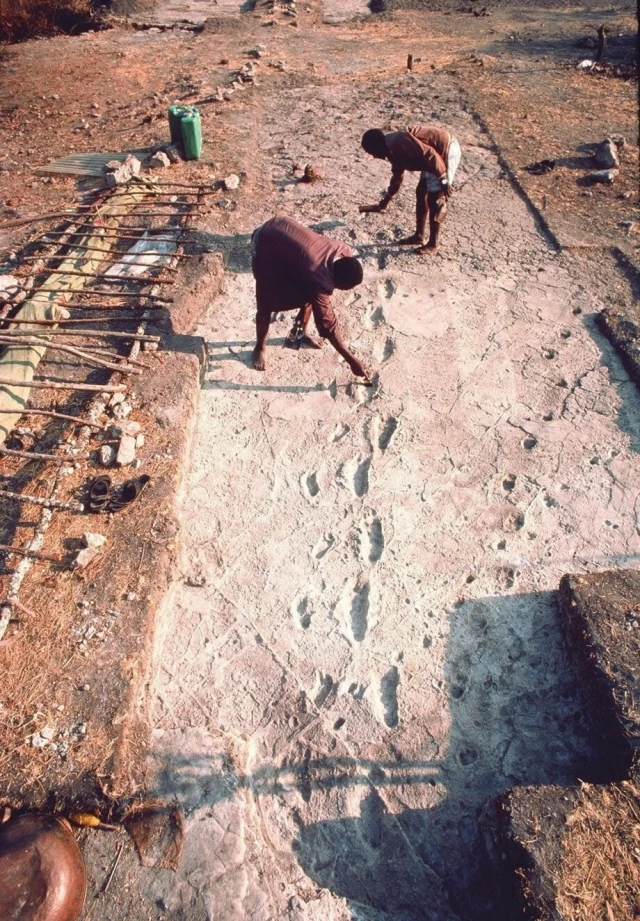
It represents a crucial link in human evolution, as it combines features characteristic of both apes and humans.
7. 6. Elamite blue chalcedony pendant, Iran, 12th century BC. 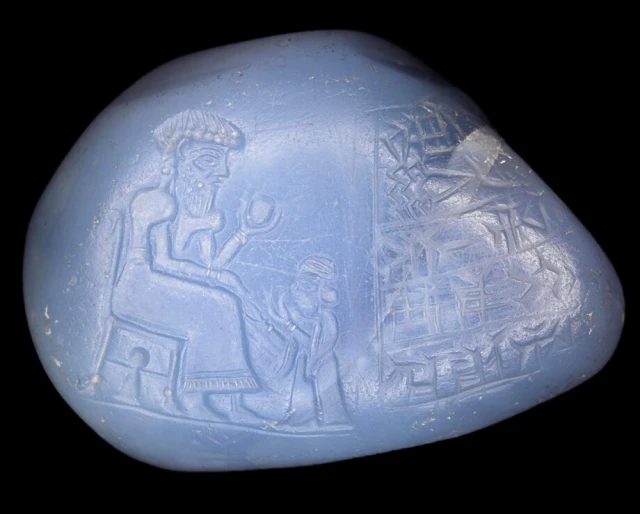
It bears a cuneiform inscription: "I, Shilhak-Inshushinak, expander of the kingdom, have taken this jasper from the land of Puralish; what I have painstakingly crafted, I have placed here and given to Baruli, my beloved daughter."
8. Polygraph patented by Hawkins, owned by Thomas Jefferson. The patent was granted in 1803. 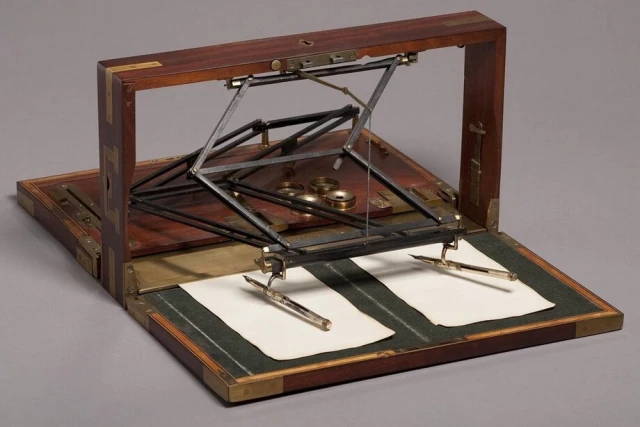
Jefferson called it "the greatest invention of the present age." This was not a lie detector, but a mechanical copier—a writing instrument that allowed two copies of a document to be made simultaneously using two pens connected by a lever system. Jefferson used it extensively for correspondence and considered it a remarkable invention.
9. Bronze belt hook in the shape of a tiger. Gyeongsang, South Korea, 1st century CE. 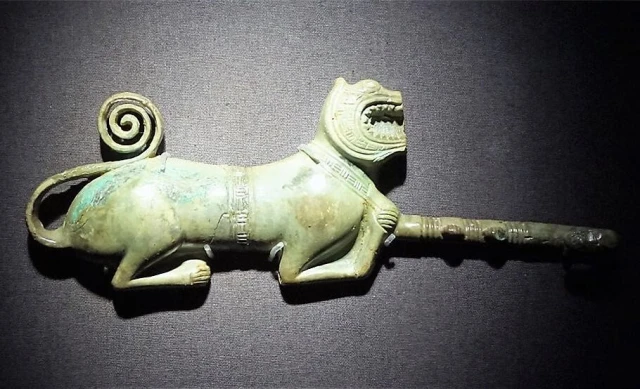
Belt hooks (or buckles) were common items of clothing in ancient Korea. These items served not only a utilitarian purpose—fastening a belt—but also served as a status accessory, indicating the owner's social status. The image of a tiger, revered in Korean mythology as a protector and guardian spirit, gave the hook additional symbolic significance: it protected the owner from evil forces and emphasized their strength and courage.
10. In 1958, during excavations at the Sanctuary of Artemis in Bravron, Greece, archaeologists discovered a marble relief depicting Zeus and Leto with their children, Apollo and Artemis. 420–410 BC. 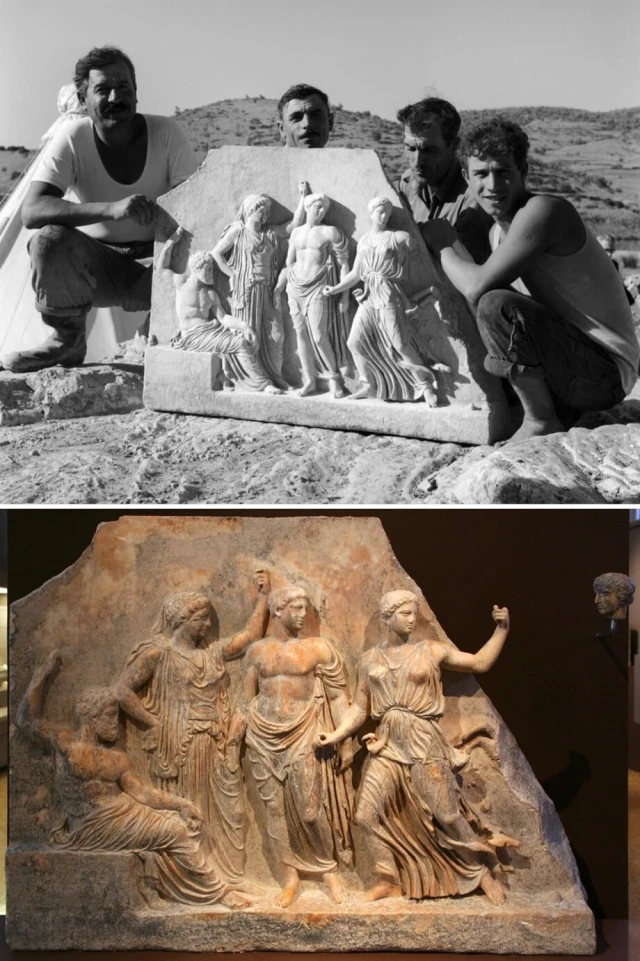
Currently housed in the Bravron Archaeological Museum.
11. "Chrysanthemum" brooch by René Lalique. Circa 1900. 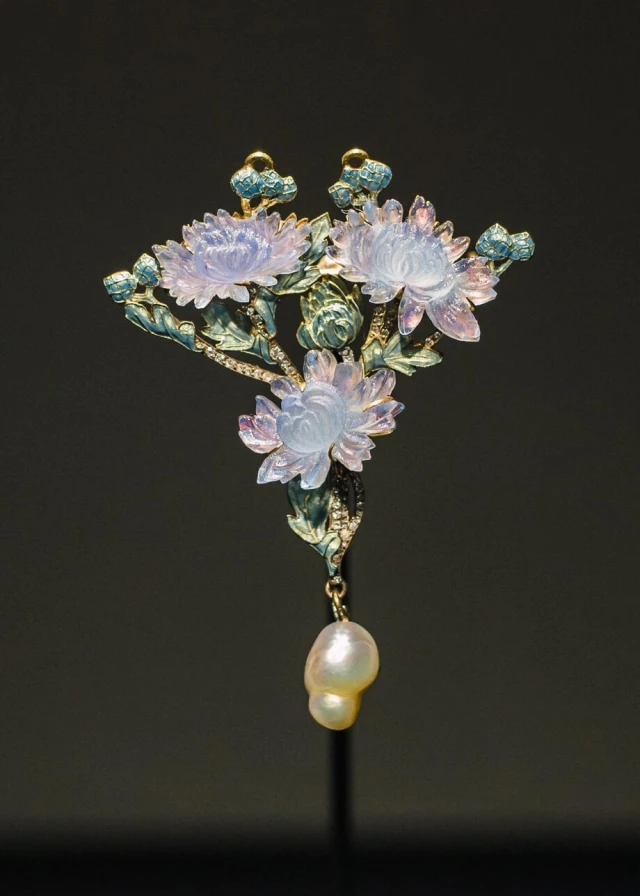
René Lalique (1860–1945) was a prominent French jeweler and glassblower, one of the key exponents of the Art Nouveau style. His works are distinguished by their sophistication, the use of unconventional materials (glass, enamel, semi-precious stones), and inspiration from natural forms—flowers, insects, and female figures.
12. Statue of the god Anubis, or more precisely Hermanubis—a syncretic deity combining the features of the Egyptian god of death, Anubis (the jackal), and the Roman messenger god, Hermes. 1st–2nd centuries CE. 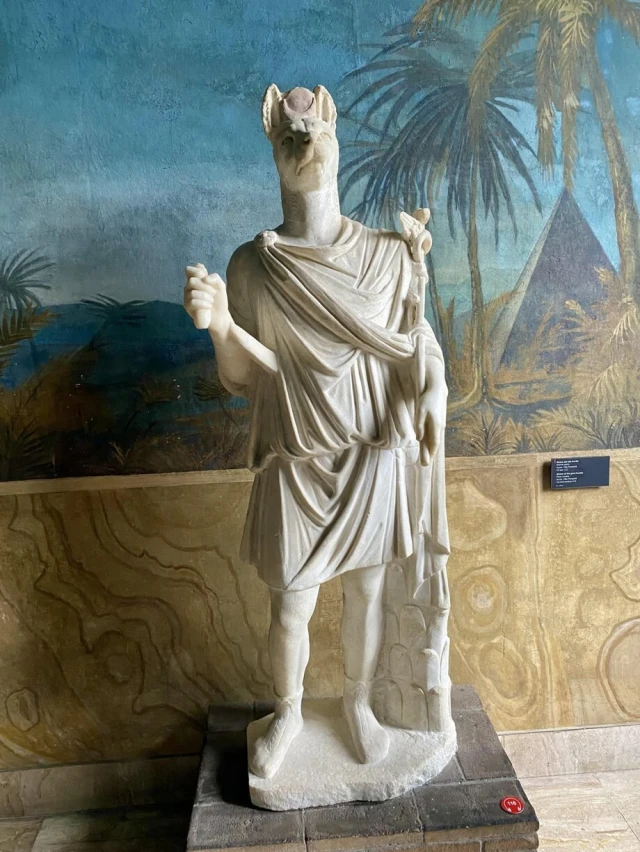
During the Roman era of Egypt (after the Roman conquest), there was an active fusion of Greek, Roman, and Egyptian religious traditions. Hermanubis is a striking example of this syncretism: he combined the functions of a guide of souls to the afterlife (Anubis) and a messenger, a mediator between worlds (Hermes). During the Roman period, his cult was particularly popular, and he was often depicted with the head of a jackal or a dog, but in a Greco-Roman setting, sometimes in military garb, holding a caduceus (a herald's staff). Such statues testify to the interpenetration of cultures during the Hellenistic-Roman era.
13. Fabergé egg with the Gatchina Palace inside. Gift from Nicholas II to his mother. 1901. 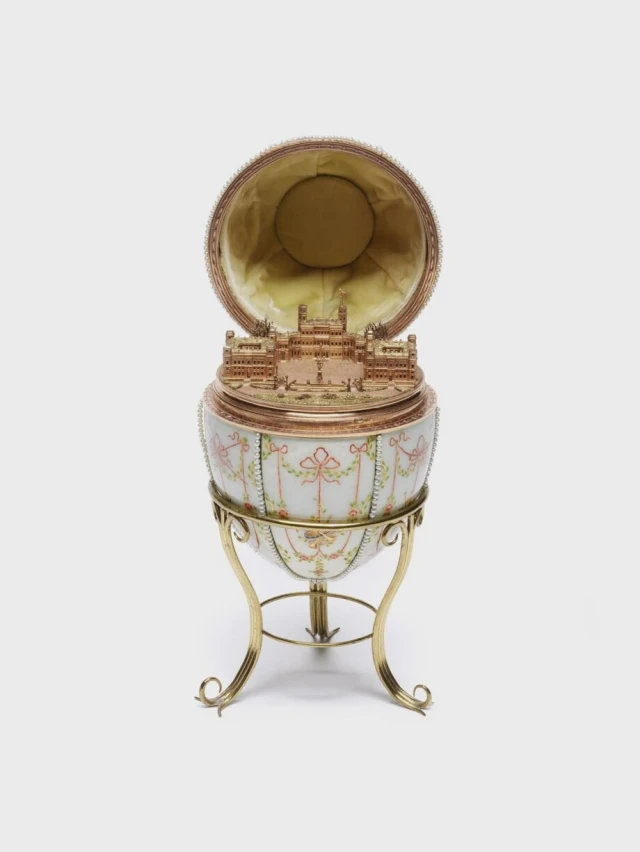
14. Set of 8 magnifying lenses. 750–700 BC. 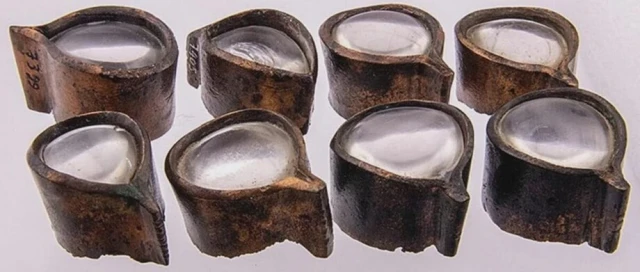
Archaeologists have found the oldest known lenses in Mesopotamia, Egypt, and Greece. It is believed that they could have been used for jewelry making, reading small texts, or even as burning glasses for starting fires.
15. The Wedding of Pirithous and Hippodamia. Roman fresco from the House of Gavius Rufus in Pompeii, 1st century CE. 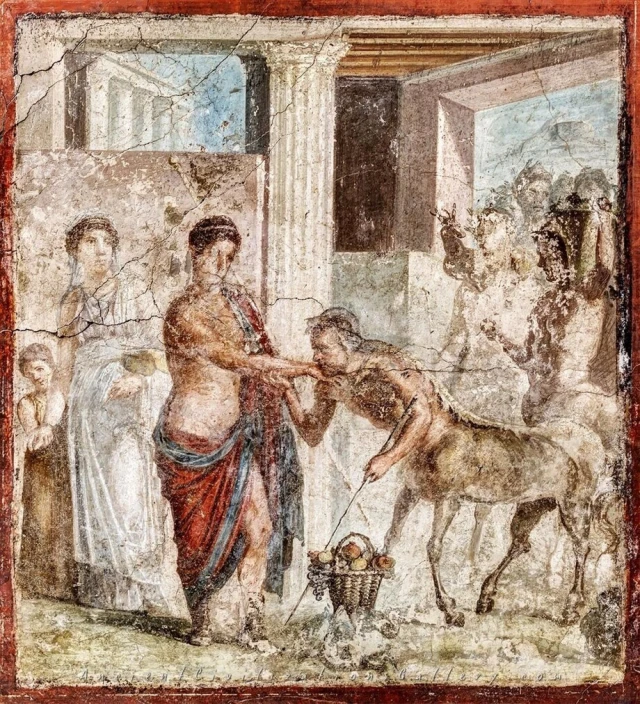
The scene depicts the centaur Eurytus presenting gifts to the Lapith king Pirithous and his bride Hippodamia at their wedding feast, which soon escalates into a battle between the Lapiths and the centaurs. The plot is based on the ancient Greek myth of the wedding of the Lapith king Pirithous and Hippodamia, to which centaurs (half-human, half-horse creatures) were invited. At a feast, the centaur Eurytus, intoxicated, attempted to kidnap the bride, sparking a bloody battle—the famous Centauromachy. This theme was popular in ancient art as an allegory of the struggle between civilization and savagery, order and chaos.
16. Book-shaped travel clock by Michael Wolff and Martinus Fenih. Sibiu, Romania, 1576 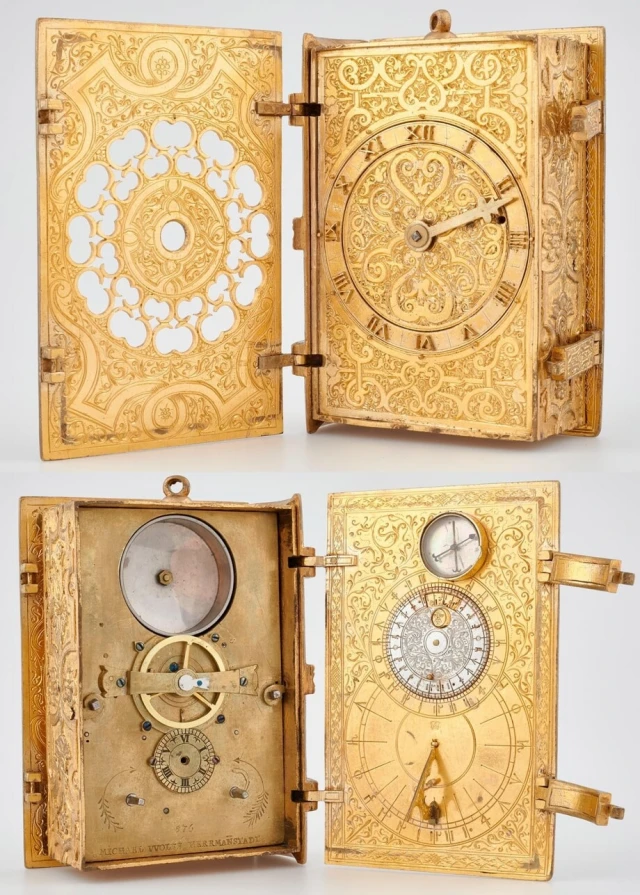
The book-shaped clock is a rare example of a travel timepiece intended for noble travelers. Such clocks often not only measured time but also served as a status accessory, combining the aesthetics of a book (a symbol of learning) with precise mechanics.
17. A rock crystal vase belonging to Eleanor of Aquitaine. The only known artifact of hers to survive to this day. 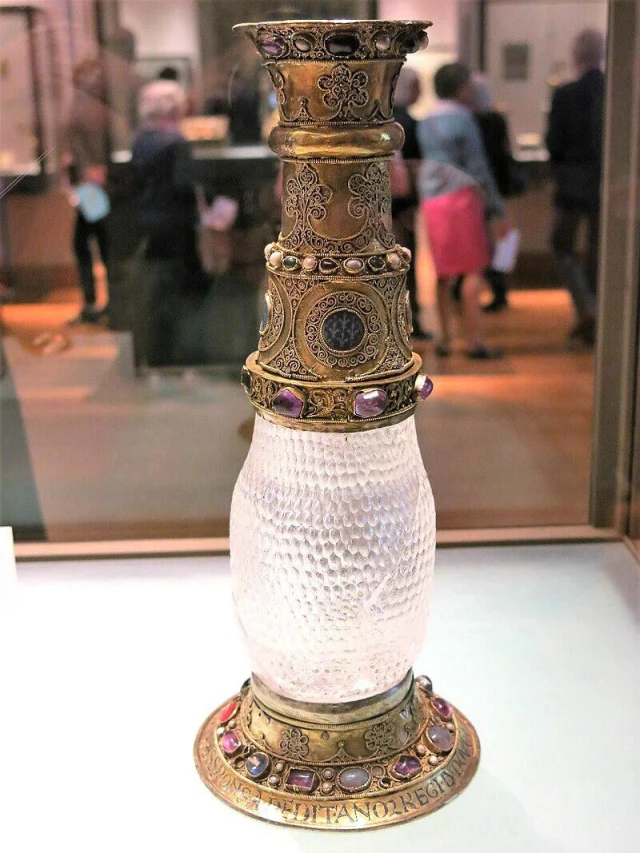
18. The Prague Astronomical Clock, known as the Orloj. One of the main symbols of Prague and medieval Europe. 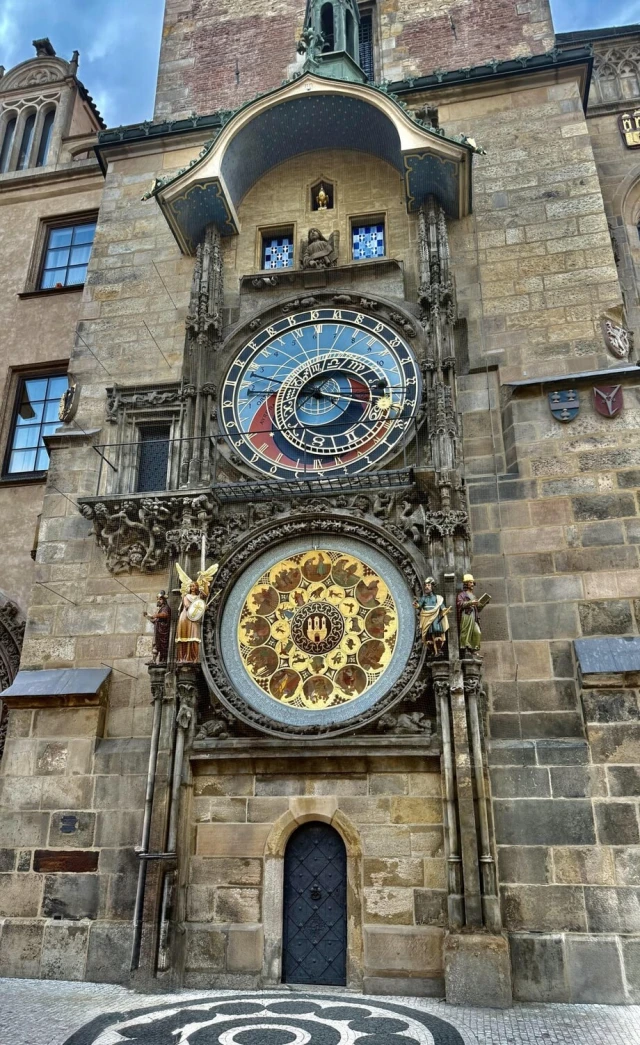
The Orloj is a medieval astronomical clock installed on the southern wall of the Old Town Hall in Prague. It is the third-oldest functioning astronomical clock in the world and the only one of its kind to retain its original mechanism from the 14th century.
Add your comment
You might be interested in:












Persistence in achieving a goal

Not everyone is having fun on the amusement ride

A biker prevented a hit-and-run driver from escaping
17 Photos That Will Stop You in Your Tracks (18 Photos)

The cutest lunch delivery ever

Absolute perfection

Young women, Dancing and George Michael: nothing superfluous

An apology delivered with a running start

A steam locomotive for "big boys"
