Popular folk names typically have simple origins, but are associated with an interesting history. There are numerous examples, such as the origin of the slang term for money, "babki." The situation with the expression "flea market" is more complex and interesting, as it has been used not only in Russia but in many countries around the world, and for a very long time. Experts still cannot agree on how exactly this term originated. However, there are several logical and compelling theories about its origin. 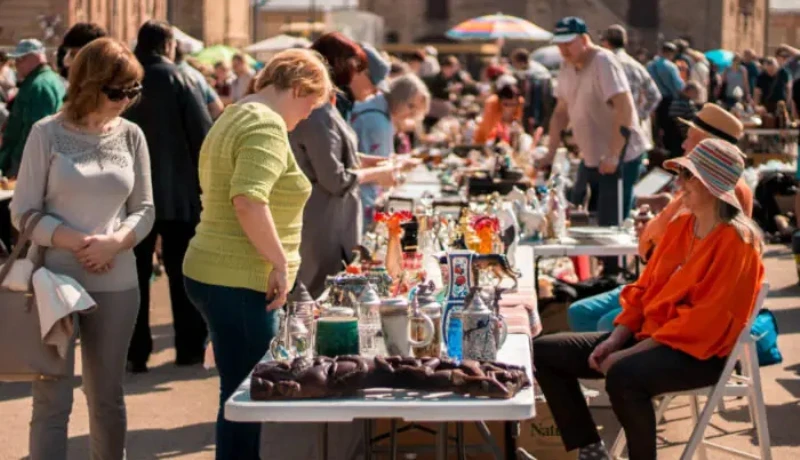
"Fly" and "fleeing"
Markets where second-hand items are sold are called "flea markets" not only in Russia. Similar expressions are used by the British, French, Germans, and Americans. The term is most often attributed to the French. In the 19th century, a Parisian antique dealer visited a second-hand market and noticed that many of the goods were literally swarming with fleas. This is when the name "le marché aux puces" (flea market) was coined, literally translated as "flea market." 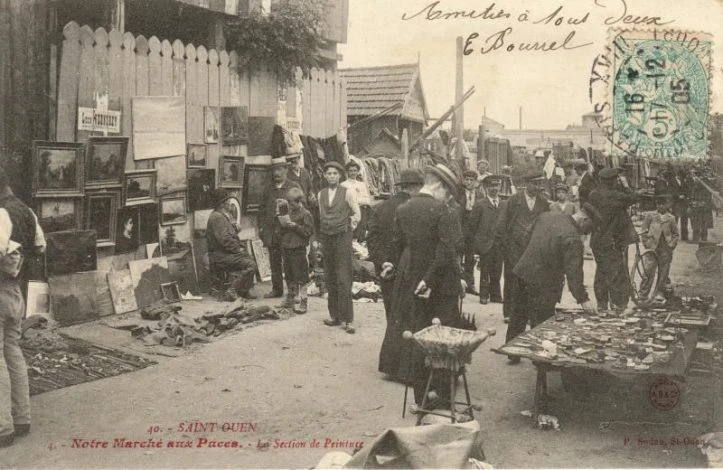
A Parisian market on a late 19th-century postcard
The unsanitary version is the most common worldwide. But there are also earlier expressions related to insects. For example, overseas, in New York's Manhattan, the Fly Market appeared as early as 1699. By the turn of the century, it had become the city's main market. The expression was likely borrowed from Europe and adapted to suit local tastes. 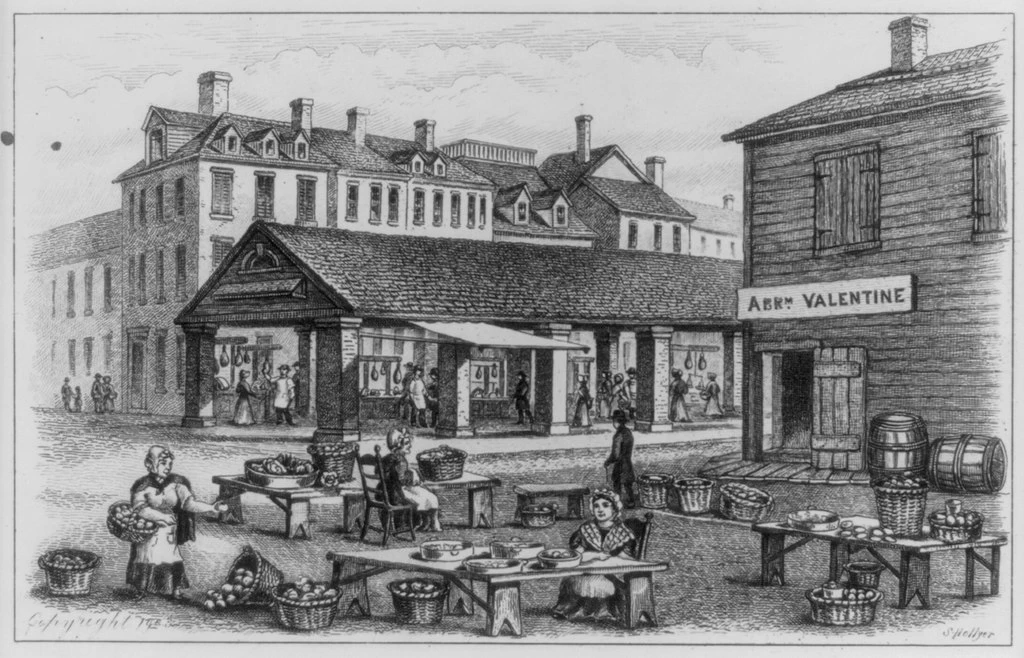
"Fly Market" in New York. 1816
Some philologists believe that Londoners got the name "Flea Market" from "flee market," meaning "runaway market." This concept originated in France and is associated with the reconstruction of Paris carried out in the mid-19th century by Baron Haussmann. During the so-called "Haussmannization," the city center was rebuilt, and Parisian markets "ran away" to the outskirts.
"Flea Markets" Today
Modern flea markets can hardly be called breeding grounds for fleas, but the expression has become firmly established in several languages. However, it is still not understood everywhere. In the Middle East, Southeast Asia, Africa, and South America, such markets have their own special names, linked to local traditions. 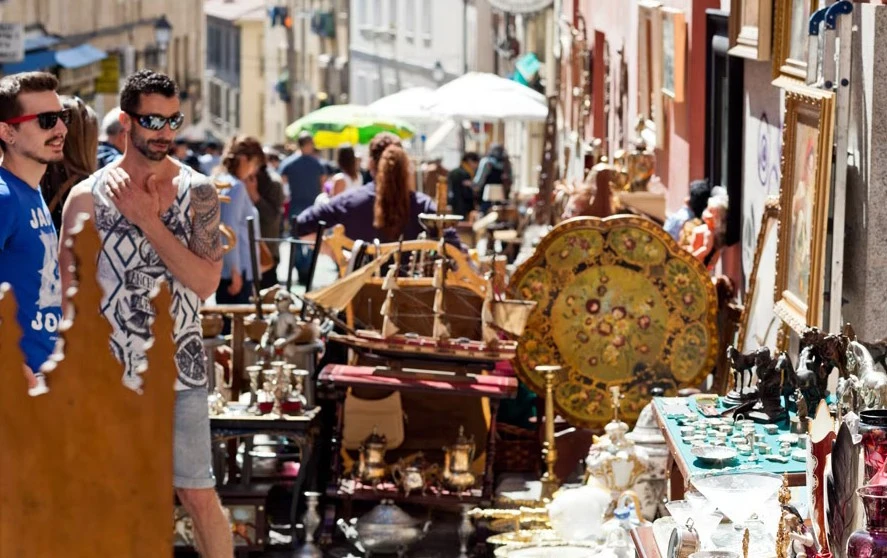
Market in Madrid
The structure and location of "flea markets" vary from country to country. While in the US and Europe, designated areas and appropriate infrastructure are provided for them, in the former Soviet Union, such markets are more often spontaneous. They usually appear near regular markets, often in city centers. Many of them emerged in the 1990s, when people sold everything they could to make ends meet. City authorities aren't always happy with these spontaneous flea markets, and they're often broken up by police. 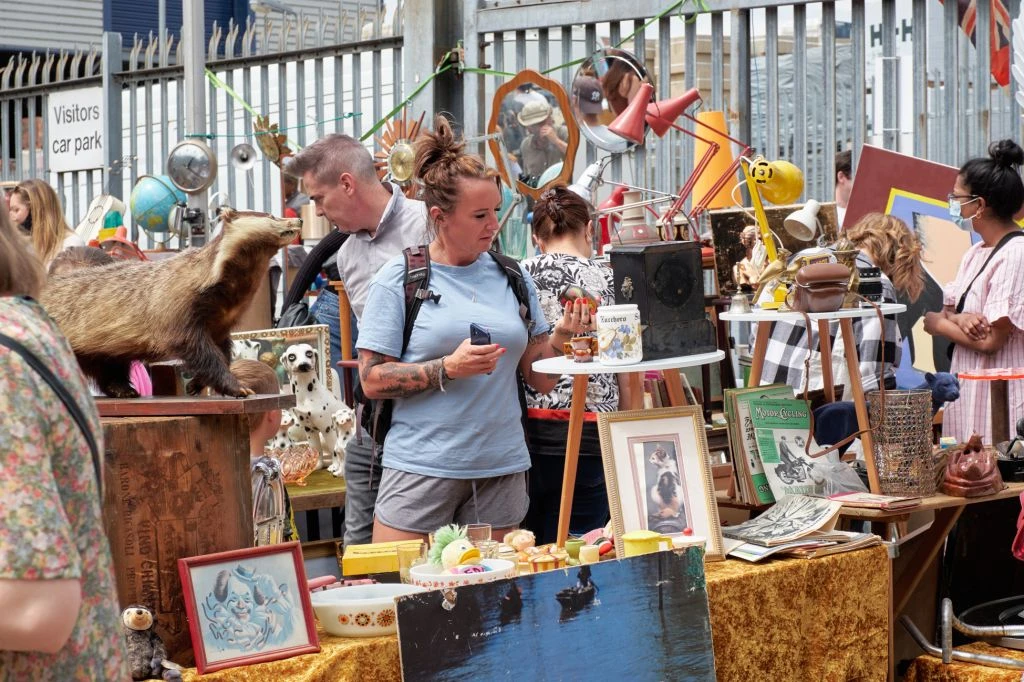
Market in London
Today, flea markets aren't just a chance to find rare items, but also an entire culture that brings together collectors, vintage enthusiasts, and simply curious passersby. What are your thoughts on these markets? Have you ever bought anything unusual there, or perhaps sold your own items? Share your stories in the comments!
Add your comment
You might be interested in:









Markets of the Soviet Union: there was everything, and even

Hyundai sets record sales thanks to unexpected models (2

Toyota unveiled a tiny truck kit that will be sold

Harley Davidson 1916 - sidecar controlled motorcycle (5
A Remote-Controlled Car Sets a World Record Land Speed

Toyota Updated the Luxury Century Sedan for the First Time

Turan Ethno-Folk Ensemble
What a bear's den looks like (3 photos + 1 video)

27 unusual photos from Google Street View (27 photos)

Persistence in achieving a goal

A biker prevented a hit-and-run driver from escaping

Not everyone is having fun on the amusement ride

Absolute perfection

17 Photos That Will Stop You in Your Tracks (18 Photos)

The cutest lunch delivery ever

What Would Happen to a Human on Every Planet in the Solar
Toyota Celica ST165 on a rally track

Young women, Dancing and George Michael: nothing superfluous
