Were there humans on Earth before Adam and Eve? Biblical mysteries, myths, and science (5 photos)
The Bible says: Cain, who killed his brother Abel, goes into exile—and suddenly marries. But where did his wife come from if there were no other people yet? And he's also afraid of being killed. But who could do that if there are no other people yet? These questions from the Bible have stirred minds for centuries. Let's figure it out: could people have lived on Earth before Adam and Eve? 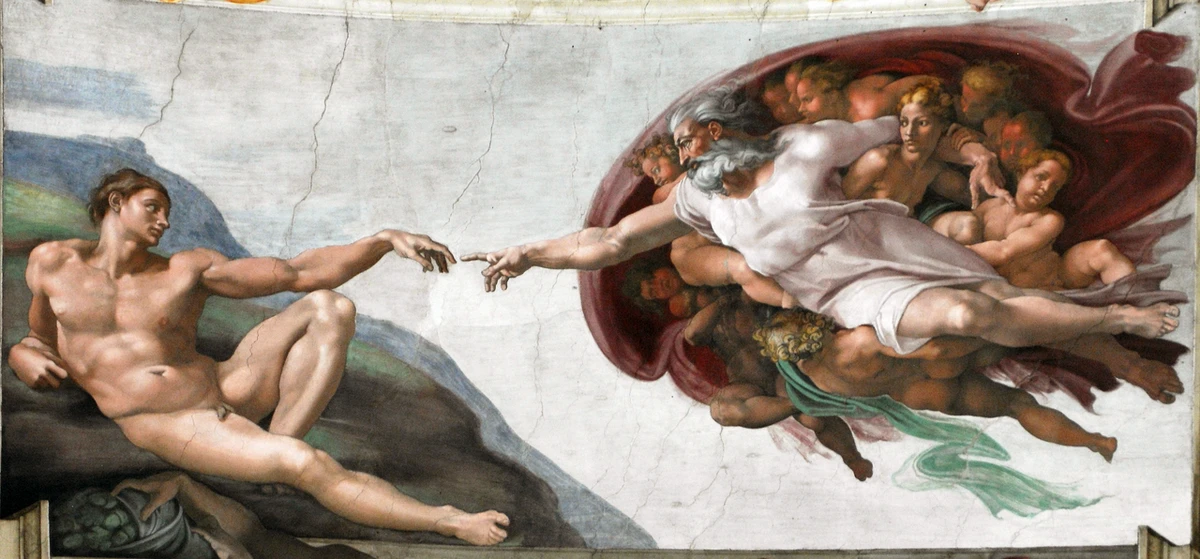
Michelangelo Buonarroti. The Creation of Adam. ca. 1511
Mysteries of the Bible
There are passages in Holy Scripture that have puzzled readers and theologians for centuries.
For example, Genesis 1:26–27 speaks of the creation of man in the plural: "And God said, 'Let us make man in our image, according to our likeness...'" But Genesis 2:7 speaks of the creation of a specific Adam: "And the Lord God formed man of the dust of the ground, and breathed into his nostrils the breath of life; and man became a living soul." Why such a difference in the narrative?
Another puzzling point is Cain's words in Genesis. 4:14:
"Behold, now You have driven me from the face of the earth, and from Your presence I will be hidden, and I will be a fugitive and a wanderer on the earth; and whoever finds me will kill me."
But who can do this if there are to be no other people?
Genesis 4:17 says that Cain "knew his wife" and even built a city. But where did he get his wife? And who then lived in this city—if humanity began with Adam and Eve?
An equally mysterious passage from Genesis 6:1–4, where the "sons of God" have intercourse with the "daughters of men," resulting in the birth of giants (Nephilim):
"There were giants on the earth in those days, and also afterward, when the sons of God came in unto the daughters of men, and they bare children to them. These are the mighty men of old, men of renown."
Who are these "sons"? Angels? Descendants of Seth? Or some ancient race? These contradictions have given rise to many theories, from the scientific to the mystical. 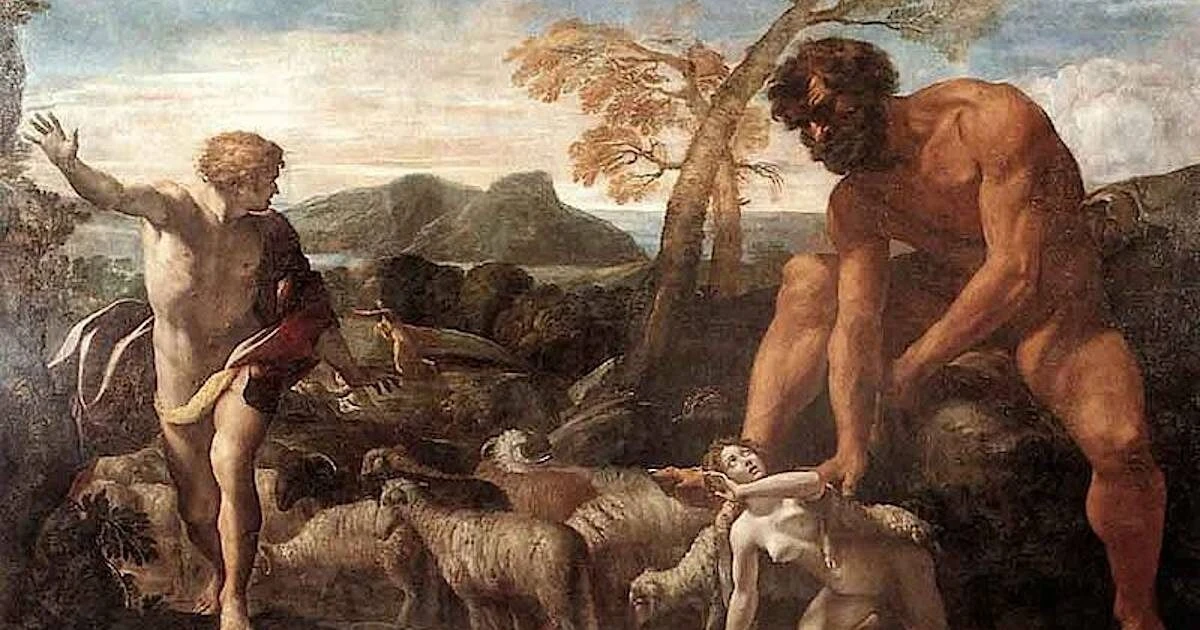
"Nephilim" by Giovanni Lanfranco
Myths of the "First Man" in Other Cultures
The idea of the "first man" is not unique to the Bible. Similar stories appear in ancient myths, which may have influenced the biblical narrative.
In Sumerian mythology, the gods created humans from clay after several failed attempts—a plot that echoes the biblical one. In the Babylonian epic "Enuma Elish," humans are created from the blood of the slain god Kingu—as instruments for serving the gods. Hinduism has a myth about the cosmic man Purusha, from whose body parts the universe was created (Rig Veda): "When Purusha was divided, into how many parts was he divided?" And in Zoroastrianism, the first man, Gayomart, was created by the deity Ahura Mazda and became the progenitor of humanity.
The biblical story likely absorbed ancient myths of the Middle East, but reworked them in a monotheistic vein—with the idea of a single God who created the world and humanity.
Lilith and Other Predecessors
The Jewish tradition contains legends that hint that Adam was not the first. One of the most famous is the story of Lilith, Adam's first wife. According to the medieval text "The Alphabet of Ben Sira," she was created from clay at the same time as Adam, but refused to submit to her husband. After uttering the name of God, Lilith flew away. She later became a demon that harmed infants.
This image explains why Genesis 2:18 says, "It is not good that the man should be alone; I will make him a helper comparable to him." The first attempt at creating a couple failed—and only then was Eve created. 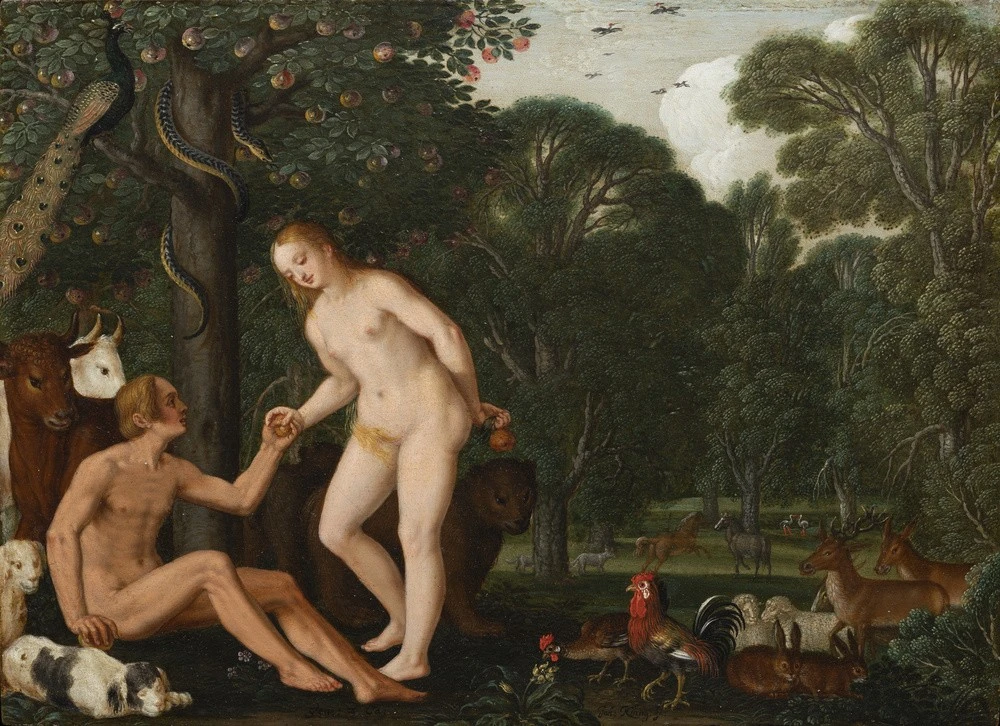
Lucas Cranach the Elder's painting "Adam and Eve in the Garden of Eden"
There are even more mysterious traditions: some midrashim (ancient Jewish religious interpretations and legends) say that other universes or creations existed before our world, which God "destroyed" or "corrected" before creating Adam.
Science versus the Bible?
Science and religion view this question differently. From the perspective of modern anthropology and genetics, the biological species Homo sapiens did not appear suddenly, but evolved gradually from earlier forms.
"Mitochondrial Eve" and "Y-chromosomal Adam" were not the first pair of humans, but rather the most recent common ancestors on both their mothers and fathers. They lived at different times and were not the only individuals of their generation. Archaeology shows that Neanderthals, Denisovans, and other human species lived on Earth long before the biblical Adam. 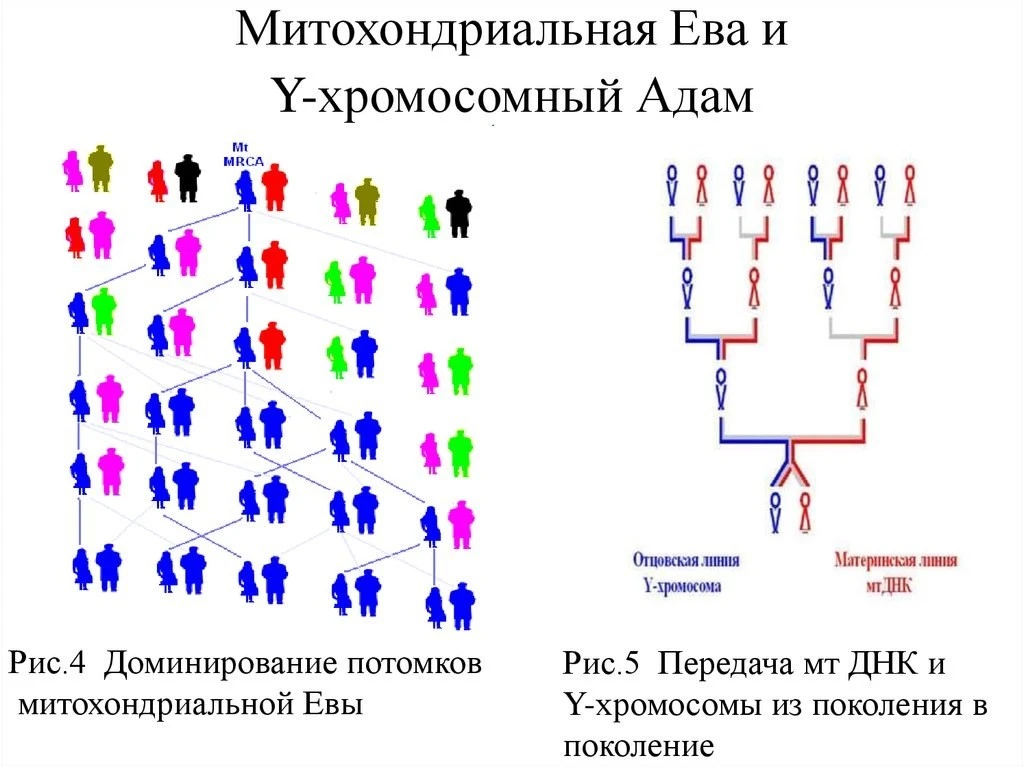
Theologians offer several ways to reconcile the Bible and science. Some adhere to a literal reading: Adam and Eve are the first and only humans, and all references to "others" refer to their descendants. Others interpret history symbolically: Adam and Eve are not two individuals, but a symbol of all humanity, and Eden is a metaphor for the transition to a new stage of development. Still others believe that Adam was the first human in a spiritual sense—the one who entered into a relationship with God, although the biological species may have existed earlier.
For example, the Catholic Church (Pope John Paul II, 1996) recognizes that evolution is not just a hypothesis, but a scientifically proven process, and allows that Adam and Eve may serve as symbols. Orthodox theologians (like Metropolitan Hilarion) also sometimes interpret Genesis allegorically, emphasizing the theological meaning of the text rather than its historical accuracy.
Why is this important?
The question of pre-Adamic people is more than just a mental exercise. It touches on key ideas of Christian doctrine. If Adam is not the first biological human, does the meaning of original sin change? How does this affect the doctrine of salvation? Can we perceive the Bible not as a history textbook, but as a profound narrative about man's place before God?
In Acts 17:26, the Apostle Paul emphasizes the unity of the human race: "From one man He made every nation of men to dwell on all the face of the earth…" This statement challenges any hypotheses about "pre-Adamic" people—but at the same time encourages a deeper understanding of the very nature of the biblical text.
The debate continues, and each reader is free to choose the approach that seems most compelling. 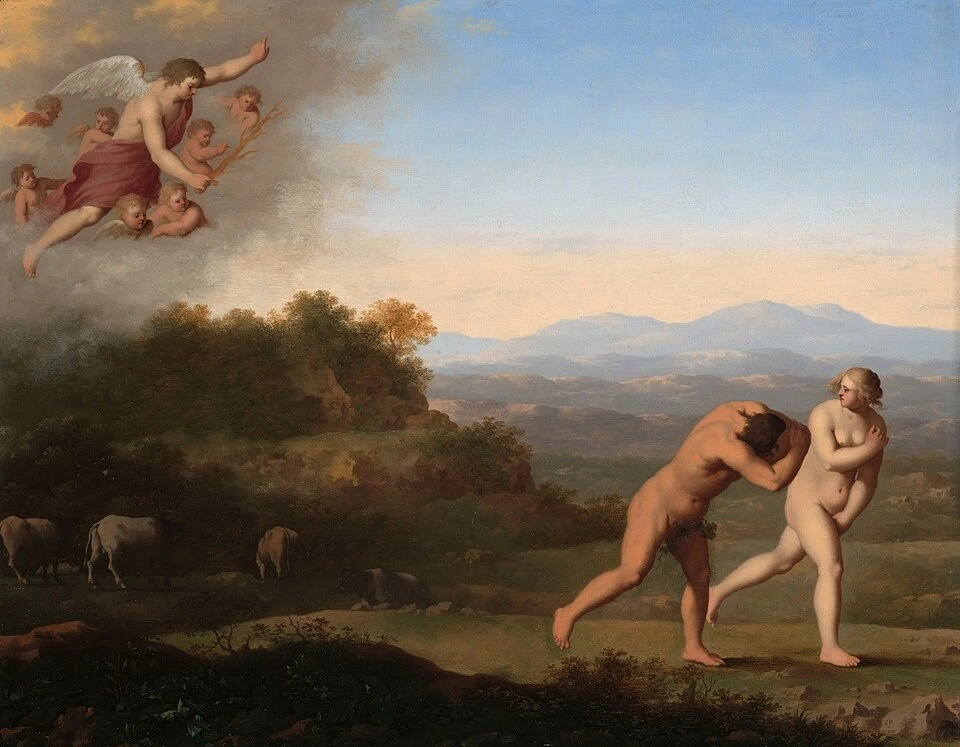
The Expulsion from Paradise is a painting by Cornelis van Poelenburch, completed in 1646.
Conclusion: The Bible leaves behind mysteries that stir the imagination. Were there people before Adam? Perhaps the answer depends less on the facts than on how we perceive Holy Scripture: as a historical chronicle or as a parable about eternal truths, speaking to us through symbols and images.