He Lived to Be 120: The Story of the World's Oldest and Most Famous Parrot (6 Photos)
At first glance, the story of a long-lived parrot who reached the ripe old age of 120 sounds like just another fun internet yarn—the kind republished decade after decade to brighten up people's feeds with something wholesome and harmless. In reality, the life of Cocky Bennett is a well-documented phenomenon. Even today, scientists cannot say for sure why parrots are capable of living so long. 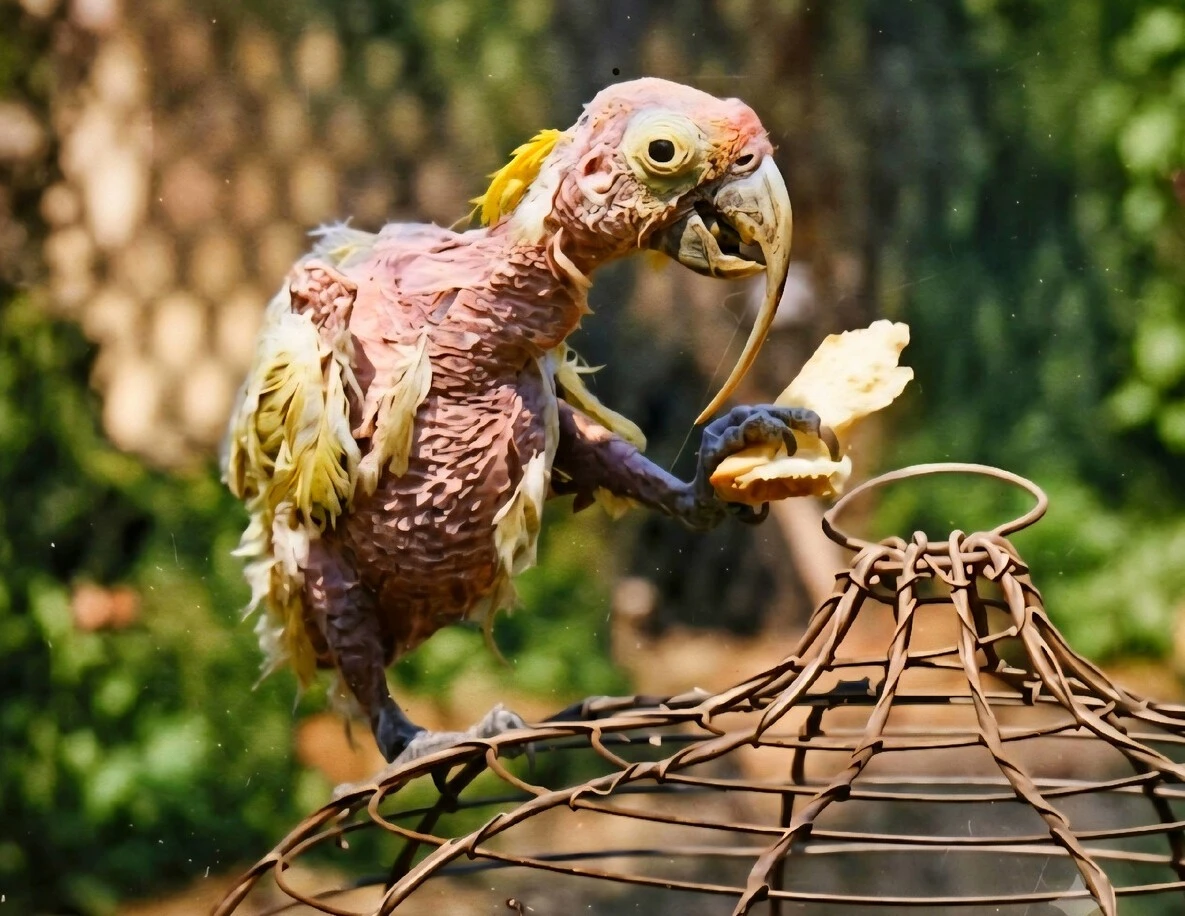
Dinosaurs? Absolute toddlers next to me!
This sulphur-crested cockatoo hatched around 1796—back when his native Australia didn't even exist as a unified nation. It was merely a penal colony. As a chick, he was snatched from a nest in a eucalyptus tree somewhere in the bush, eventually ending up in the hands of Captain George Ellis, who sailed merchant ships across the Pacific islands. A proper pirate's parrot, if you will. You know the vibe ;) Though in truth, it was just an ordinary trading vessel. 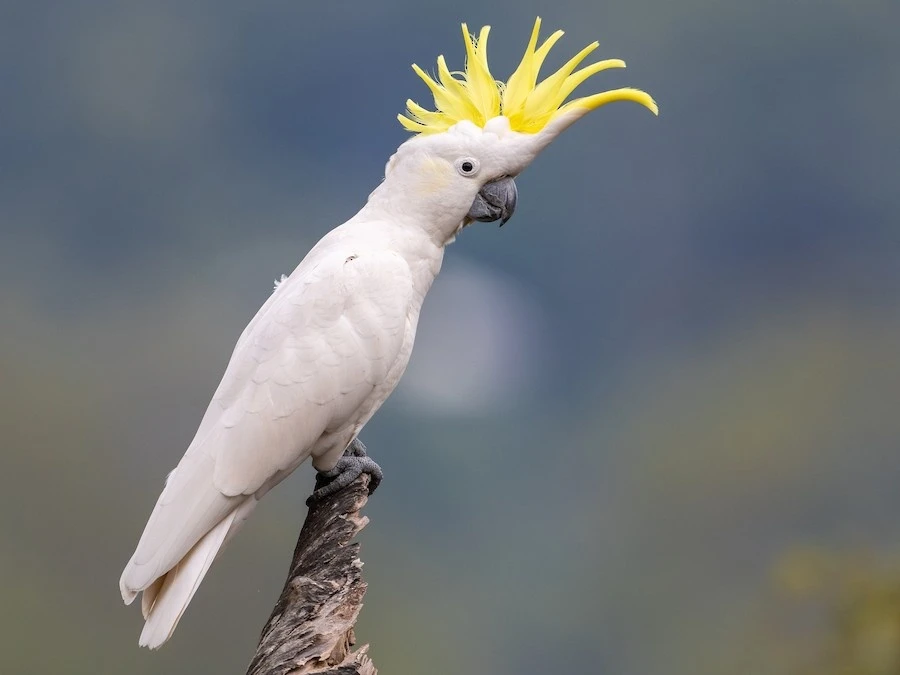
For the record, this is what a sulphur-crested cockatoo who ISN'T a centenarian looks like.
Cocky spent most of his long life aboard the captain's ship, sailing with Ellis from island to island across the South Pacific. Decades passed in a steady rhythm. The sailors, stuck at sea for months on end with little entertainment, were more than happy to chat with the bird. Cocky soaked up everything he heard—including colorful profanities, filthy jokes, and local slang. Eventually, it was his penchant for swearing that would make him a legend. 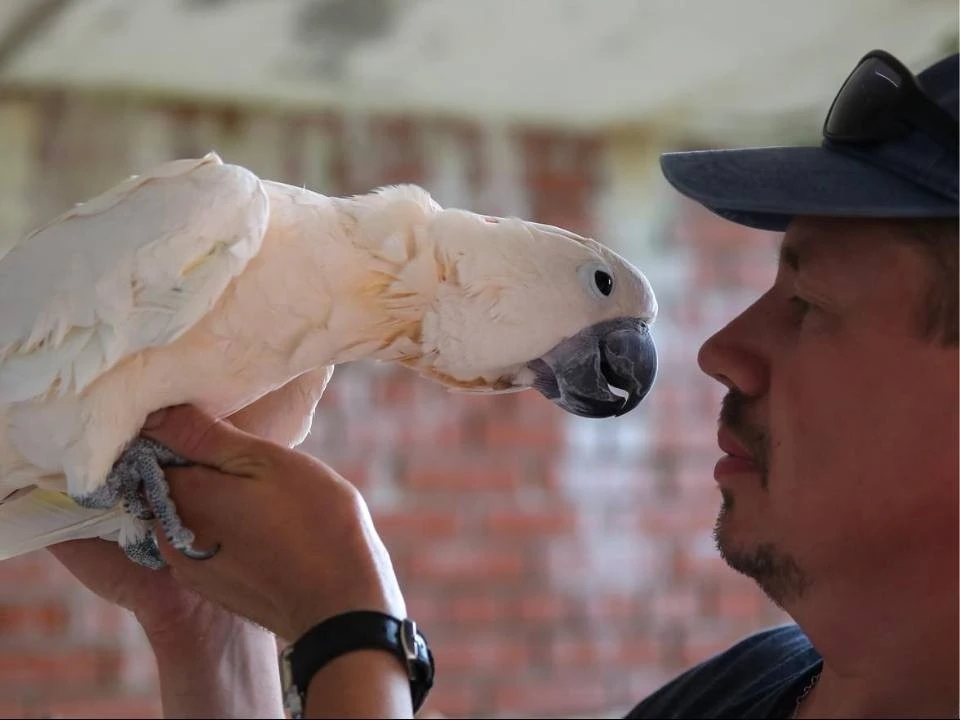
*Whispering the filthiest swear word imaginable into your ear*
In 1887, Captain Ellis passed away from old age at 87. His parrot, meanwhile, was already past 90(!!!) and still going strong. Well, almost... By that point, Cocky had contracted a nasty disease common among parrots: a virus that slowly destroys feathers and deforms the beak. Though completely featherless, the bird remained as energetic and talkative as ever. 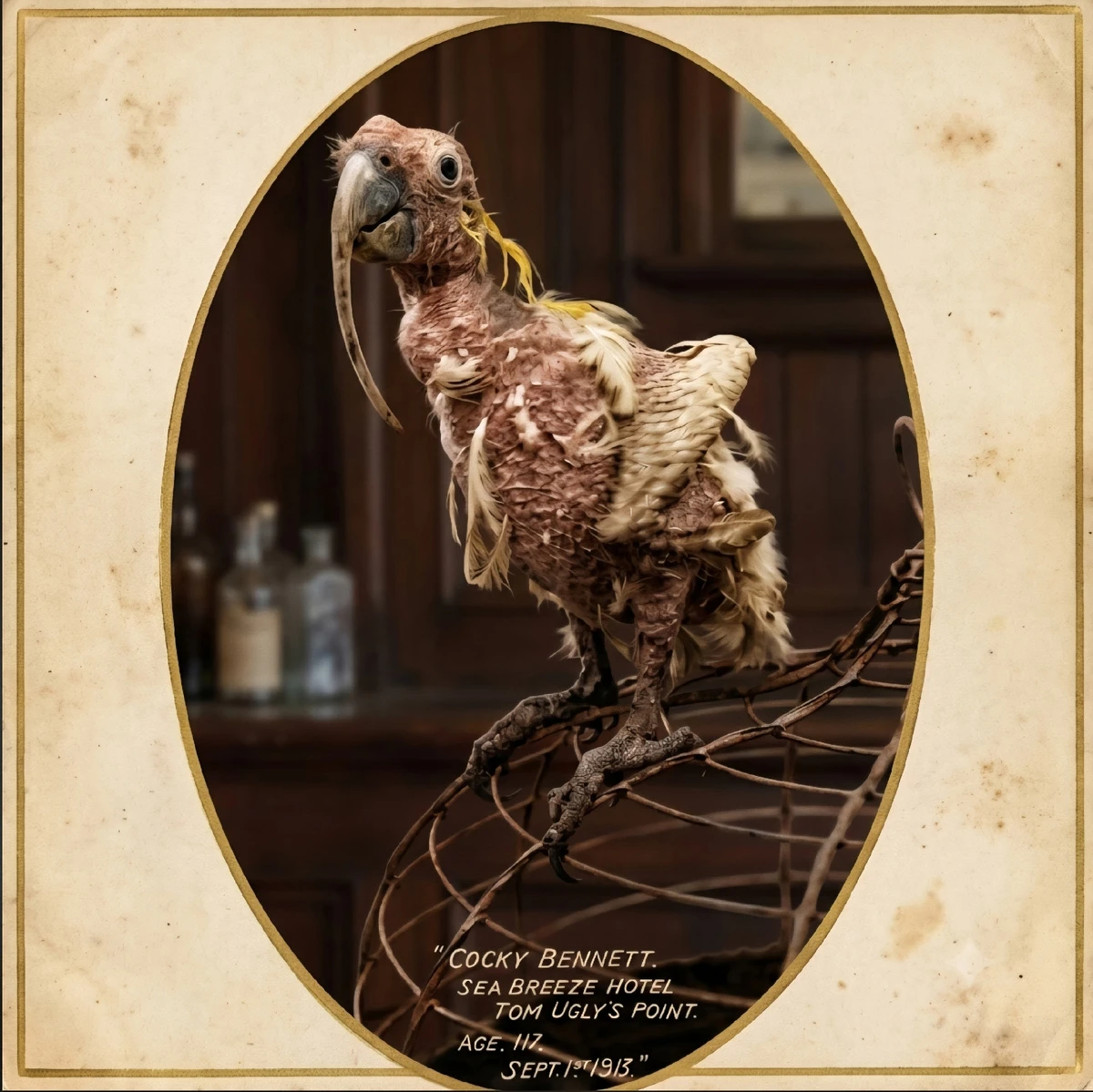
Featherless, bipedal, and it talks. Is this what you had in mind, Plato???
After the captain's death, Cocky was passed on to new owners and eventually landed at a hotel in Sydney, Australia. He took up residence in the hotel bar, which is where his rise to fame truly began. Cocky spent nearly twenty years in that pub, growing into such a major local celebrity that people traveled from all over Sydney just to see him. Journalists and politicians adored him. Perched in his cage on the veranda, Cocky greeted regulars, offered commentary on the day's events, and liberally drew from his sailor's vocabulary at every opportunity. Imagine a bald, centenarian bird sitting there, hurling endless profanities at patrons. Absolutely legendary! 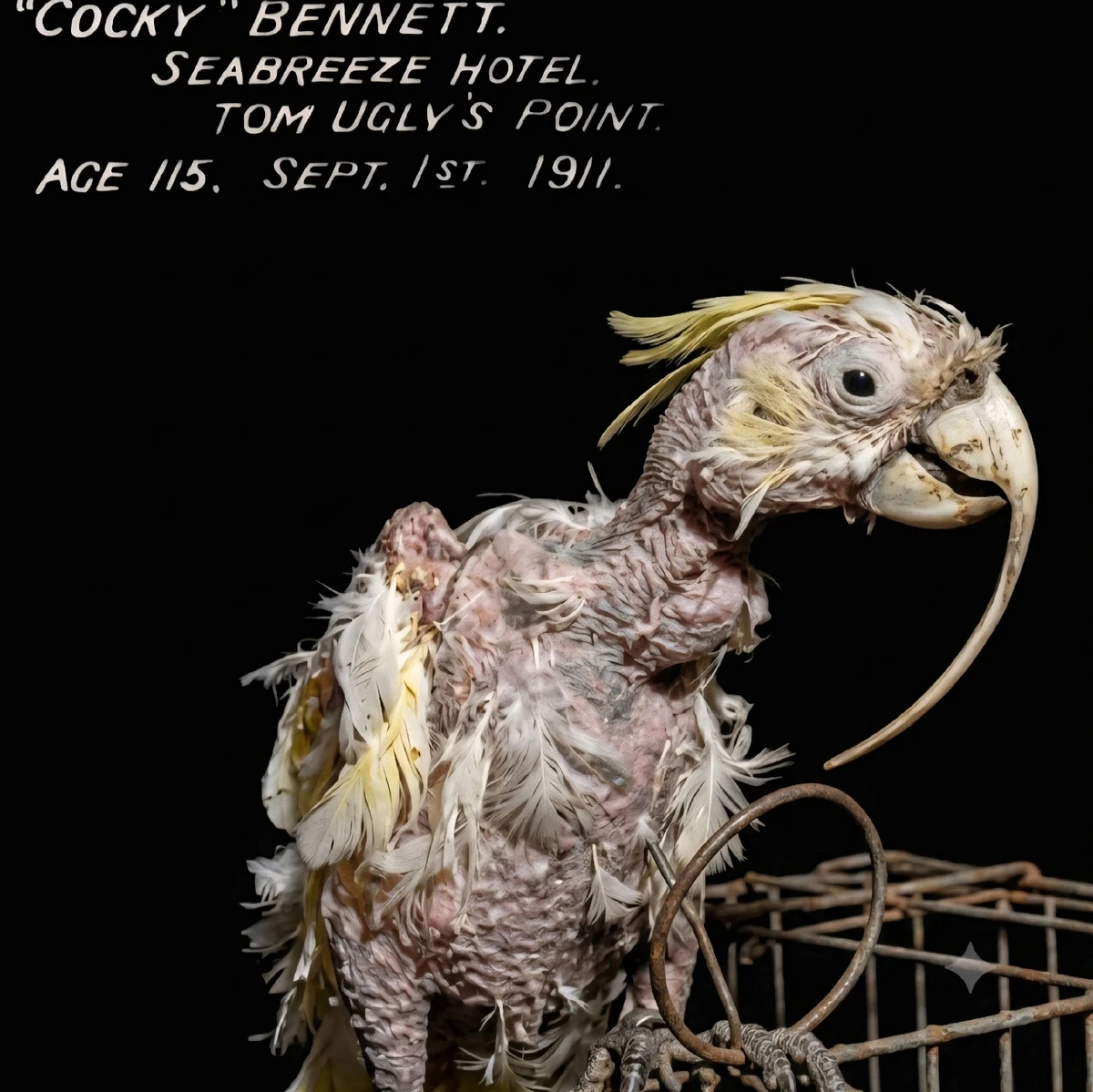
When you manage to start a fresh chapter after a century at sea.
On May 26, 1916, Cocky Bennett passed away. The following morning, newspapers across the country reported his passing, hailing him as a "venerable cockatoo" and noting that he "kept up his chatter until his very last day." His owner announced plans to have him taxidermied. Cocky's taxidermied mount remains on display to this day at the Carss Cottage Museum in Sydney. 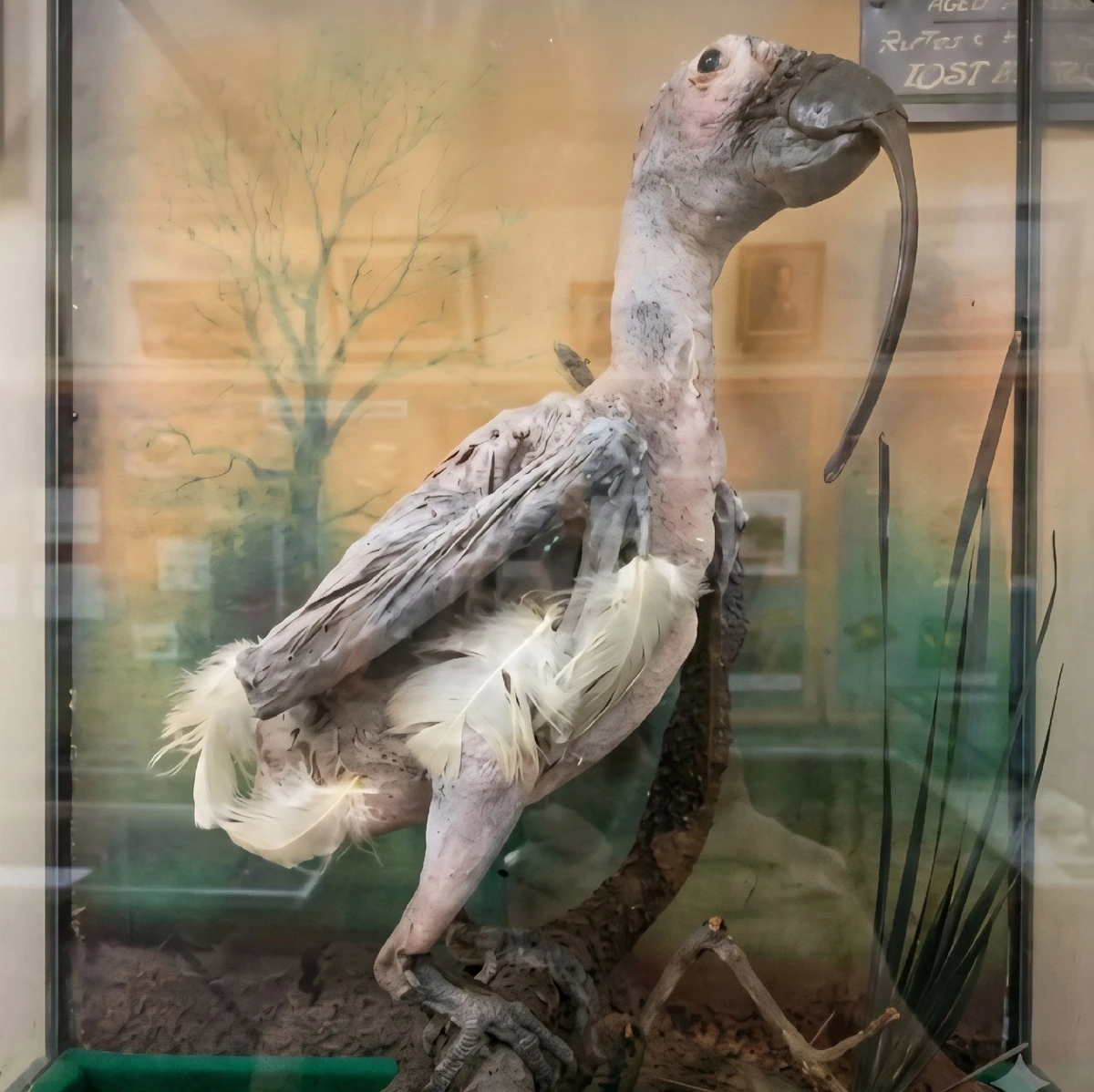
A monument to greatness.
While Cocky Bennett set a record even for his species, sulphur-crested cockatoos are famously long-lived, frequently reaching 70 or 80 years in captivity—and occasionally even more. This is actually a common bird trait: they live disproportionately long given their body size. A sparrow easily outlives a mouse, and an eagle outlasts most mammals of comparable weight. Several factors account for this, all working in tandem. Birds have a remarkably high metabolic rate—which should theoretically accelerate aging—yet they possess exceptionally efficient antioxidant defenses that neutralize cellular damage. Furthermore, telomeres—the protective caps at the ends of chromosomes that shorten with each cell division, acting as a biological clock—degrade far slower in birds than in mammals of similar size. Combine that with a life in captivity—no predators, steady meals, and no constant struggle for survival—and extreme longevity no longer seems like a mystery. Cocky simply tapped into his full biological potential without burning it out on daily survival. Makes you wonder: had it not been for the disease, could he have lived even longer?