Most animals on earth are adorable and bring a smile. But there are a few creatures that are unlikely to evoke a storm of positive emotions. Our "Anti-Cute-Cute" ranking features 10 creations of nature with very unique appearances. Each of them could compete for the title of the ugliest creature on the planet. 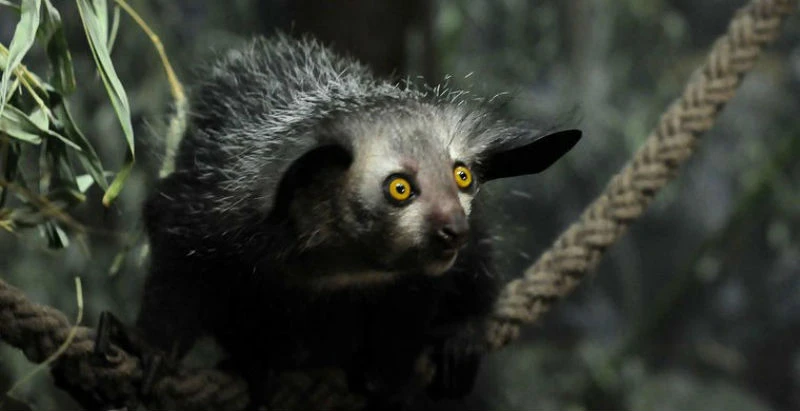
Aye-aye 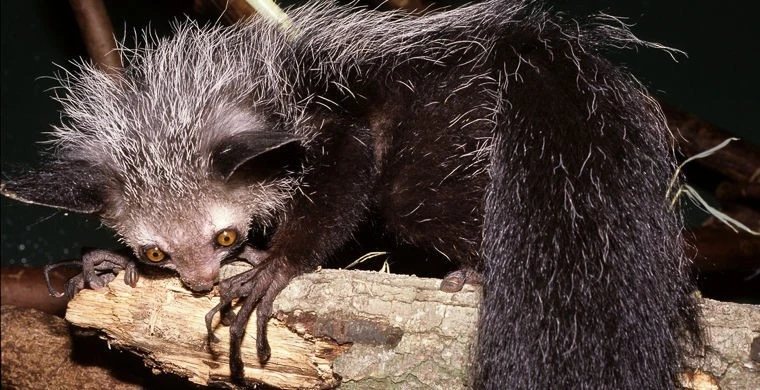
When scientists discovered this strange creature with huge eyes, protruding ears, strange teeth, and long fingers in Madagascar in 1780, they didn't know what order of animals to classify it. They considered it a rodent, but the aye-aye weighs as much as a cat and has a fluffy tail like a squirrel. 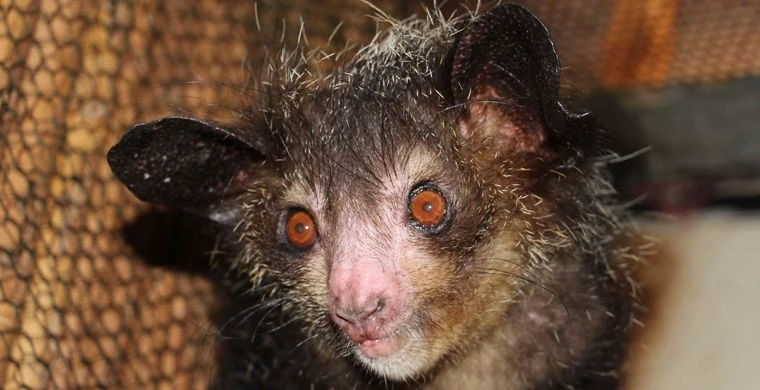
After detailed study, scientists agreed that this strange creature belongs to the order Prosimia, the largest of the nocturnal primates. 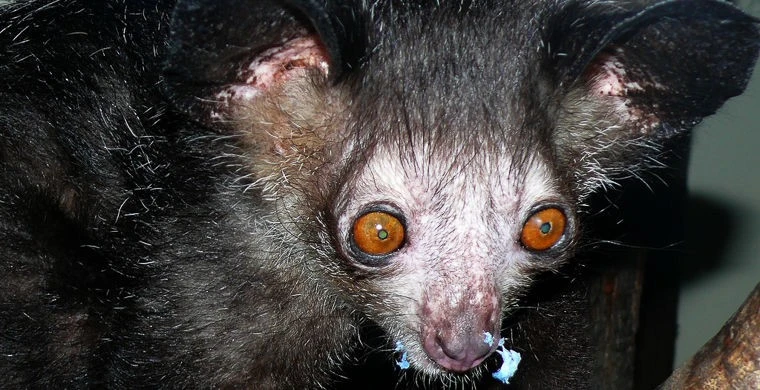
The aye-aye looks a bit like a monster due to its elongated, clawed fingers. The third finger on its forelimbs is especially valuable: it combs its fur, collects larvae, and drinks with it, dipping its finger in water and sucking thoroughly. 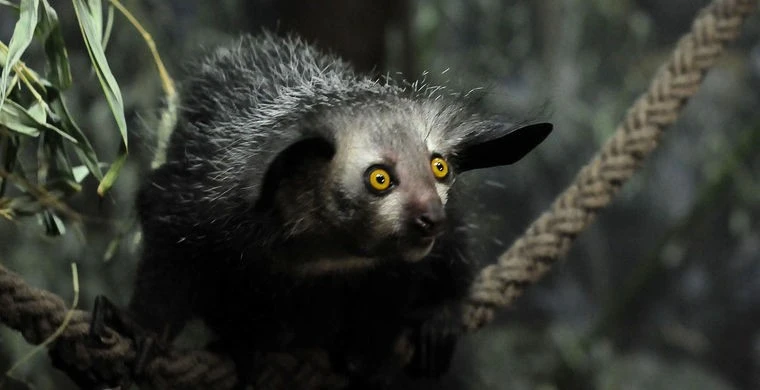
Their skillful claws also help them weave nests and shelters from branches and leaves high in the treetops. 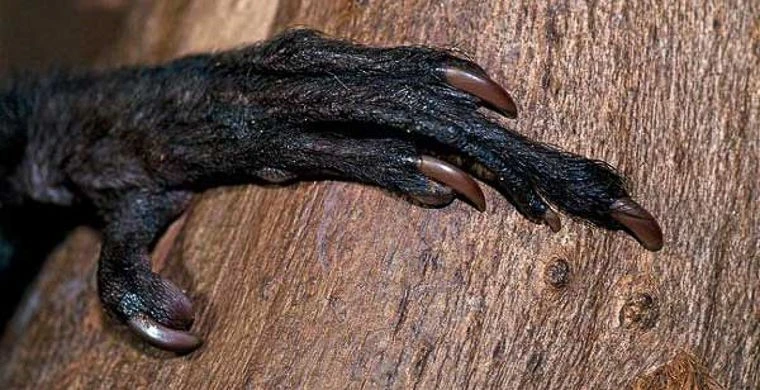
Human development in Madagascar led to a decline in the aye population. Only fifty remained in 1972. To restore the species, 16 reserves were created in Madagascar, where the aye-ayes were able to live and reproduce peacefully. This saved these not-so-pretty, but invaluable animals—they live only in Madagascar and are the only representatives of the aye family. 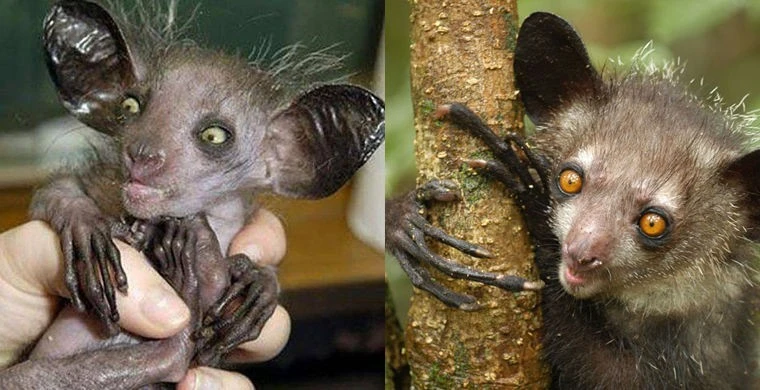
Purple Frog 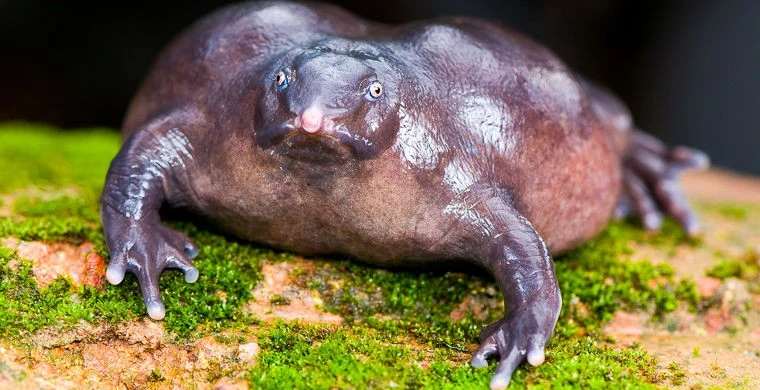
In 2003, a remarkable subterranean frog was discovered in the jungles of the Western Ghats mountain range in India. 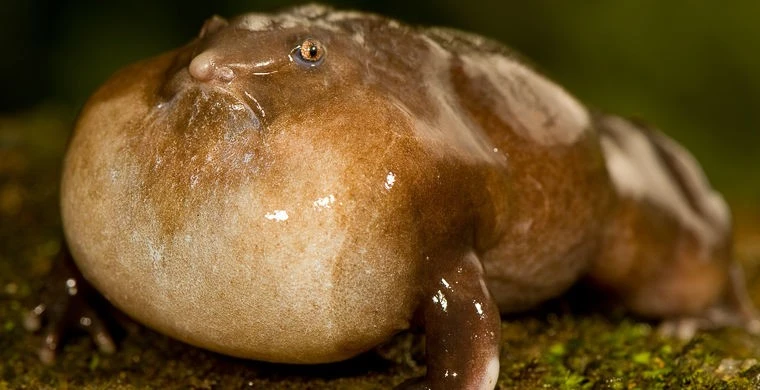
Biologists knew nothing about it, as it lived underground almost year-round and in only one location covering an area of 14 square kilometers. Its pointed nose earned it the Latin name Nasikabatrachus sahyadrensis (nasika means "nose" in Sanskrit). Due to its deep purple color, it is also called the purple frog. 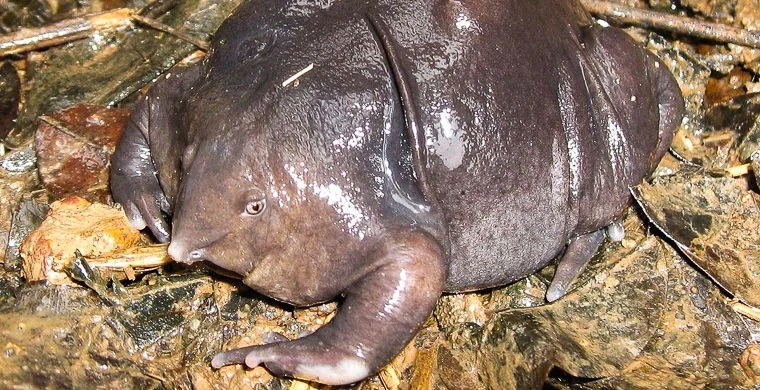
This slimy, gelatinous amphibian grows up to 9 cm, lives underground, feeds on termites, and emerges to the surface only for a couple of weeks for mating and reproduction.
Naked Mole Rat 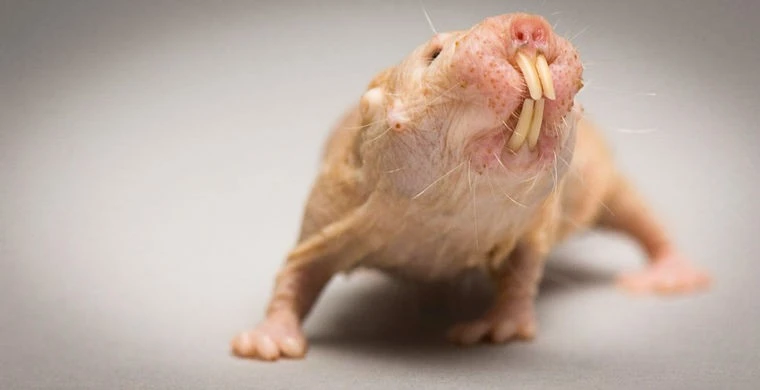
This unattractive subterranean creature inhabits the arid savannas and semi-deserts of African countries: Ethiopia, Somalia, and Kenya. The naked mole rat is a long-lived rodent, living for about 30 years and spending virtually no time above ground. 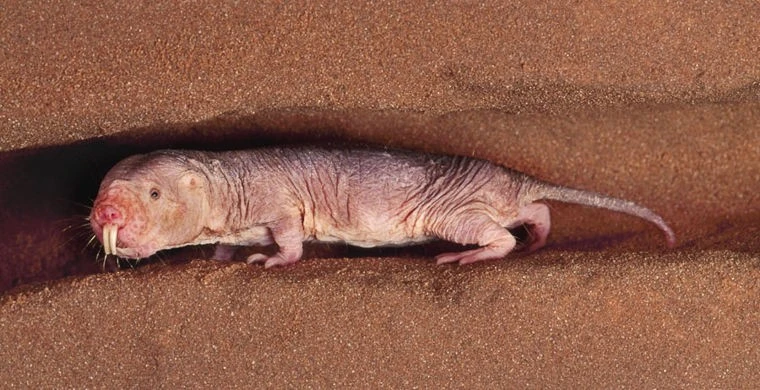
This animal has surprised scientists with a number of characteristics: it doesn't drink water, is insensitive to pain, cuts, and burns, easily tolerates high concentrations of carbon dioxide, and is completely immune to cancer. 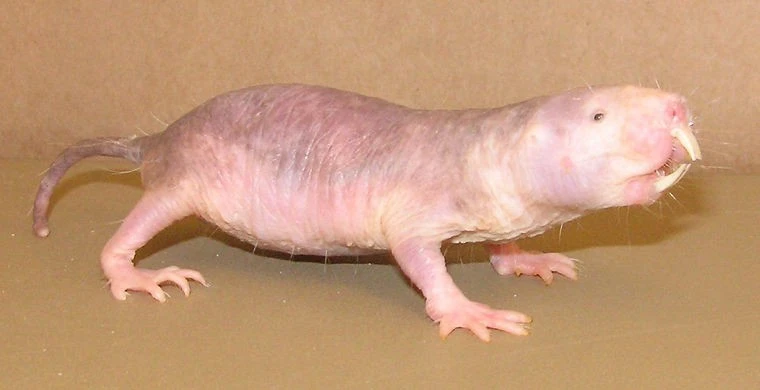
This distinctive appearance is the result of the rodent's adaptation to an underground life, the purpose of which is to dig, dig, and dig some more. A quarter of the mole rat's muscle mass is devoted to its jaw muscles. They have poor eyesight, sharp claws, and a hairless, elongated body up to 10 cm long. Their teeth are separated from their mouth by special labial growths, preventing soil from entering their bodies during underground work. 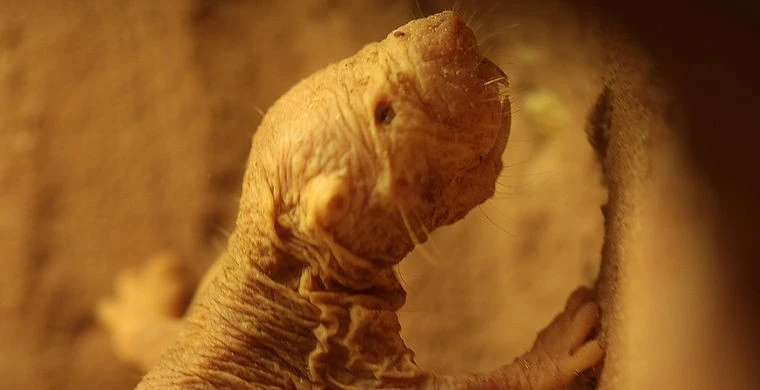
Interestingly, these animals live in colonies, like ants, and perform different roles depending on their size. The largest mole rats protect the colony from predators, while the smallest ones forage for food and raise their young, as well as maintain a complex tunnel system up to 3-5 km long. Each colony has a single queen, who mates with only two or three males and can give birth to up to 900 young in her lifetime. The remaining males and females have no sexual relations, remaining exclusively workhorses.
Blob fish 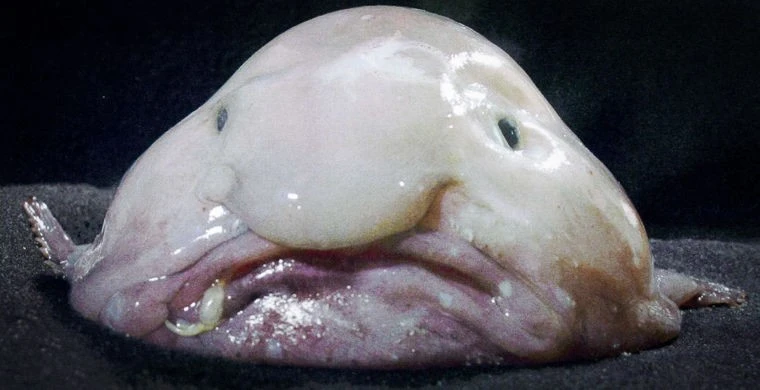
This deep-sea fish often tops lists of nature's most bizarre creatures. In 2013, it was chosen as the mascot of the British Ugly Animal Preservation Society. The gelatinous fish with its forlorn expression garnered 10,000 votes, beating out the proboscis monkey, the world's largest frog, which lives on Lake Titicaca, the flightless kakapo parrot from New Zealand, and the aquatic "monster" axolotl.
The blobfish, also known as the psychrolute goby, is a gelatinous mass with a density slightly lower than that of water, allowing the fish to swim without expending any energy. Its "face" appears sad to humans due to its wide-set eyes and drooping mouth.
This fish is very protective: it sits on its eggs like a hen on its eggs, and after the offspring hatch, it watches over its young. The species is poorly studied and is endemic to Australia, meaning it is found nowhere else in the world except off the coast of the Green Continent and Tasmania. Recently, the blobfish has been threatened with extinction due to the expansion of deep-sea fishing. In Asian countries, the psychrolute goby is considered a delicacy, hence its woes.
Star-nosed mole 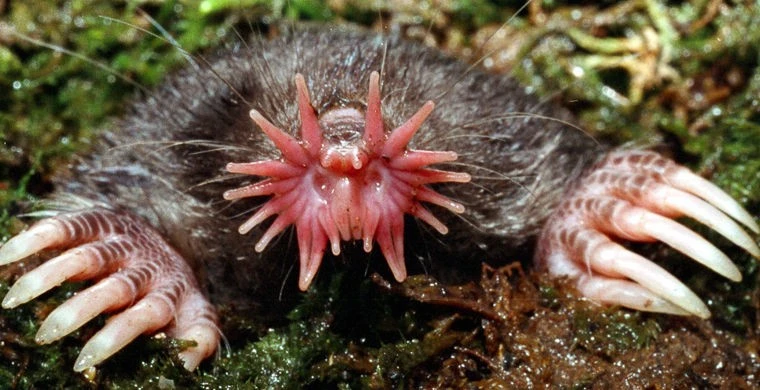
Also known as the star-nosed mole. It lives only in eastern North America. Around each nostril of this mole are 11 skin growths, which serve as tactile organs. 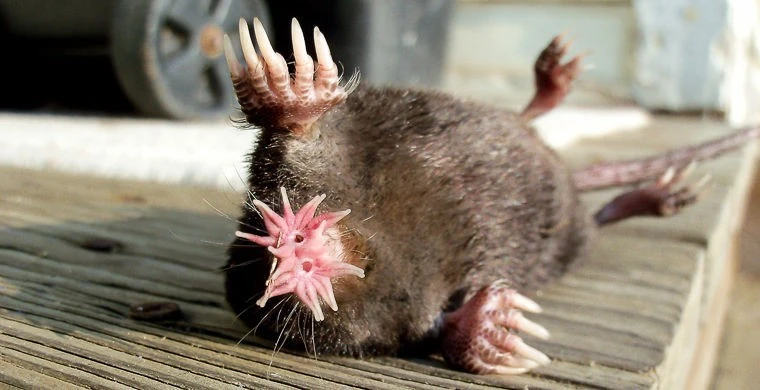
There are 22 of them in total, and they can move faster than the human eye can detect. 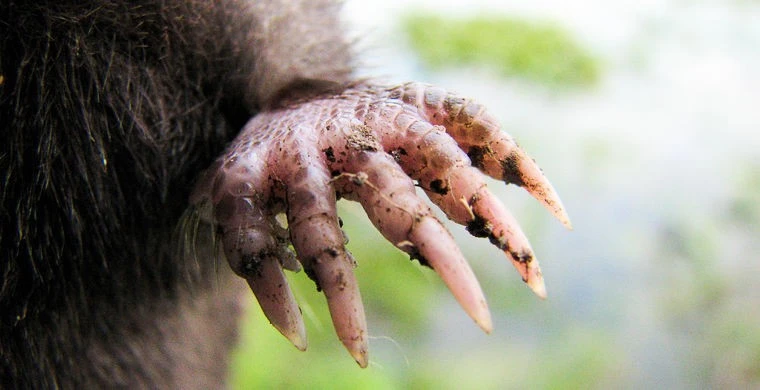
Only with the help of a camera did scientists calculate that this animal can examine up to 13 small objects per second with its "tentacles." When the star-nosed mole eats, it gathers its "rays" into a beam, and when it drinks, it dips them in water. 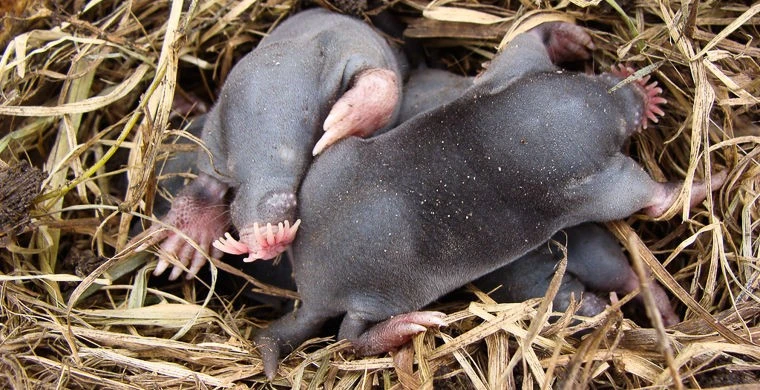
Two of the star-nosed mole's 22 antennae do not bend, but always point forward. Photographers love to take close-up shots of the star-nosed bat, focusing on its "tentacles," which makes it look particularly ugly.
Bat of Vietnam 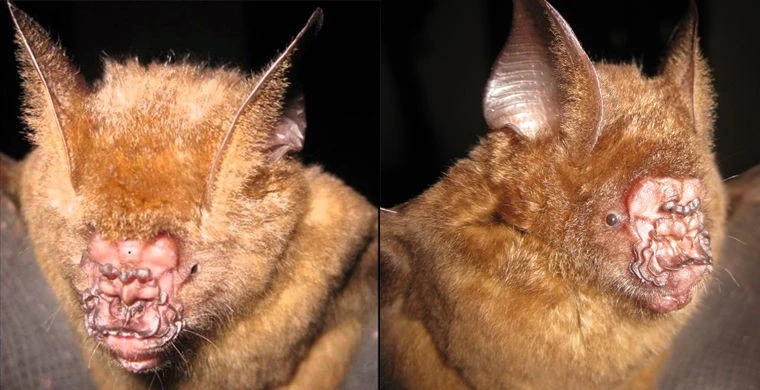
In 2012, scientists announced the discovery of a new species of bat, Hipposideros griffini. These animals, with their unattractive faces, were discovered in several areas of Vietnam. The bats were found to have completely different DNA than their relatives. Scientists concluded that the unusual shape of the nose, formed by a fold of skin, helps the bats use echolocation. The species was named H. griffini in honor of Professor Donald Redfield Griffin, an expert on bat echolocation; it was his work that helped determine that an entirely new species had been discovered.
Marabou 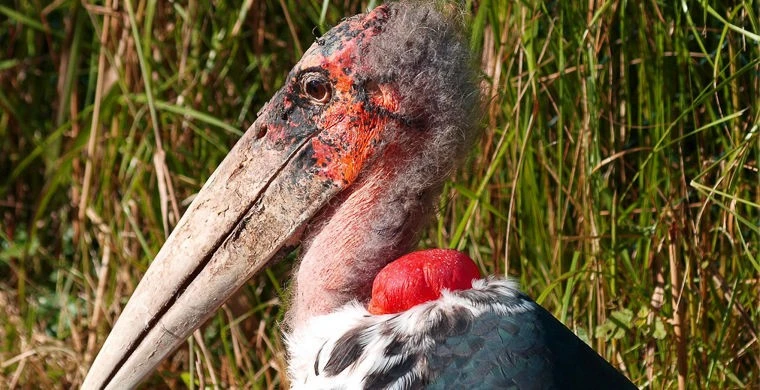
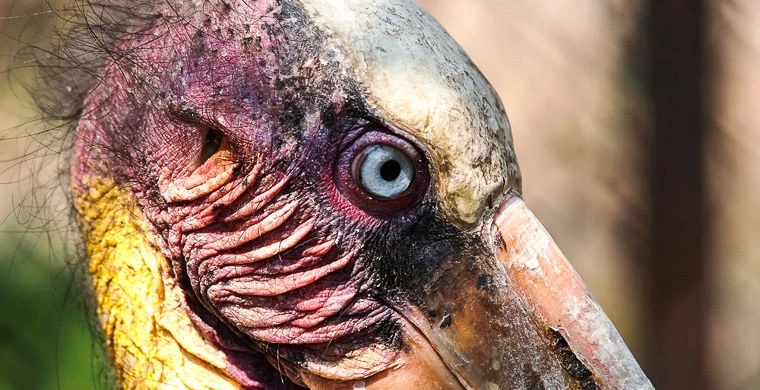
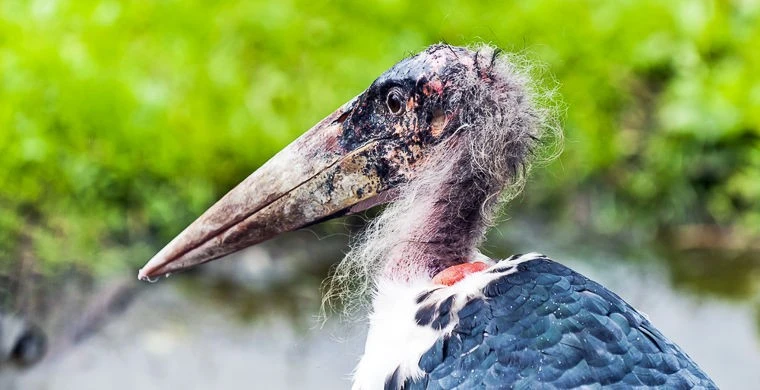
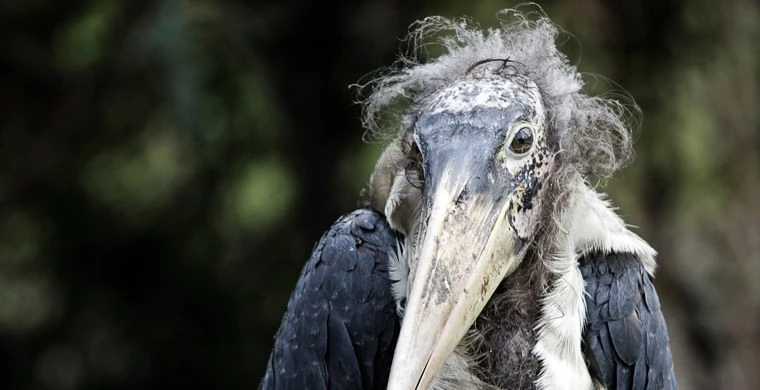
Due to its appearance and habits, the marabou has a reputation as an ugly, vicious, and treacherous bird, an encounter with which is considered a bad omen. 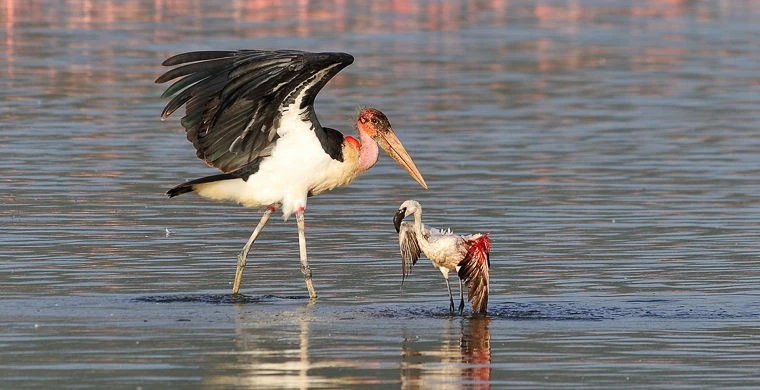
The marabou has a bald head, a massive beak, and a fleshy, leathery sac hanging from its chest, the purpose of which remains unknown to scientists. 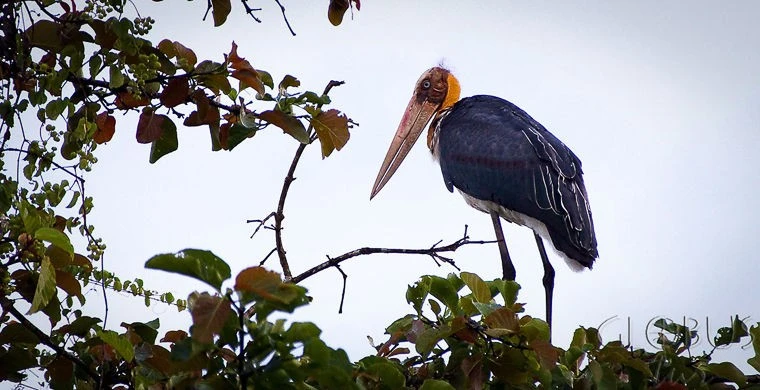
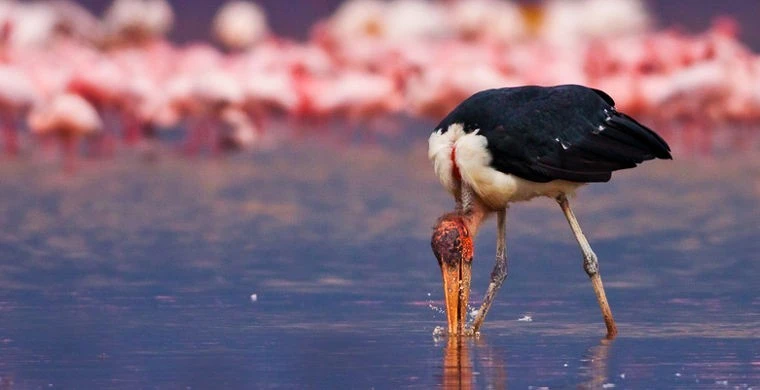
The marabou is the largest member of the stork family, serving as a garbage collector. This bird feeds on carrion, but can also feast on crocodile eggs and hatchlings, as well as its own feathered relatives. 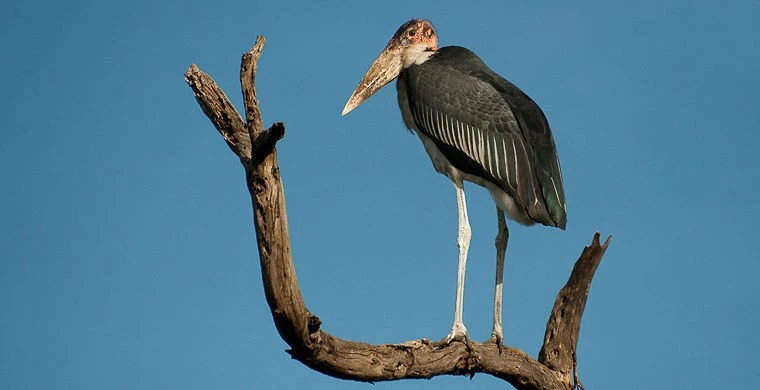
The marabou's digestive system allows it to digest even large bones. 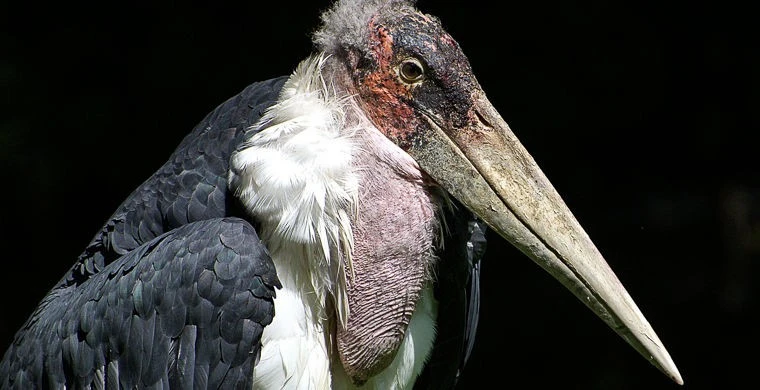
Deep-sea anglerfish 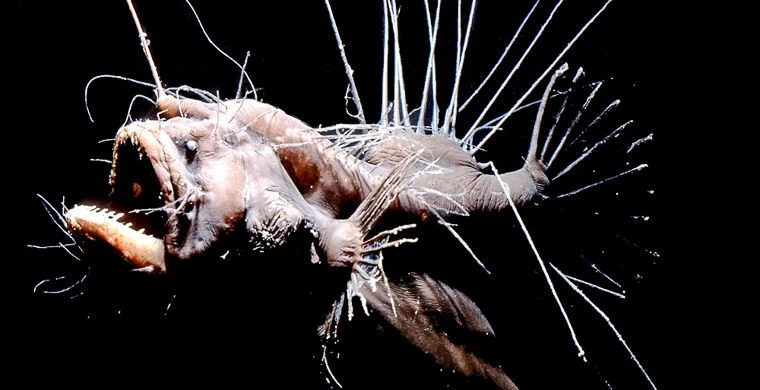
Now this is someone you could star in horror movies without makeup. This sinister fish is also known as the anglerfish. It lives at enormous depths of up to 3 km and hunts using a special fishing rod with a "beacon" at the end: the light attracts prey, and the fish only has to open its toothy mouth wide. 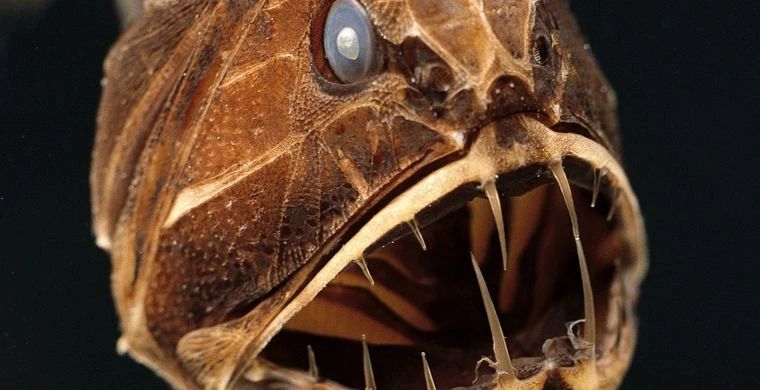
Until recently, people imagined anglerfish as particularly ugly: with bloated bodies and bulging eyes. But that's how they look on the surface, when fishermen pull them from the bottom, while in the depths, where they are weighed down by tons of water, they look somewhat different. It was only in late 2014 that American scientists managed to capture an anglerfish in its natural habitat: using an underwater robot in Monterey Bay, they captured rare footage of one species of this terrifying fish—the Johnson's black anglerfish.
Baboons 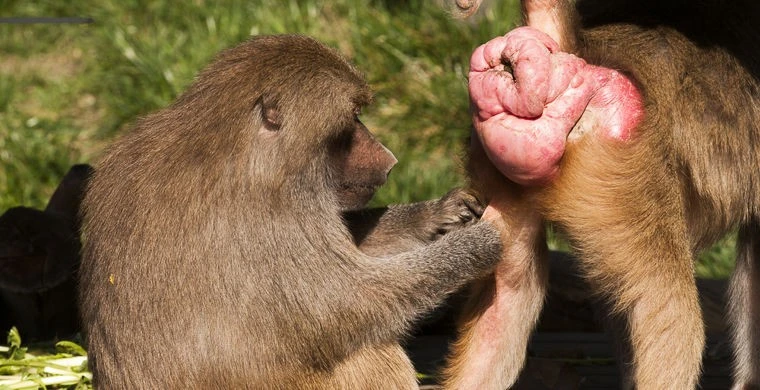
Beauty standards in the animal kingdom don't compare well with those in humans. Take baboons, for example. Even in normal times, they look... peculiar. 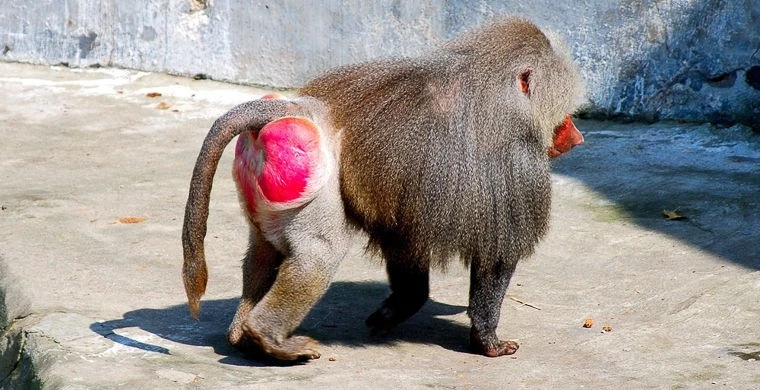
But the female baboon is even more "beautiful" during mating season: her hairless rear swells to incredible proportions and turns bright red. 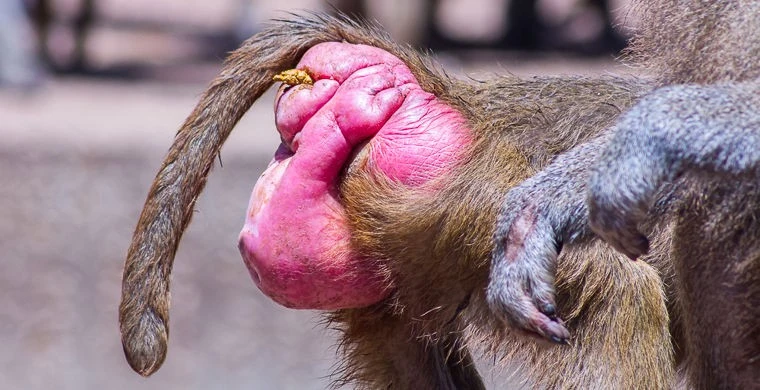
What might shock zoo visitors is a mating signal for the male. The larger and redder the rear, the more prepared the female is for pregnancy and motherhood.
Warthog 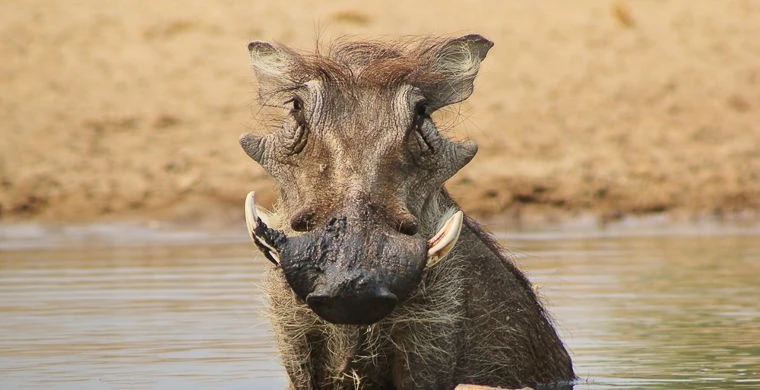
The warthog is perhaps the ugliest member of the pig family. Its flattened head is covered with wart-like growths, and its mouth is covered with formidable fangs up to 60 cm long. 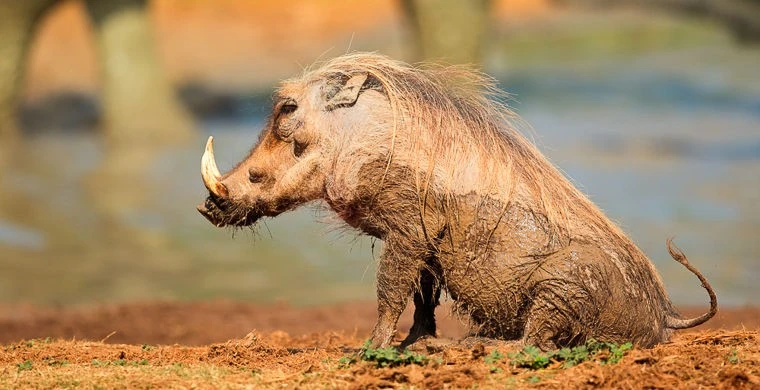
Its fur grows unevenly: a mane-like growth of stiff, sparse bristles covers only the back of its head and spine. Like other pigs, it loves to dig in the mud and always appears dirty, with large calluses on its feet from constant digging. 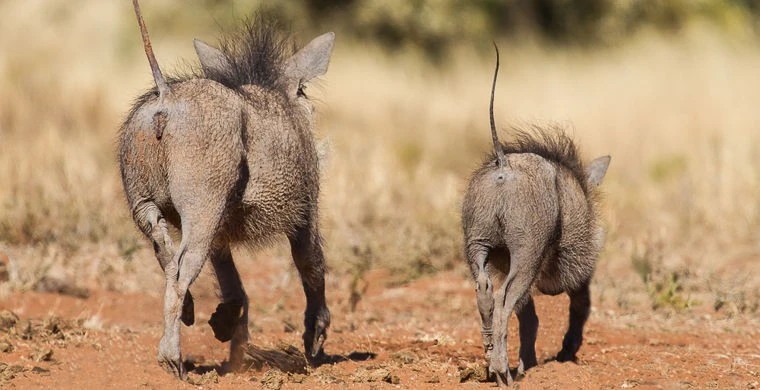
The warthog is cautious and timid; when threatened, it raises its tail, earning it the nickname "Radio Africa."
Add your comment
You might be interested in:












"What Is This Thing?": 20+ Bizarre Objects That

Margaret Hamilton Dies at 90: The Story of the Moon
25 Incredibly Beautiful and Rare Stones (26 Photos)

13 "Healthy" Habits You Should Actually Quit (14

16 Fascinating and Surprising Facts About Life in Sweden

Cassini Spacecraft Reveals Saturn’s Rings (10 Photos)

Hypnotic and Oddly Satisfying GIFs That Show How Food Is

Behind-the-Scenes Feuds: Hollywood's Most Famous On-Set

Soldiers in Lace, a Bowling Geisha, and 20 More Rare Photos
