Why a Modern Driver Wouldn't Make It Ten Feet in a Ford Model T (7 Photos)
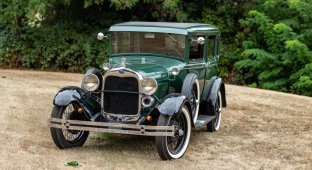
Imagine taking a seasoned driver with decades of experience behind the wheel and putting them in a brand-new car—except that car is a 1908 Ford Model T. 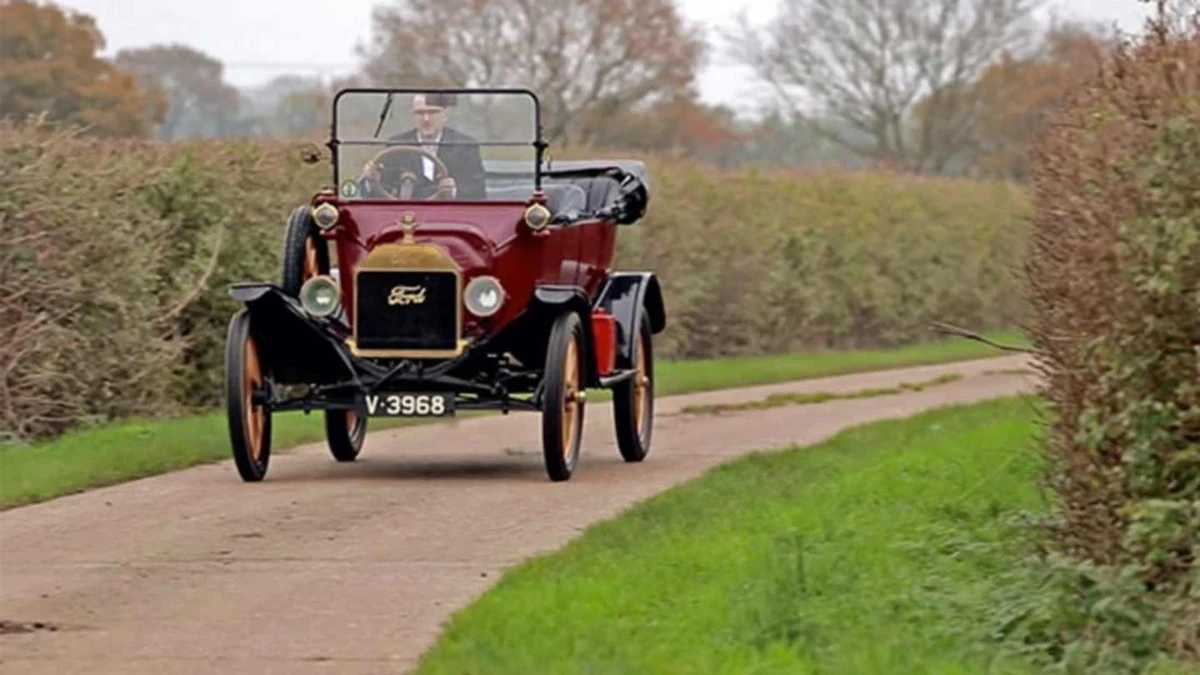
Looks deceptively simple
On paper, it sounds straightforward: three pedals, a steering wheel, an engine—how hard could it be? In reality, most people today wouldn't even be able to get it moving. And if the car did manage to roll forward, within a few feet the driver would likely stall out, accidentally slam it into reverse, or frantically hunt for the gas pedal.
The irony is that over a century ago, the Model T was considered one of the easiest cars in the world to drive.
A Car Unlike Anything on the Road Today
Today, driver controls are almost completely standardized. The left pedal is the clutch, the middle is the brake, and the right is the accelerator. The gear shift handles gear selection, while your right foot controls your speed.
In a Ford Model T, everything was different. 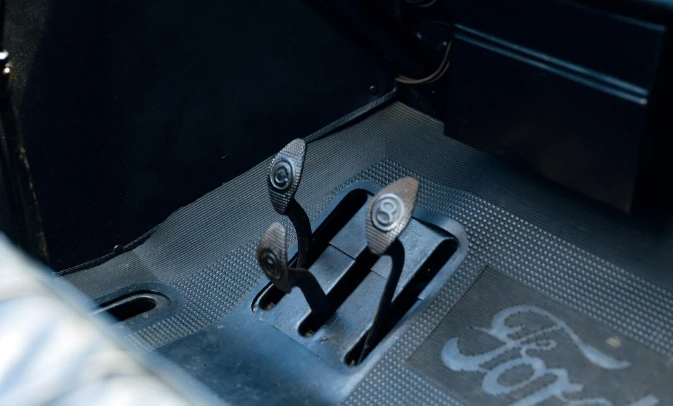
The Model T trap
There were indeed three pedals on the floor, but not one of them controlled the throttle. Acceleration was handled by a small lever mounted on the steering column. A second lever alongside it adjusted the spark advance—a parameter no modern driver ever has to touch by hand.
As for the pedals, they did entirely different things:
the left pedal controlled forward gears;
the middle pedal engaged reverse;
the right pedal slowed the transmission, not the wheels.
Right off the bat, your muscle memory starts working against you.
Why Your Driving Habits Are Useless Here
Modern drivers operate almost on autopilot. Thousands of hours behind the wheel build deep-seated muscle memory.
Want to pull away? Your right foot reaches for the gas. Need to stop? Your right foot shifts to the brake. In the Model T, all of those instincts are wrong. 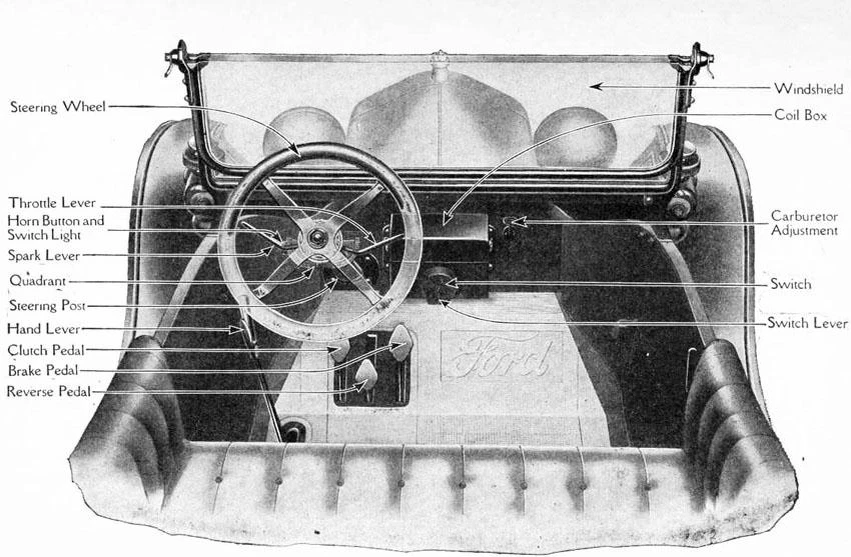
Inside the Model T
The right pedal isn't a conventional wheel brake—it stops the transmission. The throttle is up on the steering wheel. And the left pedal isn't just a clutch; it doubles as the gear shifter.
What's more, it had three distinct positions:
fully pressed down for low gear;
halfway up for neutral;
fully released for high gear.
For a modern driver, the concept of a single pedal acting as both clutch and gear shift is mind-boggling.
The Wildest Part? It Was Simpler Than a Manual
Incredible as it sounds, the Ford Model T was actually far easier to operate than most other cars of its era. The secret lay in its unique transmission design.
In the early 20th century, standard manual gearboxes relied on unsynchronized sliding gears. To change gears, a driver had to match the engine speed to the transmission speed with pinpoint perfection.
The process went like this:
press the clutch;
shift into neutral;
release the clutch;
rev or drop engine RPMs;
press the clutch again;
engage the next gear.
This procedure was known as double-clutching. Off by a fraction of a second? You'd be greeted by a horrific grinding of gears—or worse, a destroyed transmission. 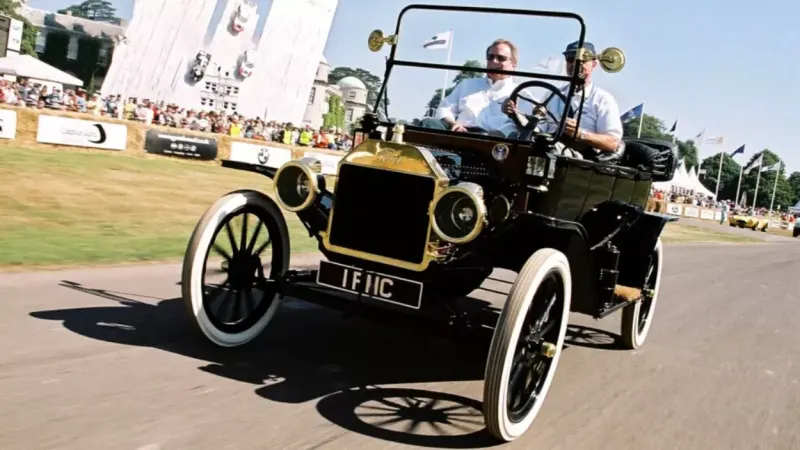
The Planetary Gearbox Changed Everything
Ford's engineers took a completely different path. Instead of a conventional manual gearbox, they opted for a planetary transmission.
Gears weren't engaged by sliding cogwheels back and forth, but by tightening flexible brake bands around spinning drums. 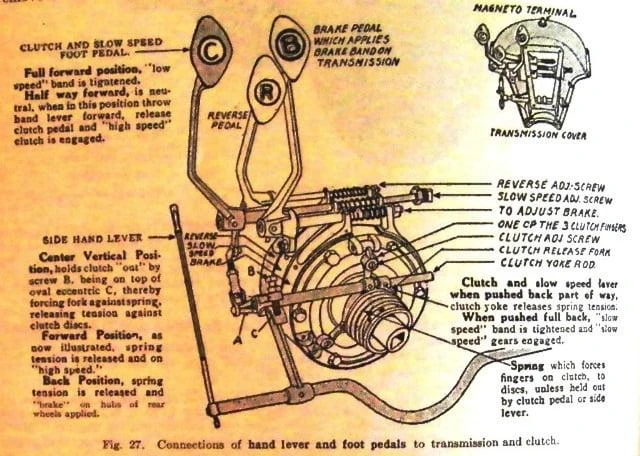
System diagram
Drivers no longer had to finesse engine RPMs to match gear speeds. All you had to do was press the right pedal.
That is why automotive historians often credit the Ford Model T as the car that truly brought driving to the masses.
While driving had previously required genuine mechanical skill, now even former carriage drivers who had never touched a complex machine could learn to operate a car.
Why This Setup Feels Impossible Today
The core issue is that the auto industry has completely overhauled control standards since then.
Our brains operate pedals on instinct—much like touch-typing on a keyboard. Behind the wheel of a Model T, those hardwired habits become a recipe for disaster.
In a split-second reflex, a driver stomps down with their right foot expecting to accelerate—and slams on the transmission brake instead.
Trying to smoothly ease off the "clutch," they accidentally engage high gear.
And when trying to bring the car to a stop, they might inadvertently trigger something that defies every modern notion of braking.
Even a veteran driver becomes a complete novice behind the wheel. 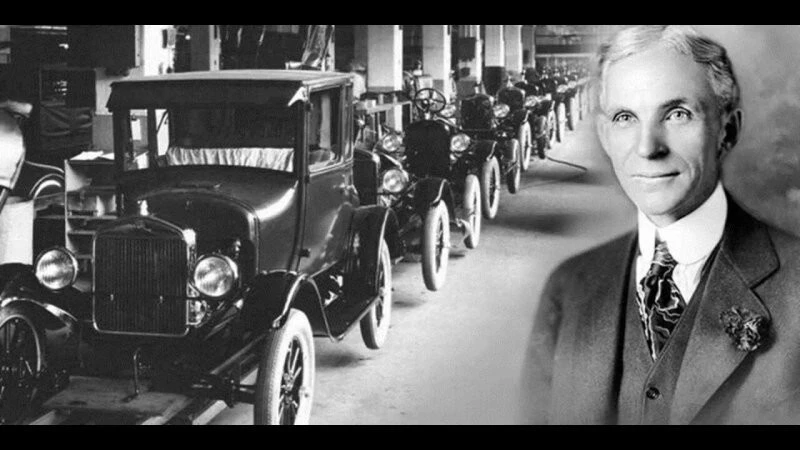
Why the System Disappeared
Despite its clever design, the Model T's planetary transmission had one major drawback: it only had two forward gears.
In the early 1900s, two gears were plenty. Roads were rough, speeds rarely topped 25 to 30 mph, and engines operated within a very narrow RPM band.
As cars evolved, so did expectations.
Engines grew more powerful, speeds climbed, and cars required three, four, then five and six speeds.
Designing a pedal-based layout for that many gears proved virtually impossible—you would either need a floor full of pedals or a hopelessly convoluted combination of presses.
Meanwhile, conventional manual transmissions were advancing rapidly.
By 1928, synchromesh made double-clutching obsolete. Gear shifting became smooth and intuitive. Later, engineers figured out how to operate planetary gearsets automatically using hydraulics—giving birth to the modern automatic transmission. 
The Model T Paradox
The story of the Model T highlights a fascinating quirk of technological progress.
A car that feels impossibly alien and confusing today was, in its time, a revolutionary breakthrough in user-friendliness.
In fact, if you paired a driver from 1915 with a modern motorist, the veteran driver would easily putter away in a Model T, while the modern driver—despite decades of experience—might struggle to roll ten feet. And not because they're a bad driver.
But because over the past century, cars have evolved so dramatically that human habits have shifted alongside the technology. Sometimes progress isn't about making machines more complex; it's about establishing new standards so deeply ingrained in our daily lives that everything that came before feels completely alien.