Behind the Scenes of the Shark Chase in 'Jaws' (12 Photos)
In July 1974, local photographer Peter Vandermark set sail with the crew of *Jaws*. In just a single day, he managed to capture Steven Spielberg checking storyboards, the *Orca* in hot pursuit of the shark, and how the crew manipulated the iconic barrel off-camera to make it look like the giant fish was dragging it along. 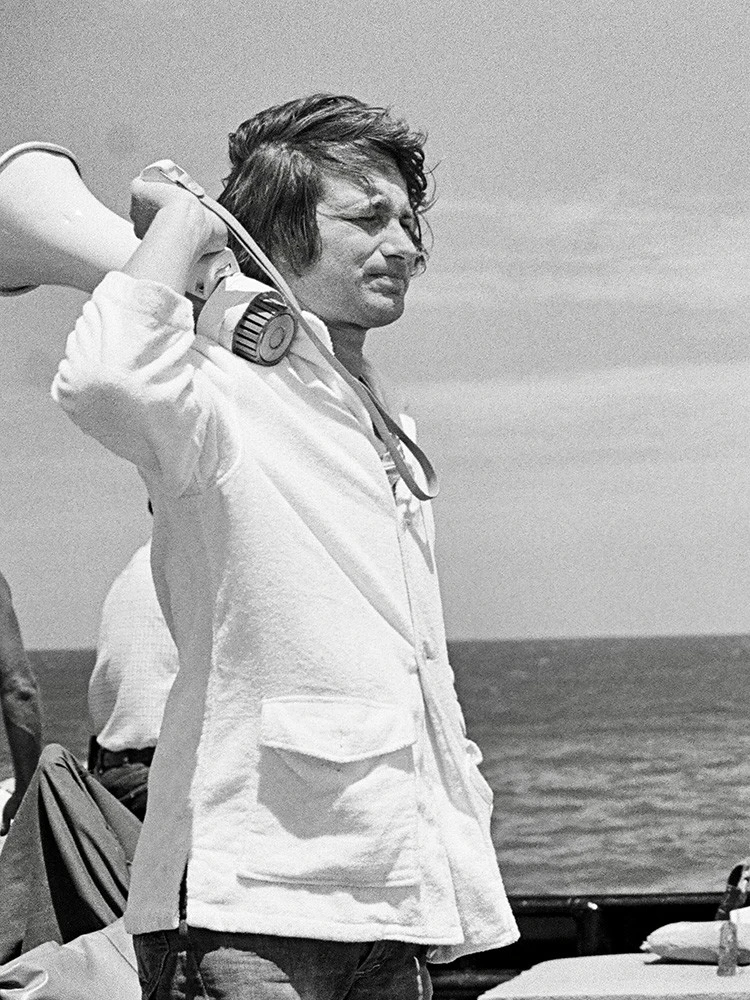
Steven Spielberg directing the *Orca* chase scene. Photo by Peter Vandermark, Boston University.
Vandermark was 26; Spielberg was 27. The photographer and a reporter from the *Cape Cod News* spent the day aboard a tugboat serving as the production crew’s floating base off Cape Poge in Nantucket Sound. Vandermark later recalled how struck he was that someone virtually his own age was running such a massive operation. 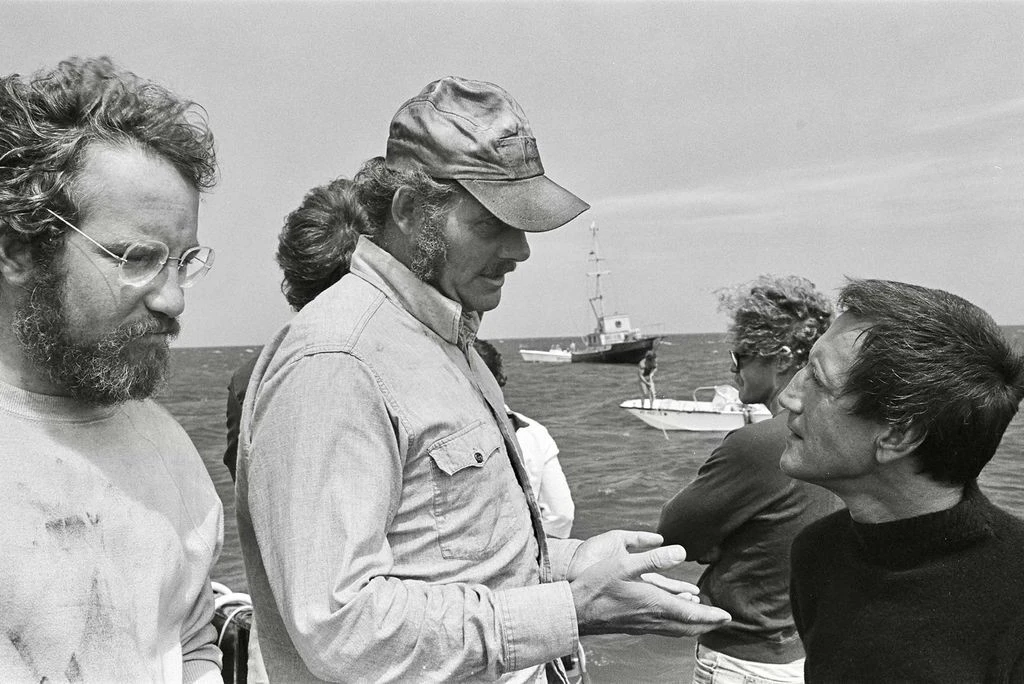
Robert Shaw talking with Roy Scheider, as Richard Dreyfuss passes by on the left. Photo by Peter Vandermark, Boston University. 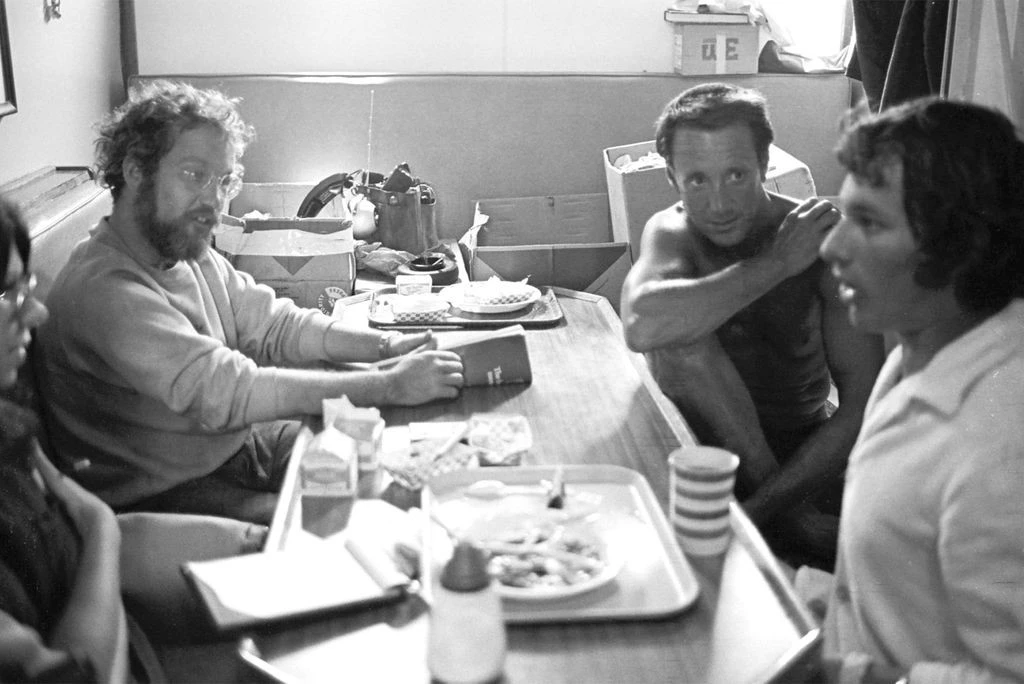
Laura Terrone of the *Cape Cod News* interviews Dreyfuss, Scheider, and Spielberg. Photo by Peter Vandermark, Boston University.
Aboard the *Orca*, everyone had their assigned station. Hooper, played by Richard Dreyfuss, mans the wheel, while Robert Shaw’s Quint stands at the bow. While the harpooned shark is supposed to be dragging the barrel, it was actually being towed by a small boat positioned just out of frame. Watching from a neighboring vessel, the photographer had a front-row seat to both the high-seas chase and the filmmaking secrets behind it. 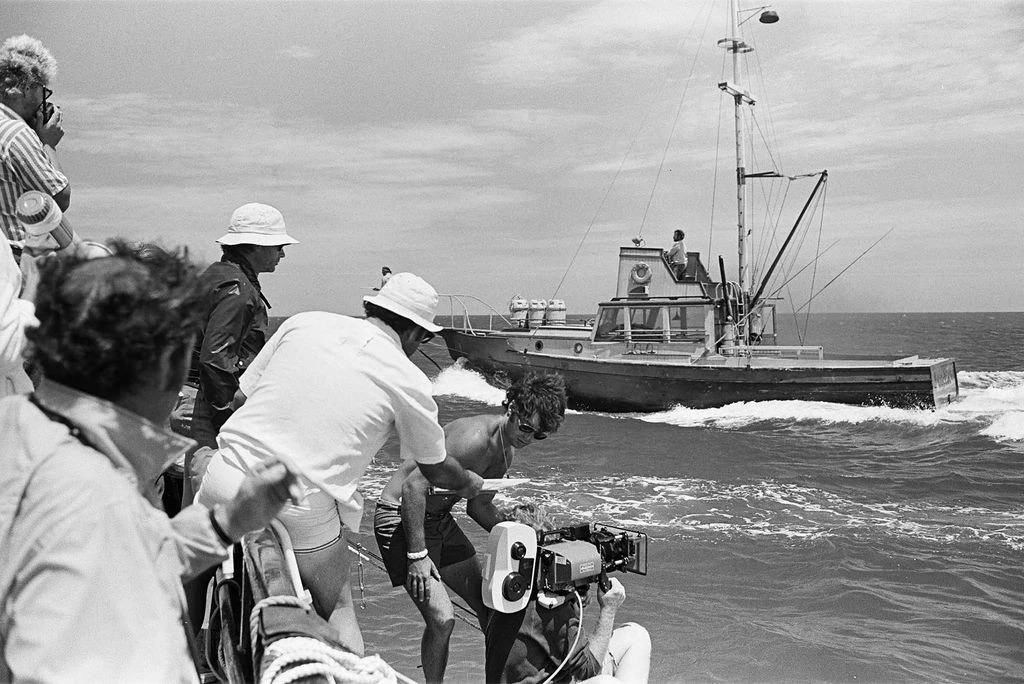
Filming the chase scene from a neighboring vessel: Hooper at the wheel of the *Orca*, Quint at the bow. Photo by Peter Vandermark, Boston University. 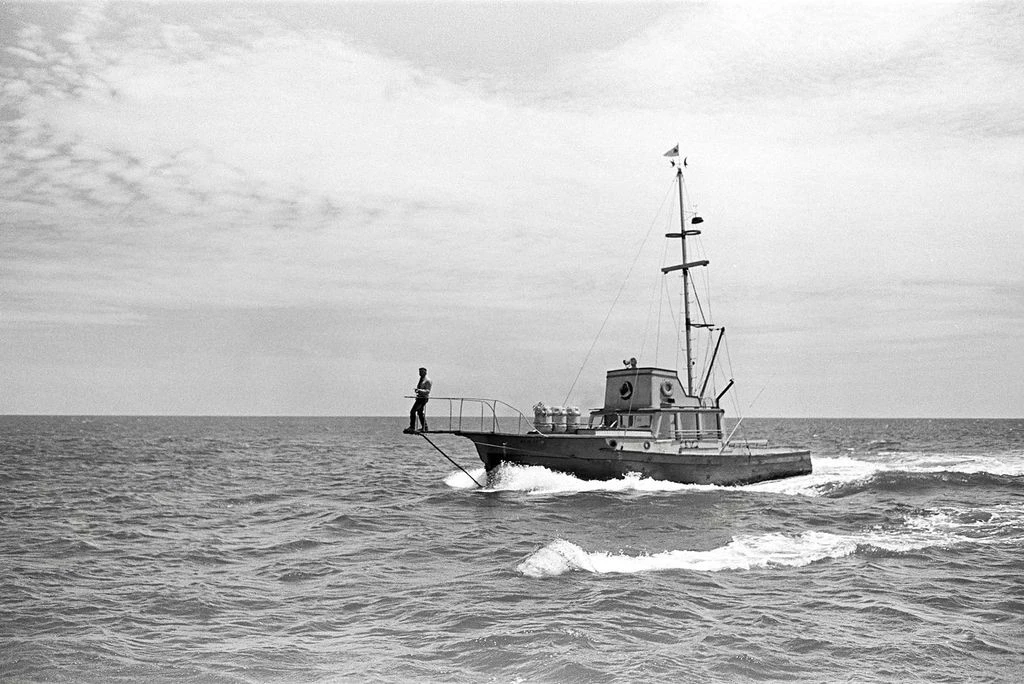
Robert Shaw standing on the bow of the *Orca*. The barrel in this scene was towed by an off-camera boat. Photo by Peter Vandermark, Boston University.
In photos showing him with the storyboards, Spielberg can be seen setting up the next shot—after which everything was at the mercy of the swell. Director of photography Bill Butler later recalled that keeping the boats steady was virtually impossible. Camera operator Michael Chapman found a clever solution: he handheld the Panaflex camera and swayed with the boat's motion, making it much easier to keep the actors in frame aboard the small vessel. 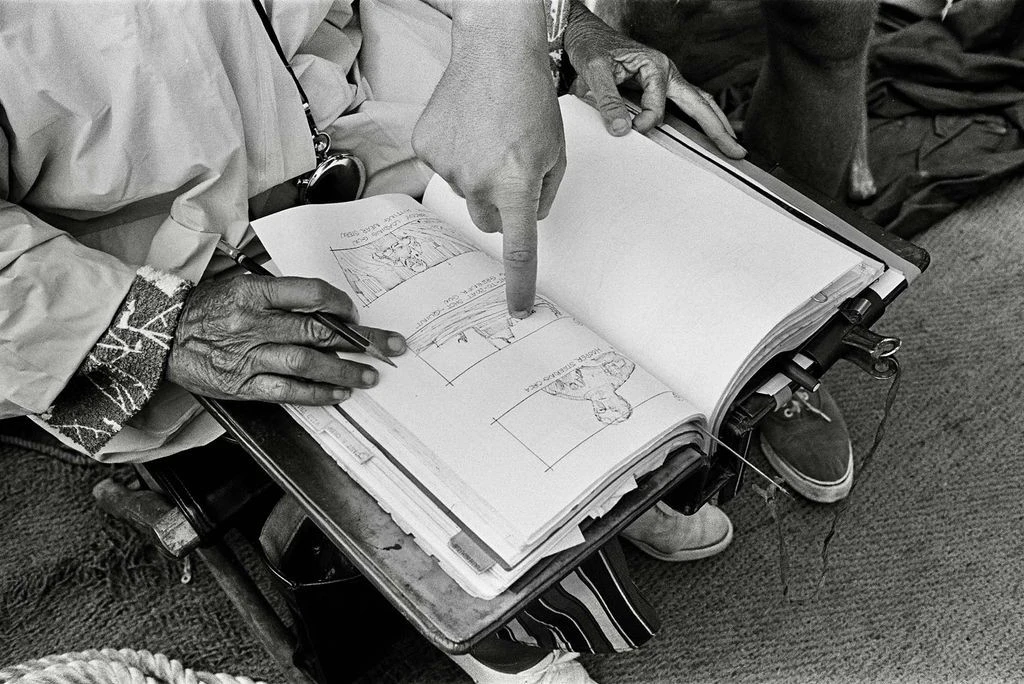
Spielberg outlining the next shot on a storyboard. Photo by Peter Vandermark, Boston University. 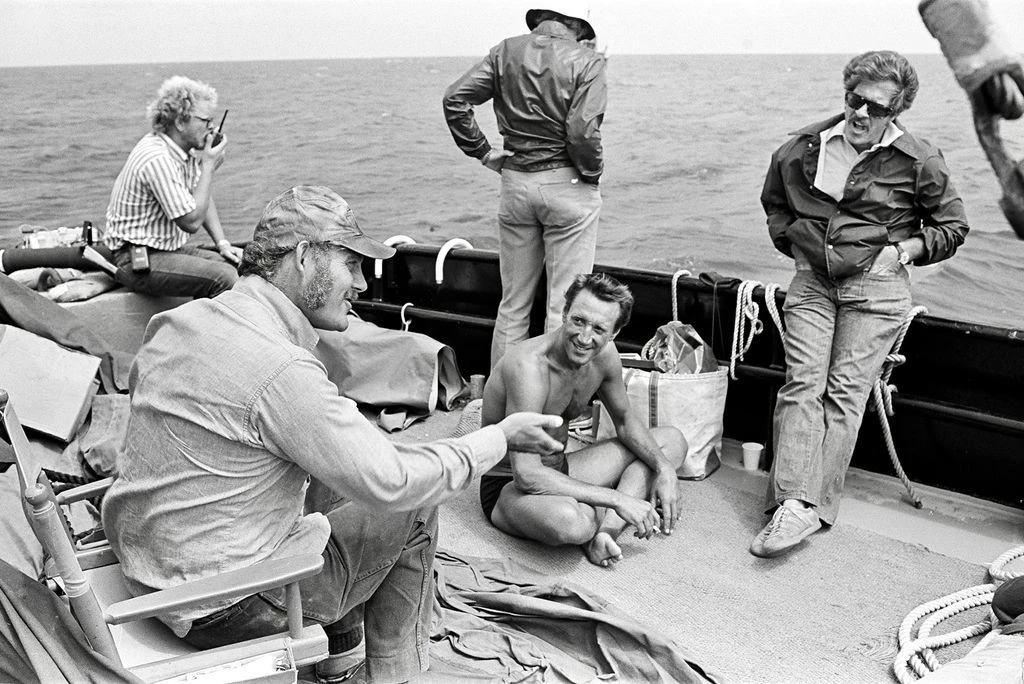
Assistant director Tom Joyner (far left, holding a walkie-talkie) and director of photography Bill Butler (back to the camera) working on board with the cast. Photo by Peter Vandermark, Boston University.
For water-level shots, Butler used a custom waterproof Panavision housing originally designed to shoot river rapids for *Deliverance*. On *Jaws*, the housing was lowered so far that the lens hovered just millimeters above the surface. When a wave splashed over the protective glass, the camera stayed dry while giving audiences a dramatic swimmer’s-eye view. 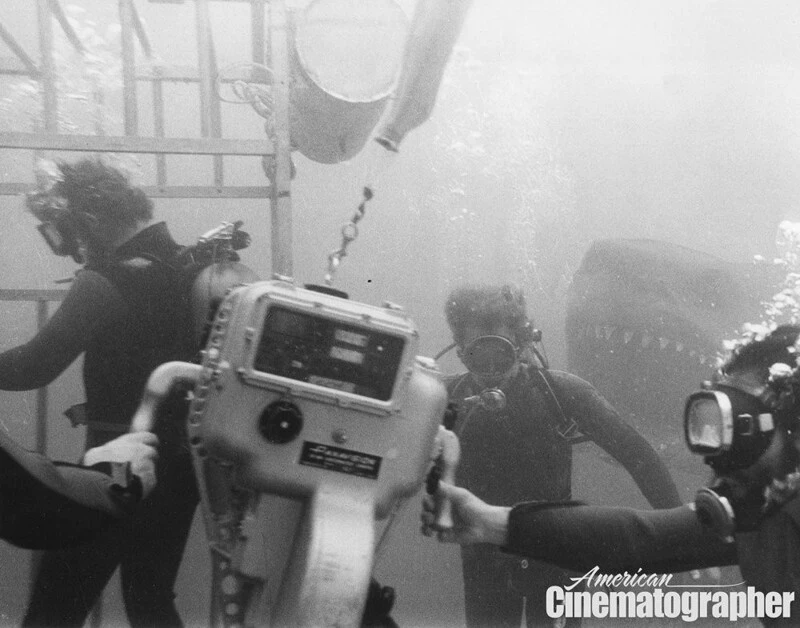
The water shots required specialized equipment. An archival photo shows divers alongside the camera housing. Source: American Cinematographer archive.
The family archive of Peter Benchley offers another perspective on the production. One August photo shows the mechanical shark being towed through the water on a wooden rig. Benchley, who wrote the original novel, also made a cameo as a local news reporter. His family gallery includes moments discussing the scene with Spielberg as well as filming the interview with Hooper. 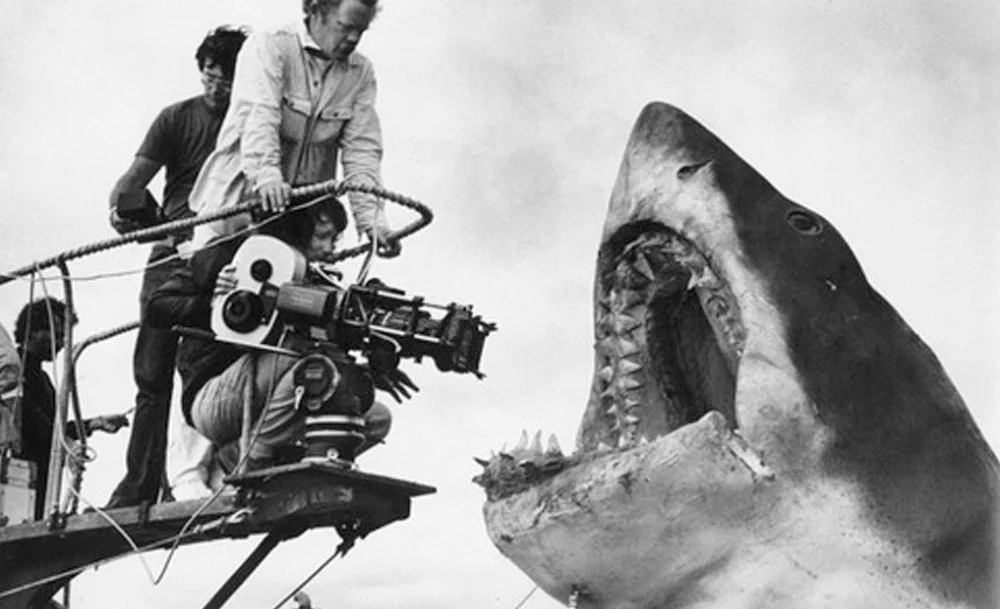
The camera set up in front of the mechanical shark. Photo from the Peter Benchley family collection. 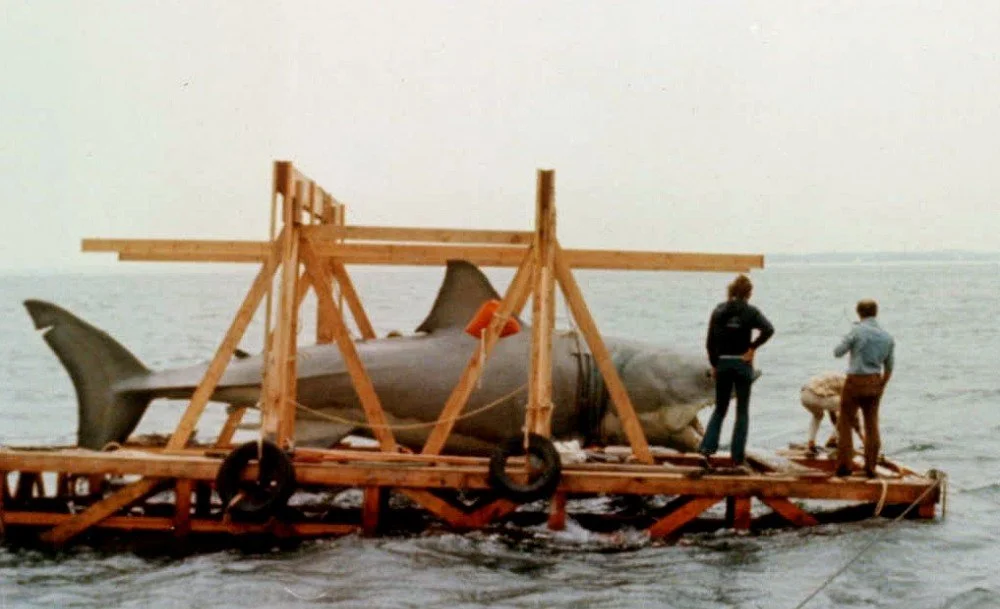
Towing the mechanical shark off Martha’s Vineyard, August 1974. Photo from the Peter Benchley family collection. 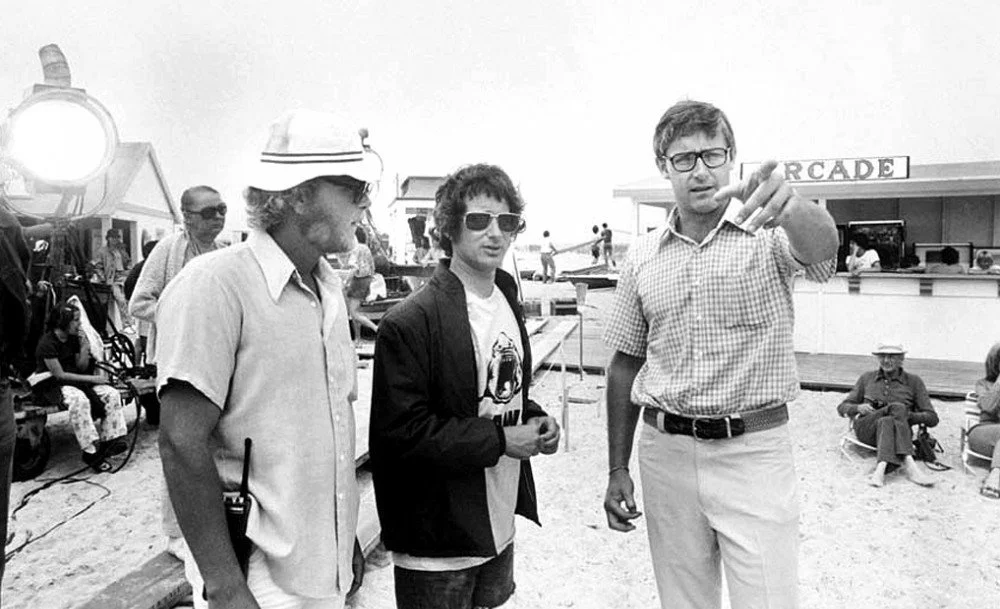
Spielberg discussing a cameo appearance with Peter Benchley. Photo from the Peter Benchley family collection. 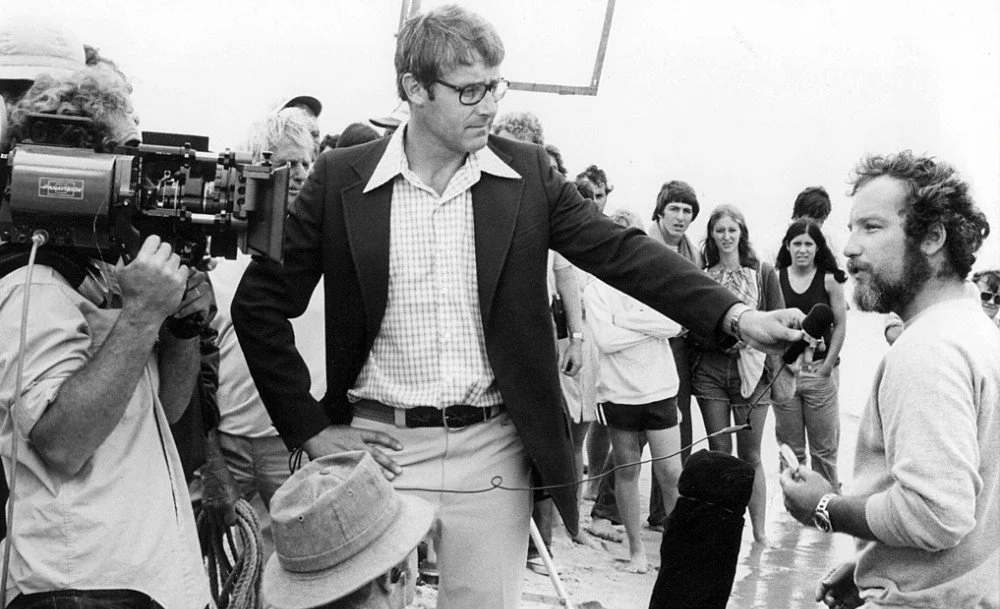
Peter Benchley, playing a news reporter, interviewing Richard Dreyfuss’s Hooper. Photo from the Peter Benchley family collection.
Vandermark developed his film the very next day, and the photo story ran on July 24, 1974. The negatives sat untouched for decades until an author writing a book on the making of the film requested photos for a new edition. Vandermark had them scanned, seeing many of the enlarged shots for the first time in his life.