At first glance, the answer might seem obvious: life on Earth appeared once and then began to evolve. From the first primitive organisms, bacteria, archaea, plants, animals, and ultimately, us, gradually emerged.
But in reality, the question posed in the title is much more complex. 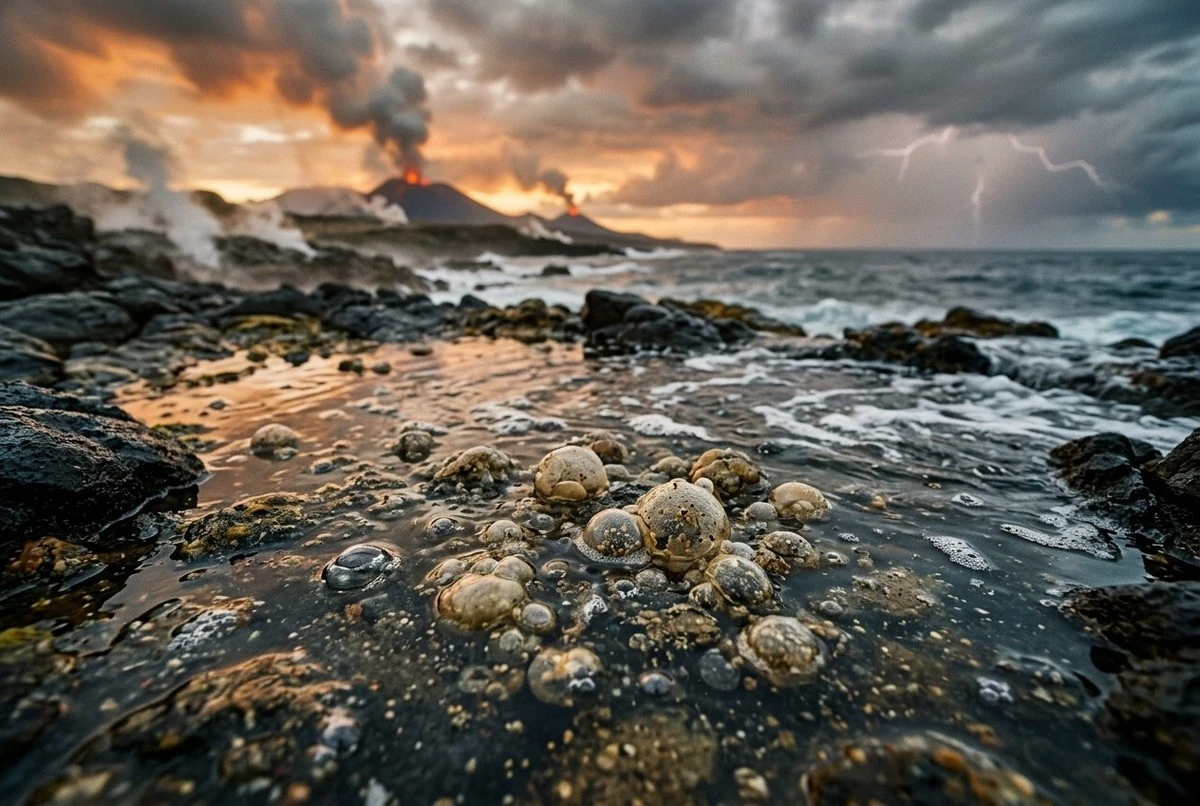
So, there is no doubt that life exists on Earth. And we know that it emerged several billion years ago. But we don't know how many times nature tried to give rise to it and how many times it succeeded.
All living organisms are remarkably similar in structure. Bacteria, fungi, trees, whales, and humans use DNA and RNA to store and transmit information, proteins are assembled from amino acids, and cells use ATP as a universal energy currency. What's particularly interesting is that the genetic code of all living things is also almost identical.
And this, of course, is no coincidence. All the diversity of life we observe on Earth today traces back to a single common root—the last universal common ancestor, known as LUCA. It's important to note that, in a strict scientific sense, LUCA was not the first living organism on Earth. Rather, it was the final common point from which all branches of modern life diverged.
And then comes the interesting part.
The fact that all modern life shares a common ancestor does not prove that life arose only once. It merely indicates that a single, successful lineage has survived to the present day.
The early Earth had oceans, volcanic activity, a chemically rich environment, energy sources, organic molecules, and millions of years to experiment. Under such conditions, various forms of proto-life could have emerged—simple chemical systems capable of growth, metabolism, and primitive inheritance. But ultimately, only one lineage survived.
Imagine not a single tree of life growing from a single seed, but an entire forest of different trees. Somewhere, the chemical system proved unstable and disintegrated. Somewhere, it was unable to reliably transmit information. Somewhere, one lineage of life simply couldn't withstand competition from another. And so, hundreds of millions of years later, only one lineage remained, giving rise to full-fledged biological evolution. 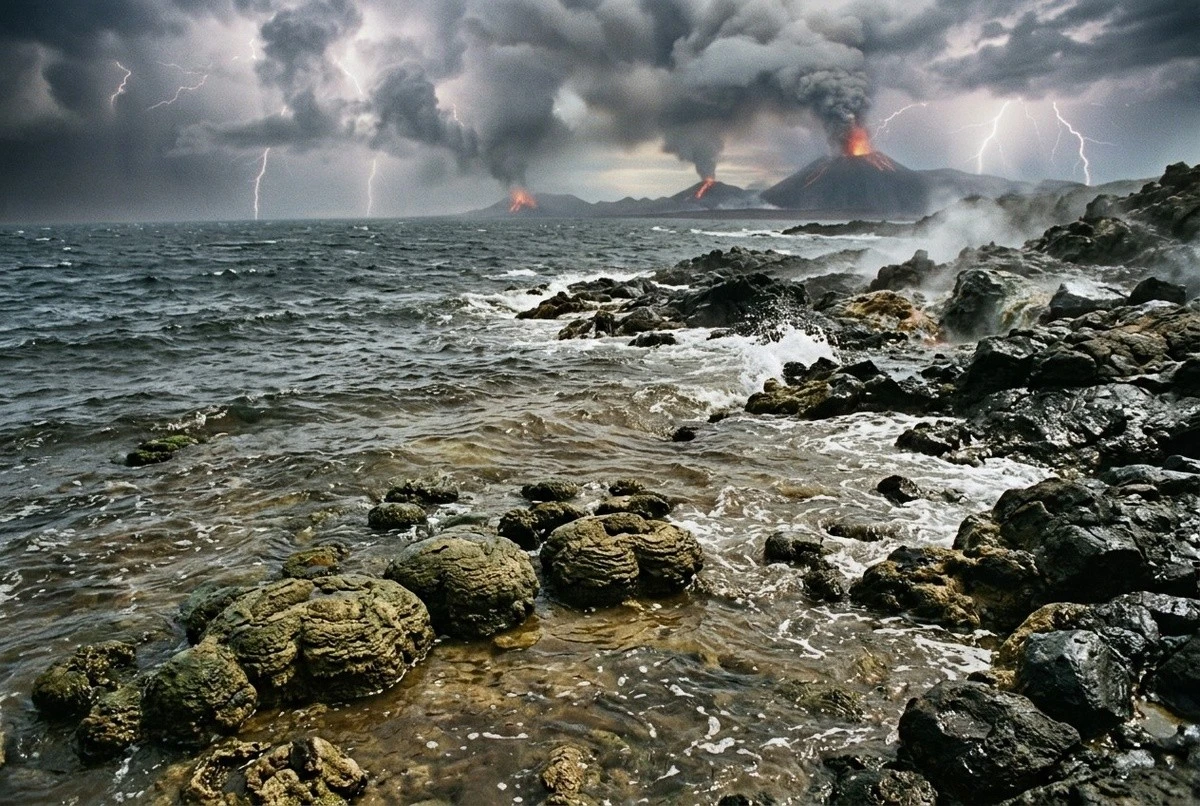
From this point on, the sole surviving lineage gained a huge advantage. It no longer simply existed passively in the environment, but modified it to suit its needs. The first successful organisms utilized available molecules, occupied favorable ecological niches, and literally "devoured" chemical resources from which life could theoretically have emerged again.
Therefore, it is possible that life arose multiple times on early Earth, but all but one of these experiments failed. And the evidence could have long since been destroyed: molecules were destroyed, rocks were reworked by geological processes, oceans and land changed, and the most successful lineage of life occupied the entire planet.
It's worth mentioning one intriguing hypothesis: a "shadow biosphere" may exist on Earth—organisms with a different biochemistry than our own. For example, with a different set of molecules or an unusual metabolic process. Simply put, another line of life may be lurking somewhere, surviving to this day. However, there is no evidence to support this. All discovered organisms, no matter how strange they may be, still belong to the same tree of life as us.
Add your comment
You might be interested in:














20 Personal Photos of Celebrities That Ooze Vintage

Global Sex Symbol: Rare Photos of Monica Bellucci (26
Animal Paws and Claws: 50 Photos That Will Surprise Even

America's Cheese Caves: How and Why the US Government
Fascinating Facts to Blow Your Mind (10 Photos)

How an Airline Pilot Was Sucked Out of the Cockpit

Thieves Stole NVIDIA Rigs Hunting for Scarce GPUs, But Got

This Korean Photo Studio Might Just Take the Best Family

Hilariously Awful Design Fails That Make Zero Sense (20
