5 Discoveries That Mainstream Science Can't Explain (6 Photos)
Whenever someone tells me that human civilization progressed on a strict schedule—from stone axes to steam engines and then to microchips—I instantly get skeptical. The actual history of humanity is far more complex and subtle. Every so often, it throws us artifacts that stubbornly refuse to fit into this convenient narrative. 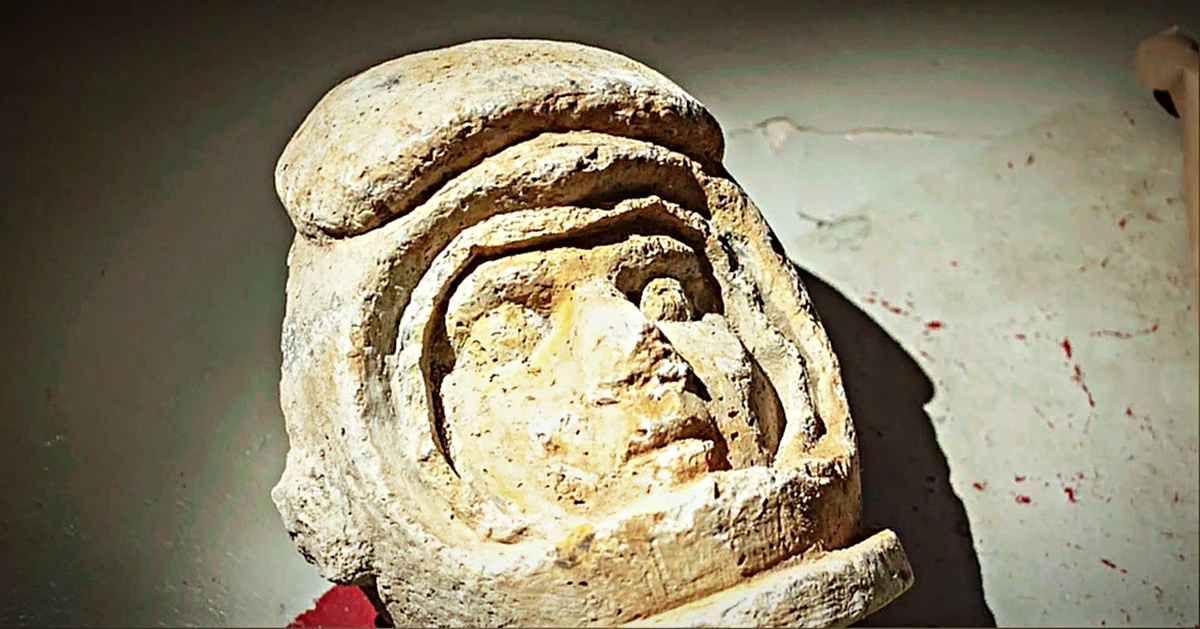
Today, I want to talk about discoveries often categorized under the umbrella of "forbidden archaeology." It's a sensational label—one I roll my eyes at whenever I hear it—but it captures the essence: these are artifacts with a level of complexity that makes no sense for their era. We aren't talking about UFO enthusiast fantasies here, but real artifacts sitting inside display cases in museums from Athens to Baghdad and Bogotá.
The Computer That Spent Two Thousand Years at the Bottom of the Sea
In 1900, a Greek sponge diver discovered an ancient shipwreck off the coast of Antikythera. Amid the amphorae and statues, divers salvaged a misshapen, corroded lump of green bronze. Nobody at the time realized what they were holding. 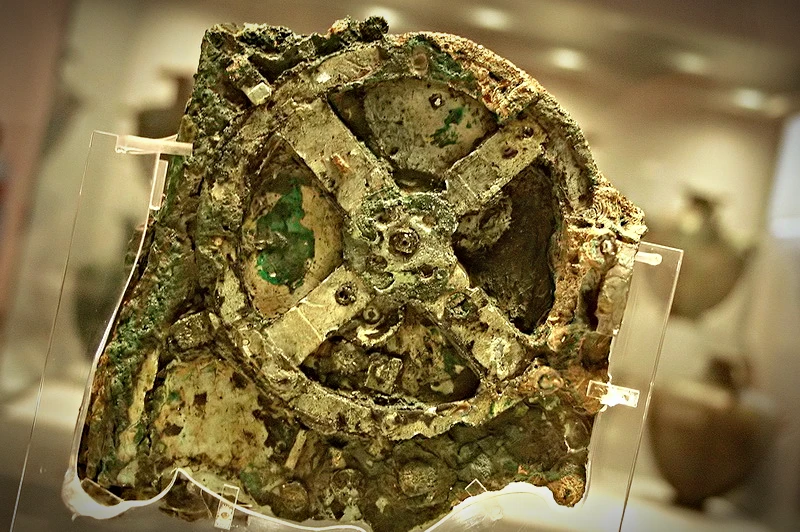
The Battery from Mesopotamia 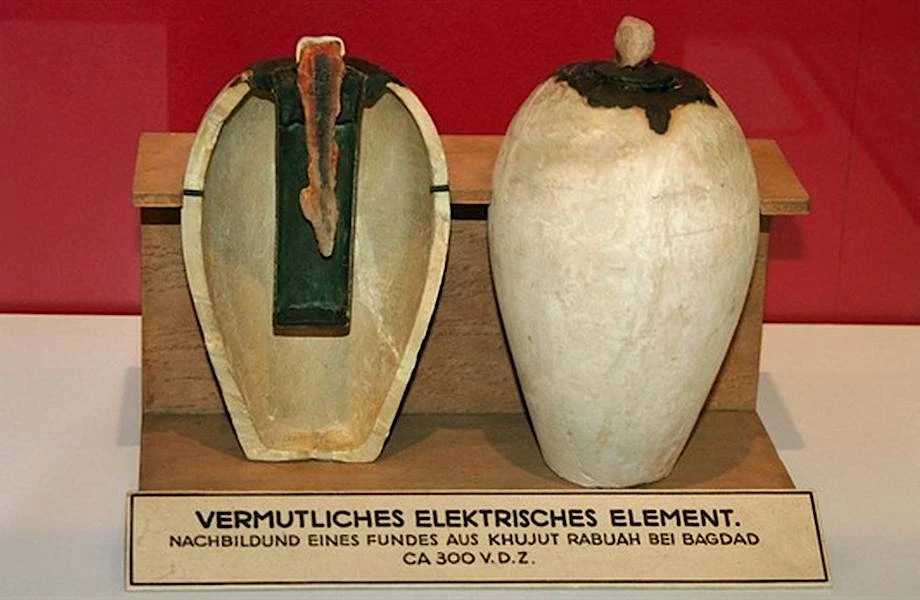
In the 1930s, German archaeologist Wilhelm König, then director of the National Museum of Iraq in Baghdad, excavated several small clay jars. Inside each was a copper cylinder housing an iron rod, sealed tightly with bitumen.
The design so closely resembled a galvanic cell that after World War II, an engineer at General Electric built an exact replica. Filling it with vinegar produced a functioning electrical current—weak, around one volt, but undeniably real. The Parthians might have actually used electricity, most likely to electroplate jewelry with a thin layer of gold.
Honestly, I take this theory with a grain of salt. Archaeologists never found any wires, and no electroplated gold items from that era have been uncovered in Iraq so far. They might simply have been scroll containers, with the electrical reaction being a mere coincidence of materials. Still, the fact remains: whether by accident or design, people in the third century AD assembled a device capable of generating power. It makes you wonder how many similar "accidents" are still waiting to be recognized in museum storage rooms.
Pre-Columbian Golden Wings 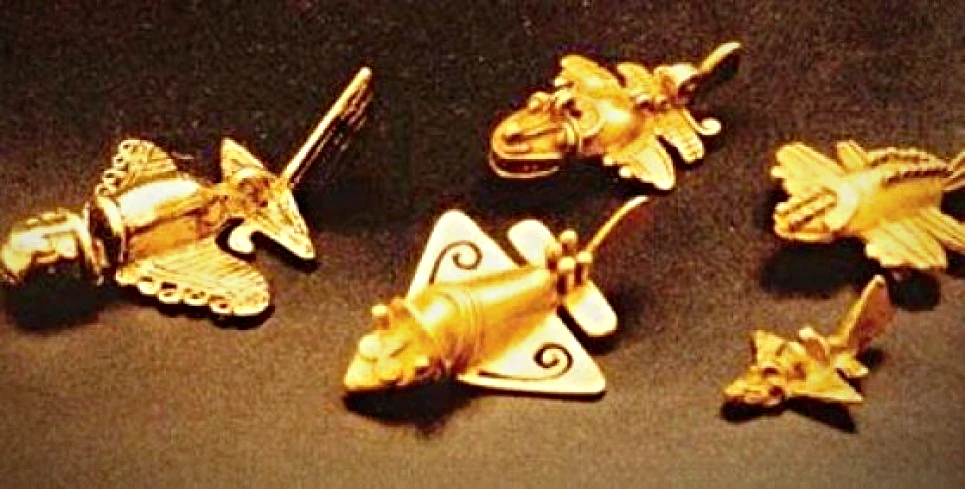
Museums in Bogotá house tiny gold figurines crafted by the Quimbaya culture, dating back roughly to the first millennium AD. Officially, they are cataloged as representations of birds or lizards. But look closely: some feature a vertical tail fin, delta wings along the bottom of a fuselage, and even what looks suspiciously like a cockpit.
In the 1990s, German model aircraft builders scaled up these figurines while maintaining their exact proportions and built remote-controlled models. Test flights revealed excellent aerodynamics and remarkable stability. A coincidence? Perhaps. But it's an awfully convenient coincidence for a creature an artist allegedly dreamed up out of thin air.
A similar story surrounds the wooden Saqqara Bird—it also features a vertical tail fin unknown in real birds, yet essential for a glider.
Surgeons We Knew Nothing About 
While ancient technical devices always spark heated debate, ancient medicine offers far clearer proof—we have physical skeletal remains, and bone doesn't lie.
Trepanation—drilling holes into the skull—has been practiced since the Neolithic era. Skulls with neatly crafted perforations have been uncovered from Europe to Peru. Most astonishingly, many patients lived for years after the procedure, as evidenced by healed bone tissue around the edges. Among the Incas, survival rates reached 80 to 90 percent, outperforming 19th-century battlefield surgery. To me, this is one of the most underrated facts in the history of science. We are used to thinking of ancient humans as primitive, yet they performed brain surgery with success rates that doctors from two centuries ago would have envied.
The Etruscans crafted gold dental bridges. In Egypt, researchers uncovered a mummy with a wooden prosthetic big toe consisting of three flexible joints and attached via leather straps. It was fitted so meticulously that the wearer could walk comfortably in sandals.
Stones That Remember the Stars 
Stonehenge, construction of which began nearly five thousand years ago, is far from a chaotic pile of boulders. The alignment of the stones directly corresponds to the sunrise on the summer solstice. This required not only the brute strength to transport multi-ton megaliths across hundreds of miles, but also deep astronomical knowledge passed down across generations without a written language.
In the late 1970s, as part of the Dragon Project, British researchers recorded unusual ultrasonic pulses near the Rollright Stones, which fluctuated depending on the time of day. Quartz sandstone, used to build many megaliths, exhibits a real piezoelectric effect—it generates an electrical charge under mechanical stress. Mainstream science remains skeptical of such studies, and understandably so. Still, the deliberate choice of these specific rock types and locations—frequently situated along geological fault lines—gives one pause.
My Take on All of This
After years of exploring these kinds of discoveries, I've come to a simple conclusion: human progress has never been a straight line moving steadily upward. It's more like climbing a mountain trail, where travelers frequently get lost in the fog, lose their way, and then rediscover the path along an entirely different route.
Technologies vanished alongside lost civilizations, and knowledge died with master craftsmen who never got the chance to pass on their secrets. What strikes us today as an impossible enigma is often just a reminder that ancient cultures were far more capable than we give them credit for. I wouldn't be surprised if dozens of similar items are sitting in museum archives around the world right now, waiting for someone to finally understand what they really are.