Einstein: "The distinction between past, present, and future is merely a stubbornly persistent illusion" (2 photos)
On March 15, 1955, Michele Angelo Besso, a Swiss-Italian engineer and close friend of Albert Einstein, passed away. 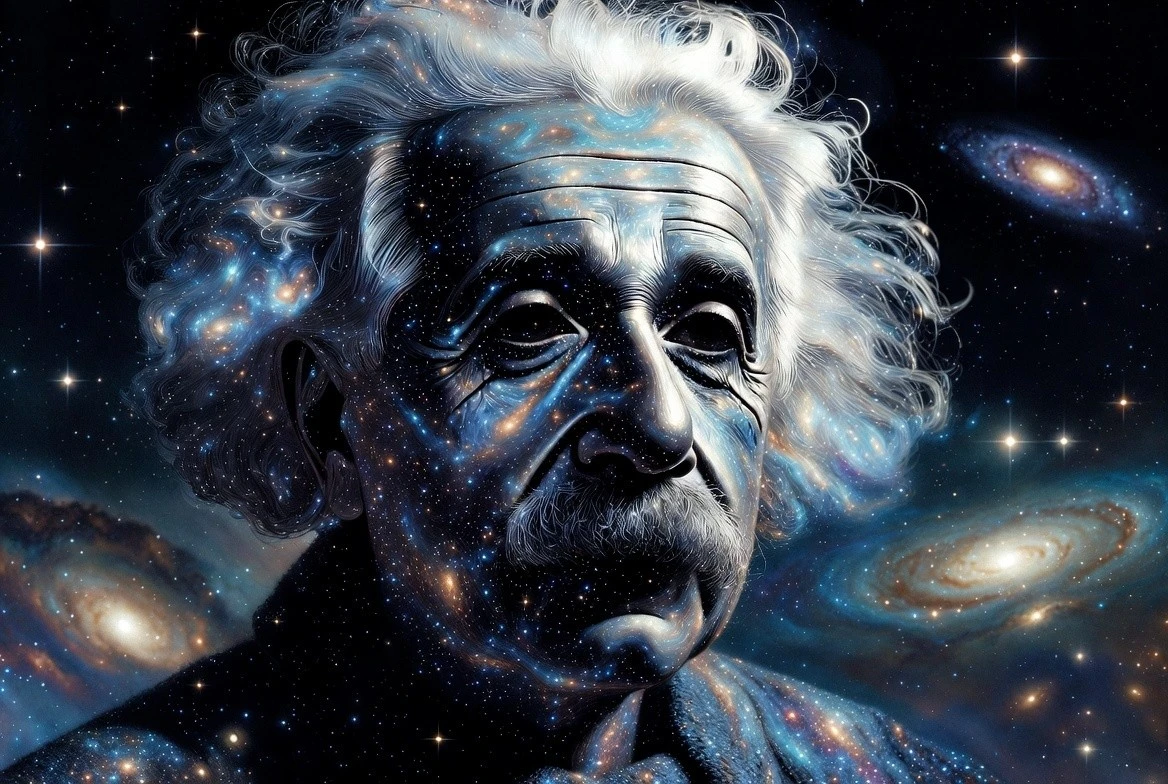
Upon learning of his friend's departure, Einstein wrote his family a most unusual letter, a section of which was particularly interesting:
"He left this strange world a little before me. It means nothing. For us who believe in physics, the distinction between past, present, and future is merely a stubborn illusion," the great physicist consoled his friend's family with these words.
A little over a month later, on April 18 of that same year, Einstein himself departed this "strange world." Apparently sensing that his end was near, he attempted to express his understanding of death in writing, using the language of physics.
What did he mean?
In the letter, Einstein discussed time in the context of his theory of relativity, according to which time is not a separate "river" flowing equally for everyone. It is connected to space into a single space-time, and its flow depends on speed and gravity.
This gave rise to the concept of a "block universe" in physics: events in the past, present, and future do not "disappear" or "emerge," but simply occupy their place in space-time.
Therefore, Einstein's phrase is a veiled attempt to say that death does not devalue his friend's life. Their shared history, the moments they shared with their family, the very fact of Besso's life and scientific work haven't "disappeared into nothingness"—they simply now reside in other regions of space-time, to which we have no access.
Time as an Illusion
In the theory of relativity, there is no single "now" in the Universe: it is structured differently for different observers. Therefore, the familiar feeling for all of us living on Earth that only the present moment exists, the past has disappeared, and the future has not yet arrived, may not be a fundamental property of nature, but a peculiarity of our perception of reality and language. 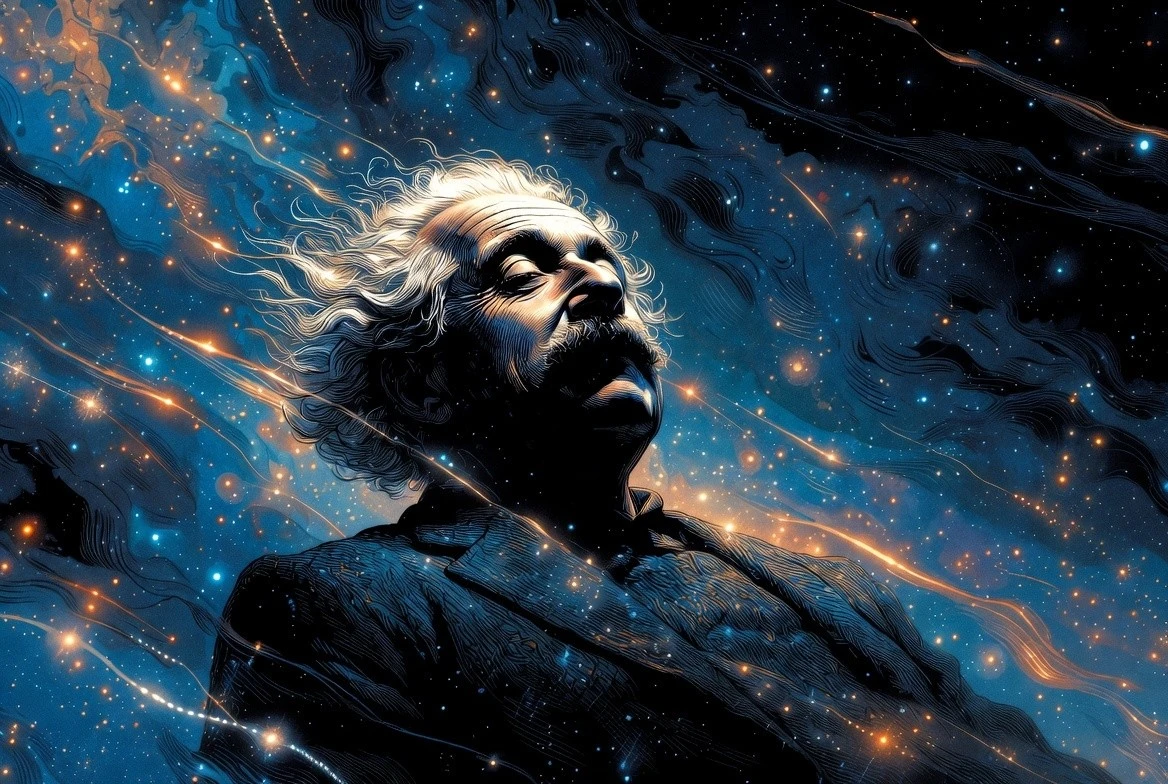
This is precisely what Einstein expresses in his letter: the boundary between "was," "is," and "will be" is illusory.
A theoretical physicist who spent his entire adult life striving to understand the structure of the world, at the end of his life, formulated an idea that in many ways resonates with the religions and beliefs of different eras and peoples: life is not a fleeting flash that disappears without a trace, but a fact that is inscribed in the annals of the universe. And although for us the boundary between "was," "is," and "will be" seems insurmountable, by the standards of the universe, it is arbitrary. Nothing truly disappears, and a life lived is not erased—it remains a fact of the world, just not in our "now."
It's important to note that this is more of a philosophical conclusion from the physical worldview than a scientific proof of "life after death."