The tangalunga, or Malayan civet, is a relative of the cat that farmers on the Malaysian Peninsula detest. Not because it steals chickens or other small birds, but because it eats fruit straight from the trees! And if you try to catch one, be prepared to wash your clothes from the disgusting smell! 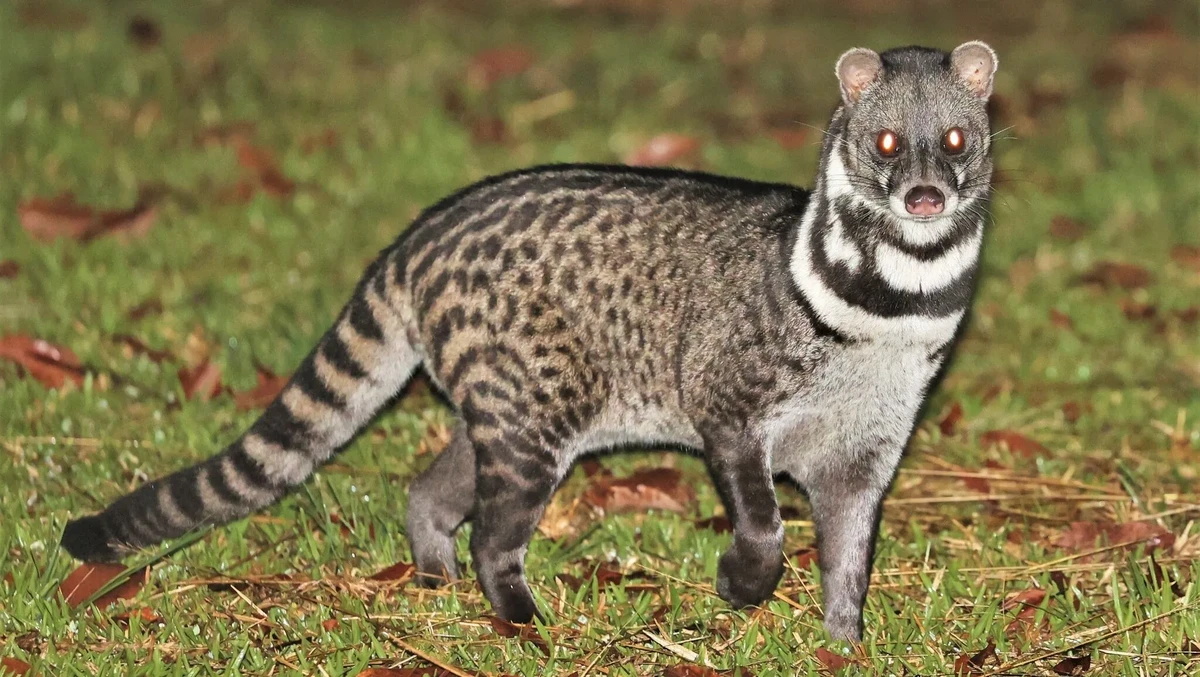
The grace of a cat, the body of a ferret, the gaze of a demon.
Civets are distantly related to hyenas and cats, and together they belong to the suborder Feliformes. So there's something truly feline about them: they're very agile and agile animals with an excellent sense of smell and a long, strong tail that lashes sharply from side to side when the tangalunga is angry. 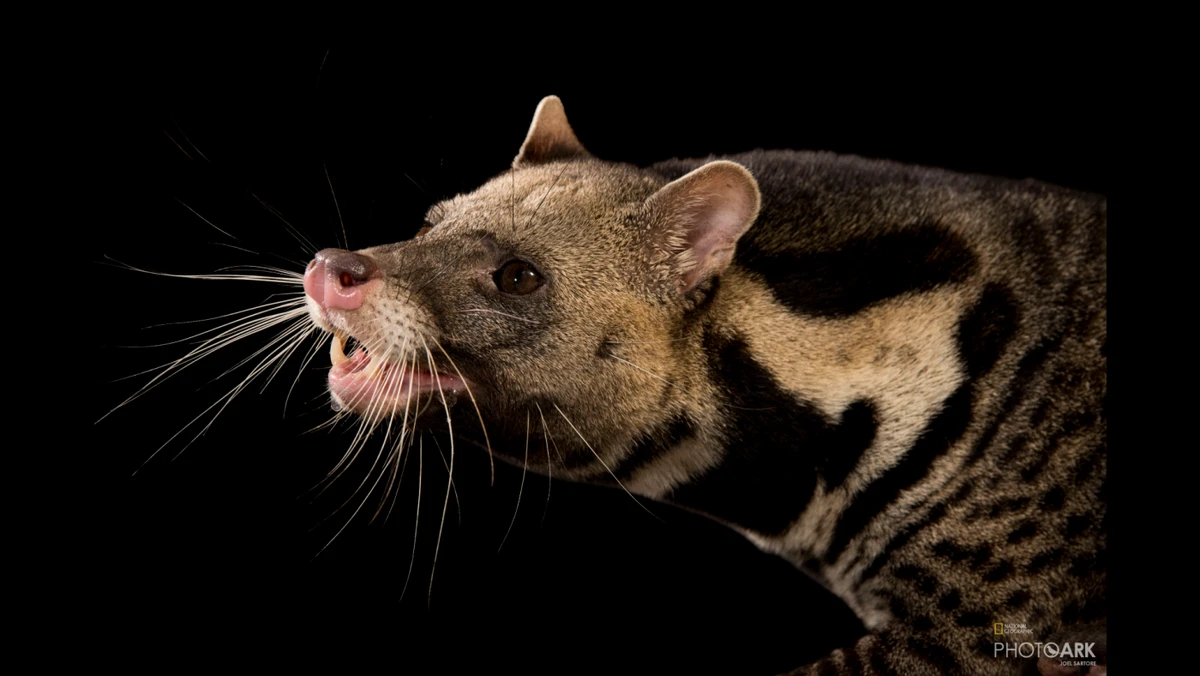
Don't put your finger in a civet's mouth! It's better to put an apple or an orange in its mouth.
But there are plenty of differences, too, of course. The civet's legs are a bit short, it lacks sharp, retractable claws, and I won't even mention its face—anyone can figure that out. But the most striking difference is hidden under the civet's tail. There are the openings of the anal glands, which secrete an exceptionally odorous fluid, comparable in stench to that of a skunk. 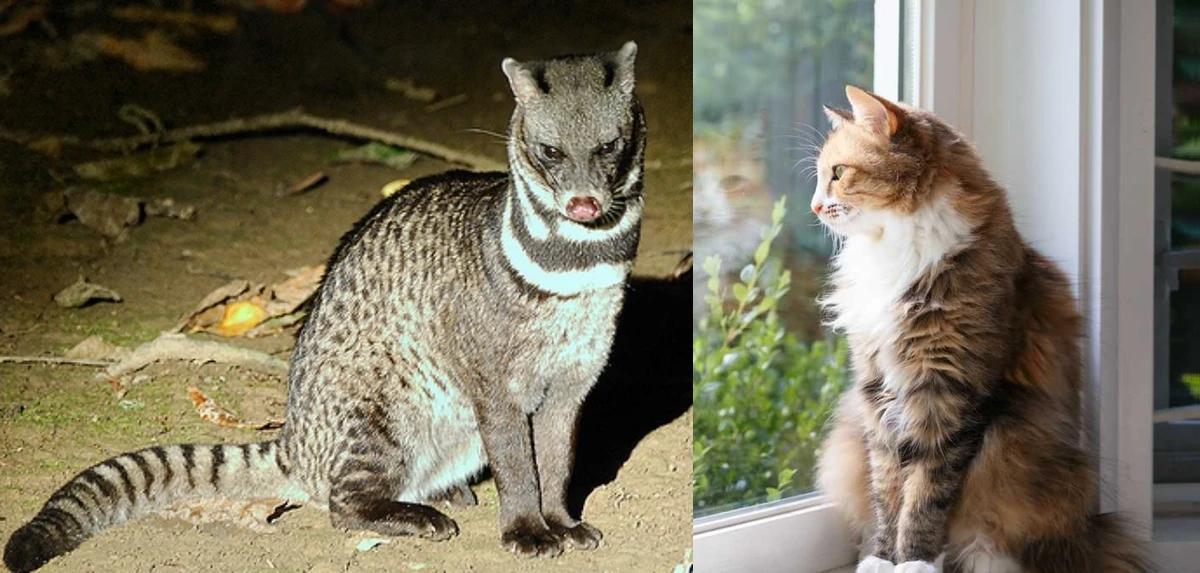
Because of its shorter legs, the civet can't sit as gracefully as a cat. But what it lacks in beauty, it makes up for with its wicked gaze.
The scent glands are the tangalunga's primary means of self-defense. Unlike comparable-sized domestic cats, the tangalunga is far from a skilled hunter. Sure, it can catch a mouse, a lizard, a large insect, and sometimes even a bird, but that's not enough. Like any poor hunter, it's forced to resort to vegetarianism. 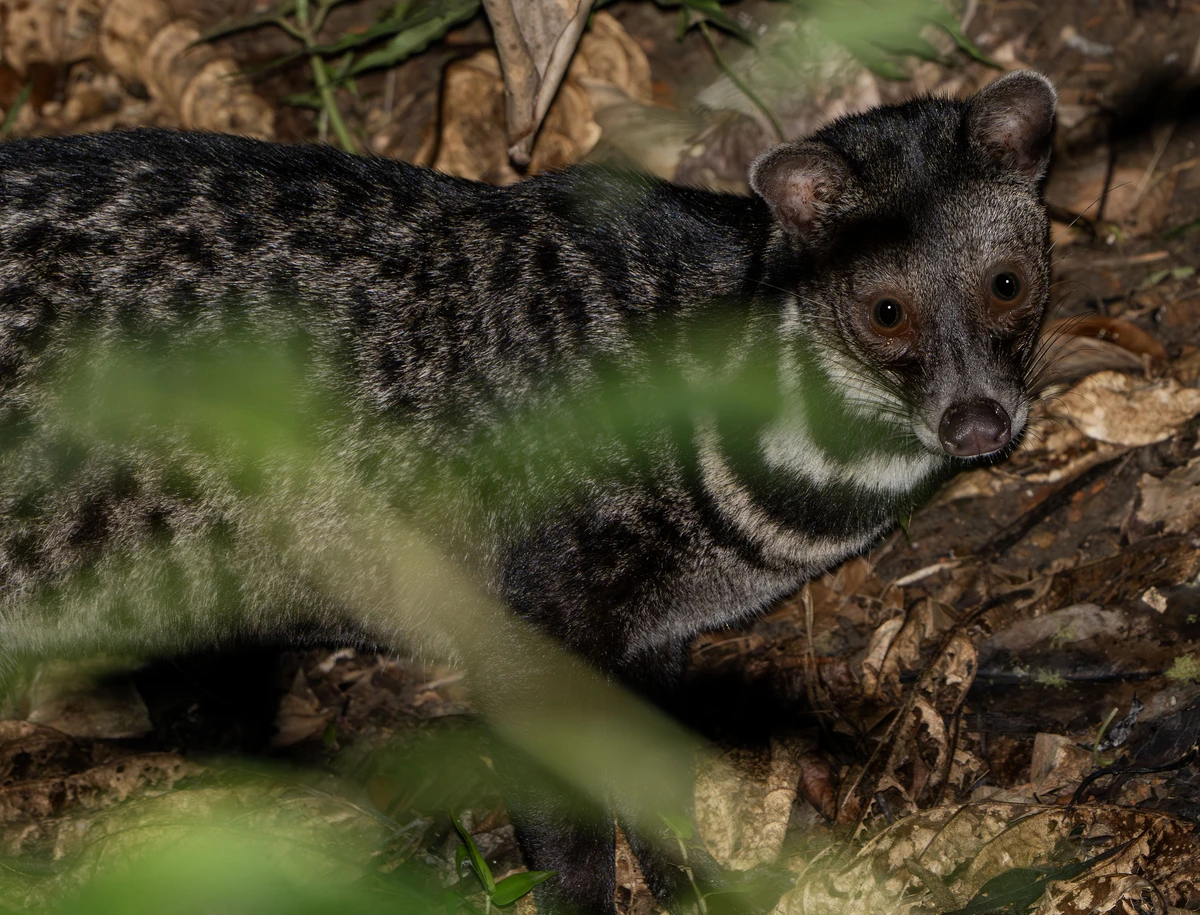
— Honey, how much sleep did you get today? — What is sleep?
Since fruit is an important part of the tangalunga's diet, it lives almost exclusively in tropical forests, only occasionally being encountered on the plains. However, the herbivorous predator also thrives near human habitation. Yes, it's bothered by the constant noise and lack of safe places, but this lifestyle has two undeniable advantages: fragrant orchards and stinking garbage dumps. To the civets, both are brimming with delicious treats! But humans, predictably, don't want to tolerate the presence of little animals stealing their fruit and ripping out their garbage bags, so they chase them away or even shoot them. 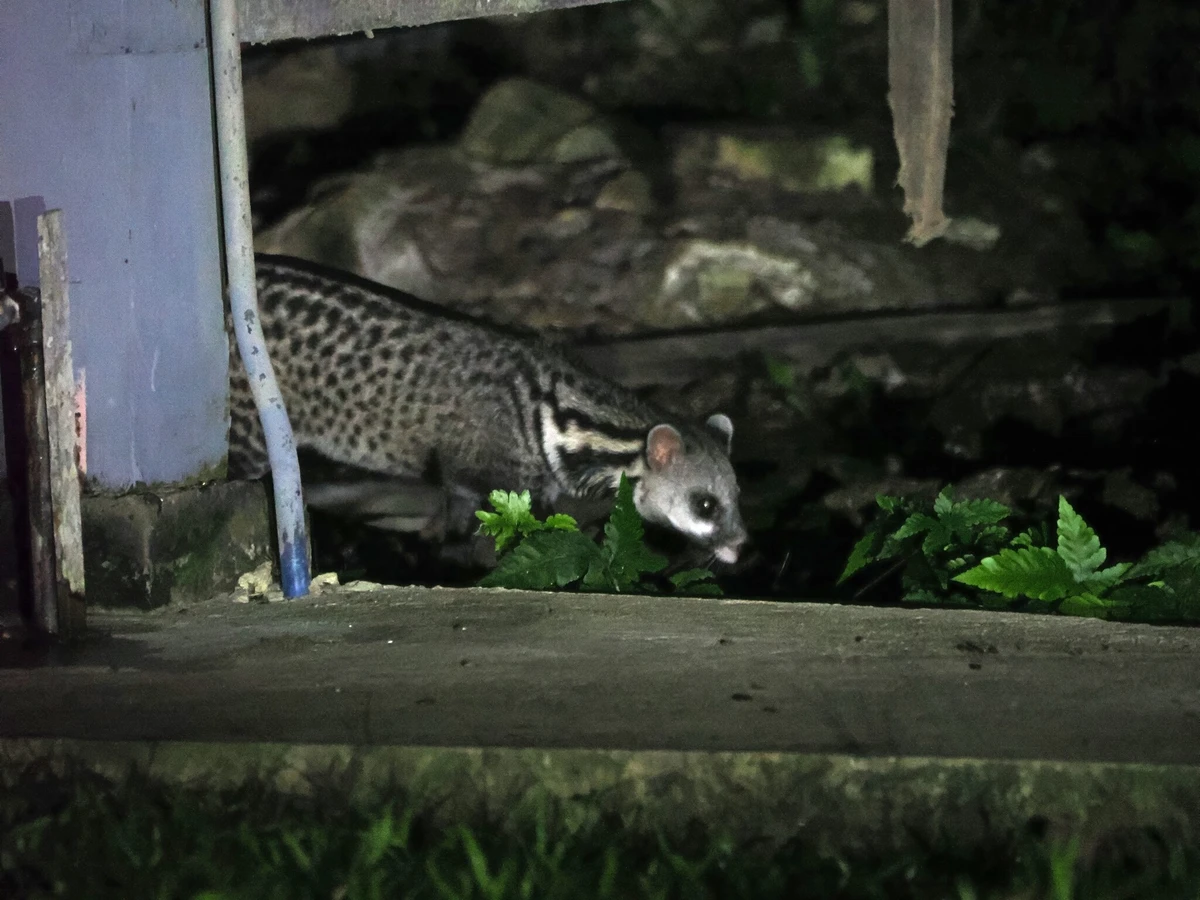
Sneaking through the streets to steal pizza crusts...
However, this phenomenon isn't widespread. Their low population density protects them from the wave of widespread public anger. Civets are territorial animals, preferring not to interact with members of their own species outside of the breeding season. To prevent anyone from entering their territory, even accidentally, they leave scent marks. These animals are extremely respectful of other animals' boundaries and do not attempt to expand their territory until the opportunity presents itself. In the entire history of observation, not a single territorial fight has been recorded. 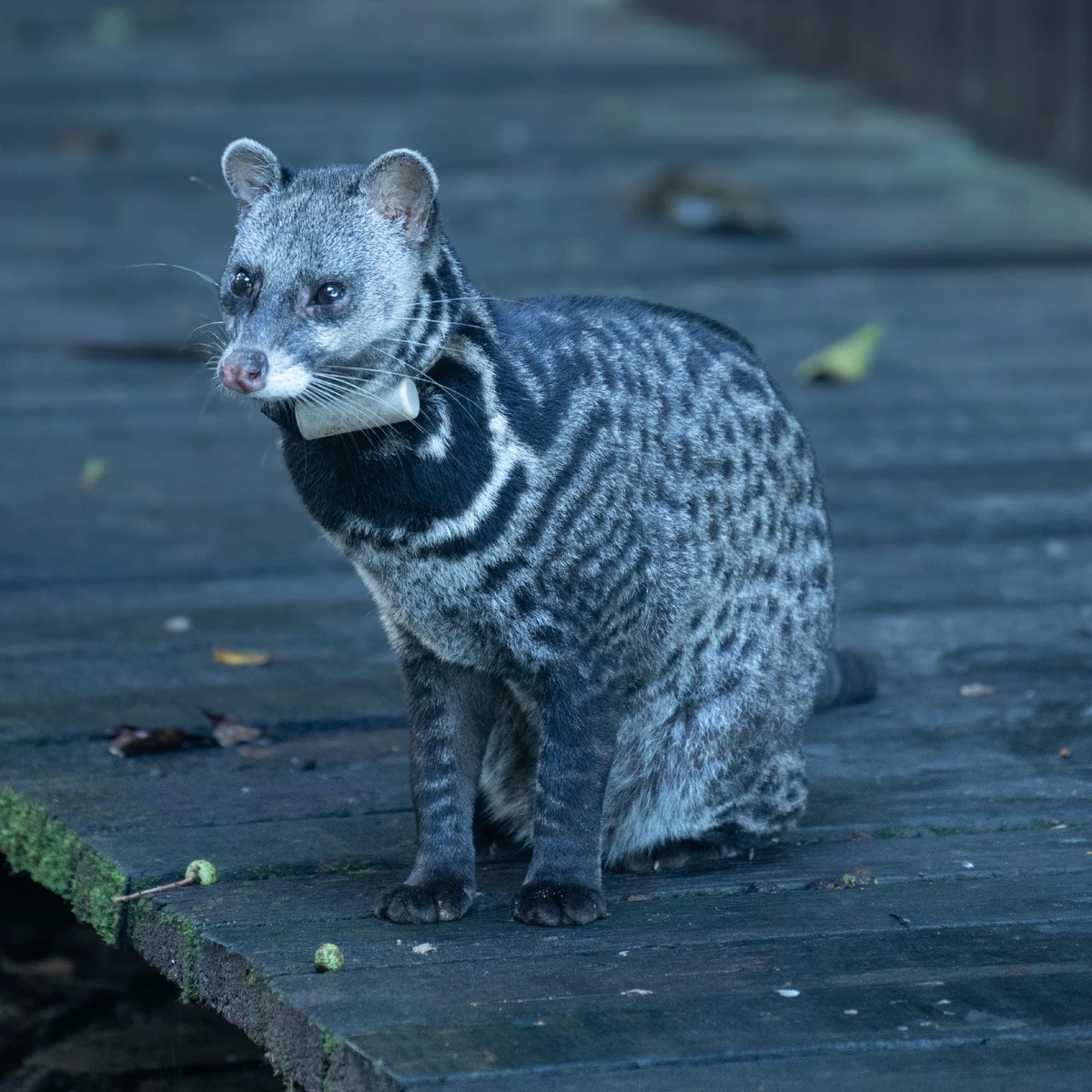
Civets in nature reserves often wear GPS trackers around their necks as fashion accessories.
Even mating season—a particularly intense period for most animals—passes almost routinely. The tangalunga, like many other tropical animals, has no fixed breeding season—you can breed whenever you want, and you can always feed your young. Therefore, males recognize a female's readiness to mate by the change in scent markings. After which, one of them reaches the female, spends the night with her, and returns to his home range. The responsibility of raising the young falls on the fragile shoulders of the female. 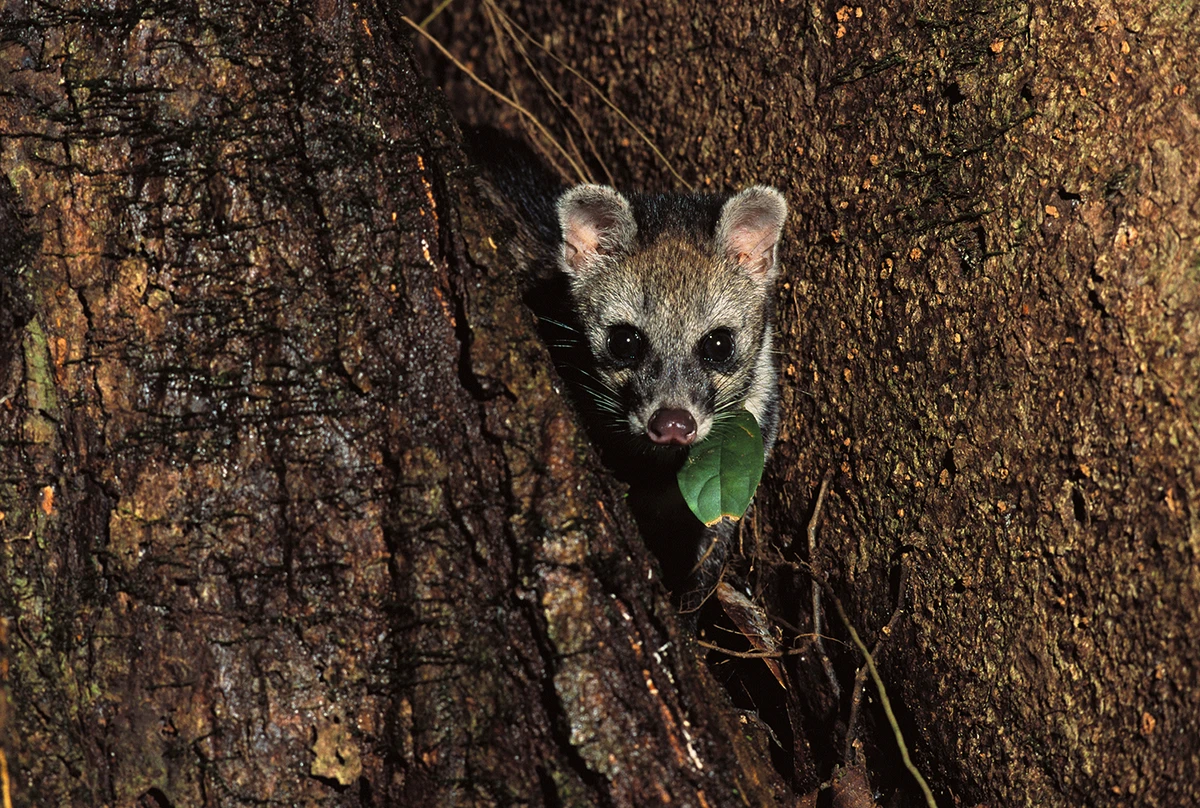
— "Oh, great tree spirit, what wisdom will you bring me today?" — "Make your young and disappear into the fog. The rest is none of your business!"
However, raising children is a rather quick matter. A month after birth, the blind kittens, fed on milk, already grow into boisterous adolescents who feed on meat. After another 2-3 months, they set out on their own. Due to this rapid reproduction and the near-perfect climate, a female can give birth twice a year, producing up to 8 kittens in total. Thanks to this rapid reproduction, the species still thrives despite tropical deforestation. However, its capacity is not limitless, and its numbers are gradually declining.
Add your comment
You might be interested in:











30 photos with the main cat weapon - claws (31 photos)

A young Ukrainian itishnik became the owner of the McLaren

Sleepy kitten doesn't want to get up

Baby refuses to listen to grandma

The neural network generated a photo of a spectacular
“I want it too!”: the donkey demanded a hug from the man

Tom Cruise runs and performs stunts on set even at 61 (3

A Passenger Tried to Twerk During an Arrest (2 photos + 1

Welcome to Indian Airlines!

How to start a 102-liter engine

Protective film Removing it with a power screwdriver

When a child plays hide-and-seek at a professional level

Man sets up bedroom camera and discovers the reason for his

Super dads who swoop in to save the day

Precision carpentry

Looks like it's time to buy WinRAR

How to hang wallpaper neatly

How metal buckets are made in Pakistan
