Rare and interesting photographs from the front lines of World War II (21 photos)
I invite you to view a selection of interesting historical photographs from the front lines of World War II. These images have been restored and colorized. The pictures reveal not only episodes of major battles, but also the everyday reality of ordinary people who had to adapt to the hardships of wartime. 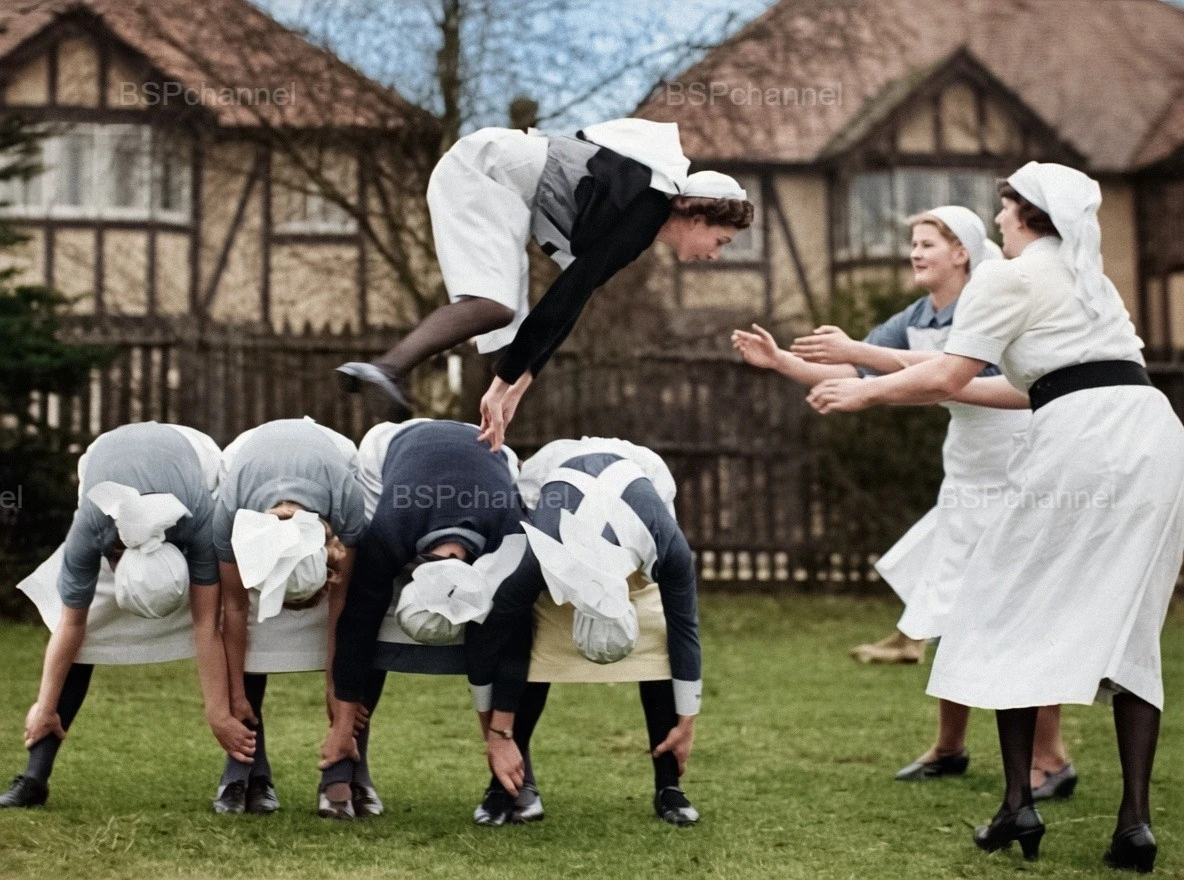
The girl who kissed 10,000 soldiers to boost their morale. USA, 1941-1942. 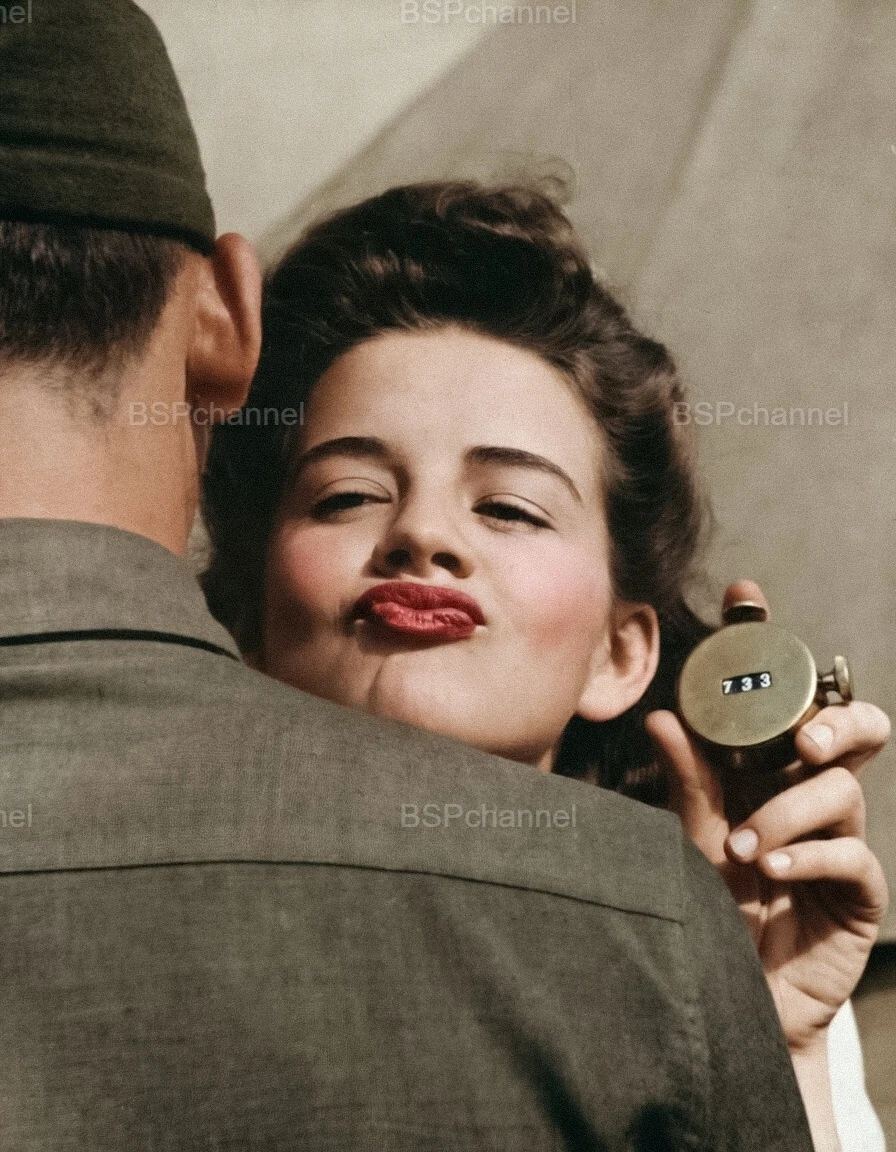
As you probably know, the attack on the main US Pacific Fleet base in December 1941 not only allowed Japan to seize a significant portion of Southeast Asia virtually unopposed, but also pushed the Americans to enter the war. While the phrase "entering the war" sounds like a dry statement of fact to history textbooks, for thousands of young conscripts it was tinged with a wide range of emotions—from mild panic to profound horror. They didn't yet know which front they would be sent to, who they would fight against, whether they would die or live to see peace. Getting support from their families wasn't easy; they were no less worried. In such a tense environment, only some lighthearted entertainment, a distraction from obsessive thoughts of death, could lift a soldier's spirits. And aspiring actress Marilyn Hare provided just such a distraction. She arrived at one of the training camps with a photographer, sang a couple of songs, and announced that she would kiss ten thousand soldiers to boost morale. It was, of course, a publicity stunt. Marilyn's photographs were circulated in numerous publications as a perfect example of playful patriotism. We don't even know if she actually kissed all ten thousand: in the final photo, she holds a counter frozen at 733. Did she return the next day to continue her "kissing therapy"? It's unknown. But soldiers across the country looked at these photos, giggled silly, and dreamed that Marilyn would show up at their unit. So, she accomplished her main task—to distract and entertain the recruits—splendidly.
Kodak K-24 aerial camera during World War II, 1943. 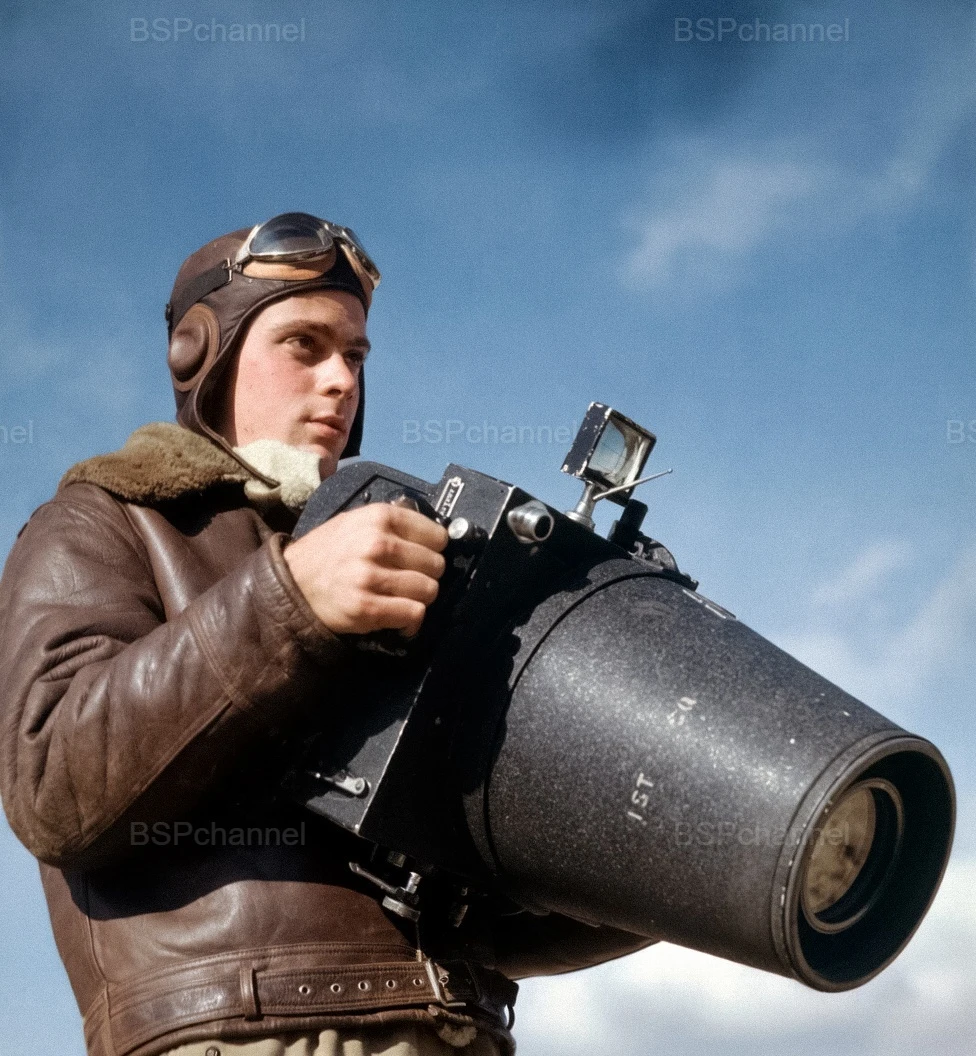
This device became one of the most widely used aerial reconnaissance devices in the Allied arsenal. The K-24 was installed on fighters and bombers, including the legendary P-51 Mustang, P-47 Thunderbolt, and B-17 Flying Fortress. With it, pilots and navigators captured images of enemy positions, infrastructure, and the results of bombing raids. Technically, the K-24 was quite simple and reliable: the lens had a focal length of 6 inches (approximately 152 mm), and the frame was 18 x 18 cm on perforated 5-inch roll film. The camera was controlled either manually or automatically, using an intervalometer that took pictures at set intervals. But the main advantage of the K-24 was not its specifications, but its mass production. These cameras were produced in the thousands and allowed for the collection of incredible amounts of intelligence. Thanks to them, the Allies could plan operations with a precision unmatched by the enemy.
Wounded soldiers of the British Expeditionary Force sing a song with nurses in a ward at a military hospital in London after returning from continental Europe, 1940. 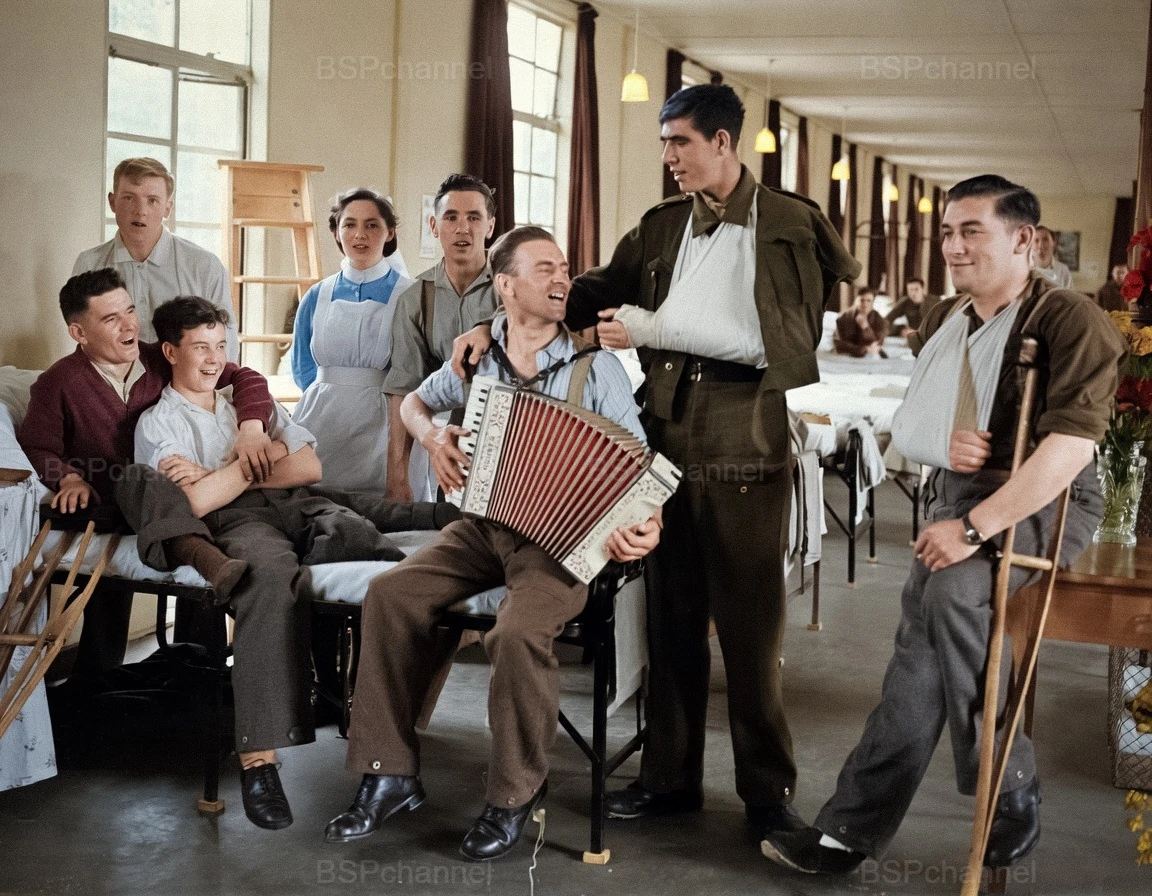
American soldiers at the panoramic window of Hitler's former residence, the Berghof, in Obersalzberg. June 1945. 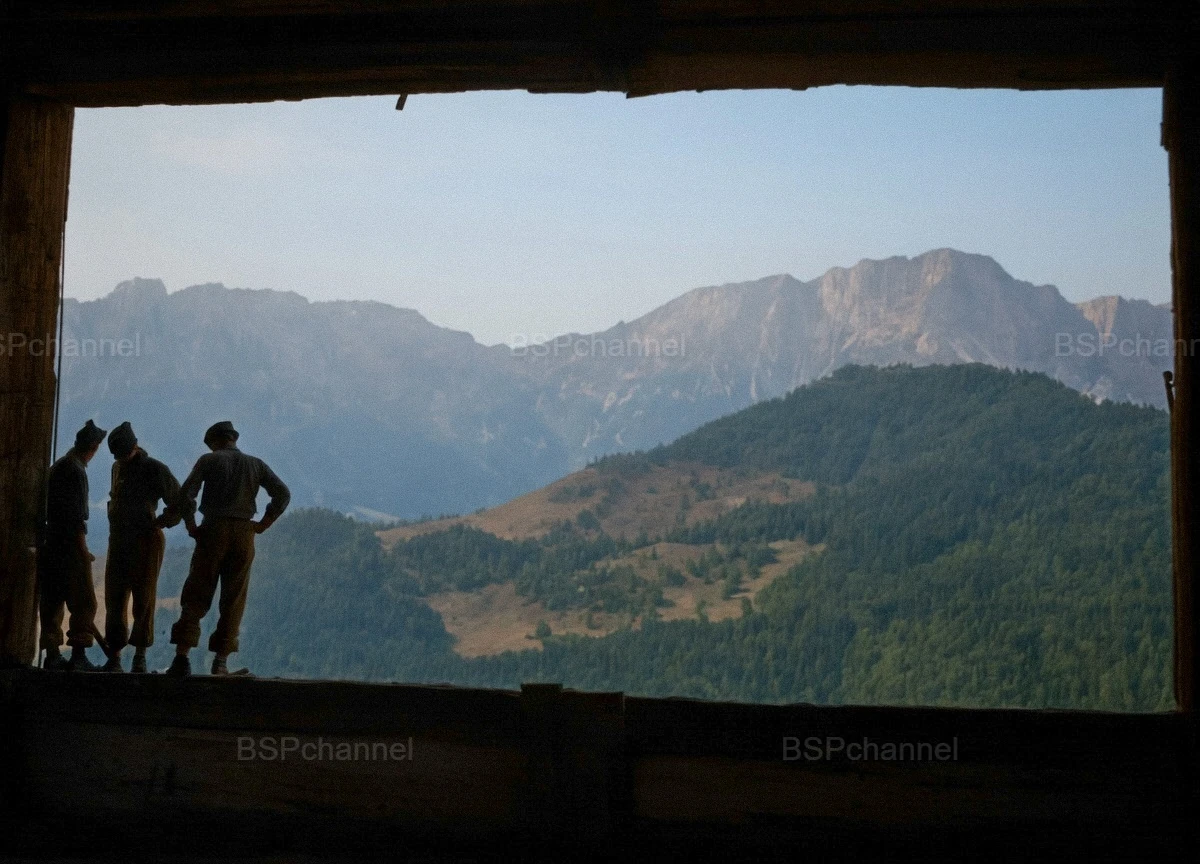
Photographer: Tony Vaccaro
The Berghof (German for "mountain courtyard") is Adolf Hitler's country residence, located in the picturesque Obersalzberg Alpine region near the Bavarian town of Berchtesgaden. The history of this place began in 1916, when Hamburg businessman Otto Winter built a small chalet there, called Haus Wachenfeld. In 1928, Winter's widow leased the house to Adolf Hitler for 100 Reichsmarks per month. Here, in the tranquil Alpine setting, the Nazi Party leader dictated the second volume of his book after his early release from Landsberg Prison. After coming to power in 1933, Hitler purchased the house. By 1936, with the active participation of architect Alois Degano and the Führer's personal secretary, Martin Bormann, the modest chalet had been transformed into a luxurious residence, renamed the Berghof. The main feature of the renovated house was a huge panoramic window in the living room, which was lowered into the wall by an electric motor, revealing a breathtaking view of the snow-capped peaks of the Austrian Alps. The room exuded an atmosphere of "Alpine chic": cedar walls, expensive tapestries, antique furniture, and a massive marble fireplace. Hitler spent about a third of his reign at the Berghof, making key political decisions and welcoming distinguished guests. Former British Prime Minister Lloyd George, the Duke and Duchess of Windsor, and Prime Minister Neville Chamberlain greeted him on the steps of this residence before the signing of the Munich Agreement in 1938. With the outbreak of war, Bormann transformed Obersalzberg into a veritable fortress. Nazi bigwigs Hermann Göring and Albert Speer settled here, building SS barracks, underground bunkers, and even a teahouse on Mount Kehlstein—the famous "Eagle's Nest." Hitler abandoned the Berghof in July 1944 and never returned. On April 25, 1945, the British air force launched a massive air strike on Obersalzberg, dropping thousands of tons of bombs. On May 4, retreating SS troops set fire to the ruins. In 1952, the remains of the Berghof were demolished by the Bavarian government to prevent it from becoming a "pilgrimage site" for neo-Nazis. Today, a memorial stands on the site of the former residence, and the Documentation Obersalzberg historical museum operates.
Sailors and civilians look at an electronic sign announcing the Normandy landings. Times Square, New York City, June 6, 1944. 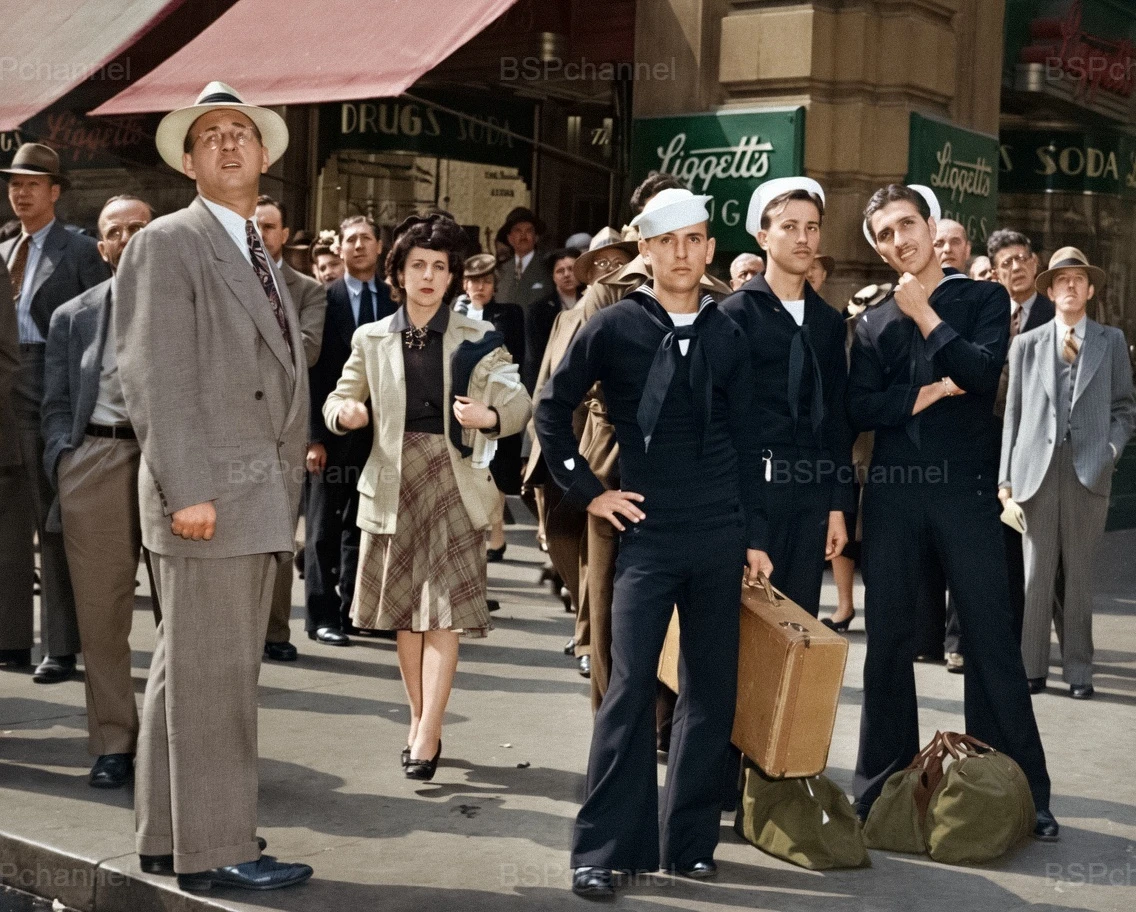
Photographer: Fred Palumbo
Message on a shell to the German Nazis from workers at a British munitions factory, 1940s. 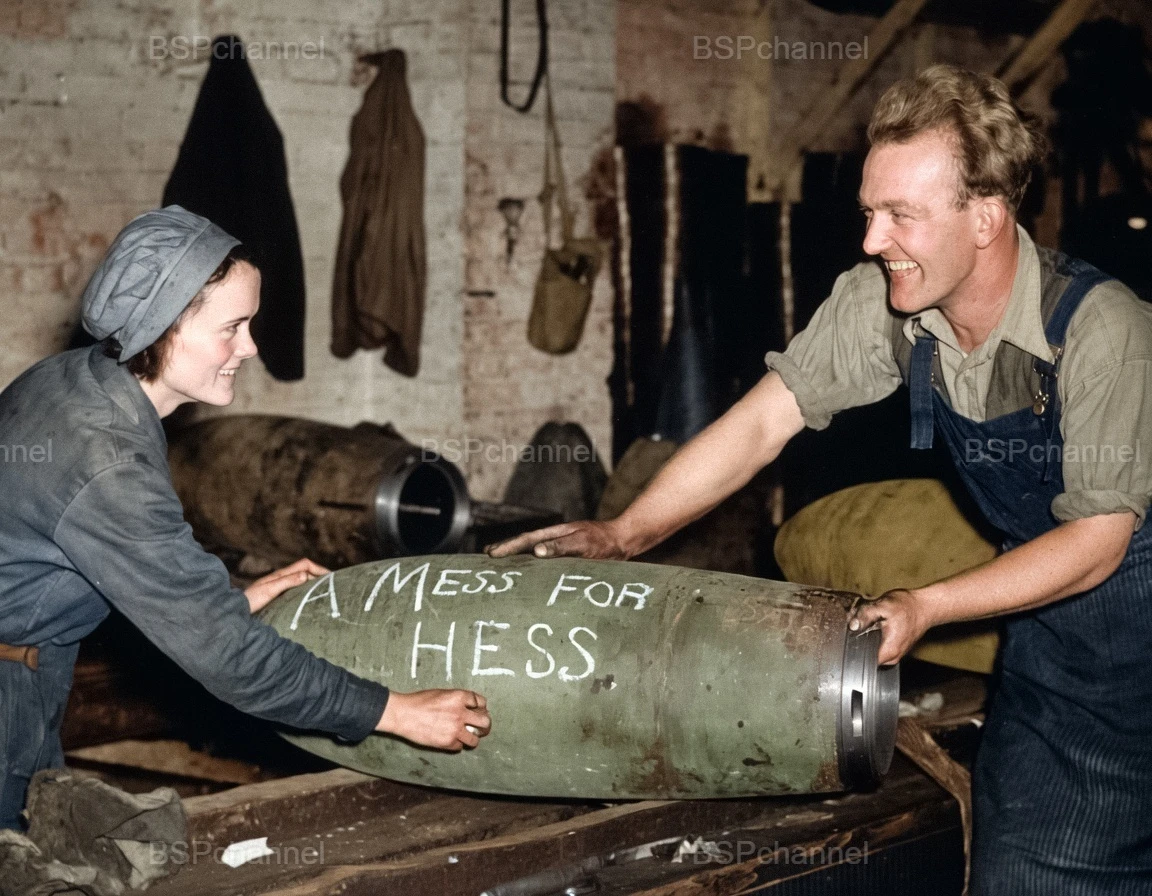
Striped cow. England, Essex, 1939. 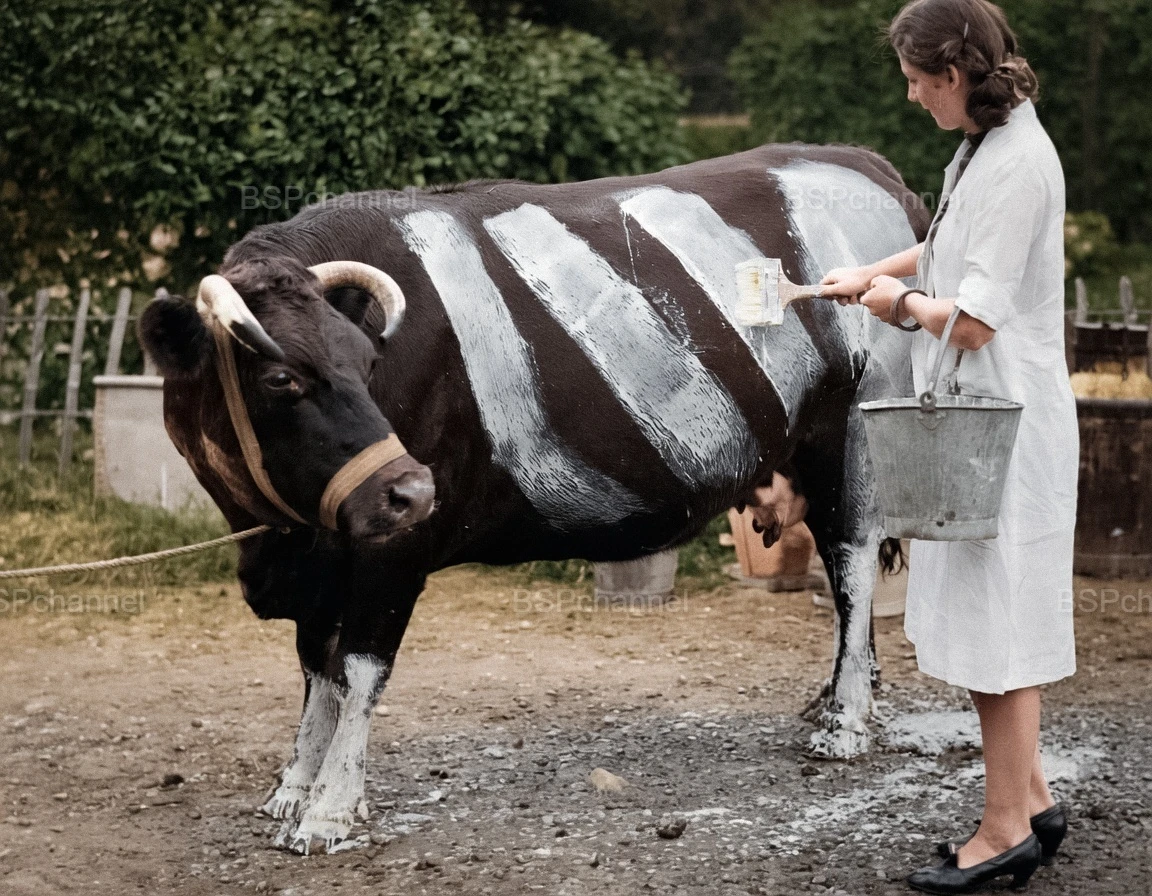
A farmer paints white stripes on a cow to improve visibility at night and prevent car accidents if the cows wandered onto the road. During the Blitz, blackouts were introduced in Britain to minimize nighttime bombing.
Students make army swords in Matsue, Shimane Prefecture, Japan, 1944. 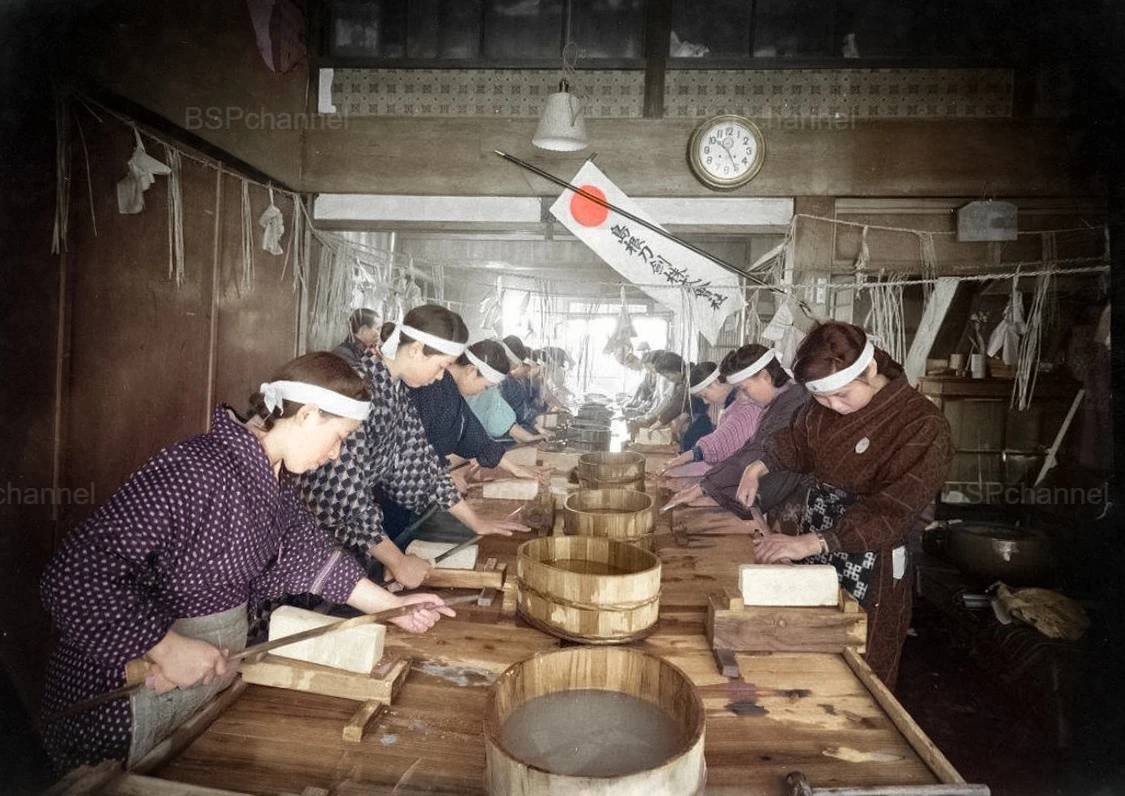
Photographer: Yasuo Tomishige
By the end of the Pacific War, Japan was experiencing a catastrophic labor shortage. The front was draining the male population, and the economy was suffocating. Under these circumstances, the government, led by Prime Minister Hideki Tojo, resorted to extreme measures: they conscripted young female students. The girls were forced to work, primarily in factories serving the army. Factories producing ammunition, equipment, and machinery were filled with young women who toiled under harsh wartime conditions. Thus, the Japanese leadership attempted to maintain the military machine at any cost, even when the outcome of the war was almost a foregone conclusion.
Woman in a coat with a yellow Star of David. Amsterdam, 1944. 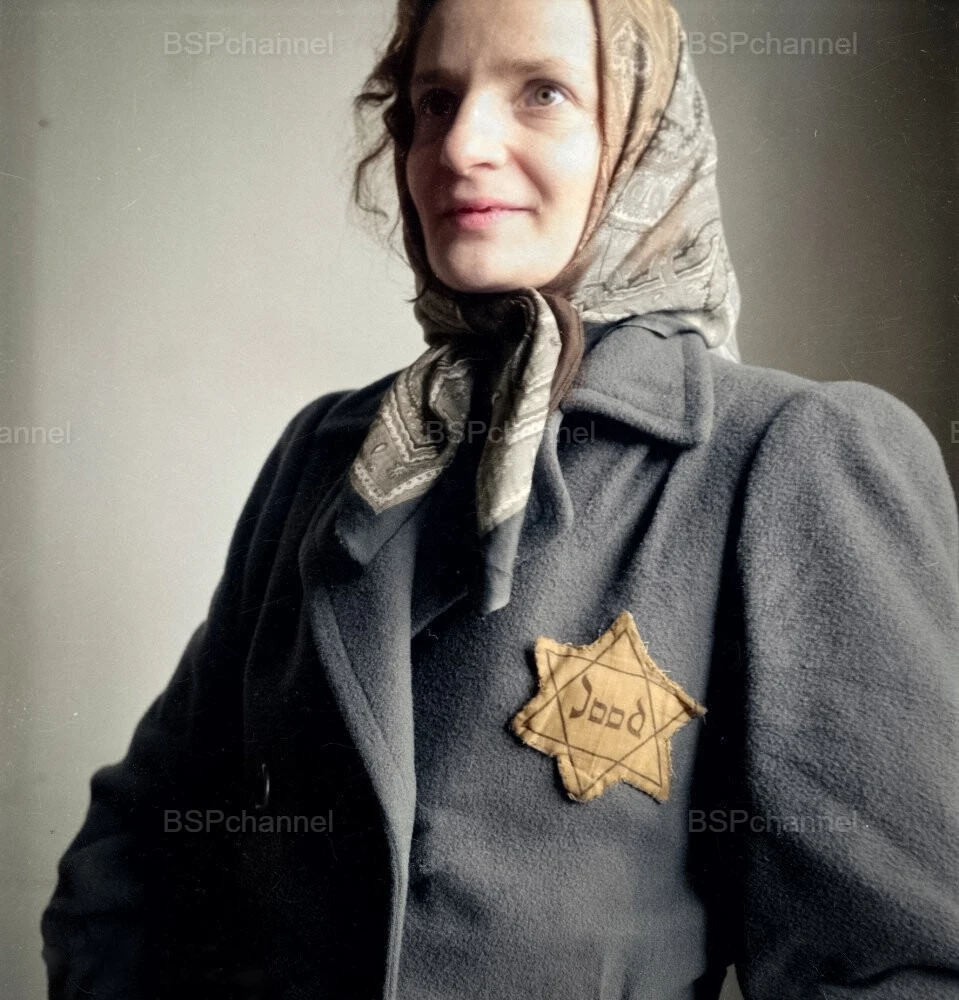
Photographer: Kas Oorthuis
The yellow Star of David is a symbol that Jews were forced to wear on their clothing during the Holocaust. This symbol, introduced by the Nazis, served one purpose: to make Jews easily recognizable and to separate them from the rest of the population. The Germans forced people to sew a distinguishing mark—most often a six-pointed star—on their outerwear.
An English nurse demonstrates a child's gas mask, 1940. 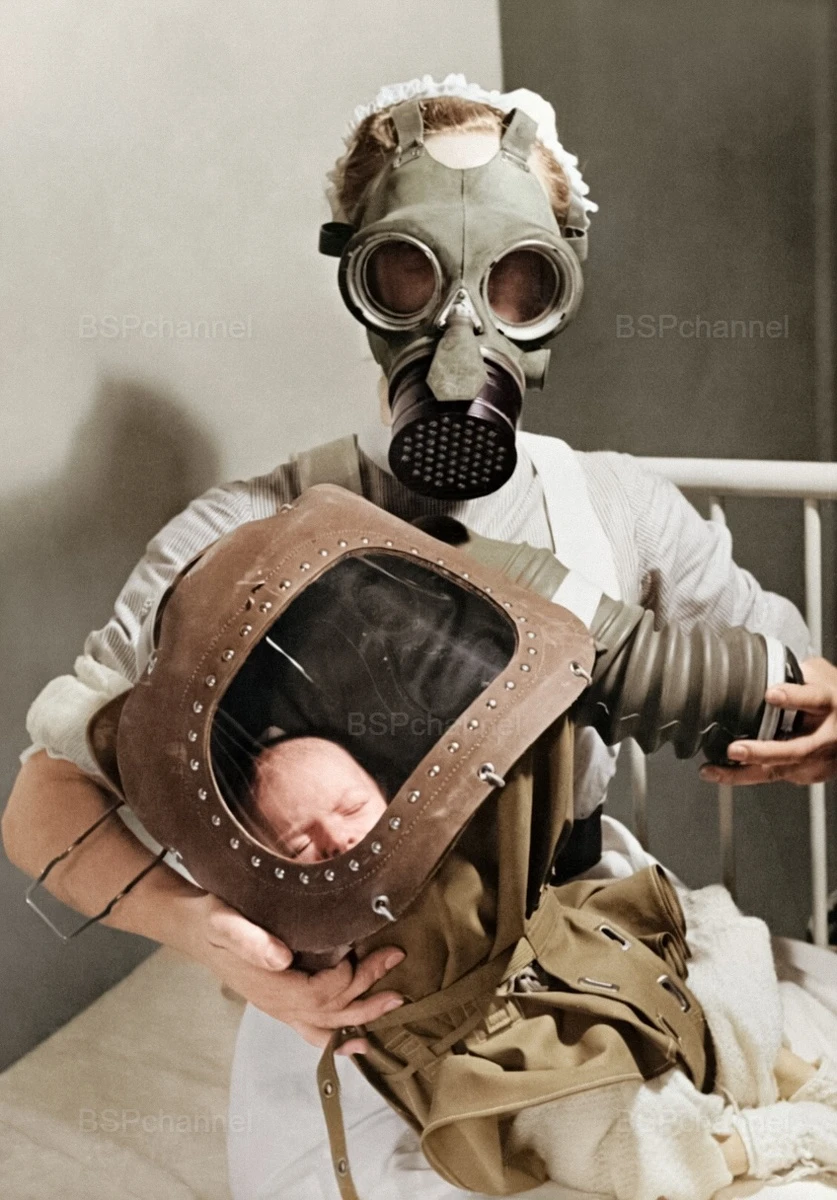
Germany had been actively using poison gas since World War I. Therefore, with the outbreak of the new conflict, British authorities were seriously concerned that chemical weapons would be used again—and on a much larger scale. In case of a gas attack, protective equipment was developed for all categories of the population, including the very young. This children's gas mask is a testament to an era when war preparations were made with utmost care, sparing neither adults nor children.
Workers from a factory in the English town of Smethwick, on Valentine Mk2 tanks destined for the USSR. September 22, 1941. 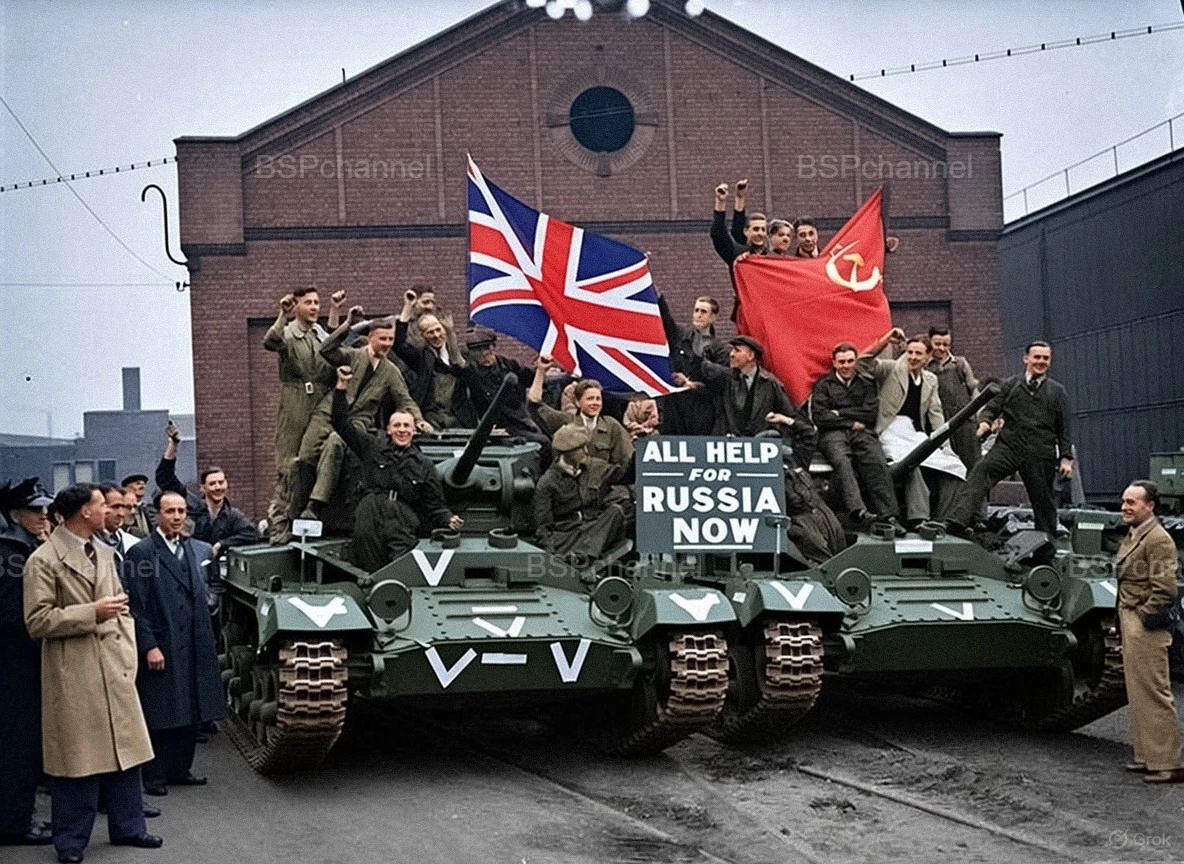
A bus leans against the wall of a house in Harrington Square, Mornington Crescent, after the German bombing of London during the early days of the Blitz, September 9, 1940. 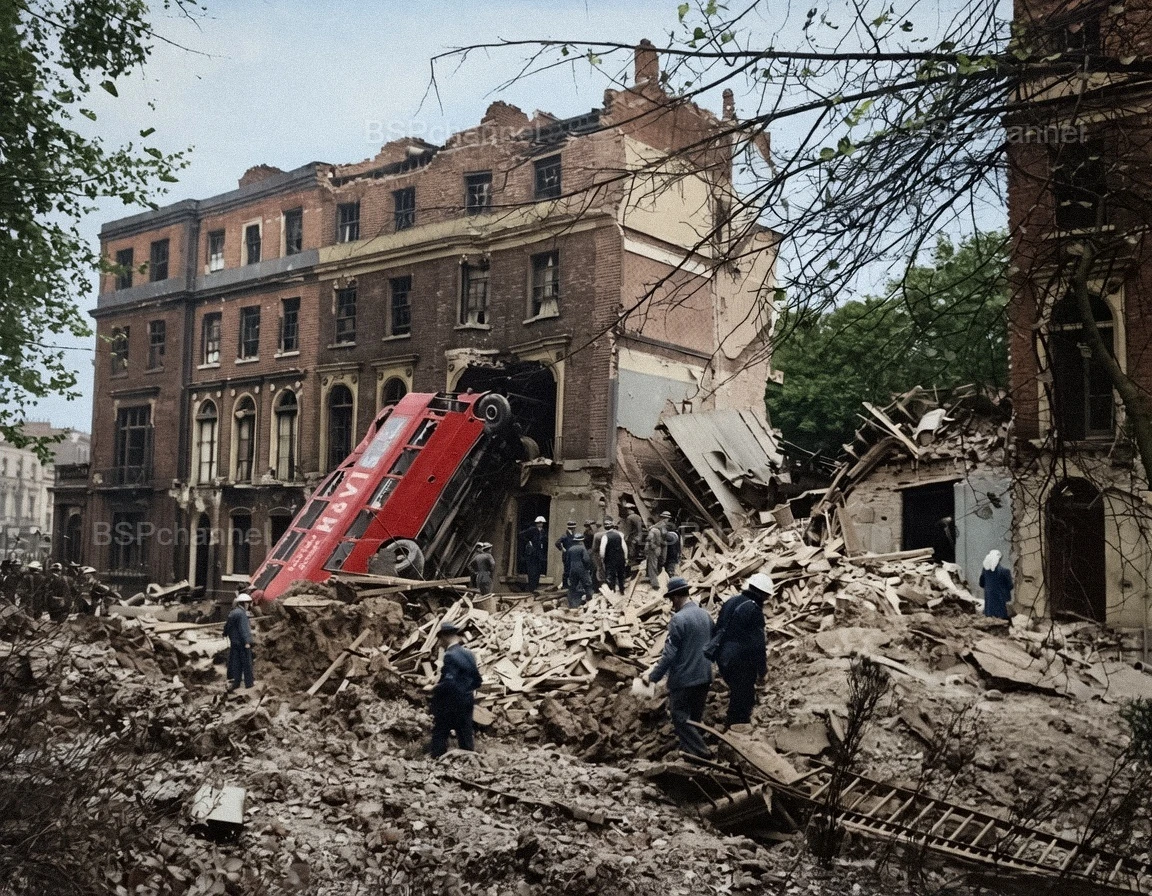
Photographer: H.F. Davies
The bus was empty at the time, but eleven people died in the houses.
The London Underground during the Blitz, 1940-1941. 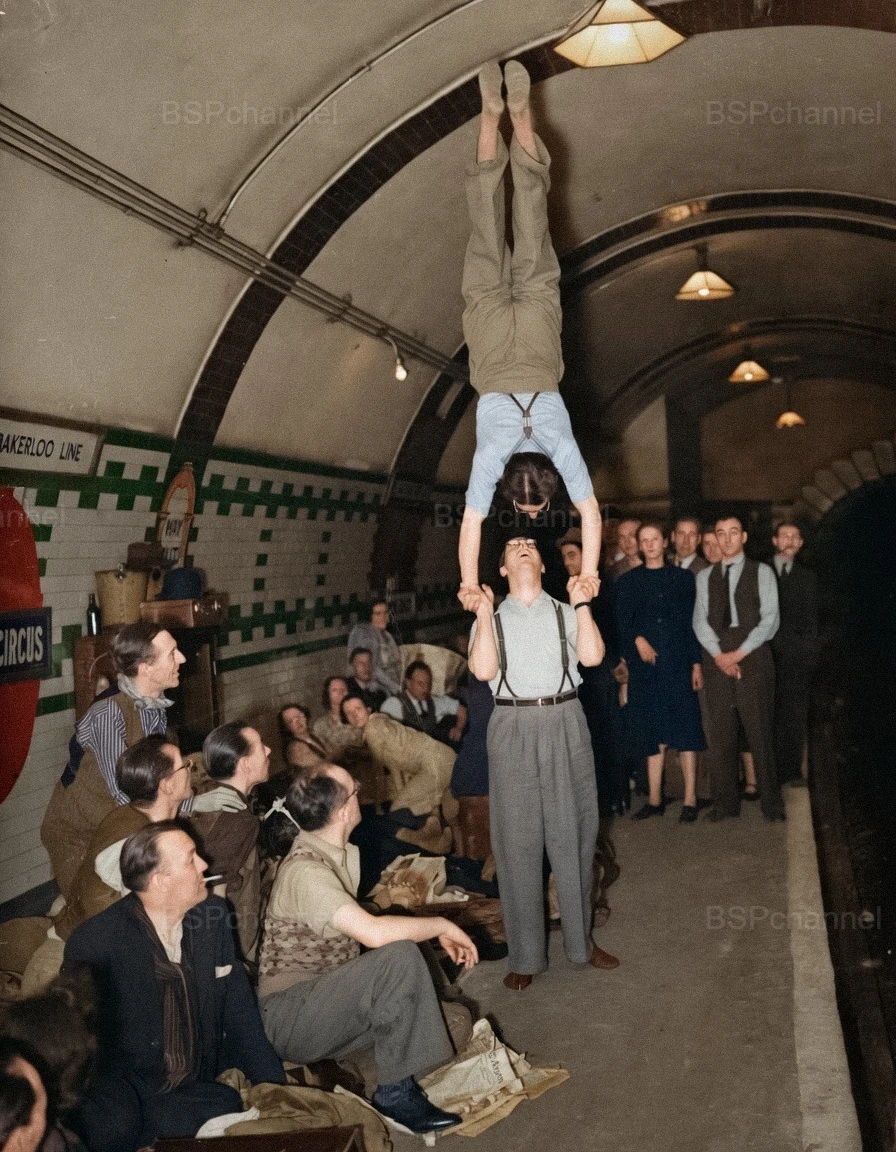
In the autumn of 1940, black skies closed over London. The Blitz began—massive German air raids that continued almost continuously for eight months. And then Londoners did what they do best: they adapted. The Underground, which only yesterday had been simply a means of transportation, became a city beneath the city. Underground stations became refuges for hundreds of thousands of people. Every evening, as soon as the air raid siren sounded the approach of the Luftwaffe, the capital's residents descended underground. There, on platforms, in tunnels, in abandoned branch lines, they developed their underground life.
Army ambulances. Detroit, Michigan. August 1942. Chrysler's Dodge truck plant. 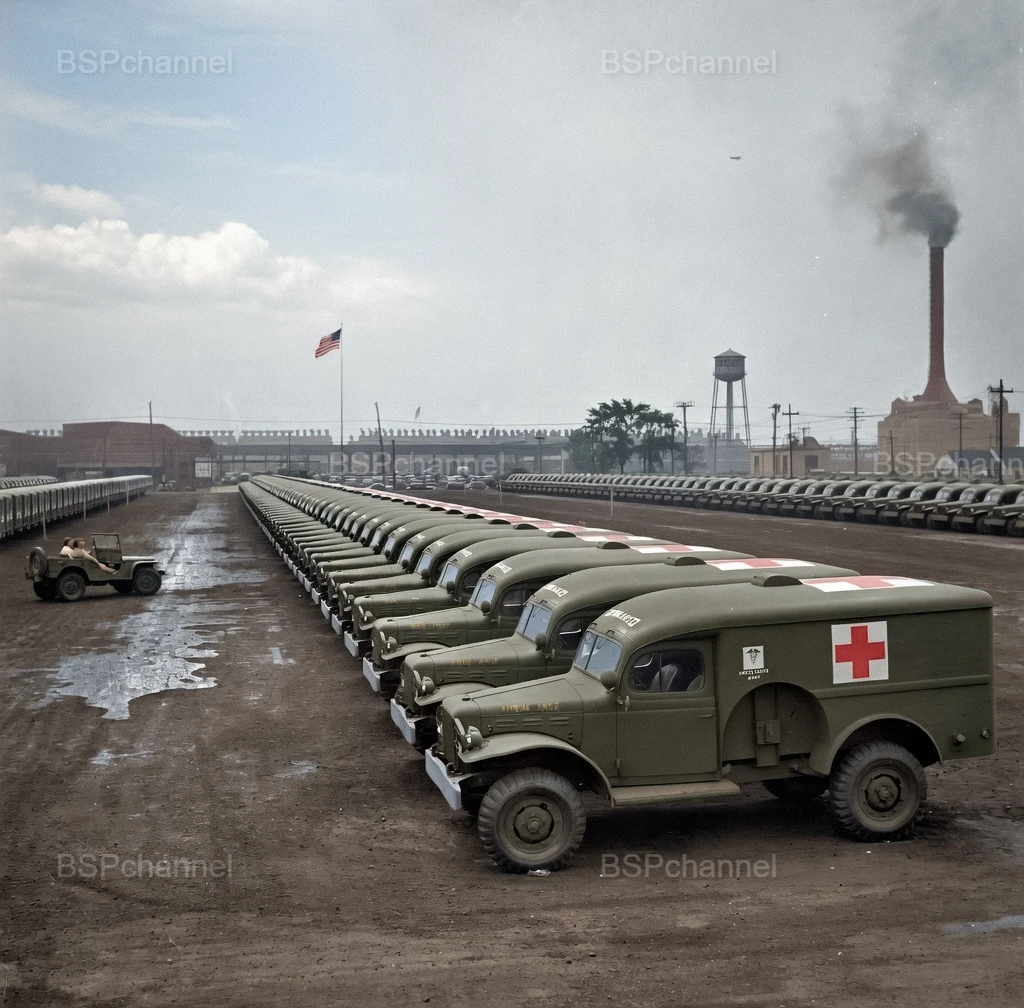
Photographer: Arthur Siegel
A game of leapfrog among nurses of the Red Cross mobile unit at the Southgate Civil Defense Center. England, 1940. 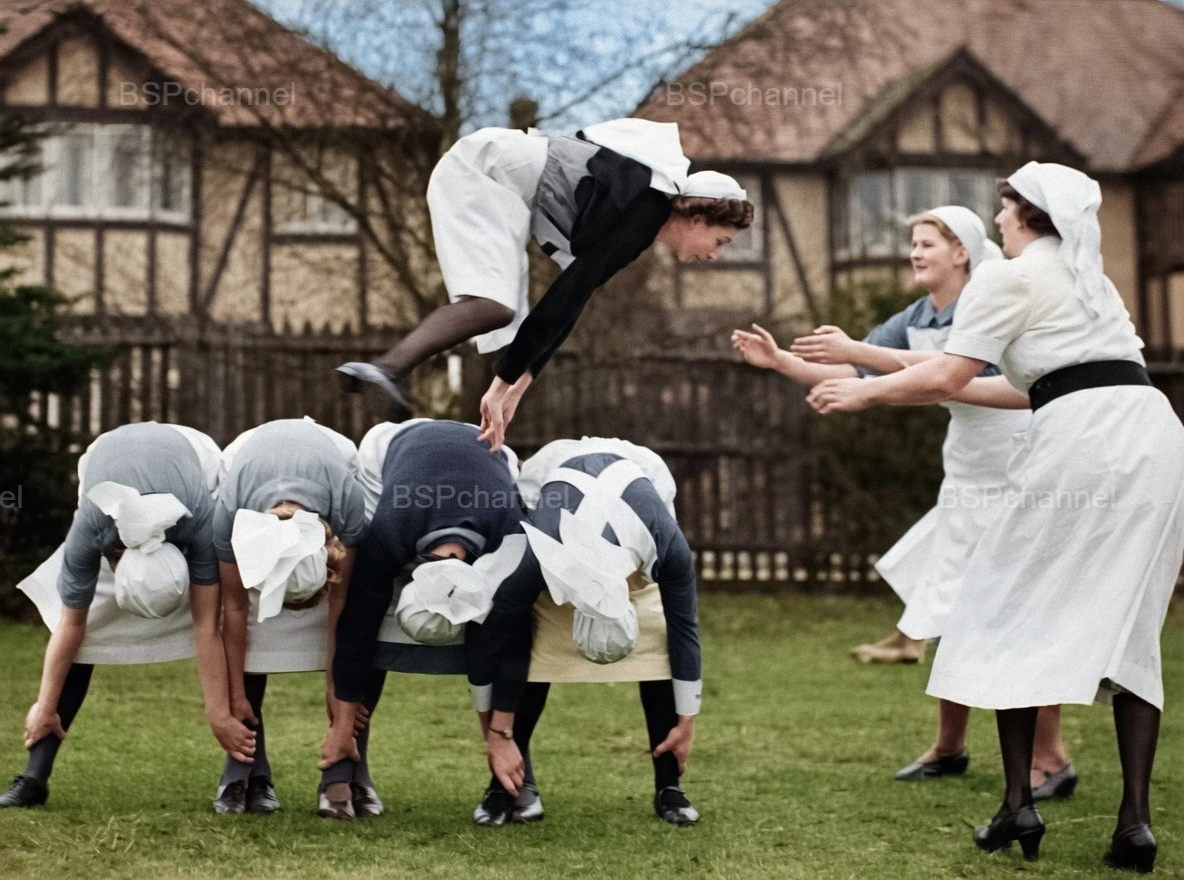
Canadian soldiers in an LVT amphibious vehicle in the flooded Dutch village of Luit, 1945. 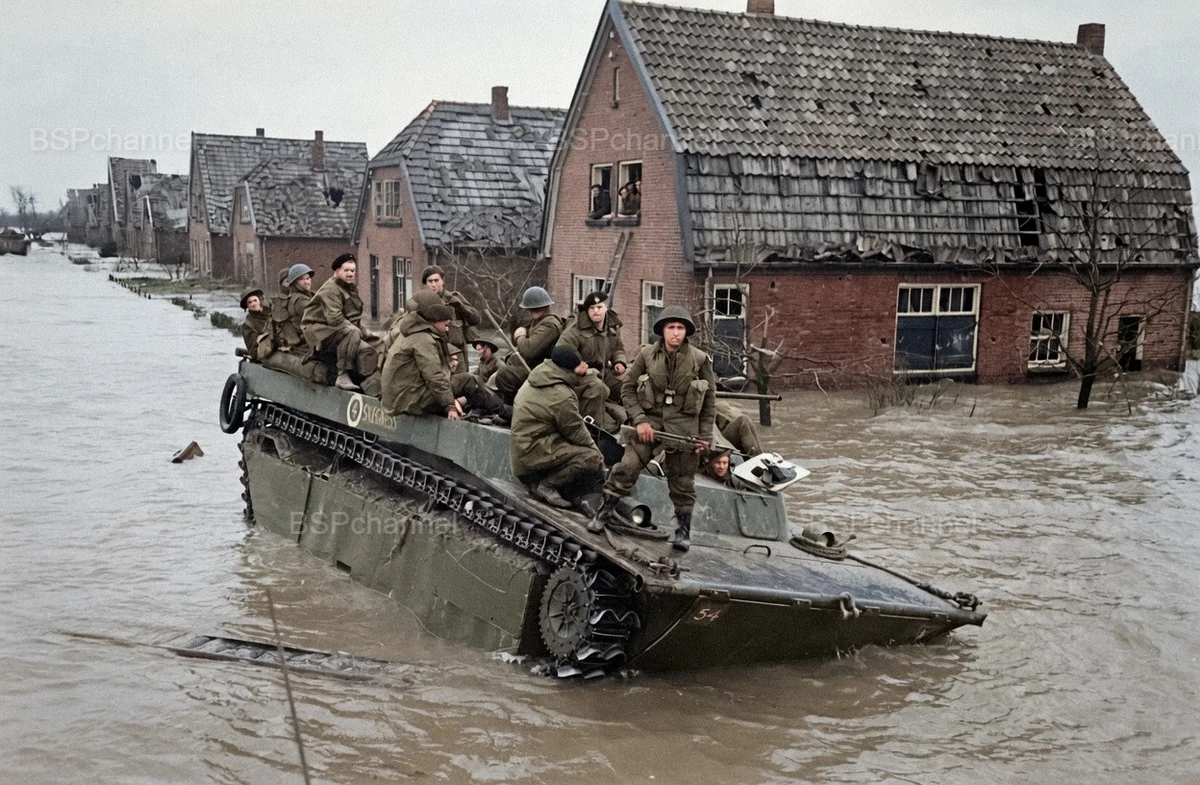
Nighttime anti-aircraft fire from an American airfield on Okinawa. Silhouettes of F4U Corsair fighters are visible in the foreground, 1945. 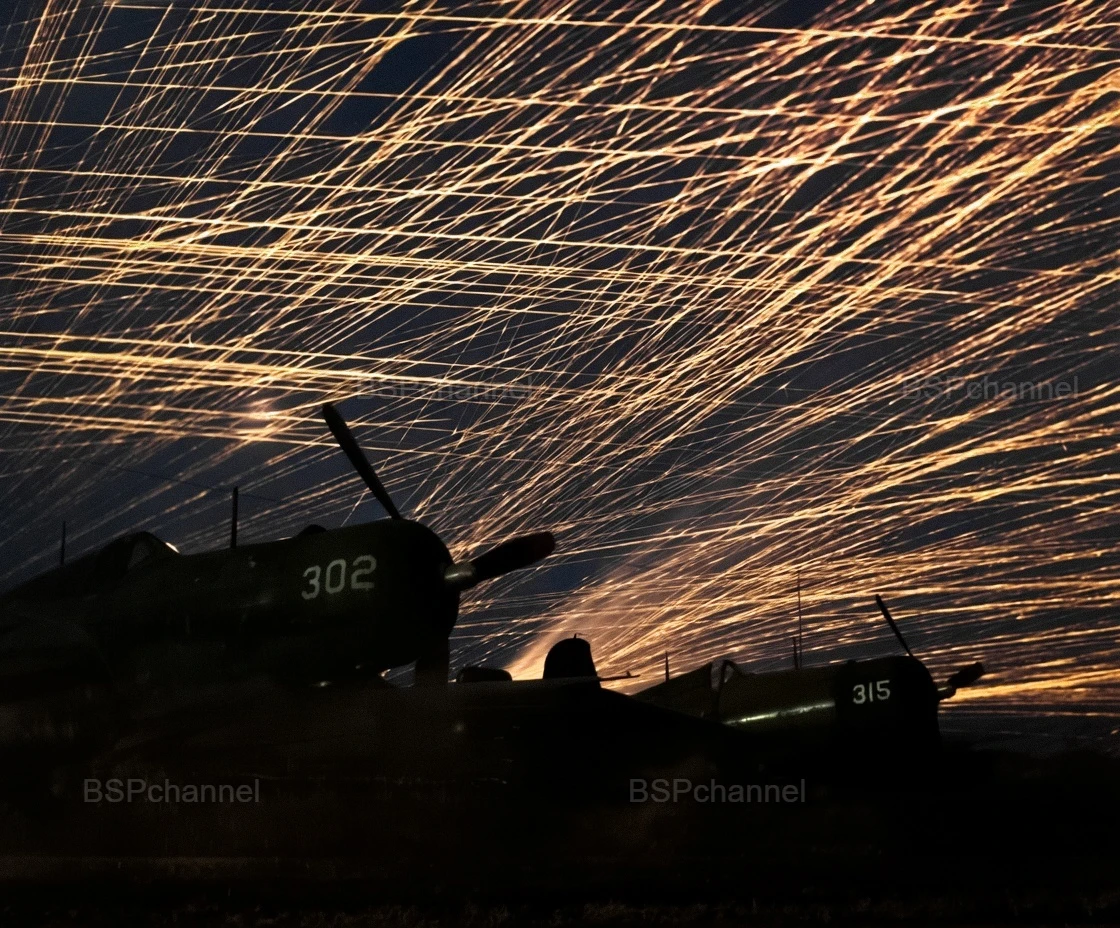
Photographer: T. Chorlest
British gunners deploy a BL 6-inch Mk VII naval gun during an alert at the coastal battery at Fort Shornemead. 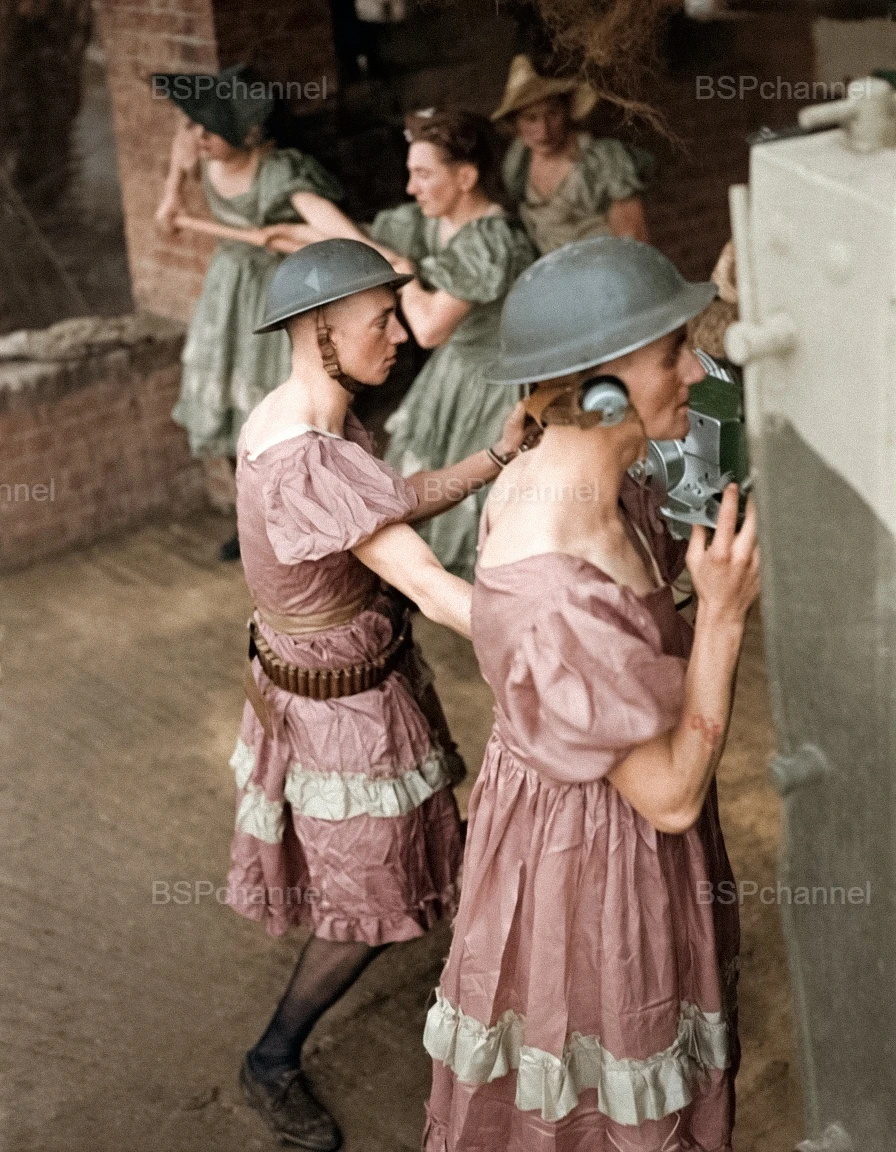
Photographer: John Topham
No, this is not a masquerade or a strange military quirk. It's both more prosaic and more touching: when the alarm sounded, they were rehearsing an amateur performance. They simply didn't have time to change.
Nurses and soldiers enjoy the labyrinth at Hatfield House. Hatfield House, the residence of the Marquess of Salisbury, was converted into a military hospital, April 1940. 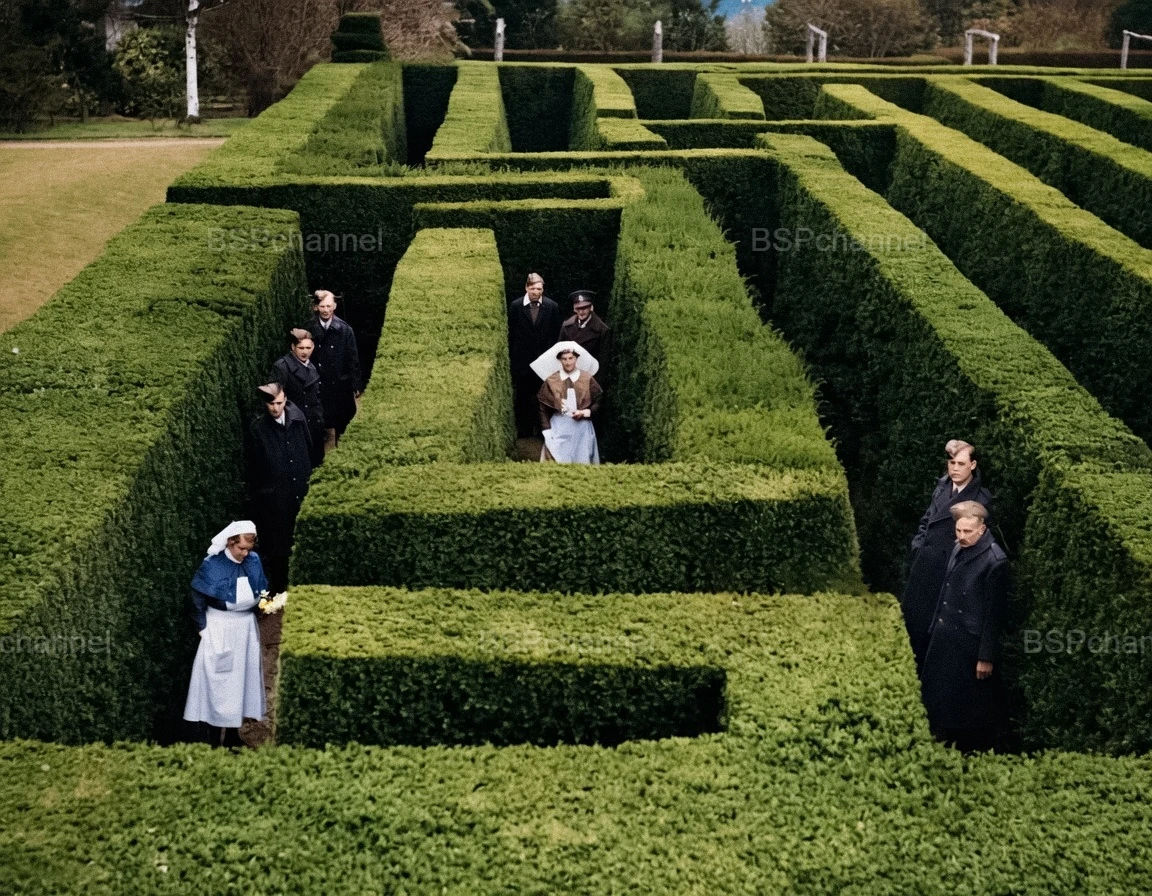
A group of French women accused of collaborating with the Germans stripped to their underwear, some with shaved heads, as part of a public humiliation. January 1, 1945. 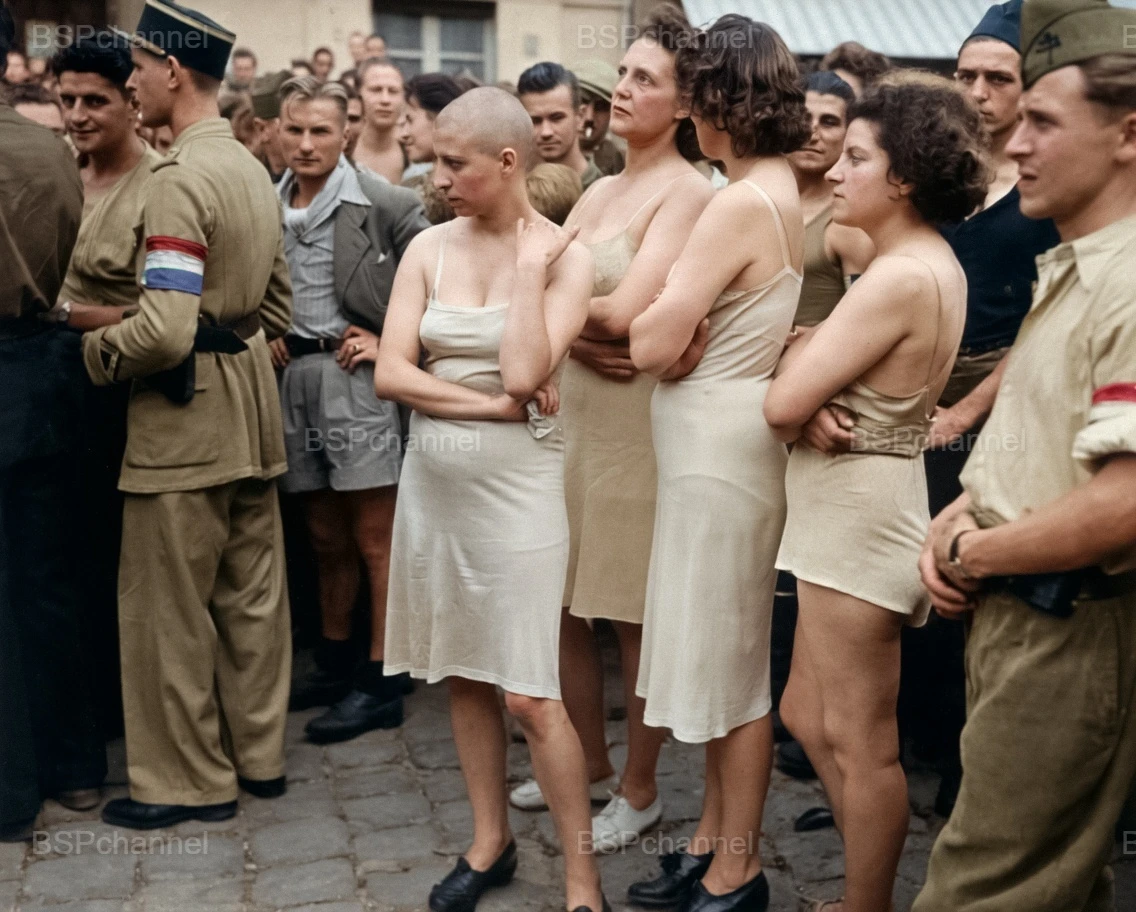
Four years of occupation is a long time. French men were at the front, in prisoner-of-war camps, or in hiding. Women were left alone. Hunger, cold, constant fear for their children. Some of them actually did develop relationships with German soldiers and officers—some out of desperation, some for convenience, some for a crust of bread, and some for love (as cynical as that may sound). For the German administration, such connections were even desirable—they helped "pacify" the population. But after the Allies landed, a witch hunt began. The culprits had to be found. Punishing the "traitors" was easier and safer than searching for collaborators among the men, many of whom held high positions in the Vichy administration. A wave of lynchings swept across France. Women suspected of German ties were seized right off the streets. Their heads were shaved—a universal sign of shame dating back to the Middle Ages. They were stripped, tarred, and feathered. They were paraded through the streets to the acclaim of the crowd. Sometimes the process ended in beatings, sometimes in death.