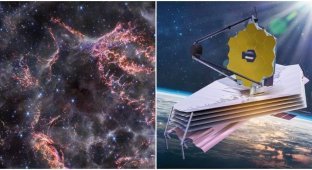
How Stars Are Born: Rho Ophiuchi in Incredible Detail (4 photos)
The star-forming region of Rho Ophiuchi is the closest "stellar nursery" to Earth, located approximately 390 light-years away. Today, it is a key target for studying the birth and evolution of Sun-like stars. 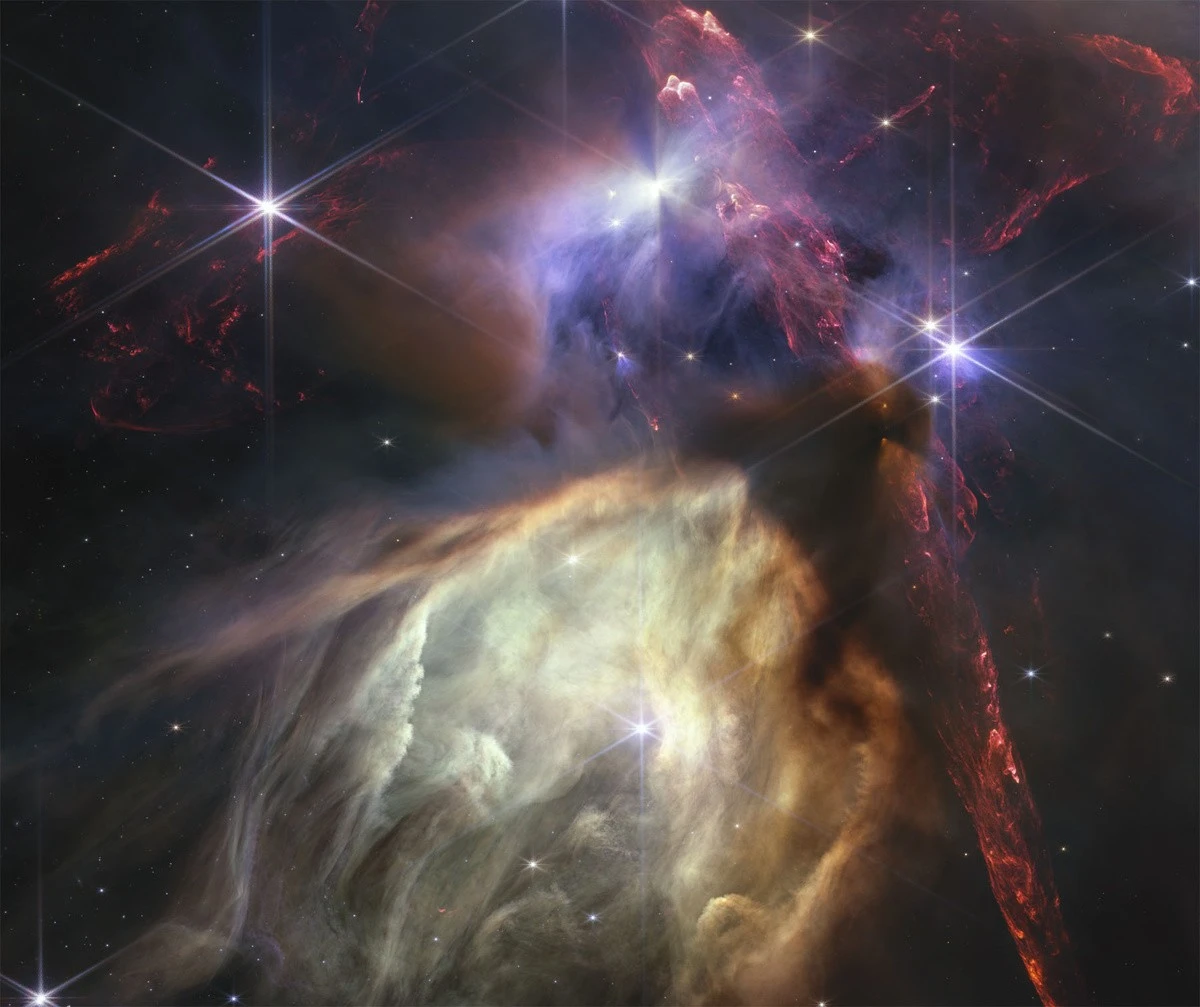
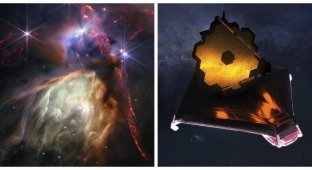
This image, acquired on July 12, 2023, by NASA's James Webb Space Telescope, captures only a portion of the vast cloud complex. This allows for such high detail: we are literally looking at the "anatomy" of star formation.
Thanks to its high infrared sensitivity, the telescope was able to peer through dense curtains of gas and dust that obscure the cloud's depths in visible light. As a result, the image revealed structures that had previously only been partially observed or only theoretically predicted. 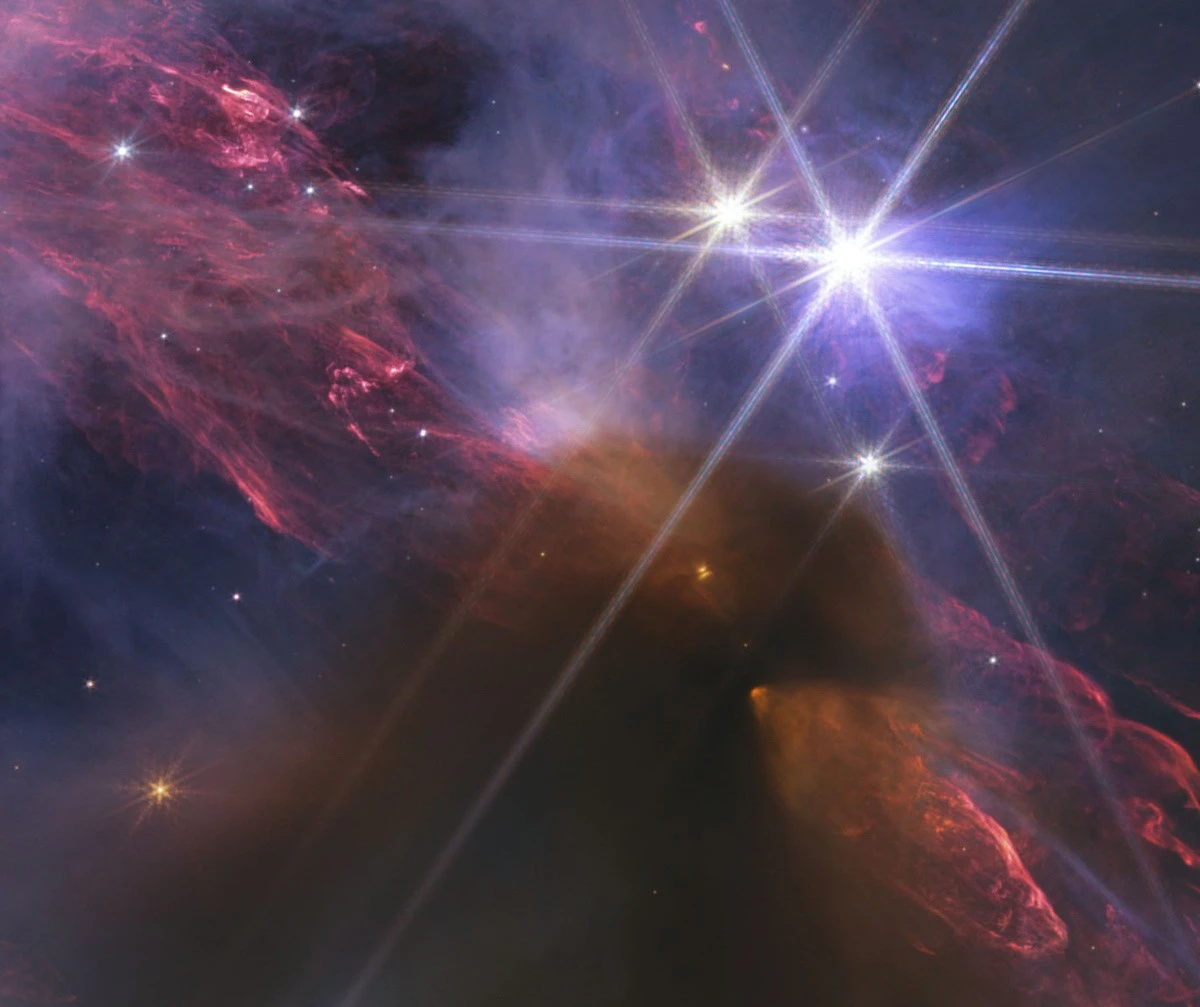
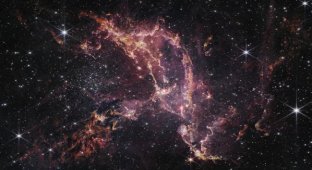
The image clearly reveals glowing cavities blown out by streams of matter, dense filaments of interstellar dust, and shock waves—traces of the violent processes that accompany the birth of stars. 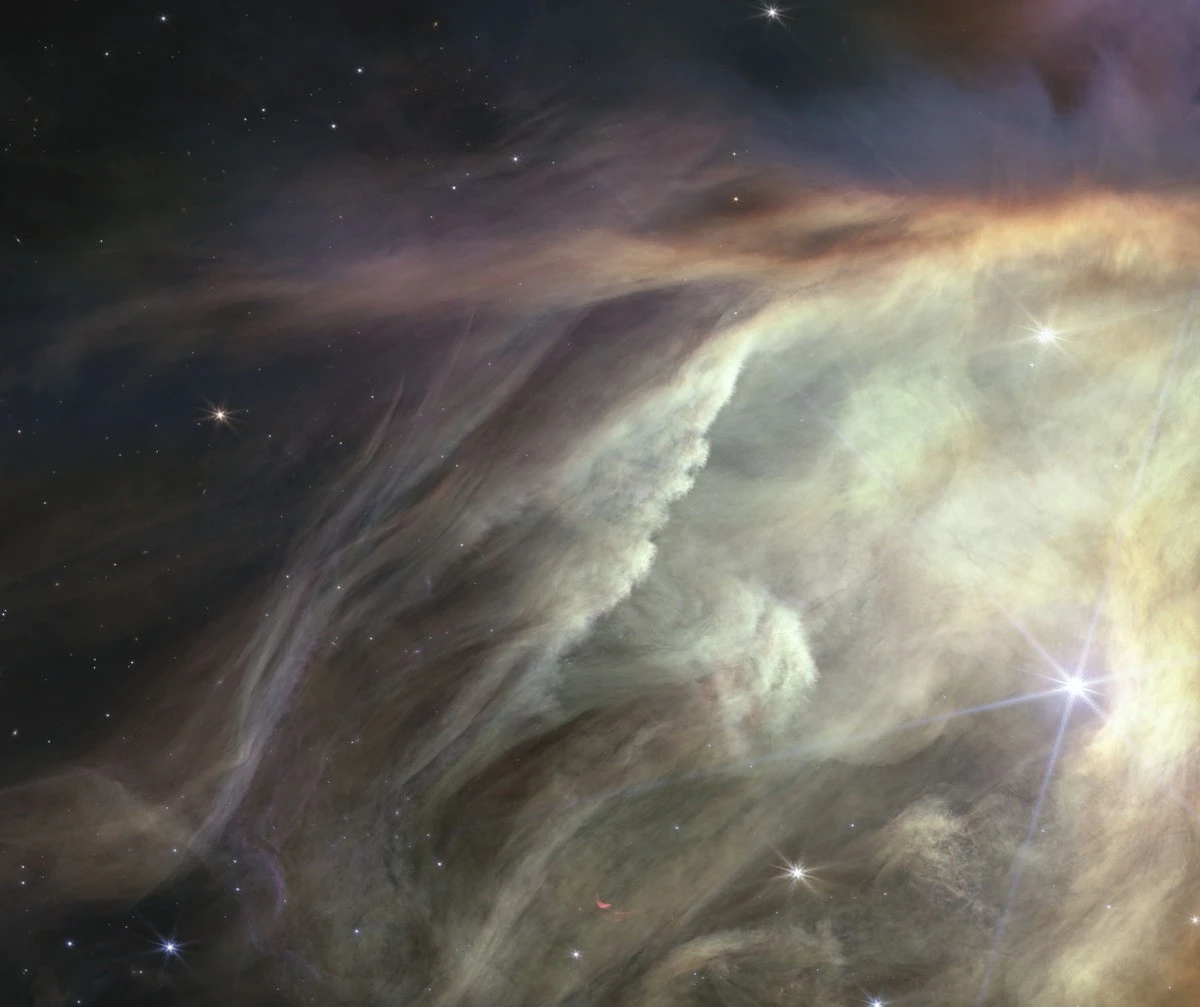
Particularly impressive are the powerful plasma streams that protostars—stars in the early stages of their evolution—eject into space at speeds of hundreds of kilometers per second. 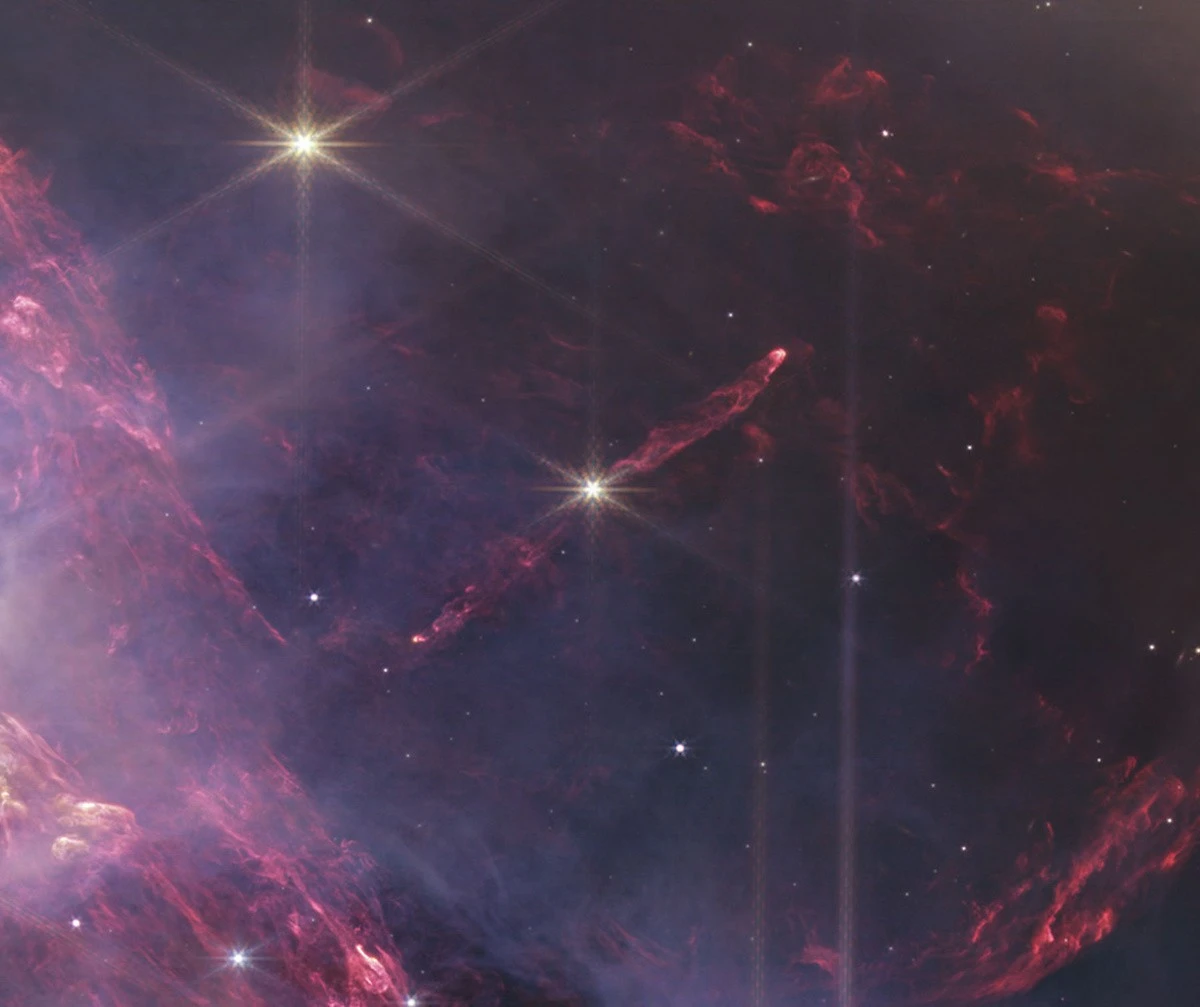
Rho Ophiuchi is a region where stars similar to the Sun, along with their future planetary systems, form. Observations from the James Webb Space Telescope allow us to peer into the distant past of our own Solar System.
Thanks to the James Webb Space Telescope, we have one of the most detailed surveys of such regions ever recorded. This image is not only breathtaking in its beauty, but also provides the most detailed look yet at star formation processes.